How to Identify and Fix Common Exam Mistakes for Better Grades
Exam season brings an immense amount of pressure, and often, the difference between an A and a B comes down to strategy rather than raw intelligence. Many students study diligently for weeks, only to watch their hard work slip away on test day due to easily preventable slip-ups. Recognizing common exam mistakes early in your preparation can completely transform your academic performance and reduce test anxiety. According to data tracking global student assessments from the OECD iLibrary, refined test-taking strategies and anxiety management consistently correlate with higher academic marks. By pivoting away from stressful cramming and leaning into structured execution, you can unlock your true academic potential.
This comprehensive guide will break down the psychological and technical reasons behind exam errors. We will explore the critical missteps students make before, during, and after an exam, giving you actionable strategies to correct them.
The Hidden Impact of Common Exam Mistakes
When we talk about test errors, we are not just talking about forgetting a formula or misspellings. Errors generally fall into two distinct categories: knowledge gaps and execution failures. Execution failures are particularly frustrating because you actually know the material, yet you fail to demonstrate that knowledge on paper. Overestimating your preparation, mismanaging your clock, and letting panic dictate your pace are quiet GPA killers. Understanding these pitfalls allows you to build a protective shield around your hard-earned knowledge.
When you make these errors repeatedly, it erodes your academic confidence and makes future test cycles feel much more daunting than they actually are. Addressing these execution gaps requires a deliberate focus on how you handle pressure. It also demands a willingness to analyze your personal testing habits objectively so you can make meaningful changes.
Pre-Exam Pitfalls: Missteps Before the Test Even Starts
Excellent exam performance begins long before the test booklet opens. Sadly, many students sabotage their success in the days and hours leading up to the assessment. This section highlights how poor planning can ruin your performance before you even read the first question.
The Myth of the All-Night Cram Session
One of the most pervasive habits among students is staying up all night to study. While it feels productive to force information into your brain at 3:00 AM, sleep deprivation severely impairs your working memory and cognitive flexibility. Without adequate sleep, your brain struggles to retrieve information, leaving you prone to simple errors on complex questions. Furthermore, sleep deprivation prevents your brain from converting short-term study data into stable long-term memories.
When you choose sleep over cramming, you allow your brain to process the concepts you have already reviewed. This mental clarity enables you to reason through difficult or unfamiliar problems with greater accuracy. A well-rested mind will always outperform an exhausted mind that is stuffed with unorganized facts.
Arriving Untethered and Unprepared
Showing up to the exam room late, rushing through the door, or forgetting essential tools spikes your cortisol levels. Starting a test in a state of panic immediately hinders your critical thinking abilities. When your body enters a fight-or-flight state, the prefrontal cortex shuts down, making logical reasoning incredibly difficult.
To prevent this emotional chaos, create a packing checklist the night before your test. Gather your calculators, writing utensils, student identification, and approved reference sheets ahead of time. Arrive at the testing venue at least fifteen minutes early so you can sit quietly, regulate your breathing, and establish a focused frame of mind before the exam begins.
Critical Blunders Made During the Examination
Once the clock starts ticking, execution is everything. Let us look at the tactical errors that cost students the most marks during the live exam and how to avoid them.
Misreading the Explicit Prompts and Instructions
This is arguably the most heartbreaking error in academics. A question might ask you to “compare and contrast,” but you only list the similarities. It might ask you to select two correct options, but you only pick one. These small details can drastically alter the trajectory of your final grade.
To fix this, practice active reading during the test. Always read the question twice before making your selection or writing your answer. Underline directional verbs like analyze, evaluate, define, or list to ensure your answer matches the prompt exactly. Taking an extra ten seconds to verify what the question is truly asking saves you from wasting time on an incorrect, off-topic response.
Poor Allocation of Limited Time
Spending twenty minutes on a difficult multiple-choice question worth one mark is a recipe for disaster. Consequently, you run out of time for the high-value essay questions at the end of the paper. This structural imbalance happens because students let their stubbornness override their testing strategy. They feel compelled to solve a hard problem immediately rather than prioritizing easy wins.
To overcome this, use a strict pacing system. Scan the test early on and divide your total testing time by the number of sections, allocating more minutes to high-value questions. If you get stuck on a difficult question, flag it, move forward, and return to it at the end of the exam if time permits.
Mistake
Correction Strategy
Spending too long on a single hard question
Skip it, flag it, and return to it at the end.
Rushing through easy questions at the start
Read every option before making your selection.
Leaving Blanks on Non-Penalized Tests
Unless an exam explicitly states that it deducts points for incorrect answers, leaving a question completely blank is an automatic zero. Many students leave questions blank because they fear being wrong, but this habit guarantees a loss of marks. Even an educated guess gives you a statistical chance of earning points, especially on multiple-choice formats.
When you encounter an unfamiliar prompt, eliminate the options you know are completely impossible. This simple reduction dramatically increases your odds of selecting the correct answer from the remaining choices. Never surrender potential points when there is no penalty for trying your best to solve the problem.
Post-Test Habits That Hold You Back
Your job isn’t finished when you hand in your test paper. True academic growth requires analyzing your performance to ensure you do not repeat history on future assessments.
Failing to Review Graded Test Papers
Many students receive their graded papers, look at the final score, and immediately shove the document into the bottom of their backpack. If you do not analyze exactly where and why you lost points, you are highly likely to make the exact same mistakes on your final exams. Treat every returned test as a personalized diagnostic roadmap rather than a source of shame or disappointment.
Take the time to categorize your errors into conceptual misunderstandings or simple reading mistakes. If you notice a pattern of missing details, you know you need to slow down your reading speed. Engaging with your graded papers transforms setbacks into valuable learning opportunities that accelerate your long-term academic progress.
FAQ SECTION
What are the most common exam mistakes students make?
The most common exam mistakes include misreading question instructions, managing time poorly, and failing to review answers before handing in the paper. These common exam mistakes often cost students marks even when they understand the material. Another of the common exam mistakes is staying up all night to cram, which reduces concentration and working memory during the exam.
To avoid these common exam mistakes, practice active reading and complete timed practice exams at home. Working under realistic conditions builds the confidence and stamina needed to perform well on test day. One of the common exam mistakes is forgetting to check word limits or answer every part of a multi-part question. A simple review at the end of the exam helps you catch these common exam mistakes before you submit your paper.
How can I stop making careless errors on math tests?
Careless math errors often happen when you skip steps, solve equations in your head, or write numbers messily under time pressure. Write every step of your calculations clearly on the page. Keep your columns aligned and your handwriting neat. This makes it easier to avoid mistaking a 4 for a 9. Save the last five minutes of the test to check your work and verify your calculations.
Check your answers with a different method whenever possible. You can also substitute your final answer back into the original equation. This is an effective way to catch hidden arithmetic mistakes. If you often misread signs, circle operators as you solve each problem. This helps you notice important changes in long formulas.
Is it better to change your first answer on a multiple-choice question?
Research shows that you should change your answer if you have a clear, logical reason. The idea that your first instinct is always correct is a common myth. It can cause students to keep incorrect answers out of fear. Only change an answer if you notice a missed detail or remember a specific fact.
Do not change answers because of panic or anxiety alone. Second-guessing without evidence often creates new mistakes. Trust your preparation, but correct genuine errors during your final review. Sometimes later questions provide clues that help you solve earlier ones.
How do I manage my time effectively during a major exam?
Before you begin, scan the entire exam. Identify the sections and their mark values. Divide your time according to the weight of each section. For example, an essay worth 50% of the marks should receive about half of your available time. Use a wristwatch to monitor your progress.
If you fall behind, increase your pace. Focus on earning as many marks as possible instead of making one answer perfect. Do not spend too much time on a difficult, low-value question. That time may be better spent answering several easier questions.
What should I do if my mind goes completely blank during a test?
If your mind goes blank, close your eyes and take three slow, deep breaths. Then move to an easier question. Solving a simpler problem builds momentum and may help you remember the answer later.
Stress can reduce your working memory. Lowering your anxiety often helps information return more easily. You can also write key formulas or keywords in the margin. This clears mental clutter and helps you think through the problem step by step.
CONCLUSION
Mastering the art of test-taking goes far beyond memorizing facts and figures; it requires precise tactical execution and emotional control. By actively identifying common exam mistakes—such as poor time allocation, failing to read prompts carefully, and neglecting to review your returned work—you turn testing from a game of chance into a predictable science. True academic growth happens when you treat exams as skills to be refined rather than terrifying judgments of your innate intelligence. Every test you take provides valuable data on how you handle information under pressure, allowing you to iterate and improve your strategy over time.
As you prepare for your next testing cycle, focus on your exam strategy as much as your subject knowledge. Arrive well-rested, read every question carefully, manage your time wisely, and learn from your previous mistakes. For additional preparation techniques, explore our guide on last-minute revision tips. A calm, well-planned approach can help you avoid unnecessary errors and perform to the best of your ability.
How to Set Username in WhatsApp: Step-by-Step Guide
For years, WhatsApp users had to share their phone numbers to connect with new people. This often created privacy concerns, especially in group chats and online communities. Learning how to set username in WhatsApp is now one of the best ways to protect your personal information. Meta has introduced WhatsApp usernames, allowing users to chat without exposing their mobile numbers. The feature is rolling out globally and gives users more control over their privacy while making it easier to connect with others.
If you’re wondering how to set username in WhatsApp, now is the perfect time to learn. By creating a unique username, you can protect your phone number and safely connect with new contacts without revealing your personal details. Since the feature is rolling out in phases, reserving your preferred username early can help you secure the handle you want before it becomes unavailable. This guide explains what WhatsApp usernames are, how to create one, and how to use the new privacy features to keep your account secure. You can also read About usernames, the official WhatsApp help page, for the latest information about the feature.
Step-by-Step Guide: How to Set Username in WhatsApp
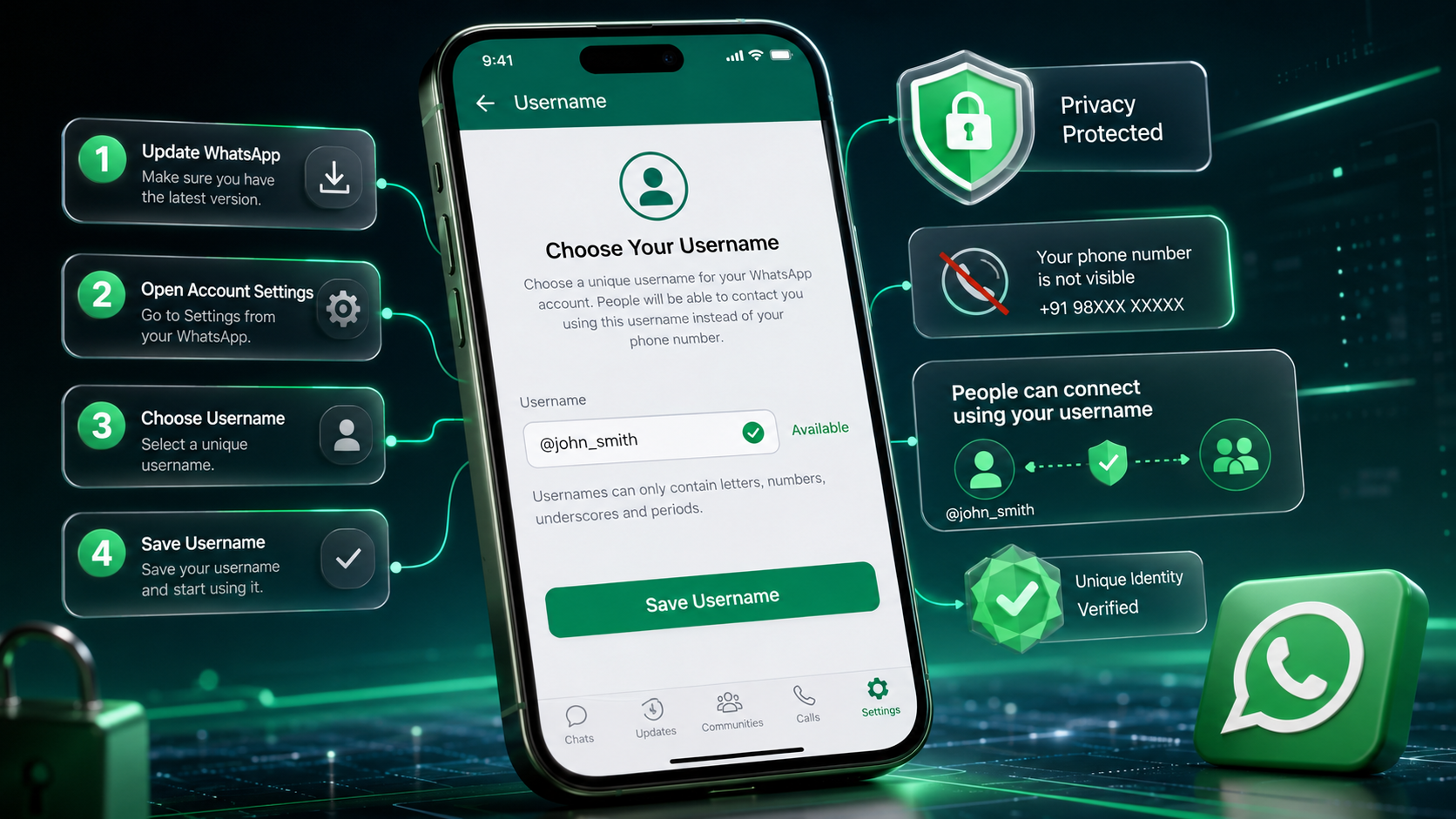
If you’re wondering how to set username in WhatsApp, the process is simple and only takes a few minutes. Setting up a WhatsApp username helps protect your privacy by allowing you to connect with new people without sharing your phone number. Instead, you can share your unique username while keeping your personal contact details private. Follow the step-by-step instructions below to create, reserve, and secure your WhatsApp username.
Step 1: Update WhatsApp
First, open the Google Play Store or Apple App Store on your device. Search for WhatsApp and install the latest available update. The username feature works only on updated versions of the app, so make sure you are using the newest release.
Step 2: Open Account Settings
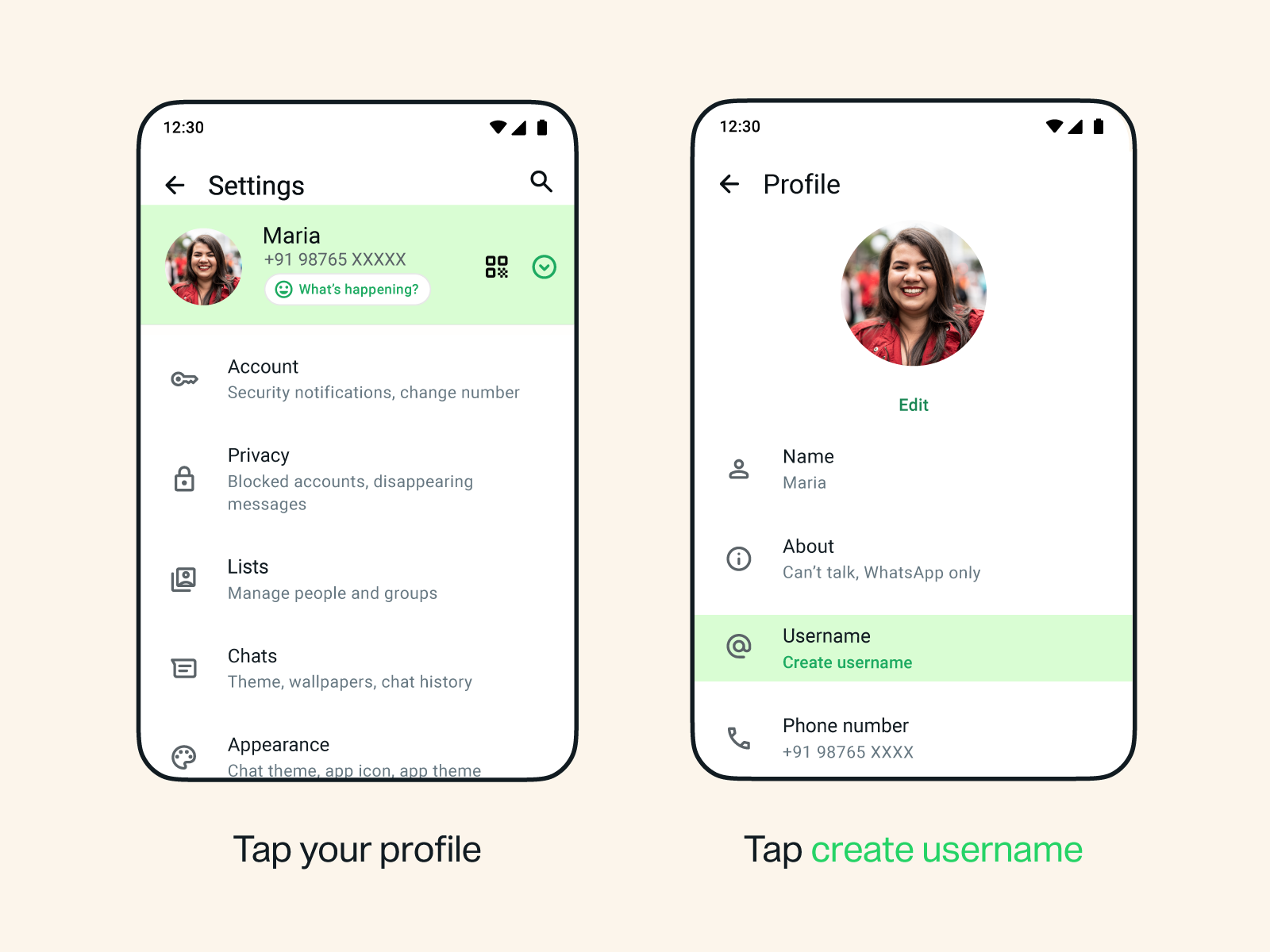
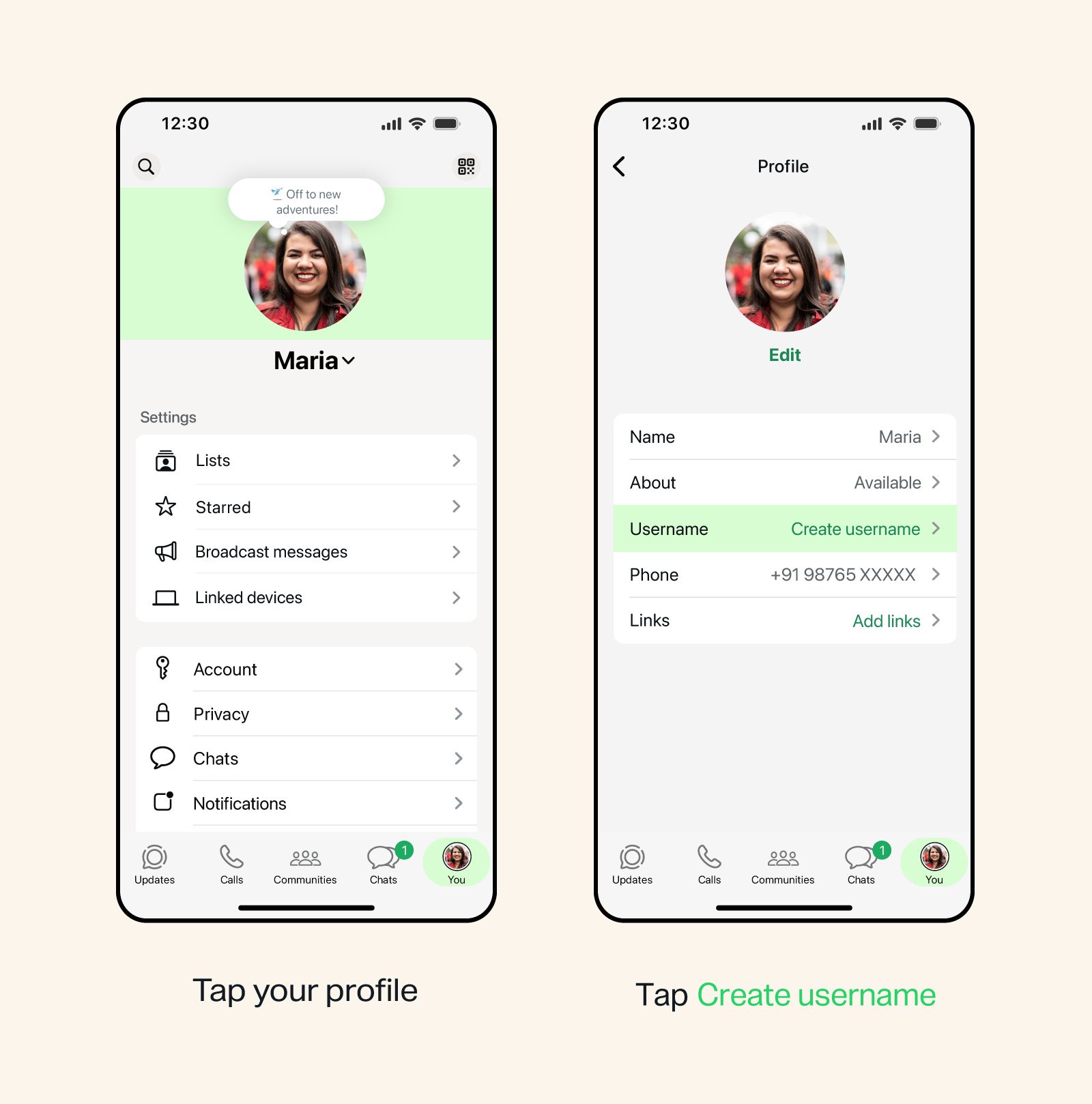
After updating the app, open WhatsApp on your phone. On iPhone, tap the Settings icon at the bottom. On Android, tap the three-dot menu in the top-right corner and choose Settings. Then open the Account section and find the new Username option.
Step 3: Choose Your Username
After opening the Username section in your WhatsApp account settings, tap Create username (or Reserve username if the feature is still rolling out in your region).
In the username field, enter the handle you want to use. Your username should be unique, easy to remember, and represent your identity or brand. WhatsApp will instantly check whether your chosen username is available. If the username is already taken, you’ll be prompted to try a different one until you find an available option.
For Android:
For ios:
Step 4: Save Your Username
Once you enter your preferred username, WhatsApp will check its availability. If you see a green checkmark, the username is ready to use. Tap Save or Reserve to confirm your choice. After saving, the username will be linked to your account and protected from being claimed by another user.
What Is the WhatsApp Username Feature?
The new username feature gives every user a unique identity, such as @yourname. Instead of sharing your phone number, you can simply share your username. People can start a conversation using that username while your phone number stays hidden.
Your mobile number is still required for account verification and recovery. However, it is no longer your public identity. This makes WhatsApp more similar to apps like Instagram, Signal, and Discord.
Meta also allows eligible users to sync existing usernames from Instagram or Facebook. This helps businesses and creators keep the same identity across Meta platforms.
Why Should You Use a WhatsApp Username?
Using a WhatsApp username offers a simple but powerful way to protect your privacy while communicating with others. In the past, sharing your WhatsApp contact meant giving out your personal phone number. This exposed users to spam calls, unwanted messages, and potential privacy risks, especially when joining large group chats or online communities. With the new username feature, you can connect with people by sharing a unique handle instead of your mobile number.
A WhatsApp username is especially useful for professionals, freelancers, creators, students, and business owners who regularly communicate with new contacts. It allows you to stay connected without revealing sensitive personal information. You also have greater control over who can contact you, making conversations safer and more private.
Some of the biggest benefits of using a WhatsApp username include:
Keep your phone number hidden from new contacts.
Reduce spam messages, marketing calls, and unwanted communication.
Share a simple username instead of your mobile number.
Protect your identity when joining public, community, or workplace groups.
Create a consistent online identity across WhatsApp, Instagram, and Facebook.
Make it easier for customers, clients, and friends to find you.
Add an extra layer of privacy while still enjoying all WhatsApp features.
As more people adopt this feature, using a WhatsApp username will become one of the easiest ways to improve your online privacy without changing how you use the app. It offers a safer and more convenient way to connect while keeping your personal phone number private.
Understanding the New WhatsApp Username Key Security
To improve user privacy, Meta has introduced an additional security feature called the WhatsApp Username Key. This optional feature adds another layer of protection for people who use usernames instead of sharing their phone numbers. Since WhatsApp does not have a public username directory, other users cannot search or browse random usernames. However, someone who already knows or correctly guesses your username could still try to send you a message request.
The Username Key helps prevent unwanted contact in these situations. You can create a unique four-digit PIN that works as an extra verification step. When this feature is enabled, anyone messaging you through your username for the first time must enter the correct Username Key before their message request is delivered. If they enter the wrong PIN or do not know the code, the request will not reach your inbox.
This feature gives users greater control over who can contact them. It is especially useful for creators, professionals, business owners, and anyone who shares their WhatsApp username publicly. Even if your username is visible on social media or a website, strangers cannot message you without the correct Username Key.
You can change, reset, or disable your Username Key at any time from the WhatsApp account settings. Updating the PIN regularly can further improve your account security and reduce unwanted messages. Combined with WhatsApp’s end-to-end encryption, the Username Key provides an extra privacy layer, helping users communicate more securely while keeping their phone numbers hidden.
FAQs: Common Questions Answered
Is the WhatsApp username feature available?
Yes, the WhatsApp username feature is gradually rolling out to users worldwide. Meta is releasing it in phases, so not everyone will receive access at the same time. If you don’t see the Username option in your WhatsApp settings yet, your account may still be waiting for the update.
To improve your chances of getting the feature sooner, make sure you’re using the latest version of WhatsApp from the Google Play Store or Apple App Store. Once available, you can create a unique username under Settings > Account > Username. This allows you to connect with new people without sharing your phone number.
WhatsApp usernames are optional, so you can continue using the app as usual if the feature hasn’t reached your account. Meta is expected to expand the rollout to more users over time, making usernames available across supported devices and regions.
What is the username on WhatsApp?
A WhatsApp username is a unique identifier that lets people connect with you without seeing your phone number. It works like a handle, such as @alex_dev, and can be shared instead of your mobile number when starting new conversations. This feature is designed to improve user privacy while making it easier to communicate with friends, customers, or colleagues.
Although you use a username publicly, your phone number is still linked to your WhatsApp account for verification, login, and account recovery. It remains hidden from new contacts who message you through your username. Usernames are optional, so you can continue using WhatsApp with your phone number if you prefer. By using a unique username, you can protect your personal information, reduce unwanted contact, and maintain a safer messaging experience while keeping your identity more private.
How do I reserve a username for WhatsApp?
To reserve a WhatsApp username, first update the app to the latest version from the Google Play Store or Apple App Store. Once updated, open WhatsApp > Settings > Account > Username. Enter the username you want and wait for WhatsApp to check its availability. If the name is available, you’ll see a confirmation message or green checkmark. Tap Save or Reserve to secure it for your account.
In some regions, WhatsApp may also allow you to sync a verified username from your Instagram or Facebook account through Meta Accounts Center. This helps individuals, creators, and businesses maintain the same identity across Meta platforms. If the Username option isn’t visible yet, keep your app updated, as Meta is rolling out the feature gradually to users worldwide.
How do I find out my WhatsApp username?
After creating your WhatsApp username, you can easily view it from your profile settings. Open WhatsApp and go to Settings, then tap your profile picture or profile name at the top of the screen. Your username will appear below your display name and will be shown with an @ symbol, making it easy to identify and share with others.
If you haven’t created a username yet, this section will prompt you to set one up once the feature becomes available on your account. You can also return to this page anytime to edit or change your username, subject to availability. Keeping a simple and memorable username makes it easier for friends, customers, and colleagues to connect with you without needing your phone number.
How do I send a @name in WhatsApp?
Once the WhatsApp username feature is available, you can start a chat by entering the person’s exact @username in the New Chat search bar. If the username is valid and the user has enabled messages through their handle, WhatsApp will display their profile so you can begin a conversation without using their phone number.
Since WhatsApp does not offer a public username directory, you must know the person’s exact username to find them. In some cases, users may also enable a Username Key, a four-digit PIN that adds an extra layer of privacy. If this security feature is active, you’ll need to enter the correct PIN before your first message request is delivered. This system helps protect users from spam while making it easier to connect securely through usernames.
Conclusion
Transitioning to a handle-based ecosystem is the most significant privacy upgrade in the history of WhatsApp. Learning how to set username in whatsapp accounts ensures that you retain complete sovereignty over your phone number, keeping it safe from corporate databases, strangers, and spammers. Whether you want to network seamlessly at a professional conference, join neighborhood group chats securely, or establish a brand identity, reserving your handle today is an essential defensive step. Update your app right now, secure your handle, and enjoy a much safer, highly private messaging experience.
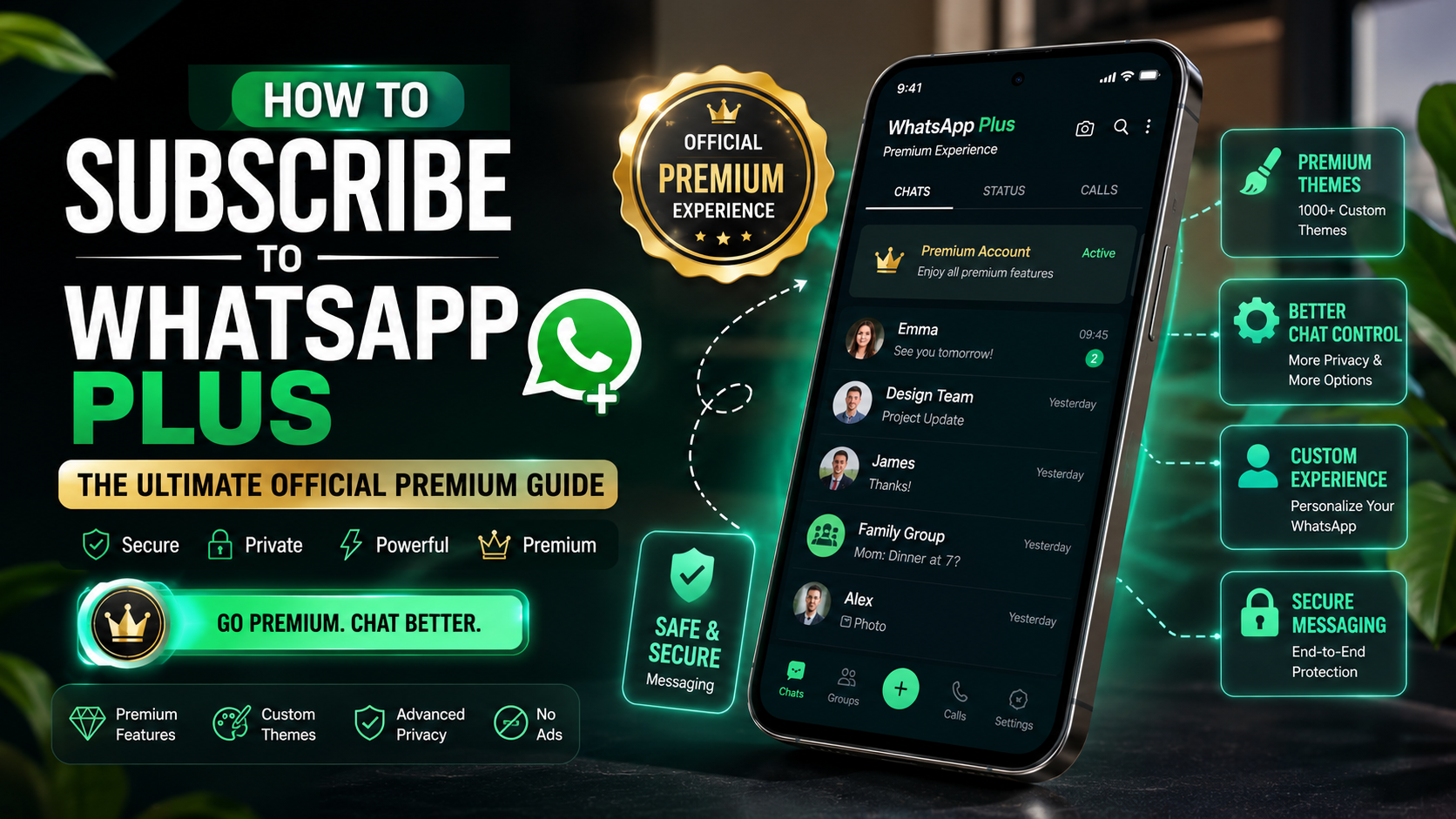
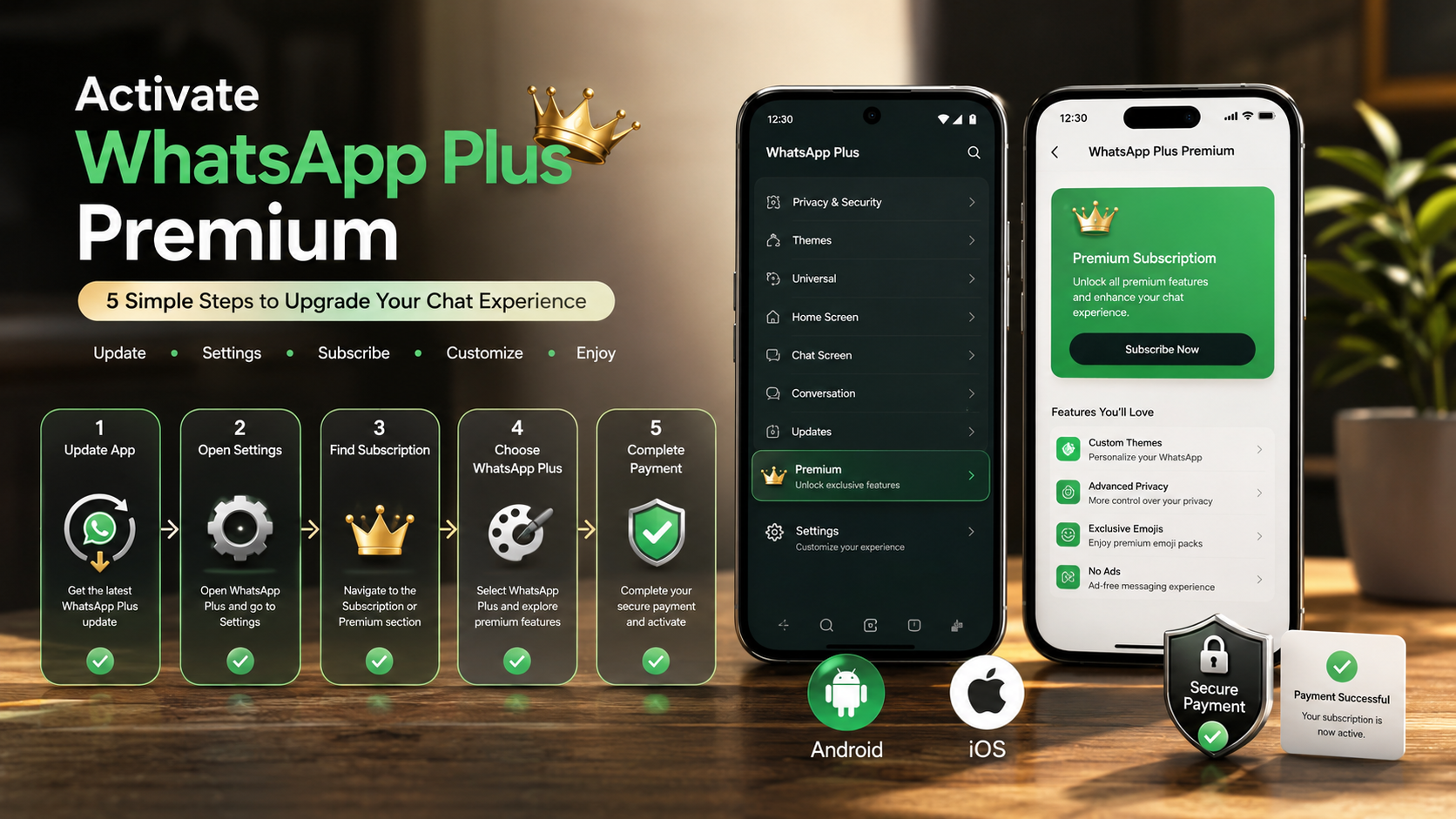
If you’re interested in unlocking additional WhatsApp features and customization options, you may also like our complete guide on How to Subscribe to WhatsApp Plus, which explains the installation process, features, benefits, and important considerations before using it.
What Is Retrieval-Augmented Generation? The Ultimate Guide to RAG
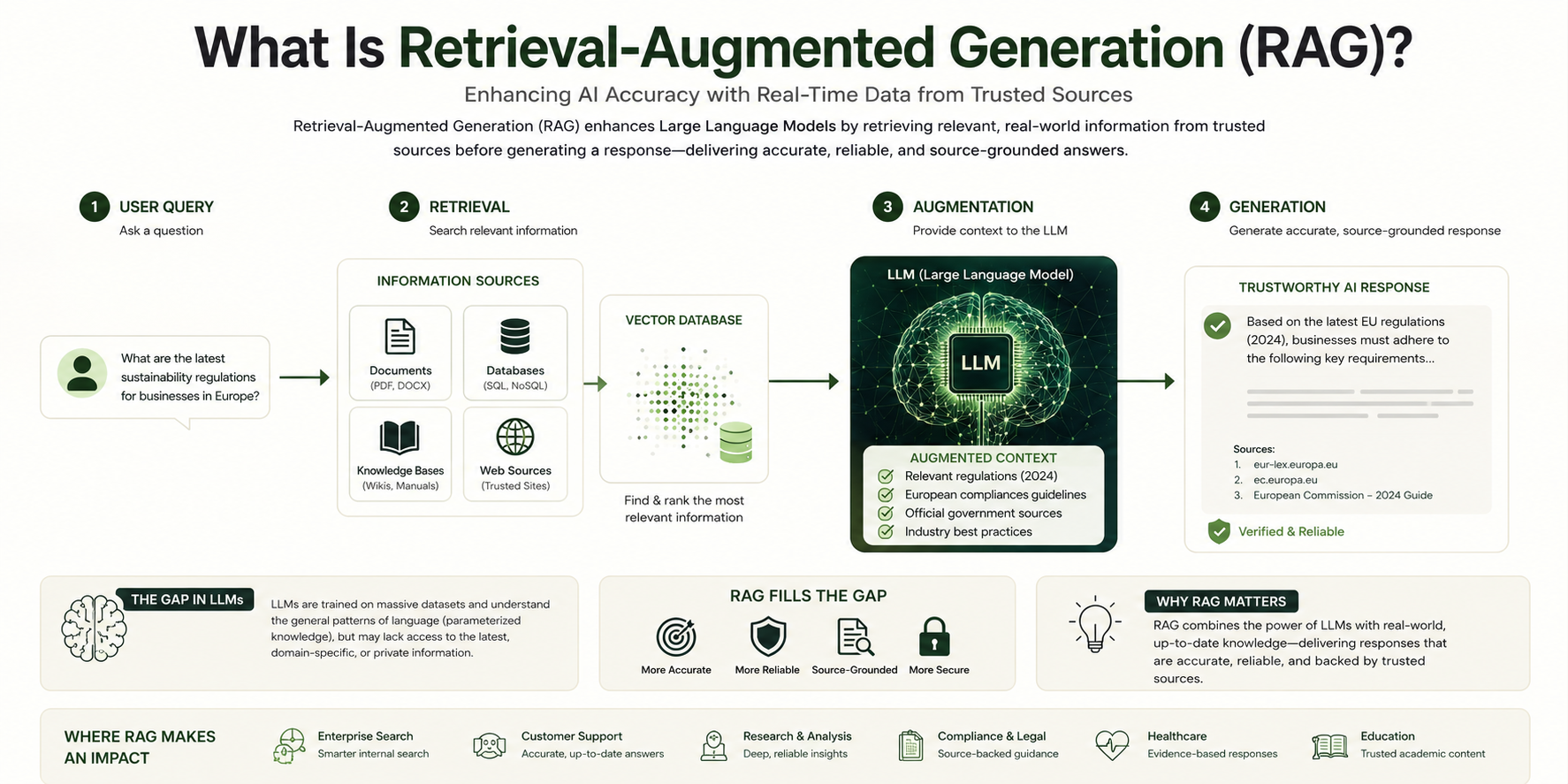
Artificial intelligence has changed the way we work, learn, and communicate. Today, Large Language Models (LLMs) can create content, write code, summarize information, and answer complex questions within seconds. However, traditional LLMs have a major limitation: they can sometimes generate incorrect or made-up information, a problem known as AI hallucination. To overcome this challenge, researchers and engineers developed a powerful approach called Retrieval-Augmented Generation (RAG).
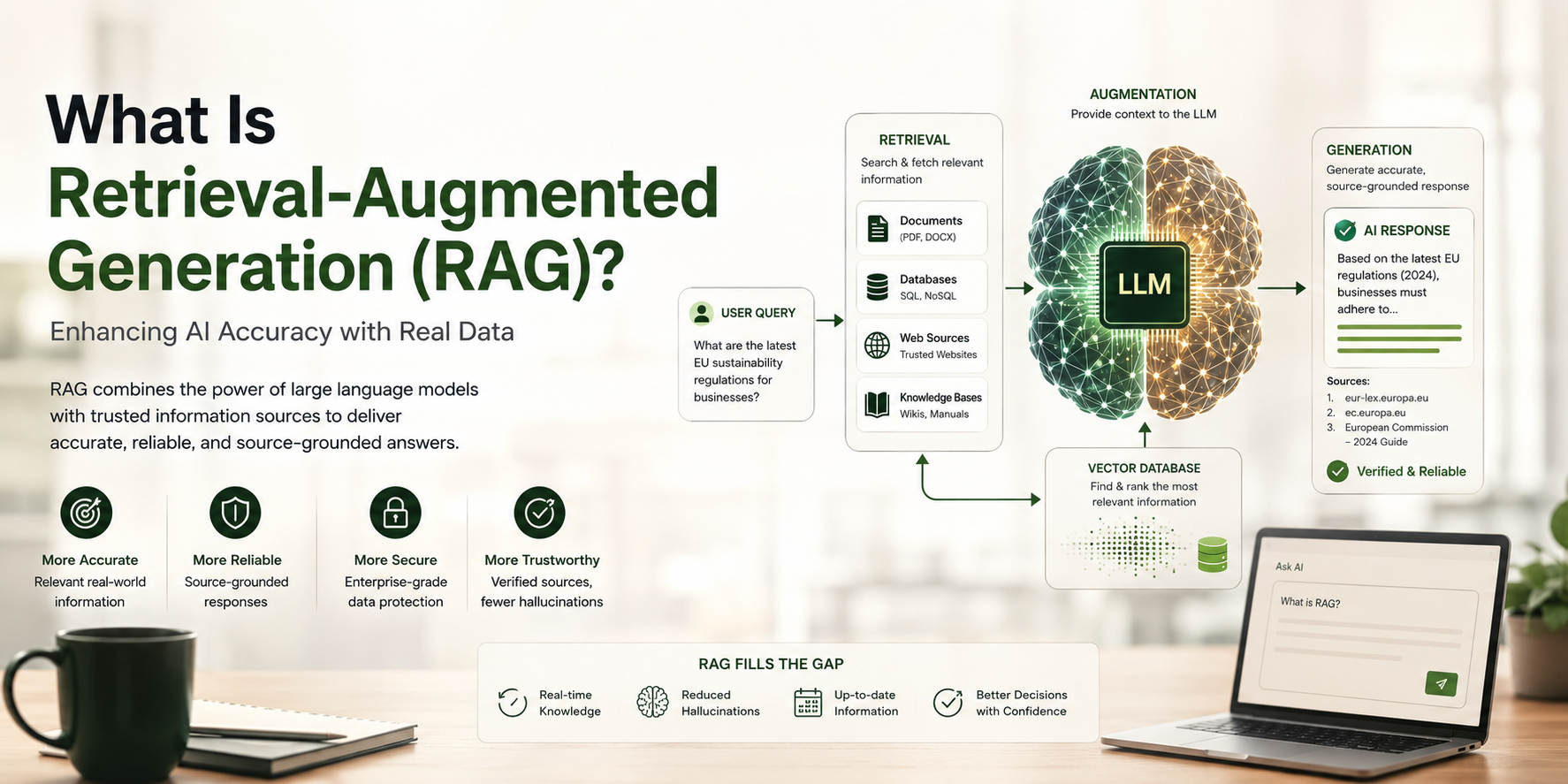
So, what is Retrieval-Augmented Generation? RAG is a framework that improves LLM performance by allowing AI systems to retrieve information from external knowledge sources before generating an answer. Instead of depending only on its training data, an AI model can search trusted documents, databases, or other sources and use that information to create more accurate and reliable responses. According to NVIDIA, RAG connects generative AI models with external data sources, helping them deliver more relevant and context-aware responses. You can explore NVIDIA’s explanation of how generative AI models use external knowledge sources to improve accuracy for a deeper understanding of this approach. NVIDIA explanation of RAG and external knowledge sources
This guide explores how RAG works, its main stages, key benefits, and how it compares with traditional LLMs. Understanding RAG is essential for developers and businesses that want to build smarter, safer, and more trustworthy AI applications.
What Is Retrieval-Augmented Generation? The Core Mechanics
So, how does this framework solve these problems? Think of RAG as turning that closed-book exam into an open-book test. Instead of guessing the answer, the model receives a search engine that scours a specific database for relevant facts before formulating a response.
The system works by pairing a generator (the LLM) with a retriever (an external search tool). When a user inputs a prompt, the retriever finds matching documents within a custom data repository. The system then bundles those source documents together with the user’s original query and hands the entire package to the LLM. As a result, the model reads the provided text and extracts the exact information needed to answer the user perfectly.
Furthermore, this method eliminates the need to constantly retrain or fine-tune massive neural networks. You simply update the text documents in your database, and the AI immediately gains access to the fresh data.
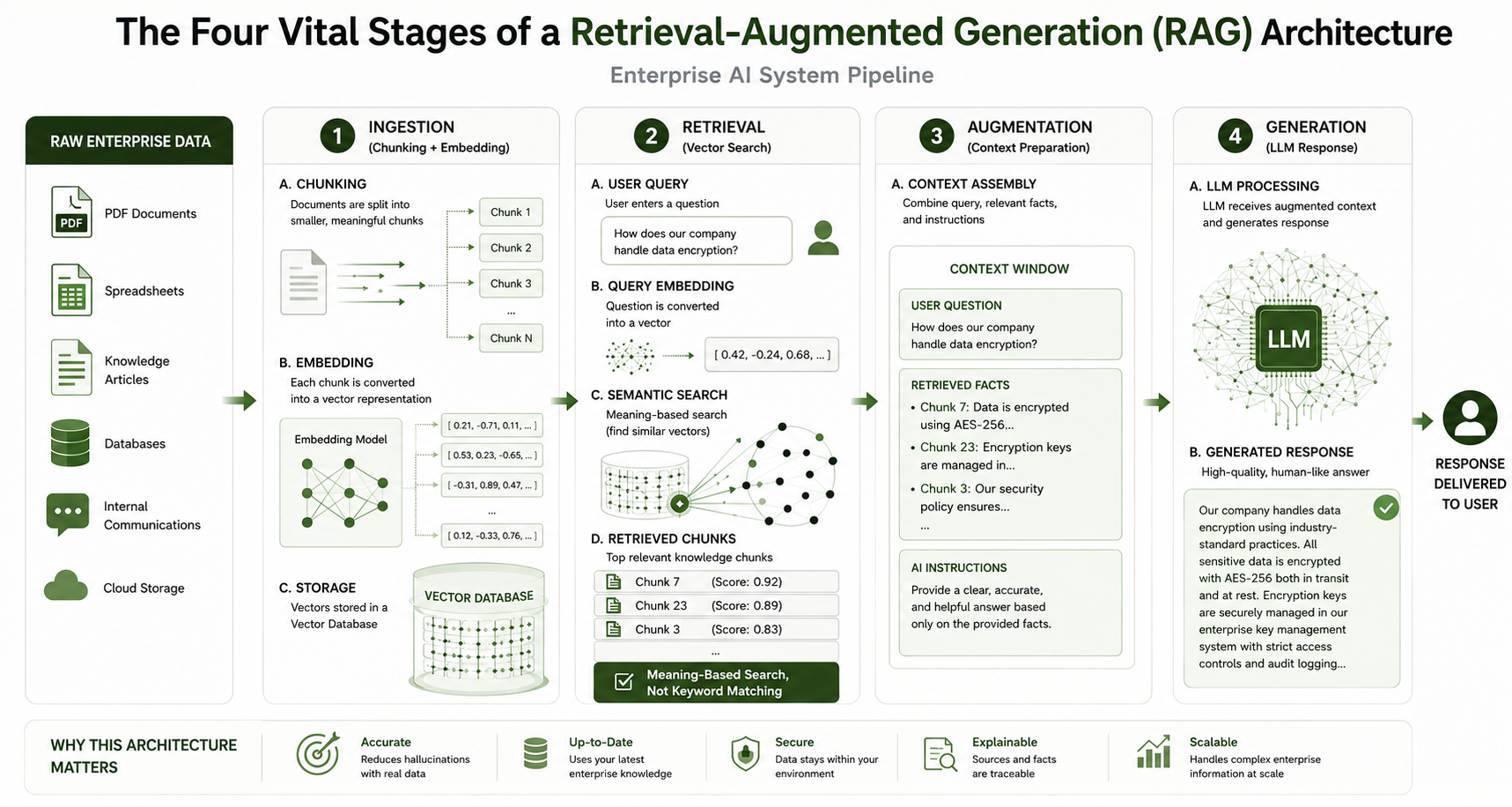
The Four Vital Stages of a RAG Architecture
Building an enterprise-ready RAG system requires a structured pipeline. The process involves transforming raw data into actionable knowledge that an AI can read instantly. Developers break this pipeline down into four distinct phases.
1.The Ingestion Stage
Before an AI can retrieve information, you must prepare your data. First, developers gather documents like PDFs, spreadsheets, and knowledge base articles. The system breaks these large files into smaller, readable pieces called chunks. Next, an embedding model converts these chunks into mathematical strings called vectors, which capture the semantic meaning of the text. Finally, these vectors are stored in a dedicated vector database.
2. The Retrieval Stage
This stage begins the moment a user asks a question. The system converts the user’s query into a vector using the same embedding model. It then performs a mathematical search across the vector database to find the text chunks that most closely match the intent of the query. Instead of just matching exact words, it finds matching concepts.
3. The Augmentation Stage
Once the system identifies the most relevant text chunks, it prepares them for the language model. The system creates a comprehensive prompt that combines the retrieved facts, the user’s initial question, and specific instructions on how to behave. For example, it might instruct the AI to only use the provided text and to say “I don’t know” if the answer isn’t present.
4. The Generation Stage
In the final phase, the augmented prompt is delivered to the LLM. The model reads the context chunks, synthesizes the information, and writes a natural, human-like response. Because the text contains the raw facts, the model does not have to guess, resulting in a highly accurate output.
The Core Differences Between LLM and RAG
Understanding the distinction between a standalone LLM and a RAG setup is critical for planning any AI strategy. While they work together, they serve completely different functions in an application.
Feature
Standalone LLM
RAG-Enabled System
Data Source
Static internal training data
Internal data plus dynamic external databases
Information Recency
Limited by the strict training cutoff date
Real-time updates based on database changes
Risk of Hallucination
High, especially on niche or new topics
Extremely low, as answers require source backing
Data Privacy
Cannot inherently access private company files
Securely connects to private internal repositories
Setup Cost
Extremely high if retraining the model
Affordable, requiring only database infrastructure
Key Benefits of Using RAG for Enterprises
Using a retrieval framework gives enterprises several practical benefits when they deploy AI systems at scale. It helps organizations improve accuracy, maintain compliance, and manage business information more effectively.
Verifiable Source Citations: Because the model pulls answers from specific text chunks, it can tell users exactly which document, page, or paragraph it used to find the answer. This makes auditing AI outputs remarkably easy.
Enhanced Data Security: RAG systems can restrict information access based on user permissions. The retriever will only pull documents that the specific user has clearance to view, protecting sensitive corporate data.
Cost Efficiency: Training a custom language model from scratch costs millions of dollars in computing power. In contrast, setting up a vector database for retrieval costs a fraction of that amount and achieves superior accuracy for specific business tasks.
Frequently Asked Questions
Is ChatGPT a RAG model?
No, ChatGPT itself is not purely a RAG (Retrieval-Augmented Generation) model. It is a Large Language Model (LLM) developed by OpenAI. The core model learns from large amounts of data and can generate answers without searching external sources. It uses learned patterns and knowledge to understand questions and create responses.
However, the ChatGPT application can use RAG-like methods when it needs extra information. For example, when ChatGPT searches the web, reads uploaded files, or connects to external databases, it retrieves useful information and gives that context to the language model. This process improves accuracy and provides more updated answers. ChatGPT is an AI assistant powered by an LLM that can use retrieval systems, but it is not a RAG model by itself.
What is RAG in LLM with example?
RAG stands for Retrieval-Augmented Generation. It is an architecture that improves an LLM by connecting it with external information sources. Instead of depending only on training data, a RAG system finds relevant information from documents, databases, or websites. It then gives this information to the LLM to create a better response.
For example, an HR assistant AI may answer questions about employee healthcare plans. If an employee asks, “Does my insurance cover acupuncture?”, a normal LLM may not know the latest company policy. A RAG system searches the company’s benefits documents and finds the section about acupuncture coverage. The LLM then uses that information to create a specific and reliable answer.
What are the 4 stages of RAG?
The four main stages of RAG are data ingestion, retrieval, augmentation, and generation. In the data ingestion stage, the system collects documents, PDFs, or web pages. It breaks the text into smaller sections, converts them into vectors, and stores them in a vector database.
During retrieval, the system searches the database to find information related to the user’s question. In the augmentation stage, the system combines the retrieved information with the user’s prompt. Finally, during generation, the LLM uses this improved prompt to create an accurate and relevant response.
What is the difference between LLM and RAG?
An LLM is the core AI model, while RAG is a framework that improves how an LLM uses information. An LLM learns from large datasets and creates responses using its training knowledge. However, it may not know recent events or private information.
RAG connects an LLM with external sources such as documents, databases, or websites. When a user asks a question, the RAG system first finds useful information and gives it to the LLM. The model then uses this context to generate a more accurate answer. In simple terms, an LLM works like a brain, while RAG gives that brain access to a searchable knowledge library.
Can RAG completely eliminate AI hallucinations?
RAG can greatly reduce AI hallucinations, but it cannot remove them completely. A RAG system improves accuracy by finding relevant information and giving it to the LLM before it answers. However, mistakes can still happen if the system retrieves poor-quality data or if the model misunderstands the information.
Developers can reduce hallucinations by improving data quality, using better search methods, applying clear instructions, and limiting answers to trusted sources. RAG does not guarantee perfect results, but it makes AI responses more reliable. This makes it useful for areas such as healthcare, finance, and legal applications.
Conclusion
Answering the question of what Is Retrieval-Augmented Generation reveals that the future of artificial intelligence relies on grounding models in verifiable reality. Standalone language models possess incredible linguistic capabilities, but their tendency to hallucinate and their reliance on static data limits their utility in professional settings. By pairing these models with intelligent retrieval systems, organizations unlock the full potential of automation without sacrificing accuracy.
Implementing a retrieval pipeline transforms how systems interact with data. It converts isolated, frozen neural networks into dynamic tools capable of accessing real-time corporate knowledge bases, secure customer records, and public search engines. Consequently, users receive highly accurate, context-aware answers complete with verifiable citations.
As AI continues to evolve, retrieval-based approaches will play a major role in enterprise applications. RAG provides a practical, secure, and cost-effective way to build AI systems that people can confidently use. To understand how this connects with broader AI advancements, explore this guide on what is generative AI.
Balancing Books and Bank Accounts: The Ultimate Guide to Part-Time Jobs for Students
Finding the right part-time jobs for students can feel like a balancing act. You need an income to cover text books, housing, and social activities, but your primary focus must remain on your education. According to data from the U.S. Bureau of Labor Statistics, millions of young people successfully combine employment with higher education every year. Working while studying does more than just pay the bills. It teaches vital time management skills, builds a professional network, and fills your resume before you even graduate. Many students find that having a structured work schedule actually forces them to organize their study time more effectively, leading to better academic performance overall. The key is finding a position that respects your boundaries as a learner and offers the agility to shift priorities when midterms or final projects arrive.
Why Flexible Student Employment Matters
The modern university experience is expensive. Beyond tuition, everyday living costs can quickly accumulate, leaving many young people stressed about their finances. However, taking on a rigid employment schedule can quickly lead to severe burnout, exhaustion, and falling grades. This is precisely why flexible working hours ensure that your academic commitments always come first.
The ideal position offers you the complete control to scale your hours down during exam weeks and scale them up during winter or summer breaks. Employers who specialize in student shifts know that academic calendars change from week to week. When you find a workplace that embraces this flexibility, you can earn a steady income without sacrificing your sleep, mental health, or GPA. This balance transforms employment from a source of stress into a powerful tool for personal development.
The Best On-Campus Part-Time Jobs for Students
Looking for work right on your campus is often the smartest first move for any undergraduate or graduate student. Universities understand that you are a student first, making them incredibly accommodating employers who design shifts around your class schedule. Furthermore, working on campus completely eliminates a long daily commute, saving you both time and transportation money.
1. University Library Assistant
Working at the campus library is a classic student role for a reason. The environment is inherently quiet, orderly, and highly conducive to learning. You get significant downtime during slow evening or early morning shifts, which means you can use this quiet time to read, study, or complete your own homework assignments while getting paid. Responsibilities generally include shelving returned books, assisting peers with digital database searches, organizing study room reservations, and managing the main checkout desks during operating hours.
2. Campus Tour Guide
If you are an outgoing individual who genuinely loves your university, sharing that passion with prospective students is a fantastic way to earn an income. This role sharpens your public speaking skills, confidence, and ability to think on your feet under pressure. Your primary responsibilities will include leading large groups of high school students and their parents around the campus grounds, explaining university history, and answering questions about student life, dorms, and academic programs.
3. Departmental Assistant
Many academic departments hire students to help with daily administrative tasks right within their own major buildings. This position allows you to work closely with professors, advisors, and university administrators, which frequently leads to excellent letters of recommendation for graduate school or future careers. The daily responsibilities typically involve answering professional emails, filing paperwork, updating department bulletin boards, helping organize local campus events, and directing visitors to the correct faculty offices.
High-Paying Remote Gigs for Digital-Savvy Students
If your physical campus options are limited or highly competitive, the modern digital economy offers incredible flexibility for tech-savvy young adults. You can work from the comfort of your dorm room, a local coffee shop, or a quiet student lounge between lectures. Remote digital roles allow you to customize your workspace and choose exact hours that mesh perfectly with your changing lifestyle.
Role
Average Hourly Pay Range
Best Skills to Have
Freelance Writer
$18–$35 per hour
Research, Grammar
Virtual Assistant
$15–$25 per hour
Organization, Email Management
Online Tutor
$20–$40 per hour
Subject Expertise, Communication
Freelance Content Writing
Many businesses constantly need blog posts, social media updates, newsletter copy, and website descriptions to boost their digital marketing efforts. If you have a strong knack for words, excellent grammar, and solid research skills, freelancing allows you to set your own project deadlines and determine your own hourly or per-word rates. It is an exceptional way to build a professional portfolio that proves your communication abilities to future corporate employers after you complete your degree.
Virtual Assistance
Busy entrepreneurs, corporate executives, and small business owners often hire organized students to handle routine digital tasks remotely. This might include scheduling social media posts, organizing chaotic email inboxes, entering data into spreadsheets, or confirming digital calendar appointments. Because these tasks can generally be completed at any time of day, you can easily finish your administrative work late at night or early in the morning without ever missing an important lecture or group study session.
Traditional Off-Campus Flexible Student Employment
If you prefer to keep your work life and academic life completely separate, traditional off-campus positions remain highly reliable, abundant choices. Working outside of the university bubble exposes you to a wider variety of people from different backgrounds, expanding your interpersonal skills outside of education.
Barista or Cafe Worker
Local coffee shops and busy neighborhood cafes often offer early morning shifts that wrap up before noon. This convenient timing allows you to finish your work day and earn a solid wage before your first afternoon lecture even begins. Furthermore, many independent cafes offer great daily tips alongside a base hourly wage, which can significantly boost your take-home pay. You also learn how to work quickly under pressure during the morning rush, a skill that serves you well in any future fast-paced corporate environment.
Retail Associate
Local clothing boutiques, electronics stores, and larger department stores frequently look for enthusiastic evening and weekend help to manage customer traffic. Retail positions teach valuable face-to-face customer service skills, inventory management, and cash handling proficiency. As an added benefit, these roles often come with excellent employee discounts on merchandise, helping you save money on clothing, groceries, or tech supplies while you complete your academic studies.
How to Choose the Right Job for Your Schedule
Not every open position on the market will fit your unique lifestyle, personality, or academic discipline. You need to evaluate your weekly course load honestly and objectively before filling out applications. Take a close look at your syllabus and determine how many hours you can realistically dedicate to employment without suffering from chronic fatigue or falling behind on assignments.
First, always assess your weekly credit hours and the difficulty of your classes. If you are taking a heavy science load with mandatory evening labs, look for low-stress roles with fewer, shorter shifts. Second, make sure to factor in total commute times, as an off-campus job that requires a long bus ride eats into your valuable study time. Finally, prioritize skill alignment whenever possible by choosing a role that builds practical skills directly relevant to your future long-term career goals.
FAQs
What are the Highest-Paying Part-Time Jobs for Students?
The highest-paying part-time jobs for students include online tutoring, freelance web development, and specialized customer support. Students with strong skills in calculus, physics, chemistry, or programming can often charge higher hourly rates. Many tutors earn good money by teaching high school students during evening hours. Server and bartending jobs at busy restaurants can also pay well because of tips. These roles suit students with strong communication and customer service skills.
Paid internships can also offer excellent hourly pay. They provide valuable experience and improve your chances of getting a full-time job after graduation. Many technology, engineering, and finance companies pay competitive wages to attract talented students. Brand ambassador roles are another option. Students with social media skills can earn flat project fees while building marketing experience.
How many hours a week should a student work?
Most academic advisors recommend working 10 to 15 hours per week. This balance helps students maintain good grades and a healthy lifestyle. Working more than 20 hours each week is often linked to lower academic performance and higher stress. Your education is a long-term investment. Do not let extra work affect your grades, health, or financial aid.
Consider the hidden time required for a job. Commuting, getting ready for work, and recovering after shifts all reduce your free time. Heavy course loads also require extra study hours. Setting clear limits on your work schedule can prevent burnout. It also helps you stay focused during classes and maintain scholarship requirements.
Can international students work part-time?
Yes, international students can usually work part-time. However, they must follow visa rules carefully. In many countries, student visas limit work to 20 hours per week during the academic term. Some visas also restrict where students can work. For example, employment may be limited to on-campus jobs such as dining halls or administrative offices. Always check with your university’s international student office before accepting a job.
Breaking visa rules can have serious consequences. You could lose your student status, face financial penalties, or even be required to leave the country. Many countries allow full-time work during approved holiday periods. These breaks can help students earn extra income. Some degree programs also include work opportunities such as Curricular Practical Training (CPT) or structured work placements. These programs allow eligible students to gain experience while following visa requirements.
How do I balance work and college exams?
Good communication is one of the best ways to balance work and exams. Give your supervisor a copy of your class schedule at the start of each semester. Tell them about major exams well in advance. Many student-friendly employers will adjust your shifts if they receive enough notice. This gives you more time to prepare.
A well-planned calendar also makes a big difference. Schedule dedicated study sessions before each exam. Treat these study blocks like work shifts that cannot be skipped. Studying consistently reduces stress and improves your understanding of the material. It also lowers the chance of needing last-minute schedule changes.
What skills do student jobs help you build?
Part-time jobs help students develop valuable workplace skills. You learn time management by balancing classes and work. You also improve communication, teamwork, active listening, and conflict resolution. These experiences make your resume stronger and prepare you for full-time employment after graduation.
Student jobs also teach financial responsibility. Managing your own income helps you learn budgeting and saving. Daily workplace challenges improve problem-solving and emotional intelligence. Employers value candidates who successfully balance work and education. It shows responsibility, discipline, and a strong work ethic.
Conclusion
Securing the right part-time jobs for students is ultimately about finding a healthy, sustainable balance between immediate financial needs and long-term academic success. Whether you choose a quiet, studious shift at the campus library, an active and social role as a university tour guide, or a flexible freelance writing business from your own desk, the right position will support your educational journey rather than hinder it. Always remember to prioritize your mental health, your physical well-being, and your GPA above a temporary paycheck. Use these unique employment opportunities to grow your professional network, gain true financial independence, and confidently build the vital foundational skills required for your future career path. With the right strategy, clear communication, and efficient time management, you can successfully earn an income today while building a brighter professional tomorrow.
Ultimately, your time at university is the foundation of your future career, and a part-time job should support that journey. Along the way, you’ll build professional relationships with managers, coworkers, and customers that can lead to valuable references, mentorship, and future opportunities. If you’re interested in flexible remote work, explore these best online typing jobs to find beginner-friendly opportunities that fit around your class schedule. By staying organized, setting clear boundaries, and choosing employers who respect your academic commitments, you can turn a part-time job into a valuable stepping stone toward your long-term career goals.
The Future of Work: Analyzing the Jobs Most Likely to Be Automated
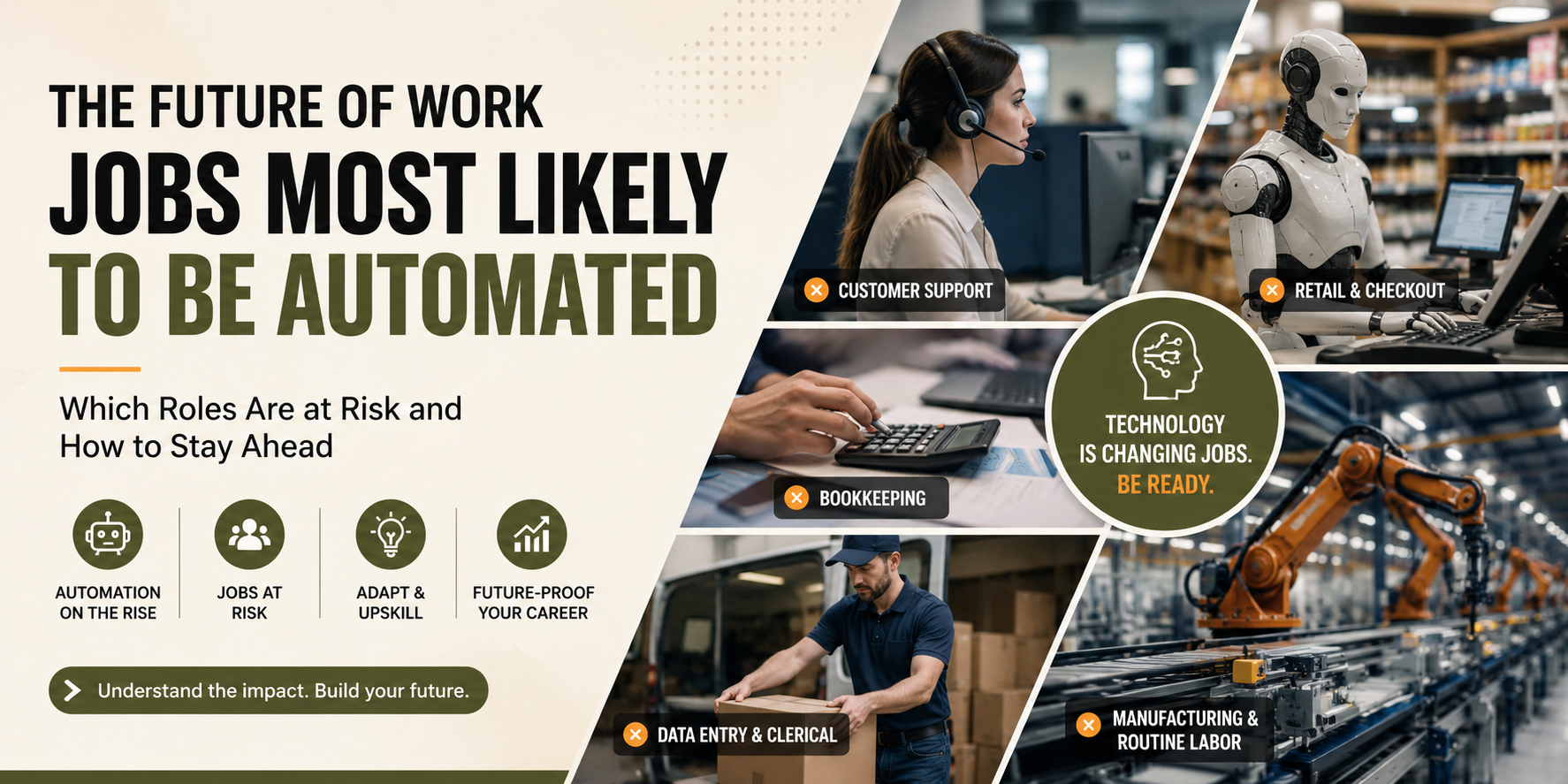
The rapid rise of artificial intelligence and advanced robotics is reshaping the global employment landscape. As machine learning algorithms become more sophisticated, many professionals wonder which industries will experience the most significant changes. Understanding the jobs most likely to be automated helps workers, businesses, and educators adapt to this technological shift. According to recent research on global workforce trends published by the World Economic Forum, automation will transform millions of roles over the coming decade, making adaptability a crucial skill for the future.
This shifts the conversation from whether automation will happen to how fast it will occur. Routine, repetitive tasks are the primary targets for software algorithms and mechanical automation. However, this transition does not mean human labor will disappear entirely. Instead, roles are evolving rapidly, requiring a mix of technical knowledge and emotional intelligence. For a broader perspective on how AI is expected to reshape employment opportunities, read our article on how AI will create more jobs, according to Jeff Bezos. This article explores the sectors facing the highest risk of automation, identifies specific vulnerable roles, and provides actionable strategies for future-proofing your career. By understanding these shifts, professionals can make informed decisions about their career paths and skill development in the coming years.
Understanding Automation Risk Factors
Not all occupations face the same level of exposure to technological displacement. To evaluate the roles most susceptible to automation, researchers look at the nature of the daily tasks involved. Jobs that rely heavily on predictable, repetitive, and structured activities are highly vulnerable. Software excels at processing structured data, following fixed rules, and executing physical actions in controlled environments. Consequently, industries relying on manual data entry or predictable physical labor face swift transformation.
Conversely, roles requiring deep empathy, complex problem-solving, and creative thinking remain difficult to automate. Algorithms struggle with nuance, abstract strategy, and genuine human connection. Therefore, understanding these risk factors helps us predict which specific positions will see the highest levels of machine integration. The goal is to evaluate your daily activities to see if a machine can perform them faster and cheaper. This systematic analysis helps businesses optimize workflows while guiding employees toward higher-value skills that guarantee long-term employability in a tech-driven market.
The Top Jobs Most Likely to Be Automated
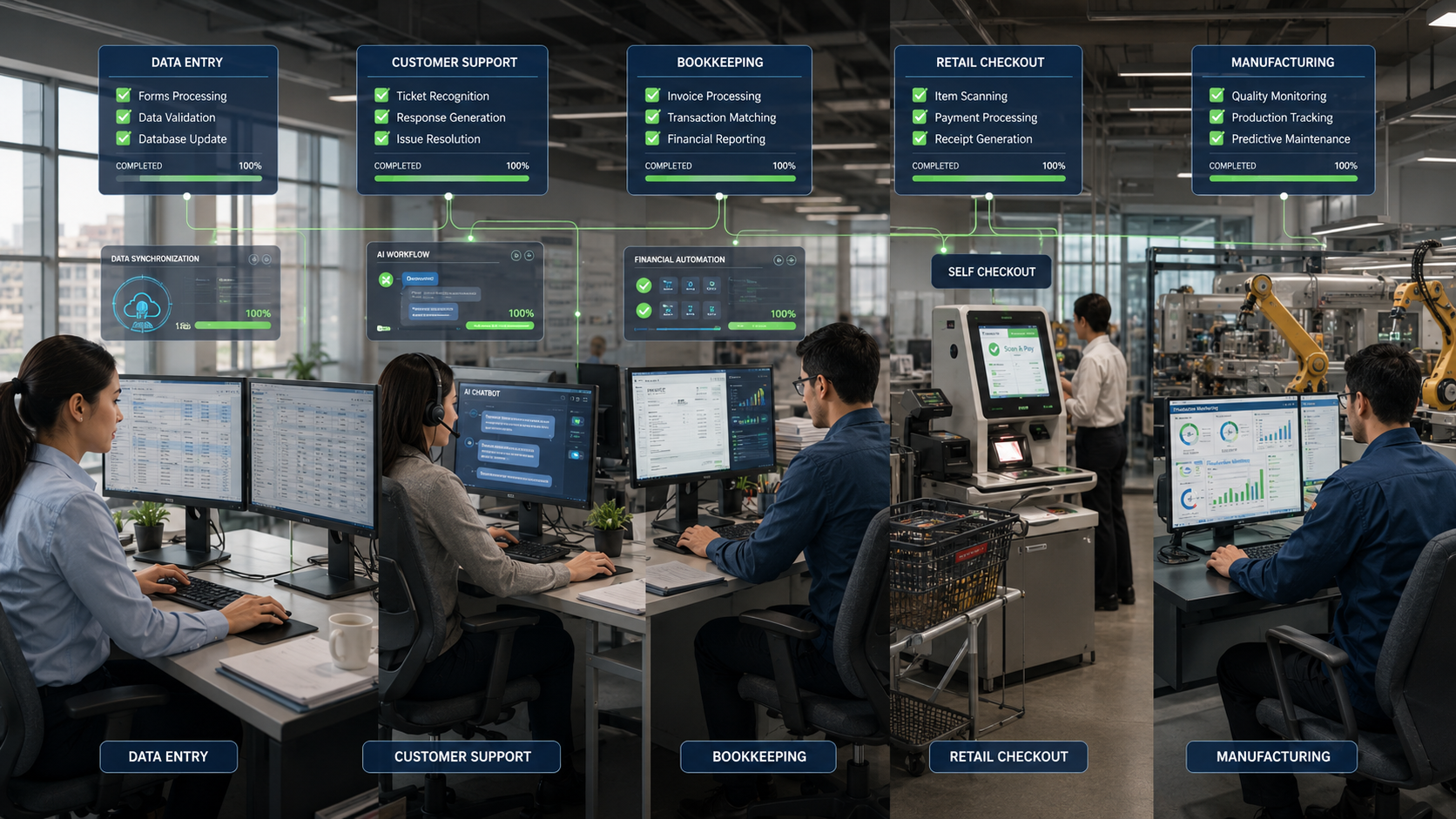
1. Data Entry Clerks and Copy Officers
Data entry is one of the clearest examples of a routine administrative task. Algorithms can extract text, validate information, and update databases faster and more accurately than humans. Because this work follows strict rules, companies are rapidly deploying automation software to handle high-volume data processing. This shift leaves traditional data entry roles practically obsolete in modern corporate environments.
As optical character recognition and natural language processing advance, the need for manual transcription plummets. Companies find that automated systems reduce input errors significantly while operating continuously without fatigue. Consequently, professionals in these fields must quickly pivot toward data analysis or database management to maintain value. Focusing on how data is utilized, rather than how it is entered, is the key to remaining relevant as these clerical tasks disappear.
2. Routine Customer Support Representatives
Basic customer service roles are shifting toward conversational AI platforms. While complex issues still require human intervention, chatbots now handle routine inquiries such as tracking orders, processing returns, and resetting passwords with ease. This transition allows companies to scale customer support operations efficiently while significantly reducing overhead costs.
Tier 1 Support: Highly automated via natural language processing.
Tier 2 Support: Hybrid model where AI assists human agents.
Tier 3 Support: Fully human-led for nuanced or sensitive problems.
As these AI tools become more empathetic and context-aware, they manage increasingly complex customer journeys. Human agents are increasingly reserved for high-value clients or deeply sensitive escalations that require emotional intelligence. Therefore, support professionals should focus on mastering relationship management, advanced technical troubleshooting, and customer success strategies to thrive in this new hybrid support ecosystem.
3. Bookkeeping and Accounting Clerks
Modern financial software automatically categorizes expenses, reconciles bank statements, and generates balance sheets. Although strategic financial planning still depends on human expertise, financial software now automates the foundational task of recording transactions. As a result, businesses increasingly adopt cloud-based financial platforms that integrate directly with banking systems, reducing demand for traditional bookkeeping roles.
The automation of transactional accounting means that matching invoices and tracking receipts no longer require manual oversight. Instead, software flags discrepancies automatically, leaving humans to handle only the exceptions. Financial professionals must shift their focus from historical record-keeping to forward-looking advisory services. Understanding financial strategy, compliance, and corporate tax optimization will ensure that accounting experts remain indispensable trusted advisors to business leadership.
4. Retail Cashiers and Checkout Operators
Self-checkout kiosks and automated scanning systems are standard in retail environments worldwide. Furthermore, computer vision technology and mobile payment systems now allow for completely cashier-less stores. As grocery stores and retail chains optimize operational costs, the demand for manual cashiering continues to decrease rapidly across the industry.
The physical presence of a cashier is becoming a luxury or a niche branding choice rather than an operational necessity. Automated systems manage inventory and process payments simultaneously, streamlining the entire retail experience for consumers. Retail workers need to transition into roles that emphasize customer experience, visual merchandising, or localized store management. Specialized product knowledge and consultative selling are areas where human interaction still drives significant retail revenue.
5. Assembly Line and Factory Workers
Predictable physical labor has faced automation pressure for decades, but modern robotics accelerates this trend. Robotic arms equipped with advanced sensors can assemble, pack, and inspect goods with minimal human oversight. This shift significantly reduces manufacturing errors, increases production speeds, and lowers long-term operational costs for industrial facilities.
Modern smart factories utilize connected devices to monitor machine health and optimize output dynamically. Human workers on the factory floor are transitioning from manual assemblers to robotic technicians and maintenance overseers. Survival in the manufacturing sector requires technical training in machine programming, industrial safety, and systems diagnostics. The future factory worker is a highly skilled technician who manages the machines doing the heavy lifting.
Industries Leading the Automation Shift
Transportation and Logistics
The logistics sector is investing heavily in autonomous technology to streamline global supply chains. Automated guided vehicles already manage inventory inside modern warehouses, moving goods efficiently without human drivers. Additionally, long-haul autonomous trucking and delivery drones are moving closer to mainstream adoption, which will eventually reshape commercial driving roles.
The integration of smart logistics software optimizes delivery routes and manages fleet maintenance automatically. This reduces fuel consumption and minimizes delivery delays across the board. Workers in this sector must look toward supply chain management, logistics coordination, and fleet operations technology. Managing the complex networks that move goods globally remains a highly valued human skill that machines cannot easily coordinate alone.
Financial Services and Banking
Algorithmic trading and automated fraud detection systems handle massive transactional volumes in real time. Loan processing systems use predictive models to assess credit risk instantly, minimizing the need for manual underwriting. As a result, back-office banking roles are consolidating rapidly as institutions prioritize digital-first consumer experiences.
Personalized robo-advisors now manage investment portfolios for retail clients, minimizing the need for traditional wealth managers for standard accounts. To succeed in modern finance, professionals must focus on complex corporate deals, bespoke wealth management, and fintech innovation. Merging financial expertise with data science capabilities creates a highly resilient skill set that financial institutions will continue to seek out fiercely.
How to Future-Proof Your Career Against Automation
To remain resilient as the Jobs Most Likely to Be Automated continue to evolve, professionals must focus on developing skills that machines cannot easily replicate. Continuous learning and upskilling are no longer optional; they are essential strategies for long-term career stability. Individuals must learn to view technology as an enabling tool rather than a threat to their livelihood.
Develop Soft Skills: Focus on emotional intelligence, negotiation, leadership, and conflict resolution.
Learn to Work alongside AI: Master the tools transforming your industry rather than avoiding them.
Focus on Creativity: Engage in strategic planning, innovative design, and complex problem-solving.
Specialize in Niche Areas: Deep technical expertise in a specific field remains highly valuable.
Transitioning toward management, strategy, or creative direction can significantly lower your automation risk. Embracing technological tools allows you to offload routine tasks and focus on high-value, strategic work. The future belongs to professionals who can seamlessly blend human insight with machine output to deliver superior results.
Understanding the Broad Impact of Automation
When analyzing the jobs most likely to be automated, it becomes clear that artificial intelligence is changing the core expectations of the modern workforce. No industry is completely immune to change, and traditional pathways to corporate advancement are shifting. Software applications now write basic computer code, draft legal contracts, and generate initial marketing assets with remarkable speed. Consequently, professionals who previously thought their advanced degrees protected them from technological shifts must reevaluate their long-term career strategies.
The solution is not to resist these tools but to become an expert at utilizing them. Employees who learn how to prompt AI models, audit machine outputs, and integrate automated workflows into their businesses will become incredibly valuable. By focusing on systems architecture and operational oversight, you move away from executing individual tasks and move toward managing technological ecosystems. This tactical adjustment helps you increase your professional value alongside advancing computational power instead of letting automation replace your role.
The Strategic Path Forward for Businesses and Employees
Navigating a landscape shaped by the Jobs Most Likely to Be Automated requires a dual commitment from both organizational leaders and individual workers. Corporate entities must invest heavily in upskilling programs to transition vulnerable workers into collaborative corporate roles. This minimizes local economic disruptions while building a highly loyal, technologically fluent workforce capable of managing next-generation software platforms. Companies that ignore this responsibility risk facing massive talent shortages as traditional operational models become obsolete.
For the individual, maintaining career longevity requires an active commitment to continuous professional development. You must regularly evaluate your daily workflow to ensure you are contributing abstract value that algorithms cannot easily calculate. Cultivating strong industry networks, building cross-functional expertise, and volunteering for strategic corporate initiatives will solidify your position. The ultimate goal is to remain agile, highly adaptive, and constantly ready to pivot as software capabilities advance.
FAQ Section
What defines a job as highly automated?
Modern technology, software algorithms, and robotic systems make a job highly automated when they can perform its core operational tasks more cheaply, more quickly, and more accurately than a human worker. These vulnerable roles typically involve a high volume of predictable physical tasks, structured data processing, or repetitive administrative duties. These characteristics define many of the Jobs Most Likely to Be Automated. When a professional workflow follows a fixed set of unchanging rules, software developers can easily write code or train machine learning models to replicate the entire process from start to finish.
As a direct result of these engineering advancements, the necessity for human intervention drops significantly, completely transforming the role into a tech-driven operation managed by automated schedules rather than manual labor. Beyond simple repetition, automation readiness is also defined by how isolated a task is from chaotic real-world variables. If an industry operates within a highly controlled environment—such as a digitized spreadsheet or a fixed factory assembly line—it provides the perfect conditions for automation to thrive, scale, and permanently replace human labor.
Will AI completely replace human workers?
No, artificial intelligence will not completely replace human workers, but it will fundamentally change how we perform our daily professional duties across every major industry. While machines excel at processing massive datasets, recognizing complex patterns, and executing routine analytical tasks at lightning speed, they completely lack authentic empathy, intuition, and genuine creative thought.
Consequently, most global industries will see a massive transition toward highly collaborative, hybrid work environments. In this new ecosystem, AI platforms handle the repetitive, administrative, and data-heavy structural work, which effectively allows human professionals to focus their energy entirely on high-level strategic planning, unique creative expression, and critical interpersonal relationships that drive real business value.
Rather than a total replacement of the workforce, we are witnessing a shifting of responsibilities. Workers who learn to use AI as a supportive tool will replace those who refuse to adapt, making technological collaboration the true defining factor of professional success in the modern digital age.
Which industries are safest from automation?
Industries that depend on deep human relationships, complex emotional management, adaptive critical thinking, and advanced manual dexterity remain among the safest from automation. Healthcare professionals, primary school teachers, mental health therapists, specialized social workers, and creative professionals perform work that technology struggles to replicate. These vital fields demand strong situational awareness, non-routine decision-making, and genuine human interaction that software cannot truly simulate.
Because current machine learning models cannot truly replicate authentic human feelings, interpret subtle body language, or adapt to highly unpredictable emotional landscapes, these professions will remain firmly under human control for the foreseeable future. Additionally, trades that demand complex physical problem-solving in unstructured environments—like plumbing, electrical work, or emergency surgical operations—are incredibly difficult to automate because a pre-programmed machine or robot cannot easily navigate the unique physical anomalies encountered in daily real-world scenarios.
How can I find out if my job is at risk?
You can accurately assess your career risk level by carefully analyzing your daily task list and identifying highly repetitive structural patterns. If a significant portion of your daily professional responsibilities involves simple data entry, filling out standardized digital forms, processing transactions, or performing highly predictable physical actions, your role faces much higher exposure to modern automation tools.
Conversely, if your typical workday requires regular high-stakes negotiation, creative brainstorming, complex abstract troubleshooting, or managing diverse teams of people, your position is highly secure. These intricate tasks require advanced human cognition, emotional intelligence, and situational adaptability that current software applications simply cannot replicate.
The ultimate test is to evaluate whether your job depends on following a strict manual or interpreting unique, unpredictable human situations. The more your role requires original, non-linear decision-making, the less likely automated corporate systems will replace or optimize it.
Should I change careers if my role is vulnerable?
Not necessarily; changing your entire career path from scratch might be an extreme overreaction to shifting technological trends. Instead of completely abandoning your industry, look for immediate opportunities to pivot into higher-value, specialized areas within your current professional field. For example, if you currently work in basic accounting, you should focus less on manual ledger data entry and shift your focus toward forward-looking financial advising, corporate consulting, or strategic tax planning.
Upskilling in software management, system prompting, and advanced data analysis can also make you completely indispensable as a technical specialist who manages the new tools your company adopts. The goal is to move up the value chain toward tasks that require human judgment, leadership, and oversight. By actively transforming yourself into the person who audits, directs, and optimizes the automated systems, you ensure your professional longevity without needing to completely restart your career in an unfamiliar industry.
Conclusion: Embracing the Future of Work
The rise of artificial intelligence has sparked a new industrial revolution, pushing the Jobs Most Likely to Be Automated into the spotlight. Businesses now automate many routine roles in data entry, administrative support, retail, and manufacturing to improve efficiency. As a result, these positions rank among the Jobs Most Likely to Be Automated. However, this transformation does not eliminate human employment or opportunity. Throughout history, every major technological revolution has replaced specific tasks while creating new industries, generating wealth, and opening new career paths.
You can stay ahead by adapting proactively and committing to continuous professional growth. Develop uniquely human skills such as emotional intelligence, strategic problem-solving, leadership, and creative thinking to remain competitive as the number of Jobs Most Likely to Be Automated continues to grow. Professionals who embrace automation as a productivity tool rather than fear it can eliminate repetitive work and dedicate more time to high-value responsibilities. Stay curious, invest in lifelong learning, and keep up with trends related to the Jobs Most Likely to Be Automated so you can build a resilient, future-ready career alongside advancing technology.
In our hyper-connected world, finding a healthy equilibrium between career ambitions and personal life can feel like an uphill battle. The continuous rise of remote work has blurred the lines between our living rooms and our offices, leaving many professionals burned out and searching for a change of scenery. If you are rethinking your daily routine, exploring countries with the best work-life balance can offer valuable perspective. The latest international data from the OECD Better Life Index reveals that certain nations have successfully built societies where personal well-being is prioritized just as much as economic output.
Evaluating global destinations requires looking beyond simple job satisfaction. True equilibrium relies on systemic support, including statutory annual leave, robust parental benefits, fair minimum wages, and a cultural mindset that fiercely protects time away from the desk. Western Europe and Oceania consistently dominate these metrics, proving that lower average working hours often result in higher national happiness and strong economic productivity. This comprehensive guide breaks down the top destinations leading the world in employment harmony and examines what makes their corporate environments so healthy.
What Defines a Healthy Work-Life Equilibrium?
To truly understand how global professionals find harmony, we must look at the structural framework that supports them. A healthy workplace equilibrium is rarely the result of individual time management or personal discipline alone. Instead, it is driven by comprehensive national labor laws and rigid cultural boundaries that protect employees from systemic corporate exploitation.
When international HR experts assess global labor markets, they analyze several critical pillars. These include legally mandated annual leave, standard working hour limitations, and paid parental leave policies. When a government enforces these regulations, it actively reduces workplace stress and enhances overall societal well-being.
Furthermore, a healthy equilibrium relies heavily on robust social infrastructure, such as universal healthcare and affordable childcare frameworks. When these basic needs are covered by the state, workers do not feel pressured to clock extreme overtime just to survive. Consequently, employees maintain better physical health, stronger family relationships, and higher long-term career motivation.
The Top Countries With the Best Work-Life Balance
The countries with the best work-life balance consistently rank among the world’s most desirable places to live and work. These nations combine competitive economies with generous employee benefits, flexible workplace policies, and a strong commitment to personal well-being.
When comparing the countries with the best work-life balance, several nations consistently outperform the rest of the world in international labor and quality-of-life rankings. They have successfully balanced economic growth with shorter working hours, paid leave, healthcare access, and employee satisfaction.
One reason the countries with the best work-life balance stand out is their shared belief that a well-rested employee is a more productive employee. Rather than promoting constant overtime, these countries encourage healthy boundaries between professional responsibilities and personal life, leading to higher innovation, stronger communities, and lower burnout rates.
As we explore the countries with the best work-life balance, you will see how geography, labor laws, workplace culture, and government policies shape everyday working life. From shorter workweeks to generous vacation allowances, the countries with the best work-life balance prove that investing in employee well-being benefits individuals, businesses, and entire economies over the long term.
1. New Zealand
Holding the top spot globally on major corporate well-being metrics, New Zealand treats professional boundaries with immense respect. The local culture places a massive emphasis on outdoor activities, community engagement, and family time, all of which are heavily supported by forward-thinking government legislation.
Employees across the country enjoy a mandatory 32 days of statutory annual leave alongside an exceptionally high minimum wage framework. Furthermore, the government provides 26 weeks of paid maternity leave, making it an incredibly attractive destination for young professionals seeking a sustainable lifestyle.
The Kiwi corporate environment explicitly discourages after-hours communication. Managers openly encourage team members to disconnect completely on weekends to enjoy the nation’s stunning natural landscapes. This widespread societal alignment ensures that your job remains a way to fund your life, rather than becoming your entire identity.
2. Ireland
Ireland has climbed rapidly in international quality-of-life rankings due to a deliberate mixture of progressive labor regulations and unprecedented economic growth. The Irish government actively supports flexible working models, passing legislation that grants employees a statutory right to request remote or hybrid arrangements without facing professional penalties.
With 30 days of standard annual leave and highly generous maternity benefits, workers have ample opportunity to step away from their screens. The local professional landscape values clear communication, collaboration, and mutual respect, which prevents the development of toxic workplace environments.
Moreover, Irish cities offer vibrant cultural scenes that make disconnecting from work seamless and rewarding. Professionals can easily transition from an efficient workday to community sports, traditional music sessions, or coastal hikes, maintaining a rich personal life that fuels their daily career enthusiasm.
3. Belgium
Belgians enjoy an average workweek of just 34.1 hours, a figure that is significantly lower than the global industrialized average. The country seamlessly combines an extensive, tax-funded social security system with highly flexible workplace options designed to accommodate diverse family dynamics.
Belgian labor laws make it remarkably simple for employees to request structured part-time schedules or temporary career breaks. These transitions occur smoothly without individuals facing career stagnation, corporate discrimination, or professional stigma from their peers.
Additionally, the cultural emphasis on culinary arts, cycling, and family gatherings means that weekends are treated as sacred intervals. Offices completely empty out by Friday afternoon, allowing the workforce to recharge fully before the upcoming week begins. This collective respect for leisure time ensures that burnout levels remain low across major industries.
4. Germany
Despite a global reputation for intense focus and industrial manufacturing efficiency, Germany is a true global powerhouse when it comes to comprehensive worker protection. The country records some of the shortest annual working hours among major developed economies, averaging roughly 1,340 hours per worker each year.
German workplace culture relies on clear, rigid compartmentalization to protect mental wellness. When employees are on the clock, they focus entirely on optimization and task completion, leaving zero room for workplace distraction or time-wasting meetings.
Expert Insight: Once the standard workday concludes, strict labor regulations actively discourage managers from sending after-hours digital communication or making weekend phone calls.
This cultural separation means that personal time is entirely undisturbed, allowing German professionals to pursue hobbies, join community clubs, and rest deeply without lingering career anxiety.
5. Norway
Norway pairs breathtaking natural landscapes with a highly supportive social system built on equality and collective well-being. A standard Norwegian workweek is strictly capped at 37.5 hours, and workers receive an impressive five weeks of fully paid vacation time each calendar year.
Parental leave policies are among the most comprehensive worldwide, offering up to 49 weeks at full salary to support young families during critical developmental stages. This profound structural investment in family welfare keeps national stress levels low and civic trust exceptionally high across all demographics.
Culturally, Norwegians participate in friluftsliv, a philosophy centered on spending time in the open air regardless of the weather conditions. Employers actively structure work schedules so that team members can leave early enough in the afternoon to ski, hike, or sail, prioritizing health over corporate metrics.
6. Denmark
Denmark consistently ranks at the absolute top of international happiness indexes, largely because only a tiny fraction of the Danish workforce logs long hours. The Danish cultural philosophy of hygge, which prioritizes coziness, comfort, and meaningful connection, extends directly into professional spaces.
Corporate structures here are remarkably flat, meaning collaboration and employee happiness are prioritized over rigid corporate hierarchy and top-down management control. Flexible schedules are standard practice across industries, allowing parents to easily collect their children from school without experiencing career guilt.
Furthermore, Danish companies view overwork as a sign of poor time management rather than an indicator of dedication. If an employee is consistently staying late at the office, management will step in to redistribute the workload, ensuring everyone leaves on time to enjoy their personal evenings.
7. Canada
As the top-performing North American nation on this list, Canada stands out for its high quality of life, cultural diversity, and strong provincial workplace protections. Canadian corporations heavily emphasize employee wellness programs, proactive mental health support, and adaptable working environments that cater to modern lifestyle needs.
While statutory leave mandates vary slightly depending on the specific province, the overall corporate mindset strongly encourages a healthy separation between your job and your self-worth. Canada’s massive geographic scale and beautiful provincial parks encourage a highly active, outdoor-focused lifestyle during time off.
Whether snowboarding in the winter or camping in the summer, professionals are expected to disconnect and recharge. This cultural landscape makes Canada a prime destination for expats who want to advance their careers without sacrificing their personal peace.
8. Australia
Australia combines a booming, resilient economy with a famously laid-back lifestyle centered around community, fitness, and nature. Strong statutory minimum wages and an excellent universal healthcare system give citizens profound peace of mind outside of the traditional office setting.
Australians value their weekends immensely, using their extensive time off to take full advantage of the country’s pristine coastlines and warm climate. The corporate sector widely accepts flexible working hours, hybrid models, and generous personal leave allotments as standard employment baseline requirements.
Overtime is generally frowned upon, and taking your accumulated annual leave is seen as a healthy, necessary practice to maintain high operational efficiency. This collective approach creates a supportive corporate environment where professionals can thrive both financially and personally.
9. Spain
While the traditional afternoon siesta is less common in modern Spanish corporate hubs like Madrid or Barcelona, the cultural dedication to personal life remains completely intact. Spain legally mandates 36 days of annual leave, providing workers with ample time to rest, travel, and recharge throughout the year.
The local lifestyle naturally prioritizes long evening dinners, lively community gatherings, and a slow, highly intentional pace of living once the workday concludes. Spanish professionals rarely let their careers dictate their social schedules or family commitments.
Furthermore, recent labor reforms have strengthened the legal “right to disconnect,” ensuring that employees cannot be penalized for ignoring work messages outside of office hours. This strong framework keeps the focus on maximizing life outside of productivity metrics.
10. Finland
Finland leads the industrialized world in trust-based corporate cultures, offering unparalleled workplace autonomy to its citizens. Finnish employees enjoy immense freedom over their daily schedules, backed by federal laws that allow them to adjust their core working hours by up to three hours to accommodate personal responsibilities.
Combined with world-class public education and universal healthcare systems, Finland provides a masterclass in societal and professional sustainability. The culture places a massive premium on quiet relaxation, sauna visits, and connecting deeply with the nation’s vast forests and lakes.
Finnish managers operate with high trust, meaning they focus entirely on output and results rather than monitoring desk time. This environment empowers professionals to work efficiently, hit their goals, and transition seamlessly into a restful evening routine.
Global Well-Being Metrics Compared
The data clearly indicates that the world’s most balanced nations achieve their status through structured legal frameworks. When we look closely at average weekly hours alongside statutory vacation mandates, a clear pattern of institutional support emerges across these top-performing regions.
Country
Average Weekly Hours
Statutory Leave (Days)
Parental Leave System
New Zealand
33.0
32
26 weeks, full pay
Ireland
34.3
30
26 weeks, partial pay
Germany
33.2
30
Highly flexible, shared
Norway
32.6
35
Up to 49 weeks, full pay
Denmark
37.0
35
Comprehensive, shared
By analyzing this data, professionals can see that lower working hours do not harm economic output. Instead, these structured vacation periods and short workweeks give employees the necessary time to recover, resulting in significantly higher focus, fewer sick days, and elevated retention rates for businesses.
FAQs
Which country has the absolute best work-life balance?
New Zealand currently holds the top position globally across multiple international HR indexes. This prestigious ranking stems from its exceptional combination of 32 days of statutory annual leave and robust universal healthcare. The country also provides a high minimum wage framework and 26 weeks of fully paid maternity leave. Culturally, Kiwi employers deeply respect personal time. They actively encourage remote flexibility and manageable working hours. This systemic alignment ensures that workers can thrive in their careers. Meanwhile, they retain plenty of time to enjoy the country’s famous natural beauty and outdoor lifestyle.
Furthermore, the local philosophy dictates that a career should fund your life rather than consume it. Both public and private sectors actively guard this healthy standard. As a direct result, professionals experience incredibly low rates of occupational burnout. The government consistently reviews labor standards to match changing global economic conditions. This ongoing oversight ensures that flexibility remains protected as remote work trends evolve. Consequently, professionals residing in New Zealand enjoy an unparalleled quality of life and robust emotional well-being. They report deep satisfaction that spans both their professional milestones and their personal achievements.
How do European countries protect workers from burning out?
Many European nations use a strict combination of legislative frameworks and deeply ingrained cultural norms to fight corporate burnout. For instance, Germany and Spain have enacted clear labor laws that establish a legal “right to disconnect.” This means employers cannot penalize workers for ignoring messages outside of office hours. Additionally, high statutory vacation minimums—often ranging between 30 and 36 days annually—ensure that employees have dedicated time to rest. They can fully recharge without worrying about job security or financial strain. This collective approach successfully treats rest as a vital component of public health.
On top of these strict legal boundaries, European corporate culture emphasizes task optimization over superficial face-time at the office. Management frequently views working late as an indicator of poor time management or an unrealistic workload. It rarely signifies admirable dedication. Many companies actively implement forced server shutdowns after hours. This technical barrier prevents employees from accessing corporate email networks during weekends or holidays. By structuring the system so that rest is non-negotiable, these nations remove the individual guilt often associated with taking time off. This environment ultimately creates a much more resilient and creative workforce.
Does working fewer hours reduce national economic productivity?
No, data indicates the exact opposite is often true. Countries like Germany, Denmark, and Belgium maintain incredibly strong, highly competitive economies. Yet, they record some of the shortest average working hours worldwide. When employees are well-rested and feel secure in their personal lives, their workplace focus increases significantly. Their creativity and overall efficiency rise during their actual working hours. Shorter hours eliminate the mid-day fatigue and administrative inefficiency that often plague longer workweeks. This reality proves that the quality of labor matters far more than the sheer quantity of hours spent sitting at a desk.
Furthermore, economic studies demonstrate that overwork yields diminishing returns. It leads to costly mistakes, severe mental exhaustion, and high employee turnover rates that drain valuable corporate resources. When nations cap the standard workweek, businesses respond by optimizing their internal processes. They eliminate redundant meetings and maximize automated workflows. This shift ensures that the time spent at work is intensely focused and highly productive. Ultimately, a well-rested employee brings greater innovation and fewer errors to their daily tasks. A shorter, deliberate work schedule serves as a powerful engine for sustainable macroeconomic growth.
What role does parental leave play in overall lifestyle balance?
Comprehensive parental leave is foundational to systemic societal well-being. Nations like Norway and Denmark offer months of paid leave that parents can share flexibly. This system avoids placing the childcare burden entirely on one individual. This balanced approach significantly reduces the financial and emotional stress of welcoming a new child. It allows mothers to reintegrate into the workforce smoothly. It also fosters an equitable distribution of household responsibilities from day one. By protecting early family life, these countries build healthier, more resilient generations of future workers.
Moreover, these progressive parental leave frameworks remove the systemic career penalties that historically targeted working mothers. When the law financially supports both parents to take extended time off, corporate cultures adapt quickly. Businesses normalize temporary absences and career pauses. This structure shifts the cultural paradigm completely. It ensures that corporate environments view family development as a natural phase of life rather than an obstacle to advancement. The resulting drop in household stress levels heavily improves long-term mental health. It enhances marital stability and boosts overall life satisfaction for working parents across all commercial sectors.
Can you achieve a great work-life balance in the United States?
While the United States lacks federal mandates for paid annual leave or maternity benefits, achieving balance remains highly possible. Success requires choosing employers that explicitly value employee wellness. Professionals must set strict personal boundaries around digital communication and design a disciplined remote routine. Fortunately, many modern US companies now offer unlimited PTO or four-day workweeks to compete for top talent. This corporate shift allows proactive professionals to build a balanced lifestyle if they carefully vet their employment contracts before signing.
To find this harmony in an environment that rewards hustle culture, American workers must protect their personal time fiercely. They should track personal hours with the same strict discipline they apply to professional deadlines. This means turning off work notifications at a specific time every evening. Workers must utilize accrued vacation days fully, regardless of perceived corporate pressure. Cultivating a fulfilling identity completely outside of a job title remains crucial. This path requires significantly more individual advocacy and deliberate boundary-setting than it would in Europe. However, choosing the right company culture can unlock an excellent lifestyle within the United States.
Conclusion
Finding a sustainable harmony between your job and your personal life is no longer a luxury. It is a fundamental requirement for long-term health and professional success. The countries with the best work-life balance show us that corporate productivity does not require personal sacrifice. By embedding worker protections directly into national law, these nations create happier, healthier societies. They foster a supportive culture that celebrates leisure, family, and rest. If you are feeling overwhelmed by your current workload, take inspiration from these global models. Setting clearer boundaries, prioritizing your rest, or exploring remote roles can completely transform your career trajectory.
As we look toward the future of global employment, the demand for humane workplace practices will only continue to grow. True career sustainability requires a collective shift away from outdated corporate metrics that measure success solely by hours spent at a desk. Instead, businesses should prioritize employee well-being, while individuals should actively protect their mental health by setting healthy work-life boundaries. Organizations that invest in their people often benefit from higher productivity, stronger retention, and better long-term performance.
If you’re considering a flexible career that supports a healthier lifestyle, explore our guide to High-Paying Remote Jobs in 2026 to discover opportunities that combine competitive salaries with greater freedom and work-life balance.
Ultimately, the countries with the best work-life balance demonstrate that sustainable careers are built on flexibility, well-being, and respect for personal time. By focusing on sustainable growth, establishing clear boundaries, and embracing the importance of rest, you can build a career that is both financially rewarding and personally fulfilling.
Navigating the Financial World: A Complete Guide to Careers in Finance
The global financial landscape is evolving rapidly, creating a dynamic environment for aspiring professionals. Choosing a path in this sector offers more than just strong earning potential; it provides an opportunity to drive strategic business growth, manage complex corporate assets, and safeguard personal wealth effectively. Whether you are fascinated by corporate strategy, stock market trends, or public economic policy, pursuing careers in finance can unlock a wide array of highly rewarding professional opportunities worldwide. The modern economy relies heavily on robust financial systems, ensuring that professionals who can manage capital intelligently remain in constant, widespread demand across every major global market.
To build a sustainable path, understanding the vast layout of the industry is absolutely essential. Organizations like the U.S. Bureau of Labor Statistics highlight financial occupations as cornerstone roles with consistent market demand, exceptional compensation metrics, and excellent long-term growth prospects. This comprehensive guide will break down the highest-paying avenues, explore the necessary technical and soft skill sets, and provide practical, actionable strategies to launch your financial journey successfully. By understanding the unique demands of each sub-sector, you can make an informed, strategic decision that aligns beautifully with your long-term personal, professional, and financial aspirations.
The Diverse Landscape of Careers in Finance
The financial sector is not a monolith; it comprises several distinct sub-industries that keep the global economy functioning smoothly. Each specific area requires a unique blend of analytical skills, personality traits, and technical expertise to master. Understanding these diverse branches will help you align your personal strengths with the right professional trajectory. Many professionals spend their entire lives specializing in just one domain, while others transition across sectors as they build deeper strategic business expertise. Exploring these categories is the first step toward mapping out a successful and fulfilling financial path.
Corporate Finance
Corporate finance centers on managing a single company’s capital structure, funding sources, and day-to-day liquidity requirements. Professionals in this domain ensure that businesses optimize their cash flow, minimize unnecessary operational risks, and maximize overall shareholder value over the long haul. It is a highly strategic field that requires a deep understanding of corporate operations, market competition, and long-term economic forecasting models.
Core Responsibilities: Corporate budgeting, long-term capital allocation, investment feasibility studies, cash flow optimization, and rigorous financial forecasting.
Working in this sector offers a front-row seat to business operations, giving you the power to influence major corporate decisions directly. It provides a more predictable work schedule compared to other intensive financial paths, making it a highly attractive option for professionals seeking long-term career stability alongside meaningful strategic corporate impact.
Investment Banking
Investment banking involves helping corporations, institutional clients, and governments raise massive amounts of capital through complex debt and equity issuance. It is a fast-paced, high-stakes environment known for intense work hours but immense financial rewards and unprecedented deal exposure. Investment bankers act as the vital middlemen who connect capital-seeking entities with large-scale global investors who have the liquidity to fund those massive initiatives.
Core Responsibilities: Execution of mergers and acquisitions (M&A), initial public offerings (IPOs), debt restructuring, corporate valuations, and capital raising.
The learning curve in investment banking is notoriously steep, forcing junior professionals to build world-class financial modeling skills rapidly under tight deadlines. While the lifestyle demands absolute dedication and long nights, the professional network and deep financial acumen you build during these early years can easily serve as a powerful launchpad for executive positions later in your career.
Wealth and Asset Management
This sector focuses on managing investments, portfolios, and financial plans for affluent individuals, families, or large institutional clients. Advisors in this space tailor highly customized investment strategies to meet specific long-term financial goals, protect wealth from inflation, and ensure orderly estate planning across generations. It combines rigorous market analysis with deeply personalized relationship management to build trust over decades.
Success in wealth management requires more than just picking winning stocks; it demands exceptional emotional intelligence and communication skills. Professionals must navigate sensitive client dynamics and help individuals make sound financial decisions during periods of high market volatility, making this a rewarding career for those who enjoy directly helping people achieve financial freedom.
High-Paying Financial Professions and Synonyms
If high earnings and career growth are your goals, finance offers several rewarding paths. Elite banking and investment sectors provide some of the highest salaries in the industry. These roles also offer significant opportunities for long-term career advancement.
Success in these fields requires strong mathematical skills and strategic thinking. Professionals must also perform well under pressure and maintain high standards of accuracy.
Institutional Asset Management
Institutional asset management is one of the most prestigious areas of finance. Portfolio managers oversee large investment portfolios for pension funds, university endowments, foundations, and sovereign wealth funds.
The role demands strong analytical skills and careful decision-making. Managers monitor global economic trends, geopolitical events, and market indicators. Their goal is to deliver returns that outperform benchmark indexes.
Compensation is closely linked to performance. Successful portfolio managers often receive substantial bonuses based on the value they create for institutional clients. Top performers can earn exceptionally high incomes.
Financial Risk and Compliance Roles
As global financial regulations tighten and market complexities multiply, risk management has evolved into an absolutely vital corporate function. Quantitative risk analysts evaluate potential market volatility, credit defaults, legal compliance pitfalls, and operational hazards to safeguard institutional assets from catastrophic failures. Working in this sector requires an intricate understanding of complex financial derivatives, international banking laws, and sophisticated statistical modeling techniques. Senior risk officers sit at the right hand of corporate boards, possessing the executive authority to halt dangerous trades or reshape entire corporate strategies to keep the institution safe, secure, and fully compliant with modern regulatory standards.
Essential Skills for Modern Financial Roles
Succeeding in today’s fiercely competitive financial market requires a deliberate balance of technical expertise and polished soft skills. The modern workplace demands data-driven professionals who can interpret numbers accurately while communicating those complex insights clearly to diverse audiences. As technology continues to integrate deeply into everyday financial workflows, the baseline requirements for entering this competitive field are continuously rising.
Technical and Analytical Capabilities
Financial professionals must be entirely comfortable working with massive, complex data sets on a daily basis. Standard spreadsheets are no longer the final destination; they are merely the baseline tool for modern corporate evaluation.
Advanced Financial Modeling: Building predictive models in Excel or specialized software to forecast future corporate revenues and evaluate risk factors accurately.
Data Analysis Proficiency: Utilizing modern programming languages like Python, R, or SQL to query vast databases and uncover hidden market trends.
Accounting Principles: Maintaining a flawless grasp of corporate balance sheets, complex income statements, and structural cash flow analysis.
Mastering these technical tools allows you to look past raw numbers and see the actual operational story of a business, transforming you from a basic data collector into a highly valued strategic asset for any executive leadership team.
Soft Skills and Relationship Management
Technical brilliance alone is rarely enough to secure executive-level positions within top-tier financial organizations. You must also possess the human skills required to lead teams, build deep trust with institutional clients, and pitch complex ideas persuasively.
Strategic Communication: Translating dense financial metrics into plain, actionable business advice that non-technical stakeholders and corporate boards can easily grasp.
Diplomatic Negotiation: Successfully closing high-stakes deals, structuring complex M&A agreements, and managing competing client expectations under pressure.
By combining sharp emotional intelligence with deep technical acumen, you elevate your professional value, ensuring you can lead multi-disciplinary teams and guide companies through complicated economic transitions smoothly.
How to Launch Your Career in the Financial Sector
Breaking into this highly competitive industry requires deliberate planning, structured education, and active, targeted professional networking from day one. Candidates who stand out are those who proactively seek out practical experiences and specialized credentials long before applying for their dream full-time roles.
Obtain the Right Credentials: While a bachelor’s degree in finance, economics, or accounting provides a solid foundation, advanced certifications truly set you apart. Consider pursuing a Chartered Financial Analyst (CFA) charter for investment roles, a Certified Public Accountant (CPA) license for accounting tracks, or a Certified Financial Planner (CFP) designation for wealth management paths.
Secure Internships Early: Hands-on experience is incredibly valuable in this industry. Securing a summer internship during your university years often serves as a direct, reliable pipeline to securing a coveted full-time employment offer upon graduation.
Build a Professional Network: Attend major industry conferences, join local financial analyst societies, and connect actively with working alumni on professional platforms like LinkedIn to uncover unadvertised job opportunities.
Taking these structured steps consistently will help transform you from a hopeful applicant into a highly qualified, highly sought-after professional who possesses the exact blend of knowledge and connections that modern financial institutions look for when hiring top talent.
FAQ Section
What are the highest-paying careers in finance?
Among the highest-paying careers in finance are investment banking, private equity, and hedge funds. For example, investment banking analysts earn strong base salaries and performance bonuses, even early in their careers. As a result, many out-earn graduates in other industries.
Likewise, private equity associates and portfolio managers receive high compensation. In addition, they oversee large investments and corporate acquisitions. Furthermore, senior executives, such as Chief Financial Officers (CFOs) and Managing Directors, earn even more. Additionally, their pay often includes stock options, profit sharing, and performance-based equity.
Do I need a master’s degree to work in finance?
No. A master’s degree is not required to start a finance career. However, it can improve your chances of joining top firms.
In fact, many entry-level jobs only require a bachelor’s degree in finance, economics, or a related field. For example, these roles include financial analyst, credit underwriter, and junior accountant.
Moreover, an MBA or a Master of Science in Finance can help you advance into leadership positions. In addition, professional certifications such as the CFA or CPA are highly valued. As a result, they often carry as much practical weight as a master’s degree in many specialized roles.
What is the difference between corporate finance and investment banking?
Corporate finance focuses on managing a company’s finances from within. Professionals handle budgeting, financial planning, and capital allocation. Their goal is to keep the business profitable and financially stable.
Investment banking is different. It is a client-facing advisory service. Investment bankers help companies and governments raise capital. They also advise on mergers, acquisitions, and other major transactions.
Corporate finance usually offers more predictable hours. Investment banking typically provides higher earning potential but demands longer working hours.
Is finance a stressful career path?
Stress levels vary by role and employer. Investment banking, hedge funds, and public accounting are known for long hours and demanding deadlines.
Corporate finance, wealth management, and insurance risk management often offer better work-life balance. They also have more predictable schedules.
Strong time management and healthy work habits can reduce stress. Setting professional boundaries also helps maintain long-term well-being.
How is artificial intelligence impacting financial jobs?
Artificial intelligence is changing the finance industry. It automates repetitive tasks such as data entry, compliance checks, and basic financial modeling.
AI is not replacing every finance job. Instead, it is increasing demand for professionals who can interpret data and make strategic decisions. Human judgment, ethics, and client relationships remain essential.
To stay competitive, finance professionals should strengthen their analytical skills. Learning data analysis and AI tools is also becoming increasingly important.
Conclusion
Careers in finance offer strong earning potential and a wide range of opportunities. Whether you prefer stable corporate roles or fast-paced investment banking, there is a finance career to match your interests and goals.
However, success in careers in finance requires technical knowledge, continuous learning, and strong communication skills. In addition, building a solid foundation early can open doors across many industries.
Meanwhile, technology continues to reshape the financial sector. Therefore, staying adaptable and improving your technical skills will help you remain competitive. Moreover, earning professional certifications, gaining internship experience, and expanding your network can strengthen your career prospects. If you want to strengthen your money management skills, explore our guide to the best personal finance books.
Ultimately, explore the many careers in finance and choose the path that aligns with your strengths, interests, and long-term goals.
Complete Guide to the New CBSE Three Language Policy (2026 Update)
The cbse three language policy has become one of the most discussed educational reforms after the implementation of the National Education Policy (NEP) 2020. The Central Board of Secondary Education (CBSE) is gradually introducing this framework to promote multilingual learning while preserving India’s linguistic diversity. Many parents and students have questions about language choices, board examinations, exemptions, and the transition process. Understanding these changes is essential because language subjects affect academic planning from the middle school level onward.
The objective of the cbse three language policy is not simply to increase the number of language subjects. Instead, it encourages students to develop proficiency in multiple languages, improve communication skills, and appreciate India’s cultural heritage. At the same time, the policy provides flexibility to schools and states while respecting regional language preferences. Students and parents can review the official CBSE notification on the three-language policy for detailed implementation guidelines and updates.
Students who are already studying under the existing curriculum will continue according to transitional guidelines issued by CBSE. Meanwhile, younger students entering Class 6 under the new framework will gradually experience the revised language structure. This guide explains every important aspect of the policy in simple language, helping parents, teachers, and students understand what to expect in the coming academic years.
What is the CBSE Three Language Policy?
The cbse three language policy is a language-learning framework introduced in line with the National Education Policy (NEP) 2020. It requires students to study three languages during their school education while promoting multilingualism and national integration. The policy aims to help children become proficient in more than one language without placing unnecessary academic pressure on them.
According to NEP 2020, at least two of the three languages should be Indian languages. However, the policy does not force students to learn any specific language. States, schools, and education boards have flexibility when selecting language combinations based on regional needs and available teaching resources. English can continue as one of the three languages wherever it is already part of the curriculum.
Students may study languages such as Hindi, Sanskrit, Tamil, Telugu, Bengali, Marathi, Kannada, Malayalam, Punjabi, Gujarati, Urdu, Assamese, Odia, or other Indian languages offered by their schools. Foreign languages such as French, German, Japanese, Spanish, or Korean may also be offered by schools, usually as optional subjects depending on availability.
The primary objective of the cbse three language policy is to strengthen language skills, improve cognitive development, and encourage students to appreciate India’s rich linguistic heritage while remaining globally competitive.
Implementation of the Policy for Current Students
CBSE has introduced the cbse three language policy in a phased manner to ensure a smooth transition for schools and students. The board understands that many students have already selected language combinations under the previous curriculum. Therefore, it has issued transition guidelines to avoid disrupting their studies.
Students currently studying in higher classes will generally continue with their existing language subjects until they complete their present stage of education. Schools do not need to change language combinations midway through a student’s academic session. This approach protects students from unnecessary academic stress and allows schools enough time to prepare teachers, textbooks, and learning materials.
For younger students entering Class 6 under the revised curriculum, schools will gradually implement the new language structure. The rollout will continue as these students progress to higher classes. Schools also have flexibility in selecting appropriate Indian languages based on local demand and teacher availability.
CBSE has encouraged schools to plan language teaching carefully, provide qualified teachers, and inform parents well before students choose their language subjects. This phased implementation ensures that the cbse three language policy remains practical and student-friendly.
Understanding First, Second, and Third Languages
The three-language framework does not rank languages by importance. Instead, it helps schools organize language learning across different levels of proficiency. Each language contributes to a student’s overall communication skills and cultural understanding.
The first language is usually the student’s primary language of learning or strongest language. Schools teach this language in greater depth, including grammar, literature, comprehension, writing, and communication skills. Students spend more classroom time developing advanced proficiency.
The second language supports additional language development. It may be another Indian language or English, depending on the school’s curriculum and state guidelines. Students learn reading, writing, speaking, and listening skills through structured classroom instruction.
The third language introduces students to another language and encourages multilingual communication. Schools teach the third language at an appropriate level based on the student’s age and curriculum. The focus remains on building practical communication skills rather than creating excessive academic pressure.
This balanced approach allows students to become confident multilingual learners while maintaining manageable academic workloads throughout their school years.
Objectives of the CBSE Three Language Policy
The cbse three language policy supports several educational goals beyond language learning. One of its primary objectives is to strengthen multilingual abilities from an early age. Research suggests that learning multiple languages improves memory, problem-solving skills, creativity, and cognitive flexibility.
The policy also encourages students to appreciate India’s cultural and linguistic diversity. By learning more than one Indian language, students gain exposure to different traditions, literature, and regional histories. This promotes national integration while respecting local identities.
Another important objective is to improve communication skills for higher education and future careers. In today’s global economy, multilingual professionals often enjoy better academic and employment opportunities. Students who develop strong language abilities can communicate effectively in diverse social and professional environments.
The cbse three language policy also aligns Indian education with international best practices that encourage multilingual learning. Instead of memorizing languages only for examinations, students are expected to develop practical language skills through meaningful classroom activities and continuous learning.
Overall, the policy seeks to create confident, culturally aware, and globally competitive learners.
Frequently Asked Questions
What is the 3 language rule for CBSE?
The cbse three language policy is a language-learning framework introduced in line with the National Education Policy (NEP) 2020. Its main objective is to promote multilingual education while preserving India’s rich linguistic and cultural diversity. Under this framework, students study three languages during their school education. The policy encourages schools to include at least two Indian languages among the three language choices, wherever possible, while giving states and schools flexibility to decide the exact language combinations based on local needs and available resources.
The cbse three language policy does not make any single language compulsory for all students. Instead, it allows schools to offer combinations such as Hindi, English, Sanskrit, Tamil, Telugu, Bengali, Marathi, Kannada, Malayalam, Punjabi, Gujarati, Urdu, or other Indian languages. Many schools may also offer foreign languages such as French, German, Japanese, or Spanish as optional subjects, depending on teacher availability and school infrastructure.
The policy aims to improve students’ reading, writing, speaking, and listening skills in multiple languages. Research shows that learning more than one language can improve memory, critical thinking, and communication abilities. It also helps students understand different cultures and strengthens national integration by encouraging appreciation of India’s diverse linguistic heritage.
CBSE is implementing the cbse three language policy in phases so that schools have enough time to prepare teachers, learning materials, and language resources. Students who are already studying under the existing curriculum will generally continue with their current language subjects according to CBSE’s transition guidelines. Parents should always check the latest CBSE notifications because language options and implementation timelines may differ between schools and states.
Is third language compulsory in CBSE Class 10 2026?
Yes. The third language is compulsory under the revised CBSE three language policy. However, Class 10 students will not take a separate Board examination for it.
According to the latest CBSE circular, the revised language framework begins for students entering Class 9 from 1 July 2026. These students must study three languages during Classes 9 and 10. The three languages are classified as R1, R2, and R3. At least two of these languages must be Indian languages, in line with the National Education Policy (NEP) 2020.
CBSE has also clarified how the third language will be assessed. There will be no external CBSE Board examination for the third language (R3) in Class 10. Instead, schools will conduct internal assessments throughout the academic year. These assessments may include class tests, projects, assignments, oral activities, and other continuous evaluation methods.
The final R3 grade will appear on the student’s official CBSE certificate or marksheet. However, a student’s performance in the third language will not prevent them from appearing for the Class 10 Board examinations. This approach supports multilingual learning while reducing examination pressure on students.
Can Students Choose Two Foreign Languages?
No. Under the revised CBSE three language policy, students generally cannot choose two foreign languages as part of the mandatory three-language requirement. The policy follows the National Education Policy (NEP) 2020. It recommends that at least two of the three languages should be Indian languages. This approach promotes multilingual learning and helps students stay connected to India’s linguistic and cultural heritage.
For example, a student may study English and French. However, they must also study an Indian language such as Hindi, Sanskrit, Tamil, Telugu, Bengali, Marathi, Kannada, Malayalam, Punjabi, Gujarati, or Urdu. This combination satisfies the three-language formula.
Many schools also offer foreign languages like French, German, Japanese, Spanish, or Korean. These options depend on teacher availability and school infrastructure. However, foreign languages do not replace the requirement to study Indian languages under the core policy.
Students who want to learn another foreign language may do so if their school offers it as an elective or additional subject. Parents and students should check the latest CBSE guidelines. They should also confirm the available language options with their school before making a final choice.
Will There Be a Separate Board Examination for the Third Language?
No. Under the revised CBSE three language policy, students will not take a separate external CBSE Board examination for the third language (R3) in Class 10. Instead, schools will assess the subject through internal evaluation. This system reduces examination stress and encourages students to build practical language skills.
Schools will use different assessment methods throughout the academic year. These may include periodic tests, classroom participation, assignments, projects, oral activities, and other continuous evaluations. Students will not appear for a separate CBSE Board paper for R3. However, the school will record the final grade. The grade will also appear on the student’s official CBSE certificate or marksheet.
CBSE has confirmed that a student’s performance in the third language will not stop them from appearing for the Class 10 Board examinations. The policy supports multilingual learning without adding another high-pressure board exam.
Parents and students should check the latest CBSE circulars regularly. The board may update assessment rules or implementation timelines as the CBSE three language policy expands to more schools and academic batches.
What if a School Does Not Have Teachers for Certain Languages?
CBSE understands that some schools may not have qualified teachers for every language. This challenge is more common in remote and smaller areas. Under the CBSE three language policy, schools receive flexibility during implementation. This allows them to introduce languages based on available teachers and learning resources.
If a school lacks a teacher for a specific language, it can choose several practical solutions. It may recruit qualified language teachers or hire retired educators with relevant experience. Schools can also share teachers through Sahodaya school clusters. Another option is to use approved online or hybrid learning platforms. These methods help schools provide quality language education without delaying implementation.
CBSE encourages schools to offer only those languages they can teach effectively. School management should plan language choices carefully before the academic session begins. Parents should also confirm the available language options before selecting subjects for their children. As the CBSE three language policy expands across schools, more institutions are expected to recruit trained teachers and strengthen their language-learning facilities. This phased approach helps schools meet policy requirements while ensuring students receive proper instruction.
Conclusion
The cbse three language policy represents an important step toward implementing the vision of the National Education Policy 2020. Rather than increasing academic pressure, the policy aims to develop multilingual skills, strengthen cultural awareness, and improve communication abilities among students. CBSE has adopted a gradual implementation strategy so that schools, parents, and students can adapt without disrupting existing academic plans.
Parents should stay informed through official CBSE notifications because language options and implementation timelines may vary depending on the school and state. Students should choose language combinations based on their interests, future academic goals, and the subjects offered by their schools.
As the education system evolves, the cbse three language policy is expected to create learners who are confident in multiple languages, connected to India’s rich linguistic heritage, and well prepared for higher education and global opportunities. Understanding the policy early helps families make informed decisions and plan a balanced academic journey.
For students looking to improve their learning experience with digital tools, explore our detailed guide on best educational apps for students to discover useful resources that support modern education and better study habits.
Cloud Storage vs External Hard Drives: Which Is Best for Your Data in 2026?
Cloud storage vs external hard drives is one of the biggest decisions people face when choosing a reliable way to store and protect their digital files in 2026. From family photos and personal documents to business records, creative projects, and high-resolution videos, selecting the right storage solution can significantly improve your data security, accessibility, and long-term backup strategy. Whether you’re a student, freelancer, gamer, photographer, or business owner, understanding the differences between these two storage options will help you make the right choice.
When comparing cloud storage vs external hard drives, you’re essentially deciding between two completely different approaches to storing and backing up your data. Cloud storage offers the convenience of accessing files from virtually anywhere with an internet connection, automatic synchronization across devices, and effortless collaboration. External hard drives, on the other hand, provide complete ownership of your data, lightning-fast transfer speeds, and a one-time purchase without recurring subscription fees.
Neither option is universally better than the other. Instead, the right choice depends on your storage needs, budget, workflow, privacy concerns, and how often you access your files. For someone constantly working across multiple devices, cloud storage may be the ideal solution. Meanwhile, professionals dealing with massive video files or users who prioritize privacy may prefer external SSDs or HDDs.
Throughout this comprehensive guide, you’ll discover the key differences between cloud storage and external hard drives, including their performance, security, pricing, advantages, disadvantages, and ideal use cases. By the end of this article, you’ll have a clear understanding of which storage method—or combination of both—is the best fit for your needs.
Cloud Storage vs External Hard Drives: What Is the Difference?
Choosing between cloud storage and an external hard drive starts with understanding how each technology works. While both solutions allow you to save and protect files, they operate in entirely different ways and are designed to solve different storage challenges.
Cloud storage keeps your files on remote servers owned and maintained by a service provider. Your data is uploaded over the internet and can be accessed from multiple devices after signing into your account. External hard drives, however, store files locally on physical hardware that connects directly to your computer using USB, USB-C, or Thunderbolt.
The biggest distinction comes down to ownership versus convenience. Cloud storage emphasizes flexibility, synchronization, and accessibility, whereas external drives focus on speed, privacy, and long-term local storage.
Some users rely exclusively on one option, but many professionals combine both to create a reliable backup strategy. Understanding the strengths and limitations of each approach will help you determine which one aligns with your workflow.
How Does Cloud Storage Work?
Cloud storage allows you to upload files to secure remote servers through the internet. Instead of saving data directly on your computer or an external device, your files are stored in professionally managed data centers operated by cloud service providers. For example, services like Google Cloud Storage documentation explain how cloud-based storage systems allow users to store, manage, and access data remotely.
Every time you upload a document, photo, or video, the file is synchronized with your online account. As a result, you can log in from your smartphone, laptop, desktop, or tablet and access the same files from almost anywhere in the world.
Benefits of Cloud Storage
Access files from any internet-connected device
Automatic synchronization across multiple devices
Easy file sharing with friends or colleagues
Automatic backup of important files
Scalable storage plans as your needs grow
Cloud storage is particularly valuable for remote teams, businesses, students, and individuals who frequently switch between devices. Since the files are stored remotely, hardware failures on your computer typically won’t affect the copies stored in the cloud.
However, cloud storage also has limitations. Uploading or downloading large files depends entirely on your internet speed. Slow connections can significantly increase transfer times, especially for video editors, photographers, and professionals handling hundreds of gigabytes of data.
Another important consideration is privacy. Although most providers use strong encryption, your files are ultimately stored on servers owned by another company. Users handling confidential or sensitive information should carefully review the provider’s security policies before uploading valuable data.
How Do External Hard Drives Work?
External hard drives are physical storage devices that connect directly to your computer using USB, USB-C, or Thunderbolt interfaces. Unlike cloud storage, your files remain completely under your control because they’re stored locally on hardware that you personally own.
External storage devices are available in two primary types:
Hard Disk Drives (HDDs) that use spinning magnetic disks
Solid State Drives (SSDs) that use flash memory without moving parts
Traditional HDDs generally provide higher storage capacities at lower prices, making them ideal for long-term archiving. SSDs, on the other hand, deliver significantly faster read and write speeds while being more resistant to accidental drops because they contain no mechanical components.
Advantages of External Storage
Complete ownership of your data
No recurring subscription costs
Extremely fast file transfers
Works without internet access
Greater privacy and offline protection
External drives are especially popular among photographers, filmmakers, software developers, gamers, and professionals working with very large files. Since data travels directly between your computer and the drive, transfer speeds can reach over 1,000 MB/s with modern SSDs.
The downside is that physical devices can be damaged, lost, or stolen. Without an additional backup, a failed drive may result in permanent data loss.
Cloud Storage vs External Hard Drives Comparison
Although both options perform the same basic function—storing your files—they differ dramatically in everyday use.
Feature
Cloud Storage
External Hard Drive
Storage Location
Remote Servers
Local Physical Device
Internet Required
Yes
No
Accessibility
Anywhere
Wherever the Drive Is
Monthly Cost
Usually Yes
No
One-Time Purchase
No
Yes
Transfer Speed
Internet Dependent
Extremely Fast
Collaboration
Excellent
Limited
Privacy
Provider Managed
User Controlled
The comparison above demonstrates why neither option is universally better. Cloud storage excels in convenience, collaboration, and accessibility, while external drives provide unmatched speed, privacy, and ownership.
Many professionals now combine both technologies instead of choosing one over the other. They use external SSDs for daily work and cloud storage for secure off-site backups, creating a balanced solution that offers both performance and protection.
Cloud Storage vs External Hard Drives: Security and Privacy Comparison
When comparing storage solutions, speed is often one of the biggest deciding factors. Whether you’re editing 4K videos, transferring thousands of RAW images, installing games, or backing up an entire computer, the time required to move your data can dramatically affect your productivity.
Although cloud storage has improved significantly over the past decade, it still depends on your internet connection. External drives, especially modern SSDs, deliver consistently higher performance because data is transferred directly through physical hardware instead of traveling across the internet.
Let’s examine how these technologies compare in real-world performance.
Local Transfer Speeds: Why External Drives Are Faster
External SSDs have transformed portable storage by providing exceptional read and write speeds. Premium USB-C and Thunderbolt SSDs routinely deliver transfer speeds exceeding 1,000 MB/s, while some high-end models surpass 2,000 MB/s.
This speed allows users to:
Transfer hundreds of gigabytes within minutes
Edit videos directly from the drive
Back up entire operating systems quickly
Move large software libraries efficiently
Reduce waiting times during file transfers
Traditional HDDs are slower, usually ranging between 100 MB/s and 200 MB/s, but they remain an affordable option for storing large collections of photos, videos, and backups.
Because everything happens locally, performance remains consistent regardless of internet availability. This makes external drives the preferred choice for professionals who regularly work with large files or require dependable high-speed storage.
Cloud Storage Performance: What Affects Upload and Download Speeds?
Cloud storage performance depends on several factors outside your control. Even if a cloud provider offers excellent infrastructure, your experience is limited by your internet connection.
Several factors influence cloud performance:
Upload speed provided by your ISP
Download bandwidth
Network congestion
Distance to the provider’s data center
Current server load
Wi-Fi stability
For example, uploading a 500 GB video project to the cloud could take several hours—or even days—depending on your internet connection. Downloading those files later will require similar amounts of time.
Cloud storage performs exceptionally well for smaller documents, spreadsheets, PDFs, and photos. However, professionals working with terabytes of media often find internet-based storage significantly slower than local alternatives.
As internet speeds continue to improve globally, cloud performance will become increasingly competitive. Even so, for handling massive files and frequent transfers, external SSDs remain the clear winner in terms of raw speed and efficiency.
Access Your Files Anytime, Anywhere with Cloud Storage
One of the greatest advantages of cloud storage is its ability to make your files available almost anywhere. As long as you have an internet connection, you can sign in to your account and access documents, photos, videos, or backups from virtually any device.
This flexibility makes cloud storage especially valuable for:
Remote employees
Students studying in different locations
Business professionals
Digital nomads
Freelancers
Teams collaborating across countries
For example, you can upload a presentation from your office computer and continue editing it on your tablet while traveling. Any changes you make are automatically synchronized across all connected devices.
Benefits of Cloud Accessibility
Access files from smartphones, tablets, desktops, and laptops
Automatic synchronization
Instant file sharing
Real-time document collaboration
No need to carry physical storage devices
Another major benefit is automatic backup. If your laptop is stolen or damaged, your files remain safely stored in the cloud and can be restored to a new device within minutes.
However, this convenience depends entirely on having a reliable internet connection. Without internet access, your ability to retrieve files may become limited unless you’ve previously enabled offline access.
External Hard Drives: Reliable Offline Access
External hard drives offer a completely different type of convenience. Instead of depending on internet connectivity, they provide immediate access to your files whenever the drive is connected to your computer.
This is particularly beneficial for professionals working in locations where internet access is unreliable or unavailable.
Examples include:
Photographers shooting on location
Videographers editing large projects
Construction sites
Travelers in remote areas
Researchers working in the field
Since all files remain stored locally, there are no upload delays or synchronization processes. You simply connect the drive and begin working immediately.
Advantages of Offline Storage
No internet required
Instant file access
Consistent performance
Perfect for large media libraries
No cloud synchronization delays
Many video editors prefer working directly from high-speed external SSDs because editing large 4K or 8K video projects directly from cloud storage is usually impractical due to bandwidth limitations.
The primary disadvantage is portability. If you forget your drive at home or the office, you cannot access your files until you physically retrieve it.
Cloud Storage vs External Hard Drives: Security Comparison
Protecting valuable information should always be a top priority. Whether you’re storing personal photos, financial documents, business records, or confidential client information, understanding the security differences between cloud storage and external hard drives is essential.
Both options offer strong security features, but they approach data protection in fundamentally different ways.
External drives provide complete ownership and physical control over your files, while cloud storage relies on sophisticated encryption, secure data centers, and provider-managed infrastructure.
Understanding the strengths and weaknesses of each option will help you make a safer long-term decision.
Security Benefits of External Hard Drives
External hard drives offer one major advantage that cloud storage cannot fully replicate: complete physical ownership.
Since your files remain on hardware you own, no third party has direct access to your information unless the drive is lost, stolen, or compromised.
Key Security Advantages
No third-party servers
No internet exposure
Reduced hacking risks
Complete data ownership
Offline protection
Many businesses that handle highly confidential information choose local storage because it minimizes online exposure.
However, physical storage also comes with unique risks.
Your drive could be:
Dropped
Damaged by water
Destroyed in a fire
Lost while traveling
Stolen during a burglary
Without another backup, recovering data from a damaged drive can be expensive—or even impossible.
Cloud Storage Security Features
Modern cloud providers invest billions of dollars in cybersecurity, making cloud storage much safer than many people assume.
Most reputable providers protect your files using:
AES-256 encryption
TLS encryption during transfers
Multi-factor authentication
Automatic security updates
Geographically redundant backups
Because your files are stored across multiple servers, even hardware failures inside a data center rarely result in permanent data loss.
Additional Security Features
Automatic ransomware detection
Version history
File recovery
Account activity monitoring
Device management
These features provide protection that individual users would often find difficult or expensive to implement on their own.
The main concern is trust. Since another company stores your data, you rely on that provider to maintain strong privacy policies and security practices.
Which Option Offers Better Privacy?
Privacy is another important consideration when comparing storage solutions.
With external hard drives, your files remain completely under your control. Unless someone physically accesses your drive, your data remains private.
Cloud storage is different because files are stored on servers operated by third-party companies.
While reputable providers encrypt user data, some may still collect metadata for operational purposes, including:
File sizes
Device information
Login history
Usage statistics
For users storing highly confidential information, privacy-focused cloud providers that offer end-to-end or zero-knowledge encryption provide an additional layer of protection.
Best Practices for Better Privacy
Use strong passwords
Enable two-factor authentication
Encrypt sensitive files
Keep backup copies
Regularly review account activity
Combining these practices with either cloud storage or external drives significantly improves overall data security.
External Hard Drives Advantages and Disadvantages
Despite the rapid growth of cloud storage, external hard drives continue to be one of the most popular storage solutions because they provide speed, affordability, and complete ownership.
Understanding both their strengths and weaknesses will help you determine whether they’re suitable for your needs.
Advantages of External Hard Drives
External drives remain popular because they offer several practical benefits that cloud storage simply cannot match.
Key Advantages
One-time purchase with no monthly fees
High-speed file transfers
Offline accessibility
Complete ownership of your data
Works without internet
Large storage capacities
Ideal for backups
Long-term archive solution
Professional photographers, gamers, video editors, and businesses often prefer external SSDs because transferring terabytes of data locally is dramatically faster than uploading files to the cloud.
Additionally, owning your hardware means you’re never locked into subscription plans or dependent on a provider’s pricing changes.
Disadvantages of External Hard Drives
Although external drives are incredibly useful, they also have limitations that users should understand before relying on them as their only storage solution.
Common Drawbacks
Physical damage from drops
Risk of theft
Can be misplaced
No automatic synchronization
Limited collaboration
Hardware eventually wears out
Traditional HDDs contain moving mechanical parts that can fail unexpectedly after years of use. While SSDs are much more durable, they also have finite write cycles and can eventually degrade.
Perhaps the biggest disadvantage is relying on a single copy of your files. If your external drive fails and no backup exists, your data could be permanently lost.
For this reason, experts strongly recommend maintaining at least one additional backup, preferably stored in a different physical location.
Cloud Storage Advantages and Disadvantages
Cloud storage has revolutionized how people store, share, and protect digital information. Its convenience and accessibility have made it the preferred choice for millions of individuals and businesses worldwide.
However, like any technology, it has both strengths and weaknesses.
Understanding these advantages and disadvantages will help you decide whether cloud storage should become your primary storage solution or simply one part of a broader backup strategy
Advantages of Cloud Storage
Cloud storage offers unmatched convenience for modern users who regularly work across multiple devices or collaborate with others.
Major Benefits
Access files anywhere
Automatic backups
Easy file sharing
Real-time collaboration
Scalable storage plans
Disaster protection
Automatic synchronization
Reduced hardware maintenance
Since providers manage the infrastructure, users don’t need to worry about replacing failed hard drives or maintaining physical storage devices.
Cloud storage also protects against local disasters such as floods, fires, or theft because your data remains safely stored in professionally managed data centers.
For businesses and remote workers, these benefits often outweigh the ongoing subscription costs.
Disadvantages of Cloud Storage
Although cloud storage offers exceptional convenience, it also has several limitations that should be carefully considered before making it your only storage solution.
Biggest Drawbacks
Monthly or yearly subscription costs continue indefinitely.
Access depends entirely on internet availability.
Large uploads can take many hours or even days.
Privacy concerns may arise when storing sensitive information on third-party servers.
Occasional service outages can temporarily restrict access to your files.
In addition, some cloud providers charge data retrieval or bandwidth fees for large-scale downloads, particularly in enterprise environments.
For users storing massive media libraries, these recurring expenses can eventually exceed the cost of purchasing multiple external hard drives.
This is why many IT professionals recommend using cloud storage for critical files while keeping larger archives on external drives for long-term cost savings.
Frequently Asked Questions (FAQs)
What Are the 5 Disadvantages of Cloud Storage?
Although cloud storage is convenient and flexible, it has several disadvantages that users should understand before relying on it completely. The first drawback is ongoing subscription costs. Unlike an external hard drive that requires only a one-time purchase, cloud storage usually involves monthly or annual fees that continue for as long as you use the service.
Another disadvantage is its dependence on an internet connection. If your internet is slow, unstable, or unavailable, accessing or uploading files can become frustrating. This is especially challenging for professionals who regularly work with large files such as videos or RAW photos.
Privacy is another concern because your files are stored on third-party servers. While most providers use strong encryption, you’re still trusting another company with your personal or business data. In addition, cloud services may occasionally experience outages, temporarily preventing access to important files.
Finally, uploading or downloading large amounts of data can take considerable time due to bandwidth limitations. For this reason, many experts recommend combining cloud storage with an external hard drive, giving you both remote accessibility and fast local backups.
How Much Does 100 TB of Cloud Storage Cost?
The price of 100 TB of cloud storage depends on the provider and the type of storage plan you choose. Consumer storage plans generally don’t offer this much capacity, so businesses and professionals usually use enterprise cloud storage or object storage services.
On average, cloud storage costs between $5 and $20 per terabyte per month. Using an average price of $15 per TB, storing 100 TB would cost approximately $1,500 per month, or nearly $18,000 per year. Some providers also charge additional fees for downloading large amounts of data, often called data egress fees, which can significantly increase long-term costs.
By comparison, purchasing several high-capacity external hard drives to build a local 100 TB storage system typically costs around $2,000–$3,000 as a one-time investment. Although cloud storage provides excellent scalability and remote access, external storage is usually much more economical for large archives. Many businesses reduce costs by storing active projects in the cloud while archiving completed files on external drives.
Which Is Better, iCloud or External Storage?
Choosing between iCloud and external storage depends on your workflow and the devices you use every day. If you’re heavily invested in the Apple ecosystem, iCloud offers seamless integration with your iPhone, iPad, Mac, and other Apple devices. It automatically syncs photos, documents, contacts, notes, and backups, making it incredibly convenient.
However, external storage provides advantages that iCloud cannot match. External SSDs and HDDs offer significantly faster transfer speeds, much larger storage capacities, complete ownership of your data, and no recurring subscription fees. They also work without an internet connection, making them ideal for storing large video files, photo libraries, and long-term backups.
Another benefit of external storage is its compatibility with multiple operating systems, including Windows and macOS. If your priority is automatic syncing and easy access across Apple devices, iCloud is an excellent choice. If you value speed, privacy, lower long-term costs, and offline access, an external hard drive is often the better option. Many users benefit from combining both solutions for maximum flexibility and data protection.
Will I Lose Everything If I Stop Paying iCloud Storage?
No, you won’t immediately lose all your files if you cancel your iCloud storage subscription. If the amount of data stored in your account exceeds the free storage limit, Apple generally allows a grace period during which your existing files remain available while you decide whether to upgrade your plan or reduce your storage usage.
During this time, however, several features may stop functioning properly. For example, your device may no longer create new iCloud backups, additional photos and videos may stop syncing, and you may be unable to upload new files until enough storage space becomes available.
If your account remains over the storage limit for an extended period, Apple may eventually remove data that exceeds your available storage according to its policies. To avoid any risk of losing valuable information, it’s wise to maintain a separate backup on an external hard drive or another trusted storage solution. Following the 3-2-1 backup strategy ensures your files remain protected even if your cloud subscription changes or your account reaches its storage limit.
Conclusion
Choosing between cloud storage vs external hard drives depends on your priorities, including accessibility, speed, privacy, and budget. Cloud storage offers convenience, automatic backups, and easy file access anywhere, while external hard drives provide faster performance, offline access, and complete data ownership. For the best protection, many users combine both solutions to create a reliable and flexible backup strategy.
Understanding the technology behind online storage can also help you make better decisions about your data. Learn more about how cloud computing works .
Breaking the Myth: The Highest Paying Blue Collar Jobs
For decades, society pushed a singular narrative: go to a four-year university, get a degree, and sit in an office. Today, that script is flipping. Skyrocketing tuition costs and a massive skills shortage have made trade professions incredibly lucrative. The highest paying blue collar jobs now offer salaries that easily rival or outpace positions requiring a master’s degree. According to data from the U.S. Bureau of Labor Statistics, specialized technical trades are experiencing faster-than-average growth alongside significant wage increases. This shift is creating a unique window of opportunity. Individuals with a knack for practical problem-solving can build highly lucrative careers without taking on crushing student loan debt. This guide breaks down the top skilled trade careers, what they pay, and how you can enter these high-demand fields.
The modern economy increasingly relies on complex technical systems that require hands-on upkeep, installation, and engineering logic. White-collar saturation has left many college graduates with underemployment, while industrial, technical, and construction firms scramble to find capable hands. This structural deficit means companies are paying premium wages, offering robust benefits, and providing fast-tracked career growth to secure skilled personnel. Choosing this vocational trajectory path is no longer a secondary backup plan; it is a calculated, strategic financial move for long-term career stability and personal prosperity.
The Elite Earners: Highest Paying Blue Collar Jobs
Not all trade jobs are created equal. The roles commanding the absolute highest wages require specialized technical knowledge, safety compliance certifications, and niche problem-solving skills. Let us look closely at the careers leading the financial pack. To secure these elite roles, professionals must commit to continuous skill updates and rigorous safety protocols. The technical complexity involved means you are often working with high-value capital equipment, complex machinery, or critical infrastructure systems.
Consequently, the high barrier to entry lies in the mastery of the craft rather than academic credentials. Employers are highly willing to invest in individuals who display mechanical aptitude, analytical thinking, and a strong work ethic. As you gain experience, your earning potential increases exponentially, making these positions some of the most lucrative and reliable paths in the global job market today.
Nuclear Power Reactor Operators
Nuclear power reactor operators control nuclear reactors, monitor logs, and manage emergency protocols. This role requires immense responsibility and meticulous attention to detail, which explains why it consistently ranks at the top of the wage scale. Operators must constantly analyze data readouts, adjust control rods, and ensure absolute compliance with federal safety regulations. Because nuclear facilities run around the clock, these professionals work in shifts to maintain grid stability and prevent hazardous operational failures.
Furthermore, the training process for nuclear operators is incredibly intense, involving years of simulator practice and technical coursework. This intense preparation ensures that individuals can handle extreme pressure and make critical, split-second decisions during an operational crisis. Because a single error can have massive environmental and financial consequences, energy companies compensate these operators with executive-level salaries, comprehensive healthcare packages, and excellent retirement benefits, cementing this as a premier vocational career.
Average Salary: $110,000 – $125,000+ per year
Training Needed: High school diploma, extensive on-the-job training, and a license from the Nuclear Regulatory Commission (NRC).
Elevator Installers and Repairers
Elevator technicians assemble, install, maintain, and fix elevators, escalators, and moving walkways. Because the work is physically demanding, highly technical, and involves working at extreme heights or in cramped spaces, companies pay a premium for certified talent. These systems rely heavily on complex electronic controls, microprocessors, and hydraulic systems, meaning a modern technician must be part electrician and part mechanical engineer.
Moreover, regular maintenance is strictly mandated by municipal safety codes, ensuring an ongoing stream of recession-proof service contracts. Technicians must troubleshoot complex wiring diagrams, replace worn cables, and test emergency braking mechanisms. The combination of structural risk, technical complexity, and strong labor union backing keeps wages exceptionally high, ensuring that skilled professionals enjoy both top-tier compensation and unmatched long-term job security in expanding urban environments.
Average Salary: $95,000 – $115,000 per year
Training Needed: A four-year apprenticeship program is standard, usually requiring state licensure.
Power Plant Operators, Distributors, and Dispatchers
These professionals control the systems that generate and distribute electrical power across regional grids. As energy infrastructure modernizes, the demand for technicians who understand both mechanical systems and digital controls continues to surge. Dispatchers monitor the flow of electricity through substations, anticipating heavy load demands and rerouting power during severe weather emergencies to prevent widespread blackouts.
Additionally, this career trajectory demands deep knowledge of safety regulations and electrical engineering fundamentals. Workers must collaborate closely with field engineers and plant managers to optimize energy output while minimizing operational wear on multi-million dollar turbine equipment. Given our absolute societal dependence on uninterrupted electricity, these distribution experts remain central to national infrastructure, allowing them to command exceptional hourly rates, extensive overtime pay, and robust institutional stability.
Average Salary: $90,000 – $105,000 per year
Training Needed: Extensive long-term on-the-job training and background checks.
High-Demand Skilled Trades With Excellent Wealth Potential
Beyond the absolute top earners, several mainstream trade industries offer rapid career advancement and excellent foundational salaries. These industries span transportation, maritime operations, and structural management, showing the immense diversity available within industrial sectors. These roles are ideal for individuals who prefer dynamic work environments over a standard office desk. Many of these careers offer direct opportunities for entrepreneurship, allowing you to scale a personal trade skill into a thriving local business.
Furthermore, these sectors are currently experiencing rapid technological integration, which elevates the status and precision of the work. From digital diagnostic tools to automated logistics management, modern trade work requires continuous learning and adaptability. This evolution ensures that wages remain competitive with white-collar alternatives, providing a viable framework for generating substantial household wealth while building essential infrastructure that keeps communities safe, connected, and highly productive.
Occupation
Average Salary Range
Projected Growth Rate
Aircraft Mechanic
$75,000 – $90,000
Faster than average
Commercial Diver
$70,000 – $95,000
Steady
Construction Manager
$98,000 – $120,000
Stable
Aircraft and Avionics Equipment Mechanics
Air travel keeps the global economy moving, and aircraft mechanics ensure those planes fly safely. This hands-on role involves diagnosing mechanical or electrical problems, replacing worn parts, and analyzing flight data. Mechanics must work precisely according to rigid aviation manuals, documenting every turn of a wrench to satisfy strict federal aviation standards. This zero-mistake environment requires high personal accountability and technical mastery.
Moreover, the industry faces an acute shortage of younger workers due to a wave of upcoming retirements. This shortage translates directly into higher entry-level wages, excellent sign-on bonuses, and rapid promotions for certified airframe and powerplant (A&P) technicians. Mechanics can work for major commercial airlines, private cargo carriers, or aerospace manufacturers, enjoying a highly dynamic career that offers excellent global travel benefits alongside exceptional baseline financial compensation.
Average Salary: $75,000 – $90,000 per year
Training Needed: FAA-approved technical school program or relevant military experience.
Commercial Divers
Commercial divers work underwater to inspect, repair, build, or remove large structures. They use scuba gear, welding equipment, and specialized power tools. As a result, the high risk of deep-water work commands an exceptionally high hourly rate. In addition, these professionals are essential for offshore oil rigs, port construction, underwater salvage projects, and bridge inspections. Therefore, their skills remain in high demand across global maritime industries.
Moreover, the physical and mental demands of the job require specialized training and excellent physical fitness. Divers must also master underwater welding, non-destructive testing, and hyperbaric safety procedures. Because the work environment is challenging, they must coordinate closely with surface support crews. Consequently, employers offer premium wages to attract qualified professionals. Overall, the combination of technical expertise, adventure, and high earning potential makes commercial diving one of the most rewarding careers in the skilled trades.
Average Salary: $70,000 – $95,000 per year
Training Needed: Commercial diving school certification and rigorous physical fitness exams.
Why Skilled Trades Are Becoming the Ultimate Career Path
Choosing a high-paying vocational path provides distinct financial and lifestyle advantages over traditional corporate employment. While white-collar professionals often face intense corporate competition and shifting workplace trends, trade experts enjoy clear, skill-based advancement. The ability to directly see the results of your daily labor builds strong job satisfaction, which is often missing in digital office roles.
Furthermore, trade careers foster a strong sense of community and professional camaraderie through structured union networks and shared apprentice experiences. This professional framework ensures that safety standards are consistently enforced and fair wages are maintained across the industry. By choosing a career focused on tangible expertise, you align your livelihood with the foundational needs of civilization, protecting your earning power from economic volatility and white-collar downsizing trends.
Zero Student Debt: Most trade paths utilize paid apprenticeships. You earn an income while learning your craft, completely bypassing the college debt trap.
Artificial Intelligence Insulation: Generative AI tools can automate coding, writing, and administrative tasks. However, AI cannot physically replace a faulty electrical transformer, fix a broken water main, or repair a commercial jet engine.
Unparalleled Job Security: The foundational infrastructure of our world—roads, power grids, sanitation, and transport—demands physical, human upkeep.
FAQ Section
What Is the Absolute Highest Paying Blue Collar Job?
Among the highest paying blue collar jobs, nuclear power reactor operators consistently earn the highest salaries. Their median annual wage is about $122,610, while experienced operators can earn $150,000 to $200,000 or more through license premiums and overtime. As a result, this career is widely recognized as one of the highest paying blue collar jobs available today.
Elevator installers and repairers also rank among the highest paying blue collar jobs, with median annual earnings of about $106,580. These careers offer premium pay because they require advanced technical skills, extensive safety training, and specialized certifications.
In addition, many of the highest paying blue collar jobs involve managing complex, high-risk infrastructure. Even small mistakes can have serious environmental, operational, or financial consequences. Therefore, employers offer high salaries to attract and retain experienced professionals.
Furthermore, strong union representation helps many of the highest paying blue collar jobs maintain competitive wages. Regular contract negotiations often increase pay to keep pace with inflation and growing technical demands. Consequently, several of the highest paying blue collar jobs can provide higher lifetime earnings than many traditional office careers.
Can You Make Six Figures in a Blue-Collar Career?
Reaching a six-figure income is achievable, common, and sustainable in many modern skilled trades. Highly specialized fields such as aerospace maintenance, industrial underwater welding, high-voltage electrical grid management, and automated manufacturing systems maintenance often offer base salaries near or above $100,000. A widespread shortage of experienced tradespeople has also increased demand. As a result, employers compete for skilled workers by offering higher wages and better benefits.
Many trade professionals increase their income through overtime, on-call emergency shifts, and holiday pay. Others choose to start their own contracting businesses. Skilled plumbers, electricians, and HVAC technicians can grow from hourly employees into business owners. By hiring crews and securing commercial or municipal contracts, they can earn well into the six figures. This can exceed the earning potential of many middle-management office roles.
Do These Jobs Require a College Degree?
No. Most high-paying skilled trades do not require a traditional four-year college degree. Instead, workers qualify through technical school certificates, community college programs, or registered union apprenticeships. This practical training lets people enter the workforce sooner and avoid the heavy student debt that many college graduates face.
Apprenticeships are especially valuable because they follow an earn-while-you-learn model. Apprentices receive a wage while developing their skills under experienced professionals. This hands-on approach differs from many academic programs, which focus more on theory and may not lead directly to employment. As a result, many trade workers begin earning strong incomes in their early twenties. That early start can make it easier to buy a home, invest, and build long-term wealth.
Are High-Paying Trade Jobs Dangerous?
Some high-paying industrial trades involve physical risks. These include handling high-voltage utility lines, operating heavy machinery, working at great heights, or performing commercial underwater welding. However, modern safety regulations, thorough training, and advanced personal protective equipment (PPE) greatly reduce these risks. Many employers also invest heavily in workplace safety. Accidents can damage equipment, reduce productivity, and result in costly regulatory fines.
Professionals who follow safety procedures and complete regular training can enjoy long, healthy, and rewarding careers. A disciplined approach to safety is essential in every trade. Compared with many sedentary office jobs, skilled trades can also offer health benefits through regular physical activity. Office work is often linked to back pain, metabolic problems, and high stress. By contrast, many modern trades provide an active and well-regulated work environment that supports long-term career sustainability.
How do I start a career in the skilled trades?
The single most effective way to launch a lucrative career in the skilled trades is by applying directly for a registered apprenticeship program through a local trade union or an established private commercial contractor. Alternatively, you can jumpstart the process by enrolling in an accredited vocational technical school to build foundational skills and learn structural safety principles. Both of these paths provide the targeted, hands-on experience and necessary field hours required to pass rigorous state licensing exams.
It is highly beneficial to research which specific industrial trades are currently facing acute labor shortages in your geographic region, as these high-demand gaps often lead to fully subsidized training programs, corporate sponsorships, and immediate career placement. Additionally, developing strong baseline skills in practical mathematics, mechanical drawing, and technical blueprint reading during high school or through online courses can give you a major competitive advantage, allowing you to score exceptionally well on initial union entrance exams.
CONCLUSION
The modern job market is undergoing a significant transformation. The highest paying blue collar jobs prove that you do not need an office cubicle or a university degree to build an excellent financial future. Careers in energy distribution, specialized mechanics, and infrastructure maintenance offer secure and lucrative alternatives to the traditional corporate path. As college costs continue to rise and many office-based roles face technological disruption, skilled trades remain a reliable source of financial stability and long-term career growth.
Ultimately, the skilled trades reward practical skills, dedication, and precision. If you enjoy solving real-world problems and want to avoid student debt, pursuing a specialized trade can be a smart path to financial independence. You can also explore how these careers are evolving by reading our guide to future blue collar jobs in the AI age. By developing essential skills that keep industries running, you can build a resilient career with lasting value in an unpredictable economy.
The Wired Renaissance: Why Is Gen Z Using Wired Headphones in 2026?
Wireless earbuds transformed the way people listened to music over the past decade. Their compact design, cable-free convenience, and advanced features quickly made them one of the most popular tech accessories worldwide. However, a surprising trend has emerged in recent years. Across college campuses, coffee shops, public transport, and city streets, wired headphones are making a remarkable comeback. As a result, many people are asking the same question: Why is Gen Z using wired headphones when wireless technology is more advanced than ever?
Interestingly, this shift is about much more than nostalgia. Instead, it reflects changing consumer priorities. Gen Z is choosing products that are affordable, dependable, stylish, and easy to use. While wireless earbuds certainly offer convenience, they also introduce common frustrations such as battery anxiety, Bluetooth pairing issues, software updates, and higher replacement costs. In contrast, wired headphones provide a simple plug-and-play experience that many young consumers now appreciate.
Moreover, social media platforms such as TikTok and Instagram have played an important role in bringing vintage technology back into mainstream fashion. Early-2000s aesthetics, often referred to as the Y2K revival, have influenced clothing, accessories, cameras, flip phones, and even wired earphones. Consequently, these classic headphones are no longer viewed as outdated technology. Instead, they have become a symbol of individuality and authenticity.
Furthermore, many students and young professionals are becoming more conscious of their spending habits. Rather than paying hundreds of dollars for wireless earbuds that may only last a few years, they are choosing durable wired alternatives that often cost significantly less. This practical mindset has helped fuel the growing popularity of corded headphones throughout 2026.
In this comprehensive guide, you’ll discover why Gen Z is using wired headphones, how this trend became mainstream, and whether wired audio devices truly offer advantages over their wireless counterparts.
The Aesthetic Appeal of Vintage Tech
One of the biggest reasons Gen Z is using wired headphones is their unique visual appeal. Unlike previous generations that eagerly embraced every new gadget, many younger consumers enjoy mixing modern technology with retro fashion. Consequently, wired headphones have become much more than listening devices—they are now stylish accessories that complement everyday outfits.
The growing popularity of the Y2K aesthetic has significantly influenced this trend. Fashion inspired by the late 1990s and early 2000s has returned across social media, bringing back cargo pants, oversized hoodies, vintage sneakers, digital cameras, flip phones, and classic wired earphones. As a result, wearing visible headphone cables now feels intentional rather than outdated.
Additionally, many Gen Z consumers appreciate products that feel authentic instead of overly polished. Wireless earbuds often look nearly identical regardless of the brand, creating a uniform appearance. By comparison, wired headphones stand out because the visible cable immediately catches attention. For many young people, this small design detail helps express their personality and individual style.
The popularity of white wired headphones has also sparked conversations online, with many users discussing why this classic accessory has returned. Community discussions on Reddit highlight how people view wired headphones as affordable, reliable, and easier to use compared with some wireless alternatives
Ultimately, the appeal goes beyond appearance alone. For Gen Z, wired headphones represent authenticity in an increasingly digital world, making them an accessory that combines fashion with functionality.
Better Sound Quality and Zero Battery Anxiety
Although style has contributed to the popularity of wired headphones, performance remains one of the strongest reasons behind their comeback. Many users believe that wired headphones deliver a more reliable listening experience, especially during everyday activities such as studying, commuting, gaming, or editing videos.
First of all, wired headphones never need charging. This alone solves one of the biggest frustrations associated with wireless earbuds. Almost everyone has experienced earbuds running out of battery in the middle of a workout, an online class, or a favorite playlist. With wired headphones, however, that problem simply does not exist. As long as the connected device has power, the headphones continue working without interruption.
In addition, wired connections eliminate Bluetooth pairing issues. Wireless earbuds occasionally disconnect, experience interference in crowded places, or require repeated pairing after software updates. By contrast, wired headphones provide an instant and stable connection every time they are plugged in.
Sound quality is another important consideration. Generally speaking, wired headphones can deliver higher-quality audio because they transmit signals directly through a cable instead of relying on wireless compression. While premium wireless earbuds have improved dramatically in recent years, many wired models still provide excellent clarity and consistency, particularly within the same price range.
Another significant advantage is zero audio latency. Audio remains perfectly synchronized with video, making wired headphones especially useful for mobile gaming, video editing, music production, and watching films. Consequently, users enjoy smoother performance without noticeable delays between audio and visuals.
Finally, troubleshooting is refreshingly simple. If the connection becomes loose, users usually only need to unplug and reconnect the cable. There are no firmware updates, charging cases, or Bluetooth settings to manage. Therefore, many Gen Z consumers appreciate the straightforward reliability that wired headphones continue to offer in 2026.
Setting Boundaries in an Overconnected World
Another important reason why Gen Z is using wired headphones is the desire to create healthy boundaries in an increasingly connected world. Today, smartphones, social media notifications, messaging apps, and constant online communication make it difficult for many people to enjoy uninterrupted personal time. As a result, young adults are looking for simple ways to reduce distractions and regain control over their daily routines.
One surprising solution is the use of wired headphones. Unlike wireless earbuds, which can be difficult for others to notice, the visible cable clearly signals that someone is listening to music, studying, or focusing on a task. Consequently, people are less likely to interrupt conversations, ask unnecessary questions, or expect immediate interaction. This makes wired headphones an effective visual cue that communicates, “I’m busy right now.”
“The wire is the ultimate ‘do not disturb’ sign. It tells the world you are intentionally tuned out and deeply immersed in your own space.”
This visual signal helps young people reclaim privacy in public spaces. It allows them to navigate crowded environments without unwanted social interactions.
The Financial Logic of Plug-and-Play Gear
Cost is another major reason why Gen Z is using wired headphones. As living expenses continue to rise, many students and young professionals are becoming more careful about how they spend their money. Therefore, affordable technology that offers long-term value is becoming increasingly attractive.
Wireless earbuds often come with premium price tags. Depending on the brand and features, high-end models can cost hundreds of dollars. Additionally, these devices rely on small rechargeable batteries that naturally lose capacity over time. After several years of regular use, battery performance often declines, making replacement necessary even if the speakers still function properly.
In addition, many Gen Z consumers are embracing more sustainable shopping habits. Rather than upgrading to the newest gadget every year, they prefer products that last longer and generate less electronic waste. Wired headphones align perfectly with this mindset because they offer reliable performance without requiring frequent replacement.
Overall, plug-and-play technology provides excellent value for money. It combines affordability, durability, and dependable performance, making wired headphones an appealing choice for budget-conscious consumers in 2026.
Why Is Gen Z Using Wired Headphones in 2026?
The growing popularity of wired headphones is not simply a passing internet trend. Instead, it represents a broader shift in how Gen Z views technology. Rather than chasing every new feature or gadget, many young consumers now prioritize reliability, affordability, and simplicity. Consequently, wired headphones have become a practical choice that aligns with these changing values.
One of the biggest reasons behind this movement is the growing interest in digital minimalism. Many people feel overwhelmed by devices that constantly require charging, updating, syncing, and managing through multiple apps. Therefore, products that work instantly without additional setup are becoming increasingly attractive. Wired headphones perfectly fit this lifestyle because users simply plug them in and start listening.
Moreover, fashion trends continue to influence consumer behavior. The return of Y2K-inspired clothing and vintage technology has transformed wired headphones into a stylish accessory rather than an outdated product. Young people enjoy combining retro items with modern fashion to create unique personal styles that stand out both online and offline.
Looking ahead, wired headphones are likely to remain relevant throughout 2026 and beyond. While wireless technology will continue to evolve, many users now recognize that convenience is only one part of the overall experience. Reliability, affordability, excellent sound quality, and timeless style remain equally important.
For these reasons, the answer to “Why is Gen Z using wired headphones?” is clear. They offer a balanced combination of fashion, functionality, value, and simplicity that continues to appeal to a generation seeking practical technology for everyday life.
Frequently Asked Questions About Wired Headphones and Gen Z
Why Is Everyone Suddenly Using Wired Headphones Again?
The sudden return of wired headphones has surprised many people because wireless audio technology has become so advanced. However, this comeback is not happening randomly. Instead, it is the result of several cultural and practical changes happening at the same time.
First, Gen Z is using wired headphones because they offer a combination of style, reliability, and affordability. Many young consumers have become interested in vintage technology, especially items connected to the early 2000s. As a result, wired earphones have become part of the broader Y2K fashion revival, where older designs are being transformed into modern fashion statements.
In addition, wired headphones solve several common problems associated with wireless devices. Users do not need to worry about charging batteries, losing small earbuds, or dealing with Bluetooth connection issues. Therefore, many people see wired headphones as a simpler and more dependable alternative.
Why Does Gen Z Wear Headphones All the Time?
Many people notice that Gen Z often wears headphones while walking, studying, traveling, or relaxing, but the reason goes beyond simply listening to music. Headphones have become a tool for managing modern life and creating a personal environment in public spaces.
Today, people experience constant noise and digital interruptions. Busy streets, crowded transportation, social media notifications, and endless conversations can quickly become overwhelming. As a result, many young people use headphones to create a sense of control and comfort.
Music, podcasts, and audio content allow users to create their own personal atmosphere. For example, someone traveling on a crowded train can use headphones to reduce distractions and focus on something enjoyable. Similarly, students often use headphones to concentrate while studying in shared environments.
Why Are Wired Earphones Trending Again?
The trend of wired earphones becoming popular again is closely connected to the revival of nostalgic technology and the desire for simpler products. Although wireless earbuds dominate the market, many people are rediscovering the advantages of traditional audio devices.
One major reason is the influence of retro culture. Fashion trends often repeat themselves, and technology is no exception. The return of early-2000s styles has made older products attractive again. Therefore, items that were once considered outdated are now viewed as unique and fashionable.
In addition, wired earphones fit perfectly into the current movement toward authenticity. Many Gen Z consumers prefer items that feel personal rather than mass-produced. Wireless earbuds often have similar designs, while wired headphones come in different colors, shapes, and styles.
Are Wired Headphones Still Popular in 2026?
Yes, wired headphones are still popular in 2026, and their popularity has continued to grow beyond a temporary internet trend. While wireless technology remains dominant, wired audio devices have found a strong place among consumers who value reliability and simplicity.
At first, many people believed the return of wired headphones would only be a short-lived fashion moment. However, the trend has continued because it solves real problems. For example, users enjoy avoiding battery issues, connection failures, and expensive replacements.
Additionally, wired headphones appeal to people who want technology that works immediately. Modern devices often require apps, accounts, updates, and charging. Wired headphones avoid these extra steps, making them attractive for everyday use.
Do Wired Headphones Sound Better Than Wireless Ones?
The answer depends on the specific headphones being compared, but wired headphones often provide advantages in sound quality and consistency. This is one of the main reasons many audio enthusiasts continue to prefer them.
A wired connection sends audio signals directly through a physical cable. As a result, there is no need for wireless transmission, Bluetooth compression, or battery-powered processing. This can allow wired headphones to deliver detailed and consistent audio performance.
However, wireless technology has improved significantly. Modern wireless headphones can produce impressive sound quality, especially premium models. Therefore, the difference between wired and wireless audio is not always obvious for casual listeners.
Conclusion: Why Is Gen Z Using Wired Headphones?
The comeback of wired headphones shows that Gen Z values more than just the latest technology. Their popularity comes from a mix of style, affordability, reliability, and simplicity. While wireless earbuds offer convenience, wired headphones provide a dependable listening experience without charging issues or connection problems. Moreover, the Y2K fashion revival has transformed old-school earphones into a modern accessory. Ultimately, why Gen Z is using wired headphones comes down to choosing practical technology that fits their lifestyle. Sometimes, classic designs remain popular because they simply work better.
If you’re also exploring practical tech choices, check out our guide on best budget smartphones under 30000 for affordable devices that balance performance, features, and value.
No Degree, No Problem: The Best Career Options Without a College Degree
The traditional professional landscape is shifting rapidly. Consequently, finding high-paying career options without a college degree is more achievable than ever before. Many global employers are actively shifting toward skills-based hiring. Therefore, they prioritize what you can actually do over a piece of paper. According to the U.S. Bureau of Labor Statistics, numerous high-growth occupations offer lucrative paths. These fields welcome individuals who bypass the university route entirely. This cultural shift is creating unprecedented opportunities for self-taught individuals, bootcamp graduates, and career changers. As a result, you can build a stable future without taking on massive student loan debt.
This comprehensive guide breaks down the most sustainable and high-paying professional paths available today. Crucially, the modern workforce values hands-on capability over academic credentials. By focusing on practical application, building a portfolio, and earning targeted certifications, you can secure a great trajectory. However, success requires a strategic approach to skill acquisition. Let’s look closely at the best career paths you can start building right now to achieve long-term professional success.
High-Paying Career Options Without a College Degree in Tech
The technology sector leads the charge when it comes to skills-based hiring. Because digital frameworks evolve at a breakneck pace, real-world capability matters much more than formal diplomas. Indeed, problem-solving skills are what engineering teams truly care about. Consequently, many tech giants have completely removed degree requirements from their job descriptions to source diverse talent pools.
Software Development and Engineering
You do not need a formal computer science degree to build excellent applications. Similarly, you can manage complex enterprise databases without a diploma. Many successful engineers teach themselves through interactive online coding bootcamps. Furthermore, they utilize open-source contributions and independent documentation study. Employers simply look for clean logic and the ability to solve functional problems efficiently.
Key Skills: C#, Python, SQL database management, and cloud architecture.
How to Start: Build a personal portfolio on GitHub to showcase your coding logic, database schemas, and completed projects directly to recruiters.
To thrive in this competitive space, focus on mastering a specific stack before branching out. Specifically, developing a deep understanding of application development allows you to speak confidently during technical interviews. Moreover, showing that you can build an application from scratch makes your lack of a degree irrelevant. Thus, your portfolio becomes your true asset.
IT Support and Network Administration
Every modern business relies heavily on secure, reliable IT infrastructure to conduct daily operations. Therefore, companies need skilled technical professionals to manage internal networks. They must also troubleshoot complex hardware configurations and protect critical digital communication channels. Fortunately, this field offers a straightforward, step-by-step upward trajectory based purely on technical certifications.
Key Skills: Network routing, cloud systems deployment, and basic information security protocols.
How to Start: Earn industry-standard certifications like CompTIA A+, Network+, or Cisco CCNA to validate your hardware and networking skills immediately.
Starting in an entry-level helpdesk role allows you to learn the inner workings of corporate infrastructure. Meanwhile, you will be earning a steady income. As you accumulate hands-on experience, you can earn advanced system certifications. Consequently, you can quickly move into specialized roles like systems administrator or network engineer. Ultimately, this path rewards continuous learning and technical curiosity above all else.
Lucrative Professional Paths in Logistics and Operations
Global supply chains require organized coordinators to keep goods moving smoothly across international borders. As international commerce becomes more integrated, companies are investing heavily in operational talent. Therefore, businesses actively seek individuals who understand practical logistics and technical supply chain management.
Maritime Logistics and Port Operations Specialist
Global trade depends heavily on standardized maritime shipping networks to transport bulk materials and finished goods efficiently. Thus, specialized logistics coordinators manage crucial cargo tracking systems. They also navigate complex international compliance laws and oversee standardized documentation. For this reason, this field highly values practical compliance knowledge over generic business theory.
Key Skills: Knowledge of international shipping standards, supply chain tracking, and official identification systems like the UN/LOCODE standard.
Why it Matters: The industry faces a shortage of operators who understand global compliance, making this a highly stable, long-term profession.
Entering this sector often involves starting in administrative or coordination roles within freight forwarding companies. Because the daily tasks involve handling highly specific international codes, your on-the-job mastery becomes your greatest asset. Furthermore, professionals who understand how to optimize routing are highly compensated. Consequently, they save companies thousands of dollars per shipment.
Project Management Coordinator
Organized individuals who can guide complex initiatives from initial planning to final execution are highly valued across all corporate sectors. Whether managing a commercial construction project or coordinating a software development sprint, project managers ensure success. Specifically, they help teams meet tight deadlines and stick to strict budgets. Therefore, this career path relies heavily on structural organization.
How to Start: Acquire a foundational Certified ScrumMaster (CSM) certification or a Project Management Institute (PMI) credential to demonstrate your structural knowledge.
You can enter this field by taking on junior coordinator roles. In these positions, you will assist senior managers with scheduling and tracking deliverables. As you demonstrate your ability to remove operational bottlenecks, you will naturally progress. Eventually, you will handle larger projects independently. In short, it is a highly versatile path with excellent growth potential.
Highly Rewarding Creative and Digital Trades
If you possess a strong visual sense, the creative industry offers excellent independent and corporate career paths. However, you must be willing to master modern digital tools. Businesses require continuous streams of digital assets to engage audiences. Therefore, they constantly hire talent to convert customers in the digital marketplace.
Digital Content Strategist and SEO Expert
Modern businesses need a powerful online presence to attract clients and stay ahead of their competition. Consequently, content strategists and Search Engine Optimization (SEO) experts analyze online search trends. They also map out extensive editorial calendars and optimize web copy. This discipline is completely performance-driven. Therefore, it is ideal for self-taught marketers.
How to Start: Complete free training modules on Google Search Central and build a personal website to test strategies and prove you can rank keywords.
Because search engine algorithms change frequently, up-to-date practical knowledge is far more valuable than old university textbooks. By demonstrating that you can grow organic traffic, you make yourself an indispensable asset. Moreover, you prove you can convert web visitors into customers. Thus, you will find ample opportunities in corporate marketing departments and digital agencies alike.
Multimedia Designer and Video Editor
From internal corporate marketing departments to independent digital production houses, visual storytellers are experiencing massive demand. Indeed, the global media landscape is growing rapidly. Businesses require polished video content, social media graphics, and interactive user interfaces. Therefore, this creative field evaluates talent entirely based on visual style and technical execution.
Key Skills: Advanced video editing platforms, vector graphic design software, and digital layout optimization.
How to Start: Assemble a digital portfolio website showcasing diverse video edits, motion graphics templates, or promotional marketing materials.
To build a sustainable career without a formal art degree, focus on building a distinct visual style. Additionally, you must learn the specific software tools used by professional agencies. You can easily start by taking on freelance gigs. For example, you can help local businesses upgrade their social media presence. Over time, your collected body of work becomes your definitive calling card.
FAQ SECTION
Can I really get a high-paying job without a college degree?
Yes, you absolutely can land a high-paying position without a formal university degree. Today, career options without a college degree are expanding as employers increasingly prioritize practical skills over academic credentials. Modern industries are actively moving away from rigid degree requirements, focusing instead on skill verification and real-world performance.
Many of the best career options without a college degree are found in fast-growing sectors such as technology, digital marketing, skilled trades, and global supply chain logistics. These industries frequently hire candidates based on technical expertise rather than an expensive piece of paper. Employers want professionals who can solve problems, adapt quickly, and deliver results from day one.
If you’re exploring career options without a college degree, earning industry-recognized certifications, building a strong portfolio, and gaining hands-on experience can significantly improve your earning potential. In many cases, these career options without a college degree offer salaries that match or even exceed those of traditional graduate roles. Ultimately, your professional growth depends more on your skills, consistency, and ability to create value than on holding a university diploma.
What are the fastest growing non-degree career paths today?
The fastest-growing career paths that do not require a college degree are currently concentrated within technology, digital commerce, and highly specialized operational logistics. Specifically, roles such as software developers, cybersecurity analysts, network administrators, and cloud engineers are experiencing critical talent shortages. Because these digital fields evolve at a breakneck pace, traditional four-year academic institutions struggle to keep their curricula relevant. Furthermore, specialized operational sectors like agile project management and international maritime logistics coordinator roles face continuous global demand. These fast-growing fields offer clear, linear progression paths based strictly on your technical upskilling and hands-on performance. Therefore, excellent opportunities remain wide open for self-taught professionals and bootcamp graduates who can adapt quickly to new software tools, learn specialized industry standards, and fill immediate operational gaps in corporate teams.
How do I prove my skills to employers without a diploma?
To successfully catch the eye of corporate recruiters without a traditional university diploma, you must build a comprehensive, public portfolio that acts as undeniable proof of your capabilities. For technical roles like software engineering or database management, maintaining an active, organized GitHub profile filled with clean, documented code and real-world application logic is essential. Similarly, if you are pursuing digital marketing, SEO, or creative trades, launching a personal website that highlights detailed case studies, live web traffic metrics, or successful design campaigns works incredibly well. Additionally, stacking recognized certifications from official organizations gives you instant baseline credibility. When you combine these tangible assets with a performance-focused resume that highlights exact project outcomes, you demonstrate your value directly. Consequently, this strategic approach allows you to bypass human resources filters and secure competitive interviews based entirely on your visible expertise.
Are certifications better than a college degree for landing a job?
Certifications are highly advantageous because they are significantly faster, more affordable, and much more targeted than a traditional four-year college degree. While an academic degree provides a broad, theoretical foundation, a specialized industry certification serves as precise verification that you possess the exact tactical skills required for a specific job role right now. For many cutting-edge sectors, holding targeted credentials alongside a strong personal portfolio is actually preferred by hiring managers. This powerful combination gives companies confidence that you can contribute to their active pipelines with minimal training. Furthermore, pursuing certifications allows you to avoid the crippling financial burden of student loans while focusing your energy entirely on highly profitable, in-demand technical skills. Ultimately, certifications prove your commitment to continuous, modern upskilling, which is an trait highly prized by modern corporate leaders.
How do I transition to a new field without academic credentials?
Successfully transitioning into a brand-new field without academic credentials requires a highly organized strategy centered on structured self-study, active networking, and practical skill validation. First, you must reverse-engineer your target role by identifying the exact technical skills, software tools, and frameworks currently in demand. Next, leverage high-quality online bootcamps, official technical documentation, and interactive tutorials to master these concepts thoroughly. Once you build a baseline of knowledge, create independent projects or offer pro-bono services to local organizations to accumulate real-world troubleshooting experience. Finally, optimize your professional profiles to highlight your new technical capabilities rather than your past employment history. Be sure to actively attend industry meetups and connect directly with working professionals to uncover hidden job openings, as personal referrals are incredibly powerful for non-traditional candidates.
CONCLUSION
Finding excellent career options without a college degree is a highly practical reality in today’s evolving job market. Consequently, companies worldwide are shifting their focus toward execution, practical skills, and measurable results. Whether you choose to dive into software engineering, master digital content strategy, or coordinate complex international maritime logistics, your progression matters. Your success depends heavily on your personal willingness to learn and adapt. If you’re still deciding which direction to take after school, explore our guide on career options after high school to discover more pathways that align with your interests and goals. Therefore, the door is wide open for individuals who choose determination over traditional credentials.
By obtaining targeted certifications, building an impressive portfolio, and showcasing your skills on open platforms, you can confidently bypass the university path. Focus on continuous improvement, stay curious, and build real solutions to unlock a highly rewarding professional future. Your value as a professional lies in what you can build, create, and organize. Therefore, invest in yourself and take control of your career path today.
Career Change Guide: Navigating Paths at 30, 40, & 50
Changing paths later in life can feel daunting, but you do not have to navigate this transition blindly. This career change guide is designed to help you pivot successfully, whether you are looking to find deeper fulfillment, increase your earning potential, or escape professional burnout. According to data published by the U.S. Bureau of Labor Statistics, workers change jobs multiple times throughout their lives, proving that career paths are rarely linear. Stepping into a new industry requires a mix of strategic planning, self-reflection, and practical execution. In this comprehensive breakdown, we will explore how to audit your transferable skills, update your branding, and leverage your unique advantages at every decade of your professional journey.
Understanding the unique dynamics of your age group allows you to build a tailored strategy that minimizes risk while maximizing long-term professional growth. Many people stay trapped in unfulfilling jobs because they believe they have invested too much time to walk away now. However, continuing down a path that drains your energy is a misuse of your potential. By reframing your mindset, you can see your previous work history as an asset rather than an anchor holding you back. This guide will give you the clarity and actionable steps needed to confidently take control of your professional future. If you are also exploring better-paying opportunities, read our High Salary Career Options in India guide to discover careers with strong income potential and long-term growth.
Pivoting in Your 30s: Building a New Foundation
Maximizing Energy and Professional Longevity
Your 30s are an excellent time to build a long-term career foundation. By this stage, you likely have several years of work experience. You understand workplace dynamics but still have decades of your career ahead. This makes it easier to take calculated risks. You might switch to an entry-level role in a new field or earn additional technical certifications.
Many professionals realize their first career choice was shaped by family expectations or limited experience. Your 30s offer an opportunity to choose a path that better matches your interests, skills, and long-term goals.
Energy levels and learning ability also remain strong during this stage of life. As a result, you can learn technical skills more quickly and adapt to a new workplace culture. You are experienced enough to avoid many common beginner mistakes. At the same time, you still have time to grow into leadership roles. This combination makes you an attractive candidate for employers seeking adaptable professionals. Viewing a career change as a long-term investment can lead to decades of rewarding work.
Auditing Transferable Skills Early
Your greatest asset in your 30s is agility. When reviewing this career change guide, start by identifying skills that cross industry lines perfectly. Project management, digital communication, and technical literacy are all highly valued across sectors. If you can manage timelines and lead cross-functional teams, those abilities will translate to any corporate role you pursue. Similarly, clear writing and speaking are universally valuable traits that instantly differentiate you from less experienced job applicants.
Instead of hiding your past, use it to build a compelling narrative about your diverse problem-solving capabilities. For example, a former teacher transitioning into software sales can emphasize their public speaking, curriculum design, and classroom management skills as direct evidence of their ability to educate clients and manage complex sales pipelines. Take the time to deconstruct your daily responsibilities from your previous jobs into core competencies. By doing so, you will discover that you already possess a massive portion of the toolkit required to thrive in your target industry.
Navigating Your 40s: Leveraging Mid-Career Expertise
Balancing Stability with Professional Growth
By the time you reach your 40s, a career pivot often involves balancing financial responsibilities with personal fulfillment. You might have mortgages, families, or established lifestyle costs that make a total entry-level reset completely impractical. Consequently, your strategy should focus on lateral moves into adjacent industries where your leadership and maturity are highly valued by hiring managers. This decade is all about working smarter, using your deep professional network, and targeting positions that bridge your past experience with your future aspirations.
Many professionals in their 40s experience a mid-career crisis, feeling that they have plateaued or that their industry is shifting away from their core strengths. However, this is actually the moment when your accumulated business acumen becomes a major competitive advantage. You understand how organizations function, how revenue is generated, and how to navigate complex interpersonal dynamics. By targeting sectors that are experiencing rapid growth, you can position yourself as a stabilizing force who can help younger companies scale effectively while keeping your financial requirements fully intact.
Reframing Your Mid-Career Narrative
To position yourself effectively to hiring managers, you must change how you pitch your background. Instead of emphasizing your specific past industry, focus heavily on your operational expertise and strategic thinking. Highlight your proven ability to lead cross-functional teams, manage significant budgets, and deliver measurable business outcomes. Showcase your data-driven decision-making and problem-solving capabilities, as these traits are highly sought after by companies looking for reliable leadership.
When updating your professional materials, remove outdated references and focus strictly on the achievements that demonstrate your modern relevance. Emphasize your emotional intelligence, conflict resolution skills, and mentorship abilities, as these senior traits cannot be easily taught in a classroom. Your goal is to convince employers that your mature perspective will save them time and money. By reframing your past as a deliberate foundation for your next chapter, you transform your age from a potential barrier into an undeniable, premium asset.
Reinventing at 50 and Beyond: The Power of Experience
Capitalizing on Wisdom and Executive Presence
Entering a new field at 50 is a powerful move that leverages deep wisdom and executive presence. Many professionals at this stage seek roles focused on consulting, mentorship, or specialized advisory positions. Your deep understanding of business operations allows you to provide immediate, high-level value without requiring extensive hand-holding or training. Employers who value stability, institutional knowledge, and sophisticated risk management will find your background incredibly appealing during times of market volatility.
At this point in your life, you likely know exactly who you are and what you excel at doing. This self-assurance translates into a commanding executive presence that can calm anxious teams and guide projects to successful completion. You are no longer trying to prove yourself; instead, you are focused on legacy, impact, and sharing your wealth of knowledge. By targeting organizations that have cross-generational workforces, you can position yourself as a vital bridge builder who elevates everyone around them while steering the company toward its long-term strategic objectives.
Overcoming Modern Job Search Barriers
The modern job market relies heavily on digital platforms, which can feel alienating if you are accustomed to traditional networking methods. To stand out, ensure your digital presence is sharp, modern, and highly relevant to today’s hiring trends. Optimize your LinkedIn profile with modern, industry-specific keywords and clean formatting. Highlight your recent consulting projects, continuing education courses, or volunteer leadership roles to prove that your skills remain sharp and fully updated.
Additionally, proactively address any implicit biases by showcasing your adaptability to modern digital collaboration tools like Slack, Asana, or advanced data dashboards. Attend contemporary industry conferences, join digital professional communities, and engage in online discussions regarding current trends in your target field. This active participation proves that you are forward-thinking and fully engaged with the future of work. Ageism exists, but you can dismantle it by demonstrating a high level of digital fluency, an enthusiastic growth mindset, and an unshakeable passion for learning.
Actionable Strategy: Steps for a Successful Transition
Step 1: Conduct a Thorough Self-Assessment
Before sending out applications, define exactly what you want from your next chapter. Identify your core values, ideal daily tasks, and non-negotiable salary requirements so you do not make a lateral mistake. This clarity prevents you from jumping blindly into another unfulfilling role out of sheer desperation. Write down the specific elements of your current job that bring you joy, alongside the tasks that drain your creative energy.
Use this analytical data to build a comprehensive profile of your ideal work environment. Consider whether you thrive in fast-paced startup environments or prefer the structured stability of established enterprise companies. Assess your risk tolerance honestly, factoring in your current savings, financial obligations, and family commitments. This foundational work ensures that your next step is a deliberate, long-term move rather than a temporary escape from a stressful boss or a dying industry sector.
Step 2: Bridge the Skill Gaps
Once you target a new field, look for specific requirements in current job postings. Take targeted online courses, attend industry boot camps, or earn recognized certifications to prove your technical competence. Do not feel like you need a brand-new four-year degree; instead, focus on micro-credentials that offer maximum industry respect for a minimal investment of time and capital.
Create a portfolio of mock projects, freelance work, or volunteer assignments that demonstrate your ability to execute tasks in your new domain. This tangible proof is often far more persuasive to hiring managers than a list of completed courses. By showing that you can already do the work, you remove the risk associated with hiring a career changer. Dedicate a few hours every week to deliberate practice, turning your skill gaps into a structured, highly visible roadmap of personal and professional growth.
Step 3: Network with Direct Intention
Cold applications rarely produce the best results during a career transition. Instead, connect with professionals in your target industry. Request brief informational interviews to learn from their experience. These conversations often reveal opportunities that are never publicly advertised.
Focus on building genuine relationships instead of asking for a job immediately. People are more willing to help when they see sincere interest and curiosity.
Attend local networking events and industry meetups. Join online communities related to your field. Use your existing contacts to gain warm introductions to decision-makers.
Ask thoughtful questions about daily responsibilities, industry trends, and future opportunities. Doing so helps you come across as informed and genuinely interested. Over time, these conversations build valuable connections. They also provide insider knowledge and uncover hidden job opportunities before they appear on public job boards.
Frequently Asked Questions
Is 40 too late for a career change?
No, 40 is absolutely not too late for a professional transition. At 40, you still have roughly 25 years of your working life ahead of you, which is equal to or longer than the time you have already spent in the entire workforce. This means you are essentially only at the halfway point of your professional journey. Employers heavily value the maturity, sophisticated problem-solving skills, and cross-functional leadership experience that mid-career professionals naturally bring to the table.
By targeting adjacent industries or roles that directly utilize your existing transferable skills, you can pivot smoothly without starting completely from scratch financially or professionally. Focus your efforts on strategic networking, informational interviews, and demonstrating how your unique accumulated experience solves their modern corporate problems. Additionally, your decade or two of navigating workplace dynamics means you require less basic training than a younger hire, making you a highly reliable, low-risk asset for forward-thinking organizations looking to scale.
How do I write a resume for a career change?
When pivoting fields, you should use a functional or hybrid resume format rather than a strictly traditional chronological one. This specific layout prioritizes your relevant skills, core competencies, and notable achievements over specific past job titles and chronological employment dates. Group your diverse experience under bold, skill-based headings like “Project Leadership,” “Data Analysis,” or “Strategic Communication” to show immediate, undeniable value to a recruiter who may not understand your past industry.
Use your professional summary section at the very top of the page to explicitly explain your transition, framing your diverse background as a unique advantage rather than a drawback. Ensure you carefully weave in critical keywords from the target job description to successfully pass automated applicant tracking systems (ATS). By connecting the dots for the hiring manager, you prove your direct alignment with the new role and minimize any perceived risks of hiring someone changing paths.
Can I change careers without losing my current salary?
Yes, it is possible to change careers without taking a pay cut. The best approach is to make a strategic move into a related industry or a similar role. Look for positions where your existing experience matches the needs of your new field. For example, a teacher can move into corporate instructional design. A healthcare professional can transition into health-tech software sales. These career changes may allow you to maintain or even increase your salary.
Emphasize your leadership experience, business knowledge, and communication skills. These strengths can help you qualify for mid-level or senior positions. As a result, you may not need to start in an entry-level role. This approach protects your income while creating opportunities for long-term career growth.
What are the best fields for a career change at 50?
The best fields for professionals at 50 and beyond are those that deeply prioritize life experience, strategic long-term thinking, and strong interpersonal skills. Excellent professional options include corporate consulting, operations project management, non-profit leadership, executive coaching, and human resources. Many tech-adjacent roles, such as data privacy compliance, risk assessment, or corporate instructional design, also openly welcome seasoned professionals with open arms.
These specific industries highly value deep wisdom, crisis management capabilities, and the steady emotional intelligence that younger workers may still be actively developing. This allows you to step in and make an immediate, highly meaningful impact on corporate culture. Your mature age becomes a powerful, premium selling point when positioned as an indicator of absolute reliability, operational wisdom, and mentorship potential for the rest of the existing internal team.
How long does a typical career transition take?
A career transition usually takes six months to two years. The exact timeline depends on how different your new career is from your current one. Moving into a related field is often faster because many of your existing skills already apply. In many cases, focused networking and a stronger resume can speed up the process. A major career change takes longer. You may need a university degree, professional license, or technical certification before entering the new field.
A gradual approach helps reduce financial risk. It also gives you time to build a portfolio and expand your professional network. Breaking the transition into smaller steps can prevent burnout. Patience, consistent effort, and daily progress are the keys to a successful career change.
Conclusion
Changing careers is a journey of growth, resilience, and self-discovery at any age. This <strong>career change guide shows that every stage of life offers unique advantages. During your 30s, you can build new technical skills with greater flexibility. Professionals in their 40s can leverage leadership experience to pursue new opportunities. By your 50s, your expertise, judgment, and executive presence become valuable assets for employers.
A successful career transition starts with understanding your transferable skills. This career change guide encourages you to identify knowledge gaps, build meaningful professional relationships, and keep learning. Your previous experience is never wasted. It becomes the foundation for your next career. Use this career change guide to assess your skills and update your professional profile.
Career growth is a continuous process of learning and adapting. The global economy keeps evolving, and new roles appear every year. As a result, adaptability has become one of the strongest forms of job security. Let this career change guide help you move beyond fear and uncertainty. Follow the strategies in this career change guide, stay committed to personal development, and begin your next professional chapter with confidence.
Apple Price Hike: MacBook and iPad Costs Explode by Up to 1 Lakh in India
Apple has introduced massive, unexpected price revisions across its entire computing and tablet portfolio in India, stunning consumer tech buyers nationwide.This sudden hardware price shock hits premium device configurations hardest, leaving many buyers scrambling to adjust their technology budgets.The major apple price hike means that high-end models like the M5 Max MacBook Pro have seen their retail costs spike by up to ₹1,00,00aw0 overnight. According to official product listings updated on the official Apple India digital storefront, this drastic price inflation stems directly from shifting global economic dynamics and a massive reallocation of semiconductor manufacturing resources.
For years, local consumers expected retail pricing to hold steady over a device generation’s lifecycle. However, the changing economics of high-performance components have forced the tech giant to abandon its historic local price caps. This streamlined guide breaks down the updated baseline retail rates for all affected MacBooks, desktop Macs, and iPads. We will also analyze the underlying structural factors behind this premium market shift and offer strategic buying advice to help you maximize your value.
Why Is the Apple Price Hike Happening Now?
Apple’s latest price increases are the result of multiple factors affecting the global technology industry rather than a single event. Rising component costs, supply chain challenges, currency fluctuations, and increased investment in next-generation hardware have all contributed to higher production expenses. As these costs continue to rise, companies often adjust retail prices to maintain profitability and support future product development.
Several key factors behind the latest price hike include:
Higher semiconductor costs: The growing demand for advanced AI hardware has increased competition for premium memory chips and semiconductor components used across the technology industry.
Supply chain constraints: Manufacturers continue to face pressure from limited production capacity and higher logistics costs, making electronic devices more expensive to build.
Rising manufacturing expenses: Labor costs, raw materials, and assembly expenses have increased over the past few years, affecting the overall cost of producing Apple devices.
Currency exchange fluctuations: In markets such as India, changes in exchange rates and import-related costs can further increase retail prices compared to global markets.
Investment in new technologies: Apple continues to invest heavily in custom silicon, AI features, research and development, and premium hardware, all of which contribute to higher production costs.
While Apple has absorbed some of these costs in previous years, the latest revisions suggest that maintaining older pricing has become increasingly difficult. As a result, consumers are now seeing higher prices across several product categories, including iPads, MacBooks, Macs, HomePods, and Apple TV devices.
Apple Price Hike: Updated Mac and MacBook Prices in India
Apple’s latest Apple price hike has significantly increased the cost of Mac desktops and MacBook laptops in India, making the country one of the most expensive markets for Apple’s computing devices. The revised pricing affects both entry-level and premium models, with high-end professional systems seeing the largest jumps.
The budget-friendly MacBook Neo now costs ₹10,000 more than before, while the MacBook Air M5 has received a ₹30,000 increase. Professional users face even steeper hikes, as the 14-inch MacBook Pro with the M5 chip is now ₹70,000 more expensive, and the flagship MacBook Pro M5 Max has crossed the ₹4.99 lakh mark after a massive ₹1 lakh price increase.
Apple Price Hike: Complete Price Revision Table (India)
The table below compares the old and revised prices of Apple products in India, including iPads, Macs, MacBooks, HomePods, and Apple TV models. It also shows the exact price increase for each device, giving buyers a clear overview of how Apple’s latest pricing changes affect its entire product lineup in the Indian market.
Product Category
Apple Device Model
Old Price (INR)
New Price (INR)
Net Price Increase (INR)
IPAD
Base iPad
₹34,990
₹49,990
+₹15,000
iPad Mini
₹49,900
₹69,900
+₹20,000
iPad Air
₹64,900
₹89,900
+₹25,000
iPad Pro
₹99,990
₹1,39,900
+₹39,910
MAC (DESKTOPS)
Mac Mini M4
₹59,900
₹94,900
+₹35,000
Mac Studio M4 Max
₹2,14,900
₹2,79,900
+₹65,000
Mac Studio M3 Ultra
₹4,29,900
₹5,89,900
+₹1,60,000
iMac M4
₹1,34,900
₹1,74,900
+₹40,000
MACBOOK
MacBook Air M5
₹1,19,900
₹1,49,900
+₹30,000
MacBook Pro M5
₹1,69,900
₹2,39,900
+₹70,000
MacBook Pro M5 Max
₹3,99,900
₹4,99,900
+₹1,00,000
MacBook Neo
₹69,900
₹79,900
+₹10,000
HOME PRODUCTS
HomePod
₹32,900
₹44,900
+₹12,000
HomePod Mini
₹10,900
₹15,900
+₹5,000
APPLE TV
Apple TV 4K 64GB
₹14,900
₹25,900
+₹11,000
Apple TV 4K 128GB + Ethernet
₹16,900
₹31,900
+₹15,000
Apple Price Hike FAQ
Is Apple going to increase prices?
Apple has already implemented a sweeping global price adjustment across all official sales channels. Primarily, the increase has been driven by rising memory chip costs and updated currency conversion rates in several markets. As a result, customers in many regions are now paying more for selected Apple products. However, the flagship iPhone lineup has not been affected by these price changes so far. Nevertheless, industry analysts believe this situation could change in the coming months.
Furthermore, continued inflation in component prices is placing additional pressure on manufacturing costs. Consequently, Apple may need to adjust prices again if production expenses continue to rise. In addition, fluctuating exchange rates are making it more difficult for the company to maintain consistent pricing worldwide. Therefore, localized price revisions may become more common throughout the fiscal year.
Meanwhile, consumers who are planning to purchase Apple devices should keep a close eye on future announcements. Similarly, buyers in regions with weaker currencies may experience larger price increases than others. Overall, while iPhones have avoided these adjustments for now, other consumer hardware categories remain vulnerable. Ultimately, if global component inflation persists, Apple could introduce further price increases to protect its profit margins and offset higher manufacturing costs.
Why is Apple raising prices?
Apple is raising prices primarily because the rapid global expansion of artificial intelligence (AI) infrastructure has significantly increased demand for advanced memory components. As a result, semiconductor manufacturers are facing intense pressure to meet the needs of both enterprise and consumer markets. In particular, many fabrication plants are prioritizing high-margin memory orders for AI data centers, which has reduced the availability of components used in consumer electronics.
Consequently, the cost of dynamic random-access memory (RAM) and NAND flash storage has risen considerably. Furthermore, these memory components are essential for Apple devices that rely on unified memory architectures, making higher production costs difficult to avoid. In addition, increased demand from cloud computing providers has further strained the semiconductor supply chain. Therefore, Apple and other technology companies are experiencing higher manufacturing expenses.
However, memory costs are only one factor influencing pricing decisions. Additionally, exchange rate fluctuations, regional market conditions, and broader economic pressures can also affect retail prices in different countries. Meanwhile, Apple continues to balance rising production costs with maintaining competitive pricing. Overall, the combination of strong AI-driven demand, limited memory supply, and increasing manufacturing expenses has contributed to the company’s decision to adjust prices in selected markets.
Did Apple prices just go up?
Yes, Apple prices have recently increased across official digital and physical retail channels in India. Specifically, the latest price revisions affect several popular product categories, including the MacBook Air, MacBook Pro, Mac mini, iMac, and the complete iPad lineup. As a result, customers purchasing these devices may notice noticeably higher prices than before. In general, entry-level consumer models have seen price increases starting at approximately ₹10,000. Meanwhile, high-end customized professional configurations, particularly those with upgraded processors and expanded memory, have experienced much larger increases.
Furthermore, some premium workstation models now cost up to ₹1,00,000 more than their previous prices, depending on the selected processor, storage, and memory configuration. Additionally, these adjustments reflect changes across multiple product families rather than a single device category. However, the exact increase varies according to the model and customization options chosen. Therefore, buyers considering a new Apple device should carefully compare current prices before making a purchase. Overall, the latest pricing changes represent a significant adjustment across Apple’s product portfolio in India, especially for customers interested in premium or professionally configured devices.
Are older Mac and iPad inventories more expensive now?
Official Apple digital channels modified their retail pricing matrices instantly. However, independent authorized local dealers, offline electronics chains, and third-party e-commerce platforms may still carry existing retail inventory at older distribution prices. If you need an immediate hardware upgrade, purchasing from existing offline retail stock before inventory replenishment occurs is highly recommended to bypass the surge.
Are iPhone models included in this price hike?
Fortunately, the current iPhone lineup is not included in this particular round of Apple price increases. At present, core iPhone models continue to be sold at their standard launch prices across India. As a result, customers interested in purchasing a new iPhone should not expect additional costs related to this specific pricing adjustment. However, several other Apple product categories have experienced price revisions due to changing market conditions.
Furthermore, ongoing increases in component costs and supply chain pressures continue to affect the broader technology industry. Consequently, Apple may need to reassess its pricing strategy if these challenges persist. In addition, prolonged microchip shortages could place further pressure on manufacturing expenses, especially for devices that rely on advanced memory and processing technologies. Therefore, future pricing decisions will likely depend on production costs, market demand, and overall economic conditions.
Meanwhile, industry analysts suggest that if supply constraints continue for another two quarters, upcoming flagship iPhone models could face similar price adjustments. Nevertheless, there has been no official confirmation that future iPhones will become more expensive. Overall, while the current iPhone lineup remains unaffected, buyers should monitor future announcements because pricing policies may change if manufacturing costs continue to rise.
Conclusion
This sudden retail realignment across the Apple portfolio marks a profound turning point for the local technology market. As enterprise AI data centers continue to siphon the global supply of premium storage and memory components, regular buyers are experiencing the true financial cost of the machine learning boom. The current apple price hike forces a complete reassessment of consumer budgets, making it essential to cross-check retail avenues before committing to a purchase. Navigating this hardware inflation requires careful strategic planning, exploring certified refurbished channels, or looking for remaining distributor stock at legacy launch prices to safeguard your investment.
How to Subscribe to WhatsApp Plus: The Ultimate Official Premium Guide
For over a decade, WhatsApp has been the king of free, simple messaging. However, Meta is changing things with a new optional premium tier called WhatsApp Plus. This tier offers exclusive design upgrades and organization tools for power users. If you are wondering how to subscribe to WhatsApp Plus, the process is simple and happens directly inside the app.
According to the Official WhatsApp Help Center, this premium service gives users more control over their interface while keeping the core secure messaging features free and unchanged. Users can explore additional customization options, improved chat management tools, and other premium benefits designed for a more personalized messaging experience.
In this guide, we will explain how to subscribe to WhatsApp Plus, explore its pricing details, and review the premium features to help you decide whether the subscription is worth your money.
What Is the New Official WhatsApp Plus Subscription?
Before exploring the subscription process, it is important to understand what WhatsApp Plus actually means. For many years, the name “WhatsApp Plus” was associated with an unofficial third-party application. This modified version was created by external developers and offered extra customization options. However, it was not supported by WhatsApp and could create privacy concerns. In some cases, users of unofficial versions faced account restrictions or security problems because these apps did not follow WhatsApp’s official guidelines.
The new official WhatsApp Plus subscription is different because it is designed as a premium upgrade within the regular WhatsApp experience. Instead of replacing the original app, it adds extra tools for users who want more control over their chats and interface. The subscription focuses mainly on personalization, improved organization, and additional design features.
Moreover, the official premium service keeps the familiar WhatsApp environment while adding optional enhancements. Users can enjoy a more customized interface, better chat management options, and exclusive features without needing to install any external applications. As a result, subscribers can personalize their messaging experience while maintaining the security and reliability of the standard WhatsApp platform.
Step-by-Step: How to Subscribe to WhatsApp Plus
Learning how to subscribe to WhatsApp Plus helps users understand the complete activation process and access premium customization features safely.Subscribing to WhatsApp Plus is a quick and simple process. The entire setup can usually be completed within a few minutes. Since the subscription is managed through official mobile payment systems, users can complete the process safely without relying on third-party websites or external applications. Therefore, your account information and payment details remain protected during the transaction.
How to Activate WhatsApp Plus on Android and iOS
Update the App: First, open the Google Play Store or Apple App Store. Then, check whether your WhatsApp Messenger app is updated to the latest available version. Updating ensures that you have access to the newest features and settings.
Open WhatsApp Settings: Next, launch WhatsApp on your smartphone. On an iPhone, tap the gear icon at the bottom of the screen to open Settings. On Android devices, tap the three-dot menu in the top corner and select Settings.
Find the Subscription Option: After opening Settings, look for the Subscriptions section. This option allows you to view available premium plans and additional features connected to your account.
Choose WhatsApp Plus: Once you find the subscription page, select WhatsApp Plus. You can then review the available benefits, customization options, and regional pricing details before continuing.
Complete the Payment: Finally, tap Continue and confirm your subscription. Android users can complete the purchase through Google Play Billing, while iOS users can use Apple’s in-app payment system.
After your payment is successfully processed, you will receive a confirmation message inside the app. Shortly afterward, your premium features will be activated, allowing you to access the new customization and organization tools immediately.
Exclusive Features: What Do You Get After Upgrading?
The WhatsApp Plus subscription is designed for users who want a more personalized and organized messaging experience. While the standard version already provides essential communication tools, the premium upgrade focuses on adding extra customization options and improved convenience. Therefore, it is especially useful for power users, professionals, and anyone who spends a lot of time managing chats.
More Chat Pins: One of the key benefits is improved chat organization. Standard accounts may have limits on pinned conversations. However, premium users can pin more important chats and groups at the top of their list. As a result, users can quickly access their most valuable conversations without scrolling through long chat histories.
Interface Themes: Another major upgrade is the ability to personalize the app’s appearance. Users can choose from different color styles, layouts, and custom backgrounds. This allows everyone to create a messaging environment that matches their preferences.
Custom App Icons: In addition, subscribers can change the appearance of the WhatsApp icon on their device’s home screen. These options provide a more unique and personalized look.
Premium Sounds and Expressions: Finally, upgraded users can access exclusive ringtones, animated sticker packs, and special visual effects. These features make conversations more engaging and help users express themselves in creative ways.
FAQs
Can I use my WhatsApp Plus subscription across multiple devices?
Yes, you can use your WhatsApp Plus subscription across multiple supported devices. The premium access connects directly to your WhatsApp account and phone number. Therefore, once you activate the subscription on your primary device, your account can share the available features with linked devices.
To continue using the premium experience, simply connect your additional devices through WhatsApp’s linked devices option. After the connection, your chats and selected settings can sync across your devices. This makes it easier to switch between your phone, desktop, and other supported platforms.
However, some features may depend on device compatibility and app version. Make sure every connected device uses the latest version of WhatsApp to access the newest tools and improvements.
In addition, your subscription remains connected to your account rather than a single device. As a result, you can enjoy a smoother messaging experience while managing conversations from different locations.
Will subscribing change my privacy or encryption?
No, subscribing to WhatsApp Plus will not change your privacy settings or encryption protection. The premium upgrade only adds extra customization and organization features to improve your overall experience. Your regular messaging functions will continue to work the same way.
WhatsApp keeps your messages, voice calls, video calls, and shared media protected through end-to-end encryption. This security system helps ensure that only you and the intended recipient can access your private conversations.
Furthermore, the subscription does not give WhatsApp Plus access to your personal chats or private files. It simply adds optional tools that allow you to personalize the app’s appearance and manage conversations more efficiently.
Therefore, users can enjoy premium features without changing the way they communicate. Your existing chats, contacts, and account information will remain available while you use the upgraded experience.
What happens if I cancel my subscription?
If you decide to cancel your WhatsApp Plus subscription, your premium features will not disappear immediately. Instead, WhatsApp will keep your upgraded features active until your current billing period finishes. This means you can continue using the premium tools you already enjoy until the subscription end date.
After the billing cycle ends, your account will automatically switch back to the standard WhatsApp experience. You will lose access to premium customization options, advanced organization tools, and other exclusive features included with the subscription.
However, canceling your plan will not delete your chats, contacts, or personal data. Your conversations and media will remain available as usual. The change only affects the premium features connected to your subscription.
Additionally, you can always subscribe again in the future if you want to restore the premium experience. Therefore, canceling the service gives you control over your subscription without affecting your regular WhatsApp account.
Are there extra fees for sharing media?
No, WhatsApp does not charge additional fees for sharing media because of the WhatsApp Plus subscription. The premium plan only covers the extra features and customization options that come with the upgrade. Therefore, you can send photos, videos, documents, voice messages, or other files the same way you do on the standard version of WhatsApp.
However, your regular internet connection handles media sharing. If you use mobile data, your carrier may charge you according to your plan. On the other hand, if you connect to Wi-Fi, your media transfers use your existing Wi-Fi connection without any separate WhatsApp fee.
In addition, the subscription does not make users pay extra for everyday communication features. You can continue calling, messaging, and sharing files based on your normal data usage. As a result, the premium upgrade focuses on improving your experience with added tools rather than increasing the cost of basic messaging activities.
Why can’t I see the subscription option?
If you cannot find the subscription option in your WhatsApp settings, there is usually no need to worry. WhatsApp often introduces new features gradually, so some users may not see them at the same time. Therefore, availability can depend on factors such as your account, device, app version, or region.
First, check whether you use the latest version of WhatsApp from the official app store. Regular updates help you access new features as soon as WhatsApp releases them. Additionally, restarting the app or your device may refresh the available settings.
However, if the subscription option remains missing, your account may not have access yet. In that case, waiting for the official rollout is the safest approach.
It is also important to avoid third-party applications or websites that claim to unlock premium features. These unofficial tools can put your account, personal information, and device security at risk. Instead, always use official WhatsApp channels for updates, subscriptions, and feature access.
Conclusion
Learning how to subscribe to WhatsApp Plus is a simple process. The premium plan provides extra customization and organization tools. For example, users can access themes, app icons, and improved chat management.
Casual users may prefer the free version. However, people who spend a lot of time on messaging apps may find the added features useful. Overall, the subscription offers a more personalized communication experience.
Overall, the subscription offers a smoother and more flexible communication experience for users who want more control over their messaging environment. If you are also looking for more useful mobile tools and apps, check out our guide on the best free apps for Android to discover more options.
The Ultimate Creative Guide: Best AI Tools for Image Generation 2026
The landscape of digital creation has shifted dramatically, and finding the best ai tools for image generation 2026 is now a priority for designers, marketers, and developers alike. In early 2026, the launch of highly efficient architectures like Google’s Nano Banana 2 (Gemini 3.1 Flash Image) completely changed expectations around speed and quality. Navigating this rapidly evolving space requires a clear understanding of which models excel at photorealism, typography, and commercial safety. According to the Google Search Central documentation, high-quality, helpful content must always prioritize user intent and technical transparency, especially as AI-generated imagery becomes a core component of the modern web ecosystem.
Understanding these tools matters because selecting the wrong engine can lead to distorted anatomical features, garbled text layouts, or compliance issues. This comprehensive review breaks down the top platforms dominating the creative industry right now. We will evaluate real-world performance, unique rendering strengths, and specialized features like vector exports and conversational canvas editing to help you select the ideal tool for your specific workflow.
THE TOP AI IMAGE GENERATION LANDSCAPE IN 2026
The generative space is no longer a one-size-fits-all market. Visual engines have bifurcated into specialized pipelines optimized for distinct production demands. Whether you need an API to handle millions of programmatic product renders or an intuitive interface for artistic asset design, the market offers a tailored solution.
Developed by Black Forest Labs, the Flux ecosystem has emerged as the preferred choice for production-grade photorealism. Flux 1.1 Pro offers an unparalleled understanding of natural lighting, executing complex multi-light environments and soft bounced shadows with precision.
Beyond lighting, its architectural framework significantly reduces common artifacts in complex spatial regions like fingers, eyes, and textured fabrics. If your workflow requires rendering human subjects in highly believable lifestyle settings without the cost of physical photoshoots, Flux stands out as an elite contender.
For pure creative expression, cinematic textures, and atmospheric depth, Midjourney v7 remains the reigning industry benchmark.Moving away from its historical constraint of operating solely inside Discord, Midjourney now offers a robust web platform alongside an integrated animation pipeline.
Midjourney v7 excels at interpreting abstract aesthetic prompts, making it incredibly popular among concept artists, cinematic designers, and editorial illustrators. It naturally applies a polished, gallery-ready look to images that other tools often fail to capture on the first draft.
Historically, rendering crisp, legible text within an image was a major roadblock for diffusion models. Ideogram v2 completely dismantled this barrier by prioritizing typographic layout control.It achieves near-flawless accuracy when embedding long-form text, labels, or complex signages inside a graphic.
Similarly, OpenAI’s GPT Image 2 has vastly improved its conversational editing flow inside ChatGPT. It allows creators to systematically alter text elements, shift palettes, or adjust asset placement by simply talking to the model.
COMPARING THE BEST AI TOOLS FOR IMAGE GENERATION 2026
To help you decide which tool fits your budget and production scale, the table below outlines the core metrics, cost structures, and standout capabilities of the premier engines available today.
Tool / Model
Cost Structure
Best For
Output Strengths
Flux 1.1 Pro
~$0.03 per Megapixel
Commercial Photorealism
Flawless anatomy, lifelike directional lighting
Midjourney v7
Starts at $30/month
Cinematic & Fine Art
Deep textures, creative atmosphere, upscaling
Google Nano Banana 2
Free (App) / Tiered API
High-Speed Iteration
Rapid generation, 4K texture micro-details
Ideogram v2
~$20/month
Typography & Logos
Graphic design layouts, sharp embedded text
Recraft V4
$0.04 to $0.08 per image
Vector Graphics
Native SVG generation, strict brand consistency
Adobe Firefly (2026)
Included in Creative Cloud
Enterprise Compliance
Indemnified commercial safety, licensed data
DESIGN-SPECIFIC AND ENTERPRISE ENGINES
For creators working under strict brand guidelines or complex legal requirements, standard consumer models can introduce unwanted risks. The following tools address specialized creative needs.
Recraft V4: This tool has carved out a massive niche for brand designers because it is currently the only major visual engine capable of generating native vector graphics (SVG). This allows illustrations, logos, and iconography to scale infinitely without pixelation.
Adobe Firefly: Trained exclusively on licensed stock imagery and public domain content, Firefly provides enterprise teams with absolute peace of mind.It integrates directly into Photoshop and Illustrator, focusing heavily on professional workflows like generative fill and background replacement.
Leonardo.ai Phoenix: This platform provides custom fine-tuning environments where game developers and concept designers can upload a small dataset of artwork to train a bespoke style model, ensuring perfect asset continuity across large projects.
FAQ SECTION
Which AI is best for image generation 2026?
There is no single best AI image generator for every purpose in 2026. Each tool has different strengths, so the right choice depends on your creative needs. For example, if you want highly realistic images with accurate details, Black Forest Labs’s FLUX.1 models are among the strongest options available. They perform especially well with realistic lighting, faces, and natural environments.
Meanwhile, Midjourney remains a top choice for artistic images. Its latest versions are popular for cinematic scenes, imaginative concepts, and visually rich styles. In addition, many creators prefer it for fantasy art and creative exploration.
However, if your main goal is creating posters, advertisements, or designs with readable text, Ideogram is often the better option. It focuses heavily on text accuracy inside images. Similarly, Recraft is a strong choice for designers who need scalable graphics and vector-style artwork.
Overall, the best AI depends on your project. Therefore, photographers may prefer FLUX, artists may choose Midjourney, marketers may use Ideogram, and designers may rely on Recraft. The ideal tool is the one that matches your specific workflow.
Which is the best AI for 2026?
Choosing the best AI in 2026 depends on what you need it to do. There is no single tool that leads in every category. However, for multimodal abilities, two of the strongest choices are Google’s Gemini and OpenAI’s ChatGPT. Both combine text understanding, advanced reasoning, and image capabilities in one platform.
For example, Gemini stands out because of its speed and strong visual generation features. It is designed to create highly detailed images with realistic lighting and sharp quality. In addition, its integration with Google’s ecosystem makes it useful for many daily tasks.
On the other hand, ChatGPT focuses on flexibility and conversation-based editing. Users can refine images through simple instructions instead of rewriting complicated prompts. As a result, creating and improving visuals feels more natural.
Ultimately, the best AI depends on your workflow. If you want fast image creation and broad integration, Gemini may be the better choice. However, if you need creative control, editing, and interactive assistance, ChatGPT is a powerful option. Therefore, both platforms are among the leading AI tools for 2026.
Which AI is best for image generation right now?
The best AI image generator depends on your specific goals. Different tools are designed for different types of creative work. Therefore, there is no single winner for every user.
For fast and simple image creation, Google’s Gemini is a strong choice. It offers an easy workflow and works well for everyday visuals. In addition, it can produce detailed images with realistic textures, sharp product designs, and quick revisions. This makes it useful for creators who want quality results without learning complicated prompt techniques.
However, for professional businesses and brands, Adobe’s Adobe Firefly is often the better option. It focuses on commercial-friendly image creation and is built with licensed training data. As a result, companies can use it more confidently for marketing materials, advertisements, and branded content.
Meanwhile, other AI tools may be better for specific styles. Some specialize in artistic images, while others focus on realism or design work. Ultimately, the right choice depends on your project. For quick personal creations, Gemini is a great option.
Is Grok 3 really the best AI?
xAI’s Grok is a strong AI tool, but whether it is the best depends on your goals. It stands out because of its focus on creativity, speed, and real-time awareness. For creators who want bold and experimental visuals, Grok can be an exciting option.
One of its biggest advantages is its connection with X. This allows it to stay connected with current trends and online conversations. As a result, it can be useful for creating timely content, social media visuals, and modern digital artwork.
However, Grok is not always the ideal choice for every professional use case. For example, businesses that need strict brand controls, predictable results, and commercial-focused workflows may prefer tools like Adobe Firefly. Meanwhile, creators who prioritize artistic freedom may find Grok more appealing.
Overall, Grok is one of the strongest AI options available, especially for creative experimentation and fast content creation. However, it is not automatically the best AI for everyone. The best choice depends on whether you value creativity, safety, editing control, or business reliability
CONCLUSION
The best ai tools for image generation 2026 represent a mature, highly specialized ecosystem far removed from the unpredictable artifacts of early generative models. Choosing the right tool comes down to mapping your specific project requirements to the strengths of each model architecture. If your priority is absolute photorealism and believable lighting, integrating Flux 1.1 Pro into your pipeline will deliver the highest return. For designers crafting logos, marketing banners, or brand mascots, combining the typographic mastery of Ideogram v2 with the scalable vector exports of Recraft V4 provides an elite production workflow.
As these technologies continue to integrate deeper into professional suites and creative pipelines, the competitive edge belongs to those who understand how to leverage each engine’s distinct advantages. Start by identifying whether your project requires the commercial indemnity of Adobe Firefly, the conversational flexibility of ChatGPT, or the pure artistic power of Midjourney v7. By choosing the right tool for the job, you can unlock unprecedented creative efficiency while maintaining pristine asset quality.
For creators exploring more AI-powered tools and automation solutions, check out our guide on AI Voice Generator Without Subscription to discover flexible voice creation options without recurring costs.
Panthalassa’s Floating, Wave-Powered Data Centre Technology: The Future of Clean AI Infrastructure?
Panthalassa’s floating, wave-powered data centre technology is designed to address the growing demand for AI computing power. The artificial intelligence boom has created massive pressure on traditional data centres, and many energy systems struggle to support this rapid expansion. Panthalassa, an Oregon-based startup, proposes a new solution by moving advanced computing infrastructure into the open ocean.
The company designs floating data centres that capture energy from ocean waves and convert it into electricity for AI workloads. This approach removes the need for traditional land-based power connections and reduces pressure on existing electrical grids.
Panthalassa’s technology focuses on two major challenges: sustainable energy production and efficient cooling. The offshore systems generate their own power and use the surrounding seawater to manage heat from advanced computer hardware.
This article explores how these floating systems work, why the company attracted major investment, and how ocean-based computing could influence the future of clean AI infrastructure.
How Panthalassa’s Floating, Wave-Powered Data Centre Technology Works
Panthalassa follows a simple principle: place computing systems close to renewable energy sources. Instead of producing electricity offshore and sending it back to land, the company places servers directly inside floating ocean structures.
These offshore nodes use wave movement to generate electricity. Panthalassa’s floating systems combine renewable energy generation with autonomous AI infrastructure. Ocean swells move the structure up and down, forcing water through an internal system. The moving water powers turbines that create energy for onboard AI processors.
The design removes several problems linked to traditional data centres. Land facilities often compete for electricity, space, and cooling resources. Panthalassa’s ocean-based approach avoids these limits by operating independently at sea.
The company also connects these platforms through satellite networks instead of underwater cables. This allows remote operation while reducing the need for expensive marine infrastructure. Together, wave power, ocean cooling, and autonomous operation create a new model for future AI computing.
The Anatomy of Panthalassa’s Floating Compute Node
Panthalassa builds its offshore systems around large floating structures called nodes. These nodes use hollow steel cylinders that extend deep into the ocean. The main body reaches 50 to 80 meters below the surface, while the upper section spreads 15 to 30 meters across the water.
The design resembles a large vertical buoy. However, the structure does much more than float. It captures wave energy and transforms ocean movement into usable electricity.
The system works through three main stages. First, waves move the node and push seawater into an internal pressure chamber. Next, the pressurized water flows through a hydro turbine that generates power. Finally, the system sends electricity directly to onboard AI hardware.
The closed-loop design reduces mechanical complexity. Instead of using many external moving parts, the structure recirculates internal water. This reduces maintenance needs and improves long-term reliability in challenging ocean environments.
The mechanical architecture functions similarly to a self-filling hydroelectric dam, relying entirely on heavy-duty, earth-abundant materials like steel:
Kinetic Capture: As ocean waves cause the node to bob up and down, water is forced into an internal, pressurized reservoir.
Power Generation: This pressurized water drives an internal hydro turbine, which generates electricity continuously.
Closed-Loop System: The design eliminates high-maintenance mechanical failure points like external hinges, flaps, or gearboxes.It relies on a closed system that recirculates internal fluid to turn the generator.
Data Transmission: Because there are no physical wires linking the node to the mainland, all data routing and AI queries are processed via low-Earth-orbit satellite networks, specifically SpaceX’s Starlink.
Panthalassa’s Floating Data Centre Cooling Advantage
AI hardware produces enormous amounts of heat during operation. Traditional data centres spend large amounts of energy on cooling systems to protect processors. Panthalassa’s ocean-based approach uses the natural temperature of deep seawater to solve this challenge.
The company places computing equipment inside sealed underwater containers. The surrounding ocean absorbs heat from the hardware and works as a natural cooling system.
This method removes the need for energy-heavy cooling equipment. It also reduces dependence on freshwater resources, which many land-based facilities require for temperature control.
Deep-sea cooling creates an efficient environment for high-performance computing. As AI models become larger and demand more processing power, cooling efficiency becomes increasingly important.
By combining wave-generated electricity with passive seawater cooling, Panthalassa creates a system that could reduce the environmental impact of future AI infrastructure.
Panthalassa’s Floating Ocean Fleet Logistics
Operating computing infrastructure in the open ocean creates unique engineering challenges. Panthalassa designs its nodes to survive harsh marine conditions while working without constant human support.
Ships tow each node horizontally to its operating location. Once the structure reaches deep water, internal ballast systems rotate it into a vertical position. The node then begins its independent operation.
The platform uses autonomous systems to maintain its position. Sensors monitor ocean conditions and adjust the structure when currents or waves push it away from its target area.
The company designs the hull shape to improve stability and movement control. The nodes can operate in regions with strong and consistent ocean swells, especially areas in the Southern Hemisphere.
Autonomous operation reduces the need for frequent maintenance trips. This allows offshore data centres to function in remote locations while producing clean energy and supporting AI workloads.
Panthalassa’s Floating Node Navigation System
Floating data centres must remain stable despite changing weather and ocean conditions. Panthalassa solves this challenge through automated navigation and control systems.
Each node uses onboard technology to track its location and adjust its position. The system prevents the structure from drifting into shipping routes or restricted areas.
The vertical design improves stability because much of the structure remains below the surface. The deep underwater section acts like a heavy anchor, reducing movement caused by waves and currents.
The node’s hydrodynamic shape also helps it respond naturally to ocean forces. Instead of fighting every movement, the design uses the surrounding water to maintain balance.
This approach allows the platforms to operate independently for long periods. By combining renewable energy generation, satellite communication, and autonomous controls, Panthalassa aims to create a new generation of offshore computing facilities.
Frequently Asked Questions
Is Panthalassa a publicly traded company?
No, Panthalassa is not a publicly traded company at this time. The company operates as a privately held startup, which means everyday investors cannot purchase its shares through public stock exchanges such as NASDAQ or the New York Stock Exchange.
As a private company, Panthalassa receives funding from venture capital firms and private technology investors rather than public market shareholders. This allows the company to develop its offshore computing technology while raising capital through private investment rounds.
The company reportedly raised significant funding through a private Series A round, increasing investor confidence in its wave-powered data centre concept. This investment helped strengthen its position as a growing player in the clean AI infrastructure sector.
If Panthalassa chooses to become publicly traded in the future, it would need to complete an Initial Public Offering (IPO). An IPO would allow the public to buy shares and give the company access to broader financial markets.
Until that happens, ownership remains limited to founders, employees, and private investors.
Who is the CEO of Panthalassa?
The co-founder and CEO of Panthalassa is Garth Sheldon-Coulson. He leads the company’s mission to develop offshore computing systems powered by renewable ocean energy. His work combines experience from technology, energy, and investment fields.
Before founding Panthalassa, Sheldon-Coulson built a background across artificial intelligence, clean energy, and financial strategy. He previously worked as a senior investment associate at Bridgewater Associates, where he gained experience analyzing global economic trends and large-scale investments.
His academic background covers several disciplines. He earned a Doctor of Law (J.D.) from Harvard Law School, a Master of Science degree from the Massachusetts Institute of Technology (MIT), and a Bachelor of Arts degree from Swarthmore College.
Under his leadership, Panthalassa focused on developing and testing its wave-energy technology before entering the data centre industry. The company spent years refining its offshore systems, aiming to create a new approach for sustainable AI infrastructure.
Sheldon-Coulson’s vision centers on combining renewable energy, autonomous ocean platforms, and advanced computing to address the growing demand for cleaner AI operations.
What are the main benefits of moving data centers to the ocean?
Moving data centres offshore can solve several major challenges facing modern computing infrastructure. As artificial intelligence systems become more powerful, traditional land-based facilities require increasing amounts of electricity and cooling capacity. Many existing power grids struggle to support these large energy demands, which can delay the construction and expansion of new data centres.
Ocean-based facilities provide an alternative by generating energy closer to where computing takes place. Instead of depending on crowded terrestrial power networks, floating systems can use renewable ocean energy sources such as wave power. This allows the infrastructure to operate more independently from local electricity supplies.
Another major advantage comes from natural ocean cooling. AI processors create significant heat, and land-based facilities often rely on expensive mechanical cooling systems. Offshore data centres can use surrounding seawater as a natural heat sink, reducing energy consumption and freshwater usage.
By combining renewable energy production with efficient cooling, ocean data centres could lower operating costs and reduce the environmental impact of large-scale AI computing.
How do these floating nodes communicate with the mainland?
Panthalassa’s floating data centres operate far from traditional communication networks, so they avoid using physical connections such as undersea fibre-optic cables. Instead, the platforms rely on satellite-based communication systems to exchange data with users and operators on land.
Each ocean node connects through low-Earth-orbit (LEO) satellite networks, which provide high-speed communication over remote areas. When a user sends an AI request from the mainland, the data travels from the ground station to a satellite network. The satellite then transfers the information to the floating compute node in the ocean.
Once the request reaches the node, onboard AI processors complete the required calculations. The system processes the workload locally rather than sending large amounts of data back to land for every operation. After completing the task, the node sends the results back through the satellite network.
This wireless approach removes the need for expensive underwater cables and allows the platforms to operate in international waters. By combining renewable energy, autonomous operation, and satellite communication, Panthalassa creates a flexible model for future offshore computing.
What happens to the ocean nodes during severe storms?
Panthalassa designs its ocean nodes to handle extreme marine environments, including powerful storms and large ocean swells. The structures use a deep vertical design that keeps most of their mass below the surface, where water movement remains more stable. Instead of allowing waves to push against a large surface area, the node presents a smaller profile to incoming storms.
The hollow steel cylinder extends 50 to 80 meters underwater, creating a strong foundation that helps maintain balance. This deep structure works like a heavy pendulum. When waves move the upper section, the underwater mass naturally resists sudden changes and helps the node return to its original position.
The top section contains the critical computing equipment and remains sealed against water exposure. Its design allows large waves to move around and over the structure without causing major instability. Engineers also protect internal electronics from moisture, pressure changes, and harsh ocean conditions.
During severe weather, the autonomous control systems continue monitoring the node’s position and performance. The combination of deep-water stability, durable materials, and automated systems allows these offshore data centres to keep operating even in challenging storm conditions.
Conclusion
Panthalassa’s floating, wave-powered data centre technology offers an innovative path forward for an industry facing severe power constraints.By decoupling high-density AI computing from vulnerable terrestrial grids and placing it directly into high-energy ocean swells, the company provides a creative solution to the tech sector’s carbon footprint. The engineering design leverages passive seawater cooling and simplified internal hydro turbines to build a clean computing platform. While deploying unmoored fleets across international waters presents distinct regulatory and maintenance challenges, the influx of capital from major Silicon Valley investors indicates strong institutional confidence in the viability of offshore compute infrastructure.
As artificial intelligence infrastructure continues to evolve, technologies that improve computing efficiency and sustainability will become increasingly important. Understanding advanced AI concepts such as Generative Adversarial Networks (GANs) also highlights the broader innovations shaping the future of artificial intelligence.
CBSE ICSE and State Boards: How They Actually Differ
Choosing the right educational board for your child is one of the most critical decisions a parent can make in India. The major choices—namely CBSE ICSE and State Boards—each offer a fundamentally different approach to learning, assessment, and future career preparation. Navigating these systems can feel overwhelming, especially with conflicting advice from well-meaning relatives and peers. Understanding these core differences directly impacts how students grasp concepts and perform in competitive environments. To get a foundational look at national education policy standards, parents can review guidelines from the Ministry of Education to see how national frameworks align with local schooling.
This article provides an honest, in-depth comparison of CBSE, ICSE and State Boards. We go beyond school marketing claims to examine syllabus depth, exam patterns, teaching methods, and the practical advantages of each board. Whether your goal is engineering entrance exams, international university admissions, or an affordable local education, this guide will help you make an informed decision. If you are also planning ahead, explore our guide on career options after high school to understand how your board choice can influence future academic and professional opportunities. By the end of this guide, you will know which board best matches your child’s learning style, career goals, and long-term aspirations.
Understanding the Core Identity of CBSE ICSE and State Boards
Before comparing specific subjects, we must understand why these boards exist. The Central Board of Secondary Education (CBSE) is a national board operating under the Indian Union Government. Its primary mission is to provide a uniform education across the country, making it highly preferred by families with transferable jobs. This structural uniformity ensures that a student moving from Delhi to Bangalore can transition between schools smoothly without facing gaps in their ongoing curriculum.
In contrast, the Indian Certificate of Secondary Education (ICSE), managed by the CISCE council, focuses on a comprehensive, world-class curriculum. It treats science, arts, and humanities with equal weight, avoiding the early specialization seen in other systems. Meanwhile, State Boards are managed by individual state governments. They focus heavily on regional language, local culture, and state-level administrative realities, offering an education that is deeply contextualized to the immediate geographical area.
Syllabus Depth and Curriculum Focus
The Science and Math Angle: CBSE’s Core Strength
CBSE aligns its curriculum strictly with the National Council of Educational Research and Training (NCERT) guidelines. This national alignment makes it highly structured, concise, and focused on core concepts. The syllabus prioritizes logical reasoning, mathematical proofing, and scientific problem-solving, which heavily favors students targeting national competitive setups.
Because the central government updates these guidelines regularly to reflect shifting educational trends, the material remains lean and optimized. It avoids unnecessary trivia and instead concentrates heavily on building strong foundational concepts in physics, chemistry, biology, and advanced mathematics. This specific focus makes it a powerhouse for scientific preparation.
The Holistic Approach: ICSE’s Breadth
ICSE approaches education with an extensive, detailed syllabus that goes far beyond the boundaries of standard textbooks. It requires heavy reading and deep conceptual application across all subjects, treating non-science fields with extreme seriousness. Unlike other boards, ICSE tests students on vast theoretical knowledge, ensuring strong analytical skills through rigorous internal assignments and extensive lab work.
Students are expected to write comprehensive essays, perform detailed literary analyses, and explore historical contexts deeply. This balanced focus ensures that a student’s artistic or administrative intellect develops at the exact same pace as their scientific comprehension, providing a uniquely broad intellectual foundation.
The Localized Lens: State Board Specialization
State Boards design their curriculum to cater directly to local needs, ensuring that state-specific content is prioritized. While they cover foundational sciences to keep pace with national standards, they dedicate significant space to regional history, local political structures, and native geography. The depth can vary significantly from one state to another, as each board operates independently.
For instance, a state board in a coastal region might place higher emphasis on marine biology or local trade history. This system ensures that students graduate with an intimate understanding of their immediate environment, making it incredibly relevant for local socio-economic participation and native administrative careers.
Medium of Instruction and Language Proficiency
Language policies create a huge dividing line between these educational systems. ICSE permits only English as the medium of instruction across all its affiliated institutions. Consequently, it places immense emphasis on English literature and grammar, helping students excel in international language tests like TOEFL or IELTS. The curriculum demands high levels of verbal fluency, reading comprehension, and structured writing right from primary school.
Board
Medium of Instruction
Language Focus
CBSE
English & Hindi
Balanced national and regional language approach
ICSE
English only
Strong emphasis on advanced English language, literature, and communication skills
State Board
Regional language & English (varies by state)
High priority on the state’s native language while also offering English education
CBSE allows both English and Hindi mediums, offering a flexible national approach that accommodates diverse demographic backgrounds across different territories. State Boards, however, prioritize the regional language of that specific state as a primary tool for learning. This regional focus is incredibly beneficial for students who intend to live, work, or take state government civil service exams in their home state, as local governance is conducted entirely in the native tongue.
Preparing for National Competitive Exams vs. Global Studies
Your choice of board can shape your child’s academic path. If your child plans to crack JEE or NEET, CBSE offers a clear advantage. National testing agencies design these exams around the NCERT syllabus. As a result, CBSE students often find the transition to competitive exam preparation much easier. They also avoid studying from multiple sets of books.
ICSE students often perform well in management, humanities, law, and international study programs. The board emphasizes internal assessments, project work, and English language skills. These strengths match the expectations of many foreign universities and international standardized tests.
State Boards are often well suited for state-level engineering, medical, and government entrance exams. Some states also reserve institutional quotas or provide admission advantages for students from their own state boards.
Grading Systems and Assessment Methods
The way a board measures success changes how students study on a day-to-day basis. CBSE utilizes a structured grading system that reduces absolute marks pressure, focusing on cumulative grade points to assess a student’s overall performance. Their evaluation tests application-based knowledge through a balanced mix of objective questions, case studies, and short-answer questions.
ICSE relies heavily on a comprehensive evaluation model where internal assessments, laboratory practicals, and detailed project work contribute up to 20% of the final grade across subjects. This design forces students to maintain consistent academic effort throughout the year rather than cramming at the last minute. State Boards traditionally lean toward memory-based evaluation, relying on final written board examinations with less emphasis on day-to-day project work. This method rewards strong retention skills and precise adherence to prescribed textbook answers during the final exam cycles.
FAQ SECTION
Which board is best for cracking JEE and NEET exams?
CBSE is widely considered the best board for national competitive exams like JEE and NEET. This advantage exists because the National Testing Agency (NTA) designs these competitive entrance papers based almost entirely on the NCERT curriculum. CBSE students study this exact syllabus daily in school. Therefore, they do not face a major gap between their school exams and competitive entrance preparation, saving time and reducing stress. They can utilize their regular school hours to reinforce the exact concepts, definitions, and numerical problems that will appear on their highly competitive national entrance exams later on.
Is ICSE harder than the CBSE board curriculum?
ICSE is generally considered more demanding because of its broader and more detailed syllabus. CBSE focuses mainly on the practical application of math and science. In contrast, ICSE requires in-depth study across all subjects. This includes detailed English literature, arts, and humanities. The reading workload is also much heavier. However, whether ICSE is harder depends on the student. Those who prefer concise, formula-based learning often do well in CBSE. Students who enjoy reading and writing may find ICSE a better fit. ICSE also requires students to remember historical facts and literary analysis. This demands discipline, consistent study, and strong language skills throughout the academic year.
Can a State Board student clear national level competitive exams?
Yes, State Board students absolutely clear national exams every year. However, they must often put in extra effort to study NCERT books independently to match the specific testing patterns of central exams. Because many State Boards have updated their science curriculums to match national standards, the gap is narrowing rapidly. Success ultimately depends on the student’s dedication and access to proper reference materials rather than just the school board label. With supplemental coaching or self-study, a determined State Board student can easily bridge any content differences and compete effectively at the highest levels.
Why do parents choose ICSE over other educational boards?
Parents choose ICSE primarily to build strong global communication skills, analytical thinking, and a well-rounded personality. The mandatory English-medium rule and deep focus on world literature create highly articulate students. Additionally, the heavy emphasis on mandatory project work teaches practical research application early in life. This makes ICSE graduates highly competitive for corporate careers, management paths, civil services, and direct admissions into universities abroad. The board trains minds to handle large amounts of data and complex assignments, which mimics the workload students face in higher professional education and global corporate environments.
How do schooling costs differ across CBSE, ICSE and State Boards?
Schooling costs vary significantly across CBSE, ICSE and State Boards. State Boards are usually the most affordable option. Government and government-aided schools charge low fees, making them accessible to families from different income groups.
CBSE schools generally fall into the mid-to-high fee range. They often provide standardized infrastructure, digital learning tools, and consistent academic resources across the country.
ICSE schools are usually the most expensive. Most are private institutions that invest in specialized facilities, experienced teachers, and a broader curriculum. These factors often increase the overall cost of education.
When comparing CBSE, ICSE and State Boards, parents should look beyond tuition fees. They should also consider the quality of education, facilities, extracurricular opportunities, and their child’s long-term academic goals.
CONCLUSION
In summary, choosing between CBSE ICSE and State Boards requires looking closely at your child’s unique learning style and future aspirations. No single board is universally superior; instead, each serves a different strategic purpose in the Indian educational landscape. CBSE offers excellent national mobility and clear advantages for engineering and medical careers due to its close alignment with national testing standards. ICSE provides unparalleled language mastery, deep analytical skills, and a well-rounded foundation for global education and management fields. State Boards offer deeply affordable, culturally rooted learning that sets up students perfectly for local opportunities and state government roles.
Take time to evaluate where you see your child in the next decade. If national competitive tracks are the primary goal, lean toward the structured framework of CBSE. If international exposure, advanced communication, or corporate leadership appeals more, explore the rigorous depth of ICSE. Evaluate your local schools carefully, look beyond the brand name to inspect physical facilities, speak with experienced educators, and choose the environment where your child will truly thrive.
School Assessment System Explained: A Complete Guide
Understanding a modern school assessment system is essential for educators, parents, and students who want to track academic progress accurately. Testing today is no longer just about memorizing facts for a final exam. Instead, educational institutions use diverse evaluation frameworks to measure understanding, foster growth, and improve teaching strategies. The U.S. Department of Education emphasizes that effective data-driven evaluations are critical for closing achievement gaps and ensuring equity across classrooms. This guide breaks down how these evaluation models function, why they matter, and how they shape the future of student learning.
By looking closely at classroom practices, we see that evaluation is an ongoing dialogue rather than a final judgment. When schools implement a structured approach to tracking performance, they gain the ability to pinpoint exact learning hurdles before they become major obstacles. This foundational understanding allows communities to shift their focus from mere grading to genuine student development.
Understanding the Modern School Assessment System
A comprehensive school assessment system consists of a structured network of evaluations designed to measure student learning at different stages. Instead of relying on a single test, schools use quizzes, assignments, projects, presentations, and final exams. This approach gives teachers a complete picture of each student’s progress.
Project-based learning also plays an important role in modern assessments. Practical activities help students apply classroom concepts in real-world situations. For example, Class 10 students can strengthen their scientific understanding through hands-on experiments and innovative projects. You can explore these best science project ideas for Class 10 students to encourage creativity, critical thinking, and practical learning.
A balanced assessment system allows teachers to measure both knowledge and practical skills. It also reduces the pressure of depending on one final exam. Students who struggle with written tests often perform better in projects, presentations, or classroom activities. Using different assessment methods creates a fairer learning environment.
This continuous evaluation process helps teachers identify learning gaps early. They can provide extra support to struggling students while challenging advanced learners. As a result, schools promote steady academic growth and help every student reach their full potential.
Diagnostic, Formative, and Summative Evaluations
To truly understand how a student assessment setup works, we must look at the three primary types of evaluations used in classrooms today. Each serves a unique purpose during the academic year, acting as a guidepost for both teaching strategies and student progress. When these three models are integrated seamlessly, they form a continuous loop of feedback that drives classroom success from the very first day of school to the final dismissal.
1. Diagnostic Assessments: The Starting Point
Teachers administer diagnostic tests before learning begins. These quick checks help educators identify what students already know and where gaps exist. For example, a pre-test before a unit on fractions reveals which concepts require the most instructional time. By establishing this clear baseline, teachers avoid wasting time on topics the class has already mastered, allowing them to focus energy on areas that need immediate attention. This proactive step ensures that no student is left behind from the very start of a new academic term.
Formative evaluations happen continually during daily lessons. They are low-stakes checks, meaning they usually do not carry heavy grading weight. Examples include exit tickets at the end of class, think-pair-share group activities, or short classroom polls. These quick checks give teachers immediate feedback. If half the class fails an exit ticket, the teacher knows to review the concept the next day. This constant adjustment prevents minor misunderstandings from snowballing into major learning deficits before the final exam arrives.
3. Summative Assessments: Measuring Final Outcomes
Summative assessments occur at the end of an instructional unit or school year. They measure total learning growth against established academic standards. End-of-unit exams, final portfolios, and state standardized tests are all primary examples of summative evaluations. These assessments provide the definitive data that school districts and parents need to verify that a student has met required benchmarks. They offer a concrete look back at what was achieved, ensuring accountability and confirming readiness for the next grade level.
The Vital Role of Rubrics and Standardized Testing
Consistency is a major challenge in grading across different classrooms and schools. Therefore, a modern evaluation framework relies heavily on rubrics and standardized metrics to ensure fairness and objectivity for every student involved. Without these standardized tools, grading can become subjective, leading to confusion and frustration for parents and students who are trying to navigate their educational journey clearly.
Clear Expectations with Rubrics
A rubric is a scoring guide that outlines exactly what a student must achieve to earn a specific grade. By breaking down assignments into clear criteria, teachers eliminate guesswork. Students know precisely how their essays, presentations, or science projects will be evaluated before they even begin. This transparency empowers students to take ownership of their work, as they can self-assess their progress against the rubric guidelines. Consequently, the final grade becomes a fair reflection of effort and skill rather than a surprise.
Measuring Growth via Standardized Tests
While classroom tests measure daily progress, standardized tests offer a broader view. They compare school performance against state or national averages. Consequently, district leaders can use this data to allocate resources to schools that need additional support. These large-scale tests ensure that educational standards remain high across different regions. While they are just one piece of the puzzle, they provide the objective data necessary to ensure that every school is delivering a quality education to its students.
FREQUENTLY ASKED QUESTIONS
What is the primary purpose of a school assessment system?
The primary purpose of a school assessment system is to measure student understanding accurately. It also guides daily instruction and improves academic outcomes across schools. Instead of simply assigning final grades, a well-designed assessment system provides teachers with useful and actionable data. Teachers use this information to adjust their lessons and teaching methods. They can support struggling students while continuing to challenge advanced learners.
Assessment data also keeps parents informed about their child’s strengths, weaknesses, and academic progress throughout the school year. School administrators and education boards use this data to evaluate the effectiveness of their curriculum and teaching strategies. They can identify areas that need improvement and make informed decisions.
A balanced assessment system combines daily classroom activities, ongoing progress checks, and end-of-year exams. This approach ensures that one poor test result does not define a student’s overall performance. Instead, it creates a continuous cycle of feedback, personalized learning, and steady academic growth. As a result, students receive the support they need to reach their full potential.
How do formative and summative assessments differ?
Formative and summative assessments differ primarily in their timing, stakes, and overall role within the instructional lifecycle. Formative assessments occur continuously throughout the active learning process to monitor daily progress. A helpful analogy is to think of formative evaluation as a chef tasting a soup while it is still simmering on the stove; this taste test allows the chef to adjust the seasonings and ingredients before the final dish is served to the public. In a classroom, formative tasks include low-stakes activities like exit tickets, verbal class discussions, or short polls that carry little to no weight toward a student’s official grade.
Conversely, summative assessments take place at the definitive end of an instructional unit, semester, or academic school year to measure overall competency. Following the culinary analogy, a summative evaluation is the guest eating the final meal and rendering a permanent judgment. Summative tasks include high-stakes events like standardized exams, final research papers, or end-of-unit chapter tests. While formative tools are designed to shape and improve ongoing learning, summative tools strictly verify whether a student has met specific state standards or grade-level benchmarks.
Why do modern schools use rubrics for grading?
Modern schools rely heavily on detailed rubrics to ensure that grading remains consistently fair, deeply transparent, and objective across multiple classrooms and distinct grade levels. A rubric functions as an explicit blueprint that defines the exact performance criteria and quality standards required to earn specific scores before a student even begins an assignment. For instance, instead of merely giving a subjective grade on a research project, a teacher uses a rubric to break the total score down into distinct categories, such as grammatical precision, structural organization, historical accuracy, and original critical analysis.
This granular breakdown effectively removes subjective personal bias from the evaluation process, making it perfectly clear to both students and parents why a specific grade was ultimately earned. Furthermore, rubrics provide learners with highly actionable feedback rather than a simple, ambiguous number at the top of a page. By highlighting precise strengths and weaknesses, students can easily discover where they excel and which specific academic skills require more focused effort in the future. This structural clarity significantly reduces stressful grading disputes, eliminates classroom confusion, and fosters a collaborative, trustworthy relationship between teachers and learners.
Can a student assessment framework accommodate different learning styles?
A modern, well-designed student assessment framework is intentionally built to accommodate a wide variety of diverse learning styles by offering multiple, flexible pathways for individuals to demonstrate their true subject-matter knowledge. Educational researchers recognize that traditional multiple-choice exams do not accurately capture the intelligence or capability of every child. Consequently, comprehensive school systems actively blend performance-based tasks, oral presentations, collaborative group challenges, and creative digital portfolios alongside conventional written tests.
This pedagogical variety ensures that visual, auditory, kinesthetic, and hands-on learners all have equal opportunities to showcase their authentic understanding in a format that aligns with their natural cognitive strengths. By diversifying classroom evaluation methods, schools dramatically reduce debilitating test anxiety and create a far more inclusive, equitable learning environment. Furthermore, this multifaceted approach validates real-world skills like creative problem-solving, artistic expression, and verbal communication, proving that a student’s intellect cannot be measured solely through rote memorization or filled-in bubbles on a standardized worksheet.
How does standardized testing fit into local school evaluations?
Standardized testing plays an important role in local school evaluations. It provides a reliable, external benchmark for measuring educational performance and school accountability. Classroom quizzes and teacher-created tests show how a student performs within a specific class. In contrast, standardized tests compare a student’s knowledge with state or national averages. This broader comparison helps schools understand how they perform beyond the classroom.
District leaders, policymakers, and school administrators use standardized test data to identify curriculum gaps and measure academic progress. They also track achievement differences between student groups. The results help determine which schools need additional funding, teacher training, or instructional support.
Standardized exams should not be the only measure of a student’s ability or future potential. However, they remain an important tool for evaluating overall school performance. They help maintain consistent educational standards across different regions. As a result, a high school diploma from an underfunded rural community can represent the same core knowledge and academic readiness as one earned in an affluent suburban neighborhood.
CONCLUSION
A robust school assessment system is far more than a tool for calculating final report card grades. It is a dynamic, multi-layered framework that guides teachers, supports students, and keeps parents informed throughout the learning journey. By balancing diagnostic baseline checks, informal formative monitoring, and comprehensive summative exams, modern schools create a holistic view of student capability. When implemented correctly, this data-driven approach removes guesswork from the classroom. It ensures that instructional time is used efficiently and that every student receives the exact level of support they need to thrive in their daily studies.
Ultimately, a balanced evaluation framework transforms testing from a source of anxiety into a powerful catalyst for academic growth. As education continues to evolve, the methods we use to measure success must remain flexible, fair, and focused on student development. By embracing a diverse school assessment system, educational communities can guarantee that they are preparing students not just to pass exams, but to succeed in the real world. This commitment to continuous improvement lies at the very heart of a truly successful school system.
The education landscape is undergoing a massive transformation, making the future of board exams in India a central topic of discussion among students, parents, and educators alike. For decades, the traditional rote-learning model dominated Indian schools, culminating in high-stakes, high-stress final assessments. However, the implementation of the National Education Policy (NEP) by the Ministry of Education is fundamentally shifting this paradigm. This policy intervention aims to replace intense memorization with a structural focus on conceptual clarity and critical thinking. Consequently, the annual ritual of high-pressure examinations is evolving into a more flexible, student-centric assessment framework.
This transformation matters because it redefines how student merit is assessed and aligned with global standards. In this article, we will delve into the major structural changes ahead, including the introduction of biannual assessments and modular formatting. We will also explore the introduction of PARAKH, the new national assessment center designed to set uniform evaluation standards across all state and central boards. Finally, we will look at how these adjustments aim to reduce academic anxiety, eliminate public comparison, and better prepare Indian students for a skill-driven global economy where practical knowledge outvalues temporary memorization.
HOW THE EVALUATION SYSTEM IS EVOLVING
The traditional examination structure often evaluated a student’s memory rather than actual comprehension. To rectify this, the structural framework is moving toward a continuous evaluation model. Instead of relying on a single three-hour exam at the end of the academic year, the system will assess competencies developed over time. This approach minimizes the psychological burden on students. It turns assessment into a tool for learning improvement rather than just a mechanism for elimination.
The revised question patterns focus heavily on application-based and competency-based learning. Students will encounter more case studies, critical reasoning queries, and analytical problems. This change discourages the habit of cramming textbooks a month before the finals. Internal assessments, practical projects, and regular class presentations will hold greater weight. This ensures that a student’s performance throughout the year reflects in their final grade, balancing out a single bad day during exam season. Ultimately, this structural evolution ensures that steady effort throughout the year is rewarded, making the final evaluation a fair reflection of true capability.
MULTIPLE EXAM OPPORTUNITIES AND THE SEMESTER SYSTEM
One of the most anticipated updates regarding the future of board exams in India is the option to take board exams twice a year. This biannual system allows students to appear for their exams when they feel adequately prepared. Moreover, it offers a valuable safety net. If a student underperforms in the first window, they can retain their best score and try again in the next cycle, effectively eliminating the fear of losing an entire academic year due to temporary illness or stress.
The long-term vision includes breaking down subjects into modular segments. Students can complete a module, take the relevant exam, and move on to the next level. This modularity reduces the massive syllabus load that traditionally characterized Class 10 and Class 12 exams. By spacing out the testing process, students can dive deeper into topics without feeling overwhelmed by an unmanageable amount of study material. This shift creates a balanced learning environment that aligns closely with international schooling standards, boosting confidence and overall performance.
THE INFLUENCE OF NEP 2020 ON SCHOOL FINALS
To ensure fairness across different regional and national boards, the government established PARAKH (Performance Assessment, Review, and Analysis of Knowledge for Holistic Development). This body acts as a benchmarking institution. It sets uniform standards for student assessment across CBSE, ICSE, and various state boards. In the past, massive disparities existed between different regional evaluations, putting certain students at a disadvantage during university admissions. PARAKH systematically eliminates this imbalance.
PARAKH Core Pillars
1. Standard Setting
Establishing uniform norms across all Indian boards.
2. Skill Assessment
Shifting focus from memory-based learning to 21st-century skills.
3. Holistic Progress
Encouraging self, peer, and teacher-led evaluations.
Furthermore, the division between Science, Commerce, and Arts is blurring. A student opting for Physics can now simultaneously choose History or Fashion Studies. Consequently, board exams must adapt to evaluate these diverse, personalized subject combinations seamlessly. This multi-disciplinary approach breaks down ancient educational silos, letting students construct custom academic paths that truly match their career interests and personal talents.
WHAT THESE CHANGES MEAN FOR STUDENTS AND TEACHERS
This structural shift requires a parallel evolution in teaching methodologies. Educators can no longer rely on dictating notes from older textbooks. Instead, they must design interactive lessons that stimulate classroom discussions and practical experimentation. This means professional development for teachers will become a continuous necessity, altering the daily workflow within schools nationwide. Classroom environments must transform from passive spaces into highly interactive workshops.
For Students: The focus shifts from memorizing answers to understanding the underlying “why” and “how” of concepts, forcing them to engage with subjects genuinely.
For Teachers: Pedagogy must integrate digital tools, project-based assignments, and personalized feedback cycles rather than relying on uniform lectures.
For Parents: The expectation of perfect 100% scores based on memorization must give way to supporting a child’s unique skill development and emotional resilience.
Ultimately, these reforms aim to foster a healthier mental ecosystem, making learning an enjoyable journey rather than a stressful race. It demands patience and adaptability from all stakeholders involved.
FAQ SECTION
What is the major change in the future of board exams in India?
The major change involves shifting from a high-stakes, once-a-year examination model to a flexible, biannual system. Guided by the National Education Policy, exams will focus heavily on competency-based testing rather than memorization. This means questions will evaluate a student’s analytical skills, logical reasoning, and real-world application of concepts. Additionally, the system will integrate regular internal evaluations, reducing the singular pressure of the final written test. This comprehensive shift ensures that the assessment reflects a student’s true understanding throughout the year rather than their performance on one specific day.
Will students have to appear for board exams twice a year?
No, appearing twice is not mandatory. The biannual system offers students the choice to take exams twice a year to improve their scores. If a student is satisfied with their performance in the first attempt, they do not need to sit for the second window. This setup acts as a safety net to lower stress and prevent the loss of a full academic year due to unforeseen circumstances or illness during a single exam window. It empowers students by putting control back into their hands, allowing them to choose when they feel best prepared to excel.
What is PARAKH and how does it impact Indian board exams?
PARAKH is a national assessment center established under the NEP guidelines. Its main purpose is to set uniform evaluation standards and norms across all recognized school boards in India, including central and state boards. Currently, different boards have varying difficulty levels and grading systems. PARAKH aims to remove these discrepancies, ensuring that student assessments are fair, transparent, and universally comparable across the country. This uniform benchmarking creates a level playing field for college admissions, ensuring that no student is disadvantaged simply due to the grading patterns of their specific regional school board.
How should students prepare for competency-based board exams?
Students should shift their focus from rote memorization to deep conceptual understanding. To prepare effectively, they should solve case studies, practice application-based problems, and engage deeply in laboratory work or school projects. Understanding core principles in subjects like mathematics and science becomes vital, as questions will test how well a student can apply formulas to unfamiliar, real-world situations rather than just asking for textbook definitions. Group discussions, analytical reading, and utilizing interactive digital learning tools can also help adapt to this modern testing format, making standard guidebooks obsolete.
Will Class 10 board exams be permanently canceled?
No, Class 10 board exams are not being permanently canceled. Instead, they are being restructured to cause less stress. The focus is turning toward tracking progress over time rather than treating the Class 10 exam as a definitive filter. The future system aims to make these assessments low-stakes, using them primarily to guide students toward choosing appropriate subject combinations in senior secondary school. They will serve as a diagnostic milestone to identify strengths and weaknesses rather than a rigid screening process that determines a student’s entire future academic direction.
CONCLUSION
The future of board exams in India marks a long-overdue shift from a memory-focused system to a more holistic approach. Reforms include biannual exams, competency-based questions, and standardized grading through PARAKH. Together, these changes aim to reduce exam pressure and move away from a culture of rote learning. They also ensure that assessments measure learning and skill development instead of acting mainly as elimination tools.
The transition will take time. Teachers across diverse schools will need training and support to adapt to the new system. However, the long-term outlook is promising. Students will have more opportunities to learn with curiosity and build practical skills for a competitive world. These skills will also help them explore diverse career paths, including the many job opportunities after engineering available in today’s evolving employment market. The message is simple: success will depend on critical thinking, problem-solving, and creativity rather than memorization. Embracing these reforms can prepare the next generation to face real-world challenges with confidence and innovation.
Cyber Safety for Students: A Guide to Staying Safe Online
The modern digital world offers incredible, unprecedented opportunities for learning, collaboration, and entertainment. However, navigating this vast space safely requires proactive awareness, critical thinking, and the right everyday habits. Practicing robust cyber safety for students is no longer just an optional tech habit or a minor recommendation; it is a fundamental life skill required to protect your personal information, financial data, and digital reputations. According to the official CISA (Cybersecurity and Infrastructure Security Agency) documentation, understanding basic digital hygiene significantly reduces the risk of falling victim to malicious online activity.
As educational environments increasingly rely on cloud-based platforms, virtual classrooms, and social media, students face growing digital risks. They are more likely to encounter phishing attacks, privacy leaks, and emerging threats such as deepfake technology. This article explores the core principles of Cyber Safety for Students. It also provides practical strategies to protect your data, devices, and mental well-being. Understanding these risks helps you study, communicate, and socialize online with greater confidence.
Understanding the Digital Footprint
Every single action you take online leaves a permanent, traceable trail known as a digital footprint. This includes your social media posts, photo uploads, public comments, search engine history, and website registrations. Consequently, what seems like a harmless photo or an impulsive comment today can easily resurface years later. Many students mistakenly believe that deleting a post removes it forever, but archiving tools, screenshots, and server logs can preserve data indefinitely.
Future employers, university admissions boards, and security screeners routinely audit public digital histories to evaluate an applicant’s character. Therefore, managing your online presence with extreme care is the first step toward long-term internet safety. You must view your online profile as an extension of your real-world resume.
Strategies for a Cleaner Digital Presence
Think before posting: Avoid sharing emotional, political, or controversial content that you might regret later in your professional career.
Audit your accounts: Regularly delete old accounts, forum profiles, and applications that you no longer actively use.
Google yourself: Periodically search your full name across multiple search engines to see what information is publicly available to strangers.
Securing Personal Accounts and Data
Weak or recycled passwords represent the easiest entry point for modern cybercriminals. Many students use the exact same simple password across multiple platforms, creating a dangerous domino effect if one obscure website suffers a data breach. Once hackers compromise one account, they will automatically use automated software to test those exact login credentials on major platforms like Google, bank accounts, and university networks.
The Power of Strong Passwords
A secure password should resemble a long passphrase rather than a single, predictable word. Combine uppercase letters, lowercase letters, numbers, and unique special symbols to maximize complexity. Avoid easily guessable information like your birthdate, pet’s name, or school name. Using a dedicated password manager can help you generate and store these unique codes safely without needing to memorize them all.
Implementing Multi-Factor Authentication (MFA)
Multi-factor authentication adds a vital, secondary layer of defense that stops hackers in their tracks. Even if a malicious actor discovers your password, they cannot access your account without a secondary verification code sent directly to your physical device. Enabling MFA on your primary email, student portals, and banking apps is a non-negotiable step for modern data protection.
Recognizing Online Threats and Scams
Phishing remains one of the most prevalent and dangerous threats targeting students today. Attackers often masquerade as trusted entities, such as your university’s IT department, a known professor, financial aid offices, or a popular streaming service, to trick you into revealing login credentials. They create a false sense of urgency, claiming your account will be deleted if you do not log in immediately.
Staying Safe on Public Wi-Fi
Coffee shops, libraries, and campus common areas offer convenient public Wi-Fi networks for studying. However, these networks are frequently unsecured, allowing interceptors on the same network to view your active browsing activity and steal data. Avoid accessing sensitive financial accounts, entering credit card numbers, or typing important passwords while connected to public networks unless you are utilizing a secure, encrypted Virtual Private Network (VPN).
How to Spot a Phishing Scam
Phishing scams often share common warning signs. Watch for these red flags before clicking any links or sharing personal information:
Urgent or threatening language that pressures you to act immediately.
Mismatched sender email addresses, such as support@amz-security.com, that imitate legitimate organizations.
Poor grammar, spelling mistakes, or unusual greetings, which are common in fraudulent emails.
Unexpected attachments or suspicious links that redirect you to unfamiliar or fake websites.
Social Media Savvy and Privacy Settings
Social media platforms are fundamentally designed for sharing, but oversharing poses distinct, severe security risks. Identity thieves can easily piece together answers to your security questions—like your mother’s maiden name or your first pet—by analyzing your public profile details and childhood photos. Furthermore, tracking your location data gives bad actors insight into your daily routines.
Optimizing Your Privacy Controls
Take time to thoroughly review the privacy settings on platforms like Instagram, TikTok, and Snapchat. Restrict your profile visibility to “Friends Only” and carefully vet every single friend request you receive. Never share your real-time location, home address, or daily school schedule publicly. By limiting who can see your life, you drastically reduce your surface area for targeted cyber crimes.
Combating Cyberbullying and Mental Fatigue
Digital wellness is an integral, often overlooked component of student internet security. Cyberbullying, online harassment, and digital fatigue can severely impact academic performance and mental health. The psychological weight of constant connectivity can lead to stress, anxiety, and decreased focus. Recognizing when an online space becomes toxic is crucial for your overall safety.
If you encounter online harassment, do not engage or argue with the bully. Document the behavior completely by taking screenshots, block the perpetrator immediately across all platforms, and report the incident to a trusted authority figure, parent, or school administrator. Remember that maintaining firm boundaries with your digital devices and taking regular screen breaks is essential for preserving your mental well-being.
FAQ Section
Why is cyber safety for students so important today?
Cyber Safety for Students is essential because students use the internet every day for learning, research, entertainment, and communication. This constant online activity increases the risk of scams, malware, identity theft, and data breaches. Students also use school-issued devices and campus networks. These systems often store sensitive academic and personal information.
Poor online habits can damage a student’s academic reputation and future career opportunities. Employers and universities may review a person’s digital footprint before making decisions. By following Cyber Safety for Students best practices, students can protect their personal information, secure their devices, and build a positive online presence for the future.
How often should I update my passwords?
You should ideally update your primary, high-priority passwords every three to six months to maintain optimal security against evolving brute-force tracking methods. However, it is even more critical to change them immediately if you suspect an active security breach, notice unusual account login behaviors, or receive a public automated notification about a corporate data leak involving your service providers. Relying on memory alone often leads to using weak, repetitive variations that hackers easily exploit.
Using a dedicated, secure password manager helps track complex, randomly generated variations easily without causing personal confusion. This modern utility effectively eliminates the temptation to reuse old passwords across multiple platforms, ensuring that a single compromised app or forum account does not compromise your entire digital identity, banking portals, or academic networks. Taking this proactive approach drastically reduces your vulnerability to widespread identity theft and credential stuffing attacks.
Is public campus Wi-Fi entirely safe to use?
Public campus Wi-Fi networks are convenient, but they are not always secure. Hundreds or even thousands of users share these networks every day. This makes it easier for attackers to intercept unencrypted data with widely available tools. These “man-in-the-middle” attacks can expose private messages, passwords, and login details.
Avoid making financial transactions or accessing sensitive accounts while using public Wi-Fi. If you must sign in to your student portal or bank account, use a trusted Virtual Private Network (VPN). A VPN encrypts your internet traffic and helps protect your data from unauthorized access.
What should I do if I accidentally click a suspicious link?
If you click a suspicious link or unexpected email attachment, disconnect your device from the internet immediately. Turn off Wi-Fi, enable airplane mode, or unplug the network cable. This helps stop malware from communicating with external servers or stealing your personal data.
Next, run a full malware scan using trusted and updated antivirus software. Monitor your accounts for unusual activity and report any suspicious transactions to your bank if financial information may have been exposed. Change your passwords from a separate, secure device. Never enter passwords into pop-up windows that appear after clicking a suspicious link, as they are often used to steal login credentials.
How can I tell if a website is secure for browsing?
Cyber Safety for Students begins with learning how to identify secure websites before entering any personal information or login credentials. You can verify a website’s basic security by checking the URL carefully. Look for the “https://” prefix at the beginning of the web address, where the “s” indicates an encrypted connection using transport-layer security protocols. A visible padlock icon next to the URL in your browser also suggests that the site has a valid security certificate.
However, Cyber Safety for Students also means understanding that phishing websites can obtain valid security certificates. Because of this, Cyber Safety for Students requires you to check the exact spelling of the domain name and watch for subtle character substitutions that mimic trusted websites. You should also look for warning signs such as poor-quality graphics, broken links, missing contact information, or aggressive pop-up forms requesting personal details. Following these habits is an important part of Cyber Safety for Students, helping you browse safely and avoid online scams. By practising these checks regularly, Cyber Safety for Students becomes a daily habit that strengthens your online security.
Conclusion
Prioritizing cyber safety for students is a fundamental, mandatory requirement for navigating the modern educational landscape successfully. By actively managing your digital footprint, implementing strong passphrase-style passwords, enabling multi-factor authentication, and remaining vigilant against evolving phishing scams, you can protect your data effectively. Total digital security is achieved through consistent, everyday habits rather than a simple, one-time adjustment.
As technology continues to advance, the methods used by cybercriminals will become more sophisticated. Therefore, staying informed and adapting your security habits is essential. Take time to review your privacy settings regularly, question unexpected emails, and take control of your digital world with confidence. Your safety online is entirely within your control, and building these habits now will protect your identity and professional future for decades to come.
Digital Citizenship Guide: The Ultimate 2026 Manual for Navigating the Online World
The internet is no longer just a separate tool that we access occasionally; it is a dynamic space where we live, work, learn, and build meaningful relationships. Because our offline realities and online lives are now fully integrated, learning how to behave in virtual spaces is a fundamental life skill. This comprehensive digital citizenship guide will help you navigate the internet safely, responsibly, and ethically. By understanding your digital footprint, you can protect your personal information while contributing positively to global online communities.
According to guidelines from the International Society for Technology in Education (ISTE), being a good digital citizen means actively participating in the online world in a way that promotes safety, equity, and respect. It is about much more than just avoiding internet scams or ignoring suspicious emails. It involves deeply understanding how your digital actions affect real people on the other side of the screen.
This guide covers everything you need to know to succeed online today. We will explore the core pillars of digital literacy, online safety, and ethical communication. If you want to learn more about online regulations and internet governance, read our article on Should the Government Control the Internet?. Whether you are a student exploring the web, a professional managing a brand, or a parent protecting a family, these foundational principles will empower you to use the internet with confidence, safety, and purpose.
THE CORE PILLARS OF DIGITAL LITERACY
Protecting Your Privacy and Personal Data
Securing your personal information is the first and most critical step toward responsible internet use. Cyber threats evolve rapidly every year, making strong passwords and multi-factor authentication mandatory for everyone. Hackers utilize sophisticated automated tools to crack simple passwords in mere seconds, which can lead to identity theft and financial loss. Therefore, you should use a trusted password manager to generate unique, complex passwords for every platform you use. Additionally, you must enable biometric logins or dedicated authentication apps on all accounts to add an extra layer of security. Avoid sharing sensitive data like your home address, phone number, or financial details on public forums and social media networks. Being cautious about the permissions you grant to smartphone apps is another excellent way to keep your private data secure from unwanted third-party tracking.
Managing Your Permanent Digital Footprint
Every photo you post, comment you leave, article you share, and link you click contributes to your permanent digital footprint. Many internet users falsely believe that deleting a post removes it forever, but archiving tools and quick screenshots can make data permanent. Employers, universities, and background checkers routinely scan these public records to evaluate an individual’s character and professionalism. Consequently, a single reckless post made years ago can have long-term consequences for your career and personal life. Before hitting the “publish” button, always take a moment to consider how your content might look to someone evaluating your character five years from now. Building a positive digital footprint involves curating a web presence that reflects your true values, achievements, skills, and professional growth in a constructive manner.
FOSTERING ETHICAL ONLINE COMMUNICATION
Practicing Digital Etiquette and Netiquette
Treating others with respect is crucial because virtual communication completely lacks physical cues, facial expressions, and vocal tones. Because of this absence of human context, simple jokes or sarcastic remarks can be misunderstood very easily. Clear, polite, and empathetic language should always be your default choice when interacting with people online. Avoid typing out sentences in all capital letters, which universally mimics angry shouting in text conversations, and never engage in malicious flame wars. Good netiquette also means respecting other people’s time and digital boundaries. Do not tag friends in embarrassing photos without permission and avoid sending unsolicited mass messages. By practicing mindfulness in your daily digital interactions, you contribute to a much healthier, more productive, and supportive online environment for internet users worldwide.
Combating Cyberbullying and Misinformation
The anonymity of the internet sometimes emboldens negative behavior, leading to toxic environments on social media networks. Good digital citizens actively stand up against cyberbullying by reporting abusive behavior to platform moderators rather than joining the conflict. Similarly, fighting the rapid spread of digital misinformation is equally vital for maintaining a healthy online society. Fake news spreads incredibly fast because algorithms often prioritize sensationalist content that triggers strong emotional reactions from readers. Always verify the reliability and bias of a news source before sharing any article on your social media profiles. Check fact-checking websites, look for official government documentation, and read multiple sources to ensure you are not accidentally spreading harmful rumors or false data to your friends and followers.
BALANCING SCREEN TIME AND MENTAL HEALTH
Recognizing the Signs of Digital Fatigue
Spending too much time online can harm your physical health, mental well-being, and real-world relationships. Eye strain, persistent headaches, poor posture, disrupted sleep patterns, and increased anxiety are common signs of severe digital fatigue. The constant influx of notifications and notifications triggers dopamine loops that keep us glued to screens for hours on end. Recognizing when technology transitions from a helpful tool into a harmful addiction is vital for your long-term wellness. If you find yourself mindlessly scrolling through media feeds for hours or feeling anxious when away from your phone, it is time to reassess your habits. Acknowledging these symptoms early allows you to take control of your lifestyle before your mental and physical health suffer significant long-term damage.
Tips for a Healthy Digital Diet
Creating a healthy digital diet requires deliberate effort and the establishment of clear boundaries around your personal device usage. First, establish strict tech-free zones in your home, keeping smartphones and laptops entirely out of bedrooms to improve your sleep quality. Second, turn off all non-essential application notifications to minimize daily workplace distractions and regain your focus. You can also use built-in screen time trackers to set daily limits on problematic apps that consume too much of your time. Finally, schedule a regular “digital detox” weekend once a month to disconnect from internet services completely and reconnect with the physical world. Spending quality time in nature, reading physical books, and engaging in face-to-face conversations will rejuvenate your mind and restore your mental clarity.
FAQ SECTION
What is the main purpose of a digital citizenship guide?
A digital citizenship guide teaches people how to use technology safely, responsibly, and ethically. It provides practical steps for protecting personal data, respecting others online, and thinking critically about digital content. These skills help users avoid risks such as identity theft, cyberbullying, phishing scams, and online exploitation. The guide also connects technical skills with ethical behavior. It shows people not only how to use digital tools but also how to use them responsibly. Ultimately, it encourages a safer and more respectful online community where people can learn, collaborate, and share ideas with confidence.
Why is digital citizenship important for students?
Students spend much of their time online for learning, entertainment, and communication. Digital citizenship helps them understand that their online actions can have lasting consequences. It teaches them to recognize cyberbullying, identify online predators, and evaluate the reliability of online information. These skills are essential in a world filled with misinformation. Good digital habits also prepare students for college and future careers, where digital literacy is highly valued. By learning these skills early, students can make better decisions online and build a positive digital reputation.
How can I protect my personal data online?
Protecting your personal data starts with good security habits. Use a unique and strong password for every account. Enable multi-factor authentication whenever possible for added protection. Avoid using public Wi-Fi for banking or shopping unless you use a trusted VPN. Review your social media privacy settings regularly and limit who can see your personal information. Check app permissions before granting access to your location, contacts, or photos. Being careful about what you share online reduces the risk of data breaches and cyberattacks.
What does a positive digital footprint look like?
A positive digital footprint reflects your skills, achievements, and interests. It can include helpful blog posts, professional LinkedIn updates, educational content, or a digital portfolio. Supporting others online and sharing accurate information also strengthens your reputation. A positive online presence shows that you are respectful and responsible. This can benefit you when employers or universities search for your name. A strong digital footprint can create new career, education, and networking opportunities.
How do I handle cyberbullying if I witness it?
If you witness cyberbullying, do not ignore it. Avoid arguing directly with the bully because this may make the situation worse. Instead, save evidence by taking screenshots of harmful posts or messages. Report the content using the platform’s reporting tools. Reach out to the victim with a private message of support. Let them know they are not alone. If the bullying includes threats, blackmail, or hate speech, report it to a trusted adult, school official, workplace representative, or local law enforcement.
Conclusion
Using the internet safely requires more than technical knowledge. It also requires responsibility, empathy, and good judgment. This digital citizenship guide shows how your online actions affect your reputation and influence others. Protect your personal information, communicate respectfully, and manage your digital footprint carefully.
Following the advice in this digital citizenship guide helps create a safer and more welcoming online environment. Technology can improve lives when used responsibly. Start today by updating your passwords, reviewing your privacy settings, and thinking carefully before sharing content. By applying the lessons from this digital citizenship guide, you can help build a safer internet based on trust, respect, and responsibility.
Next Wave of AI: Why Execution Is Replacing Conversation
Artificial intelligence has changed dramatically over the past few years. Most people still associate AI with chatbots that answer questions, generate content, or write code. While these tools remain valuable, they represent only the beginning of a much larger transformation. The next wave of AI focuses less on conversation and more on execution. Instead of suggesting what users should do, modern AI systems increasingly perform the work themselves.
Businesses want more than fast answers. They need software that automates workflows, updates databases, analyzes information, and communicates with multiple business applications. This demand is driving the rise of agentic AI, where autonomous systems complete tasks with minimal human intervention.
The shift from conversational AI to execution-based AI will reshape productivity across every industry. Organizations that embrace this technology will reduce repetitive work, improve efficiency, and allow employees to focus on higher-value responsibilities. Understanding the next wave of AI is becoming essential for business leaders, developers, and professionals preparing for the future of work. To learn how modern AI agents plan, use tools, and complete complex workflows, explore OpenAI’s official guide on building AI agents.
Why the Next Wave of AI Is Replacing Conversational AI
Conversational AI made artificial intelligence accessible to millions of users. A simple prompt could generate reports, marketing copy, software code, or customer responses within seconds. This ease of use accelerated AI adoption across businesses of every size.
Despite these advantages, chat interfaces have important limitations. Users still guide every step of the process. They enter prompts, review responses, correct mistakes, and manually transfer information into other software. The chatbot produces useful content, but it rarely completes the entire workflow.
Businesses need more than intelligent conversations. They want AI to process invoices, update CRM systems, organize documents, monitor inventory, and automate administrative work without repeated instructions. These practical requirements are shaping the next wave of AI, where intelligent systems focus on completing tasks instead of generating text.
As companies pursue greater efficiency, execution becomes more valuable than conversation. AI will increasingly act as a digital worker rather than simply serving as a digital assistant.
How the Next Wave of AI Solves the Illusion of Productivity
Many organizations believe conversational AI fully automates their operations. In practice, it often accelerates only one part of a much larger workflow. Employees still perform several manual steps before completing a project.
For example, a chatbot may draft an email campaign in minutes. Someone must still review the content, edit mistakes, upload it into marketing software, schedule delivery, and measure campaign performance. The AI improves writing speed but does not execute the complete process.
The same pattern appears across finance, healthcare, sales, and customer service. Workers continue moving data between applications, verifying information, and managing approvals. These repetitive activities consume valuable time every day.
The next wave of AI removes these bottlenecks. Autonomous agents connect directly with business software through APIs. They move information automatically, trigger workflows, complete repetitive tasks, and notify users only when human decisions become necessary. This approach delivers genuine automation instead of creating the appearance of productivity.
How the Next Wave of AI Eliminates Context Drift
Context drift remains one of the biggest weaknesses of conversational AI. During lengthy discussions, chatbots sometimes lose track of earlier instructions or misunderstand important details. These mistakes force users to repeat information and carefully review every response.
This limitation becomes even more serious in enterprise environments. Large projects often involve dozens of requirements, multiple departments, and complex approval processes. Losing context during execution can create delays, compliance issues, or costly operational errors.
The next wave of AI addresses this challenge by combining language models with structured memory, workflow management, and external databases. Instead of relying only on conversation history, autonomous agents retrieve relevant information whenever they perform a task.
This structured approach improves consistency and reliability. Businesses can automate complex workflows with greater confidence because AI systems maintain context throughout the entire process. As organizations increase AI adoption, reliable execution will become more important than maintaining long conversations.
What Is Replacing Prompt Engineering in the Next Wave of AI?
Prompt engineering became one of the fastest-growing AI skills during the early adoption of generative AI. Users experimented with prompts to improve writing quality, coding accuracy, and research results. Better prompts often produced significantly better outputs.
Today, the next wave of AI is reducing the importance of prompt engineering. Developers now focus on designing autonomous workflows rather than crafting perfect prompts. Multiple AI agents collaborate to complete large objectives automatically.
One agent may analyze a business goal. Another collects information from company systems. A third generates reports or writes code. Additional agents test results, monitor quality, and deploy completed work. Humans supervise the overall process instead of controlling every individual task.
This evolution changes the skills businesses value most. Workflow design, AI integration, automation architecture, and governance now matter more than writing increasingly detailed prompts. Organizations gain greater efficiency because autonomous systems execute work instead of waiting for continuous human instructions.
How the Next Wave of AI Focuses on System Execution
Execution defines the future of artificial intelligence. The next wave of AI integrates directly into enterprise software instead of operating as an isolated chatbot. Modern AI systems communicate with databases, cloud platforms, accounting software, CRM applications, and project management tools.
This connectivity allows AI to complete meaningful business processes. It can read incoming emails, verify customer records, generate invoices, update inventory, schedule appointments, and send notifications without human intervention. Employees receive completed results rather than suggestions.
Advanced AI systems also improve reliability through self-monitoring. When errors occur, they identify the problem, retry failed actions, or recommend alternative solutions. This capability reduces downtime and minimizes manual troubleshooting.
Businesses benefit through lower operating costs, faster workflows, improved accuracy, and greater scalability. As execution capabilities continue advancing, organizations will judge AI systems by measurable business outcomes rather than conversational ability alone.
How the Next Wave of AI Will Change Jobs by 2030
The next wave of AI will reshape many professions during the next decade. Automation will not eliminate every job, but it will significantly reduce demand for repetitive digital work. Roles focused on transferring information between systems, processing routine documents, or following standardized procedures face the greatest disruption.
Data entry, basic customer service routing, repetitive compliance checks, simple report generation, and template-based content creation will increasingly become automated. Autonomous AI systems can complete these predictable workflows faster and more accurately.
At the same time, demand will continue growing for AI architects, cybersecurity specialists, automation engineers, skilled tradespeople, healthcare professionals, and strategic business leaders. These careers require critical thinking, creativity, human judgment, emotional intelligence, or physical adaptability.
Future professionals will work alongside intelligent systems instead of competing against them. Learning how to design, supervise, and optimize AI-powered workflows will become one of the most valuable skills in the modern workplace.
FAQ About the Next Wave of AI
Which 3 jobs will survive AI?
The next wave of AI will automate many repetitive digital tasks, but several careers will continue to thrive because they rely on skills that machines cannot easily replicate. Skilled trades such as plumbers, electricians, and HVAC technicians will remain in high demand. These professionals work in unpredictable physical environments where every job presents unique challenges. AI can assist with diagnostics, but it cannot replace hands-on expertise in most real-world situations.
Strategic human leaders will also remain essential. Business executives, entrepreneurs, and organizational leaders make complex decisions that require emotional intelligence, negotiation skills, ethical judgment, and long-term planning. While AI can analyze data, people still define business goals and manage relationships.
AI system architects represent another future-proof profession. As organizations adopt autonomous AI systems, they need experts to design, monitor, secure, and improve these technologies. These professionals ensure AI agents work safely and efficiently while meeting business objectives. As the next wave of AI expands, demand for experienced AI architects and automation specialists will continue to grow across nearly every industry.
What are the problems with conversational AI?
Conversational AI transformed how people interact with technology, but it still has several important limitations. Most chatbots require continuous human supervision. Users must write prompts, review responses, verify facts, correct mistakes, and manually move information into other applications. This process creates an unnecessary bottleneck and prevents true automation.
Another major issue involves context drift. During long conversations, AI models sometimes lose track of previous instructions or misunderstand user intent. This inconsistency reduces reliability, especially for businesses that manage large projects or sensitive data. Employees often repeat instructions to maintain accuracy, which reduces productivity.
Conversational AI also struggles to execute real-world business processes. It may generate excellent recommendations, but it usually cannot complete workflows independently without additional integrations. For example, it can draft an invoice but cannot automatically process payments unless connected to external systems.
The next wave of AI addresses these limitations through agentic workflows. Instead of simply generating responses, autonomous AI systems connect with enterprise software, execute multi-step tasks, maintain structured memory, and monitor their own performance. This evolution transforms AI from a conversational assistant into a reliable digital worker capable of completing meaningful business operations.
What is replacing prompt engineering?
Prompt engineering became one of the most popular AI skills during the rise of generative AI. Users experimented with different instructions to improve writing, coding, research, and problem-solving results. Well-designed prompts often produced more accurate outputs, making prompt engineering valuable for businesses and developers.
However, the next wave of AI is changing this approach. Instead of relying on increasingly detailed prompts, organizations are building autonomous AI systems that plan, execute, and monitor tasks with minimal human involvement. These systems use agentic workflows where multiple specialized AI agents collaborate to achieve larger business goals.
One AI agent may break a project into smaller tasks. Another gathers information from databases. A third writes code or documents, while another validates the results before deployment. Humans supervise the overall process rather than managing every individual action.
This shift makes workflow design, automation architecture, API integration, and AI governance more valuable than prompt engineering alone. Businesses now focus on building intelligent systems that consistently complete work instead of simply generating responses. As the next wave of AI continues to mature, designing reliable execution pipelines will become one of the most important technical skills.
Which jobs will be gone by 2030?
No one can predict with certainty which jobs will disappear by 2030, but many experts expect AI to automate a growing share of repetitive digital work. The next wave of AI will most likely affect roles that involve structured, predictable, and rule-based tasks. Jobs such as data entry clerks, basic customer support representatives, document processing specialists, routine bookkeeping assistants, and administrative support roles face significant automation pressure.
Similarly, positions focused on repetitive copywriting, standard report generation, template-based coding, and basic quality assurance testing may require fewer workers as AI systems become more capable. Autonomous AI agents can complete these tasks quickly while maintaining consistent quality.
However, automation does not always eliminate entire professions. In many industries, AI changes job responsibilities instead of replacing employees completely. Workers increasingly supervise automated systems, review complex decisions, and solve problems that require human judgment.
The next wave of AI will likely create new opportunities in AI governance, cybersecurity, workflow automation, robotics, cloud computing, and intelligent systems management. Professionals who continuously learn new technologies and develop strategic skills will remain competitive in an AI-driven economy.
What does agentic AI mean in practice?
Agentic AI refers to intelligent software that can plan, make decisions, and execute multiple actions to achieve a defined objective with minimal human supervision. Unlike traditional chatbots that respond to individual prompts, agentic AI performs complete workflows by connecting with external applications, databases, APIs, and enterprise software.
For example, a marketing manager might ask an agentic AI system to launch a product campaign. Instead of simply generating a marketing plan, the system could research competitors, analyze customer trends, write promotional content, schedule social media posts, update project management software, monitor campaign performance, and generate weekly reports automatically.
Businesses can also use agentic AI in finance, healthcare, customer service, software development, and supply chain management. Autonomous agents process invoices, approve routine requests, manage inventory, monitor cybersecurity alerts, and coordinate business operations across multiple platforms.
The next wave of AI depends heavily on these execution-focused systems. Organizations want AI that performs meaningful work instead of producing text alone. As agentic technologies mature, businesses will increasingly deploy digital workers that collaborate with employees, automate repetitive tasks, and improve productivity throughout the enterprise.
Conclusion
The evolution of artificial intelligence is moving past the novelty of conversation. While chatbots opened our eyes to what large language models can do, the next wave of AI is focused entirely on practical, autonomous execution. By transitioning from simple prompt boxes to integrated, multi-agent systems, technology is finally moving toward true automation. This shift will inevitably reshape the workforce, reducing the need for repetitive digital tasks while elevating roles that require human empathy, physical skill, and high-level systems design. To stay ahead, businesses and professionals must look beyond the chat interface and start building the infrastructure required to let AI execute.
If you’re new to AI or want to build a stronger foundation before exploring autonomous agents, read our complete guide to Generative AI. It explains how generative AI works, its real-world applications, benefits, limitations, and why it serves as the foundation for the next generation of AI-powered systems.
How to Read a Cheque: A Complete Step-by-Step Guide
Understanding Your Paper Turnover
Even in our digital banking era, knowing how to read a cheque remains an essential financial literacy skill. Whether you are setting up a direct deposit, writing a payment for rent, or verifying a business transaction, paper cheques still anchor major parts of the financial system. According to compliance and operational guidelines set by central authorities like the Federal Reserve System, standardizing these paper documents ensures that billions of dollars move securely between accounts every day.
Understanding the layout of a cheque prevents costly financial errors. Misreading a digit or misidentifying a number can delay payments, cause overdraft fees, or disrupt your payroll. This comprehensive guide explains every element on a cheque, what the numbers mean, and how to use them with confidence. If you’re looking to strengthen your overall financial knowledge, don’t miss our guide on credit card tips you need to know. Taking a few minutes to master the layout of a cheque protects your hard-earned money and makes everyday banking tasks much easier.
The Anatomy of a Cheque: Front Layout
When you first look at a cheque, the amount of information printed on such a small piece of paper can feel overwhelming. However, every financial institution follows a strict template to keep processing simple. Each section serves a legal purpose to ensure the validity of the transaction. By breaking down the front layout into manageable parts, you can easily identify who is paying, who is receiving, and which bank is managing the exchange of funds.
Personal and Bank Information
In the top-left corner, you will find the account holder’s personal details. This includes the legal name and the registered mailing address. Directly opposite or just below this section, the printing displays the name of the bank or financial institution holding the funds. Having this information visible helps businesses verify the identity of the person writing the cheque. It also gives the recipient peace of mind knowing exactly which bank is backing the financial document being handed over to them.
The Essential Transaction Fields
The middle portion of the cheque contains the specific details required to execute the transaction:
The Date Line: Located in the top right, this dictates when the cheque becomes valid for cashing or depositing.
Pay to the Order of: This line specifies the exact individual or organization authorized to receive the funds.
The Amount Boxes: The cheque features two distinct areas for the payment amount. A small box displays the amount in numbers (e.g., $150.00), while a long line requires you to write the amount out in words.
Every field must be filled out completely to prevent fraud or processing rejections. If you leave the payee line blank, anyone can write their name in and cash the document. Similarly, writing an incorrect date can cause the bank to refuse the deposit altogether.
How to Read a Cheque: Deciphering the Bottom Numbers
The bottom edge of every cheque contains a string of uniquely stylized numbers. Banks use Magnetic Ink Character Recognition (MICR) technology to read this line automatically. Understanding this section is the core of mastering how to read a cheque. These numbers communicate directly with banking computers to transfer funds instantly.
The Transit Routing Number
The first nine digits on the left side represent the routing number. This code identifies the specific financial institution responsible for clearing the funds. Think of it as a postal code for your bank, directing the money to the correct corporate entity. Without this precise nine-digit sequence, clearing houses would not know where to send the transaction requests. It is a vital piece of data required for setting up automated payments or receiving electronic transfers from employers.
The Account Number
The middle set of numbers identifies your personal or business checking account. This sequence tells the bank exactly which vault or ledger to pull the money from once the routing number locates the correct institution. Every account holder has a unique sequence, ensuring that funds are never drawn from the wrong person. When providing banking details for external transfers, you will always copy this exact sequence alongside your routing code to establish a secure link.
The Cheque Number
Usually the shortest sequence on the bottom line, this matches the sequential number printed in the top-right corner. It helps you track individual payments and allows banks to flag duplicate transactions. Using this tracking code helps you maintain accurate record-keeping in your personal ledger. If a cheque goes missing or gets stolen, you can provide this specific number to your bank to issue a stop-payment order quickly.
Key Security Features and the Reverse Side
The back of a cheque is just as important as the front. It contains security measures and validation fields that ensure the funds reach the intended recipient safely. Many users completely ignore the back until they need to sign it, but understanding its layout helps protect against sophisticated counterfeiting methods.
The Endorsement Area
Flip the cheque over, and you will see a designated area that reads “Endorse Here.” The recipient must sign this line before depositing or cashing the cheque. Writing “For Deposit Only” along with an account number adds an extra layer of security, preventing anyone else from cashing it if it gets lost. This simple endorsement practice ensures that your funds remain safe even if the physical piece of paper drops out of your wallet on the way to the bank.
Tracking Security Guards
Modern cheques use advanced printing techniques to deter fraud. Look closely at the back for a “Security Screen” warning box. Many cheques feature microprinted text that looks like a solid line to the naked eye but reveals distinct words under magnification. These high-tech features prevent criminals from photocopying or altering the document. If any of these security patterns appear distorted or missing, a bank teller will immediately flag the cheque for manual fraud investigation.
Common Myths About Processing Cheques
Many consumers hold misconceptions about how paper payments function in today’s digital landscape. Clearing up these myths helps protect your financial health and prevents unexpected fees. As technology evolves, the laws governing physical transactions change as well, making old assumptions dangerous for your account balances.
Do Cheques Last Forever?
A common misconception is that a cheque remains valid indefinitely. In reality, banks consider cheques “stale-dated” after six months. While some institutions may still honor them, they have the legal right to refuse processing. If you find an old payroll or personal cheque tucked away in a drawer, it is always best to contact the issuer for a replacement rather than risking a returned document fee at your local branch.
The Speed of Digital Clearing
Many people assume paper cheques take weeks to clear. Thanks to electronic check conversion laws, banks scan images of cheques instantly. The funds often leave your account within 24 hours, meaning you should never write a cheque assuming you have a few days to deposit the cash. This rapid clearing cycle makes it imperative that you have the full amount available in your balance at the exact moment you hand the paper over.
Frequently Asked Questions
What do the numbers at the bottom of a cheque mean?
The numbers at the bottom of a cheque are written in a special magnetic ink and are divided into three distinct sections. The first nine digits represent the routing number, which identifies your specific bank. The second string of numbers is your unique account number, telling the bank where to pull the funds from. The final, shorter set of digits is the cheque number, which helps track individual transactions. Together, these numbers allow automated sorting machines to process payments accurately and quickly without manual data entry. It serves as the primary communication link between different banks.
This entire row is called the MICR line, which stands for Magnetic Ink Character Recognition. Banks use specialized sorting machines that read this magnetic ink even if someone has written over it or smudged the paper. Understanding this sequence allows you to quickly find the exact information you need when setting up online bills, linking external accounts, or authorizing one-time electronic payments over the phone.
Where is the routing number located on a cheque?
The routing number is always located at the bottom-left corner of a standard cheque. It consists of exactly nine digits and is flanked by specific symbols known as MICR characters. This number functions as an address for your financial institution. When a business or bank scans your cheque, this number instantly tells its computer system which bank holds your checking account. It is the first set of numbers you read from left to right on the bottom line. Finding this number is essential whenever you need to set up recurring automated bill payments online.
In some cases, large national banks use different routing numbers for different states or regions. Therefore, always check the bottom-left corner of your own cheque to verify the correct number. This method is more accurate than relying on a family member’s or coworker’s account information.
How do you read a cheque for direct deposit?
To set up a direct deposit, you need to read the routing number and account number from the bottom of your cheque. Look at the bottom-left corner to find the nine-digit routing number and write it down. Next, look at the middle sequence of numbers to locate your specific account number. Ignore the cheque number entirely for this process. Employers use these two codes to route your paycheck directly into your checking account electronically, eliminating the need for paper delivery. It provides a secure, completely paperless path for your recurring income streams.
When you look at the sequence, you might see small symbols that look like brackets separating the numbers. Do not include these symbols when filling out your direct deposit enrollment form; only copy the numerical digits themselves. If your check does not clearly separate the account number from the check number at the bottom, you can cross-reference it with your monthly bank statement to ensure absolute accuracy.
What is the difference between the routing number and account number?
The routing number identifies the financial institution itself, acting like an institutional zip code. The account number identifies your specific, individual account within that financial institution. Multiple customers at the same bank will share the exact same routing number, but no two customers will ever share the same account number. When reading a cheque, the routing number appears first on the left, while the account number typically follows it in the middle string of digits. Knowing the difference ensures you fill out financial enrollment documents without mixing up critical identification codes.
If you accidentally swap these two numbers on an electronic form, your transaction will fail entirely. The automated clearing house network will try to look for a bank using your account number, fail to find it, and reject the payment request immediately. This error can result in late fees from billing companies or significant delays in receiving your hard-earned payroll deposits.
Why is the amount written twice on a cheque?
The amount is written twice on a cheque to prevent fraud and minimize administrative errors. First, the numerical box gives the bank teller a quick reference for the value. Meanwhile, the written line spells out the amount in words for legal validation. If, however, a discrepancy occurs between the numbers in the box and the written words, legal guidelines state that the written words always take precedence as the official legal amount of the cheque. As a result, this legal rule protects consumers from malicious alterations because words are much harder to rewrite or modify than simple numbers.
For example, a scammer could easily add a zero to the end of the numbers box, turning a fifty-dollar cheque into a five-hundred-dollar cheque. However, changing the handwritten words “Fifty and 00/100” to match that fraudulent addition requires completely rewriting the sentence. Consequently, the document is far more likely to be flagged as tampered with. Therefore, always write out the words clearly and draw a straight line to fill any remaining blank space on that line.
Conclusion
Mastering how to read a cheque gives you greater control over your banking transactions. Once you understand how to read a cheque, you can identify routing codes, account numbers, and security features with confidence. This knowledge helps you avoid processing delays and reduces the risk of banking fraud. Always double-check your written amounts before handing over a cheque. Also, confirm that all numbers are correct. This simple habit keeps your personal finances running smoothly and securely. It also bridges the gap between traditional cheque security and modern electronic processing systems.
Although digital banking continues to grow, paper cheques remain a reliable option for large payments. These include home down payments, vehicle purchases, and business contracts. Learning how to read a cheque removes uncertainty during these important transactions. You no longer have to guess which number belongs on an online payment form. Nor do you need to worry about a teller rejecting your deposit. Taking time to master how to read a cheque builds long-term confidence. It also helps protect your financial well-being for years to come.
The Ultimate Guide to Careers in Digital Marketing: Paths, Skills, and Growth
The corporate world is shifting online rapidly, making digital advertising more vital than ever. Consequently, careers in digital marketing have become some of the most sought-after professional paths in the modern economy. Businesses must build a robust online presence to survive, which drives an unprecedented demand for skilled strategists, creators, and analysts. If you are looking for a dynamic field that merges creativity with technical data, this industry offers a diverse range of opportunities. To explore the foundational guidelines of online visibility and web standards, checking out the Google Search Central documentation provides excellent insight into how the digital ecosystem functions.
Whether you are a recent graduate, a creative writer, or a tech-savvy data analyst, careers in digital marketing offer opportunities for many different skill sets. This comprehensive guide will break down the top high-paying roles, essential skills, and actionable steps to build a successful long-term career. If you are just starting out, consider earning one of the best professional certifications for beginners to strengthen your skills and improve your job prospects. Moreover, the industry is highly dynamic and rewards individuals who embrace continuous learning, change, and adaptation.
Why Choose Careers in Digital Marketing?
The modern marketplace relies almost entirely on electronic channels to attract and retain customers. Choosing a career in this sector offers immense stability, competitive financial rewards, and long-term professional growth potential. As traditional media continues to contract, digital budgets grow exponentially year over year across global corporate structures.
High Demand and Job Security
Virtually every brand requires a functional online strategy to survive in today’s digital-first economy. From global corporations to local boutique shops, businesses invest heavily in their digital presence to maintain customer acquisition pipelines. This universal need creates a continuous, recession-proof stream of job opportunities across various sectors. Because consumer behavior remains anchored online, the demand for professionals who understand digital trends shows no signs of slowing down anytime soon.
Diverse Career Paths
Digital advertising is not a monolithic industry, meaning it accommodates a vast spectrum of unique human talents and working styles. If you enjoy storytelling, video production, or graphic design, content creation and brand building might be your true professional calling. Conversely, if you prefer logic, statistics, and pattern recognition, data analytics and paid media optimization offer challenging, numbers-driven environments. You can easily switch between specializations as your personal interests evolve over the years.
Flexibility and Remote Work
Because this work relies primarily on cloud software, digital dashboards, and online collaboration platforms, professionals enjoy massive geographic flexibility. Many marketing agencies and corporate communications departments offer permanent remote or hybrid work models, allowing a healthier work-life balance. This flexibility allows you to collaborate with international clients and global teams right from your home office. Ultimately, it shifts the focus of your employment from hours logged to actual value delivered.
High-Paying Roles in the Online Marketing Industry
As you plan your professional trajectory, understanding the distinct specializations within the industry will help you target the right positions. Here are some of the most lucrative tracks available today.
Search Engine Optimization (SEO) Specialist
SEO specialists focus exclusively on driving high-quality organic traffic to websites by optimizing technical structures and content layouts. They spend their days improving site architecture, conducting extensive keyword research, and building authoritative backlink profiles to rank higher on search networks. This role requires a perfect balance of technical developer knowledge, strategic user intent analysis, and creative content planning. As search engines continually refine their algorithms, these specialists ensure that an organization’s digital assets remain visible and accessible.
Content Marketing Manager
Content managers oversee the end-to-end creation, curation, and distribution of blogs, corporate videos, eBooks, podcasts, and infographics. They ensure that all published material aligns perfectly with the brand’s established voice while guiding potential customers through the sales funnel. Strong editorial instinct, comprehensive project management skills, and cross-departmental collaboration are completely vital to succeed in this role. By creating highly valuable assets, these professionals build long-term trust and authority for businesses without relying purely on paid ads.
Social Media Strategist
Beyond just posting regular photos, social media strategists manage an organization’s public image across platforms like Instagram, LinkedIn, and TikTok. They analyze audience engagement metrics, design community campaigns, and collaborate closely with digital influencers to boost brand loyalty and conversions. This position requires an intimate understanding of pop culture, platform algorithms, and consumer psychology to capture attention in crowded feeds. Strategists turn passive scrollers into active brand advocates by creating highly interactive online communities.
Paid Media and Pay-Per-Click (PPC) Expert
PPC experts manage sizable advertising budgets on digital networks like Google Ads, Meta Ads, and Amazon Advertising platforms. They design highly targeted campaigns, monitor daily ad spend, and constantly run split tests to maximize total return on investment. This role is highly analytical, requiring an individual to comfortable with complex data spreadsheets, audience segmentation, and mathematical modeling. Because their work directly impacts client revenue, skilled media buyers are always in high demand across agencies worldwide.
Core Skills Needed for a Successful Strategy
To excel in the highly competitive world of digital advertising, you must develop a balanced mix of soft and hard skills.
Essential Skillset Matrix
Success in careers in digital marketing depends on developing both technical and creative skills. On the technical side, professionals should understand data analytics and ROI tracking to measure campaign performance. They also need a solid grasp of search engine algorithms to improve website visibility. In addition, experience with marketing automation platforms helps streamline campaigns and increase efficiency.
Equally important are creative and interpersonal skills. Strong storytelling and copywriting abilities enable marketers to create engaging content that connects with their audience. Moreover, adaptability is essential because digital marketing tools and trends evolve rapidly. Finally, effective cross-team collaboration allows marketers to work successfully with designers, developers, content creators, and sales teams to achieve shared business goals.
Data Literacy and Analytics
Modern marketing campaigns live and die by empirical data, meaning intuition alone is no longer enough to succeed. You must know how to interpret complex user metrics from modern tracking tools like Google Analytics and custom data dashboards. Understanding granular user behavior, specific conversion rates, and exact bounce rates helps you refine marketing strategies for maximum corporate performance. Marketers who can accurately translate raw numbers into actionable business growth strategies will always find themselves ahead of the competition.
Adaptability and Continuous Learning
Search engine algorithms change constantly, social media platforms alter their reach rules overnight, and new software tools emerge weekly. Therefore, successful professionals possess an exceptional growth mindset and an immense tolerance for constant change. You must stay highly curious, read industry publications daily, and continuously update your knowledge base to keep your campaigns performing optimally. Embracing a lifestyle of lifelong learning turns industry disruption into your personal competitive advantage.
How to Get Started and Build Your Portfolio
Breaking into this industry does not always require a formal four-year university marketing degree or expensive educational credentials. Instead, modern digital employers heavily value practical experience, personal initiative, and visible proof of your actual execution capability.
Earn Industry Certifications: Start by taking free, globally recognized courses from reputable platforms like Google Skillshop, HubSpot Academy, or Meta Blueprint.
Build Your Own Website: Launch a personal blog, e-commerce store, or portfolio site to practice foundational SEO, write copy, and track real user data.
Freelance or Volunteer: Offer your digital services to local small businesses, neighborhood non-profits, or family friend operations to build real-world case studies.
By establishing your own digital sandbox, you can test marketing theories without risk, find out what interests you, and create an impressive portfolio that commands attention during job interviews.
Frequently Asked Questions
What Entry-Level Jobs Are Available in Digital Marketing?
If you are exploring careers in digital marketing, several entry-level roles can help you get started. Common positions include Digital Marketing Coordinator, Social Media Assistant, and SEO Junior Analyst. These careers in digital marketing focus on daily tasks instead of long-term business strategy. For example, you may schedule posts, write captions, track campaign performance, and conduct keyword research. As a result, these responsibilities provide practical experience across multiple marketing channels. Over time, careers in digital marketing allow you to discover the specialization that best matches your interests and skills.
Furthermore, careers in digital marketing often begin with collaborative team environments. For instance, a Social Media Assistant may work closely with content writers and graphic designers. This experience helps you understand how different departments support a consistent brand voice. Moreover, learning marketing software, content management systems, and analytics tools builds valuable technical skills. Therefore, careers in digital marketing become easier to advance as your experience grows. By mastering these core responsibilities, you prepare for higher-level positions. Ultimately, careers in digital marketing reward professionals who combine technical knowledge with creativity and strong communication. As your confidence increases, careers in digital marketing can lead to specialist, manager, or leadership roles. This steady progression makes careers in digital marketing attractive for long-term professional growth.
Do I need a marketing degree to get a job?
No, you do not strictly need a marketing degree to secure a position in this field. Many highly successful professionals come from diverse backgrounds like English literature, journalism, computer science, or behavioral psychology. Modern employers value practical tech skills, professional certifications, and hands-on portfolio experience far more than a specific university diploma. A strong portfolio demonstrating real campaigns you managed, or websites you optimized, will carry significant weight during recruitment. Completing industry-standard certifications is an excellent, cost-effective way to validate your skills to potential hiring managers.
Because digital advertising changes much faster than traditional academic curricula can adapt, actual proof of competence is the real currency of the industry. An applicant who can showcase a personal blog they successfully ranked on search engines, or a small budget ad campaign they optimized to achieve a 4% click-through rate, will immediately outshine an individual holding only a theoretical degree. The modern workspace requires people who can comfortably navigate tools like Google Analytics, Meta Ads Manager, and email automation workflows on day one. By prioritizing tangible project outcomes, specialized industry certifications, and localized case studies over standard university credentials, you show forward-thinking employers that you possess the exact real-world capabilities they need to grow their bottom line.
What is the average salary for digital marketers?
Salaries vary widely based on your geographic location, your specific area of expertise, and total years of experience. Entry-level professionals typically earn between $45,000 and $60,000 annually as they build up their skills. However, as you gain experience and move into specialized technical roles like PPC Specialist or Enterprise SEO Strategist, salaries often rise to between $75,000 and $100,000. Senior executives, such as Directors of Digital Marketing or Chief Marketing Officers (CMOs), can easily command salaries well over $130,000 per year, accompanied by performance bonuses.
The significant compensation differences within the industry are driven primarily by how closely a specific role ties to direct business revenue generation.For instance, data analytics, performance marketing, and marketing automation roles generally pay a notable premium compared to generalist support positions. This premium exists because these analytical experts explicitly manage and track large advertising budgets, directly influencing conversion metrics and client returns. Additionally, geographic regions and localized cost-of-living metrics play a critical role in standard pay rates. Working inside high-tech metropolitan hubs or transitioning from a standard marketing agency to an in-house corporate tech product team can accelerate your salary growth by 20% to 30%, making specialized skill development an incredibly lucrative path.
Is Digital Marketing a Stressful Career Path?
Like any fast-paced corporate industry, digital marketing can involve periods of elevated pressure. This is especially true during major holiday product launches or after sudden platform updates. For example, paid media managers face daily pressure to maximize return on ad spend. Meanwhile, social media managers may need to handle public relations crises online. However, the field also offers creative freedom, diverse projects, and flexible work arrangements. As a result, these advantages can reduce workplace burnout over time. Moreover, strong time-management skills and clear client expectations improve productivity. Relying on data instead of emotional guesswork also leads to better decisions. Ultimately, these habits help professionals maintain a healthier work-life balance.
Professional anxiety often comes from the real-time nature of digital marketing. Mistakes can become public within minutes. Likewise, poorly configured dashboards can waste advertising budgets very quickly. Therefore, successful marketers use detailed quality-assurance checklists. They also automate data alerts to detect sudden performance changes. In addition, experienced professionals treat campaign fluctuations as data instead of personal failures. This mindset reduces stress and supports continuous improvement. Finally, structured workflows and clear communication boundaries make the job more sustainable. As a result, marketers can enjoy remote work and creative problem-solving without sacrificing their mental well-being.
How do algorithm changes affect this career?
Algorithm changes by major tech entities like Google or Meta fundamentally reshape how organizations reach their online audiences. A single search update can alter website rankings or advertising costs overnight, requiring professionals to pivot their strategies immediately. While this constant evolution sounds intimidating to outsiders, it actually provides excellent long-term job security for skilled strategists. If digital platforms never changed, automated artificial intelligence could replace human marketers easily. Your ability to interpret algorithm shifts, adapt content, and find creative solutions makes you incredibly valuable to businesses.
When a dominant tech platform rolls out a major system patch or updates its ranking metrics, it creates an immediate knowledge gap in the corporate marketplace. Businesses that rely on steady streams of web traffic or social engagement suddenly find themselves scrambling for answers, which is exactly when an adaptable digital marketer becomes indispensable. Rather than fearing these technical adjustments, top-tier professionals view them as fresh opportunities to outperform competitors who rely on outdated, static tactics. Staying ahead requires reading official industry documentation, testing new layouts on personal digital sandboxes, and learning how to incorporate emerging discovery trends like generative AI engine optimization into your standard strategies. Ultimately, this perpetual state of change ensures that human ingenuity, critical thinking, and rapid strategic adaptation remain highly prized and securely employed assets.
Conclusion
Navigating the diverse world of careers in digital marketing offers an exciting, future-proof professional path for driven individuals. Because businesses rely entirely on digital visibility to generate revenue and survive, the global demand for strategic thinkers, data analysts, and creative storytellers will continue to escalate. By mastering key technical analytics tools, refining your messaging skills, and building a strong personal portfolio, you can easily stand out to top-tier global employers. The industry rewards curiosity, adaptability, and measurable business growth results above all else.
As you progress, focusing on specialization while keeping an eye on broader digital ecosystem trends will make you irreplaceable. Find your specific niche, start creating real-world campaigns, and take the first step toward a thriving digital career today. The future belongs to those who know how to capture attention online, and there has never been a better time to build your expertise in this space.
Exploring Rewarding Careers in Healthcare: A Comprehensive Guide
The demand for dedicated professionals to fill various careers in healthcare is growing at an unprecedented rate worldwide. Whether you want to work directly with patients at the bedside or support medical infrastructure behind the scenes, this industry offers unmatched job security and personal fulfillment. According to data tracking employment trends from the U.S. Bureau of Labor Statistics, healthcare occupations are projected to add millions of stable jobs over the next decade, outpacing nearly every other employment sector. This explosive growth is largely driven by an aging global population and continuous advancements in medical technology that require specialized staff.
Choosing a path in medicine, allied health, or medical administration means dedicating your professional life to improving human health and well-being. It is an industry driven by innovation, deep empathy, and constant scientific advancement. This comprehensive article will break down the top clinical pathways, alternative non-clinical roles, essential skills, and practical steps you can take to build a lasting, meaningful career in this vital field. By understanding the diverse options available, you can find a professional niche that perfectly aligns with your personal strengths and educational goals.
Why Choose Careers in Healthcare?
Entering the medical industry offers a unique blend of long-term financial stability and profound emotional reward. Few professions allow you to make such a direct, tangible difference in people’s lives on a daily basis. When you choose a path in this sector, you enter a community dedicated to service, learning, and resilience. Every role, whether directly clinical or administrative, contributes to the overarching goal of saving lives and improving public health standards. This shared mission creates a deeply fulfilling workplace culture that is hard to find in other corporate environments.
Job security is one of the most compelling reasons to explore this field. People will always require medical treatment, diagnostic testing, emergency interventions, and preventative care, regardless of economic conditions. Consequently, the health sector remains highly resilient during economic recessions and market downturns. Beyond stability, the industry offers incredible flexibility, allowing professionals to transition between different specialties, facilities, or geographical regions seamlessly. The skills you acquire are universally valuable, ensuring you remain employable wherever life takes you.
The diversity of professional pathways within this field ensures that there is a place for every type of talent. Many people mistakenly assume that working in health requires a medical degree or years of intense clinical training. However, the modern healthcare ecosystem relies heavily on a massive, diverse network of professionals. You can find highly lucrative and satisfying roles in technology, data analysis, facility management, finance, and community education. This inclusivity makes it an ideal sector for career changers and young professionals alike.
Top Clinical Healthcare Occupations
Clinical roles involve direct patient interaction, medical diagnosis, and physical treatment. As a result, these professionals play a vital role in patient care. In addition, these positions require professional licensing, hands-on clinical training, and strict adherence to medical protocols. Therefore, they are best suited for individuals who can think quickly and work well under pressure. Most importantly, these professionals see the direct impact of their work on patients and families every day.
Nursing Professionals
Registered nurses (RNs) and nurse practitioners (NPs) are truly the backbone of patient care in hospitals, clinics, and private practices. They monitor patient health, administer medications, perform diagnostic tests, and collaborate closely with physicians to execute comprehensive treatment plans. The nursing profession offers incredible flexibility, allowing individuals to specialize in areas like pediatrics, geriatrics, oncology, or critical care medicine. Because nurses spend the most time with patients, they play a crucial role in patient advocacy and education, ensuring that individuals understand their diagnoses and recovery plans fully.
Allied Health Careers
If you want to treat patients directly but do not wish to become a doctor or a nurse, allied health fields provide excellent alternative pathways. These professions focus on specific aspects of recovery, diagnostics, and patient support, making them vital to the comprehensive care cycle.
Physical Therapists: Help patients recover physical mobility, regain strength, and effectively manage chronic pain after serious injuries, strokes, or major surgeries.
Radiologic Technologists: Safely operate advanced imaging equipment like X-ray, CT, and MRI machines to capture clear internal images that doctors need for accurate diagnoses.
Medical Laboratory Technologists: Analyze blood, tissue, and fluid samples using sophisticated laboratory equipment to help physicians identify infections, diseases, and chemical imbalances accurately.
High-Growth Non-Clinical Pathways
Not all healthcare heroes wear scrubs or work in operating rooms. Non-clinical roles keep hospital networks running smoothly, secure sensitive patient data, manage corporate finances, and optimize large-scale facility operations. These career paths are perfect for analytical thinkers, organizers, and business-minded individuals who want to contribute to public health without managing bodily fluids or performing medical procedures. Without these vital positions, medical providers would lack the resources, data, and organizational structure required to treat patients safely.
Health Information Management
Modern medicine runs entirely on data, creating an urgent need for specialists who can manage electronic health records (EHRs) efficiently. Health information technicians organize, verify, and secure patient data, ensuring total compliance with privacy laws and complex medical coding standards used for insurance billing. This rapidly expanding field is ideal for tech-savvy individuals who want to work in medicine but prefer a structured office or remote environment. As artificial intelligence and big data continue to reshape patient care, these professionals will be at the forefront of digital health innovation.
Healthcare Administration
Hospital administrators, clinic managers, and medical executives oversee the business side of healthcare facilities. They manage budgets, supervise non-clinical staff, and ensure regulatory compliance. In addition, they improve operational efficiency and reduce patient wait times. Therefore, strong leadership, communication, and strategic planning skills are essential. Moreover, administrators ensure that doctors and nurses have the equipment, staffing, and support they need. As a result, healthcare teams can deliver safe, efficient, and high-quality patient care.
Key Skills for Success in the Medical Field
Succeeding in this challenging and rewarding industry requires a delicate, intentional balance of technical knowledge and refined interpersonal skills. Because the medical environment is inherently stressful, professionals must intentionally cultivate emotional resilience to avoid burnout. Employers look for candidates who can demonstrate high emotional intelligence alongside academic excellence, as the best patient outcomes occur when technical precision meets genuine human compassion.
Critical Soft Skills
Empathy, active listening, and clear communication are absolutely vital when dealing with vulnerable, anxious patients and their families. Medical professionals must be able to explain complex diagnoses and treatment plans in simple terms that a layperson can easily understand. Additionally, strong teamwork and conflict-resolution skills are necessary, as care teams must collaborate seamlessly across different departments to ensure total patient safety. When professionals communicate effectively, medical errors drop significantly, and patient trust increases dramatically.
Technical and Academic Competencies
Medical science changes rapidly. Therefore, healthcare professionals must commit to lifelong learning and continuous professional development. Additionally, you should stay updated on new clinical guidelines, technological tools, electronic health record systems, and pharmacological treatments throughout your career. Furthermore, strong critical thinking, cognitive accuracy, and attention to detail are essential. Even small mistakes can have serious consequences for patient safety. As a result, mastering these technical skills helps you deliver consistent, evidence-based care. Ultimately, ongoing learning allows you to provide the highest standard of care throughout your career.
FAQ Section
What are the entry-level careers in healthcare?
Entry-level healthcare jobs let you join the workforce quickly. Many require only a high school diploma and a short certification program. Common roles include certified nursing assistants (CNAs), medical assistants, phlebotomists, and medical billers. These positions provide valuable hands-on experience in clinical settings. They also help you discover your interests before choosing a long-term career path. Many professionals use these roles as stepping stones. Some receive tuition assistance from employers to earn nursing, clinical, or administrative degrees later.
Can I work in healthcare without a medical degree?
Yes. Many healthcare careers do not require a medical degree. The healthcare system relies on many non-clinical professionals every day. You can work in healthcare administration, medical billing and coding, health informatics, human resources, public relations, or medical equipment sales. These roles often require degrees in business, public health, information technology, or communications instead of medical school. This makes them accessible to people with different educational backgrounds.
What healthcare jobs are currently in the highest demand?
Home health aides, nurse practitioners, physician assistants, and medical services managers remain in high demand. An aging population continues to increase the need for long-term care and chronic disease management. Demand for rehabilitation services is also growing. Digital transformation has created opportunities in health informatics and healthcare data analysis. Organizations also need cybersecurity professionals who understand healthcare privacy regulations. Choosing one of these careers can provide strong job security and opportunities for advancement.
How long does it take to get certified for a medical career?
The academic timeline varies completely based on your chosen career path and educational goals. Short certificate programs for phlebotomy, medical assisting, or pharmacy technicians can take anywhere from three to nine months to complete. Associate degrees for dental hygienists or radiologic technologists typically take two full years of study. If you want to become a registered nurse, plan for a four-year bachelor’s degree. Aspiring physicians and specialized surgeons face the longest journey, requiring four years of undergraduate study, four years of medical school, and three to seven years of intense residency training.
What is the difference between clinical and non-clinical roles?
Clinical roles involve direct, hands-on patient care, physical assessment, medical diagnosis, and active treatment. Doctors, physical therapists, registered nurses, and emergency medical technicians are classic examples of clinical staff who interact with patients daily. Conversely, non-clinical roles support the broader operational infrastructure without directly treating patients. These include medical transcriptionists, hospital receptionists, facility managers, health attorneys, and medical coders. Both paths are equally critical to patient outcomes, ensuring that facilities remain safe, legally compliant, financially viable, and efficiently organized for everyone.
Conclusion
The healthcare industry offers meaningful careers in healthcare for people from all educational backgrounds, skill levels, and personality types. Whether you thrive in a fast-paced emergency room or prefer health informatics or hospital administration, there are many careers in healthcare to explore. These careers in healthcare provide strong job stability and a clear sense of purpose. By matching your strengths with the right medical or administrative path, you can build one of many rewarding careers in healthcare that improve lives.
Public health challenges continue to grow, increasing the demand for skilled and compassionate healthcare professionals. As a result, careers in healthcare continue to offer excellent long-term opportunities. To better understand why these roles are so important, explore our guide to the healthcare system of a country. Success requires dedication, hard work, and ongoing learning. In return, you can make a lasting difference in your community. Start by identifying your long-term goals and researching local training programs. Then choose the educational path that fits your ambitions. Taking the first step today can lead to one of the most fulfilling careers in healthcare. With so many careers in healthcare available, you can find a path that matches your skills, interests, and long-term goals.
Traditional schooling has long relied on a fixed, one-size-fits-all timeline that often prioritizes classroom time over actual student understanding. However, global shifts toward personalized learning have made understanding credit-based school education essential for modern families. According to the U.S. Department of Education, flexible pathways help prepare students for a rapidly changing workforce by focusing on measurable outcomes. This structural shift moves classrooms away from traditional seat time toward a system that rewards actual mastery, allowing students to progress as they grasp the material.
For decades, students moved up to the next grade level based purely on their age and the calendar year. If a student struggled with fundamental concepts in a subject like math, the class moved on anyway, leaving them behind. Similarly, advanced learners often found themselves waiting for peers to catch up, leading to boredom and disengagement. A credit-based structure directly addresses these pain points by offering an alternative roadmap that prioritizes individual capability over age-based grouping.
This comprehensive guide explores how a credit framework operates in modern primary and secondary schools. We will break down the structural differences between academic credits and traditional grading systems. Additionally, this article outlines the core benefits for students and examines their real-world impact on graduation requirements. If you’re interested in improving your learning experience, you can also explore our guide to the best educational apps for students, which highlights digital tools that support academic success. By the end, you will understand how this model fosters deeper student engagement and prepares learners for future academic success.
What is Credit-Based School Education?
A credit-based school education is an innovative academic framework where students earn quantified units of recognition, known as credits, for successfully completing specific courses. Instead of advancing automatically by age group or grade level, progress depends on accumulating these credits over time. Each course carries a specific credit value based on the depth of the material, classroom hours, and the estimated independent study required. This system directly shifts the focus from time spent in a chair to actual academic achievement and subject competency.
This system closely mirrors the structure used by universities worldwide, making it an excellent bridge for secondary students. To graduate, high schools establish a required total number of credits across both core subjects and elective pathways. Core areas typically include mathematics, science, language arts, and social studies, ensuring a well-rounded foundation. Electives allow students to explore specialized interests like computer science, graphic design, or foreign languages, tailoring their graduation pathway to their future career goals.
How the Credit Accumulation System Works
The mechanics of this system rely heavily on clear academic benchmarks and structured progression paths. School boards determine the weight of each class prior to the academic year based on instructional hours. Generally, a full-year course translates to one credit, while a semester-long class equals half a credit. Students must actively meet specific performance metrics to secure their credits at the end of the term. Attendance, coursework, independent projects, and examinations all contribute to the final evaluation process.
If a student fails to meet the minimum standards, they do not earn the designated credit. Consequently, they must retake that specific module rather than repeating the entire academic year with all its subjects. This targeted approach prevents students from wasting time on concepts they have already mastered, keeping them motivated to finish. The clear visual layout of a credit checklist allows students to see exactly how close they are to graduation at any given moment.
The Role of Choice and Electives
One major advantage of this structure is the vast freedom of choice it provides to young learners. While core requirements remain mandatory to ensure baseline literacy and numeracy, students select from a diverse menu of electives to fulfill their remaining credit quotas. This flexibility encourages learners to take true ownership of their academic journeys early on. By choosing classes that align with their passions, students become more engaged in the school community.
Career Exploration: Students can test out potential career paths through targeted elective classes like journalism or business management.
Skill Development: Practical courses like personal finance, public speaking, or digital media build vital real-world capabilities.
Interdisciplinary Learning: Learners can easily connect different subjects, combining arts with technology through creative courses.
Benefits of Navigating Academic Credits in Modern Schools
Shifting to a credit-based model offers immense value for diverse student populations with varying learning needs. Traditional grading systems often penalize slow starters permanently, whereas credit models focus entirely on the final learning outcomes. This structural change alters how students view their own academic potential, fostering a growth mindset across all grade levels. It removes the competitive pressure of keeping up with peers and focuses attention on personal progress.
Personalized Learning Pacing
Every child learns at a different speed, and a credit framework accommodates these natural variations seamlessly. Gifted students can accelerate their studies, taking advanced placement courses to earn graduation credits early and avoid boredom. Conversely, students who need extra time can focus intensely on troublesome subjects without the social stigma of failing an entire grade. This flexible pacing reduces burnout and ensures that foundational concepts are truly understood before advanced topics are introduced.
Smoother Transitions to Higher Education
Colleges and universities have utilized credit hours for over a century to measure academic progress. High schoolers who manage their own credit schedules adjust to university life much faster than those from rigid systems. They already understand concepts like prerequisites, credit loads, and the delicate balance between lectures and independent study time. This familiarity reduces freshman anxiety and leads to higher retention rates during the critical first year of college.
Increased Student Accountability
When graduation requirements are expressed as a clear target number, students become highly motivated to track their progress. They actively monitor their own transcripts and choose their workloads based on their personal capacities. This transparency shifts the psychological dynamic from pleasing a teacher to actively achieving a measurable milestone. Students learn time management, long-term planning, and accountability, which are crucial soft skills required in the modern professional workforce.
Feature
Traditional Time-Based System
Credit-Based Framework
Advancement Basis
Age and calendar year
Accumulated course credits
Pacing
Fixed for the entire classroom
Flexible based on student capability
Course Variety
Standardized, rigid curriculum
Rich blend of core classes and electives
Failure Outcome
Repeating the entire grade level
Retaking only the failed credit module
Addressing the Challenges of Implementation
Transitioning a school district to a credit-based model is not without administrative and logistical hurdles. Complexity increases significantly for school schedulers when every single student follows a customized pathway. Software systems must be updated to track individual student progress accurately without errors. Additionally, classrooms must accommodate shifting student numbers, as enrollment in specific modules varies from semester to semester based on student choices.
Moreover, school guidance counselors require specialized training to guide students through their choices effectively. Without proper mentorship, learners might choose paths that are too easy or fail to satisfy competitive university entrance requirements. Therefore, robust advisory programs are absolutely crucial for systemic success within a district. Schools must also educate parents about how to read credit-based transcripts so they can properly support their children at home.
FAQ SECTION
What is the main difference between credit-based education and traditional schooling?
The primary structural divide between a credit-based framework and traditional schooling boils down to how progression is measured: mastery versus time. In a conventional educational setup, schools rely heavily on the concept of “seat time.” Students are grouped strictly by age and move through a standardized curriculum together. At the end of a calendar year, the entire cohort advances to the next grade level regardless of individual variations in understanding. This can leave struggling students with critical learning gaps while leaving advanced learners under-stimulated and bored.
Conversely, a credit-based system abandons age-based synchronization in favor of individual achievement. To graduate, students must successfully complete and earn a predetermined number of academic units (credits). Advancement is tied directly to demonstrating competence in each specific subject. If a student struggles with a particular class, such as Algebra, they do not fail the entire grade or repeat subjects they have already mastered. Instead, they simply retake that specific course module while continuing to advance in their other successful subject tracks.
How do schools determine how many credits a course is worth?
School administrators, state educational boards, and regional accreditation bodies calculate credit values using structured metrics that balance classroom instruction with curriculum depth. They often base this evaluation on the Carnegie Unit, a historical system that measures instructional time. Typically, schools award one full academic credit to a rigorous, comprehensive course that spans an entire academic year and provides approximately 120 to 180 hours of direct classroom instruction.
For shorter, more compact subjects that run for only one semester, schools generally award half a credit ($0.5$). However, schools may adjust these calculations for highly intensive subjects. Advanced laboratory sciences, specialized career and technical education (CTE) tracks, and dual-enrollment college courses often carry higher credit values because they require additional lab hours, practical workshops, or more extensive independent study outside the classroom. Before registration, schools clearly outline these credit values, prerequisites, and course expectations in the official course catalog.
Can students graduate early under a credit-based system?
Yes, early graduation is one of the most prominent benefits of this highly flexible approach to secondary education. Because the ultimate requirement for graduation is reaching a specific numerical target of credits rather than hitting a certain age or completing four fixed years of attendance, motivated students can strategically accelerate their learning timelines. Students looking to fast-track their education can take advantage of multiple pathways, such as enrolling in accredited summer school sessions, taking virtual or online courses outside regular school hours, or overloading their semesters with additional elective classes.
However, successfully pulling off early graduation requires deliberate, long-term planning alongside a guidance counselor. Even if a student accumulates the total required credit count quickly, they must still fulfill specific distribution requirements. For instance, they cannot substitute extra art electives for a mandatory senior-year English credit. Additionally, many states impose minimum attendance guidelines or specific standardized exit exams that must be carefully scheduled. When executed properly, this acceleration allows mature students to enter the workforce or start their university careers ahead of their peers.
What happens if a student fails to earn a specific credit?
When a student fails to meet a course’s passing requirements, the school does not award credit for that class toward graduation. However, schools do not automatically hold students back an entire academic year because of a single failed course. Instead, they limit the setback to that specific subject. Students keep the credits they have already earned in their other classes, which helps maintain their academic progress and confidence.
To recover the missing credit, students must address the deficiency through one of several approved options. Most school districts provide credit recovery programs, including summer school, online learning courses, or self-paced digital modules that focus on the concepts students need to master. Students may also retake the course during a future semester. This flexible approach encourages students to close their learning gaps while staying on track to meet graduation requirements without significant delays.
Is credit-based school education widely accepted by top universities?
Without a doubt, credit-based school education is the universally recognized gold standard for university admissions offices around the world. Because higher education institutions operate entirely on credit-hour systems themselves, university registrars and admissions committees find credit-based high school transcripts incredibly easy to interpret and evaluate. These documents provide a highly transparent, standardized, and granular view of a student’s true academic journey over their secondary school career.
Rather than looking at a generic grade point average from a rigid curriculum, university admissions officers can look at a credit transcript to analyze the exact level of academic rigor a student chose to pursue. It highlights whether a student challenged themselves with advanced placement credits, explored specialized technical pathways, or maintained a balanced workload across core disciplines. This clarity allows competitive universities to accurately assess an applicant’s workload capacity, intellectual curiosity, and overall readiness for the demanding, self-directed environment of higher education.
CONCLUSION
Embracing credit-based school education represents a massive leap forward for modern academic systems seeking to improve student outcomes. By focusing on credit accumulation rather than rigid age groupings, schools create a more human-centered and equitable learning environment. This flexible framework respects individual learning speeds, reduces academic anxiety, and gives students real agency over their intellectual growth. It transforms the educational journey from a passive experience into an active pursuit of knowledge.
Throughout this guide, we have analyzed how this system operates, from the mechanics of credit values to the strategic use of electives. While implementing these changes requires careful administrative planning and robust counseling support, the long-term rewards for students are undeniable. Learners emerge from these progressive programs more independent, highly accountable, and better prepared for the fluid dynamics of adult life.
Ultimately, shifting away from outdated time-based models allows secondary education to mirror the actual demands of the modern world. Success in contemporary careers depends entirely on competence, adaptability, and mastery, not just showing up for a set number of hours. Implementing a structured, flexible credit framework sets the stage for lifelong learning and continuous personal development. Parents, educators, and policy makers should continue advocating for these frameworks to unlock the full potential of every student.
How to Improve iPhone Battery Life: The Ultimate Guide
Few things are more frustrating than watching your iPhone battery drop from 100% to 10% before the day is over. If you are searching for how to improve iPhone battery life, you are not alone. Millions of iPhone users experience battery drain caused by daily usage habits, background activity, screen settings, and charging routines.
Modern iPhones are designed to handle powerful tasks like gaming, video streaming, photography, and multitasking. However, these advanced features can consume a lot of energy if they are not managed properly. According to Apple, lithium-ion batteries naturally age over time, which gradually reduces their maximum capacity. You can learn more about Apple’s official recommendations for battery care and maintaining performance through Apple Batteries – Maximising Performance.
This complete guide explains the best ways to optimize your iPhone settings, reduce unnecessary power consumption, and maintain better battery health. From managing apps and display settings to improving charging habits, these practical tips will help your iPhone last longer throughout the day.
1. Optimize Your iOS Settings for Maximum Efficiency
The fastest way to improve your iPhone battery performance is by reviewing your iOS settings. Many features continue working in the background even when you are not actively using your device. These hidden activities may include app updates, location tracking, notifications, and automatic syncing.
By controlling these settings, you can reduce unnecessary battery usage without affecting your normal phone experience. Small changes can create a noticeable difference in your daily screen time.
How Background App Refresh Affects iPhone Battery Life
Background App Refresh allows apps to download new information even when they are closed. While this feature helps apps stay updated, it can consume processing power and battery.
To change this setting:
Open Settings.
Tap General.
Select Background App Refresh.
Choose Off or allow it only for important apps.
You do not need every application refreshing in the background. Social media, shopping, and entertainment apps often use extra power because they constantly search for new content.
Limiting background activity is one of the easiest steps when learning how to improve iPhone battery life.
Improve iPhone Battery Performance by Managing Location Services
Many apps request access to your location, but not every app needs constant GPS tracking. Location services use energy because your iPhone communicates with GPS satellites, Wi-Fi networks, and mobile towers.
To manage location settings:
Go to Settings > Privacy & Security > Location Services.
Review app permissions.
Change unnecessary “Always” access to While Using the App.
This prevents apps from tracking your location when they are not needed and helps save battery power.
2. How to Improve iPhone Battery Life with Display and Screen Settings
Your iPhone display is one of the biggest battery consumers. Bright screens, animations, and long screen-on time can quickly reduce battery percentage.
Optimizing display settings is an important part of improving battery performance.
Turn On Dark Mode
Dark Mode changes the appearance of your iPhone interface and reduces power consumption on OLED displays. OLED screens can turn off individual pixels when displaying black colors, which may save energy.
To enable Dark Mode:
Open Settings.
Tap Display & Brightness.
Select Dark.
Using Dark Mode, especially at night, can reduce eye strain and may help your battery last longer.
Improve iPhone Battery Usage with Auto-Brightness
Keeping your screen brightness at maximum levels forces your phone to use more energy. Auto-Brightness automatically adjusts the display based on surrounding light conditions.
To enable it:
Go to Settings.
Open Accessibility.
Tap Display & Text Size.
Turn on Auto-Brightness.
This allows your iPhone to maintain a comfortable brightness level while avoiding unnecessary battery drain.
3. Master Healthy Charging Habits
Charging habits play a major role in your iPhone battery lifespan. Lithium-ion batteries perform best when they are protected from extreme charging patterns and temperatures.
Many users believe that charging overnight always damages the battery, but modern iPhones include smart charging features designed to reduce stress.
Optimized Battery Charging for Longer iPhone Battery Life
Optimized Battery Charging learns your charging routine and delays charging beyond 80% until you need the phone.
To activate it:
Open Settings.
Tap Battery.
Select Battery Health & Charging.
Enable Optimized Battery Charging.
This feature helps reduce the time your iPhone stays fully charged, which can slow battery aging.
Protect iPhone Battery Health by Avoiding Extreme Temperatures
Heat is one of the biggest enemies of battery health. High temperatures can permanently affect battery capacity.
Avoid:
Charging in direct sunlight.
Leaving your phone inside a hot car.
Using heavy apps while charging in hot conditions.
Always charge your iPhone on a cool surface with proper airflow.
4. Use Low Power Mode to Extend Battery Life
Low Power Mode is one of the most effective tools for saving energy quickly. It reduces background processes and temporarily limits certain features to increase battery duration.
When enabled, Low Power Mode can:
Reduce background app activity.
Pause automatic downloads.
Lower visual effects.
Limit some syncing processes.
To turn it on:
Open Settings > Battery.
Enable Low Power Mode.
You can also add it to Control Center for faster access.
Many people only use Low Power Mode when their battery is almost empty, but using it during travel, long workdays, or busy schedules can help your battery last significantly longer.
5. Reduce Unnecessary Notifications
Every notification can wake your screen, activate your processor, and use energy. If you receive many alerts every day, your iPhone may lose battery faster than expected.
To manage notifications:
Open Settings.
Tap Notifications.
Choose apps you do not need alerts from.
Disable unnecessary notifications.
Apps like games, shopping platforms, and social networks often send frequent alerts that provide little value.
Reducing notifications helps your iPhone stay inactive longer, lowering power consumption.
6. Keep Your iPhone Software Updated for Better Battery Efficiency
Keeping your iPhone software updated can improve battery efficiency. Apple regularly releases updates that fix bugs, improve performance, and optimize energy usage.
Outdated apps may use more battery because they are not optimized for newer iOS versions.
To update iOS:
Open Settings.
Select General.
Tap Software Update.
For apps:
Open the App Store.
Enable automatic app updates.
Regular updates keep your device running efficiently and prevent unnecessary battery drain caused by software problems.
7. How to Improve iPhone Battery Life by Managing Wireless Connections
Wireless connections constantly communicate with networks and devices. When they are searching for signals, they consume additional power.
Follow these tips:
Use Wi-Fi whenever available.
Turn off Bluetooth when not needed.
Disable personal hotspot after use.
Use Airplane Mode in areas with no signal.
A weak cellular signal can drain your battery because your iPhone increases power to maintain a connection.
Managing wireless settings is another effective method for how to improve iPhone battery life.
8. How to Improve iPhone Battery Life by Removing Battery-Draining Apps
Some apps consume large amounts of power because they run background processes, use location tracking, or constantly sync data.
To check battery usage:
Go to Settings.
Tap Battery.
Review app activity.
If an app uses excessive battery:
Update it.
Limit permissions.
Remove it if unnecessary.
Deleting unused apps also frees storage space and allows your iPhone to operate more smoothly.
9. How to Improve iPhone Battery Health and Check Battery Condition
Every iPhone battery loses capacity over time. This is a normal process because lithium-ion batteries chemically age.
You can check your battery condition:
Settings > Battery > Battery Health & Charging
Look for:
Maximum Capacity.
Peak Performance Capability.
Charging optimization settings.
Signs of an aging battery include:
Faster battery drain.
Unexpected shutdowns.
Reduced performance.
If your battery health becomes poor, replacing the battery can restore your iPhone’s ability to hold a charge.
FAQ Section
What is the 80 20 rule for iPhone battery?
The 80/20 rule for iPhone battery is a popular charging habit that focuses on keeping your battery level between 20% and 80% whenever possible. This approach is recommended because lithium-ion batteries experience more stress when they remain at extremely low or extremely high charge levels. Therefore, avoiding frequent drops to 0% and limiting long periods at 100% can help maintain better battery health over time.
In simple terms, try to charge your iPhone when it reaches around 20% and unplug it near 80% instead of always charging it completely. As a result, the battery goes through less chemical strain, which may slow down natural aging. However, this does not mean you should never charge your phone to 100%. Occasionally reaching a full charge is completely fine, especially when you need extra power.
Additionally, features like Optimized Battery Charging can help manage charging automatically. Overall, following the 80/20 habit, along with avoiding heat and using proper charging practices, can help your iPhone battery stay healthier for a longer time.
Why is my iPhone draining its battery so fast?
If your iPhone battery is draining quickly, the problem is usually caused by several small factors working together. Background app activity, high screen brightness, location tracking, and poor network connections can all increase power consumption. For example, social media apps, streaming services, and navigation apps often continue running tasks in the background, which makes your iPhone use more energy even when you are not actively using it.
Additionally, a bright display is one of the biggest battery consumers. Therefore, lowering brightness and enabling Auto-Brightness can immediately reduce unnecessary battery usage. Another common reason is weak cellular signal. When your iPhone struggles to connect to a network, it increases power output to maintain the connection, which can drain the battery faster.
Moreover, outdated apps or iOS versions may contain bugs that affect battery performance. To identify the cause, go to Settings > Battery and review which apps are using the most power. By updating software, limiting unnecessary background activity, reducing location access, and managing screen settings, you can significantly improve battery life and prevent unexpected battery drain.
How do I keep my battery 100% healthy?
Keeping your iPhone battery at 100% health forever is not possible because lithium-ion batteries naturally lose capacity as they age. However, you can slow down battery degradation and maintain excellent battery health for a much longer time by following smart charging and usage habits.
First, avoid extreme heat, because high temperatures are one of the biggest causes of battery aging. For example, leaving your iPhone in a hot car, charging it under direct sunlight, or using it heavily while it is overheating can reduce battery performance over time. Therefore, always charge your device in a cool and well-ventilated area.
Additionally, use Apple-certified chargers and reliable charging accessories to provide safe and stable power. Turn on Optimized Battery Charging by going to Settings > Battery > Battery Health & Charging. This feature reduces the amount of time your iPhone stays fully charged, which helps protect the battery.
Moreover, avoid regularly draining your phone completely to 0%. Instead, try charging it before the battery becomes extremely low. Finally, reduce heavy activities such as high-performance gaming or long video recording sessions while charging, because extra heat can accelerate battery wear
Is it bad to charge my iPhone overnight?
Charging your iPhone overnight is generally safe with modern devices because iPhones are designed with intelligent battery management systems. Unlike older phones that could experience overcharging problems, newer iPhones automatically control the charging process to protect the battery. Once the battery reaches 100%, the device reduces or stops charging and manages power efficiently to prevent unnecessary stress.
However, keeping your iPhone plugged in for long periods can still contribute to battery aging over time, especially if the device becomes warm. Therefore, enabling Optimized Battery Charging is a smart choice. This feature learns your charging routine and delays charging beyond 80% until you usually need your phone, reducing the amount of time it stays at full capacity.
Additionally, avoid charging your iPhone in places where heat can build up. For example, placing it under a pillow, blanket, or thick material can trap heat and increase internal temperatures. As a result, the battery may experience faster chemical aging.
For better battery health, charge your iPhone overnight on a hard, cool surface with proper airflow. Overall, overnight charging is not harmful when done correctly and with the right settings enabled.
Is 70% iPhone battery health good?
A 70% iPhone battery health level is considered low and usually means the battery has experienced significant aging. The Battery Health percentage shows how much charge your battery can hold compared to when it was new. Therefore, a battery with 70% maximum capacity can only store about 70% of the power it originally could, which leads to noticeably shorter usage time.
Generally, when an iPhone battery drops below 80% maximum capacity, it is considered significantly degraded. At 70%, you may experience faster battery drain, more frequent charging, and reduced performance during daily activities. For example, tasks like gaming, video streaming, camera use, and navigation may consume power much faster than before.
Additionally, an older battery may struggle to provide enough power during demanding situations. As a result, your iPhone may slow down performance temporarily or experience unexpected shutdowns to protect the device.
To check your battery condition, go to Settings > Battery > Battery Health & Charging and review the Maximum Capacity section. If your battery health is around 70%, replacing the battery with a reliable service provider can restore better performance and improve daily battery life. A new battery can make your iPhone feel faster, more reliable, and capable of lasting longer between charges.
Conclusion
Learning how to improve iPhone battery life does not require technical expertise or tedious compromises. By making small, intentional adjustments to your daily settings and charging routines, you gain better control over your device’s performance and battery longevity. Simple steps like disabling unnecessary background data, managing location tracking, reducing screen brightness, and staying within the ideal 20% to 80% charging range can deliver noticeable benefits over time.
Furthermore, protecting your iPhone from extreme heat, keeping iOS updated, and using built-in battery optimization features can help maintain healthier battery performance. These small habits work together to reduce unnecessary power consumption and extend the overall lifespan of your device.
For even better iPhone performance, you can also explore additional optimization tips and learn how to speed up your iPhone in 2026. By combining battery-saving techniques with general performance improvements, you can keep your iPhone running smoothly, efficiently, and reliably for years.
iPhones That Are No Longer Supported in 2026: Is Your Device Outdated?
iPhones That Are No Longer Supported in 2026 are older Apple devices that have reached the end of major iOS update support. Apple’s iPhone lineup is known for offering long software support, but every model eventually stops receiving new iOS versions. You can check the latest iOS compatibility details and supported devices directly through Apple’s official iOS information page: Apple iOS official page. In 2026, several older iPhones no longer receive the latest features, security improvements, and app compatibility updates.In 2026, several older iPhones no longer receive the latest features, security improvements, and app compatibility updates.
When Apple stops providing major iOS updates, the device does not suddenly stop working. You can still make calls, send messages, browse the internet, and use many existing apps. However, over time, unsupported iPhones become less secure because they no longer receive the latest system protections and performance improvements.
For users who rely on their phones for online banking, digital payments, business communication, social media, and personal data storage, staying on an outdated iOS version can become a serious concern. This guide explains which iPhones are no longer supported, what risks older devices face, and whether it is time to upgrade.
Complete List of iPhones That Are No Longer Supported in 2026
Apple has one of the longest software support cycles in the smartphone industry, with many iPhone models receiving iOS updates for several years after their original release. However, as technology advances, older devices eventually reach their software limits. Newer versions of iOS require more powerful processors, stronger security systems, improved graphics capabilities, and hardware designed to handle modern features.
In 2026, several older iPhone models are no longer supported with the latest iOS updates. These devices can still work for basic tasks such as calling, texting, taking photos, and using some existing applications, but they cannot install the newest iOS versions released by Apple.
The main iPhone models that are no longer supported include:
iPhone 6s
iPhone 6s Plus
iPhone SE (1st Generation, 2016)
iPhone 7
iPhone 7 Plus
These models reached the end of major iOS update support because their internal hardware could not meet the requirements of newer operating systems.
The iPhone 8, iPhone 8 Plus, and iPhone X also moved into an older software category after newer iOS versions introduced features that require more advanced hardware capabilities.
Why Apple Stops Supporting Older iPhones
One of the biggest reasons older iPhones lose support is the processor inside the device. The A9 chip used in the iPhone 6s series and the A10 Fusion chip found in the iPhone 7 lineup were designed many years ago.
While these processors were powerful at launch, modern iOS versions demand more advanced performance for features such as artificial intelligence processing, improved privacy controls, advanced camera systems, and stronger security protection.
Hardware Limitations of Older Models
Another factor is memory capacity. Newer apps and operating systems require more RAM and faster storage technology to operate smoothly. Older iPhones may struggle to provide the performance users expect from modern smartphones.
Even after losing official software support, these iPhones are not completely useless. They can still work as secondary devices, music players, cameras, or basic communication phones.
Should You Upgrade an Unsupported iPhone?
For anyone relying on their iPhone for banking, business, online payments, or sensitive personal information, moving to a newer supported model is the safer long-term choice.
A newer iPhone with a recent-generation chip will provide better security, improved performance, and a longer software lifespan.
Why iPhones That Are No Longer Supported in 2026 Lose Updates
The end of iOS support is not only about adding new features. Modern operating systems require significantly more processing power, memory management, and security technology.
Every year, Apple introduces improvements such as:
Advanced privacy controls
Improved security protection
Artificial intelligence features
Better battery management
Faster application performance
Older iPhones often lack the hardware needed to run these systems efficiently.
For example, newer iPhones include more powerful chips with improved neural processing capabilities. These processors help handle tasks like image processing, voice recognition, security encryption, and smart features.
When a device becomes unsupported, Apple focuses development resources on newer hardware that can deliver a stable and secure experience.
Risks of Using iPhones That Are No Longer Supported in 2026
Using an older iPhone after it loses official software support does not mean the device will suddenly stop working. Many unsupported iPhones can still make calls, send messages, take photos, and run existing applications. However, continuing to use an unsupported iPhone in 2026 comes with several important risks that users should consider before keeping the device as their primary smartphone.
Security Problems
The biggest disadvantage of using an unsupported iPhone is the loss of regular security updates. Apple frequently releases iOS updates to fix security vulnerabilities, improve system protection, and defend users against newly discovered threats. Once an iPhone stops receiving major iOS updates, it may no longer receive these important security improvements.
This can affect:
Password security
Online banking safety
Personal files
Private conversations
Stored payment information
While Apple sometimes releases emergency security patches for older systems, these are not guaranteed forever.
App Compatibility Issues
Another major issue with unsupported iPhones is that apps gradually stop working properly. Developers usually update their applications to support newer versions of iOS, and older systems eventually fall behind.
Users may notice problems with:
Banking applications
Social media apps
Streaming platforms
Productivity tools
A phone that works today may have fewer usable apps in the future.
iPhones That Are No Longer Supported in 2026: Supported vs Vintage vs Obsolete
Many iPhone users assume that an older device becomes useless once it stops receiving new updates, but Apple divides its device lifecycle into different categories. Understanding the difference between supported, vintage, and obsolete iPhones helps users make better decisions about upgrades, repairs, and long-term security. The list of iPhones no longer supported in 2026 shows which older Apple devices have reached the end of major iOS update support and may no longer receive the latest features, security improvements, and app compatibility updates.
Supported iPhones
A supported iPhone receives the latest iOS versions directly from Apple. These models get important improvements, including new features, security updates, performance enhancements, and better app compatibility.
Apple considers supported iPhones the safest option because they can run the newest software and work smoothly with modern applications. Users with supported devices can continue enjoying updated features, improved protection, and better overall performance.
A supported iPhone receives:
Latest iOS updates
Security improvements
New features
App compatibility updates
These devices provide the best long-term experience.
Vintage iPhones
A vintage iPhone refers to a device that Apple has stopped selling for a certain period of time but may still qualify for repairs if replacement parts are available. Being classified as vintage does not always mean the phone has lost software support. It mainly relates to Apple’s hardware service and repair availability.
However, being vintage does not mean the phone receives new iOS versions.
Obsolete iPhones
An obsolete iPhone is much older and has reached the final stage of Apple’s lifecycle classification. Apple no longer provides regular hardware service for these devices, and authorized repair providers may not be able to obtain official replacement parts. While the phone may still turn on and perform basic tasks, it becomes increasingly difficult to maintain.
Knowing these categories helps users understand whether they need a simple repair, a battery replacement, or a complete upgrade. A device’s true lifespan depends not only on its physical condition but also on its ability to receive software updates and security protection.
FAQ SECTION
Which iPhone will be outdated in 2026?
By late 2026, the iPhone 11 series may enter the later stages of its software support cycle. Although the iPhone 11 lineup still handles many everyday tasks, Apple may eventually stop including these models in major iOS updates as newer devices introduce more advanced hardware capabilities.
The iPhone 11 uses the A13 Bionic chip, which still delivers solid performance for activities such as calling, messaging, photography, streaming, and many apps. However, future iOS versions may require newer processors and improved hardware features to support advanced functions, artificial intelligence tools, and enhanced security systems.
When Apple ends major software support for the iPhone 11, the device will likely continue working for basic tasks. Users can still make calls, browse the web, and use apps that support the older software version. However, they may lose access to some new features and eventually experience compatibility problems with newer applications.
People who want longer software support should consider upgrading to newer models, as recent iPhones typically receive updates for many years after release.
Can I still use my iPhone 7 in 2026?
Yes, you can still use an iPhone 7 in 2026, but it may not provide the experience that most users expect from a modern smartphone. The device can still handle basic activities such as calling, texting, listening to music, taking photos, and using some older applications. However, the phone has reached the later stages of its usable life because Apple stopped providing major iOS updates for this model several years ago.
The iPhone 7 runs on older software, which means many newer apps may no longer support it. Banking apps, advanced communication tools, and some social media platforms may require newer versions of iOS and stronger hardware. Users may also notice slower performance, shorter battery life, and compatibility issues with newer services.
Security also remains an important concern. Without regular software updates, the phone may not receive the latest protections against new digital threats. For simple offline tasks, the iPhone 7 can still work, but it is not the best choice for managing sensitive information or daily online activities in 2026.
What is the oldest iPhone still supported 2026?
In 2026, the oldest iPhone models that still receive software support include the iPhone 12 series and the iPhone SE (2nd Generation, released in 2020). These devices continue to run modern versions of iOS because Apple designed them with capable processors and hardware that can handle current system requirements.
The iPhone 12 lineup uses the A14 Bionic chip, while the second-generation iPhone SE uses the A13 Bionic chip. Both processors still provide enough power for everyday activities such as messaging, web browsing, photography, streaming, and many popular applications. Apple also continues to focus on security improvements, which helps older iPhone models remain useful and safer to use.
However, these phones are approaching the later stages of their support lifespan. Future iOS updates may eventually stop including these models as Apple introduces newer hardware requirements and advanced features. Even after official software support ends, the phones may continue working for basic tasks, but users may miss new features and security improvements.
For long-term use, newer models like the iPhone 15 or iPhone 16 series provide a longer expected support period.
What phone do most billionaires use?
Most billionaires, technology leaders, and high-profile executives use premium smartphones from major brands rather than choosing rare luxury phones. Many of them prefer models such as the iPhone Pro Max series or the Samsung Galaxy Ultra lineup because these devices combine strong security, powerful performance, and reliable features.
People at the highest levels of business often value privacy and protection, so they choose phones from companies that focus heavily on security updates, encryption, and protection against modern digital threats. Apple and Samsung regularly improve their security systems, which makes their flagship devices attractive choices for professionals who handle sensitive information.
However, billionaires do not all use the same phone. Some choose an iPhone because of its simple user experience and strong connection with other Apple devices, while others prefer Samsung phones because of their customization options and advanced hardware features. In many cases, the phone choice depends on personal preference, business needs, and the technology ecosystem they already use.
Overall, most wealthy individuals usually rely on the same high-end smartphones available to everyday consumers.
Can I still use my iPhone 13 in 2027?
Yes, you can still use your iPhone 13 in 2027. It should continue to work well for everyday tasks. Apple usually supports its flagship iPhone models for several years after release.
The iPhone 13 launched in 2021 with the A15 Bionic chip. It still has enough power for apps, browsing, streaming, gaming, and communication.
The iPhone 13 should continue receiving security updates and software improvements for some time. However, Apple may eventually stop supporting older models. Future iOS versions may require newer hardware for advanced features.
Even after support ends, the phone should still handle basic tasks. You can continue making calls, sending messages, and using many apps.
The device also has strong battery life, a capable camera, and a durable design. With proper care, the iPhone 13 can remain a reliable phone throughout 2027 and possibly longer.
CONCLUSION
Understanding which iPhones no longer receive support in 2026 helps users protect their security and make better upgrade decisions. While keeping an older phone can save money, software support determines how long a smartphone remains safe and compatible with modern apps.
Unsupported iPhones can continue working, but they gradually lose access to security improvements, new features, and app updates. Users who store sensitive information or rely on their phones daily should plan a move to newer hardware.
Deepfake Technology Explained: Understanding Synthetic Media
The digital landscape is rapidly changing with the rise of synthetic media, and deepfake technology is one of the most significant developments in artificial intelligence. A complete deepfake technology explained guide helps users understand how AI-generated videos, images, and audio are created and why they matter. As artificial intelligence continues to evolve, organizations such as IBM Artificial Intelligence Overview are exploring how AI can be developed and used responsibly across different industries.
Deepfakes use advanced artificial intelligence (AI) and deep learning algorithms to manipulate or generate digital content that appears realistic but may not represent a real event. This technology can change a person’s face, replicate their voice, or create completely artificial scenes.
While deepfakes have creative applications in entertainment, education, and accessibility, they also create serious concerns related to misinformation, cybersecurity, privacy, and digital trust.
As AI tools become more powerful and accessible, learning how deepfakes work and how to identify them has become an essential digital skill.
What Is a Deepfake?
A deepfake is a form of synthetic media created using artificial intelligence to replace or modify a person’s appearance, voice, or actions in digital content.
The term “deepfake” comes from two words:
Deep – referring to deep learning, a type of machine learning based on neural networks.
Fake – meaning digitally altered or artificially created content.
Unlike traditional video editing methods that require manual changes, deepfake technology automatically studies large amounts of data and learns human features such as facial expressions, speech patterns, and body movements.
This allows AI systems to create realistic-looking videos and audio recordings that can be difficult to distinguish from genuine content.
How Deepfake Technology Works
Deepfake creation depends on powerful artificial intelligence models trained using large datasets of images, videos, or audio recordings.
The system learns:
Facial structure
Eye movement
Expressions
Voice characteristics
Speaking style
Body gestures
After training, the AI can generate or modify media by applying learned characteristics to another person or scene.
The two major technologies behind deepfakes are:
1. Autoencoders
Autoencoders are neural networks that learn how to compress and reconstruct information.
A typical deepfake system uses:
Encoder
The encoder analyzes an image and reduces it into important features such as:
Face shape
Expression
Position
Movement patterns
Decoder
The decoder reconstructs the face using the learned information.
For face swapping, the system trains on two individuals and transfers the facial features of one person onto another person’s video.
2. Generative Adversarial Networks (GANs)
Generative Adversarial Networks (GANs) are another important technology used for creating realistic synthetic media.
A GAN contains two competing networks:
Generator
The generator creates artificial images or videos and tries to make them appear real.
Discriminator
The discriminator checks whether the content is genuine or fake.
The two systems continuously compete:
The discriminator improves at detecting fake content.
The generator improves at creating realistic content.
Over time, this process produces highly convincing synthetic media.
Why Has Deepfake Technology Become Popular?
Deepfake tools were originally limited to research laboratories because they required:
Expensive hardware
Advanced programming skills
Large computing resources
However, recent advances in AI, cloud computing, and open-source software have made these tools widely available.
Today, many users can create AI-generated content using consumer-level computers and online platforms.
This accessibility has created both exciting opportunities and new digital risks.
Applications of Deepfake Technology
Deepfake technology is considered a dual-use technology, meaning it can be used for both positive and harmful purposes.
Positive Uses of Deepfakes
1. Film and Entertainment
The entertainment industry uses synthetic media for:
Digital character creation
Actor de-aging
Voice restoration
Visual effects
Film production improvements
This can reduce production costs and make creative storytelling easier.
2. Education and Training
Educational institutions can use AI-generated simulations to create:
Interactive historical lessons
Virtual instructors
Realistic training environments
For example, students can experience historical events through digitally recreated scenarios.
3. Accessibility Technology
AI-generated voices can support people who have lost their ability to speak due to illness or injury.
Voice cloning technology may help create personalized communication tools.
Risks and Challenges of Deepfake Technology
Although deepfakes offer innovation, they also introduce serious problems.
1. Fake News and Misinformation
Deepfake videos can be used to create false statements from public figures or manipulate public opinion.
This can impact:
Elections
Social trust
Public safety
Journalism
2. Cybersecurity Threats
Criminals can use AI-generated voices or videos for:
Identity theft
Social engineering attacks
Financial fraud
For example, a fake voice message may imitate a company executive and request unauthorized payments.
3. Privacy Violations
One of the most harmful uses of deepfakes is creating non-consensual manipulated content.
This can damage reputations and violate personal privacy.
How to Detect a Deepfake?
As deepfake technology continues to advance, identifying manipulated content has become more difficult. However, many AI-generated videos and audio files still contain subtle signs that can help reveal whether they are authentic or altered. By carefully examining visual and audio details, users can improve their ability to recognize synthetic media.
Visual Signs of a Deepfake
Unnatural Facial Movements
One of the most common indicators of a deepfake is unusual facial behavior. For example, pay attention to:
Strange or unnatural facial expressions
Irregular eye movements
Abnormal blinking patterns
Stiff or unrealistic facial reactions
Additionally, older deepfake models often struggle to recreate natural eye movement and emotional expressions, making these areas easier to notice.
Lighting and Shadow Inconsistencies
Another important sign is incorrect lighting. A genuine video usually has consistent lighting across the entire scene. Check whether:
Shadows match the surrounding environment
Skin tones remain consistent
Face lighting matches the background
If the face appears brighter, darker, or differently colored than the rest of the image, it may indicate AI manipulation.
Face and Body Distortions
Deepfake software may create blending errors around important areas. Therefore, inspect:
Face edges
Jawline
Hair boundaries
Neck and body transitions
Blurry areas, unnatural textures, or sudden changes in appearance may suggest that the content has been edited.
Audio Warning Signs
Deepfakes are not limited to video; AI-generated voices can also be difficult to identify. When listening to audio, look for:
Robotic or unnatural voices
Strange pauses between words
Unusual pronunciation
Poor lip synchronization
Sudden changes in background noise
Moreover, AI-generated speech may sound realistic but often lacks the natural rhythm, emotion, and variation found in human conversations.
Additional Verification Methods
Finally, combine visual and audio checks with technology-based verification methods. Reverse image searches, metadata analysis, and AI detection tools can help confirm whether a file is original or manipulated. Although no single method is perfect, using multiple checks provides a stronger way to identify deepfake content.
FAQ SECTION
What is the technology behind deepfakes?
Deepfake technology is powered mainly by advanced artificial intelligence techniques, especially deep learning algorithms such as Autoencoders and Generative Adversarial Networks (GANs). These systems first analyze thousands of images, videos, or audio samples of a target individual. During this process, the AI learns important details, including facial features, expressions, voice patterns, and natural movements. Furthermore, Autoencoders help compress and rebuild digital information, while GANs improve realism by allowing one network to create content and another to detect errors. As a result, the generated media becomes increasingly convincing over time. After the training phase is complete, the model can replace faces, imitate voices, or create entirely new footage. Additionally, modern deepfake tools can produce realistic synthetic content faster than traditional editing methods. However, these capabilities also create challenges because they can be misused for misinformation, fraud, and privacy violations.
Is DeepFake illegal in India?
Deepfake technology itself is not completely illegal in India; however, creating or sharing harmful deepfake content can lead to legal consequences. Currently, India does not have a single law specifically designed only for deepfakes. Instead, authorities rely on existing laws to address misuse of synthetic media.
The Information Technology Act, 2000 includes provisions that may apply to deepfake-related crimes, such as digital fraud, identity misuse, privacy violations, and publishing inappropriate content. For example, Sections 66D, 66E, and 67 deal with offenses involving cheating through digital methods, capturing or sharing private images without consent, and transmitting obscene material.
Additionally, the Bharatiya Nyaya Sanhita (BNS) contains provisions related to crimes such as forgery, defamation, and criminal intimidation, which may apply when deepfakes are used to harm someone.
Can ChatGPT detect deepfakes?
No, ChatGPT cannot directly detect deepfakes. ChatGPT is primarily a text-based artificial intelligence model designed to understand questions, analyze information, and generate written responses. However, it does not work like specialized digital forensic software that examines video frames, audio signals, or hidden file data to confirm whether media has been manipulated.
In addition, detecting deepfakes requires advanced technologies such as computer vision models, audio analysis systems, and AI-powered forensic tools. These solutions examine details like facial movements, lighting inconsistencies, voice patterns, metadata, and unusual pixel changes.
For example, a deepfake detection system may identify unnatural blinking, poor lip synchronization, or artificial voice patterns that are difficult for humans to notice. Therefore, while ChatGPT can help explain deepfake concepts, discuss possible warning signs, or guide users on verification methods, dedicated detection tools are needed to accurately analyze synthetic images, videos, and audio files.
What is the concept of deep fake?
The concept of deepfake involves using artificial intelligence and deep learning techniques to create or modify digital content, including videos, images, and audio recordings, so they appear authentic even though they may be artificially generated. The term “deepfake” is a combination of “deep learning” and “fake,” referring to the AI methods used to produce realistic synthetic media.
Essentially, deepfake technology allows computers to study a person’s facial features, voice patterns, expressions, and movements before recreating or replacing them in digital files. As a result, it can be used to swap faces, imitate voices, or change actions without traditional manual editing.
Unlike older editing methods that required extensive human effort, deepfake systems automate the process using neural networks. Furthermore, these tools can generate highly realistic content within a short time. However, while deepfakes have useful applications in entertainment, education, and accessibility, they can also create risks such as misinformation, fraud, and privacy violations when misused.
How can I detect a deepfake?
Detecting a deepfake requires careful observation because AI-generated content is becoming increasingly realistic. However, many synthetic videos and audio files still contain small inconsistencies that can reveal manipulation.
First, examine the visual details of the content. Look for signs such as unnatural blinking, unusual facial movements, inconsistent skin textures, or strange changes in facial expressions. Additionally, check whether the lighting and shadows on the person’s face match the surrounding environment. Blurry edges around the face, jawline, or hair may also indicate that a face has been digitally altered.
Moreover, audio can provide important clues. Listen for robotic voices, unnatural pauses, unusual pronunciation, or poor synchronization between speech and lip movements.
Finally, verification tools can help confirm whether media is authentic. Reverse image search, metadata analysis, and AI-based detection software can trace original sources and identify possible manipulation.
CONCLUSION
Deepfake technology represents a major turning point in our digital ecosystem. As generative artificial intelligence models improve, separating authentic human expression from synthetic fabrications will become increasingly difficult. Understanding the neural networks, autoencoders, and training frameworks that power these files helps users approach online media with healthy skepticism. To better understand the AI models behind synthetic content creation, readers can also explore this detailed guide onGenerative Adversarial Networks (GANs) Explained.
Securing our digital spaces requires a multi-layered strategy. This includes stronger legal frameworks, automated detection software, improved cybersecurity practices, and public media literacy programs. By staying informed and using practical verification habits, we can enjoy the creative benefits of synthetic media while protecting ourselves from its risks.