
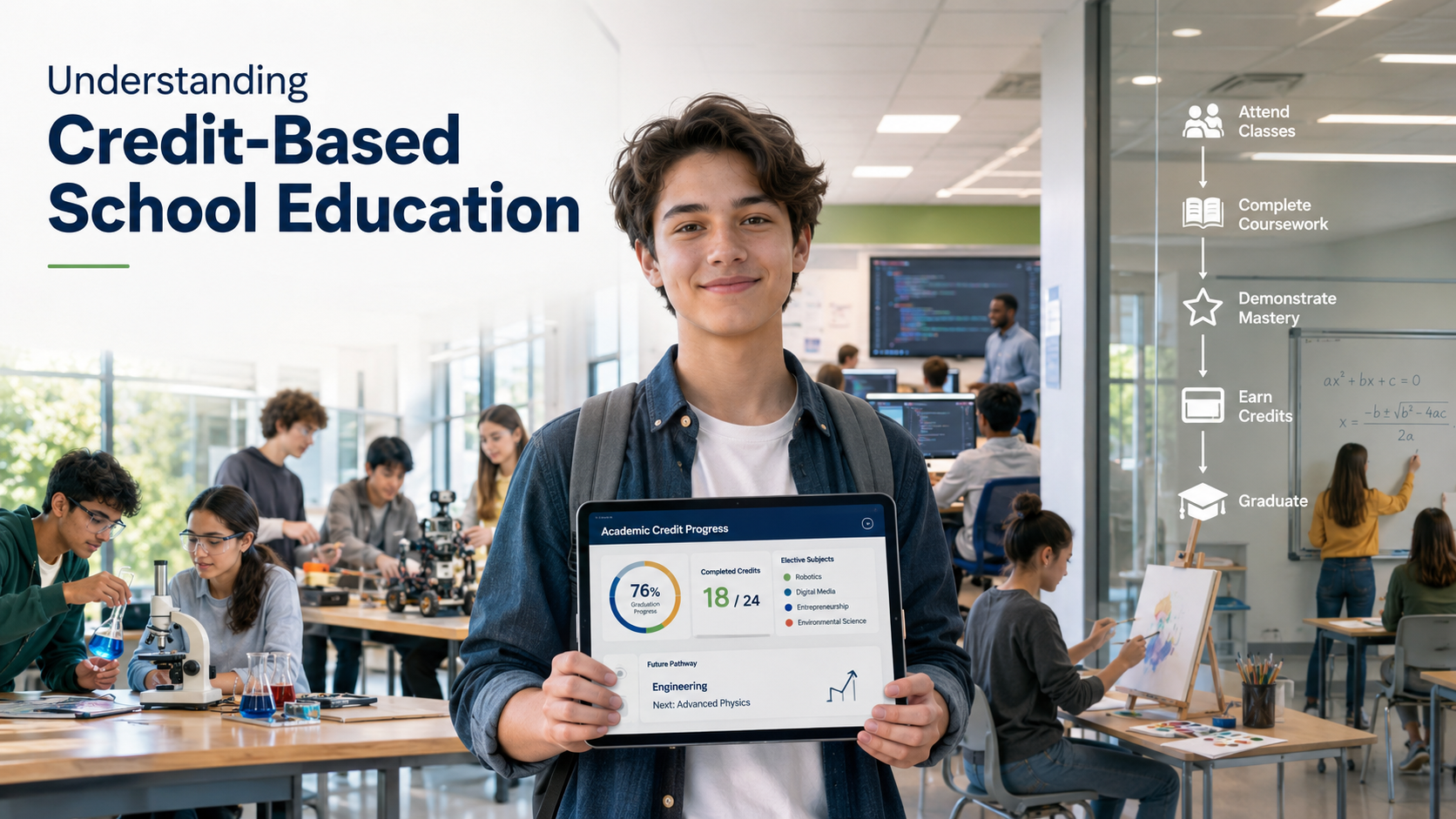
Understanding Credit-Based School Education Guide
Traditional schooling has long relied on a fixed, one-size-fits-all timeline that often prioritizes classroom time over actual student understanding. However, global shifts toward personalized learning have made understanding credit-based school education essential for modern families. According to the U.S. Department of Education, flexible pathways help prepare students for a rapidly changing workforce by focusing on measurable outcomes. This structural shift moves classrooms away from traditional seat time toward a system that rewards actual mastery, allowing students to progress as they grasp the material.
For decades, students moved up to the next grade level based purely on their age and the calendar year. If a student struggled with fundamental concepts in a subject like math, the class moved on anyway, leaving them behind. Similarly, advanced learners often found themselves waiting for peers to catch up, leading to boredom and disengagement. A credit-based structure directly addresses these pain points by offering an alternative roadmap that prioritizes individual capability over age-based grouping.
This comprehensive guide explores how a credit framework operates in modern primary and secondary schools. We will break down the structural differences between academic credits and traditional grading systems. Additionally, this article outlines the core benefits for students and examines their real-world impact on graduation requirements. If you’re interested in improving your learning experience, you can also explore our guide to the best educational apps for students, which highlights digital tools that support academic success. By the end, you will understand how this model fosters deeper student engagement and prepares learners for future academic success.
What is Credit-Based School Education?
A credit-based school education is an innovative academic framework where students earn quantified units of recognition, known as credits, for successfully completing specific courses. Instead of advancing automatically by age group or grade level, progress depends on accumulating these credits over time. Each course carries a specific credit value based on the depth of the material, classroom hours, and the estimated independent study required. This system directly shifts the focus from time spent in a chair to actual academic achievement and subject competency.
This system closely mirrors the structure used by universities worldwide, making it an excellent bridge for secondary students. To graduate, high schools establish a required total number of credits across both core subjects and elective pathways. Core areas typically include mathematics, science, language arts, and social studies, ensuring a well-rounded foundation. Electives allow students to explore specialized interests like computer science, graphic design, or foreign languages, tailoring their graduation pathway to their future career goals.
How the Credit Accumulation System Works
The mechanics of this system rely heavily on clear academic benchmarks and structured progression paths. School boards determine the weight of each class prior to the academic year based on instructional hours. Generally, a full-year course translates to one credit, while a semester-long class equals half a credit. Students must actively meet specific performance metrics to secure their credits at the end of the term. Attendance, coursework, independent projects, and examinations all contribute to the final evaluation process.
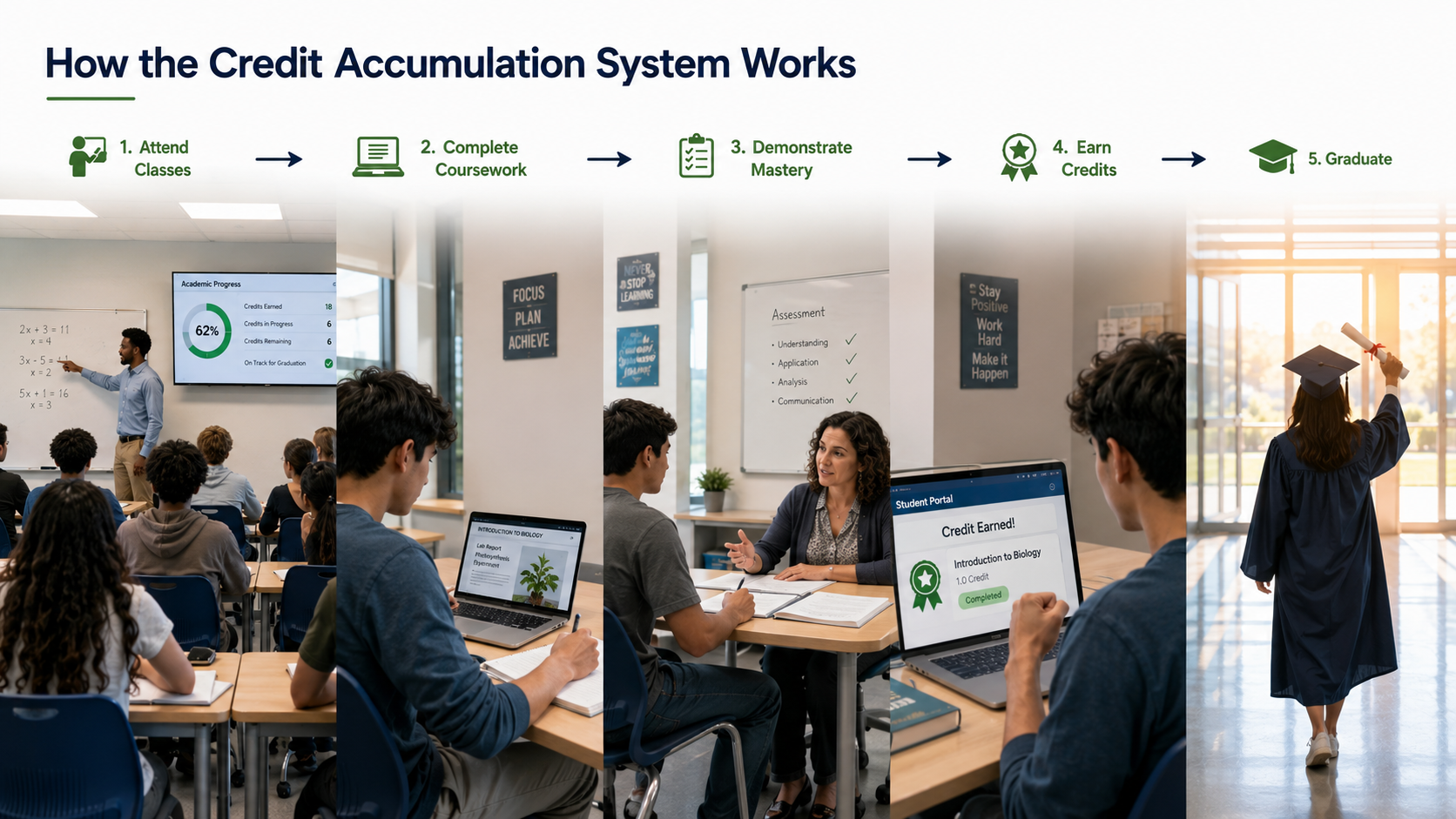

If a student fails to meet the minimum standards, they do not earn the designated credit. Consequently, they must retake that specific module rather than repeating the entire academic year with all its subjects. This targeted approach prevents students from wasting time on concepts they have already mastered, keeping them motivated to finish. The clear visual layout of a credit checklist allows students to see exactly how close they are to graduation at any given moment.
The Role of Choice and Electives
One major advantage of this structure is the vast freedom of choice it provides to young learners. While core requirements remain mandatory to ensure baseline literacy and numeracy, students select from a diverse menu of electives to fulfill their remaining credit quotas. This flexibility encourages learners to take true ownership of their academic journeys early on. By choosing classes that align with their passions, students become more engaged in the school community.
-
Career Exploration: Students can test out potential career paths through targeted elective classes like journalism or business management.
-
Skill Development: Practical courses like personal finance, public speaking, or digital media build vital real-world capabilities.
-
Interdisciplinary Learning: Learners can easily connect different subjects, combining arts with technology through creative courses.
Benefits of Navigating Academic Credits in Modern Schools
Shifting to a credit-based model offers immense value for diverse student populations with varying learning needs. Traditional grading systems often penalize slow starters permanently, whereas credit models focus entirely on the final learning outcomes. This structural change alters how students view their own academic potential, fostering a growth mindset across all grade levels. It removes the competitive pressure of keeping up with peers and focuses attention on personal progress.
Personalized Learning Pacing
Every child learns at a different speed, and a credit framework accommodates these natural variations seamlessly. Gifted students can accelerate their studies, taking advanced placement courses to earn graduation credits early and avoid boredom. Conversely, students who need extra time can focus intensely on troublesome subjects without the social stigma of failing an entire grade. This flexible pacing reduces burnout and ensures that foundational concepts are truly understood before advanced topics are introduced.
Smoother Transitions to Higher Education
Colleges and universities have utilized credit hours for over a century to measure academic progress. High schoolers who manage their own credit schedules adjust to university life much faster than those from rigid systems. They already understand concepts like prerequisites, credit loads, and the delicate balance between lectures and independent study time. This familiarity reduces freshman anxiety and leads to higher retention rates during the critical first year of college.
Increased Student Accountability
When graduation requirements are expressed as a clear target number, students become highly motivated to track their progress. They actively monitor their own transcripts and choose their workloads based on their personal capacities. This transparency shifts the psychological dynamic from pleasing a teacher to actively achieving a measurable milestone. Students learn time management, long-term planning, and accountability, which are crucial soft skills required in the modern professional workforce.
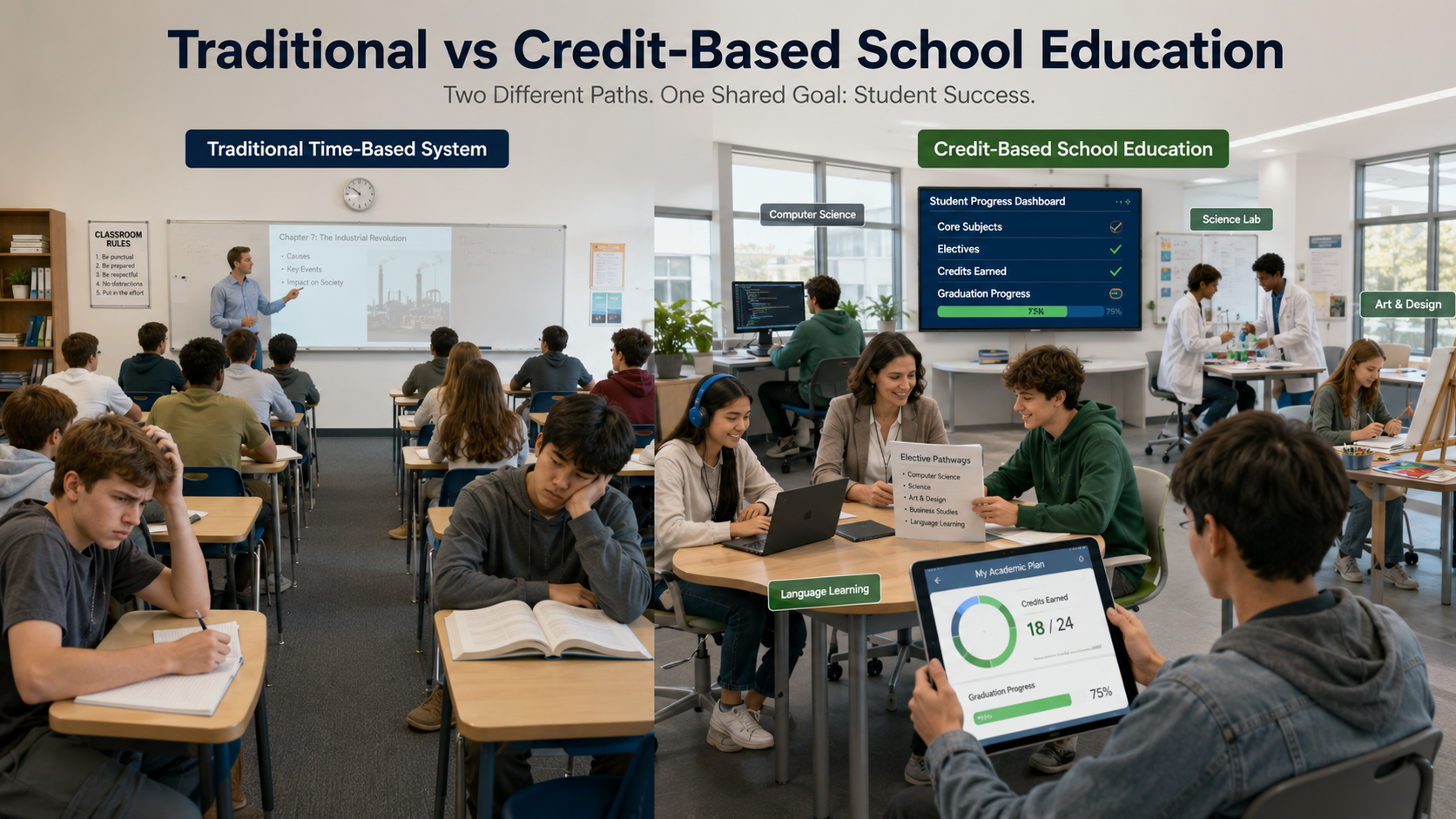
| Feature | Traditional Time-Based System | Credit-Based Framework |
| Advancement Basis | Age and calendar year | Accumulated course credits |
| Pacing | Fixed for the entire classroom | Flexible based on student capability |
| Course Variety | Standardized, rigid curriculum | Rich blend of core classes and electives |
| Failure Outcome | Repeating the entire grade level | Retaking only the failed credit module |
Addressing the Challenges of Implementation
Transitioning a school district to a credit-based model is not without administrative and logistical hurdles. Complexity increases significantly for school schedulers when every single student follows a customized pathway. Software systems must be updated to track individual student progress accurately without errors. Additionally, classrooms must accommodate shifting student numbers, as enrollment in specific modules varies from semester to semester based on student choices.
Moreover, school guidance counselors require specialized training to guide students through their choices effectively. Without proper mentorship, learners might choose paths that are too easy or fail to satisfy competitive university entrance requirements. Therefore, robust advisory programs are absolutely crucial for systemic success within a district. Schools must also educate parents about how to read credit-based transcripts so they can properly support their children at home.
FAQ SECTION
What is the main difference between credit-based education and traditional schooling?
The primary structural divide between a credit-based framework and traditional schooling boils down to how progression is measured: mastery versus time. In a conventional educational setup, schools rely heavily on the concept of “seat time.” Students are grouped strictly by age and move through a standardized curriculum together. At the end of a calendar year, the entire cohort advances to the next grade level regardless of individual variations in understanding. This can leave struggling students with critical learning gaps while leaving advanced learners under-stimulated and bored.
Conversely, a credit-based system abandons age-based synchronization in favor of individual achievement. To graduate, students must successfully complete and earn a predetermined number of academic units (credits). Advancement is tied directly to demonstrating competence in each specific subject. If a student struggles with a particular class, such as Algebra, they do not fail the entire grade or repeat subjects they have already mastered. Instead, they simply retake that specific course module while continuing to advance in their other successful subject tracks.
How do schools determine how many credits a course is worth?
School administrators, state educational boards, and regional accreditation bodies calculate credit values using structured metrics that balance classroom instruction with curriculum depth. They often base this evaluation on the Carnegie Unit, a historical system that measures instructional time. Typically, schools award one full academic credit to a rigorous, comprehensive course that spans an entire academic year and provides approximately 120 to 180 hours of direct classroom instruction.
For shorter, more compact subjects that run for only one semester, schools generally award half a credit ($0.5$). However, schools may adjust these calculations for highly intensive subjects. Advanced laboratory sciences, specialized career and technical education (CTE) tracks, and dual-enrollment college courses often carry higher credit values because they require additional lab hours, practical workshops, or more extensive independent study outside the classroom. Before registration, schools clearly outline these credit values, prerequisites, and course expectations in the official course catalog.
Can students graduate early under a credit-based system?
Yes, early graduation is one of the most prominent benefits of this highly flexible approach to secondary education. Because the ultimate requirement for graduation is reaching a specific numerical target of credits rather than hitting a certain age or completing four fixed years of attendance, motivated students can strategically accelerate their learning timelines. Students looking to fast-track their education can take advantage of multiple pathways, such as enrolling in accredited summer school sessions, taking virtual or online courses outside regular school hours, or overloading their semesters with additional elective classes.
However, successfully pulling off early graduation requires deliberate, long-term planning alongside a guidance counselor. Even if a student accumulates the total required credit count quickly, they must still fulfill specific distribution requirements. For instance, they cannot substitute extra art electives for a mandatory senior-year English credit. Additionally, many states impose minimum attendance guidelines or specific standardized exit exams that must be carefully scheduled. When executed properly, this acceleration allows mature students to enter the workforce or start their university careers ahead of their peers.
What happens if a student fails to earn a specific credit?
When a student fails to meet a course’s passing requirements, the school does not award credit for that class toward graduation. However, schools do not automatically hold students back an entire academic year because of a single failed course. Instead, they limit the setback to that specific subject. Students keep the credits they have already earned in their other classes, which helps maintain their academic progress and confidence.
To recover the missing credit, students must address the deficiency through one of several approved options. Most school districts provide credit recovery programs, including summer school, online learning courses, or self-paced digital modules that focus on the concepts students need to master. Students may also retake the course during a future semester. This flexible approach encourages students to close their learning gaps while staying on track to meet graduation requirements without significant delays.
Is credit-based school education widely accepted by top universities?
Without a doubt, credit-based school education is the universally recognized gold standard for university admissions offices around the world. Because higher education institutions operate entirely on credit-hour systems themselves, university registrars and admissions committees find credit-based high school transcripts incredibly easy to interpret and evaluate. These documents provide a highly transparent, standardized, and granular view of a student’s true academic journey over their secondary school career.
Rather than looking at a generic grade point average from a rigid curriculum, university admissions officers can look at a credit transcript to analyze the exact level of academic rigor a student chose to pursue. It highlights whether a student challenged themselves with advanced placement credits, explored specialized technical pathways, or maintained a balanced workload across core disciplines. This clarity allows competitive universities to accurately assess an applicant’s workload capacity, intellectual curiosity, and overall readiness for the demanding, self-directed environment of higher education.
CONCLUSION
Embracing credit-based school education represents a massive leap forward for modern academic systems seeking to improve student outcomes. By focusing on credit accumulation rather than rigid age groupings, schools create a more human-centered and equitable learning environment. This flexible framework respects individual learning speeds, reduces academic anxiety, and gives students real agency over their intellectual growth. It transforms the educational journey from a passive experience into an active pursuit of knowledge.
Throughout this guide, we have analyzed how this system operates, from the mechanics of credit values to the strategic use of electives. While implementing these changes requires careful administrative planning and robust counseling support, the long-term rewards for students are undeniable. Learners emerge from these progressive programs more independent, highly accountable, and better prepared for the fluid dynamics of adult life.
Ultimately, shifting away from outdated time-based models allows secondary education to mirror the actual demands of the modern world. Success in contemporary careers depends entirely on competence, adaptability, and mastery, not just showing up for a set number of hours. Implementing a structured, flexible credit framework sets the stage for lifelong learning and continuous personal development. Parents, educators, and policy makers should continue advocating for these frameworks to unlock the full potential of every student.