
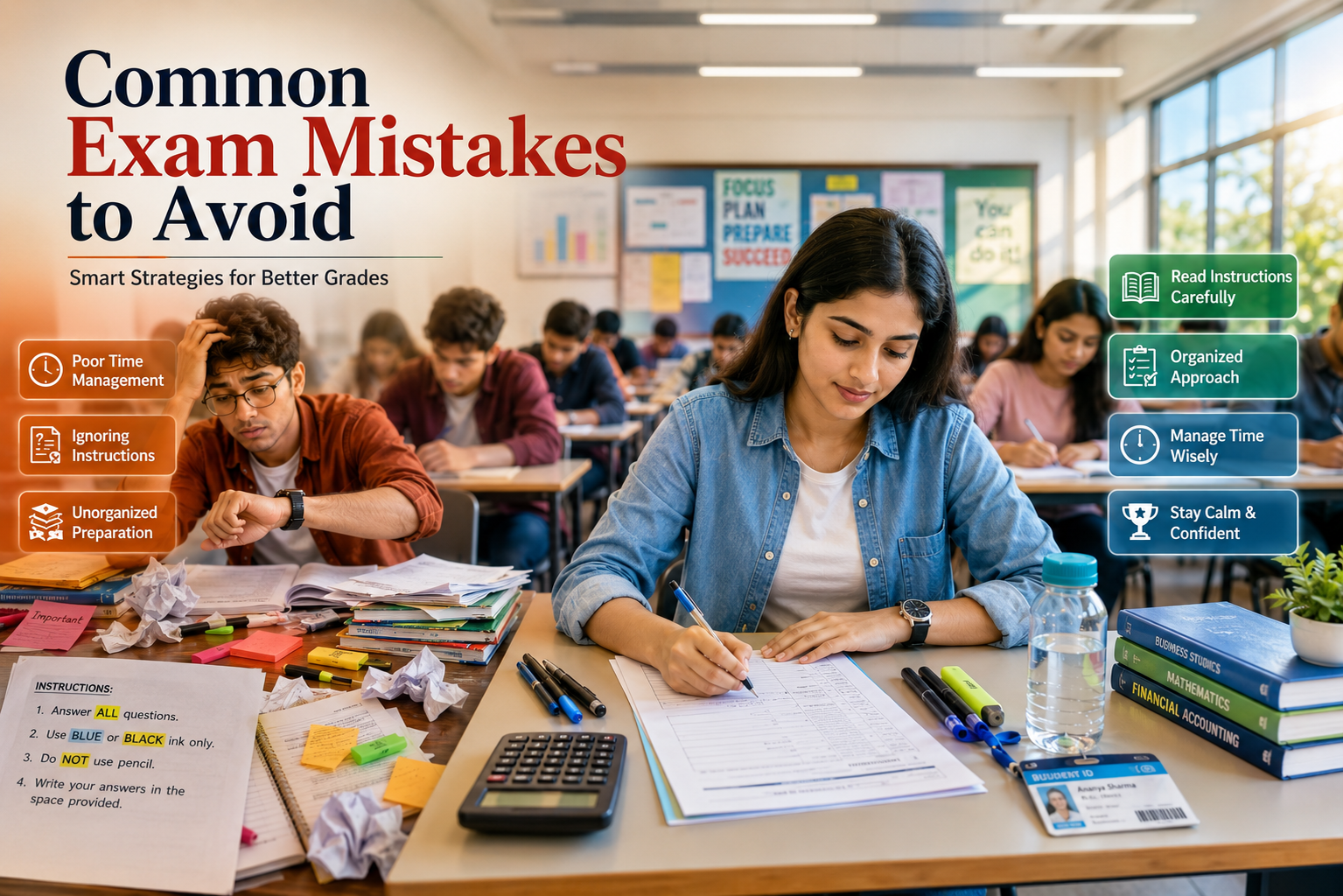
How to Identify and Fix Common Exam Mistakes for Better Grades
Exam season brings an immense amount of pressure, and often, the difference between an A and a B comes down to strategy rather than raw intelligence. Many students study diligently for weeks, only to watch their hard work slip away on test day due to easily preventable slip-ups. Recognizing common exam mistakes early in your preparation can completely transform your academic performance and reduce test anxiety. According to data tracking global student assessments from the OECD iLibrary, refined test-taking strategies and anxiety management consistently correlate with higher academic marks. By pivoting away from stressful cramming and leaning into structured execution, you can unlock your true academic potential.
This comprehensive guide will break down the psychological and technical reasons behind exam errors. We will explore the critical missteps students make before, during, and after an exam, giving you actionable strategies to correct them.

The Hidden Impact of Common Exam Mistakes
When we talk about test errors, we are not just talking about forgetting a formula or misspellings. Errors generally fall into two distinct categories: knowledge gaps and execution failures. Execution failures are particularly frustrating because you actually know the material, yet you fail to demonstrate that knowledge on paper. Overestimating your preparation, mismanaging your clock, and letting panic dictate your pace are quiet GPA killers. Understanding these pitfalls allows you to build a protective shield around your hard-earned knowledge.
When you make these errors repeatedly, it erodes your academic confidence and makes future test cycles feel much more daunting than they actually are. Addressing these execution gaps requires a deliberate focus on how you handle pressure. It also demands a willingness to analyze your personal testing habits objectively so you can make meaningful changes.
Pre-Exam Pitfalls: Missteps Before the Test Even Starts
Excellent exam performance begins long before the test booklet opens. Sadly, many students sabotage their success in the days and hours leading up to the assessment. This section highlights how poor planning can ruin your performance before you even read the first question.
The Myth of the All-Night Cram Session
One of the most pervasive habits among students is staying up all night to study. While it feels productive to force information into your brain at 3:00 AM, sleep deprivation severely impairs your working memory and cognitive flexibility. Without adequate sleep, your brain struggles to retrieve information, leaving you prone to simple errors on complex questions. Furthermore, sleep deprivation prevents your brain from converting short-term study data into stable long-term memories.
When you choose sleep over cramming, you allow your brain to process the concepts you have already reviewed. This mental clarity enables you to reason through difficult or unfamiliar problems with greater accuracy. A well-rested mind will always outperform an exhausted mind that is stuffed with unorganized facts.
Arriving Untethered and Unprepared
Showing up to the exam room late, rushing through the door, or forgetting essential tools spikes your cortisol levels. Starting a test in a state of panic immediately hinders your critical thinking abilities. When your body enters a fight-or-flight state, the prefrontal cortex shuts down, making logical reasoning incredibly difficult.
To prevent this emotional chaos, create a packing checklist the night before your test. Gather your calculators, writing utensils, student identification, and approved reference sheets ahead of time. Arrive at the testing venue at least fifteen minutes early so you can sit quietly, regulate your breathing, and establish a focused frame of mind before the exam begins.
Critical Blunders Made During the Examination
Once the clock starts ticking, execution is everything. Let us look at the tactical errors that cost students the most marks during the live exam and how to avoid them.
Misreading the Explicit Prompts and Instructions
This is arguably the most heartbreaking error in academics. A question might ask you to “compare and contrast,” but you only list the similarities. It might ask you to select two correct options, but you only pick one. These small details can drastically alter the trajectory of your final grade.
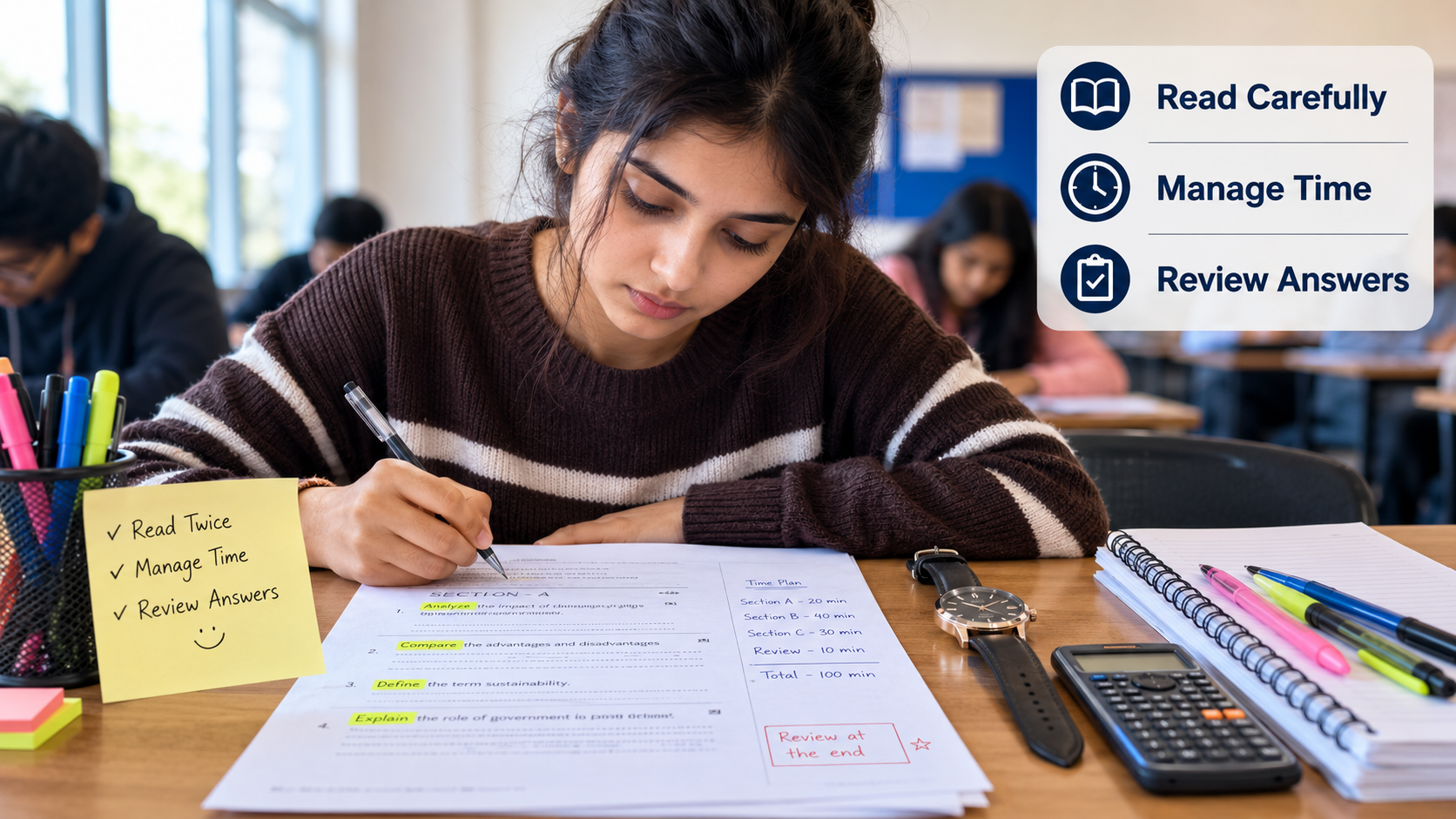
To fix this, practice active reading during the test. Always read the question twice before making your selection or writing your answer. Underline directional verbs like analyze, evaluate, define, or list to ensure your answer matches the prompt exactly. Taking an extra ten seconds to verify what the question is truly asking saves you from wasting time on an incorrect, off-topic response.
Poor Allocation of Limited Time
Spending twenty minutes on a difficult multiple-choice question worth one mark is a recipe for disaster. Consequently, you run out of time for the high-value essay questions at the end of the paper. This structural imbalance happens because students let their stubbornness override their testing strategy. They feel compelled to solve a hard problem immediately rather than prioritizing easy wins.
To overcome this, use a strict pacing system. Scan the test early on and divide your total testing time by the number of sections, allocating more minutes to high-value questions. If you get stuck on a difficult question, flag it, move forward, and return to it at the end of the exam if time permits.
| Mistake | Correction Strategy |
|---|---|
| Spending too long on a single hard question | Skip it, flag it, and return to it at the end. |
| Rushing through easy questions at the start | Read every option before making your selection. |
Leaving Blanks on Non-Penalized Tests
Unless an exam explicitly states that it deducts points for incorrect answers, leaving a question completely blank is an automatic zero. Many students leave questions blank because they fear being wrong, but this habit guarantees a loss of marks. Even an educated guess gives you a statistical chance of earning points, especially on multiple-choice formats.
When you encounter an unfamiliar prompt, eliminate the options you know are completely impossible. This simple reduction dramatically increases your odds of selecting the correct answer from the remaining choices. Never surrender potential points when there is no penalty for trying your best to solve the problem.
Post-Test Habits That Hold You Back
Your job isn’t finished when you hand in your test paper. True academic growth requires analyzing your performance to ensure you do not repeat history on future assessments.
Failing to Review Graded Test Papers
Many students receive their graded papers, look at the final score, and immediately shove the document into the bottom of their backpack. If you do not analyze exactly where and why you lost points, you are highly likely to make the exact same mistakes on your final exams. Treat every returned test as a personalized diagnostic roadmap rather than a source of shame or disappointment.
Take the time to categorize your errors into conceptual misunderstandings or simple reading mistakes. If you notice a pattern of missing details, you know you need to slow down your reading speed. Engaging with your graded papers transforms setbacks into valuable learning opportunities that accelerate your long-term academic progress.
FAQ SECTION
What are the most common exam mistakes students make?
The most common exam mistakes include misreading question instructions, managing time poorly, and failing to review answers before handing in the paper. These common exam mistakes often cost students marks even when they understand the material. Another of the common exam mistakes is staying up all night to cram, which reduces concentration and working memory during the exam.
To avoid these common exam mistakes, practice active reading and complete timed practice exams at home. Working under realistic conditions builds the confidence and stamina needed to perform well on test day. One of the common exam mistakes is forgetting to check word limits or answer every part of a multi-part question. A simple review at the end of the exam helps you catch these common exam mistakes before you submit your paper.
How can I stop making careless errors on math tests?
Careless math errors often happen when you skip steps, solve equations in your head, or write numbers messily under time pressure. Write every step of your calculations clearly on the page. Keep your columns aligned and your handwriting neat. This makes it easier to avoid mistaking a 4 for a 9. Save the last five minutes of the test to check your work and verify your calculations.
Check your answers with a different method whenever possible. You can also substitute your final answer back into the original equation. This is an effective way to catch hidden arithmetic mistakes. If you often misread signs, circle operators as you solve each problem. This helps you notice important changes in long formulas.
Is it better to change your first answer on a multiple-choice question?
Research shows that you should change your answer if you have a clear, logical reason. The idea that your first instinct is always correct is a common myth. It can cause students to keep incorrect answers out of fear. Only change an answer if you notice a missed detail or remember a specific fact.
Do not change answers because of panic or anxiety alone. Second-guessing without evidence often creates new mistakes. Trust your preparation, but correct genuine errors during your final review. Sometimes later questions provide clues that help you solve earlier ones.
How do I manage my time effectively during a major exam?
Before you begin, scan the entire exam. Identify the sections and their mark values. Divide your time according to the weight of each section. For example, an essay worth 50% of the marks should receive about half of your available time. Use a wristwatch to monitor your progress.
If you fall behind, increase your pace. Focus on earning as many marks as possible instead of making one answer perfect. Do not spend too much time on a difficult, low-value question. That time may be better spent answering several easier questions.
What should I do if my mind goes completely blank during a test?
If your mind goes blank, close your eyes and take three slow, deep breaths. Then move to an easier question. Solving a simpler problem builds momentum and may help you remember the answer later.
Stress can reduce your working memory. Lowering your anxiety often helps information return more easily. You can also write key formulas or keywords in the margin. This clears mental clutter and helps you think through the problem step by step.
CONCLUSION
Mastering the art of test-taking goes far beyond memorizing facts and figures; it requires precise tactical execution and emotional control. By actively identifying common exam mistakes—such as poor time allocation, failing to read prompts carefully, and neglecting to review your returned work—you turn testing from a game of chance into a predictable science. True academic growth happens when you treat exams as skills to be refined rather than terrifying judgments of your innate intelligence. Every test you take provides valuable data on how you handle information under pressure, allowing you to iterate and improve your strategy over time.
As you prepare for your next testing cycle, focus on your exam strategy as much as your subject knowledge. Arrive well-rested, read every question carefully, manage your time wisely, and learn from your previous mistakes. For additional preparation techniques, explore our guide on last-minute revision tips. A calm, well-planned approach can help you avoid unnecessary errors and perform to the best of your ability.