

The Future of Board Exams in India: What Changes?
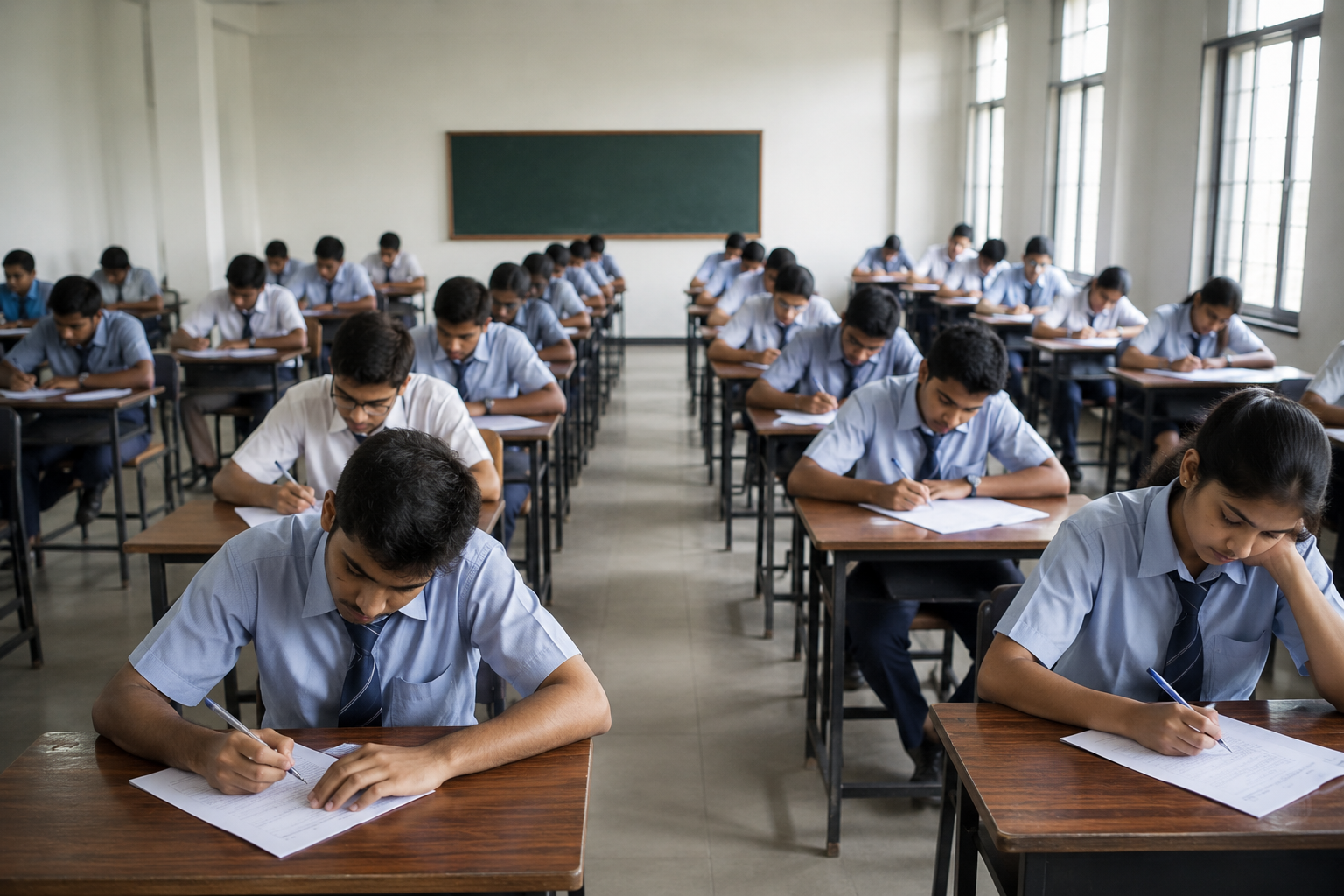

The education landscape is undergoing a massive transformation, making the future of board exams in India a central topic of discussion among students, parents, and educators alike. For decades, the traditional rote-learning model dominated Indian schools, culminating in high-stakes, high-stress final assessments. However, the implementation of the National Education Policy (NEP) by the Ministry of Education is fundamentally shifting this paradigm. This policy intervention aims to replace intense memorization with a structural focus on conceptual clarity and critical thinking. Consequently, the annual ritual of high-pressure examinations is evolving into a more flexible, student-centric assessment framework.
This transformation matters because it redefines how student merit is assessed and aligned with global standards. In this article, we will delve into the major structural changes ahead, including the introduction of biannual assessments and modular formatting. We will also explore the introduction of PARAKH, the new national assessment center designed to set uniform evaluation standards across all state and central boards. Finally, we will look at how these adjustments aim to reduce academic anxiety, eliminate public comparison, and better prepare Indian students for a skill-driven global economy where practical knowledge outvalues temporary memorization.
HOW THE EVALUATION SYSTEM IS EVOLVING
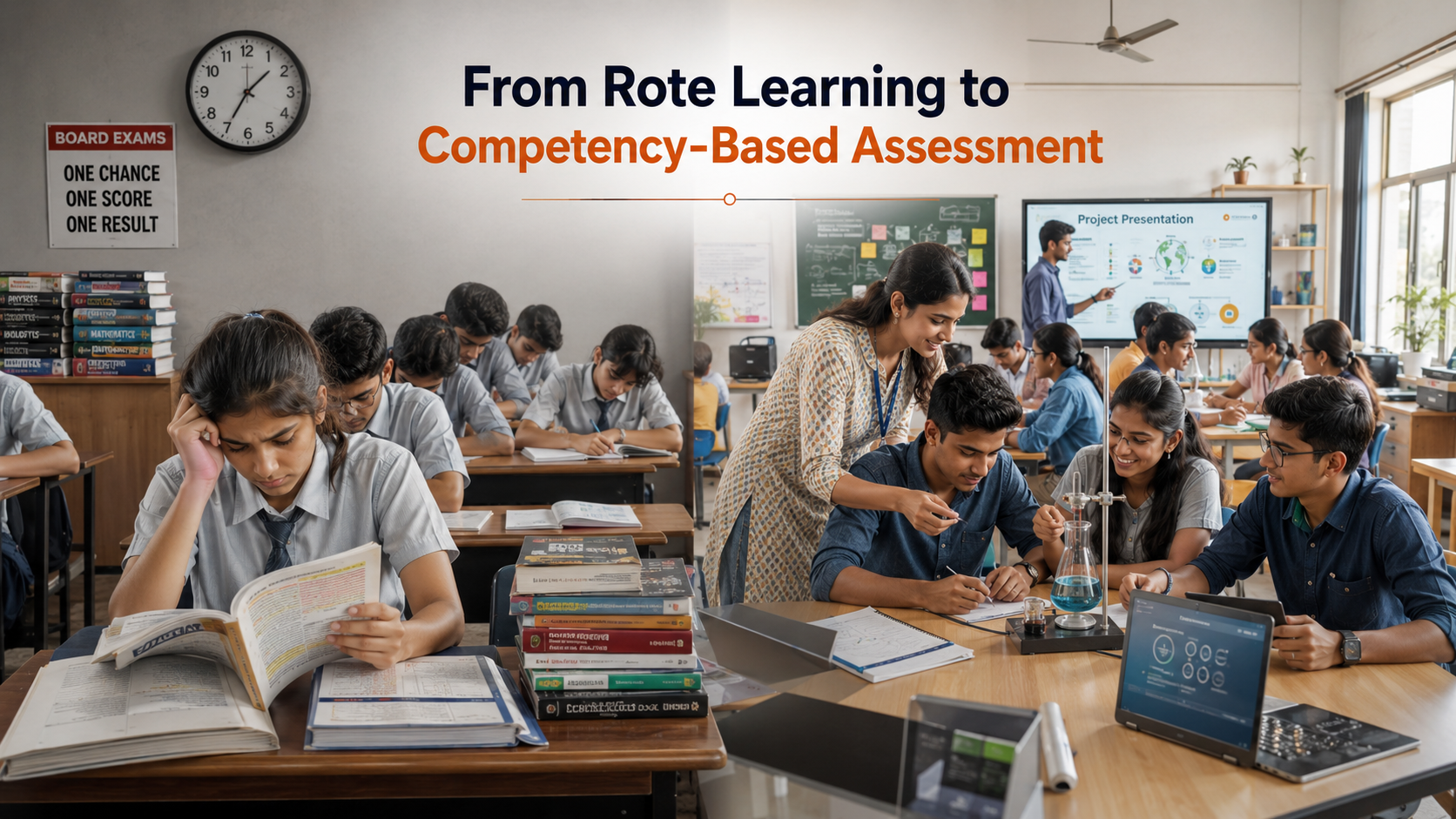

The traditional examination structure often evaluated a student’s memory rather than actual comprehension. To rectify this, the structural framework is moving toward a continuous evaluation model. Instead of relying on a single three-hour exam at the end of the academic year, the system will assess competencies developed over time. This approach minimizes the psychological burden on students. It turns assessment into a tool for learning improvement rather than just a mechanism for elimination.
The revised question patterns focus heavily on application-based and competency-based learning. Students will encounter more case studies, critical reasoning queries, and analytical problems. This change discourages the habit of cramming textbooks a month before the finals. Internal assessments, practical projects, and regular class presentations will hold greater weight. This ensures that a student’s performance throughout the year reflects in their final grade, balancing out a single bad day during exam season. Ultimately, this structural evolution ensures that steady effort throughout the year is rewarded, making the final evaluation a fair reflection of true capability.
MULTIPLE EXAM OPPORTUNITIES AND THE SEMESTER SYSTEM
One of the most anticipated updates regarding the future of board exams in India is the option to take board exams twice a year. This biannual system allows students to appear for their exams when they feel adequately prepared. Moreover, it offers a valuable safety net. If a student underperforms in the first window, they can retain their best score and try again in the next cycle, effectively eliminating the fear of losing an entire academic year due to temporary illness or stress.
The long-term vision includes breaking down subjects into modular segments. Students can complete a module, take the relevant exam, and move on to the next level. This modularity reduces the massive syllabus load that traditionally characterized Class 10 and Class 12 exams. By spacing out the testing process, students can dive deeper into topics without feeling overwhelmed by an unmanageable amount of study material. This shift creates a balanced learning environment that aligns closely with international schooling standards, boosting confidence and overall performance.
THE INFLUENCE OF NEP 2020 ON SCHOOL FINALS
To ensure fairness across different regional and national boards, the government established PARAKH (Performance Assessment, Review, and Analysis of Knowledge for Holistic Development). This body acts as a benchmarking institution. It sets uniform standards for student assessment across CBSE, ICSE, and various state boards. In the past, massive disparities existed between different regional evaluations, putting certain students at a disadvantage during university admissions. PARAKH systematically eliminates this imbalance.
PARAKH Core Pillars
1. Standard Setting
Establishing uniform norms across all Indian boards.
2. Skill Assessment
Shifting focus from memory-based learning to 21st-century skills.
3. Holistic Progress
Encouraging self, peer, and teacher-led evaluations.
Furthermore, the division between Science, Commerce, and Arts is blurring. A student opting for Physics can now simultaneously choose History or Fashion Studies. Consequently, board exams must adapt to evaluate these diverse, personalized subject combinations seamlessly. This multi-disciplinary approach breaks down ancient educational silos, letting students construct custom academic paths that truly match their career interests and personal talents.
WHAT THESE CHANGES MEAN FOR STUDENTS AND TEACHERS
This structural shift requires a parallel evolution in teaching methodologies. Educators can no longer rely on dictating notes from older textbooks. Instead, they must design interactive lessons that stimulate classroom discussions and practical experimentation. This means professional development for teachers will become a continuous necessity, altering the daily workflow within schools nationwide. Classroom environments must transform from passive spaces into highly interactive workshops.
-
For Students: The focus shifts from memorizing answers to understanding the underlying “why” and “how” of concepts, forcing them to engage with subjects genuinely.
-
For Teachers: Pedagogy must integrate digital tools, project-based assignments, and personalized feedback cycles rather than relying on uniform lectures.
-
For Parents: The expectation of perfect 100% scores based on memorization must give way to supporting a child’s unique skill development and emotional resilience.
Ultimately, these reforms aim to foster a healthier mental ecosystem, making learning an enjoyable journey rather than a stressful race. It demands patience and adaptability from all stakeholders involved.
FAQ SECTION
What is the major change in the future of board exams in India?
The major change involves shifting from a high-stakes, once-a-year examination model to a flexible, biannual system. Guided by the National Education Policy, exams will focus heavily on competency-based testing rather than memorization. This means questions will evaluate a student’s analytical skills, logical reasoning, and real-world application of concepts. Additionally, the system will integrate regular internal evaluations, reducing the singular pressure of the final written test. This comprehensive shift ensures that the assessment reflects a student’s true understanding throughout the year rather than their performance on one specific day.
Will students have to appear for board exams twice a year?
No, appearing twice is not mandatory. The biannual system offers students the choice to take exams twice a year to improve their scores. If a student is satisfied with their performance in the first attempt, they do not need to sit for the second window. This setup acts as a safety net to lower stress and prevent the loss of a full academic year due to unforeseen circumstances or illness during a single exam window. It empowers students by putting control back into their hands, allowing them to choose when they feel best prepared to excel.
What is PARAKH and how does it impact Indian board exams?
PARAKH is a national assessment center established under the NEP guidelines. Its main purpose is to set uniform evaluation standards and norms across all recognized school boards in India, including central and state boards. Currently, different boards have varying difficulty levels and grading systems. PARAKH aims to remove these discrepancies, ensuring that student assessments are fair, transparent, and universally comparable across the country. This uniform benchmarking creates a level playing field for college admissions, ensuring that no student is disadvantaged simply due to the grading patterns of their specific regional school board.
How should students prepare for competency-based board exams?
Students should shift their focus from rote memorization to deep conceptual understanding. To prepare effectively, they should solve case studies, practice application-based problems, and engage deeply in laboratory work or school projects. Understanding core principles in subjects like mathematics and science becomes vital, as questions will test how well a student can apply formulas to unfamiliar, real-world situations rather than just asking for textbook definitions. Group discussions, analytical reading, and utilizing interactive digital learning tools can also help adapt to this modern testing format, making standard guidebooks obsolete.
Will Class 10 board exams be permanently canceled?
No, Class 10 board exams are not being permanently canceled. Instead, they are being restructured to cause less stress. The focus is turning toward tracking progress over time rather than treating the Class 10 exam as a definitive filter. The future system aims to make these assessments low-stakes, using them primarily to guide students toward choosing appropriate subject combinations in senior secondary school. They will serve as a diagnostic milestone to identify strengths and weaknesses rather than a rigid screening process that determines a student’s entire future academic direction.
CONCLUSION
The future of board exams in India marks a long-overdue shift from a memory-focused system to a more holistic approach. Reforms include biannual exams, competency-based questions, and standardized grading through PARAKH. Together, these changes aim to reduce exam pressure and move away from a culture of rote learning. They also ensure that assessments measure learning and skill development instead of acting mainly as elimination tools.
The transition will take time. Teachers across diverse schools will need training and support to adapt to the new system. However, the long-term outlook is promising. Students will have more opportunities to learn with curiosity and build practical skills for a competitive world. These skills will also help them explore diverse career paths, including the many job opportunities after engineering available in today’s evolving employment market. The message is simple: success will depend on critical thinking, problem-solving, and creativity rather than memorization. Embracing these reforms can prepare the next generation to face real-world challenges with confidence and innovation.