
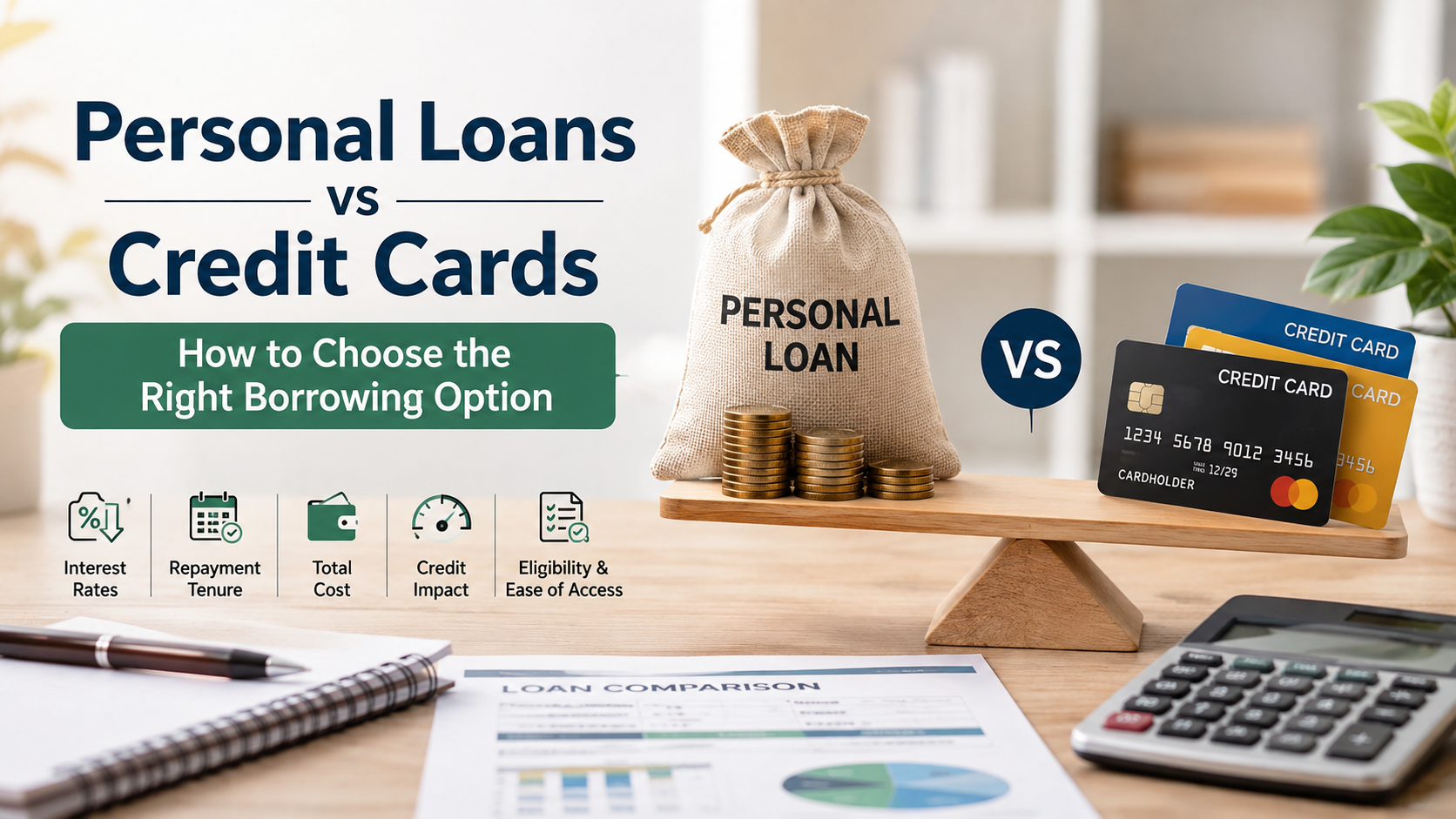
Personal Loans vs Credit Cards: How to Choose the Right Borrowing Option
Choosing between personal loans vs credit cards often comes down to your immediate cash requirements and your repayment discipline. According to consumer guidelines from the Consumer Financial Protection Bureau, understanding the true cost of credit helps borrowers avoid long-term debt traps. Both products provide access to borrowed funds, but they function differently in practice.
A personal loan offers a lump sum of money with a fixed repayment period and predictable monthly installments. In contrast, a credit card provides a revolving line of credit that you can draw from repeatedly. Using the wrong financing tool can lead to excessive interest charges or damaged credit scores.
This guide breaks down everything you need to know about these two common borrowing options. We answer essential questions about whether credit card loans beat installment loans, which option builds your credit profile faster, the hidden disadvantages of personal borrowing, and which product is simpler to obtain. You will also discover whether credit card EMIs or standard personal loans offer better value for your wallet.
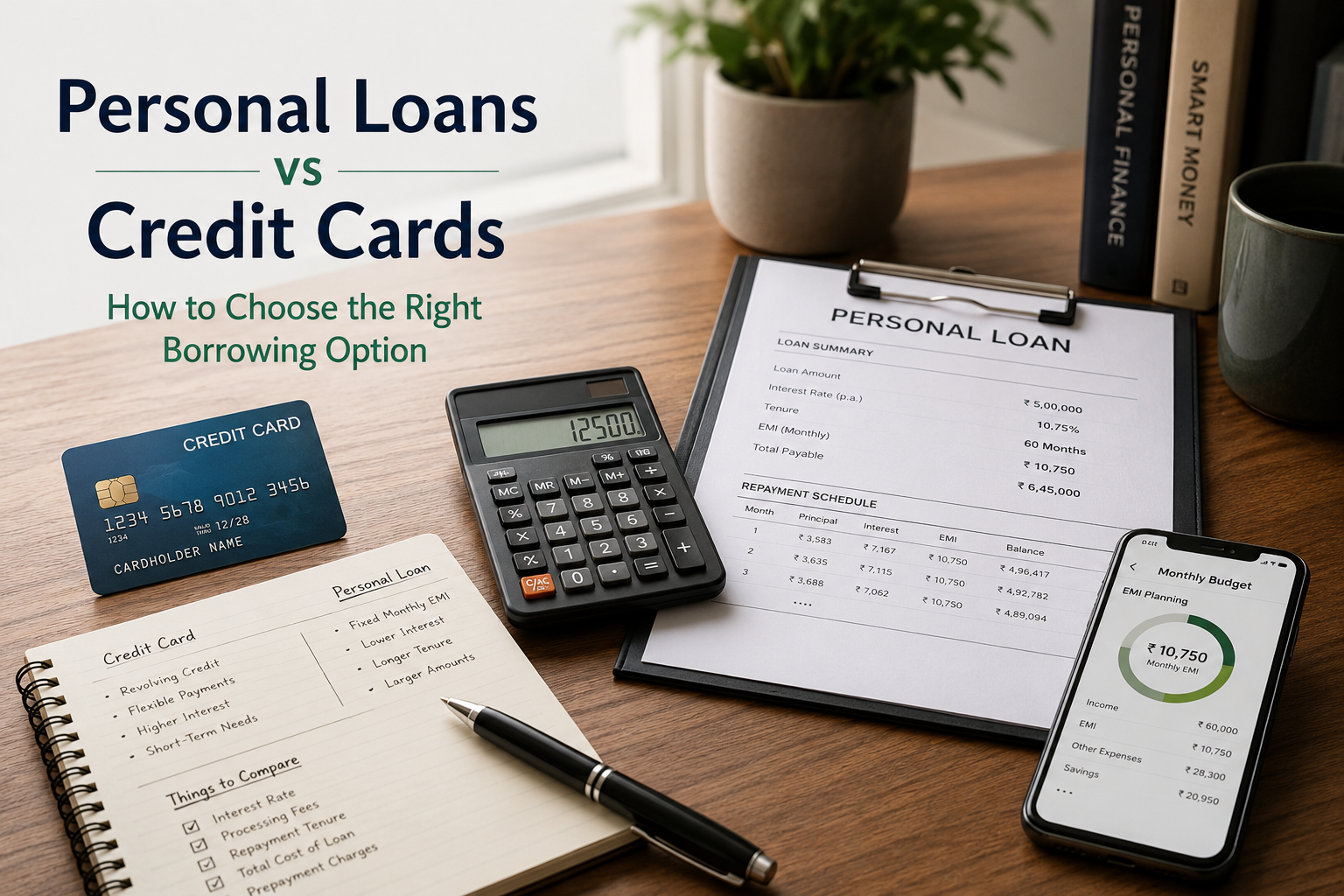

Is a credit card loan better than a personal loan?
A credit card loan is not automatically better than a personal loan. The better option depends on the amount borrowed, repayment period, and total borrowing cost. Credit card borrowing can be convenient when you need funds quickly for a smaller expense. Some cards also offer pre-approved borrowing or instant access to funds.
However, convenience can come with higher interest costs. A personal loan may be more suitable when you need a larger amount or several months or years to repay it. Personal loans commonly offer fixed interest rates and predictable monthly payments, depending on the lender and product.
Consider a credit card when you can repay the balance quickly and avoid expensive revolving interest. Consider a personal loan when you need structured repayment for a larger planned expense. It is also useful to understand the difference between good debt and bad debt before taking on new borrowing.
Before choosing, compare the annual interest rate, processing fees, repayment period, and total amount payable. The lowest monthly payment is not always the cheapest option.
Total Cost and Interest Rate Comparison
Interest rates can make a major difference when comparing personal loans and credit card borrowing. Personal loans often have lower interest rates than standard credit card balances, especially for borrowers with strong credit profiles. They also usually provide a fixed repayment schedule, which makes the total cost easier to estimate.
Credit card borrowing can become expensive when you carry a balance from month to month. Interest may continue accumulating until the balance is repaid. Cash advances can also have separate fees and interest rules, depending on the card issuer.
A useful comparison should include more than the advertised interest rate. Check:
- Interest rate and effective borrowing cost
- Processing or origination fees
- Late-payment charges
- Prepayment or foreclosure charges
- Repayment tenure
- Total interest payable
If you need several years to repay a large balance, a personal loan may cost less overall. If you can repay quickly, a credit card may be more convenient. Always compare the complete cost before borrowing, especially if you are already working to pay off debt faster and reduce your outstanding balances.
Are credit cards or personal loans better for credit?
Neither credit cards nor personal loans is automatically better for your credit profile. Their impact depends mainly on how you manage the account. On-time payments are important for both types of borrowing and can support a healthy credit history. For more ways to strengthen your credit profile, see this guide to improving your credit score fast.
Credit cards can also affect your credit utilization ratio. This measures how much of your available revolving credit you are using. High utilization can negatively affect credit scores, while lower utilization is generally viewed more favorably.
Personal loans work differently because they are installment accounts. Regular payments can demonstrate responsible management of fixed-term debt. They may also contribute to your overall credit mix, although credit mix is only one part of a credit score.
Opening either account can temporarily affect your credit because lenders may perform a hard inquiry. Taking on debt you cannot comfortably repay can cause more serious problems.
For that reason, the best choice is the product you can manage responsibly. Payment history, debt levels, and responsible borrowing matter more than simply choosing one product over the other.
The Role of Credit Utilization
Credit utilization is particularly important when using credit cards. It compares your outstanding revolving balances with your available credit limits. For example, a $2,000 balance on a $10,000 limit represents 20% utilization. Understanding credit card tips and responsible usage can also help you manage revolving debt more effectively.
Lower utilization is generally better for credit health, although there is no universal percentage that guarantees a higher score. The often-mentioned 30% guideline is useful as a general reference, not a strict rule.
Personal loans do not normally count toward revolving credit utilization in the same way. Instead, they are installment accounts with a fixed balance that typically decreases as you make payments.
Credit cards can therefore have a more visible short-term effect on credit scores through utilization. However, this does not mean credit cards are inherently better for building credit.
To use a card responsibly:
- Keep balances manageable.
- Pay bills on time.
- Avoid repeatedly reaching the credit limit.
- Monitor your overall debt.
- Pay more than the minimum when possible.
A personal loan can also support your credit history when you make every scheduled payment on time.
What are the disadvantages of a personal loan?
Personal loans offer predictable repayment, but they are not without drawbacks. One major disadvantage is the fixed repayment obligation. Once the loan is disbursed, you generally need to make the agreed monthly payment regardless of changes in your budget.
Personal loans can also include processing, origination, documentation, or other lender-specific charges. These costs reduce the amount you actually receive or increase the overall borrowing cost. Some loans may also have restrictions or charges related to early repayment, depending on the lender and local rules.
Another risk is borrowing more than you need. Because personal loans provide a lump sum, borrowers may spend surplus funds simply because the money is available.
The repayment structure can also become difficult if your income falls unexpectedly. Unlike revolving credit, you usually cannot reduce the scheduled installment without changing the loan arrangement. Maintaining an emergency fund can provide a financial buffer when unexpected expenses or income changes affect your ability to meet repayments.
Before applying, calculate whether the payment fits comfortably within your budget. Compare the total repayment amount, not just the monthly installment. A lower payment can still mean a higher total cost when the loan runs for longer. Creating a personal financial plan can help you assess whether new borrowing fits your wider financial goals.
Upfront Fees and Prepayment Penalties
Fees can change the true cost of a personal loan. Lenders may charge processing or origination fees before or when the loan is disbursed. The amount varies by lender, borrower, loan type, and market, so borrowers should never assume a standard percentage.
Some lenders may also charge fees for certain repayment actions. Depending on the loan agreement and applicable regulations, early repayment or foreclosure can sometimes involve additional costs.
These charges matter because a lower interest rate does not automatically make one loan cheaper. For example, a loan with a lower rate but substantial upfront fees may cost more than another loan with a slightly higher rate.
Before accepting an offer, review the complete fee schedule. Look for:
- Processing or origination fees
- Documentation charges
- Late-payment fees
- Early-repayment or foreclosure charges
- Insurance or optional add-on costs
Ask the lender for the total amount payable over the full term. This provides a clearer comparison than looking at the advertised interest rate alone.
What is easier to get, a personal loan or a credit card?
A credit card can be easier to obtain than an unsecured personal loan in some situations, but approval is not guaranteed. Lenders assess your credit history, income, existing debt, and other eligibility factors for both products.
Some credit cards are designed for people with limited credit histories. Secured credit cards can also provide an alternative because they are backed by a refundable security deposit. However, applicants still need to meet the issuer’s requirements.
Personal loans usually involve a more detailed assessment because the lender is providing a lump sum that must be repaid over a fixed period. Approval may depend on income stability, credit history, existing obligations, and debt-to-income considerations.
A weaker credit profile can make either product more expensive or harder to obtain. Applying for several products at once may also result in multiple hard inquiries.
Instead of choosing based only on approval speed, compare the terms you qualify for. An easily approved credit card can become expensive if you carry a balance. A personal loan may offer better repayment terms when the lender’s offer is affordable.
Secured Cards for Fast Approvals
Secured credit cards can be useful for borrowers who have difficulty qualifying for traditional unsecured cards. They generally require a cash security deposit, which helps reduce the issuer’s lending risk. The credit limit may be linked to the deposited amount, depending on the issuer.
However, describing secured cards as having virtually guaranteed approval would be inaccurate. Approval still depends on the card provider’s eligibility rules and application assessment.
The main advantage is accessibility. A secured card can help establish or rebuild a credit history when used responsibly. Regular payments may be reported to credit bureaus, although reporting practices vary by issuer.
Before choosing a secured card, check whether it reports payments to the relevant credit bureaus. Also review annual fees, interest rates, deposit requirements, and other charges.
A secured card is not the same as borrowing a personal loan. The deposit provides security for the card issuer, while your spending remains subject to the card’s credit limit.
If your goal is to build credit, focus on consistent payments and controlled balances rather than simply obtaining an account quickly.
Personal Loan or Credit Card EMI: Which Is Better
Choosing between a personal loan and a credit card EMI depends on the expense, repayment period, and financing offer. When comparing personal loans vs credit cards, consider whether you need a lump-sum amount or want to convert a specific purchase into manageable monthly installments.
Credit card EMIs can be convenient for eligible purchases because they allow you to convert a transaction into fixed monthly installments. Some retailers and card issuers may also offer promotional or no-cost EMI plans on selected products. However, check processing fees, taxes, discounts, and the actual amount payable before accepting an offer.
A personal loan may be more suitable for larger expenses that are not linked to a particular merchant. Home repairs, education expenses, medical costs, or other planned expenditures may be financed through a personal loan, depending on lender eligibility and terms.
The repayment period also matters when evaluating personal loans vs credit card EMI. Personal loans may provide longer repayment tenures, whereas credit card EMI periods vary by issuer and transaction. A longer tenure can lower your monthly payment but may increase the total interest paid.
Do not choose an option simply because it has a smaller EMI. Compare the total repayment amount, interest rate, processing fees, tenure, and monthly payment. For personal loans vs credit cards, the better choice is ultimately the one that meets your funding requirement at a manageable overall cost without encouraging unnecessary borrowing.
Choosing Between Merchant Deals and Tenures
Credit card EMIs can make sense when a merchant or card issuer provides a genuine low-cost financing promotion. They may be particularly convenient for planned purchases such as electronics, appliances, or other eligible retail products.
However, the phrase “no-cost EMI” does not always mean the transaction has no additional costs. Check whether processing fees, taxes, or changes to an upfront discount affect the final amount you pay.
A personal loan may be more appropriate when you need a larger amount or a longer repayment period. It can provide a structured payment schedule without tying the borrowing to a particular purchase or merchant.
Compare these factors before choosing:
- Total amount repayable
- Interest rate or effective financing cost
- Processing and other fees
- Repayment tenure
- Monthly installment
- Prepayment terms
For a small purchase that you can repay within a short period, a credit card EMI may be convenient. For substantial expenses requiring longer repayment, a personal loan may provide better structure.
The key is to compare total cost rather than promotional wording. The cheapest-looking option is not always the cheapest one.
Frequently Asked Questions
Can I pay off a personal loan using a credit card?
Most lenders do not allow borrowers to make direct personal loan payments with a standard credit card. Some balance transfer cards or third-party services may provide alternatives, but fees can apply. Before choosing this route, compare the transfer costs, interest rate, and repayment period to determine whether it actually reduces your overall debt burden.
Does applying for both options hurt my credit score?
Applying for both a personal loan and a credit card can temporarily affect your credit score because lenders may perform hard credit inquiries. However, one or two inquiries generally have a limited impact. When comparing personal loans vs credit cards, use pre-qualification tools that rely on soft inquiries where available, and avoid submitting several applications in a short period.
What happens if I only pay the minimum on my credit card?
Paying only the minimum keeps your credit card account in good standing, but interest continues accumulating on the unpaid balance. Because credit card rates can be high, repayment may take much longer and cost substantially more. When comparing personal loans vs credit cards, remember that personal loans typically provide fixed payments and a defined payoff date.
Can I get a personal loan with a low credit score?
You may qualify for a personal loan with a low credit score, although your available terms may be less favorable. Some lenders charge higher interest rates or fees to offset increased lending risk. Comparing multiple offers, considering a secured loan, or applying with a qualified co-signer may improve your chances of obtaining more manageable terms.
Conclusion
Understanding personal loans vs credit cards can help you choose financing based on cost, flexibility, and repayment structure. Credit cards suit recurring purchases and short-term borrowing when balances are managed carefully, while personal loans can work better for larger, planned expenses and debt consolidation. Compare interest rates, fees, monthly payments, and your budget before choosing either option. For broader guidance, managing your finances wisely can help you make borrowing decisions that support your long-term financial goals.