
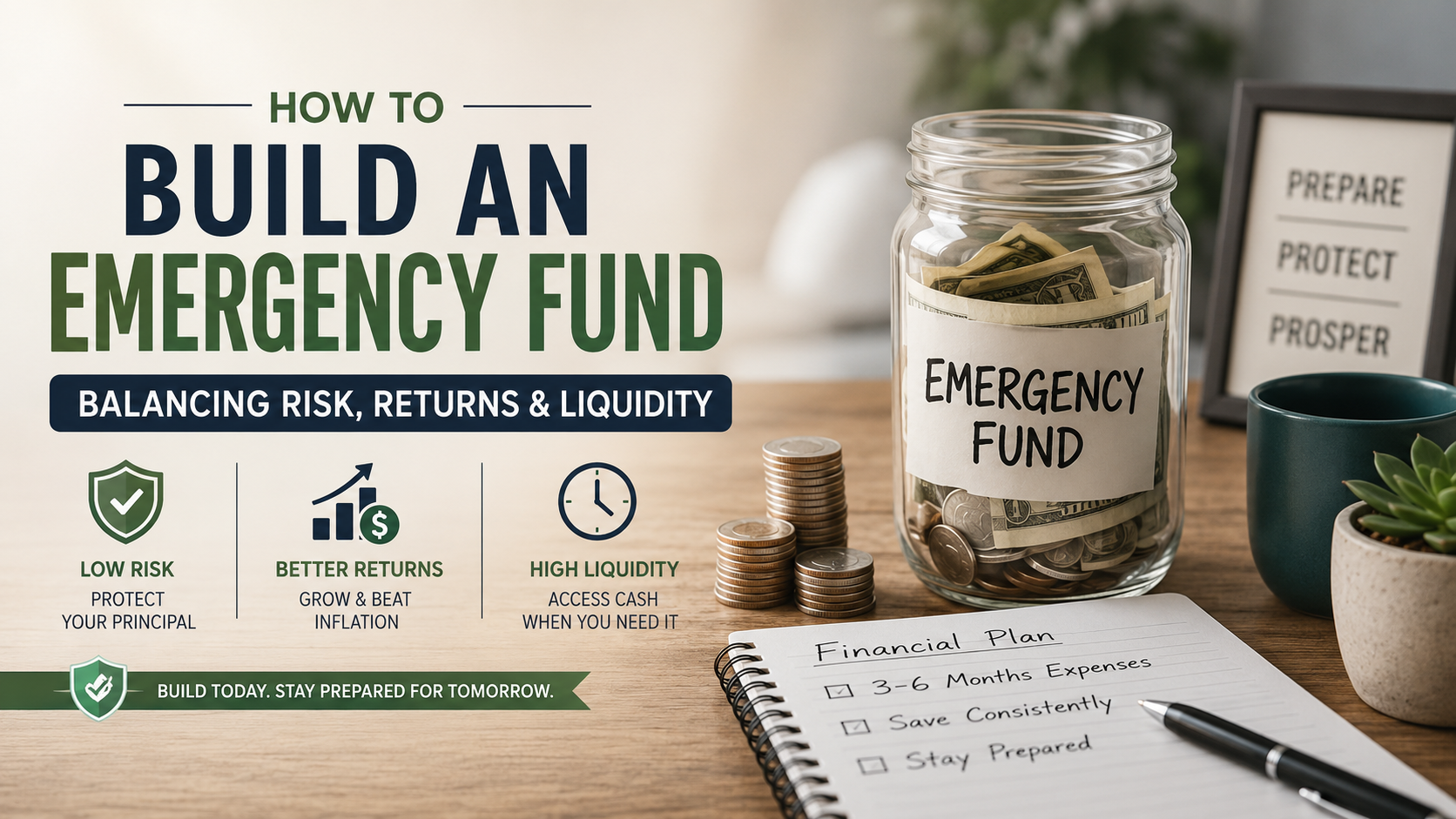
How to Build an Emergency Fund: Balancing Risk, Returns, and Liquidity
Unexpected financial hurdles can strike at any moment. Whether you face a medical bill or a job loss, learning how to build an emergency fund serves as your ultimate financial safety net. Official guidelines from the Consumer Financial Protection Bureau highlight that cash reserves protect households from high-interest debt during crises. Without savings, minor unexpected expenses can derail your monthly budget.
Creating a safety net requires a strategic framework. You must balance three key forces: risk, returns, and liquidity. If you focus only on market returns, you might lock your money away or lose capital when you need cash most. Conversely, keeping all your money in physical cash means losing purchasing power to inflation over time.
This guide breaks down how to strike the perfect balance. You will discover practical strategies to structure your cash reserves, select the right financial tools, and build an emergency cash buffer without sacrificing efficiency.

What Is the 70/20/10 Rule for Money?
The 70/20/10 rule for money is a simple budgeting method that helps you divide your income into three practical categories. Under this approach, 70% of your take-home pay covers everyday living expenses such as housing, groceries, transportation, and utilities. The next 20% goes toward savings, investments, and building your emergency fund. The remaining 10% is used for extra debt payments or charitable giving, depending on your financial priorities.
This budgeting framework encourages balanced financial habits without making your spending plan overly restrictive. It also reduces lifestyle inflation by ensuring that saving remains a regular priority as your income grows. While the percentages can be adjusted to suit individual circumstances, the overall goal is to maintain healthy spending habits while steadily improving your financial security and long-term wealth.
Balancing Expenses and Savings Effectively
Saving 20% of your income can significantly speed up progress toward major financial goals. It also helps ensure your emergency fund continues growing alongside retirement and investment savings.
If your living expenses decrease or your income increases, consider directing the extra money toward your emergency savings before increasing discretionary spending.
What Is the 3-6-9 Rule for Emergency Funds?
The 3-6-9 rule for emergency funds is a widely used guideline for determining how much money you should save based on your income stability and employment situation. People with stable jobs, multiple household earners, or highly secure employment may find that three months of essential expenses provides a reasonable starting point. Individuals who rely on a single income often aim for six months of expenses. Freelancers, contractors, self-employed professionals, and business owners typically benefit from saving nine months of living expenses because their income may fluctuate throughout the year.
This flexible approach helps match your emergency fund to your personal level of financial risk. It provides a practical framework rather than a fixed rule. As your career, family responsibilities, or financial obligations change, you should review your target and adjust your savings goal accordingly.
Customizing Your Target Based on Career Risk
Your employment situation plays an important role in deciding the right emergency fund size.
Freelancers and business owners often experience unpredictable income, making a larger reserve essential. By contrast, households with multiple stable incomes may be comfortable starting with a smaller emergency fund before increasing it over time.
Frequently Asked Questions
Where should I store my emergency fund cash?
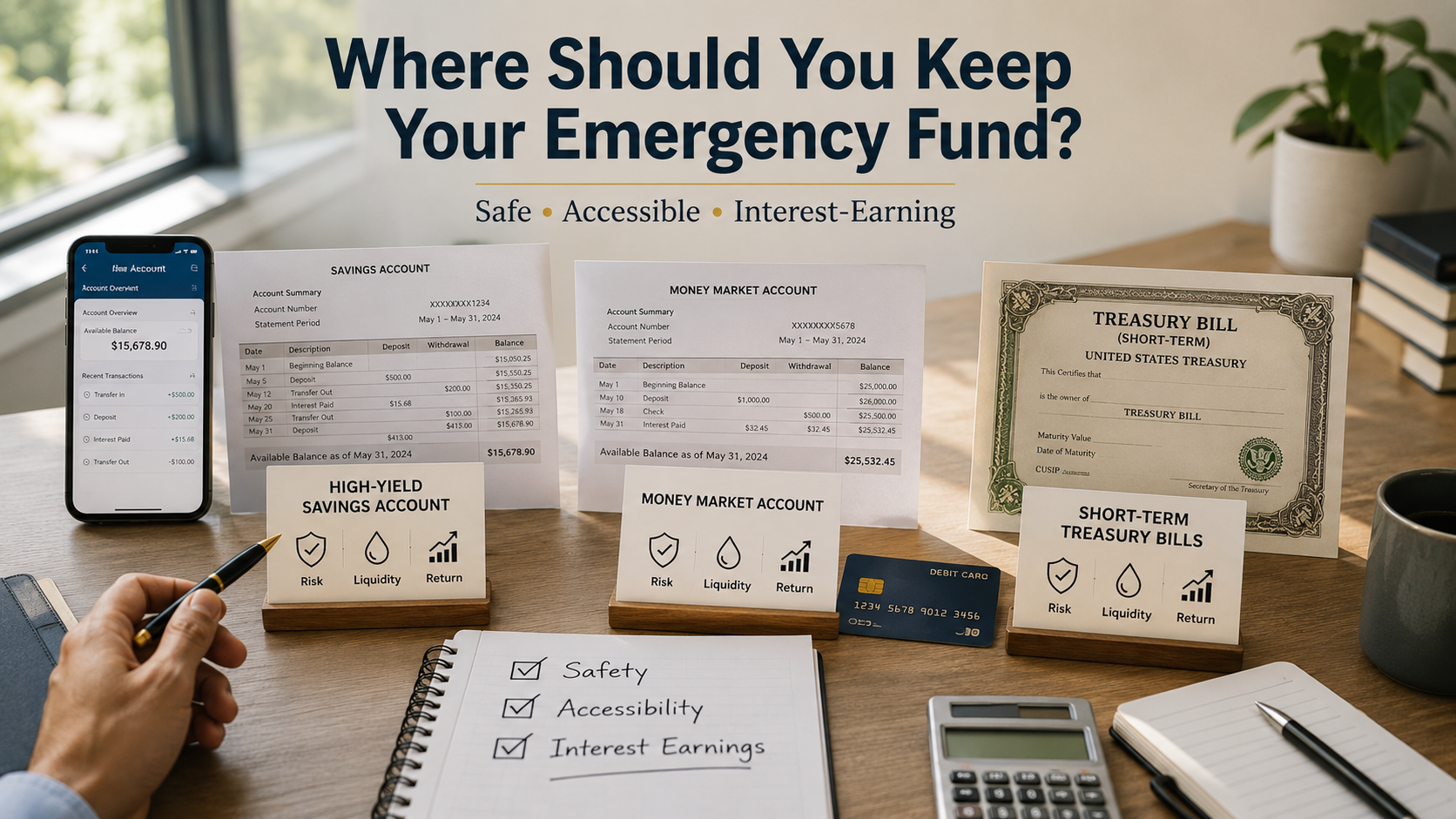
Store your emergency fund in a high-yield savings account that offers easy access and deposit protection. Avoid keeping emergency savings in stocks, real estate, or long-term investments because market fluctuations can reduce their value when you need the money most.
Can I invest my emergency fund in stocks for higher returns?
Generally, no. An emergency fund should prioritize safety and liquidity over investment returns. Stock prices can fall sharply during market downturns, forcing you to withdraw money at a loss when an emergency occurs.
How do I calculate my monthly baseline expenses?
Review your bank and credit card statements from the past three months. Add only essential expenses such as rent or mortgage payments, utilities, groceries, insurance, transportation, and minimum debt payments. Exclude discretionary spending like vacations, entertainment, and dining out.
Should I pay off debt or build an emergency fund first?
A balanced approach usually works best. Start by building a small emergency fund, often equal to one month of essential expenses. This helps prevent new borrowing when unexpected costs arise. After that, focus on paying off high-interest debt while continuing to grow your emergency savings over time.
CONCLUSION
Understanding how to build an emergency fund serves as the cornerstone of a successful personal financial plan. By balancing risk, returns, and liquidity, you create a shield that protects your household from life’s surprises. Emergency reserves are not meant to generate aggressive wealth through speculative investment gains. If you want to build long-term wealth, consider comparing returns on fixed deposits versus mutual funds for your investment portfolio instead.
Instead, the true value of cash reserves lies in providing rock-solid stability. Having liquid cash protects your long-term investments from premature liquidation. It grants total peace of mind when unexpected financial challenges arise.
Starting your savings journey does not require a massive lump sum of cash. You can begin by setting an initial target like saving your first thousand dollars. Open a high-yield savings account separate from your checking account to remove spending temptations. Automate your monthly savings transfers so your safety buffer grows continuously in the background. As your balance accumulates, structure your cash into a multi-tiered arrangement to optimize liquidity and yields.
Knowing how to build an emergency fund empowers you to face economic uncertainty with complete confidence. With a well-structured safety net, you will never need to rely on high-interest credit cards during a crisis. Take full control of your financial security today by setting up an automatic transfer.