
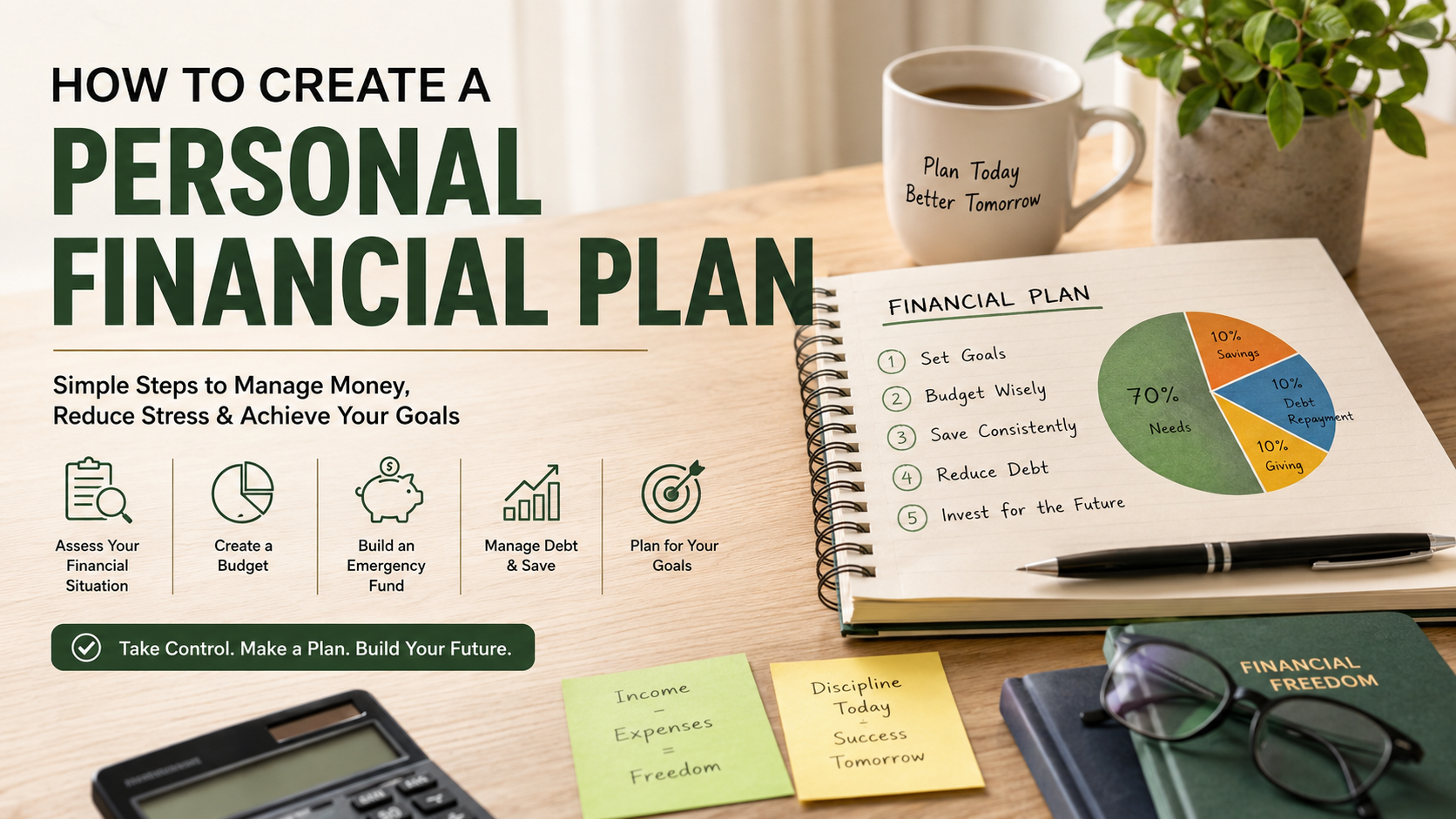
How to Create a Personal Financial Plan
Learning how to create a personal financial plan can help you take control of your money and reduce financial stress. A clear plan makes it easier to manage expenses, prepare for emergencies, reduce debt, and work toward long-term goals. The Consumer Financial Protection Bureau also provides resources that support better financial decision-making and financial well-being.
There is no single budgeting method that works for everyone. Rules such as the 7-7-7 rule, 70-10-10-10 rule, and 50/30/20 rule are useful frameworks. However, you should adapt them to your income, expenses, debt, and goals. This guide explains how to create a personal financial plan and provides a practical example. You will also learn the five basic steps of financial planning and ways to make your plan easier to maintain.


What is the 7 7 7 rule for money?
The 7-7-7 rule for money is sometimes presented as a financial planning framework built around three groups of seven. However, unlike the 50/30/20 rule, it is not a universally standardized personal finance method. Different sources may define the three parts differently. One version focuses on maintaining several months of emergency savings, investing for a longer period, and managing debt through structured targets. Because interpretations vary, you should treat this rule as a planning concept rather than a strict financial formula. Before following it, consider your income, monthly expenses, interest rates, and financial goals. The most useful part of the approach is its emphasis on financial security, long-term investing, and debt reduction. These priorities can help you create a balanced strategy. Still, you do not need to force every financial decision into a seven-year or seven-month target if another timeframe better suits your circumstances.
Emergency Funds and Milestone Planning
An emergency fund should protect you from unexpected expenses without forcing you to rely on credit cards or loans. Start by calculating your essential monthly costs, including housing, food, utilities, transportation, and minimum debt payments. You can then choose an emergency savings target based on your circumstances.
Many people begin with a smaller cash buffer before working toward several months of essential expenses. A larger reserve may be useful when income is unstable or major financial responsibilities exist. Keep emergency savings accessible instead of placing the money in investments that could lose value.
You can also divide the goal into manageable milestones. For example, you might first save $1,000, then one month of essential expenses, and eventually several months. Automatic transfers can make progress easier by moving money into savings before you have an opportunity to spend it. Review the target whenever your income, household situation, or monthly expenses change. For more guidance, see emergency fund vs. savings priorities
What is the 70-10-10-10 rule for money?
The 70-10-10-10 rule for money is a budgeting framework that divides income into four categories. A common version assigns 70% to living expenses, 10% to savings or investments, 10% to debt repayment, and 10% to giving. However, this is a guideline rather than a universal financial standard. Your percentages may need to change based on housing costs, income level, debt, family responsibilities, and financial goals. For example, someone with high-interest debt may benefit from directing more than 10% toward repayment. Another person may need a larger savings contribution to build an emergency fund. The value of this framework comes from giving each part of your income a clear purpose. It encourages you to cover current expenses while also planning for the future. When learning how to create a personal financial plan, use the 70-10-10-10 rule as a starting point. Adjust the percentages when your circumstances require a different allocation.
Living Within Your Means
Living within your means requires keeping spending below your available income. The 70% spending target can provide a useful benchmark, but it should not become a rigid requirement. Using a structured approach such as the envelope budgeting method can also help you control spending across different categories.
Housing, transportation, childcare, and other essential costs vary between households. Start by reviewing your actual spending instead of assuming every expense fits neatly into one category.
Separate fixed expenses from variable expenses. Then identify costs you can reduce without affecting essential needs.
If housing consumes most of your income, cutting small purchases may not solve the problem. You may need larger changes, such as reducing transportation costs or reviewing housing expenses.
Avoid creating an unrealistic budget that removes every enjoyable purchase. A sustainable financial plan should leave room for reasonable lifestyle spending.
Regular expense reviews can help you identify waste and redirect money toward important goals. They also keep your budget aligned with changing income and priorities.
What is the 50/30/20 rule for personal finance?
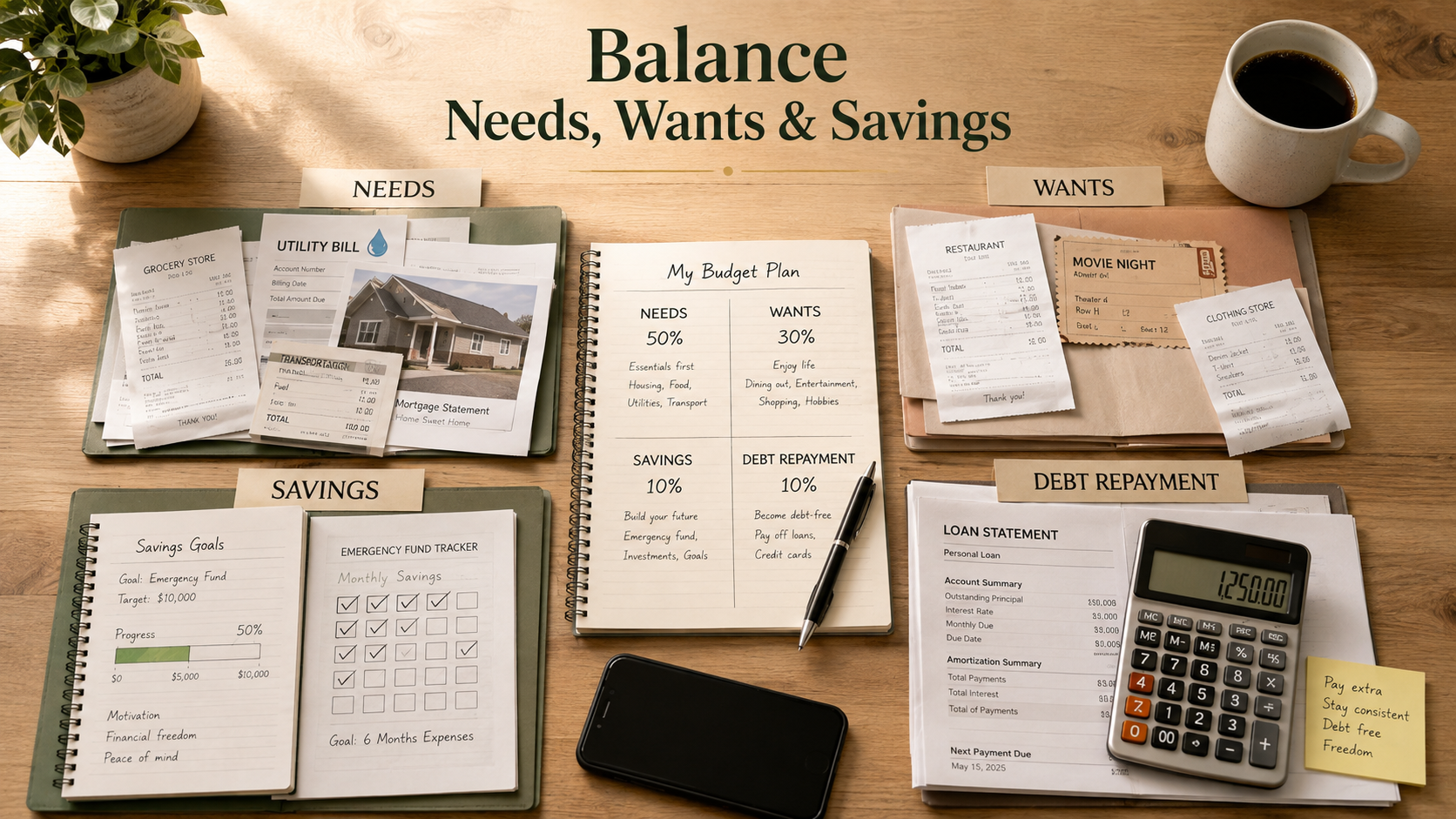
The 50/30/20 rule for personal finance divides after-tax income into three broad spending categories. The traditional framework assigns 50% to needs, 30% to wants, and 20% to savings and debt repayment.
Needs can include housing, utilities, groceries, transportation, insurance, and required debt payments. Wants may include dining out, entertainment, hobbies, subscriptions, and vacations.
The final 20% can support emergency savings, retirement contributions, investments, or additional debt payments. This framework provides a simple starting point for organizing your money.
However, these percentages are not mandatory. Someone living in an expensive city may spend more than 50% on essential costs.
Someone with aggressive financial goals may choose to save more than 20%. Your budget should reflect your actual financial circumstances.
When considering how to create a personal financial plan, use the rule to understand your spending patterns. Then adjust the percentages according to your income, expenses, and priorities.
Balancing Needs and Wants
Separating needs from wants is essential when building a realistic budget. Needs are expenses required for basic living or important financial obligations.
These can include rent, groceries, utilities, insurance, transportation, and minimum loan payments. Wants provide convenience, entertainment, or enjoyment but are usually easier to reduce.
The distinction is not always absolute. For example, transportation may be a need, while an expensive vehicle upgrade may be a want.
Review each expense based on its purpose and cost. If spending exceeds your available income, start with flexible wants before cutting essential expenses.
You can also create limits for discretionary categories instead of removing them completely. This approach makes your budget easier to maintain over time.
A sustainable budget should reflect real life, rather than an unrealistic spending pattern. As your income or responsibilities change, revisit your needs, wants, and savings priorities.
That flexibility can help prevent your financial plan from becoming too restrictive.
What are the 5 basic steps in personal financial planning?
The five basic steps in personal financial planning provide a simple structure for managing your money. First, assess your current financial position by reviewing your income, expenses, savings, debts, assets, and net worth.
Second, establish specific financial goals. These might include building an emergency fund, paying off debt, buying a home, or preparing for retirement.
Third, create a budget that connects your income with those goals. You can use frameworks such as the 50/30/20 rule as a starting point.
Fourth, put the plan into action through consistent saving, appropriate investing, debt repayment, and expense management. If debt is a major priority, learning how to pay off debt faster can help you choose a repayment strategy. Choose strategies that match your financial situation and goals.
Fifth, monitor your results and make adjustments when your circumstances change. These steps work together rather than operating as isolated tasks.
A new expense can affect your budget, while a salary increase can change your savings capacity. Learning how to create a personal financial plan therefore requires both initial planning and regular review.
The goal is to create a system that can adapt as your financial life changes.
Tracking and Adapting Over Time
A financial plan should not remain unchanged after you create it. Regular reviews help you identify problems before they become larger financial setbacks.
Review your budget several times each year. Consider a deeper review whenever your income or expenses change significantly.
Check whether you are meeting savings targets, reducing debt, and progressing toward longer-term goals. You should also review recurring expenses, subscriptions, insurance costs, and investment contributions. Using personal finance apps can make it easier to track these areas consistently.
Major life events may require more significant changes. A new job, marriage, relocation, large purchase, or change in household income can affect your priorities.
Market conditions can also influence investment decisions. Understanding risk vs. return in investing can help you evaluate how much uncertainty you are comfortable accepting. However, short-term market movements should not automatically change a long-term investment strategy.
Keep a simple record of your goals and progress. This makes it easier to compare results and identify areas that need attention.
Financial planning is an ongoing process, not a one-time exercise. Adjust your plan when circumstances change while keeping your broader financial objectives in focus.
How to create a personal financial plan example?
A practical example can make how to create a personal financial plan easier to understand. Imagine Sarah earns $4,000 in monthly take-home pay.
She wants to build an emergency fund, save for retirement, and manage everyday expenses. Using the 50/30/20 framework as a starting point, she could allocate up to $2,000 toward essential needs.
These needs might include housing, groceries, utilities, and transportation. She could reserve up to $1,200 for wants, including dining, entertainment, and hobbies.
The remaining $800 could support savings and additional debt payments. If Sarah has high-interest debt, she may direct more money toward repayment before increasing investments.
If her essential expenses already exceed $2,000, she should adjust the percentages. She should not force her budget to fit the rule.
Sarah can track her spending each week and review her progress monthly. This personal financial plan example shows how a simple framework can become a practical system.
The plan should reflect her actual income, expenses, financial obligations, and long-term priorities.
Setting Up Automated Transfers
Automation can make your financial plan easier to follow. It reduces the need to make the same saving decision every month.
After receiving your paycheck, schedule automatic transfers toward your emergency fund, retirement account, investment account, or other savings goals. Start with an amount your budget can consistently support.
If you are building an emergency fund, keep those savings accessible. Separating them from everyday spending money can also reduce the temptation to spend them.
Once you establish a sufficient cash reserve, you can redirect additional savings toward longer-term goals. Exploring investment ideas and tips for financial success can help you consider different approaches. Consider your risk tolerance and investment time horizon when making those decisions.
Automation should support your plan rather than replace it. Review your transfers whenever your income, expenses, or financial priorities change.
You should also maintain enough money in your main account for essential bills and unexpected costs. Paying yourself first can make saving more consistent, while learning about the best places to keep your savings safely can help you decide where to hold your cash. The amount must still fit your overall budget.
When combined with regular reviews, automated transfers can turn financial goals into repeatable monthly habits.
Frequently Asked Questions
What is the best way to start tracking daily expenses?
The best way to start tracking daily expenses is by using a dedicated mobile budgeting app or a simple digital spreadsheet. Reviewing every transaction weekly helps you identify wasteful spending patterns and ensures you stay aligned with your overall financial plan.
How often should I review my personal financial plan?
You should review your personal financial plan at least once every quarter, or immediately after experiencing major life changes. Significant events like getting married, changing jobs, or buying a home require immediate adjustments to your budget and savings goals.
Is it necessary to eliminate all debt before investing?
It is not necessary to eliminate all low-interest debt before investing, but high-interest consumer debt should be cleared first. Balancing debt repayment with retirement contributions allows your money to compound in the market while you steadily reduce liabilities.
What constitutes an emergency expense?
An emergency expense is an unexpected, urgent, and necessary financial need that threatens your immediate well-being or stability. Examples include sudden medical bills, critical car repairs, or emergency home maintenance, rather than planned vacations or holiday shopping.
Conclusion
Learning how to create a personal financial plan empowers you to take command of your money rather than letting money control you. By applying structured frameworks like the 50/30/20 rule, the 70-10-10-10 guideline, and essential planning steps, you build unshakeable security. Financial freedom does not happen overnight, but consistent small actions compound into massive long-term results over time. Take the first step today by assessing your income, setting clear goals, and automating your savings routines. Your future self will thank you for the financial discipline and peace of mind you cultivate right now.