
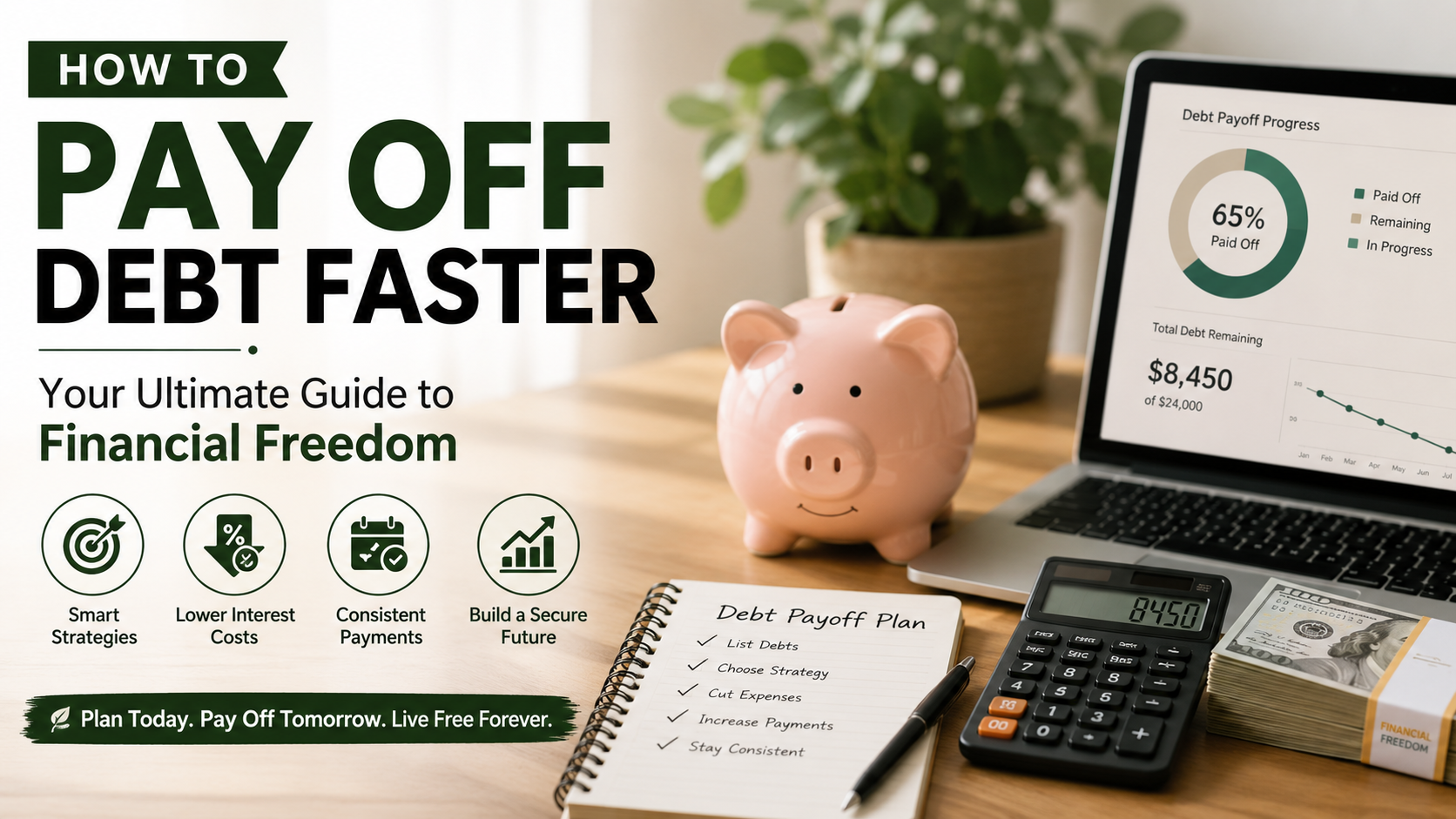
How to Pay Off Debt Faster: Your Ultimate Guide to Financial Freedom
Managing financial obligations can feel overwhelming, but learning how to pay off debt faster changes everything. When balances linger, interest charges drain your hard-earned money and delay your long-term goals. Taking control of your financial health reduces stress and opens doors to true stability. According to the Consumer Financial Protection Bureau, proactive planning is crucial for tackling high-interest balances effectively. Whether you are dealing with credit cards or personal loans, this guide answers critical questions about the quickest way to pay off debt, how much debt is normal, handling $30,000 balances in a year, and managing repayments with bad credit or low income. Let us dive into the proven methods that make financial freedom possible.

How to Pay Off Debt Fast: Practical Strategies for Becoming Debt-Free
What is the quickest way to pay off debt?
The quickest way to pay off debt is to combine aggressive repayment, controlled spending, and consistent payments. Start by listing every balance, interest rate, minimum payment, and due date. This gives you a clear view of your financial obligations. For a broader look at repayment strategies, see our guide to simple ways to overcome your debt.
Next, choose a repayment strategy. The debt avalanche method focuses on the highest interest rate first. The debt snowball method targets the smallest balance first. Both can work, but the avalanche usually reduces total interest costs.
Pay more than the minimum whenever possible. Extra payments reduce your principal balance and can lower future interest charges. Automating minimum payments also helps prevent missed deadlines and late fees.
Look for temporary ways to increase your monthly payment. Cutting unnecessary subscriptions, reducing dining expenses, or directing bonuses toward debt can accelerate progress. A structured budget can make it easier to identify where those savings can come from.
Avoid adding new debt during repayment. Your goal should be to create a consistent gap between your income and expenses. Then direct that surplus toward your balances every month.
The Power of the Debt Avalanche Method
The debt avalanche method prioritizes debts with the highest interest rates. You continue making minimum payments on every other account. Any extra money goes toward the balance charging the most interest.
This approach is mathematically efficient because expensive interest receives attention first. Once that balance disappears, you redirect its payment toward the next-highest interest debt. The process continues until every balance is cleared.
For example, suppose you have a credit card at 24% interest and a loan at 8%. The avalanche method attacks the credit card first. This can reduce the amount of interest paid over the entire repayment period.
The strategy may feel slower at first if the highest-rate balance is large. However, it can save more money than focusing only on small balances.
For people who prefer quick psychological wins, the debt snowball can still be useful. The best method is the one you can follow consistently without adding new debt.
Is $20,000 in debt a lot?
Having $20,000 in debt is not automatically excessive or manageable. The real impact depends on your income, interest rates, monthly payments, and type of debt. A $20,000 student loan can have a very different effect from $20,000 in high-interest credit card debt.
High-interest credit card balances deserve particular attention. Interest can accumulate quickly when you carry a balance from month to month. Paying only minimum amounts can also extend the repayment period significantly. Following credit card tips can help you avoid making the balance harder to repay.
Your income matters just as much. Someone earning $8,000 per month may handle $20,000 differently from someone earning $2,500. Monthly living costs also determine how much money remains for repayment.
Instead of comparing your balance with someone else’s, examine your debt-to-income ratio and monthly cash flow. List your required payments and compare them with your gross monthly income.
Then determine how much you can realistically pay beyond the minimum. A clear budget will show whether your debt is manageable or requires immediate spending cuts and income increases.
Evaluating Your Debt-to-Income Ratio
Your debt-to-income ratio (DTI) compares your monthly debt payments with your gross monthly income. Lenders commonly use this measurement when evaluating applications for loans and credit. It can also help you understand your own repayment capacity.
To calculate DTI, add your required monthly debt payments. Then divide that amount by your gross monthly income and multiply by 100.
For example, suppose your monthly debt payments total $600 and your gross monthly income is $3,000. Your DTI would be 20%.
A lower ratio generally leaves more income available for housing, food, savings, emergencies, and additional debt payments. A higher ratio can make your budget less flexible.
However, DTI does not tell the entire story. It does not account for every household expense or your interest rates. Someone with a lower DTI but expensive credit card debt may still face serious repayment problems.
Use DTI alongside your budget, interest rates, emergency savings, and total balances. Together, these figures provide a more useful picture of your financial situation.
What is the quickest way to clear debt?
The quickest way to clear debt is usually to increase the amount you pay each month while reducing the interest charged on your balances. Start with a detailed budget that shows exactly where your money goes.
Cut expenses that are not essential and redirect those savings toward your debt. At the same time, look for realistic ways to increase income. Temporary freelance work, overtime, or selling unused items can create additional repayment money.
Consider whether debt consolidation or refinancing could reduce your interest costs. A lower rate can help more of each payment reach the principal. However, consolidation is not automatically cheaper. Check the interest rate, fees, repayment period, and total cost before agreeing.
You can also contact creditors to ask whether they offer lower rates or hardship programs. Results vary, so do not assume every lender will approve a reduction.
Use windfalls carefully. Tax refunds, bonuses, or other unexpected money can make a meaningful debt payment. Keep enough cash for essential emergencies, then direct the remaining amount toward your priority balance.
Debt Consolidation and Refinancing Options
Debt consolidation combines multiple debts into one account. Instead of managing several balances and payment dates, you make one payment under the new arrangement. This can simplify budgeting and may reduce interest if the new rate is lower.
Refinancing works differently depending on the type of debt. You replace an existing loan with new financing that ideally offers better terms. The goal is usually to reduce the interest rate, monthly payment, or total borrowing cost.
However, a lower monthly payment does not necessarily mean you are saving money. A longer repayment term can reduce monthly costs while increasing total interest.
Before consolidating or refinancing, compare:
- Interest rates and annual percentage rates
- Origination or transfer fees
- Repayment periods
- Early repayment penalties
- Total interest paid
- Whether the new payment fits your budget
Avoid using consolidation as permission to keep spending. If the original spending problem continues, new balances can appear while the consolidated debt remains.
Choose refinancing only when the overall terms genuinely improve your financial position.
How to pay $30,000 debt in one year?
Paying off $30,000 of debt in one year requires substantial cash flow. Dividing $30,000 by 12 months gives $2,500 per month before accounting for interest. Therefore, your actual monthly target may need to be higher.
Start by calculating your current income and essential expenses. The difference shows how much money is available for debt repayment. If that amount falls well below your target, you need either higher income, lower expenses, or more time.
A zero-based budget can help assign every dollar a specific purpose. Prioritize housing, food, utilities, transportation, insurance, and other essential costs first.
Then direct as much surplus as possible toward your highest-priority debt. Additional income can make a major difference. Consider freelance work, overtime, temporary weekend work, or selling valuable items you no longer need.
Break the annual target into smaller milestones. A monthly goal of $2,500 can become weekly targets that are easier to track.
Do not sacrifice essential expenses or eliminate emergency savings completely. A small financial buffer can prevent an unexpected expense from forcing you back into debt. Learn more about how to build an emergency fund while balancing risk, returns, and liquidity.
Maximizing Income Through Side Hustles
Increasing income can make a major difference when your debt repayment target is aggressive. A side hustle can provide additional cash without requiring permanent lifestyle changes. The best option depends on your skills, available time, and local opportunities.
Freelancing, tutoring, delivery work, online services, weekend shifts, and selling unused items are common options. Focus on work that produces reliable income rather than chasing unrealistic promises of quick money.
Set a specific monthly income target. For example, earning an additional $500 per month creates $6,000 in potential annual repayment money. Directing that entire amount toward debt can significantly shorten your timeline.
Keep side-hustle costs under control. Buying expensive equipment or paying large upfront fees can reduce the amount available for repayment.
Also consider taxes and other costs associated with additional income. Your gross earnings are not necessarily the amount available for debt payments.
Most importantly, treat extra income as temporary repayment fuel. Avoid increasing your lifestyle as your earnings rise. Once the debt is gone, you can redirect the same income toward emergency savings, investments, or other financial goals.
How to pay off debt faster with bad credit
Paying off debt with bad credit can be harder, but a low credit score does not prevent you from making progress. Start by identifying every account, balance, interest rate, and payment status. Separate current debts from accounts already in collections. If student debt is part of the picture, review the latest student loan guidelines for 2026 as well.
Make all required payments on time whenever possible. Payment history can affect your credit profile, while missed payments can create additional fees and financial pressure.
Avoid taking on unnecessary new credit while focusing on repayment. Multiple applications can create additional inquiries and may encourage more borrowing.
Be cautious with debt-relief companies that promise guaranteed results. Some charge substantial fees or make claims that are too good to be true. Research any organization carefully before sharing financial information or signing an agreement.
A nonprofit credit counseling agency may provide budgeting help and explain debt management options. A debt management plan can sometimes reduce interest rates or fees, depending on the creditors involved.
Do not confuse debt settlement with credit counseling. Settlement can have different financial and credit consequences.
Your immediate goal should be stability. Stop balances from growing, maintain required payments, and create a realistic repayment plan that fits your actual income.
Utilizing Credit Counseling Services
Credit counseling can help people who struggle to organize payments or create a workable debt-repayment plan. Reputable nonprofit counselors typically review your income, expenses, debts, and financial goals before suggesting options.
Some agencies offer debt management plans (DMPs). Under a DMP, you may make one payment to the counseling organization, which distributes funds to participating creditors. Depending on the program, creditors may offer reduced interest rates or waived fees.
These plans are not suitable for everyone. You should understand the fees, participating creditors, payment schedule, and total repayment cost before enrolling.
Credit counseling is also different from debt settlement. Settlement companies may negotiate to reduce what you owe, but the process can involve significant risks and potential credit consequences.
Before choosing an agency, verify its reputation and understand exactly how it gets paid. Avoid organizations that demand large upfront fees or guarantee that they can eliminate your debt.
A good counselor should help you understand your choices rather than pressure you into a specific financial product.
The goal is not simply to lower one payment. It is to create a sustainable plan that prevents the debt from growing again.
How to pay off debt fast with low income
Paying off debt on a low income requires realistic expectations and careful prioritization. You cannot cut essential expenses indefinitely, so focus first on creating enough monthly cash flow to make consistent payments.
Begin by reviewing every expense. Cancel unused subscriptions, reduce unnecessary purchases, and identify spending that provides little value. Even small monthly savings can become meaningful when maintained for several months.
Protect essential expenses first. Housing, food, utilities, transportation, insurance, and basic healthcare should remain priorities. Falling behind on necessities can create problems that are more serious than the original debt.
After covering essentials and minimum debt payments, direct available extra money toward your chosen repayment target. The debt snowball may provide motivation by eliminating smaller balances quickly. The avalanche can reduce interest costs by targeting expensive debt.
Look for ways to increase income without creating additional expenses. Overtime, freelance work, temporary jobs, or selling unused possessions may help.
If your income barely covers necessities, seek appropriate community or government assistance where available. Reducing essential costs can free money for debt repayment.
Progress may be slow. Consistency matters more than making unsustainable payments for a few months.
Prioritizing Essential Expenses First
When money is limited, essential expenses must come before aggressive debt repayment. Paying extra toward debt while falling behind on rent, utilities, food, transportation, or insurance can create a more serious financial problem.
Start by calculating the minimum amount required for basic living costs. Then make the required minimum payments on your debts to keep accounts current when possible.
After essentials and minimum payments are covered, use remaining money for additional debt repayment. If your budget has no surplus, focus first on increasing income or reducing unavoidable expenses.
A practical priority order may look like this:
- Housing and basic utilities
- Food and necessary household expenses
- Transportation needed for work
- Insurance and essential healthcare
- Minimum debt payments
- Small emergency savings
- Additional debt payments
The exact order can change based on your circumstances. For example, an urgent overdue bill may require immediate attention.
Avoid using every available dollar for debt if it leaves you unable to handle a small emergency. Even a modest cash buffer can reduce the risk of borrowing again.
The objective is sustainable progress. A repayment plan only works when you can maintain it month after month without creating new financial problems.
FAQ SECTION
Can I negotiate a lower payoff amount with my creditors?
Yes, creditors are often willing to negotiate a settlement for less than you owe if you are facing severe financial hardship. They prefer recovering a portion of the funds rather than risking total default. You can attempt to negotiate a lump-sum settlement on your own or hire a professional debt settlement company to handle the discussions for you. Be aware that settlements can temporarily impact your credit score and may carry tax implications for forgiven amounts.
Does closing old credit card accounts hurt my credit score?
Closing old credit card accounts can negatively impact your credit score by shortening your credit history length and reducing your overall available credit limit. A lower total credit limit can instantly spike your credit utilization ratio if you still carry balances on other cards. It is generally wise to keep older accounts open and active with small, recurring purchases that you pay off immediately, rather than closing them after paying them off.
What is the difference between debt consolidation and debt settlement?
Debt consolidation involves taking out a new loan to pay off multiple existing balances, leaving you with a single monthly payment and ideally a lower interest rate. Debt settlement, conversely, involves negotiating with creditors to accept a fraction of your total balance as full payment, usually after stopping payments and letting accounts fall delinquent. Consolidation protects your credit score and pays creditors in full, whereas settlement can significantly damage your credit rating.
Should I use my emergency savings to pay off debt?
Using your emergency savings to clear your balances is rarely recommended unless you are facing extreme financial crisis or bankruptcy. Depleting your cash cushion leaves you completely vulnerable to unexpected expenses like medical emergencies or car repairs, which often forces people right back into borrowing. Instead, pause your contributions to savings temporarily and direct your current income toward your balances while maintaining a small starter emergency fund.
Conclusion
Taking control of your finances and learning how to pay off debt faster requires commitment, strategic planning, and consistent execution. Whether you are managing twenty thousand dollars or tackling a larger thirty thousand dollar balance within a year, the right methods make all the difference. By utilizing approaches like the debt avalanche, exploring consolidation, and maximizing your income, financial freedom is completely attainable. Once your debt is under control, starting early to build wealth before 30 can help you work toward longer-term financial goals. Stay focused on your goals, celebrate small milestones along the way, and apply these proven strategies today to secure a brighter, debt-free future.