
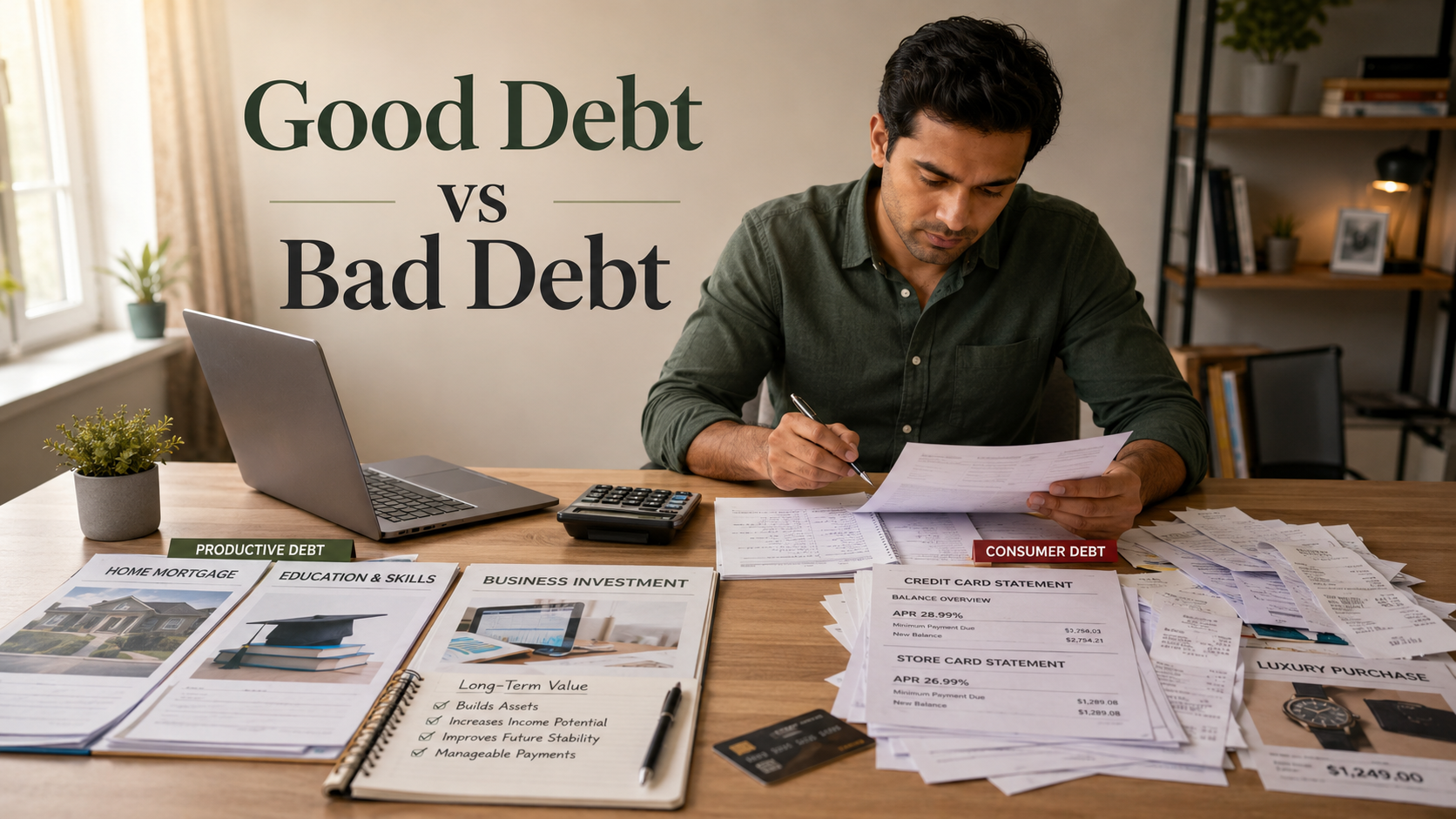
Good Debt vs Bad Debt Explained: How to Borrow Wisely
Understanding the concept of good debt vs bad debt explained clearly can completely transform your personal financial journey. Many people view all borrowing as stressful or harmful. However, financial experts and institutions like the Consumer Financial Protection Bureau emphasize that not all liabilities are created equal. Borrowing money strategically can help build long-term wealth, while reckless borrowing can drain your resources rapidly. Knowing the distinction helps you make smarter choices every single day. This comprehensive guide answers what is an example of good debt vs bad debt, what are the four types of debt, how much money is considered bad debt, what is an example of good debt, and reviews essential good debt vs bad debt examples to keep your budget safe and secure.
Good Debt vs Bad Debt Explained: Examples, Types, and Risks

What Is an Example of Good Debt vs Bad Debt?
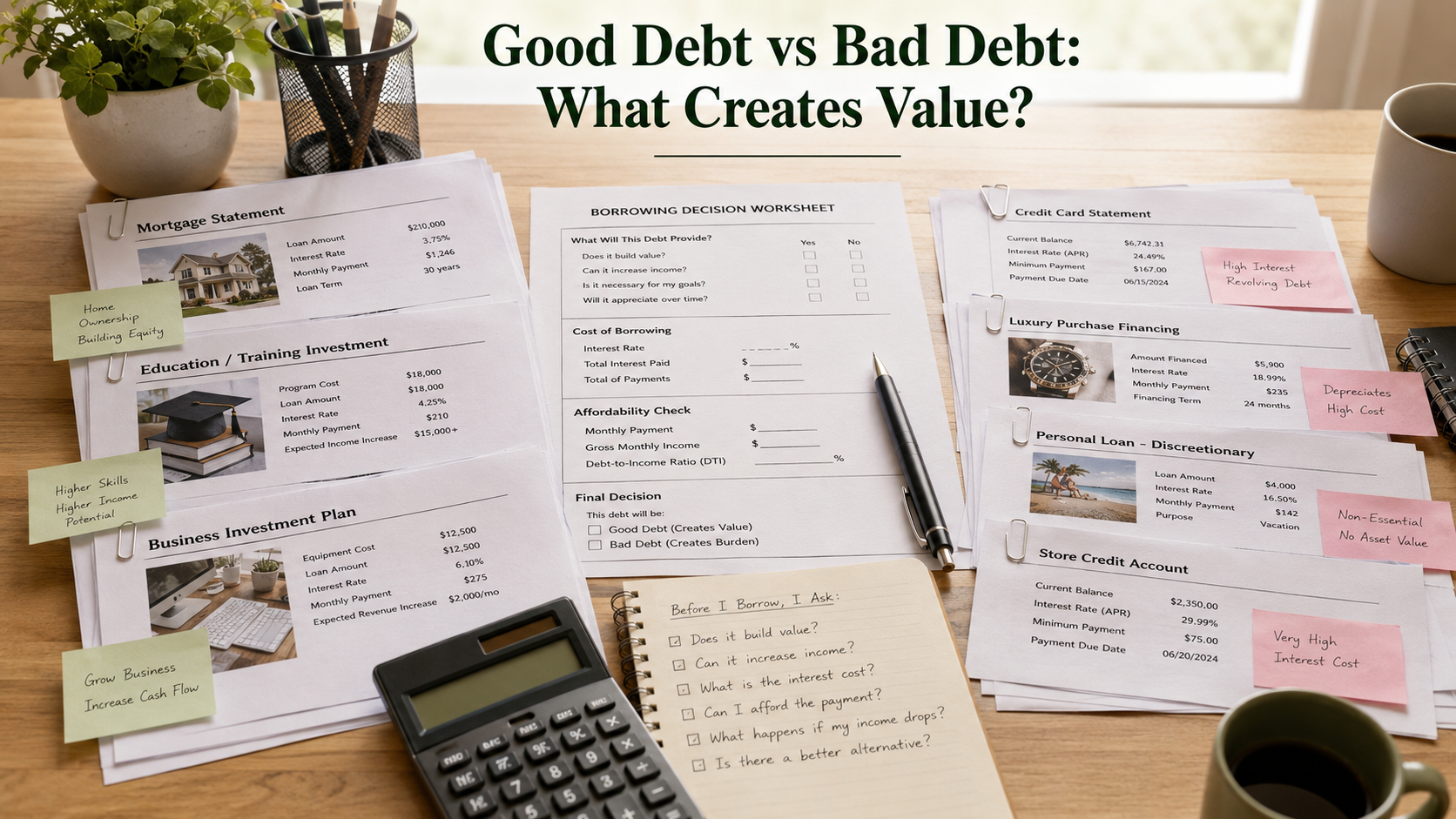
Good debt vs bad debt often depends on what the borrowed money helps you achieve. Good debt can increase your net worth, improve earning potential, or create future value. A common example is a low-interest mortgage used to buy a home that may appreciate over time.
Bad debt usually pays for items or experiences that lose value quickly. For example, using a high-interest credit card to fund a luxury vacation creates debt without producing a financial return. The interest can also make the purchase much more expensive.
When comparing the two, consider what you receive in return for borrowing money. Ask yourself:
- Will the purchase increase in value?
- Can it generate income?
- Could it improve your future earning potential?
- Is the interest rate reasonable?
Identifying Value Versus Depreciation
To identify good debt, examine what you acquire with the borrowed funds. An asset that generates income, appreciates, or supports your career may provide long-term value. For a clearer understanding of how these financial concepts connect, see Understanding Assets and Liabilities for Beginners.
By contrast, depreciating purchases with high interest costs can quickly become financial burdens. Understanding this difference helps you make more informed borrowing decisions.
What Are the Four Types of Debt?
Personal finance commonly divides debt into four major categories based on how the money is borrowed and used. Revolving debt allows you to borrow repeatedly up to a specific credit limit. Credit cards are the most common example, and balances can carry over from month to month.
Installment debt provides a fixed amount that you repay through scheduled payments. Auto loans and personal loans commonly fall into this category.
Mortgages are another type of installment borrowing, but they are specifically secured by real estate. They usually have longer repayment periods than other consumer loans.
Finally, student loans help borrowers pay for higher education, training, or career development. Their value depends partly on the education’s cost and its potential effect on future income. For more detailed guidance, see Student Loan Guidelines 2026: Everything You Need to Know.
Categorizing Your Financial Obligations
Knowing your debt type makes repayment planning easier. High-interest revolving debt often deserves priority because interest can accumulate quickly.
Installment loans usually offer predictable payments, which can make monthly budgeting simpler. However, the interest rate, loan term, and purpose still matter when evaluating the debt.
How Much Money Is Considered Bad Debt?
There is no specific dollar amount that automatically makes debt bad. Instead, financial risk depends on factors such as your income, interest rates, monthly expenses, and ability to repay the balance.
High-interest consumer debt can become especially risky when payments begin consuming money needed for essential expenses. Large credit card balances can also become expensive when annual percentage rates are high.
Rather than focusing only on the balance, consider how the debt affects your overall cash flow. A manageable loan payment may fit comfortably within your budget. The same payment could create serious pressure for someone with lower income or higher living costs.
Your debt-to-income ratio (DTI) is another useful measure. It compares your monthly debt payments with your gross monthly income.
Assessing Your Debt-to-Income Ratio
A lower DTI generally gives you more financial flexibility. Many lenders view a DTI below 36% as a healthier range, although standards vary by lender and loan type.
If debt payments consume too much of your income, consider reducing borrowing, increasing payments, or restructuring expensive balances. A practical budgeting approach can also help you manage these obligations alongside your regular expenses.
What Is an Example of Good Debt?
A common example of good debt is a student loan used for valuable education or professional training. A degree, certification, or specialized program may increase your skills and improve your long-term earning potential.
However, education debt is not automatically good. The cost of the program, expected income, repayment terms, and career opportunities should all be considered before borrowing.
A business loan can also represent good debt when it funds equipment, technology, inventory, or another investment that supports growth. If the investment improves efficiency or increases revenue, the borrowing may create meaningful long-term value.
The key is to compare the expected benefits with the total borrowing cost. Interest, fees, and repayment obligations can reduce your eventual return.
Maximizing Educational and Career Investments
Before borrowing for education or business expansion, research the likely financial outcome. Compare program costs with expected salaries and employment demand. For education-related borrowing, Managing Education Expenses Wisely: A Complete Guide can provide additional guidance.
For business borrowing, estimate whether the investment can produce enough additional revenue to justify its cost. Careful planning helps ensure that debt supports your financial goals rather than limiting them.
Good Debt vs Bad Debt Examples
Practical examples make the difference between good debt and bad debt easier to understand. A modest home purchased with a manageable mortgage may be considered good debt when the property provides housing value and potentially appreciates over time.
Financing reliable transportation can also be reasonable when the vehicle is necessary for employment and the loan fits your budget. However, this does not make every auto loan good debt.
Bad debt often involves expensive borrowing for purchases that provide little lasting financial value. Examples include luxury purchases charged to high-interest credit cards, lavish weddings financed through loans, or payday loans used for nonessential expenses.
Practical Budgeting for Everyday Purchases
Before using credit, consider the purchase’s long-term value. Ask whether it supports your income, builds an asset, or simply provides short-term enjoyment. Comparing needs vs. wants can also help you avoid unnecessary borrowing for discretionary purchases.
For everyday depreciating goods, paying with available cash can help prevent unnecessary interest charges. Most importantly, focus on affordability, interest costs, and purpose rather than labeling every type of debt as automatically good or bad.
FAQ SECTION
How can I pay off bad debt quickly?
Start by listing all your high-interest balances and choose between the debt avalanche or debt snowball repayment methods. Dedicate extra cash flow each month strictly to the highest-interest balance while paying minimums on the rest. Cutting unnecessary monthly expenses accelerates this elimination process significantly.
Does good debt affect my credit score?
Yes, managing good debt responsibly through on-time monthly payments significantly improves your credit score. Lenders view timely mortgage or student loan payments as proof of reliability. Keeping these accounts active and well-managed demonstrates strong creditworthiness to future financial institutions.
Can good debt turn into bad debt?
An obligation can become harmful if your personal financial circumstances change unexpectedly. For instance, a low-interest mortgage can strain your budget if you lose your primary source of income. Always maintain an emergency fund to protect your beneficial borrowing commitments.
Is a car loan considered good or bad?
A car loan sits in a middle ground depending entirely on your specific lifestyle and transportation needs. If a dependable vehicle is strictly necessary to reach your job and earn an income, it functions as a helpful tool. If you purchase an expensive luxury vehicle that drains your savings, it acts as bad debt.
Conclusion
Mastering the principles behind good debt vs bad debt explained throughout this guide empowers you to take control of your financial destiny. By distinguishing between liabilities that build long-term value and those that drain your resources, you can make informed borrowing decisions. Remember that strategic borrowing like mortgages or education can elevate your financial standing, while high-interest consumer borrowing requires extreme caution. Apply these insights to evaluate your current financial portfolio, prioritize high-interest liabilities, and build a secure, prosperous future. Consistent, smart management of your financial obligations is the ultimate key to achieving lasting peace of mind and enduring wealth.