

How to Set Academic Goals for Student Success
Knowing how to set academic goals is one of the most powerful skills you can develop as a student. Without clear targets, studying can feel overwhelming, directionless, and exhausting. This comprehensive guide helps you transform your educational journey by providing actionable steps and proven strategies. According to research published by the American Psychological Association, structured goal-setting significantly improves academic performance and personal motivation. Throughout this article, you will discover how to set an academic goal, learn how can I focus 100% on studying, review what are 5 academic goals, explore what are 10 good goals, and examine practical academic goals examples for students. By mastering these concepts, you can take complete control of your learning path and achieve the academic excellence you truly deserve.

How to Set an Academic Goal

How to Set an Academic Goal: A Practical Approach
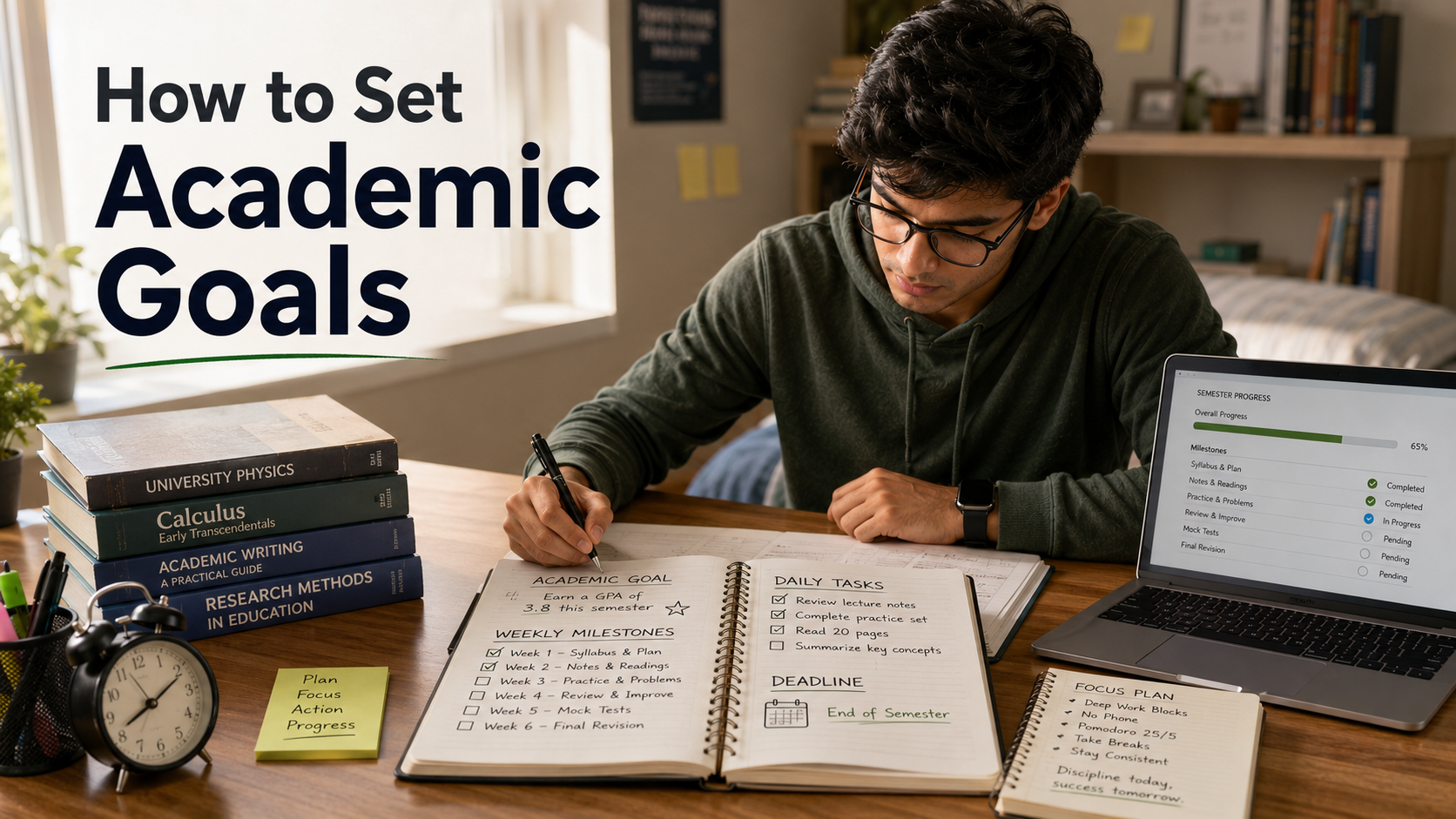
Learning how to set an academic goal starts with turning a broad ambition into a clear target. Saying you want better grades is not enough. A useful academic goal should tell you what to improve, how you will measure it, and when you will finish.
Start with one subject, skill, or academic habit. Then add a measurable result, such as raising a grade from 70% to 80% or completing two practice sets each week. Keep the target challenging but realistic for your current workload. Consider your classes, assignments, and other responsibilities before setting it.
Finally, choose a deadline and write the goal down. A simple goal might be: “I will raise my mathematics grade from 70% to 80% by the end of the semester.” This approach gives you a clear target, makes progress easier to track, and keeps your study efforts focused.
Breaking Down Your Goals
Large academic goals can feel difficult when you view them as one major task. Breaking them into smaller actions makes the workload easier to manage. Instead of trying to improve an entire subject at once, identify the steps that will move you toward the final result.
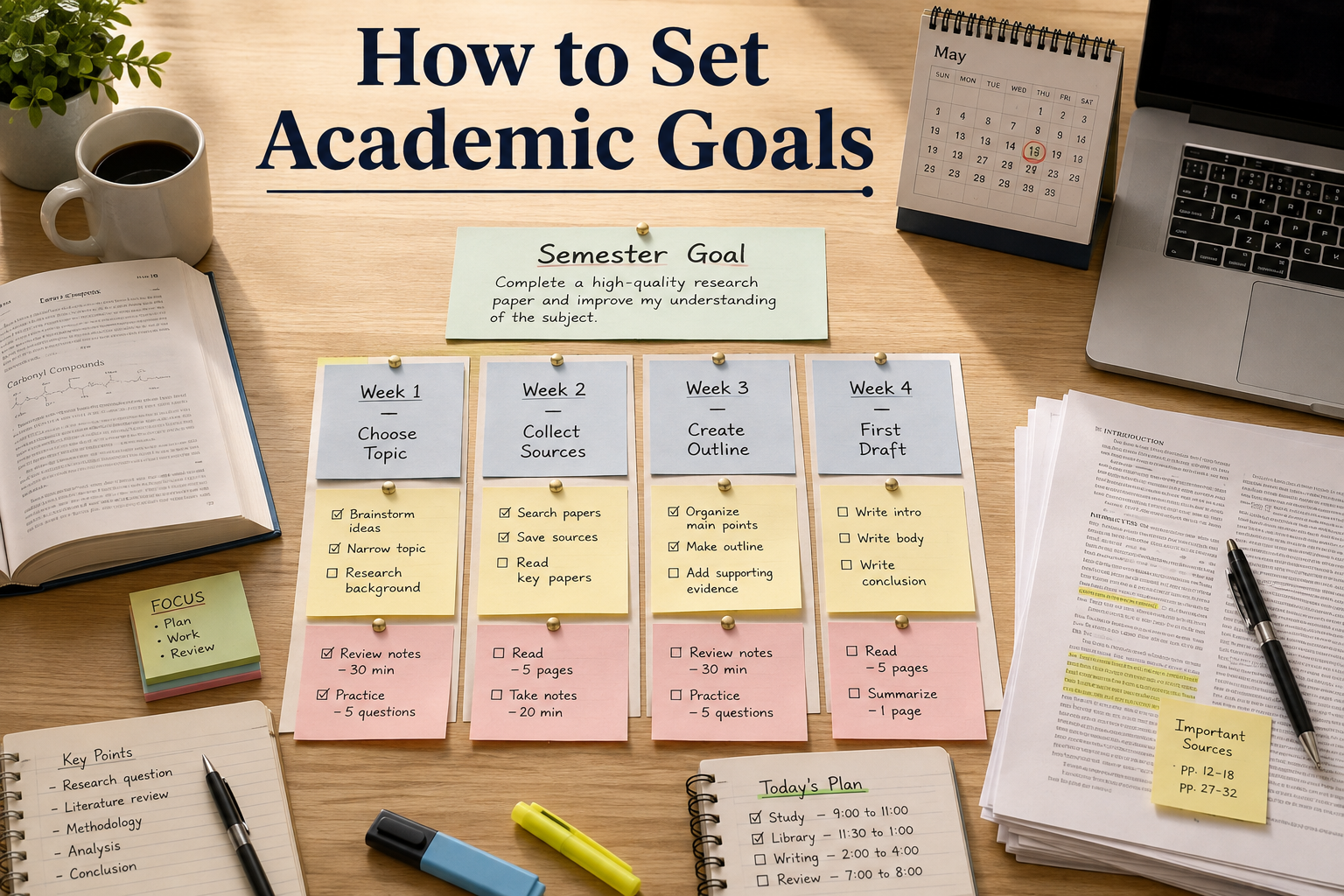
For example, a semester research project can become a series of weekly milestones. You might choose a topic in week one, collect sources in week two, create an outline in week three, and complete a first draft in week four. Each milestone should have a clear deadline.
Daily tasks can then support those weekly targets. Spending 30 minutes reviewing notes or completing five practice questions may seem small. However, consistent actions build progress over time. This structure also makes it easier to identify delays before they become serious problems. By focusing on the next practical step, you can reduce academic stress and maintain steady progress toward your larger goal.
How Can I Focus 100% on Studying?
Focusing completely on studying is difficult when your environment constantly competes for attention. Rather than chasing perfect concentration, build conditions that make focused study easier. Start by removing the biggest distractions before each session.
Turn off nonessential phone notifications and keep your phone away from your workspace. Use website blockers when social media interrupts your work. Then choose a study schedule with defined start and stop times. The Pomodoro Technique can help by combining focused work periods with short breaks.
Your physical and mental state also affects concentration. Get enough sleep, drink water regularly, and avoid demanding work when you are exhausted. Before each session, decide exactly what you will complete. A clear target is easier to follow than a vague plan to “study.”
You may not focus perfectly every minute. The goal is to create repeatable conditions that support deep work and reduce avoidable interruptions.
Creating a Dedicated Study Space
A dedicated study space can make it easier to begin academic work without wasting time. Using the same desk for studying creates a consistent environmental cue. Over time, sitting there can help you transition into a focused routine with a minimalist study desk setup.
Choose a location with good lighting and comfortable seating. Keep essential supplies nearby, including notebooks, textbooks, chargers, and stationery. You should not need to leave your workspace repeatedly for basic materials, especially when using free student software for academic success to support your studies.
Keep the area visually simple. Remove unrelated devices, gaming equipment, and other items that invite distraction. A clean desk also makes it easier to find what you need when you start working.
Your study space does not need to be expensive. A quiet bedroom corner, library desk, or shared table can work. What matters most is consistency. When possible, reserve the space mainly for academic tasks. This helps separate study time from entertainment and relaxation and supports better concentration.
What Are 5 Academic Goals?
Five practical academic goals can help you build habits that support stronger performance. The best goals are specific enough to measure but flexible enough to fit your workload.
- Finish weekly reading: Complete assigned readings before the related class.
- Participate in class: Contribute to discussions at least twice each week.
- Review notes: Revisit lecture notes within 24 hours to reinforce concepts.
- Prepare early: Begin exam revision at least two weeks before a major test.
- Seek feedback: Review instructor comments and improve future assignments.
These goals focus on behaviors you can control. Measure whether you completed readings, reviewed notes, or practiced questions. Over time, these behaviors can improve understanding and make progress more consistent.
Choose goals that match your current weaknesses instead of trying to change everything at once. A smaller set of realistic targets is easier to maintain throughout a semester.
Building Consistent Study Habits
Consistent study habits often matter more than occasional periods of intense effort. A regular routine gives your brain repeated exposure to the material and helps make studying more predictable. Using effective productivity systems for students can also make that routine easier to maintain.
Start with a schedule you can realistically maintain. You might review notes for 20 minutes each evening or complete practice questions after specific classes. The exact routine matters less than following it consistently, and time blocking for students can help organize these study sessions.
Track your habits for a few weeks. A simple checklist can show whether you are completing planned sessions. If you repeatedly miss a task, adjust the schedule instead of treating the problem as personal failure.
Consistency also reduces last-minute cramming. Regular review gives you time to identify difficult topics and ask for help. These habits strengthen memory and confidence. The aim is not to study constantly. It is to create a sustainable routine that supports your academic goals throughout the semester. This approach keeps your workload manageable and predictable.
What Are 10 Good Goals?
Good academic goals should improve performance without ignoring your health or personal development. Choose targets that cover study habits, organization, skills, and well-being, including healthy and effective online learning habits when much of your education takes place digitally.
- Improve time management by planning each week.
- Attend lectures consistently and arrive prepared.
- Join or create a focused study group.
- Use relaxation techniques to manage exam stress.
- Read one additional textbook chapter each week.
- Maintain a clear assignment planner.
- Improve essay structure through regular practice.
- Learn a research method relevant to your course.
- Maintain a consistent sleep schedule.
- Recognize small milestones instead of waiting for final results.
These goals work best when they are measurable. For example, “improve essay writing” is broad, while “complete one practice essay every two weeks” gives you a clear action. You do not need to pursue all ten simultaneously. Choose two or three priorities first, then add others when your routine becomes stable.
Cultivating Balance and Wellness
Academic progress should not come at the expense of basic health and recovery. A schedule that leaves no time for sleep, meals, movement, or rest can become difficult to maintain. Protecting your well-being helps you sustain effort during demanding study periods.
Build short breaks into longer study sessions. A brief walk can provide a change of environment after concentrated work. Regular meals and adequate hydration also support daily energy. Most importantly, maintain a consistent sleep schedule when possible.
Balance does not mean avoiding challenging work. It means managing your workload so effort remains sustainable. If assignments repeatedly push you toward exhaustion, review your schedule and priorities.
Academic success includes more than high grades. It also involves developing habits that help you handle pressure, solve problems, and continue learning. A balanced routine can support both immediate performance and long-term educational growth.
Academic Goal Examples for Students
Realistic academic goals examples for students can make goal setting easier. The right target depends on your grade level, subject, and current performance, as well as whether you are preparing for major transitions such as starting college with a college survival guide for freshers.
A high school student might aim to raise a mathematics grade from C to B by attending weekly tutoring and completing extra practice questions. A college student could aim to read 50 pages of academic literature each week before comprehensive exams.
Students can also set organization goals. For example, a thesis student might organize research files by topic before beginning the writing process. Another student might submit every assignment 24 hours before deadlines.
Each example includes a specific behavior or measurable result. That makes progress easier to evaluate. Avoid copying someone else’s target simply because it sounds impressive. Your goal should reflect your current needs, available time, and academic responsibilities. A useful goal gives you direction without creating an unrealistic workload.
Tailoring Examples to Your Major
Academic goals become more useful when they reflect the demands of your specific major. Different majors require different skills. Start by identifying the abilities your courses repeatedly require.
Science students might set goals around laboratory accuracy, problem-solving, or interpreting results. Humanities students may focus on critical reading, evidence-based writing, and source analysis. Business students could practice presentations, case analysis, or quantitative decisions. Computer science students might set goals for coding practice, debugging, or small projects.
Review your syllabus, assignments, and instructor feedback for clues. They can reveal which skills need the most attention. Then turn one weakness into a measurable target.
For example, instead of saying “I need to improve research,” aim to evaluate three academic sources each week. Specific targets make study time more purposeful. They show whether your effort improves a relevant skill. Effective academic goals connect to real course requirements and future learning needs.
FAQ SECTION
How Often Should I Review My Academic Goals?
You should review your academic goals at least once a week to measure progress and identify problems early. A weekly review gives you time to adjust your study schedule before small delays become larger setbacks. When learning how to set academic goals, regular reviews are just as important as setting the goals themselves. Check which tasks you completed, where you struggled, and whether your deadlines remain realistic. If your workload changes, adjust your targets without abandoning your overall objective. This simple habit keeps your academic goals relevant and helps you stay focused throughout the semester.
What Should I Do If I Fall Behind on My Goals?
Falling behind does not mean your academic goals have failed. First, identify what caused the delay. Poor time management, unexpected responsibilities, difficult topics, or an unrealistic schedule can all affect your progress. Once you understand the problem, adjust your remaining tasks instead of trying to complete everything at once. Prioritize urgent assignments and important exams first. Break larger tasks into smaller steps and set achievable deadlines. When learning how to set academic goals, remember that flexibility matters. Your plan should guide your progress, not create unnecessary pressure. Review your schedule regularly and make practical changes when circumstances change.
Can Academic Goals Include Non-Grade Achievements?
Yes, academic goals can focus on skills and achievements rather than grades alone. Grades measure performance, but they do not capture every important part of learning. You might set a goal to improve public speaking, write stronger research papers, learn a programming language, or become more confident during presentations. These goals can support both your education and future career. When you learn how to set academic goals, consider the skills your course or career requires. Make each target measurable so you can track improvement. For example, instead of saying “improve public speaking,” aim to complete three presentations during the semester and request feedback after each one.
How Do I Stay Motivated When Studying Gets Difficult?
Staying motivated becomes easier when you focus on small actions instead of the entire workload. Break difficult assignments into short, specific tasks that are easier to begin. For example, start by reading five pages, solving three problems, or writing one paragraph. Track these small wins so you can see your progress. Remind yourself why the goal matters, but avoid relying on motivation alone. A consistent routine is more reliable. Take planned breaks, protect your sleep, and reward yourself after completing important tasks. If your original target feels overwhelming, revisit how to set academic goals and make the goal more realistic without losing its main purpose.
Conclusion
Learning how to set academic goals gives you a practical way to turn broad educational ambitions into measurable actions. Effective goals should be specific, realistic, and connected to a clear deadline. They should also reflect your current workload and the skills you actually need to develop.
Break larger objectives into smaller weekly and daily tasks. Review your progress regularly and change your strategy when something is not working. If you fall behind, focus on the most important tasks instead of abandoning your entire plan.
Remember that academic success is not based on perfect performance every day. Consistency, flexibility, and deliberate practice matter more over the long term. Your goals should help you study with greater direction while keeping your workload manageable.
Start by choosing one important academic objective today. Write it down, define how you will measure progress, and set a realistic deadline. Then turn that objective into your next small action. This approach makes How to Set Academic Goals a practical process rather than a one-time exercise.