
Tempered Glass vs. Plastic Screen Protectors: Which Is Best?
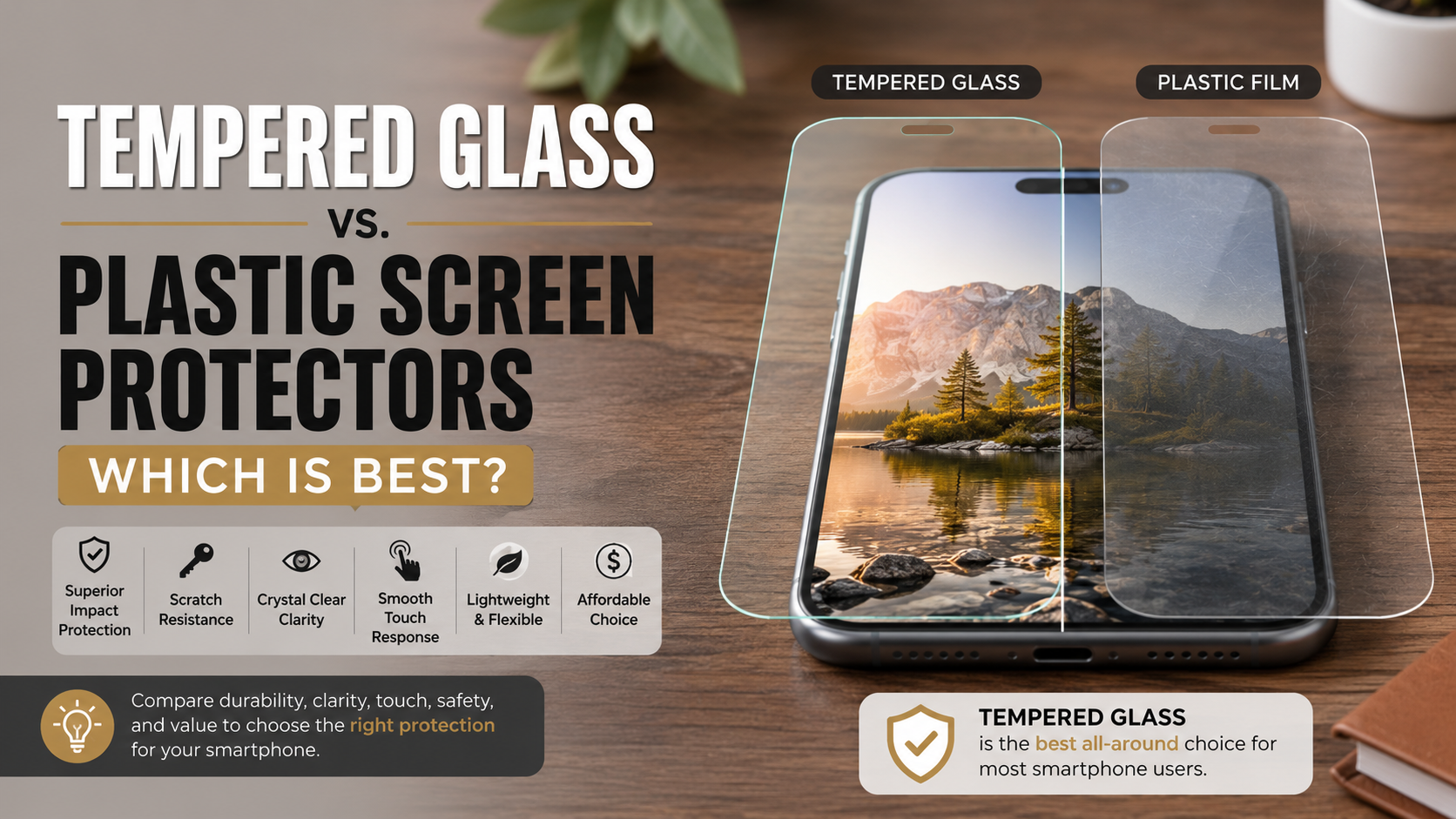
When you buy a new smartphone, protecting the display is often a top priority. Choosing between tempered glass vs. plastic screen protectors can feel confusing. Both materials protect against everyday scratches, but they perform differently during impacts.
This guide compares tempered glass and plastic film based on durability, scratch resistance, clarity, touch response, and safety. You will also learn which option works best for different phones and lifestyles.
If you want stronger protection against drops, tempered glass is usually the better choice. Plastic film remains useful when you want a thin, flexible, and affordable layer. Understanding these differences can help you choose the right screen protector for your device. For official guidance on mobile device durability standards, you can review resources provided by the Consumer Product Safety Commission.
Is Tempered Glass Better Than Protective Film?
Tempered glass generally offers better protection against impacts than traditional plastic film. It creates a rigid barrier over the display and can help absorb or distribute some impact energy during a drop. However, no screen protector can guarantee that a phone screen will never break.
Plastic film works best against minor scratches, scuffs, and everyday surface wear. It is thin and flexible, so it works well on curved displays. However, it provides less protection against direct impacts than tempered glass. For users concerned about eye comfort during screen use, blue light screen protectors are another type of display accessory to consider.
Tempered glass also provides a smoother surface that feels closer to the original phone display. A good oleophobic coating can reduce fingerprints and make swiping easier.
Plastic protectors have some advantages, too. They are usually lighter, thinner, and less expensive. They can also resist cracking because they flex instead of breaking.
For most users, tempered glass offers the better balance of impact protection, scratch resistance, clarity, and everyday usability.
Superior Impact Protection
Tempered glass can provide stronger impact protection because it is rigid and designed to spread force across its surface. During a drop, the protector may crack or fracture while helping reduce direct damage to the display underneath. The phone itself can still suffer damage, especially after a severe impact.
Plastic film behaves differently. Its flexibility allows it to absorb minor surface contact without cracking, but it offers limited protection from strong impacts. A hard object can still transfer significant force through the film.
The effectiveness of either protector also depends on its thickness, adhesive quality, coverage, and installation. A poorly fitted protector may leave vulnerable areas exposed.
For stronger drop protection, combine a tempered glass screen protector with a protective phone case. A case can help protect the phone’s frame and edges, while the screen protector focuses on display protection.
This combination provides more complete protection than relying on either accessory alone.

What Material Is Best for a Screen Protector?
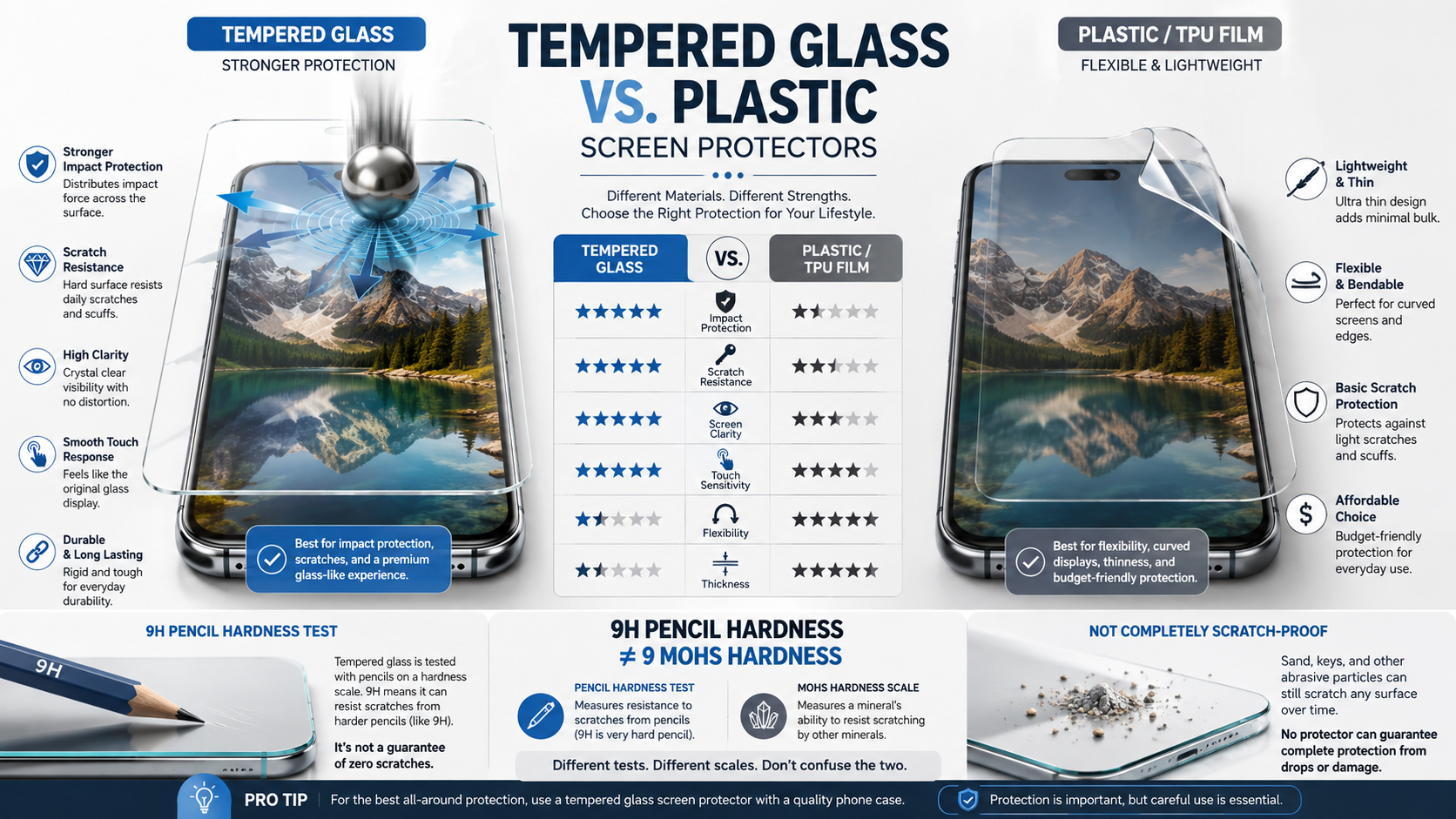
Tempered glass is generally the best all-around material for smartphone screen protection. It offers a strong combination of scratch resistance, clarity, smooth touch response, and impact protection. Its rigid construction also gives the display a more natural glass-like feel.
Plastic protectors, including TPU films, remain useful for specific situations. Their flexibility makes them suitable for curved screens and devices with unusual display shapes. They are also thinner and often less noticeable during everyday use.
Hybrid protectors combine flexible materials with harder surface layers. These products can provide a useful middle ground, but their performance varies by design and manufacturer.
When choosing a screen protector, consider more than material alone. Look for accurate device compatibility, strong adhesive coverage, good edge protection, and a quality oleophobic coating.
For most flat smartphone displays, tempered glass is the strongest overall choice. Plastic film is better suited to users who prioritize flexibility, thinness, or low cost over maximum impact protection.
The Role of Surface Hardness
Surface hardness plays an important role in preventing scratches. However, claims about screen protector hardness can be misleading. Many tempered glass products advertise 9H hardness, but this usually refers to pencil hardness testing. It does not mean the protector measures 9 on the Mohs mineral hardness scale.
A harder surface can resist scratches from everyday objects more effectively. Still, no protector is completely scratch-proof. Sand and other abrasive particles can damage glass surfaces over time.
Plastic films generally have softer surfaces. They can develop visible marks and scuffs more easily, although some TPU films can hide minor scratches through their flexible construction.
When comparing products, consider the manufacturer’s testing claims rather than relying on a single hardness number. A good protector should also offer strong adhesion and reliable coverage.
For everyday scratch protection, tempered glass usually provides the more durable surface. Hardness is useful, but overall protector quality matters just as much.
Which Is Better, a Glass or Plastic Phone Cover?
A glass screen protector and a plastic phone case serve different purposes. A screen protector covers the display, while a phone case protects the device’s frame, back, and edges.
If your main concern is screen protection, tempered glass is usually the stronger option. It can help protect against scratches and some impact damage. Plastic film provides basic scratch protection but offers less defense against drops.
For overall phone protection, combining both accessories is often the best approach. A tempered glass protector can shield the display, while a flexible or polycarbonate case can help absorb impact around the phone’s body.
Plastic screen protectors still have a useful advantage. They are flexible and can fit curved displays more easily. They also add very little thickness to the device.
Your choice should therefore depend on your priorities. Choose tempered glass for stronger display protection. Choose plastic film when flexibility, thinness, and affordability matter more.
Clarity and Touch Sensitivity
Screen clarity and touch response are important when choosing a protector. High-quality tempered glass usually provides excellent transparency and preserves the original feel of a smartphone display.
A well-made protector should not noticeably reduce brightness or interfere with normal touch input. Its smooth surface can also make scrolling and gaming feel natural.
Plastic film can perform well, but its surface may feel softer or slightly less smooth. Some lower-quality films can also develop visible marks, reduce clarity, or create unwanted optical effects.
The adhesive layer matters as much as the protector material. Poor adhesive coverage can create bubbles, reduce clarity, or affect touch performance.
For the best experience, look for a protector designed specifically for your phone model. Check that it supports the display’s fingerprint sensor and does not interfere with the case.
Premium tempered glass usually offers the closest experience to using the original display without protection.
What Are the Disadvantages of Tempered Glass Screen Protectors?
Tempered glass offers strong protection, but it is not perfect. Its biggest disadvantage is that it is thicker and less flexible than plastic film. Some users may notice the added thickness around the display edges.
Glass protectors can also chip or crack at the edges after repeated impacts. Once the protector becomes damaged, replacing it is usually the best option. The protector is designed to be sacrificial, so visible damage can mean it has done its job.
Tempered glass also tends to cost more than basic plastic film. Installation requires careful alignment and a clean display. Dust trapped beneath the adhesive can create visible bubbles or imperfections.
Some thick protectors may also cause compatibility problems with certain cases or under-display fingerprint sensors. Choosing a phone-specific, case-compatible protector can reduce these issues.
Despite these drawbacks, tempered glass remains a strong choice for most users. Its combination of durability, clarity, and scratch resistance often outweighs its added thickness and replacement cost.
Edge Chipping Vulnerability
The edges are often the most vulnerable part of a tempered glass protector. Repeated contact with pockets, bags, tables, or phone cases can place pressure on these areas.
Small chips can appear after minor impacts. Once an edge becomes damaged, cracks may spread across the protector. Replacing a damaged protector helps maintain reliable coverage.
Case compatibility is especially important. A case that presses directly against the protector’s edges can cause lifting or chipping. Look for a case-friendly design when you use both accessories together.
Edge-to-edge protectors can provide broader coverage, but they may require more precise installation. Some users may prefer slightly smaller protectors that leave a narrow border around the display.
Plastic film has an advantage here because it bends rather than chips. However, it can peel, crease, or develop scratches over time.
To reduce edge damage, install the protector carefully and avoid forcing an incompatible case over it. Good alignment and proper case compatibility can significantly improve its lifespan.
What Is the Safest Screen Protector?
A high-quality, shatter-resistant tempered glass protector is generally a good choice for users who want strong display protection. However, no screen protector should be described as completely shatter-proof or guaranteed to prevent injuries.
Tempered glass protectors are designed to break under severe stress rather than remain perfectly intact. Many models include a protective film or adhesive layer that helps keep broken pieces together.
This design can make damaged glass easier and safer to remove. However, users should still avoid touching cracked protectors unnecessarily. Replace a protector when it becomes significantly damaged.
Safety also depends on product quality. Look for reliable adhesive materials, accurate sizing, smooth edges, and compatibility with your specific phone. If privacy is another concern when using your phone in public, privacy phone screen protectors can provide an additional layer of display protection.
Plastic film does not create broken glass when damaged, which can make it appealing to some users. However, it generally provides less impact protection.
For most smartphones, a quality tempered glass protector combined with a protective case offers a strong balance of display protection and everyday safety.
Anti-Shatter Film Technology
Many tempered glass protectors include an adhesive layer or backing designed to hold the protector together after it cracks. This helps reduce the chance of loose fragments separating from the damaged protector.
This feature is useful because tempered glass is intended to act as a sacrificial layer. If the protector takes a severe impact, replacing it can be easier than repairing the phone’s actual display.
However, terms such as “shatter-proof” should be treated cautiously. Tempered glass can still break, chip, or produce sharp edges after significant damage. No consumer screen protector can eliminate every risk.
When shopping, look for products that clearly describe their safety construction and adhesive system. Avoid choosing a protector based only on marketing claims.
Proper installation also matters. A protector with gaps, poor alignment, or incomplete adhesive coverage may perform less effectively.
For everyday use, a well-installed tempered glass protector provides strong protection against scratches and many common impacts. Replace it promptly after major damage to maintain reliable coverage.
Frequently Asked Questions
Do tempered glass screen protectors affect touch sensitivity?
High-quality tempered glass protectors do not noticeably affect touch sensitivity or screen responsiveness. Modern manufacturers design these shields to be ultra-thin while maintaining structural strength. Your fingers will glide smoothly across the oleophobic coating just as they would on a bare display. Poorly manufactured or extremely thick glass may occasionally cause minor touch registration issues, but premium options perform flawlessly every single day.
Can you remove and reuse a tempered glass screen protector?
You cannot successfully remove and reuse a tempered glass screen protector once it has been installed. The silicone adhesive backing loses its stickiness and collects microscopic dust particles immediately upon removal. Attempting to reinstall an old glass protector will result in permanent air bubbles and poor adhesion. It is always best to use a brand new screen protector whenever you need to replace an old or damaged one.
How do you prevent bubbles during installation?
Preventing bubbles during installation requires cleaning your phone screen thoroughly with an alcohol wipe and microfiber cloth. Use the included dust removal sticker to capture any tiny particles floating on the display surface before applying the glass. Align the protector carefully with the earpiece and edges, then let it drop naturally. The silicone adhesive will automatically spread across the screen, pushing out trapped air seamlessly.
Are expensive screen protectors better than cheap ones?
Expensive screen protectors usually offer better manufacturing quality, stronger edge-strengthening treatments, and superior oleophobic coatings. Cheap alternatives often scratch easily, shatter too quickly, and lack proper adhesive coverage along curved display edges. Investing in a slightly more expensive brand guarantees better optical clarity, longer durability, and reliable protection for your expensive smartphone display.
Conclusion
Choosing between tempered glass vs. plastic screen protectors depends on your priorities. Tempered glass is usually the better option when you want stronger protection against scratches and everyday impacts.
Plastic film remains useful when you prefer a thinner and more flexible protector. It can work particularly well on curved displays or for users who mainly want scratch protection.
Tempered glass does have drawbacks. It can chip, crack, add some thickness, and cost more than plastic film. Installation also requires care to avoid dust and alignment problems.
For most smartphone users, however, tempered glass offers the best overall balance of protection, clarity, durability, and touch response.
For maximum protection, pair a quality screen protector with a durable phone case. Choose a protector made specifically for your device and replace it when significant damage appears.
The right combination can help reduce everyday wear and keep your smartphone display looking and functioning well for longer.