

How to Build Confidence in Students for Lifelong Success
Learning how to build confidence in students is one of the most powerful ways educators and parents can shape a child’s future. When young learners believe in their own abilities, they approach academic challenges with resilience instead of fear. According to research published by the American Psychological Association, self-assurance plays a fundamental role in motivation, mental well-being, and academic achievement. Without this inner strength, talented learners often struggle to reach their full potential due to self-doubt. This comprehensive guide answers critical questions about how to increase students’ confidence, how to be a top 1% student, what the 7 types of confidence are, what the 5 C’s of confidence include, how to build confidence in a sensitive child, and 10 essential points on self-confidence. By understanding these core concepts, you can transform a hesitant learner into a thriving, self-assured individual ready to take on the world.

How to Increase Students’ Confidence
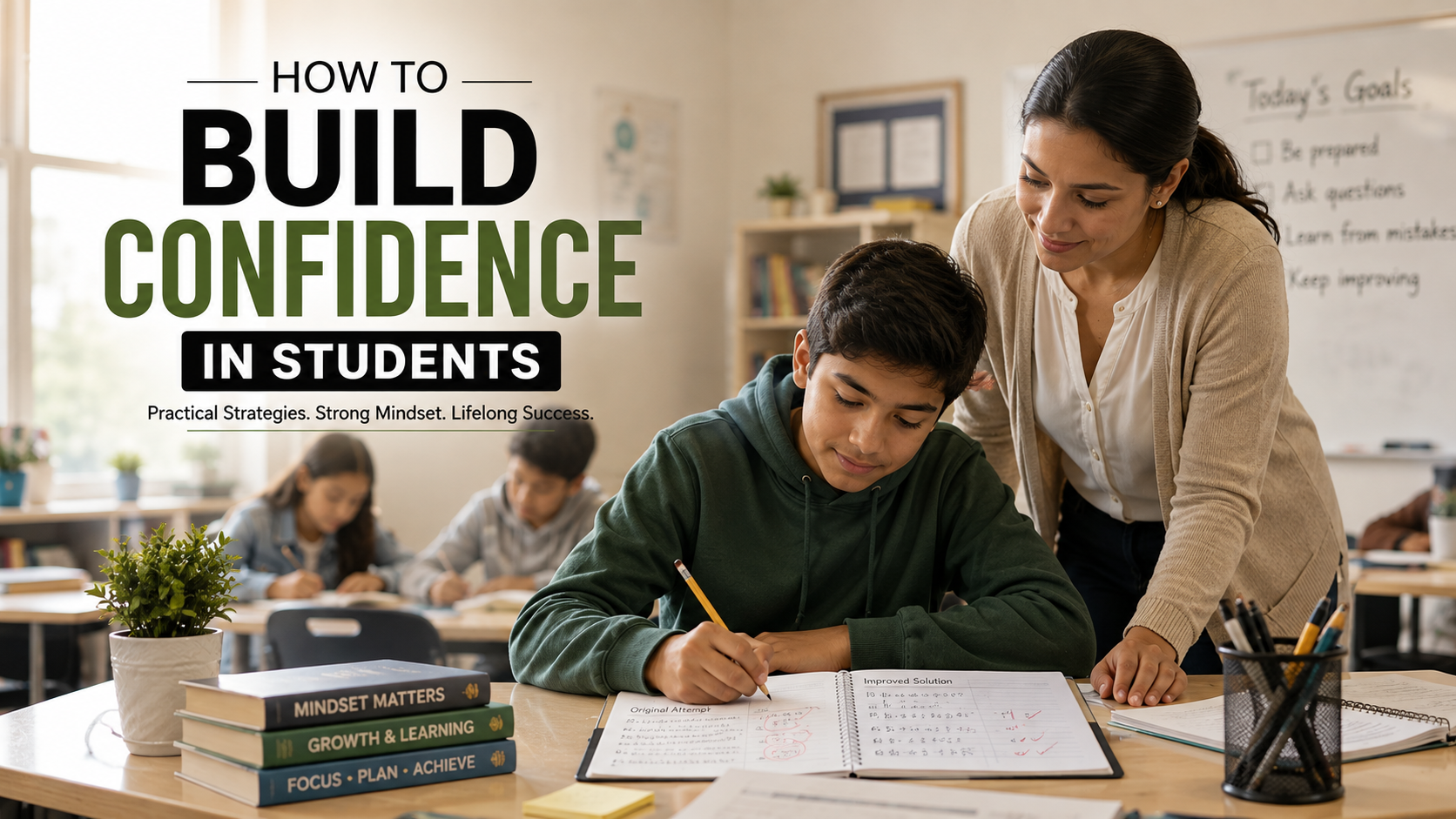
Increasing students’ confidence requires a nurturing environment where mistakes become learning opportunities rather than failures. When educators and parents celebrate small victories, learners begin to trust their decisions and abilities. Praise should focus on effort, strategy, persistence, and improvement instead of innate intelligence or final grades. This approach supports a growth mindset and encourages students to tackle difficult subjects without fearing mistakes.
Teachers can also assign leadership roles during group projects. These opportunities give hesitant learners a chance to contribute and develop their communication skills. Constructive feedback should remain private, specific, and supportive. This protects self-esteem while showing students how they can improve.
Over time, consistent encouragement builds genuine self-assurance. Students become more willing to ask questions, solve unfamiliar problems, and express their opinions. These habits can strengthen confidence at school and in everyday situations.
Fostering a Safe Classroom Culture
Creating a safe classroom culture means establishing a space where questions are welcomed and mockery is not tolerated. Students learn better when they feel physically and emotionally secure. They become more willing to share ideas, attempt difficult tasks, and learn from mistakes without worrying about embarrassment. This is closely connected to building positive student relationships in the classroom.
Teachers can help by setting clear expectations for respectful communication. They should respond to incorrect answers calmly and explain why mistakes are a normal part of learning. Practical resources such as a tool kit for mentor teachers can also help educators develop supportive approaches. This prevents students from associating mistakes with personal failure.
Educators can also model vulnerability by admitting their own mistakes. Showing that adults also make errors helps normalize imperfection. It sends a powerful message that learning does not require constant perfection.
Parents can reinforce the same approach at home. Instead of asking only about grades, they can ask what the student learned and what challenged them. This shifts attention toward progress rather than performance.
A supportive classroom ultimately gives students the psychological safety needed to participate, experiment, and develop stronger confidence.
How to Be a Top 1% Student
Becoming a top 1 percent student is rarely about having extraordinary intelligence or studying all night. It depends more on disciplined habits, effective time management, focused practice, and genuine curiosity. High-performing students participate actively in lessons, ask useful questions, and review important material consistently instead of waiting until exams approach.
They also treat setbacks as useful information. When a test goes poorly, they examine what went wrong and change their study approach. This prevents one disappointing result from becoming a permanent judgment about their ability.
Top students also protect their energy. They understand that adequate sleep, regular breaks, healthy routines, and meaningful activities support academic performance. Studying longer is not always the same as studying better.
Surrounding yourself with motivated peers can also raise your standards and provide opportunities to develop networking skills for career success over time. However, comparison should remain constructive rather than becoming a source of pressure.
Ultimately, exceptional academic performance comes from consistent execution. Students who plan carefully, study actively, review regularly, and learn from mistakes are more likely to achieve strong results over time.
Mastering Strategic Time Management
Mastering strategic time management helps high-performing students balance coursework, extracurricular activities, personal responsibilities, and rest. Learning to upskill and reskill throughout your career also requires the ability to manage learning alongside other responsibilities. Without a clear system, even motivated learners can become overwhelmed by competing deadlines and unnecessary tasks.
Students can begin by identifying their most important academic priorities. Frameworks such as the Eisenhower Matrix can help separate urgent tasks from important long-term work. This makes it easier to focus on activities that produce meaningful academic progress.
Breaking large assignments into smaller tasks also reduces procrastination. Instead of planning to “study chemistry,” a student might schedule specific activities such as reviewing formulas or completing practice questions.
Time blocking can make study sessions more purposeful. Students can assign dedicated periods for focused work and planned breaks. During those sessions, removing phone notifications and other distractions can improve concentration.
Effective time management is not about filling every hour with work. It is about using available time deliberately while protecting sleep and recovery. A balanced schedule makes consistent studying easier to maintain and reduces last-minute exam stress.
What Are the 7 Types of Confidence?
Understanding the seven types of confidence can help educators identify areas where a learner needs additional support. These commonly include social, emotional, academic, physical, creative, spiritual, and moral confidence. Each area influences how students understand themselves and respond to different situations.
Academic confidence helps learners approach challenging subjects and unfamiliar problems. Social confidence supports communication, friendship, teamwork, and participation in groups. Emotional confidence helps students manage difficult feelings during exams, conflicts, or stressful situations.
Physical confidence relates to feeling comfortable participating in physical activities and developing body awareness. Creative confidence encourages students to write, design, perform, experiment, or create without excessive fear of judgment. Spiritual confidence can involve personal meaning, values, or a sense of purpose, depending on the individual and family.
Moral confidence involves making decisions based on personal values and ethical principles. These areas can overlap, but each provides a different perspective on development.
Recognizing these dimensions helps adults provide more targeted encouragement. Student performance tracking can also help educators identify areas where a learner is progressing or needs additional support. A student may feel academically capable while struggling socially, so confidence-building should address individual needs.

Targeting Specific Confidence Dimensions
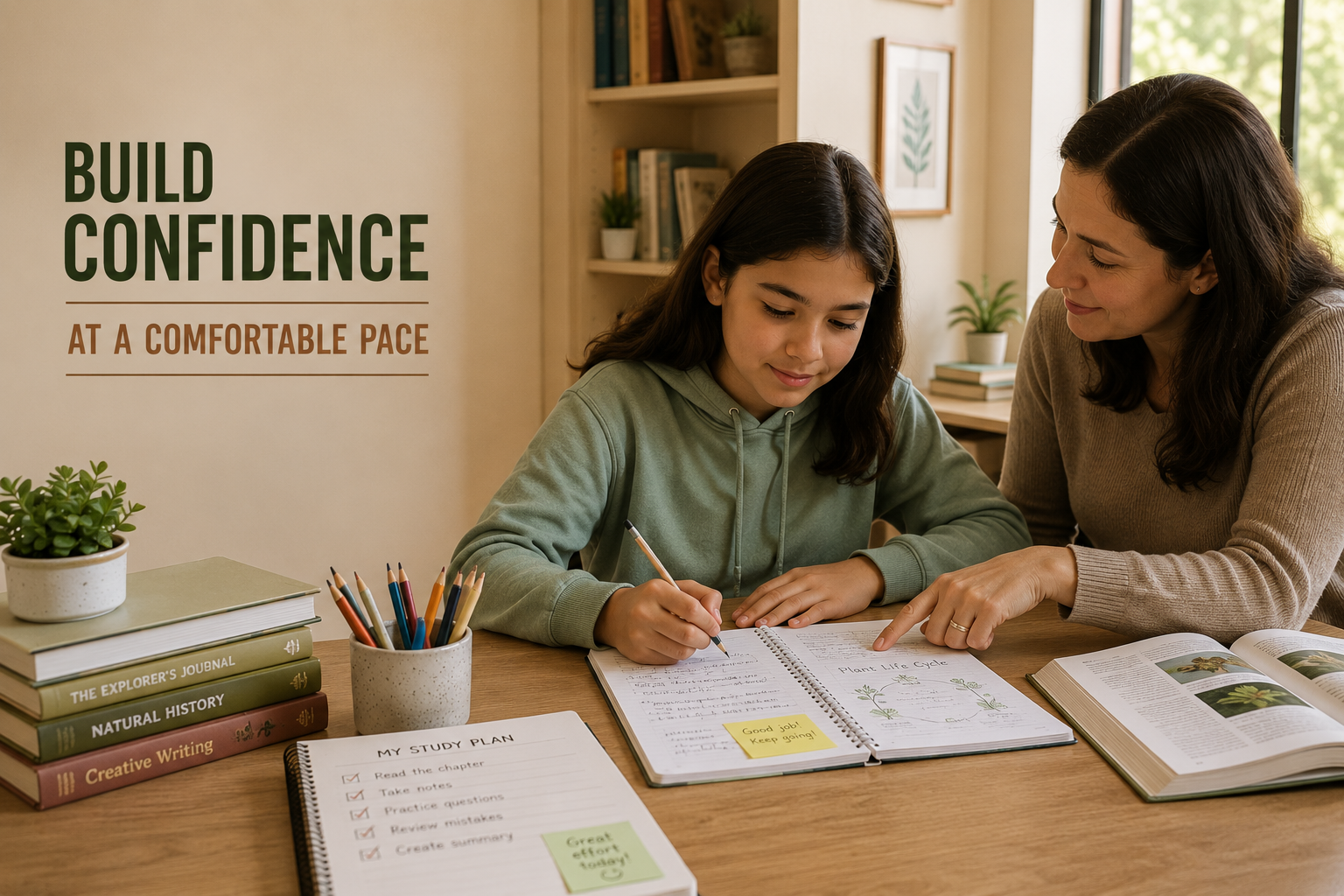
Targeting specific confidence dimensions allows parents, teachers, and mentors to provide more personalized support. A student who performs well academically may still lack social confidence or feel uncomfortable participating in physical activities. Treating confidence as one single quality can therefore overlook important challenges.
Adults should first identify where the student feels most uncertain. Simple conversations can reveal whether the difficulty involves friendships, schoolwork, creativity, emotional control, or physical activities.
The next step is creating manageable opportunities for progress. For example, a child who lacks physical confidence might benefit from a non-competitive activity such as martial arts, swimming, or recreational sports. The goal should be participation and skill development rather than immediate competition.
Similarly, a student with low social confidence could begin with paired activities before moving toward larger groups. Pair reading activities can provide one practical way to give learners structured opportunities to participate with a partner. Small successes provide evidence that the learner can handle unfamiliar situations.
This targeted approach makes confidence-building more practical. Rather than demanding that a child “be confident,” adults can help them develop specific skills through repeated, supportive experiences.
Over time, progress across several areas can create a more balanced and durable sense of capability.
How to Build Confidence in a Sensitive Child
Building confidence in a sensitive child requires patience, empathy, and an approach that avoids unnecessary pressure. Sensitive learners may experience criticism, conflict, and stressful situations more intensely than some of their peers. Constant pressure can therefore make them withdraw rather than become more confident.
Parents and teachers should provide reassurance while still encouraging gradual independence. Instead of forcing a child into the spotlight, adults can begin with low-pressure opportunities to participate. A private conversation may feel easier than speaking before an entire classroom.
Acknowledging strong emotions is also important. Telling a child that their feelings matter can help them feel understood and secure. However, reassurance should not mean avoiding every challenging situation. Children still need opportunities to face manageable discomfort and discover that they can handle it.
Praise should focus on specific behaviors. Recognizing preparation, persistence, kindness, creativity, or thoughtful problem-solving gives children clear evidence of their strengths.
Adults can also help sensitive children view their traits positively. Empathy, careful observation, and thoughtfulness can become valuable strengths when properly supported.
The goal is not to change a sensitive child’s personality. It is to help them develop confidence while respecting their individual temperament.
Creating Low-Pressure Learning Spaces
Creating low-pressure learning spaces can help sensitive children process information without unnecessary anxiety. A supportive environment does not remove every challenge. Instead, it gives learners enough psychological safety to approach challenges gradually.
For example, a teacher might allow a student to discuss an answer with a partner before presenting it to the entire class. This creates a transition between private thinking and public participation.
Parents can use a similar strategy at home. Asking open-ended questions without demanding an immediate answer gives children time to organize their thoughts. Rushing them can increase pressure and make communication harder.
The physical environment can also matter. A quiet study area with fewer interruptions may help sensitive learners concentrate more effectively. Creating a calm home environment can also provide additional stability when schoolwork feels overwhelming. Predictable routines can make that support even more consistent.
Adults should still encourage gradual growth. Avoiding every uncomfortable experience can reinforce the belief that the child cannot handle challenges. Instead, introduce manageable steps and acknowledge progress.
With consistent support, sensitive children can become more comfortable expressing ideas, handling mistakes, and trying unfamiliar activities. Confidence often develops quietly through repeated experiences of coping successfully.
10 Points on Self-Confidence
Self-confidence helps individuals pursue meaningful goals, handle setbacks, and approach unfamiliar situations with greater resilience. It does not appear instantly. Confidence usually develops through repeated experiences of preparation, action, improvement, and reflection.
Here are 10 practical points that can strengthen self-confidence:
- Prepare consistently: Building skills through regular practice creates genuine confidence.
- Challenge negative thoughts: Replace harsh internal criticism with realistic and constructive thinking.
- Set achievable goals: Smaller milestones create visible evidence of progress.
- Accept failure: Mistakes provide information that can improve future decisions.
- Use confident body language: Posture and eye contact can influence how you feel and communicate.
- Find supportive mentors: Helpful teachers, parents, and mentors can provide useful guidance.
- Celebrate small wins: Recognizing progress reinforces productive behaviors.
- Avoid unhealthy comparison: Compare your current performance with your previous performance.
- Take responsibility: Owning decisions and mistakes develops self-respect.
- Keep learning: New knowledge and skills increase adaptability and independence.
These habits work together rather than separately. Genuine confidence comes from evidence that you can prepare, act, learn, and improve.
Replacing Negative Self-Talk
Replacing negative self-talk with realistic positive reframing can strengthen confidence and emotional resilience. Students often make broad statements after struggling, such as “I cannot do this” or “I am bad at this subject.” Such statements turn one difficult experience into a judgment about their entire ability.
A more useful approach is to describe the specific problem. Instead of saying, “I cannot solve this,” a student could say, “I do not understand this method yet.” Adding “yet” does not magically solve the problem, but it leaves room for learning and improvement.
Students can also question negative assumptions. Ask whether the thought is supported by evidence or influenced by one disappointing result. Then replace it with a realistic alternative.
For example, “I failed this test, so I am not intelligent” can become “I performed poorly on this test, so I need to change how I prepare.”
This approach keeps expectations realistic. Positive thinking should not mean pretending that every situation is easy. It means recognizing difficulties without turning them into permanent conclusions about yourself.
With repeated practice, healthier self-talk can help students respond to challenges with greater patience and persistence.
FAQ
What Is the Main Driver of Student Confidence?
The main driver of student confidence is consistent progress through practice, encouragement, and meaningful achievement. When learners experience small successes, they gain evidence that their effort can produce results. Parents and teachers can build confidence in students by praising effort, useful strategies, and persistence rather than focusing only on grades. Setting realistic challenges also helps students develop skills without feeling overwhelmed. Over time, repeated experiences of learning and improving make confidence more stable and genuine. This approach helps build confidence in students because their self-belief comes from real experiences rather than empty praise or unrealistic reassurance.
How Can Parents Help Shy Students Feel Confident?
Parents can build confidence in students who are shy by creating gradual opportunities for positive social experiences. Instead of forcing a child to speak before a large group, parents can begin with conversations at home or activities involving one or two familiar people. Listening without judgment is equally important because children need to feel safe expressing their thoughts. Parents should also avoid labels such as “too shy” or “antisocial,” which can become part of a child’s self-image. Encouraging hobbies, creative activities, and small responsibilities can provide additional opportunities for success. These experiences help children develop communication skills while slowly becoming more comfortable around others. Patience is essential because confidence develops at different speeds for different children.
Does Academic Failure Destroy Self-Confidence?
Academic failure can temporarily reduce confidence, but it does not have to cause lasting damage. The response to failure matters more than the setback itself. Teachers and parents can build confidence in students by helping them examine what went wrong without treating the result as a judgment of their intelligence. Students should identify specific problems, such as poor preparation, ineffective study methods, or difficulty understanding a topic. They can then create a practical plan for improvement. This process turns failure into useful feedback instead of a permanent label. Students also need opportunities to experience small successes after setbacks. Completing easier tasks, improving one skill, or performing better on the next assessment can restore their sense of capability. In this way, failure can become part of the learning process.
Why Is Emotional Confidence Important for Learners?
Emotional confidence helps students manage difficult feelings while continuing to make thoughtful decisions. Learners regularly face pressure from exams, assignments, friendships, family expectations, and unfamiliar situations. Without emotional confidence, frustration or fear can quickly become avoidance and discouragement. Parents and teachers can build confidence in students by teaching them to identify emotions, communicate their needs, and use healthy coping strategies. Students should understand that feeling nervous or disappointed does not mean they are incapable. Learning to pause, reflect, and respond constructively can improve resilience. Emotional confidence also supports academic performance because students are better able to recover after mistakes and maintain focus during challenging tasks. When adults consistently model calm problem-solving, they provide students with practical examples of how to handle pressure.
Conclusion
Learning how to build confidence in students requires patience, consistency, and an understanding of individual needs. Confidence does not develop through praise alone. Students need real opportunities to practice skills, solve problems, make decisions, and experience progress. Parents and teachers can build confidence in students by creating supportive environments where mistakes are treated as part of learning rather than evidence of failure.
It is also important to recognize that confidence has several dimensions. A student may feel academically capable but struggle socially, emotionally, creatively, or physically. Effective support should therefore address the specific area where confidence is lacking.
Sensitive and shy students may need smaller steps and lower-pressure opportunities. High-achieving students may need help managing perfectionism and setbacks. In every case, consistent encouragement should be combined with realistic expectations.
The goal is not to make students confident in every situation immediately. The goal is to help them develop enough self-belief to attempt difficult things, learn from mistakes, and keep improving. By using these practical strategies, parents and educators can build confidence in students and help them become more resilient, capable, and independent learners.