5 Signs It’s Time to Replace My Water Heater
Nothing ruins a peaceful morning faster than stepping into an ice-cold shower. If you’re wondering whether to replace my water heater, understanding the warning signs can help you avoid unexpected breakdowns and expensive repairs.
Your water heater works quietly every day, making it easy to overlook until something goes wrong. According to the U.S. Department of Energy, water heating accounts for approximately 18% of household energy consumption. Therefore, maintaining an efficient system can also help control your energy bills. If you’re considering other ways to reduce household energy consumption, explore these ways to calculate your home’s solar energy needs before planning a solar installation.
Recognizing early warning signs gives you time to plan a replacement. You won’t need to make a rushed decision during a plumbing emergency. More importantly, you can avoid damage caused by a leaking or failing storage tank.
This guide explains five common signs that your water heater needs attention. You’ll also learn how long these appliances last, what to consider before purchasing one, and when replacement makes more financial sense than repair.
1. Your Water Heater Is More Than 10 Years Old
Most traditional storage-tank water heaters last approximately 8–12 years. However, their actual lifespan depends on water quality, maintenance, usage, and installation conditions. If your unit is approaching ten years, it’s worth monitoring its performance more closely.
As water heaters age, internal components gradually wear out. Sediment accumulates inside the tank, protective anode rods deteriorate, and corrosion becomes more likely. These problems can reduce heating efficiency and increase the risk of unexpected leaks. Similar maintenance concerns can affect other household appliances, making it useful to understand how to keep your household appliances in good condition.
You can check your water heater’s manufacturing date using its serial number. Look for the manufacturer’s label, usually attached to the side of the unit. The serial number format varies between manufacturers, so check the manufacturer’s website if necessary.
Consider replacing an older unit before it completely fails, especially if you notice other warning signs.
What to check:
- The manufacturing date and estimated age.
- Frequent repairs or declining heating performance.
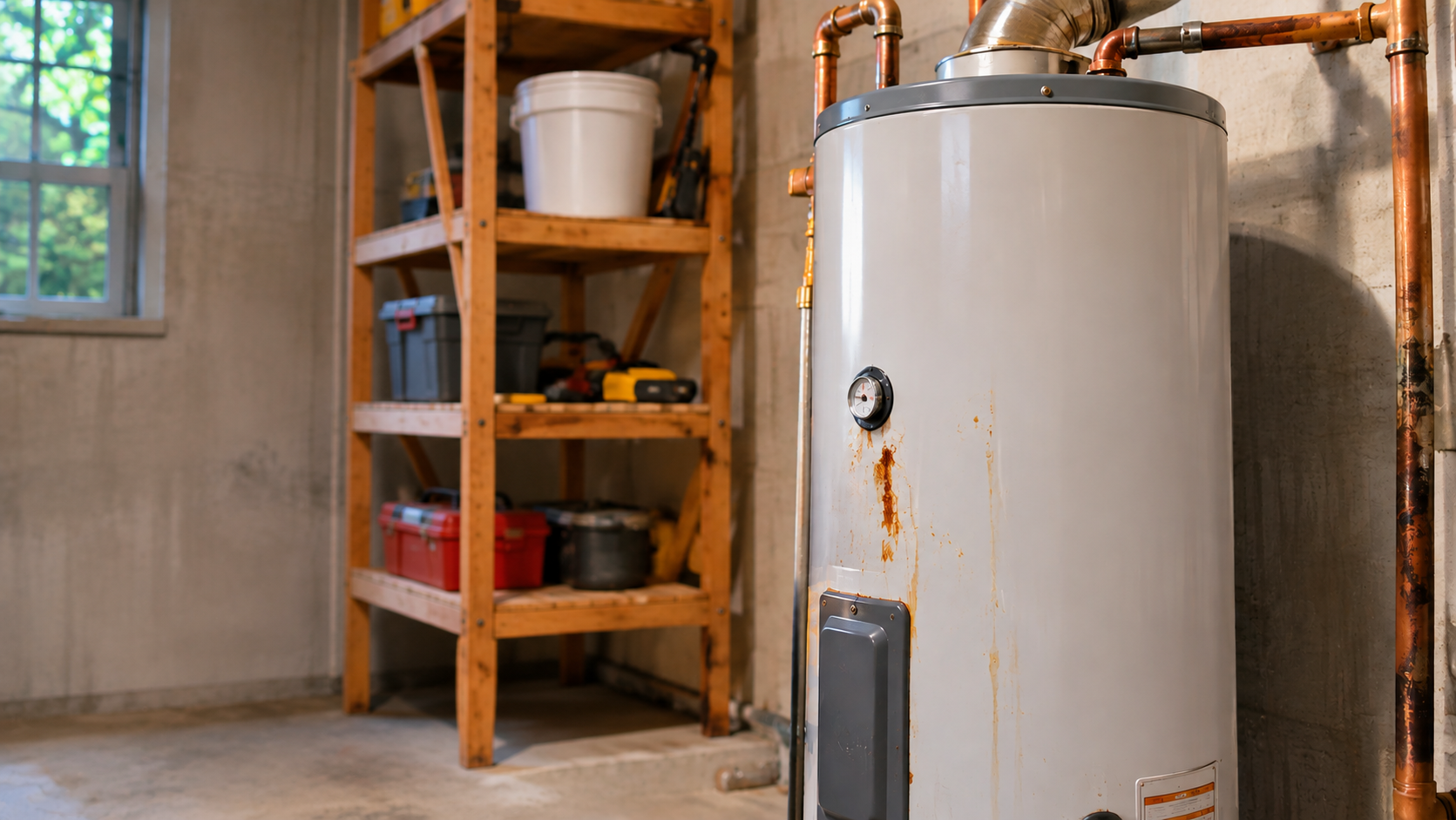
- Visible corrosion around the tank.
- Increasing energy consumption.
An older water heater doesn’t automatically require replacement. However, combining its age with other symptoms can help you make a more informed decision.
2. Rusty or Discolored Water
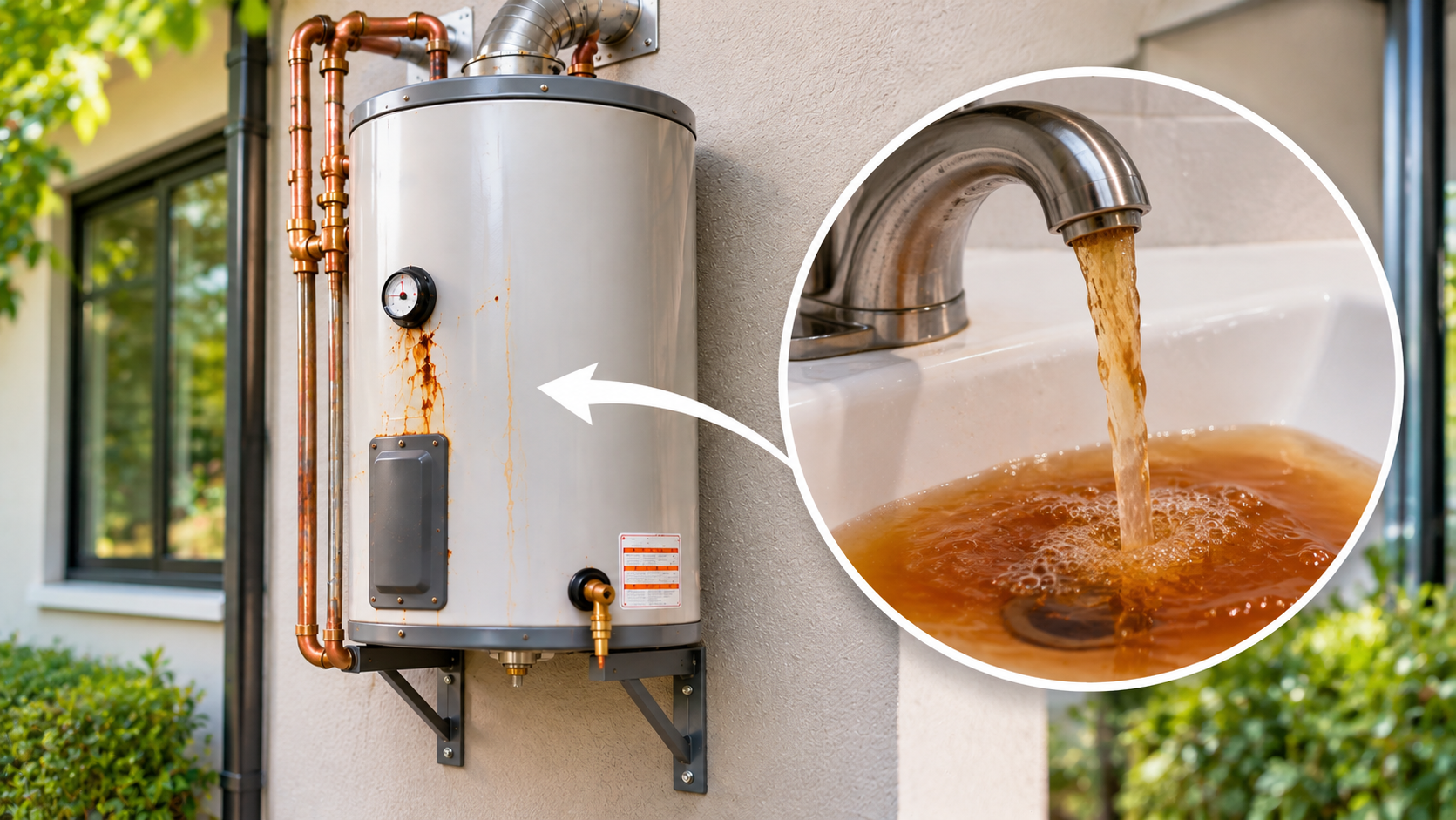
Brown, reddish, or rusty-looking water from your hot water tap can indicate corrosion inside your water heater. This problem deserves attention, especially when your cold water supply remains clear.
Storage-tank water heaters contain protective components that help prevent internal corrosion. One important component is the sacrificial anode rod. Over time, this rod deteriorates and eventually loses its ability to protect the tank effectively.
If corrosion reaches the tank’s inner lining, rust can enter your hot water supply. Continued deterioration may eventually cause the tank to leak. Unfortunately, a corroded storage tank generally cannot be repaired reliably.
Before assuming your water heater is failing, compare hot and cold water from different faucets. Discoloration affecting both supplies may indicate a plumbing or municipal water problem instead.
Warning signs include:
- Brown or reddish hot water.
- A metallic smell or taste.
- Rust-colored sediment in hot water.
- Repeated discoloration despite flushing.
If rusty water continues, contact a qualified plumber. They can determine whether the problem involves the anode rod, tank corrosion, or household plumbing. If the tank itself is corroding, replacement may be necessary.
3. Strange Noises Coming From the Tank
Your water heater should operate relatively quietly. However, loud popping, rumbling, banging, or crackling sounds can indicate a developing problem.
One common cause is sediment buildup inside the storage tank. Minerals such as calcium and magnesium settle at the bottom over time. This happens more frequently in areas with hard water. Understanding how different household systems operate can also help homeowners identify maintenance problems, including how smart home heaters work and their advantages.
As the heating element or gas burner heats the water, trapped water beneath the sediment layer can produce popping and rumbling sounds. The accumulated minerals also make heat transfer less efficient. Consequently, your water heater may consume more energy to heat the same amount of water.
Sediment buildup doesn’t always mean you need a new water heater. In some cases, professional flushing can remove accumulated deposits and restore performance.
However, hardened sediment can become difficult to remove. If your unit is already old, repeated noises may indicate more serious wear.
Pay attention to these symptoms:
- Loud popping during heating cycles.
- Persistent rumbling or banging.
- Longer heating times.
- Reduced hot water availability.
Ask a plumber to inspect the tank if these sounds continue. If sediment has damaged an older unit, replacing it may be more practical than investing in repeated repairs.
4. Water Leaking or Moisture Around the Tank
Water pooling around your water heater is a warning sign you should never ignore. Even a small puddle can indicate a developing plumbing problem or tank failure.
However, not every leak means you need to replace the entire unit. Loose connections, faulty drain valves, and pressure-relief valve problems can sometimes be repaired without replacing the tank.
The important step is identifying where the water originates. If water leaks directly from the tank’s body, internal corrosion or structural damage may be responsible. A leaking storage tank generally cannot be repaired safely and requires replacement.
Ignoring the problem can lead to damaged flooring, walls, electrical components, and nearby belongings.
Look for these warning signs:
- Standing water around the tank.
- Damp flooring or nearby walls.
- Rust around the bottom of the unit.
- Water dripping from the tank’s body.
- Persistent moisture around connections.
If you notice active leaking, arrange a professional inspection immediately. Follow the manufacturer’s emergency instructions and shut off the water supply if necessary. For significant leaks, electrical hazards, or gas-related concerns, keep away and contact the appropriate professional.
Early action can prevent a minor plumbing issue from becoming an expensive household emergency.
5. Your Hot Water Supply Is Becoming Unreliable
Running out of hot water halfway through a shower is frustrating. However, repeated temperature problems can also indicate that your water heater is losing performance.
You might notice lukewarm water, unusually long heating times, or hot water that disappears much faster than before. These symptoms can result from several problems.
For example, sediment buildup can reduce the amount of usable hot water inside a storage tank. A faulty thermostat may also prevent the system from maintaining the correct temperature. Electric models can experience similar problems when their heating elements stop working properly.
Not every temperature problem requires a complete replacement. A technician may resolve the issue by replacing a thermostat, heating element, or another faulty component.
However, repeated breakdowns can make an aging water heater expensive to maintain.
Watch for these changes:
- Hot water runs out unusually quickly.
- Water temperature fluctuates frequently.
- Heating takes longer than usual.
- Multiple repairs become necessary.
- The system struggles during normal household usage.
If repairs no longer restore reliable performance, consider upgrading your water heater. A properly sized replacement can provide more consistent hot water and improve household energy efficiency.
What Are Some Signs That It’s Time to Replace My Water Heater?
Knowing when to replace a water heater starts with recognizing changes in its age, appearance, and performance. Several warning signs can indicate that your system is approaching the end of its useful life.
First, check its age. Traditional storage-tank models generally last around 8–12 years. Second, inspect your hot water for brown or reddish discoloration. This may indicate corrosion inside the tank or problems with your plumbing.
Third, listen for unusual popping, rumbling, or banging sounds. These noises often result from sediment accumulating inside the tank. Fourth, pay attention to inconsistent water temperatures or showers that suddenly run cold.
Finally, inspect the area around your water heater for leaks. A leaking connection may need a simple repair, but a leaking tank usually requires replacement. If several warning signs appear together, arrange a professional inspection before the system fails completely.
What Should You Know Before Replacing a Water Heater?
Choosing a replacement involves more than selecting a model with the same capacity as your old unit. You should consider your household’s hot water requirements, available installation space, and long-term energy costs.
Start by evaluating your household’s daily hot water consumption. For storage-tank models, check the First Hour Rating (FHR). This measurement indicates how much hot water a heater can deliver during its first hour of operation.
Next, compare traditional storage-tank and tankless water heaters. Tank models store heated water for immediate use, while tankless systems heat water on demand. Each option has different installation requirements and operating costs.
Before purchasing, consider these factors:
- Capacity: Choose a suitable size for your household.
- Energy efficiency: Compare energy ratings and estimated operating costs.
- Installation space: Measure the available area carefully.
- Fuel type: Check whether your home supports gas or electric models.
- Local requirements: Confirm permits, ventilation, and installation regulations.
Professional installation also matters. A qualified plumber can help you select a suitable model and avoid unexpected installation expenses.
How Long Does a Water Heater Usually Last?
The average lifespan of a water heater depends on its design, maintenance, water quality, and usage. Most conventional storage-tank water heaters last approximately 8–12 years. However, some units may fail earlier, while properly maintained systems can sometimes operate longer.
Hard water can shorten a storage tank’s lifespan. Minerals such as calcium and magnesium accumulate inside the tank and contribute to sediment buildup. Over time, this buildup can reduce heating efficiency and place additional stress on internal components.
Tankless water heaters generally have longer lifespans. Many models can last approximately 15–20 years or longer with proper maintenance. However, their performance and longevity depend on installation quality, water conditions, and manufacturer recommendations.
You can estimate your unit’s age by checking its manufacturer’s label and serial number. Different manufacturers use different serial number formats, so consult their documentation when necessary.
Regular maintenance can help extend your water heater’s working life. Consider periodic inspections, sediment removal when appropriate, and anode rod checks. These steps can help identify problems before they become expensive failures.
What Are the First Warning Signs of a Failing Water Heater?
Water heaters rarely fail without showing some warning signs. In many cases, the earliest symptoms involve small changes in heating performance rather than complete system breakdowns.
One early warning is lukewarm water. If your shower no longer reaches its usual temperature, the thermostat or heating element may be malfunctioning. Another symptom is a noticeable reduction in hot water availability. This can indicate sediment buildup or declining heating capacity.
You should also pay attention to unusual sounds. Soft popping, crackling, or rumbling may indicate mineral deposits accumulating inside the tank.
Other early warning signs include:
- Hot water takes longer to reach your faucets.
- Water temperature changes unexpectedly.
- Rust-colored particles appear in hot water.
- The system requires frequent adjustments.
- Small leaks develop around valves or connections.
These symptoms don’t automatically mean your water heater needs replacement. Some problems involve inexpensive, repairable components. However, identifying them early gives you time to arrange an inspection and compare repair costs before the situation becomes urgent.
Is It Better to Repair or Replace a Water Heater?
Deciding whether to repair or replace your water heater depends on its age, condition, and estimated repair costs. A relatively new unit with one faulty component may only need a simple repair. However, an older system with repeated problems may be more expensive to maintain.
A useful guideline is the 50% rule. If a repair costs more than half the price of a comparable replacement, purchasing a new unit may offer better long-term value. However, this is a general budgeting guideline, not a universal industry standard.
Consider repairing your water heater when:
- The unit is relatively new.
- The tank has no internal corrosion or structural damage.
- The problem involves a replaceable component.
- Repair costs are reasonable.
Replacement is generally more practical when:
- The tank itself is leaking.
- The unit is approaching or exceeding its expected lifespan.
- Repairs have become frequent.
- Energy efficiency has declined significantly.
- Replacement costs compare favorably with continued maintenance.
Before deciding, request a professional inspection and compare the complete repair and installation costs. Also consider the expected lifespan, warranty, and operating expenses of a replacement model. This approach helps you make a financially sensible decision.
Conclusion
Your water heater plays an important role in keeping your home comfortable. However, ignoring warning signs can lead to unexpected breakdowns, expensive repairs, and water damage. Age, rusty water, unusual noises, leaks, and inconsistent temperatures can all indicate a developing problem.
If you’re wondering whether it’s time to replace my water heater, start by assessing its age, condition, and repair costs. A simple repair may be enough for a newer system, but an older or leaking tank may require replacement.
Don’t wait for your water heater to fail completely. Arrange a professional inspection, compare replacement options, and choose an energy-efficient model that meets your household’s needs. Taking action early can help you avoid emergencies and enjoy a reliable hot water supply for years to come.