Smart Home Heaters Advantages and Disadvantages: The Complete Guide
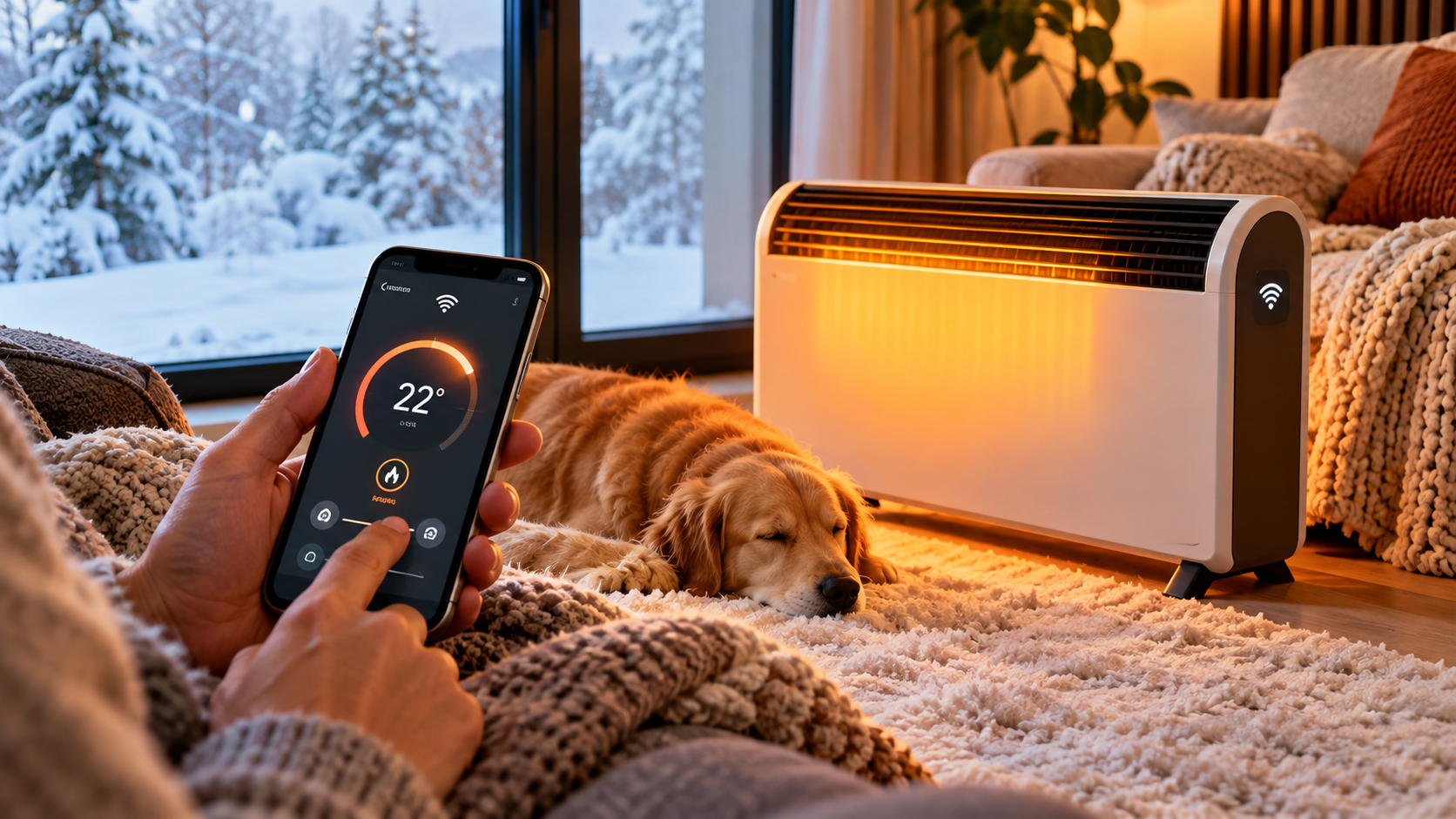
Winter comfort is no longer limited to adjusting a thermostat manually. Smart home heaters allow you to control temperatures through mobile apps, create heating schedules, and monitor energy consumption. Some models also support voice commands and automated temperature adjustments. However, understanding smart home heaters advantages and disadvantages is important before investing in connected heating technology.
Heating represents a significant portion of household energy expenses. According to the U.S. Department of Energy, heating accounts for approximately 29% of residential utility bills. This makes energy efficiency an important factor when choosing a heating system.
Smart heaters offer convenience and greater control, but they also come with limitations. Higher purchase prices, internet dependency, compatibility issues, and potential security risks can affect their overall value. Their actual energy savings also depend on your home, heating habits, and local electricity prices.
In this guide, we explore the main benefits and drawbacks of smart heating systems. You will also learn about traditional heater limitations, common smart device problems, safety concerns, and whether connected heating technology is worth the investment.
What Are the Advantages of Smart Home Heaters?
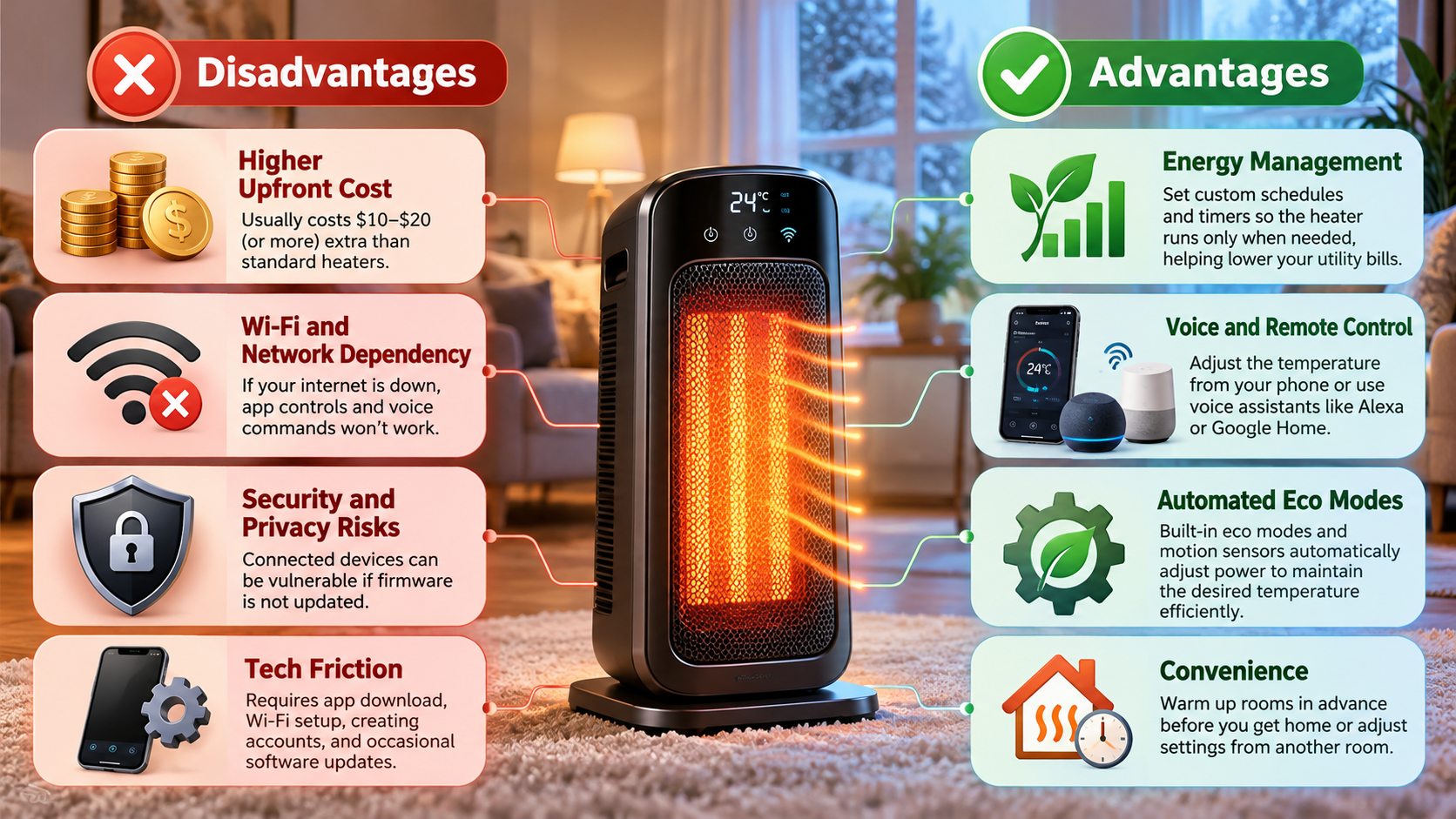
Smart home heaters provide convenient temperature control and automation. Depending on the model, you can adjust settings through a smartphone app, create heating schedules, and monitor energy consumption. Some connected thermostats also support occupancy detection and geofencing. These features can reduce unnecessary heating when nobody is home.
Another benefit is personalized comfort. Compatible heating systems allow you to manage temperatures according to your daily routine. For example, you can schedule heating before waking up or returning home. Zoned systems can also provide separate temperature settings for different areas.
Voice assistant integration adds another layer of convenience. You can adjust compatible devices without using physical controls. However, available features vary between manufacturers and models. Some functions may also require additional equipment or subscriptions.
Precision Scheduling Lowers Operating Costs
Automated heating schedules can help reduce unnecessary energy consumption. Instead of maintaining the same temperature throughout the day, you can adjust heating according to your routine. For example, lower the temperature when everyone leaves and restore comfortable settings before returning.
Smart home heaters advantages and disadvantages also depend on how effectively you use their automated features. The potential benefits include:
- Scheduled heating: Run your heater only when necessary.
- Remote temperature control: Adjust settings when your plans change.
- Energy monitoring: Identify patterns that contribute to higher electricity bills.
- Occupancy-based heating: Reduce heating in unused areas when supported.
- Improved convenience: Manage compatible devices through apps or voice assistants.
However, smart controls do not guarantee lower bills. Actual savings depend on insulation, outdoor temperatures, electricity prices, and heating efficiency. A portable electric heater can still consume substantial electricity when operating at high power.
What Are the Disadvantages of a Heater?
Traditional heaters have several limitations, regardless of whether they include smart features. Operating costs can become expensive during colder months, especially when electricity or fuel prices are high. Poor insulation and inefficient equipment can increase consumption further. Choosing the correct heater for your room size and heating requirements is therefore important.
Safety is another major concern. Portable heaters can cause fires when placed near curtains, bedding, furniture, or other combustible materials. Damaged power cords and overloaded electrical circuits can also create hazards.
Some heating methods can make indoor air feel drier, although their effects on humidity vary. Uneven heat distribution may also leave certain areas uncomfortable. Older heating systems can require regular maintenance to operate safely and efficiently.
Understanding these disadvantages helps you compare different heating options. Smart controls may improve convenience, but they cannot eliminate the basic operating costs and safety requirements associated with heating equipment.
High Power Consumption and Fire Hazards
Electric heaters can consume considerable electricity, particularly when used for several hours daily. For example, a 1,500-watt heater running for four hours consumes approximately 6 kilowatt-hours of electricity. Your actual operating cost depends on your electricity tariff.
Fire prevention also requires careful attention. Follow these essential safety practices:
- Keep heaters away from curtains, bedding, and furniture.
- Place portable heaters on stable, level surfaces.
- Keep children and pets away from hot surfaces.
- Avoid damaged cords and overloaded electrical outlets.
- Follow the manufacturer’s clearance and ventilation instructions.
- Turn off portable heaters when leaving the room or going to sleep, unless the manufacturer explicitly supports the intended use.
Smart plugs and mobile controls cannot eliminate these hazards. Always check whether the heater and its controls are suitable for the intended electrical load. Never assume that remote operation makes an appliance safe to leave unattended.
What Are the Disadvantages of Smart Devices?
Smart devices introduce additional challenges that traditional appliances generally avoid. Privacy is one concern because connected products may collect account information, usage patterns, or device activity. The information collected depends on the manufacturer and its privacy policy. Weak passwords and outdated software can also increase security risks.
Another disadvantage is dependence on software support. Some smart heaters rely on mobile applications or cloud servers for remote access and advanced automation. If a manufacturer discontinues a service, certain features may stop working. Basic manual controls may remain available, depending on the model.
Compatibility can create further problems. Devices from different manufacturers may not work together seamlessly. Some products also require specific wireless standards or additional hubs.
Smart models typically cost more than conventional alternatives. Their electronic components may also require repairs or replacement. Before buying, consider the purchase price, available features, warranty, and expected software support.
Cloud Server Reliance and Security Risks
Cloud-connected heaters may depend on external servers for remote access, voice commands, and certain automated routines. If a service experiences an outage, these features may temporarily become unavailable. The heater itself may continue operating through physical controls, depending on its design.
Security risks deserve equal attention. Weak account passwords, outdated firmware, and compromised smart home accounts can expose connected devices to unauthorized access. The level of risk varies according to the manufacturer’s security practices and the device’s design.
You can reduce these risks by taking a few precautions:
- Choose manufacturers that provide regular security updates.
- Use a strong, unique password for your account.
- Enable multifactor authentication when available.
- Review the manufacturer’s privacy and data collection policies.
- Check whether essential heating controls work without internet access.
- Confirm the expected duration of software support.
A reliable smart heater should remain practical when your internet connection fails. Prioritize models with accessible physical controls and clear support policies. These features can help you avoid unnecessary dependence on cloud services.
What Are Some Common Problems With Smart Home Devices?
Smart home devices can experience connectivity failures, software bugs, and installation difficulties. Smart heaters are no exception. A weak Wi-Fi signal may prevent a device from connecting reliably to its companion app. Router settings, wireless interference, and incompatible network requirements can also cause problems.
Firmware updates sometimes introduce unexpected bugs or change how devices communicate. Pairing errors may require you to repeat the installation process or reset the appliance. Compatibility problems can also occur when connecting devices across different smart home platforms.
These issues can reduce the convenience that smart heating promises. A failed automation may leave a room colder than expected. Alternatively, incorrect schedules or control problems may cause heating to continue longer than intended.
Understanding common problems before purchasing a connected heater can help you choose a more reliable product. Look for clear troubleshooting instructions, accessible customer support, and controls that remain usable when connectivity fails.
Wireless Interference Causes Automation Failures
Reliable connectivity is essential for smart heating features that depend on wireless communication. Thick walls, long distances, and interference from other devices can weaken Wi-Fi signals. Some heaters also require a specific wireless frequency band, making network compatibility important during installation.
If your smart heater repeatedly disconnects, try these troubleshooting steps:
- Move the router or heater to improve signal strength, where practical.
- Check the manufacturer’s recommended Wi-Fi requirements.
- Restart your router and reconnect the device.
- Install available firmware updates according to the manufacturer’s instructions.
- Review heating schedules and automation settings in the companion app.
- Contact customer support if the problem continues.
A Wi-Fi extender may help in some homes, but it is not always necessary. First, identify whether the problem comes from signal strength, router settings, or the device itself.
For greater reliability, choose equipment with accessible physical controls. Locally stored schedules can also reduce dependence on uninterrupted internet access. These features help maintain basic heating functionality during network outages.
Is Smart Home Technology Worth It?
Smart home heating can be worthwhile for households that value convenience, scheduling, and better temperature control. Remote access allows you to adjust settings when plans change. Automated schedules can also reduce unnecessary heating when rooms are unoccupied.
However, the benefits depend on your heating system and daily habits. Smart controls may provide limited savings if you already manage temperatures efficiently. A connected portable heater can still consume substantial electricity when operating at high power. In some homes, improving insulation or upgrading inefficient equipment may offer greater benefits.
The initial purchase price also matters. Compare installation costs, maintenance expenses, subscription fees, and compatibility requirements before upgrading. Reliable Wi-Fi may be necessary for certain features, although some models support local controls.
When comparing smart home heaters advantages and disadvantages, consider whether their features solve a genuine problem. Paying extra for technology you rarely use may not provide sufficient value. The right choice depends on your budget, heating requirements, and willingness to manage connected devices.
Long-Term Value Depends on Consistent Feature Usage
Smart heating equipment provides better value when its features address real household needs. Automated schedules, remote adjustments, and occupancy-based controls can make heating easier to manage. However, paying extra for features you rarely use offers little practical benefit.
Consider these options before making a purchase:
- Choose a smart heater if you regularly adjust temperatures, need remote access, or want automated schedules.
- Choose a conventional heater if you need simple, affordable heating without connected features.
- Consider a smart thermostat if your existing central heating system supports one and you want better temperature control.
- Improve insulation first if heat loss is a major reason for high energy bills.
You should also check safety certifications, warranty coverage, manufacturer support, and compatibility with existing equipment. Compare operating costs rather than assuming every connected model will reduce energy consumption.
Ultimately, smart home heaters advantages and disadvantages should be evaluated against your specific needs. Smart heating can improve comfort and convenience, but it is not automatically the cheapest option. Compare the total cost with the practical benefits before deciding whether an upgrade makes sense.
Conclusion
Smart home heaters offer convenient temperature control, automated schedules, and better management of energy use. However, higher upfront costs, connectivity problems, security risks, and maintenance requirements can affect their overall value. Understanding smart home heaters advantages and disadvantages helps you choose a heating solution that suits your budget and needs.
If you frequently adjust temperatures or want remote access, a smart heater may be worth the investment. However, a traditional heater can be more affordable if you prefer simple controls. During winter, keeping your entire household comfortable also matters. If you have pets, read our guide on how to keep your pets warm during winters for practical tips to help them stay warm and comfortable.
Before upgrading, compare operating costs, safety features, warranty coverage, and compatibility with your existing devices. For more guidance on heating efficiency, explore the U.S. Department of Energy’s home heating systems guide.
Ultimately, the best heating solution balances comfort, safety, energy efficiency, and long-term affordability.