
Cultivating Literacy in Kindergarten With a Kindergarten Book Club
Starting a kindergarten book club transforms early reading from a quiet classroom activity into an enjoyable social experience. According to the National Association for the Education of Young Children (NAEYC), early literacy development involves meaningful interactions, playful learning, and engaging experiences with books. Understanding the relationship between literacy and education also helps explain why these foundational experiences matter. Young children naturally enjoy discussing stories, predicting outcomes, and connecting characters with their everyday experiences.
When teachers organize small reading groups for five- and six-year-olds, they strengthen vocabulary, listening comprehension, and communication skills. Children also become more confident when sharing their thoughts and interpreting stories with classmates. Instead of viewing reading as a classroom requirement, they begin recognizing it as an enjoyable activity.
In this guide, we explore practical ways to establish an early literacy club. You will discover how to teach foundational reading skills, select appropriate books using the five-finger rule, and introduce exciting reading themes. We also cover engaging literacy activities that encourage young learners to participate every week.
How do you teach literacy in kindergarten?
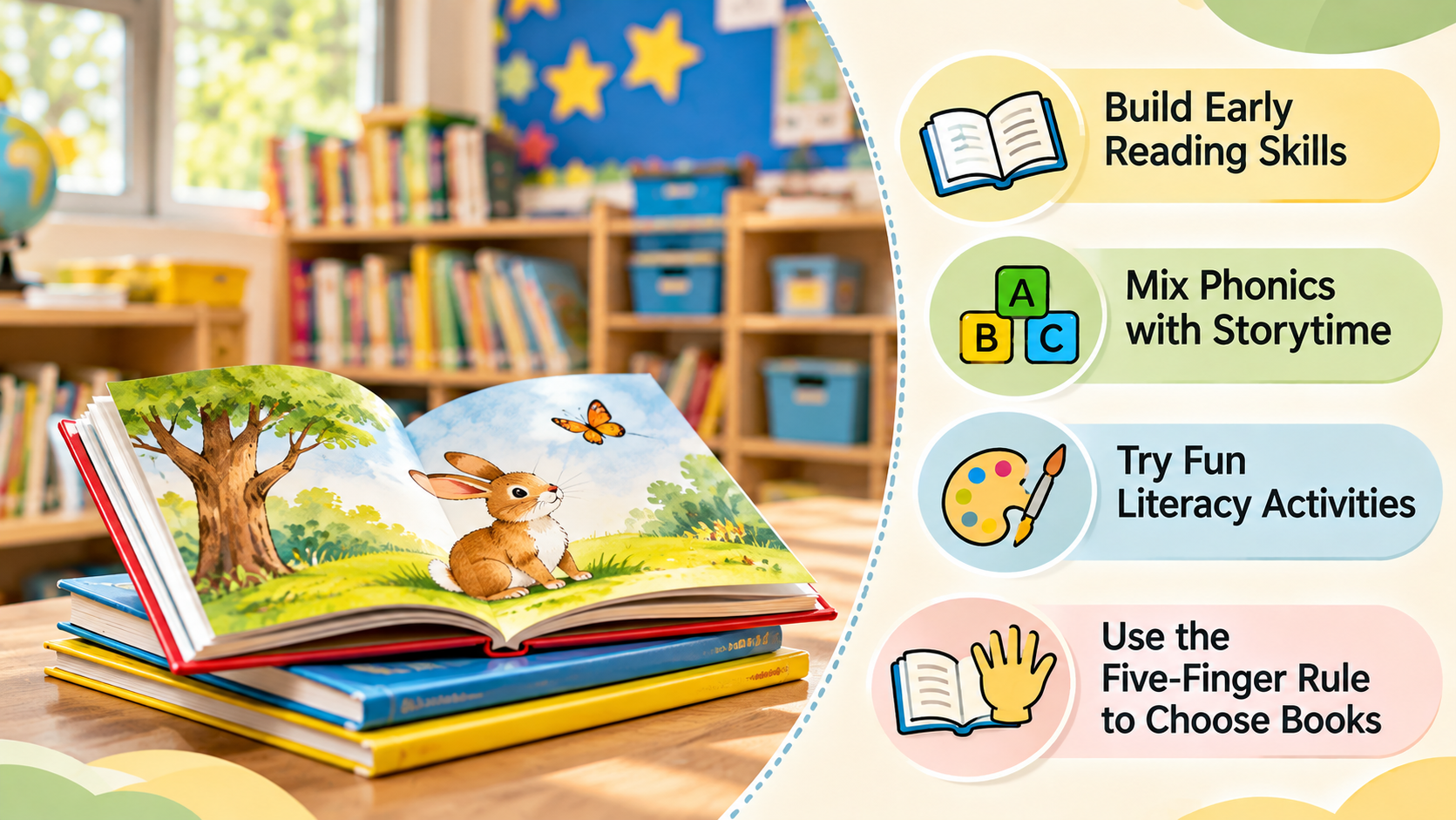
Teaching literacy in kindergarten requires a balanced approach that combines systematic phonics instruction with meaningful language experiences. Begin by developing phonemic awareness, which helps children recognize and manipulate individual sounds. Rhyming games, songs, and sound-matching activities make this process enjoyable. Unstructured play in early childhood development also highlights how playful experiences support young children’s learning. Gradually introduce letter-sound relationships so students can recognize letters and decode simple words.
Daily read-aloud sessions are equally important for developing early reading skills. They expose children to new vocabulary, sentence structures, and different storytelling styles. During shared reading, point to printed words and demonstrate how text moves from left to right. Encourage children to recognize familiar letters and repeated words.
Emergent writing also deserves attention. Let students draw pictures, write familiar letters, and label objects using invented spelling. These experiences help children understand how written language communicates ideas.
A balanced literacy routine should include:
- Phonics practice: Introduce letter sounds and simple decoding.
- Interactive reading: Encourage predictions and story discussions.
- Vocabulary development: Explain unfamiliar words through examples.
- Early writing: Let children express ideas through drawings and words.
Combining structured instruction with enjoyable storytelling helps kindergarten students develop lasting literacy foundations.
Blending Explicit Phonics With Playful Storytelling
Children understand letter sounds more easily when phonics instruction connects with familiar stories. Instead of relying entirely on worksheets, introduce new sounds through picture books, storytelling, and interactive reading activities. For example, after teaching the letter B, choose a story featuring words such as bear, ball, and butterfly. Ask children to listen carefully whenever they hear the target sound.
You can also introduce simple activities that connect spoken sounds with printed letters. Give students picture cards and ask them to identify objects beginning with the same sound. Encourage them to repeat the words, identify their starting letters, and create simple sentences.
During a kindergarten book club, these activities become opportunities for collaborative learning. Children can discuss familiar words, identify repeated sounds, and discover new vocabulary together. Keep instructions short and provide plenty of encouragement. Combining explicit phonics teaching with playful storytelling makes early reading practice meaningful, engaging, and easier to remember.
What are some fun activities for a literacy club?
Fun activities for a literacy club turn passive listening into active learning experiences. Since kindergarten students learn through movement, imagination, and conversation, choose activities that encourage hands-on participation. This way, children can explore stories while developing essential early reading skills. Moreover, playful learning makes literacy sessions more enjoyable and memorable.
For example, dramatic storytelling allows children to recreate familiar scenes using costumes, puppets, and classroom props. Teachers can also explore theater games that make learning enjoyable to encourage creative expression and classroom participation. Similarly, a storybook scavenger hunt encourages students to search for objects, pictures, or familiar words connected to the weekly story. As a result, children become more involved in understanding story details.
Another exciting option is musical alphabet freeze dance. Play music and pause it occasionally to help children identify displayed letters or their sounds. Additionally, sensory storytelling bins encourage creative exploration. Fill containers with safe materials, small figurines, and letter tiles. Children can then use these objects to recreate story events.
Other enjoyable literacy club activities include:
- Story sequencing: Arrange picture cards in the correct order to understand story events.
- Puppet conversations: Encourage children to speak and interact as familiar story characters.
- Rhyme matching: Connect pictures with similar ending sounds to develop phonemic awareness.
- Word hunts: Search for familiar letters and words around the classroom.
Finally, these activities strengthen vocabulary, sequencing, listening, and comprehension skills. More importantly, they help young readers develop confidence while making literacy learning enjoyable.
What is the 5 finger rule for books?
The five-finger rule is a simple method for helping children choose books that match their current independent reading abilities. It gives young readers a practical way to recognize when a book might feel too easy or challenging. Teachers and parents can introduce this method during classroom reading sessions or kindergarten book club meetings.
To use the rule, ask a child to open a book to a random page and read it aloud. Each time they encounter an unfamiliar or difficult word, they raise one finger. After finishing the page, count the raised fingers to estimate the reading difficulty.
The general interpretation includes:
- Zero or one finger: The book may be relatively easy for independent reading.
- Two or three fingers: The book may offer a manageable reading challenge.
- Four or five fingers: The book may be too difficult for independent reading.
Remember that this method provides guidance rather than an exact reading assessment. Vocabulary, comprehension, confidence, and the child’s reading experience also matter. Difficult books can still be enjoyable when adults read them aloud and explain unfamiliar words.
What are some ideas for a book club for kids?
A successful kindergarten book club should make reading feel enjoyable, welcoming, and predictable. Young children respond well to familiar routines and activities that give them opportunities to participate. Instead of organizing complicated meetings, introduce simple themes that connect stories with their interests and everyday experiences.
One idea is a Flashlight Friday reading club. Children can explore picture books using small, child-safe flashlights under appropriate classroom supervision. Another option is a Stuffed Animal Reading Buddy club. Students bring a favorite plush toy and pretend to read stories to their companions.
You can also organize an author-study club. Explore different books by familiar children’s authors, such as Mo Willems or Ezra Jack Keats. Encourage children to notice recurring characters, illustrations, and storytelling patterns.
Other book club themes include:
- Animal Adventure Club: Explore stories about pets, wildlife, and habitats.
- Friendship Reading Club: Discuss kindness, sharing, and relationships.
- Fairytale Club: Discover traditional stories and imaginative characters.
- Seasonal Reading Club: Explore books about weather, holidays, and nature.
A small story-related snack or creative activity can make meetings more memorable. Always consider classroom food policies and children’s dietary requirements.
Structuring a Twenty-Minute Kindergarten Meeting
A predictable meeting structure helps kindergarten students understand what happens during each book club session. Keep activities short and provide opportunities for every child to participate. A twenty-minute meeting offers enough time for storytelling, conversation, and a simple creative response without overwhelming young learners.
You can divide the session into three manageable stages:
First five minutes: Book introduction
Show the book cover and introduce its title and author. Ask children to examine the illustrations and predict what might happen. Encourage them to share their ideas without worrying about correct answers.
Next ten minutes: Interactive reading
Read the story aloud using expressive voices and natural pauses. Ask occasional questions about characters, events, and unfamiliar words. Give children opportunities to repeat phrases or describe illustrations.
Final five minutes: Creative response
Invite students to draw a favorite scene, describe a character, or answer a simple story question. Allow them to share their work with classmates.
Following this routine makes a kindergarten book club easier to manage. It also creates a comfortable environment where children can develop confidence and enjoy reading together.
What activities can be done in a book club?
A kindergarten book club can include several activities that develop comprehension, communication, creativity, and critical thinking. To make learning more engaging, choose activities that encourage children to interact with stories and express their understanding. Additionally, allow students to respond through speaking, drawing, movement, or simple writing. Teachers can also explore drawing as a learning activity to help children communicate their understanding visually.
First, introduce a turn-and-talk activity. Pair children and ask them to discuss their favorite character or predict what happens next. As a result, students practice listening and become more comfortable sharing ideas, especially in smaller groups.
Another effective option is a collaborative story map. Use chart paper to illustrate the beginning, middle, and ending of a familiar story. Meanwhile, children can suggest important events while the teacher records their ideas.
Similarly, character trait webs help children understand different personalities. Ask students to describe how a character behaves and feels. For example, introduce simple vocabulary such as brave, helpful, worried, and friendly.
Other engaging activities include:
- Story retelling: Recreate important events using puppets or picture cards.
- Alternative endings: Invite children to suggest different story conclusions.
- Character drawing: Draw a favorite character and describe its personality.
- Story prediction: Guess what might happen next using illustrations and clues.
Finally, encourage children to share their completed activities with classmates. These experiences strengthen story comprehension and communication skills. More importantly, they help young readers develop confidence while expressing their ideas.
What are some examples of literacy activities?
Kindergarten literacy activities should develop reading, writing, listening, and speaking skills through regular classroom practice. Short activities work particularly well because they provide repeated learning opportunities without overwhelming young children. Teachers can incorporate these exercises into morning routines, group discussions, and kindergarten book club sessions.
A morning message is a useful starting point. Write a short greeting on the board with a missing letter or familiar word. Invite children to identify the missing information and explain their choices. This introduces print awareness and encourages early writing.
Syllable clapping is another simple exercise. Say familiar words, such as children’s names or story characters, and ask students to clap for each syllable. This helps them recognize how spoken words contain smaller sound units.
Other practical literacy activities include:
- Rhyme matching: Match pictures or toys with similar ending sounds.
- Letter recognition: Identify uppercase and lowercase letters.
- Sound sorting: Group pictures according to their beginning sounds.
- Classroom labeling: Create simple labels for doors, chairs, and learning materials.
- Picture storytelling: Describe a picture and create a short spoken story.
These activities reinforce foundational literacy skills throughout the school day. Repeating familiar exercises also allows teachers to observe children’s progress and identify areas requiring additional support.
What are some good topics for a book club?
The best kindergarten book club topics connect with children’s everyday experiences, interests, and developing understanding of the world. Familiar themes encourage participation because students can relate stories to situations they already recognize. Choose picture books that introduce meaningful ideas through simple language, engaging illustrations, and relatable characters.
Friendship and kindness are useful starting points. Stories about sharing, helping others, and resolving disagreements introduce important social skills. Teachers can ask children how characters treat their friends and what they might do differently.
Nature and seasonal changes also provide engaging reading opportunities. Books about autumn leaves, spring gardens, weather, and animals introduce new vocabulary. They can also encourage children to observe their surroundings.
Other interesting book club topics include:
- Animal adventures: Explore wildlife, pets, and animal habitats.
- Feelings and emotions: Discuss happiness, sadness, fear, and excitement.
- Family and community: Introduce relationships, neighborhoods, and helpful community members.
- Bravery and confidence: Explore stories about trying new activities and overcoming challenges.
- Imagination and creativity: Discover magical adventures, unusual characters, and make-believe worlds.
Rotate themes regularly to maintain children’s interest. Encourage students to suggest their own topics and explain why they find them interesting. This gives young readers a sense of ownership while making discussions more meaningful.
Conclusion
Launching a kindergarten book club is one of the most rewarding ways to nurture a lifelong love of reading in young children. By combining explicit phonics instruction with playful group discussions, you help five- and six-year-olds build essential decoding and comprehension skills naturally. Tools like the five-finger rule empower emergent readers to choose just-right books, while interactive retelling stations and relatable themes keep every meeting fresh and exciting.
You do not need elaborate supplies or hours of prep time to make literacy social and memorable. Start small this week by gathering four or five students, picking an engaging picture book about friendship or animals, and trying one hands-on response activity. Watch how quickly your young learners gain confidence, expand their vocabularies, and fall in love with sharing stories together.