
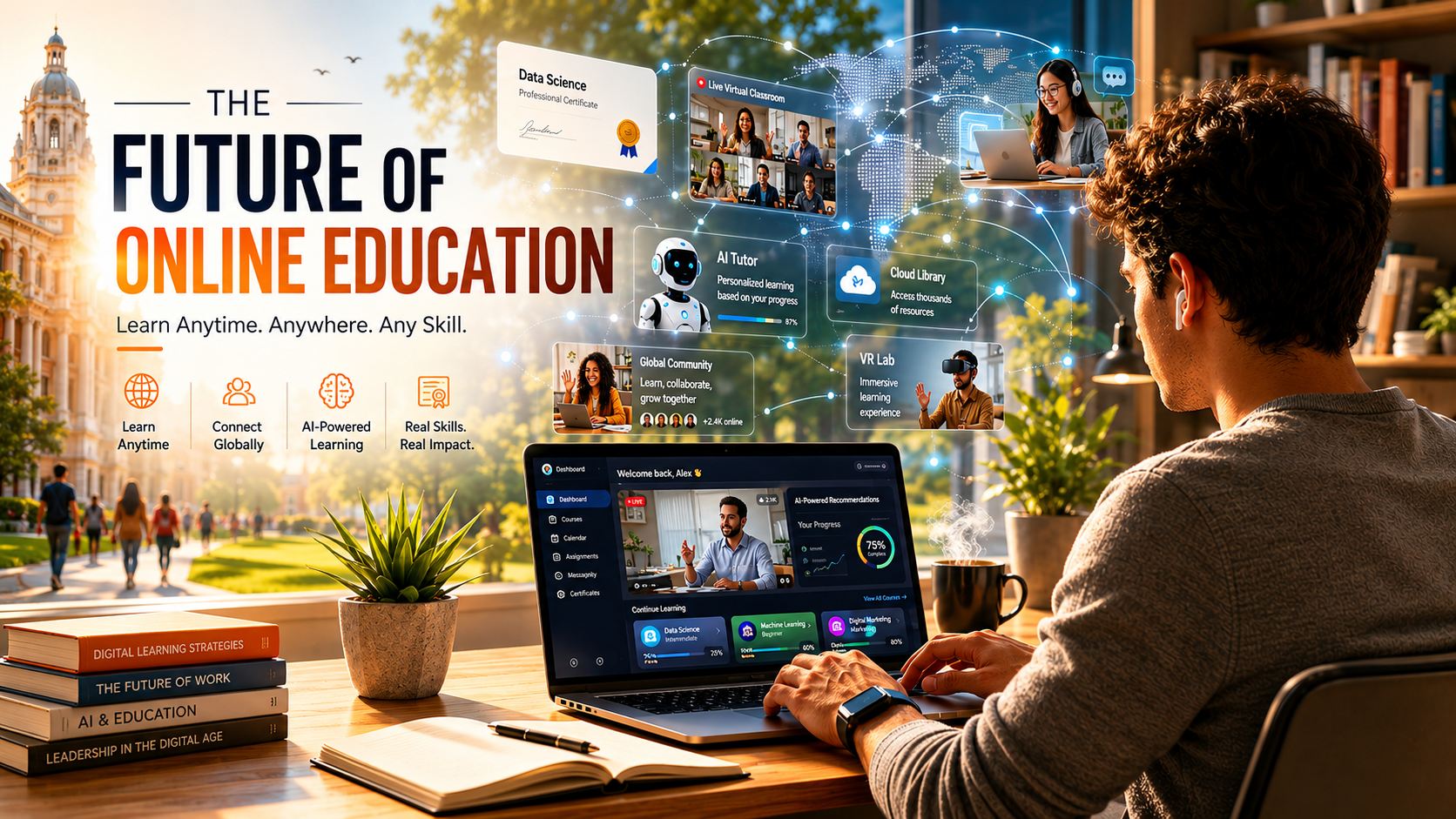
The Future of Online Education: A Complete Beginner’s Guide
The way we learn is changing faster than ever before. Traditional classrooms are no longer the sole hubs of knowledge. Today, the future of online education is shaping a world where anyone with an internet connection can access world-class training. According to recent insights from the World Bank, digital learning infrastructure has become critical for building resilient global education systems. This shift is not just a temporary trend. It represents a permanent evolution in how human beings acquire skills and credentials.
Understanding this landscape matters because it directly impacts your career, your personal growth, and your children’s development. Whether you want to switch jobs, learn a new hobby, earn a degree, or explore flexible income opportunities such as Best online typing jobs , digital classrooms offer unprecedented flexibility. In this comprehensive guide, we will break down the massive shifts happening in virtual schooling. You will discover the technologies driving this revolution, the benefits of remote learning, and practical tips to succeed as a modern digital student. The barriers to entry are falling, making this the perfect time to understand how you can navigate and benefit from this educational shift.
Why the Future of Online Education Matters Now
The digital learning environment has evolved from a basic alternative into a primary powerhouse. Millions of students worldwide now rely on web-based platforms to advance their lives. This massive growth occurs because the modern economy demands continuous upskilling, which traditional universities cannot always provide quickly. As industries change overnight, workers need fast, reliable ways to update their professional toolkits without committing to four-year programs.
In the past, high-quality instruction required living near an elite institution and paying hefty tuition fees. Digital classrooms remove these roadblocks completely. A student in a rural village can now take the exact same computer science course as a student sitting in a lecture hall in Silicon Valley. This democratization of knowledge flattens the playing field, allowing talent to shine regardless of geographical origin or socioeconomic status.
Furthermore, employers now value practical skills over specific paper degrees. As industries change rapidly due to automation, professionals must learn constantly. Virtual learning platforms offer short, targeted certificates that help workers stay relevant while keeping their full-time jobs. This flexibility ensures that learning becomes a lifelong habit rather than a single phase of youth.
Key Technological Trends Transforming Digital Learning
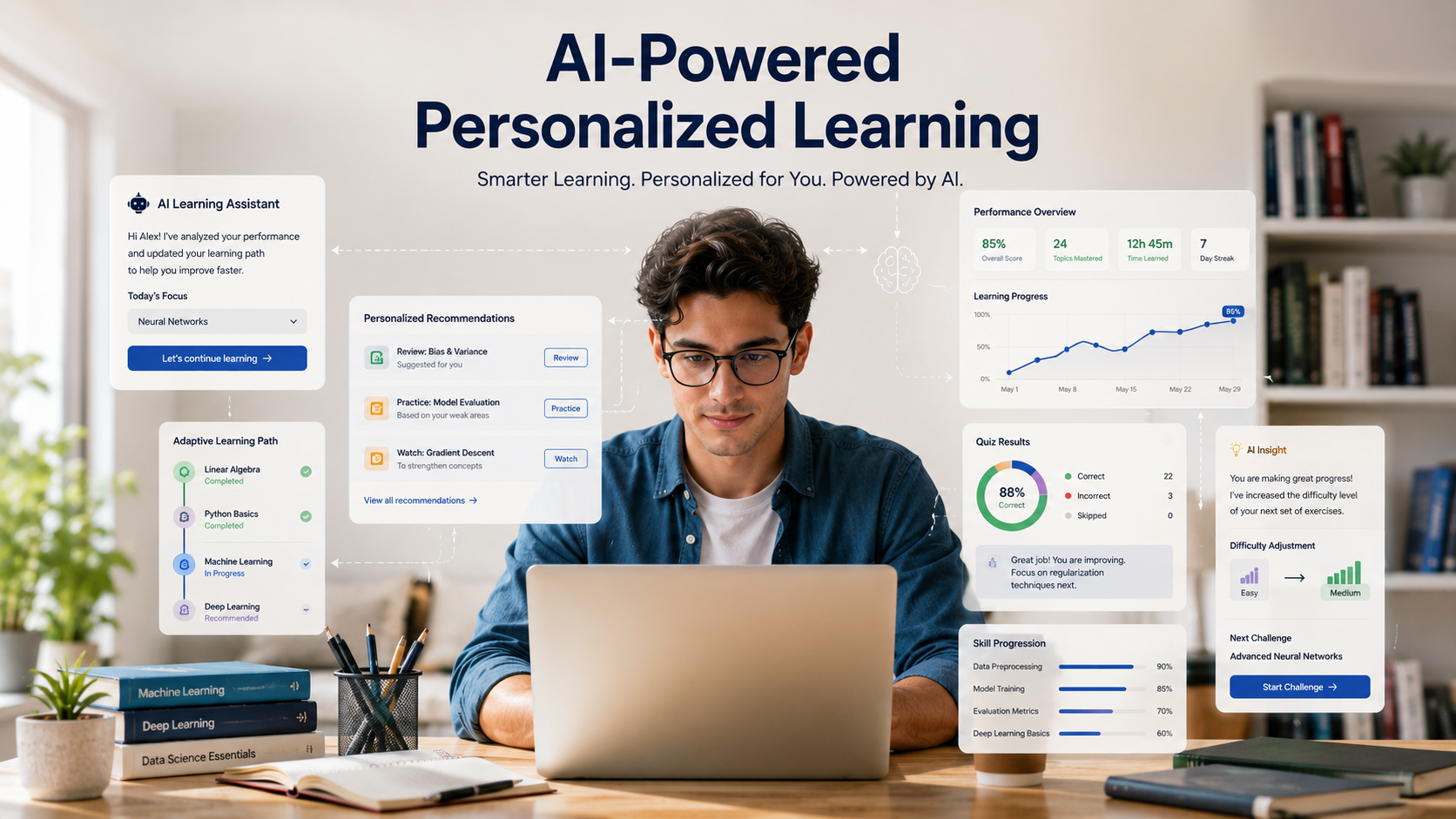
Technology serves as the backbone of this educational shift. It changes online classes from boring, static text pages into deeply interactive, engaging experiences. We are moving past the era of simple video lectures and entering a time where software actively helps you learn. These innovations ensure that remote students receive the same level of attention, engagement, and hands-on practice as those in traditional school environments.
Artificial intelligence acts as a personal, 24/7 tutor for students. AI algorithms analyze how quickly you progress through a course. If you struggle with a specific math concept, the system automatically provides extra practice problems and simpler explanations. It adapts to your personal learning speed, ensuring you never feel rushed or left behind.
-
Adaptive learning paths: Curriculums change in real-time based on your test scores and study habits.
-
Instant feedback: AI grading tools give you immediate insights into your mistakes so you can correct them.
-
Smart chatbots: Virtual assistants answer common student questions instantly at any hour of the day or night.
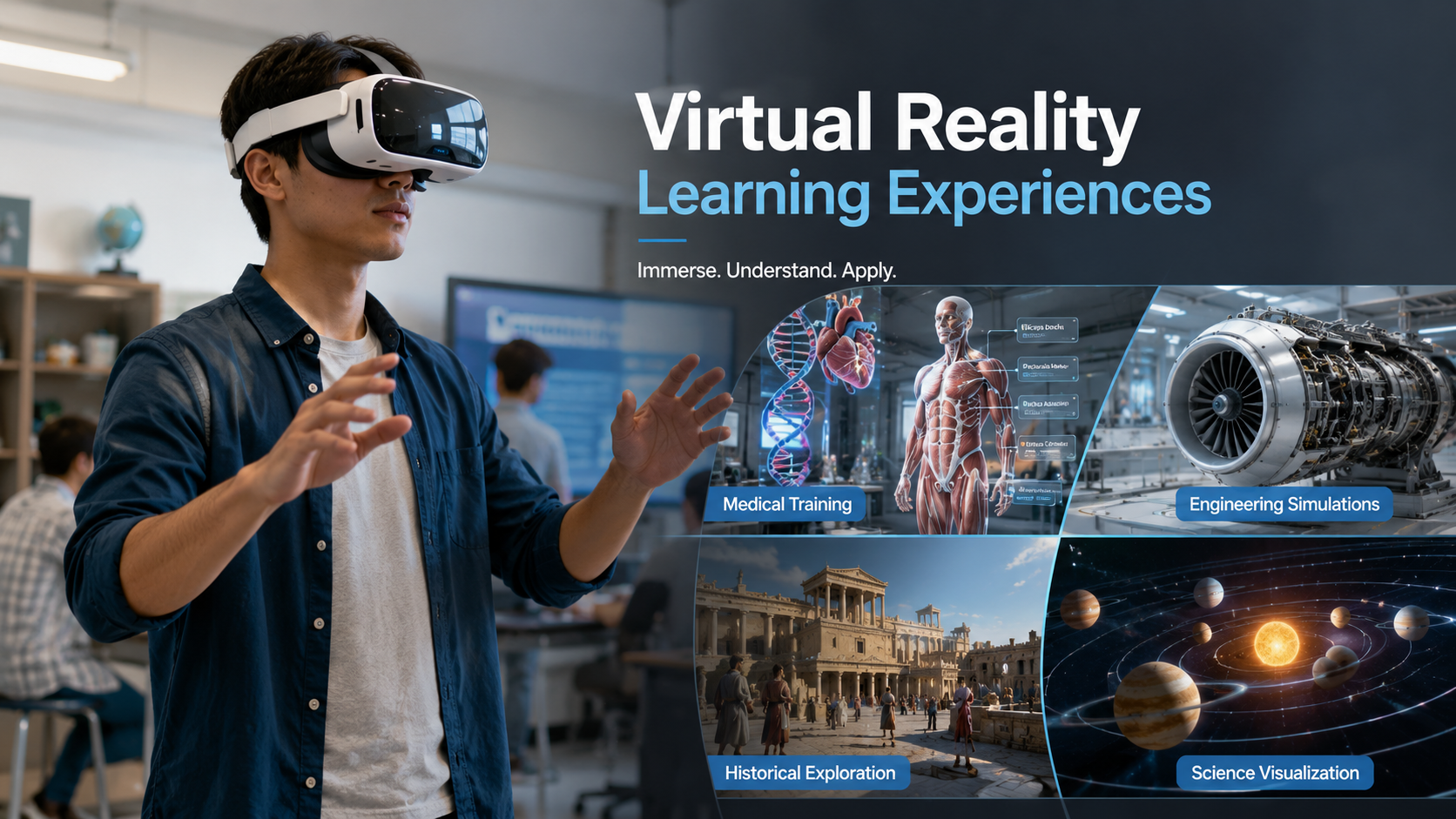
Virtual reality (VR) also brings abstract concepts to life. Imagine studying ancient Roman history by walking through a digital recreation of the Colosseum. Medical students can practice complex surgeries in a risk-free virtual environment before ever touching a live patient. This hands-on experience bridges the gap between theory and practice, making deep technical training accessible from anywhere in the world.
Essential Benefits of the Modern Virtual Classroom
Stepping into the world of web-based study offers distinct advantages over traditional brick-and-mortar setups. These benefits cater directly to the lifestyle needs of modern learners who must balance education with family and work. The modern virtual space is built around the student, offering a level of personalization that physical schools simply cannot match due to spatial and scheduling constraints.
Traditional schools force you to follow a rigid schedule that can disrupt your life. Remote learning allows you to set your own hours completely. You can study early in the morning, during your lunch break, or late at night when the house is quiet. Furthermore, you can pause or rewind video lectures until you completely grasp the material, which eliminates the anxiety of missing a professor’s notes.
Getting a degree or certification online is also generally much friendlier on your wallet. You completely eliminate costs related to campus housing, daily commuting, parking passes, and expensive physical textbooks. Most digital courses offer materials through downloadable PDFs and cloud libraries. This cost reduction opens doors for individuals who previously found higher education financially impossible, making learning a realistic goal for everyone.
How to Succeed as an Online Learner
While distance learning offers incredible freedom, it also requires strong self-discipline. Without a physical professor looking over your shoulder or classmates sitting next to you, you must manage your time wisely. Many students struggle initially because the lack of structure can lead to procrastination. Succeeding in this environment requires a shift in mindset and the creation of new personal routines.
Do not try to study in bed or in front of a television. Set up a quiet, well-lit corner in your home specifically for your schoolwork. This simple habit signals to your brain that it is time to focus and minimizes daily distractions. Keep your desk organized, ensure your internet connection is stable, and let your family or roommates know when you are in “school mode.”
Additionally, you must block out specific times on your weekly calendar for your studies and treat them like a real job. Consistency builds habits. If you treat your virtual classes as optional, you will quickly fall behind on assignments and video modules. Create a daily checklist, participate in online discussion forums to stay connected, and reward yourself for meeting your study goals each week.
FAQs
What is the future of online education for traditional universities?
Traditional universities are rapidly moving toward a hybrid model rather than replacing physical campuses entirely. Leading institutions are actively blending in-person lectures with digital resources to create a more resilient, accessible ecosystem. This structural approach allows universities to reach an expansive global audience while simultaneously offering local, on-campus students flexible learning schedules.
Many top-tier universities now offer fully online master’s and bachelor’s degrees that carry the exact same academic weight and prestige as their traditional on-campus equivalents. This intentional blend ensures that universities remain competitive and relevant in an increasingly digital world while maximizing their physical infrastructure and resources.
Furthermore, investing heavily in digital classrooms allows institutions to remain incredibly resilient against future societal or economic disruptions. By expanding their educational impact globally, traditional universities are transitioning into borders-free centers of knowledge. This evolution ultimately serves a more diverse demographic of adult learners, professionals, and international students who cannot relocate.
Will online degrees become widely accepted by global employers?
The Future of Online Education points toward greater acceptance of online degrees by employers worldwide. Global employers increasingly respect and seek out digital credentials. Modern hiring managers care more about your actual technical skills, practical experience, and problem-solving abilities than where you physically sat while learning. Large technology companies, global financial institutions, and creative agencies actively hire candidates who hold verified certificates and digital degrees from reputable online platforms.
As the Future of Online Education continues to evolve, completing a rigorous virtual program proves to employers that you possess exceptional time management skills, self-motivation, and digital fluency. These soft skills are highly valuable in today’s remote and hybrid work environments, making online graduates competitive candidates.
The Future of Online Education also reflects changing workplace expectations. As collaboration tools increasingly mirror the software used in digital learning environments, holding a virtual degree demonstrates that you can perform effectively from day one. Employers recognize that independent online study requires grit, focus, and organization—qualities that are highly valued in modern organizations.
How does artificial intelligence impact student learning in digital spaces?
Artificial intelligence personalizes the entire learning journey by removing the limitations of a one-size-fits-all curriculum. AI algorithms analyze your unique strengths, weaknesses, and engagement levels in real time to adjust course difficulty dynamically. For example, if the system detects that you excel at visual learning, the platform will automatically prioritize video content and interactive diagrams.
Conversely, if you struggle with a specific complex concept, the AI generates targeted practice quizzes and alternative explanations to help you improve. This highly customized approach ensures you never get bored by slow material or left behind by advanced topics. It closely mimics the luxury experience of having a private tutor who understands your exact learning style, accelerating your educational progress significantly.
Beyond personalization, AI tools offer instant grading feedback and 24/7 conversational assistants, ensuring that remote students are never left waiting days for a professor to answer basic clarifying questions.
What are the main challenges students face with remote learning?
The biggest challenges students face with remote learning are social isolation and a lack of self-regulation. Without consistent, face-to-face peer interaction and a structured physical schedule, some students feel disconnected from the broader academic community. Additionally, procrastination can easily derail your academic progress if you lack strong time management skills or clear personal boundaries.
Successful online students actively overcome these specific hurdles by joining virtual study groups, participating frequently in digital discussion forums, and using advanced planning applications to track assignment deadlines. Building a rigid personal routine and seeking out vibrant online communities can successfully replace the social aspects of a physical campus.
By taking charge of your environment, you keep motivation levels high and prevent the fatigue that often comes from staring at screens alone. Self-discipline ultimately acts as the deciding factor between dropping out and thriving in a digital course.
Is virtual reality actively used in online courses today?
Yes, virtual reality (VR) is currently used across various specialized fields like medicine, engineering, and aviation to provide hands-on training. For instance, modern flight schools use advanced, immersive simulators to train pilots safely under dangerous weather conditions. Technical training schools use VR headsets to teach intricate mechanical repairs without requiring expensive, high-risk physical equipment or risking student safety.
As VR hardware becomes more affordable for the general public, immersive learning experiences are expanding into standard history, science, and art classes globally. This spatial technology completely changes online learning from a passive viewing activity into an active, three-dimensional experience.
By allowing students to physically interact with molecules, architectural structures, or historical artifacts, VR greatly improves how well students understand and remember complex information. This bridges the final gap between online theory and real-world physical practice.
Conclusion
The future of online education promises a more inclusive, flexible, and highly personalized approach to acquiring knowledge. We are moving away from rigid, one-size-fits-all classrooms and entering an era of lifelong, self-paced learning. Driven by breakthroughs in artificial intelligence and immersive virtual reality, digital platforms now provide elite educational experiences to anyone willing to learn. The digital landscape has matured into a reliable ecosystem that empowers individuals to control their own intellectual and professional growth.
While this style of learning demands high self-discipline and strong time management, the personal and professional rewards are massive. You can learn from global experts, save thousands of dollars, and study on a schedule that fits your life perfectly. The tools to transform your future are already at your fingertips, waiting for you to utilize them. As technology continues to advance, the gap between online and offline instruction will disappear entirely. Take the first step today by choosing a topic you love, enrolling in a virtual course, and embracing the modern way to learn.