
Is Amazon Prime Still Worth It? A Realistic Breakdown
Is Amazon Prime still worth it in 2026? For years, an Amazon Prime membership felt like an obvious choice for frequent online shoppers. You paid an annual fee, placed an order, and received packages quickly. However, rising subscription costs and changes to popular benefits have made consumers reconsider whether the membership still offers enough value.
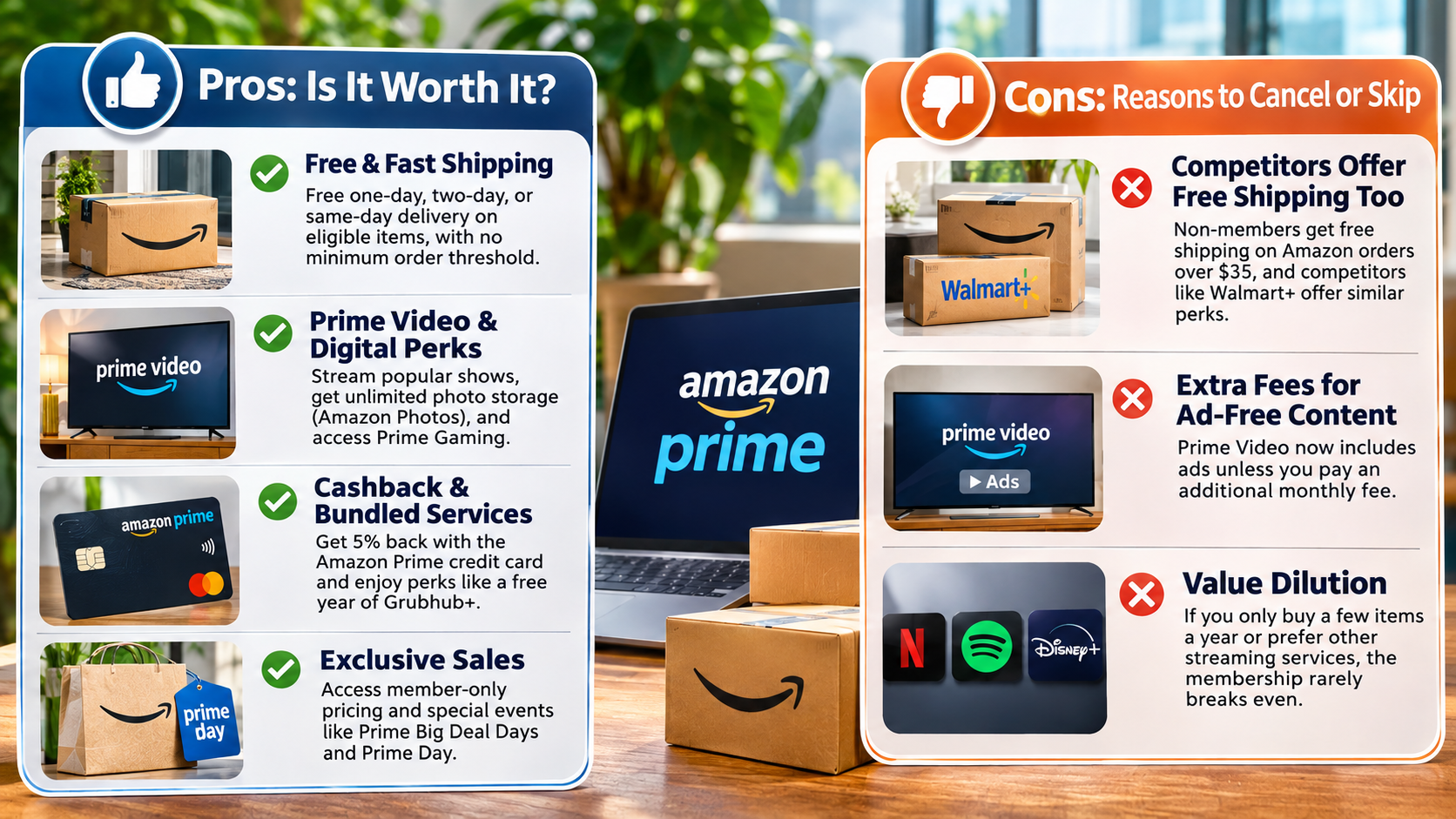
In 2026, a standard US membership costs $139 per year or $14.99 per month. Meanwhile, non-members can still qualify for free standard shipping on eligible orders of $35 or more. Prime Video has also introduced additional charges for customers who want an enhanced ad-free experience.
These changes raise an important question: Is Amazon Prime still worth it, or are customers paying more for fewer benefits?
This guide examines membership costs, delivery services, streaming changes, customer behavior, and competing alternatives. It will help you decide whether renewing your subscription makes financial sense.
Is Amazon Prime Really Worth It Anymore?
Amazon Prime remains worthwhile for people who regularly use its shopping, delivery, and entertainment benefits. However, occasional shoppers may struggle to recover the annual membership cost. The decision depends on how frequently you order products and which additional services you actually use.
A standard US membership costs $139 annually. That works out to approximately $11.58 per month. Paying monthly costs $14.99, making the annual option cheaper for long-term members.
Non-members can also receive free standard shipping on eligible orders of $35 or more. However, delivery usually takes longer than Prime shipping.
Prime Video also requires closer consideration. Standard Prime Video content includes advertisements, while the US Prime Video Ultra subscription costs an additional $4.99 monthly.
Therefore, Amazon Prime’s value depends on actual usage rather than its advertised benefits. Frequent shoppers and regular streamers may still find the subscription worthwhile.
The True Break-Even Point for Shoppers
The easiest way to determine whether Amazon Prime is worth it involves comparing your annual savings against its membership fee. Instead of counting every advertised benefit, focus on services you genuinely use.
For example, an annual membership costs $139. You need to receive at least $139 in measurable value to break even.
Consider these factors when calculating your savings:
- Delivery savings: Compare Prime shipping benefits against standard shipping charges.
- Shopping frequency: Count how many eligible orders you place monthly.
- Entertainment value: Consider whether you regularly watch Prime Video content.
- Additional benefits: Include eligible grocery discounts, exclusive deals, and other services you use.
Non-members can already qualify for free standard shipping on eligible orders above $35. Therefore, avoid treating every delivery as a separate saving.
The annual membership becomes easier to justify when multiple benefits contribute meaningful value. If you primarily shop occasionally, paying for faster delivery may not be financially sensible.
Is It Worth Getting an Amazon Prime Subscription?
Getting an Amazon Prime subscription makes sense when your household regularly purchases products online. Frequent orders can make faster delivery more valuable, particularly when buying household essentials, groceries, and everyday supplies.
Families may benefit from convenient deliveries and exclusive shopping discounts. Customers who frequently purchase eligible products can also access same-day and next-day delivery in supported locations.
However, convenience should not automatically be treated as financial savings. You might receive products faster without actually spending less money.
Prime also includes entertainment and additional membership benefits. These can improve its overall value if you already use them. However, paying separately for services you rarely access makes the subscription less attractive.
Before joining, compare your expected usage with the annual membership fee. Consider your location, shopping habits, and available delivery options.
A Prime subscription is most useful when several benefits support your regular spending habits. Occasional shoppers should carefully evaluate whether a recurring subscription is necessary.
Testing Value with Short-Term Trials
A short-term trial can help determine whether Amazon Prime deserves a place in your monthly budget. Eligible new members may receive a 30-day free trial. However, availability and eligibility depend on Amazon’s current terms.
Use the trial to evaluate your actual shopping habits rather than relying on assumptions. Track your purchases and compare delivery experiences with your previous shopping routine.
Here are some practical steps:
- Track your orders: Record how frequently you purchase eligible products.
- Compare delivery times: Check whether Prime offers meaningful improvements.
- Test entertainment benefits: Watch available Prime Video movies and television shows.
- Review additional services: Explore other benefits you would genuinely use.
- Calculate potential savings: Compare measurable savings against the regular membership price.
Remember that a free trial usually converts into a paid subscription unless you cancel beforehand.
Avoid signing up simply because a trial is available. The purpose is to understand whether the service provides lasting value.
Is Amazon Prime Losing Customers?
Amazon Prime continues to operate as a major subscription service. However, determining whether it is losing customers requires reliable membership and cancellation data.
There is a difference between slower subscriber growth and actual customer losses. A company can continue attracting new members while some existing subscribers decide not to renew.
Consumers are also becoming more selective about recurring subscriptions. Streaming services, shopping memberships, and digital entertainment compete for the same household budgets.
Some shoppers may cancel Prime because they no longer order frequently. Others might maintain their membership throughout the year because they regularly use its delivery and entertainment benefits.
Another trend worth considering is seasonal subscription management. Customers can activate memberships during major shopping events and cancel when they no longer need them.
However, without independently verified cancellation figures, it would be misleading to claim that Amazon Prime is experiencing accelerating customer losses.
The more useful question is whether individual subscribers still receive enough value to justify renewing their memberships.
The Shift Toward Seasonal Subscription Hopping
Consumers increasingly evaluate subscriptions based on their actual needs. Instead of maintaining every service throughout the year, some households prefer activating memberships temporarily.
Amazon Prime makes this approach possible through its monthly membership option. Customers can subscribe when they expect to make frequent purchases and cancel when those benefits become unnecessary.
Major shopping events can influence these decisions. Prime Day, Black Friday, and holiday shopping periods often encourage increased purchasing activity.
Seasonal subscriptions may appeal to people who:
- Shop primarily during major discount events.
- Watch specific Prime Video movies or series.
- Purchase gifts during holiday seasons.
- Need faster deliveries for temporary household requirements.
However, subscription hopping is not automatically cheaper for everyone. Frequent monthly subscriptions can eventually cost more than an annual membership.
For example, maintaining a monthly subscription for twelve months costs approximately $179.88. The annual membership costs $139.
Therefore, compare your expected subscription duration against both payment options before deciding.
Why Are People Canceling Prime?
People may cancel Amazon Prime for several reasons, including rising costs, changing entertainment preferences, and limited usage. These factors can make the membership less attractive to households trying to reduce recurring expenses.
The annual US membership currently costs $139. Although the price has remained unchanged since 2022, consumers still need to consider whether the benefits justify that expense.
Streaming changes have also influenced how subscribers evaluate the package. Prime Video includes advertisements in standard content, while Prime Video Ultra costs an additional $4.99 monthly in the United States.
Delivery expectations also matter. Prime offers several fast delivery options, but availability depends on the product and delivery location.
Customers who rarely use these benefits may question the need for another subscription.
Subscription fatigue is another important consideration. Households increasingly manage multiple streaming, shopping, and entertainment payments.
When a membership provides limited practical value, cancellation becomes a reasonable way to reduce unnecessary spending.
The Impact of Streaming Platform Surcharges
Streaming has become an important part of Amazon Prime’s overall value. However, recent changes have made its entertainment benefits more complicated to evaluate.
Prime Video includes advertisements in standard movies and television shows. Customers who prefer an enhanced ad-free experience in the United States can subscribe to Prime Video Ultra for an additional $4.99 monthly.
This means subscribers must consider two separate costs:
- Amazon Prime: $139 annually or $14.99 monthly.
- Prime Video Ultra: An additional $4.99 monthly.
Combining annual Prime membership with twelve months of Prime Video Ultra brings the total to approximately $198.88 annually.
Some content, including live programming and selected ad-supported titles, may still contain advertisements.
This additional expense can disappoint subscribers who previously considered streaming an important part of their membership value.
However, the extra charge does not affect everyone equally. People who rarely watch Prime Video may not consider it important.
Ultimately, compare the combined cost against other streaming services before paying for additional features.
Is Amazon Prime Declining?
Amazon Prime is not necessarily declining simply because some customers question its value. The service continues to offer extensive shopping, delivery, entertainment, and exclusive shopping benefits.
However, its competitive position has changed. Other retailers have developed faster fulfillment services, convenient store pickups, and alternative delivery options.
These developments give consumers more choices when shopping online. Customers no longer need to depend entirely on one retailer for convenient deliveries.
At the same time, Amazon continues investing in its delivery network. The company reported delivering more than 13 billion items worldwide the same or next day in 2025.
This indicates that delivery speed remains an important part of its business strategy.
Nevertheless, faster deliveries do not automatically make every membership worthwhile. Individual customers must consider product availability, delivery coverage, shopping frequency, and total subscription expenses.
The more accurate assessment is that Amazon Prime faces stronger competition and greater pressure to demonstrate its value.
The Loss of Competitive Exclusivity
Amazon Prime originally stood out because it combined fast shipping with several additional membership benefits. However, competing retailers have gradually expanded their own delivery and shopping services.
Customers can now compare several purchasing options before completing an online order. Depending on their location, they may choose home delivery, curbside pickup, or collection from nearby stores.
This creates greater competition around convenience and fulfillment speed.
Consider these alternatives when evaluating Amazon Prime:
- Walmart+: Offers eligible delivery benefits and additional shopping services.
- Target: Provides convenient order pickup and eligible same-day delivery through its services.
- Best Buy: Offers store pickup and delivery options for eligible electronics purchases.
- Local retailers: May provide faster collection or delivery without an annual membership.
However, these alternatives do not offer identical benefits. Availability, membership prices, delivery coverage, and product selection vary.
Therefore, compare the services you actually use rather than assuming every competitor provides the same experience.
Amazon Prime still offers a broad combination of benefits. Its challenge is convincing customers that this combination remains worth paying for.
Conclusion: Is Amazon Prime Still Worth It in 2026?
So, is Amazon Prime still worth it in 2026? The answer depends on how often you shop online and which membership benefits you actually use. For frequent shoppers, families, and regular Prime Video viewers, the subscription can still offer considerable convenience and value. However, occasional shoppers may find better ways to manage their spending without paying an annual membership fee.
Rising subscription costs, advertising on Prime Video, and stronger competition have made it more important to evaluate the benefits carefully. You can review Amazon Prime membership benefits and pricing to understand what your subscription includes. Free standard shipping on eligible orders also gives non-members another way to save money.
If your savings and usage justify the cost, keeping Prime makes sense. Otherwise, canceling your membership could be a practical way to reduce unnecessary expenses.
If you also rely on a satellite connection for your online activities, understanding its performance is important. Read our guide on whether satellite internet can handle video calls and online gaming to learn about connection speeds, latency, and everyday internet performance.
Ultimately, Amazon Prime is not essential for everyone. Its real value depends on whether you use enough of its benefits to justify the price.