
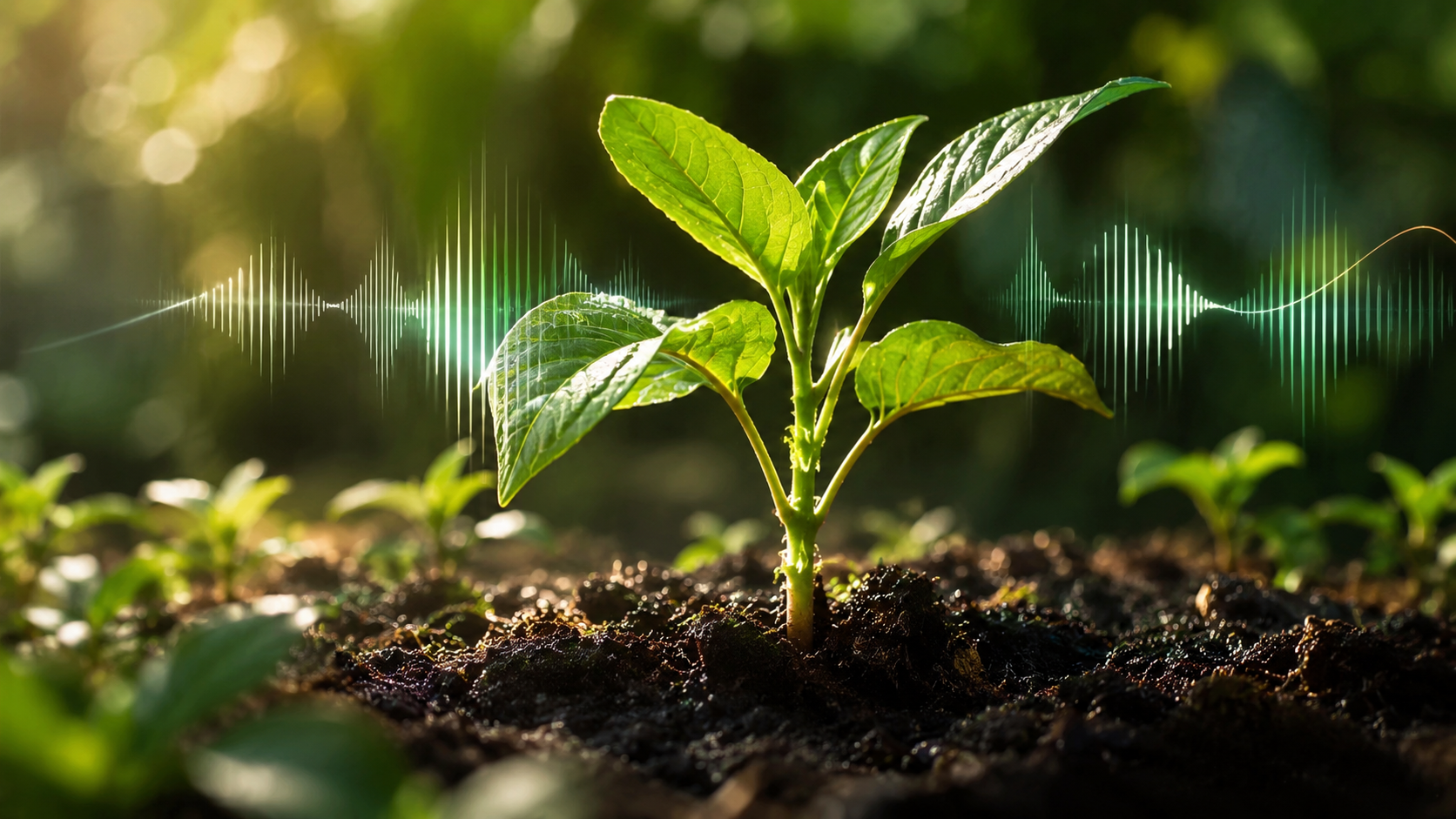
Sound Waves of Plants: Science, Acoustics, and Plant Perception
For centuries, gardeners viewed plants as silent organisms that grew without producing or responding to sound. However, modern bioacoustics research reveals that sound waves of plants play an interesting role in their interaction with the environment. Plants can detect mechanical vibrations and produce ultrasonic sounds under certain conditions. A 2023 study published in Cell found that stressed tomato and tobacco plants produce airborne ultrasonic sounds.
Understanding the sound waves of plants offers new insights into biological communication and environmental adaptation. Although plants lack ears and vocal cords, they can respond to physical vibrations. These responses may influence defense mechanisms, water regulation, and interactions with other organisms.
This guide explores how plants detect sound waves and produce acoustic signals. We examine whether roots sense underground vibrations and why stressed plants emit ultrasonic clicks. We also investigate whether talking to houseplants can influence their growth or remains a popular gardening belief.
Finally, discover how researchers record plant sounds using specialized microphones and affordable acoustic equipment. These discoveries are changing how scientists understand plant perception and the relationship between plants and their surroundings.

Can plants feel sound waves?
Yes, plants can detect certain sound waves through specialized cellular structures called mechanosensitive ion channels. These structures respond when physical pressure or vibrations affect plant tissues. Sound travels through air, water, and soil as mechanical waves. When these waves reach a plant, they can create small movements in its cells. These movements may trigger biochemical responses that influence plant activity.
Research has demonstrated that plants respond to specific vibrations. For example, studies published in Cell found that evening primrose flowers responded to pollinator wing vibrations. Their nectar became sweeter after exposure to these sounds. Other experiments showed that plants responded to vibrations resembling caterpillar chewing. These responses increased certain chemical defenses against herbivores. Understanding these biological responses also connects to the major branches of botany, which explore different aspects of plant biology and life processes.
However, plant perception differs significantly from animal hearing. Plants do not interpret sounds or recognize spoken language. Instead, they respond to mechanical stimulation through cellular signaling pathways. This ability helps them react to environmental conditions and potential threats.
Mechanosensitive Channels and Acoustic Resonance
Mechanosensitive ion channels help plants detect physical changes around their cells. These microscopic protein structures sit within cellular membranes. They respond when mechanical pressure stretches or deforms the surrounding membrane.
When sound waves create vibrations across plant tissues, these channels may open. This allows calcium ions to move across cellular membranes. The resulting calcium signals can activate genes involved in growth, stress responses, and environmental adaptation.
Acoustic resonance may also influence how plant structures respond to particular frequencies. Different tissues have different physical properties, which affect their vibration patterns. However, scientists are still investigating how specific frequencies influence plant development.
These mechanisms demonstrate that plants can respond to physical vibrations without traditional hearing organs. Their responses depend on the vibration’s intensity, frequency, duration, and location. Not every sound produces a meaningful biological reaction.
What sound do plants make?
Plants can produce high-frequency ultrasonic sounds, particularly when experiencing environmental stress. These sounds often appear as short clicks or popping signals. Their frequencies can range from approximately 20 to 100 kilohertz. This range extends beyond normal human hearing, which generally reaches 20 kilohertz.
One important mechanism behind these emissions is cavitation. Plants transport water through narrow vascular structures called xylem vessels. During drought conditions, water movement creates considerable tension inside these vessels. Under certain conditions, air bubbles form within the water column. Their formation and collapse can generate acoustic emissions. This process is closely connected to the water cycle and its role in Earth’s hydrology, which explains how water moves through natural systems.
Researchers have recorded these sounds from plants such as tomatoes and tobacco. Experiments published in scientific journals have shown that stressed plants produce more ultrasonic emissions than unstressed plants. The number and pattern of clicks can vary depending on the plant’s condition.
These findings suggest that ultrasonic plant sounds could help researchers monitor water stress. However, not every recorded click has a confirmed biological explanation.
The Physics of Water Transport Cavitation
Cavitation is an important physical process associated with ultrasonic plant emissions. It occurs when water columns inside xylem vessels experience extreme tension. This tension can develop when roots struggle to absorb enough water from dry soil.
As the pressure changes, air bubbles may form within the water column. Their formation and sudden expansion or collapse can produce mechanical disturbances. These disturbances travel through surrounding plant tissues and generate detectable acoustic signals. Understanding how plants respond to limited water availability can also help gardeners select drought-tolerant plants for hot climates that can withstand challenging growing conditions.
Scientists use sensitive microphones and acoustic emission sensors to record these events. The resulting signals can provide information about plant water transport and physiological stress.
However, cavitation is not the only possible source of plant sounds. Mechanical movement, tissue damage, and other internal processes may also contribute to recorded vibrations.
Studying these acoustic emissions could eventually improve agricultural monitoring. Farmers may use similar technologies to identify water stress before visible symptoms appear. This could support more efficient irrigation, better crop management, and improved groundwater conservation and water resource management.
How many sounds are in a plant?
There is no scientifically established number of distinct sounds that every plant produces. The acoustic emissions depend on the plant species, environmental conditions, and internal physiological activity. Researchers commonly investigate several sources of plant-generated vibrations and sounds.
Three important categories help explain these acoustic signals:
- Vascular cavitation: Air bubbles forming within xylem vessels can produce short ultrasonic clicks. These emissions are particularly associated with water stress.
- Mechanical tissue vibrations: Leaves, stems, and branches vibrate when exposed to wind, physical contact, or other environmental forces.
- Growth-related movements: Expanding tissues and developing roots create mechanical interactions with surrounding structures. These movements may generate vibrations, although their acoustic signatures remain less clearly understood.
Plant sounds also vary in frequency, intensity, and duration. A dehydrated tomato plant may produce different acoustic patterns from a healthy one.
Scientists continue investigating these differences through controlled experiments. Therefore, counting plant sounds is less useful than identifying their physical sources and understanding what each signal reveals about plant conditions.
Can plants hear when we talk to them?
Plants cannot hear human speech like people or animals. They do not possess ears or a nervous system that interprets spoken language. However, the human voice produces mechanical sound waves that can interact with plant tissues.
When you speak near a plant, your voice creates vibrations that travel through the surrounding air. These vibrations can reach leaves, stems, and other plant structures. Certain frequencies may trigger physical responses under suitable experimental conditions.
Research suggests that plants can respond to specific acoustic frequencies and mechanical vibrations. Some laboratory studies have investigated how sound exposure influences seed germination, root growth, and cellular activity. However, results vary depending on the plant species and experimental conditions.
There is currently no strong scientific evidence that plants grow better simply because someone speaks kindly to them. They cannot understand compliments, conversations, or emotional expressions.
The important distinction is between sound-induced physical responses and language comprehension. Plants may respond to vibrations without understanding their meaning. Proper watering, sunlight, nutrients, and suitable growing conditions remain far more important for healthy plant growth.
How to hear plant sound?
You cannot normally hear plant-generated ultrasonic emissions without specialized equipment. Many recorded signals occur above 20 kilohertz, beyond the typical human hearing range. However, acoustic monitoring devices can capture these frequencies and make them easier to study.
Researchers commonly use ultrasonic microphones, acoustic emission sensors, and piezoelectric pickups. These devices detect sound pressure changes or mechanical vibrations produced by plant tissues. Recording software can then display the signals as waveforms for further analysis.
Some devices also convert ultrasonic frequencies into lower frequencies. This process allows people to hear recordings through ordinary headphones. A bat detector with frequency-division or heterodyne functionality can help make certain ultrasonic signals audible.
For home experiments, a contact microphone may detect vibrations from a plant stem. However, it cannot automatically identify every internal biological sound. Environmental noise and physical handling can also affect recordings.
Listening to plant sounds requires patience and careful equipment placement. With suitable sensors, you can explore the acoustic activity of plants and compare recordings under different environmental conditions.
Equipment Setup for Bioacoustic Monitoring
You can begin exploring plant vibrations with relatively simple acoustic equipment. A piezoelectric contact microphone is one useful option for detecting mechanical vibrations from stems and woody plant structures.
For ultrasonic emissions, you will need an ultrasonic microphone or a compatible bat detector. A standard contact microphone may not capture the full frequency range of ultrasonic signals. Check the equipment’s frequency specifications before purchasing it.
A basic monitoring setup includes:
- Contact microphone or ultrasonic sensor: Select a device suited to the frequencies you want to record.
- Recording interface: Connect the sensor to compatible recording hardware or software.
- Audio analysis software: Use software capable of displaying waveforms and frequency information.
- Headphones: Listen to converted signals when your equipment supports frequency translation.
Place the sensor securely without applying excessive pressure to the plant. Record under consistent environmental conditions for better comparisons.
Remember that background noise can affect your results. Repeat recordings and compare healthy plants with plants experiencing controlled water stress. This approach provides more reliable observations than relying on individual clicks.
Do plants give off hear?
Plants do give off measurable acoustic emissions, but these sounds are not necessarily intentional signals. They generally result from physical processes occurring inside or around plant tissues. For example, water movement, cavitation, and mechanical stress can generate vibrations that travel through plant structures.
These emissions can sometimes be detected by sensitive microphones. Researchers have recorded ultrasonic clicks from plants experiencing drought or physical damage. The frequency and number of emissions may change depending on the plant’s physiological condition.
However, producing sound does not automatically mean an organism is communicating. Scientists are still investigating whether other organisms can detect and use plant-generated ultrasonic emissions. Some insects and mammals may perceive certain frequencies, but their ecological responses require further research. These interactions are also part of the wider relationship between species explored through ecosystems and biodiversity.
The distinction between sound production and biological communication is important. Plants can generate acoustic signals without deliberately broadcasting messages. Their sound emissions offer valuable information about internal processes and environmental stress. Continued research may reveal additional roles for bioacoustics in plant science, agriculture, and ecosystem interactions.
Conclusion
The study of plant sound waves proves that greenery interacts dynamically with its physical surroundings. Rather than resting passively in their pots, plants continuously sense external vibrations and release acoustic signatures under environmental stress. From the cellular mechanoreceptors that register buzzing pollinators to internal xylem pops during dry spells, acoustic mechanics govern vital botanical functions.
Recognizing that your houseplants respond to mechanical frequencies grounds gardening in solid biophysics. Regular vocal interaction, gentle air currents, and appropriate sound frequencies physically stimulate internal cellular streaming and nutrient uptake. At the same time, monitoring acoustic emissions allows modern agriculturalists to detect irrigation needs long before leaves begin to wilt.
Next time you tend your garden, remember that plant perception extends well beyond sunlight and moisture. Pay close attention to environmental acoustics, balance ambient noise levels, and consider testing contact sensors to hear your garden’s hidden internal rhythm firsthand.