
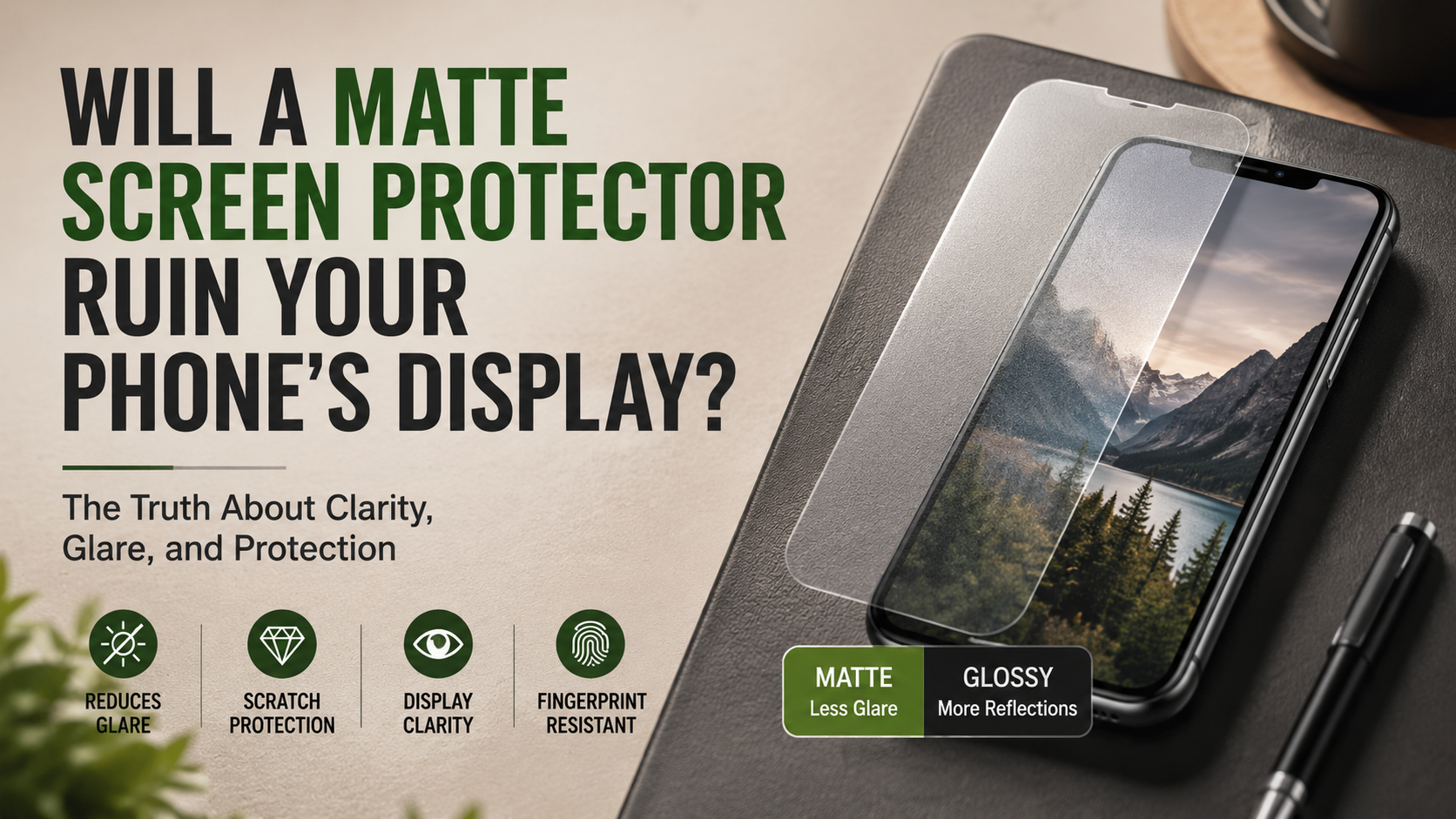
Will a Matte Screen Protector Ruin Your Phone’s Display?
Choosing the right screen protection matters for any smartphone owner. Many users wonder whether a matte screen protector can ruin the underlying display. The short answer is no. A quality protector does not permanently damage your phone’s screen.
However, a matte finish can change how your display looks and feels. Its textured surface scatters light to reduce glare and reflections. That benefit can come with a small loss in perceived sharpness, contrast, and color vibrancy.
According to display technology insights shared by DisplayMate Technologies, physical overlays change how light transmits from your phone panel to your eyes, but they rarely cause structural harm. When you apply a high-quality protective film, your core hardware remains entirely safe underneath
This article explains how a matte screen protector affects display quality. It also covers the main disadvantages, compares matte and glossy protectors, and answers common questions. By the end, you can choose the best option for your daily viewing habits.
Does a Matte Screen Protector Affect Display Quality?
A matte screen protector can affect perceived display quality, but it does not physically damage your phone’s screen. The frosted surface scatters light instead of reflecting it directly toward your eyes. This reduces glare, especially under bright lights or outdoors.
The same light diffusion can slightly reduce perceived sharpness and contrast. Colors may also look less vibrant compared with the display’s uncovered surface. The effect is usually subtle, but sensitive users may notice it while reading text or viewing detailed images.
Your phone’s OLED or LCD panel remains protected underneath the accessory. The protector does not change the pixels or permanently reduce their performance. Removing it should restore the display’s original appearance, assuming the panel itself has no separate damage.
The Science of Light Diffusion
The textured finish scatters ambient light in several directions. This prevents strong reflections from reaching your eyes at the same angle. As a result, screen glare becomes less distracting in bright environments.
However, the texture also scatters some light produced by the display. This can create a softer image compared with smooth glass. The difference becomes easier to notice on white backgrounds, fine text, and highly detailed images.
This optical trade-off is intentional. A matte protector gives up a small amount of visual clarity for better glare control. For many outdoor users, that trade-off is worthwhile.
The quality of the protector also matters. Better materials usually provide a more consistent finish and less visible grain. Choosing a reputable matte protector can therefore help balance clarity and anti-glare performance.
What Are the Disadvantages of a Matte Screen Protector?
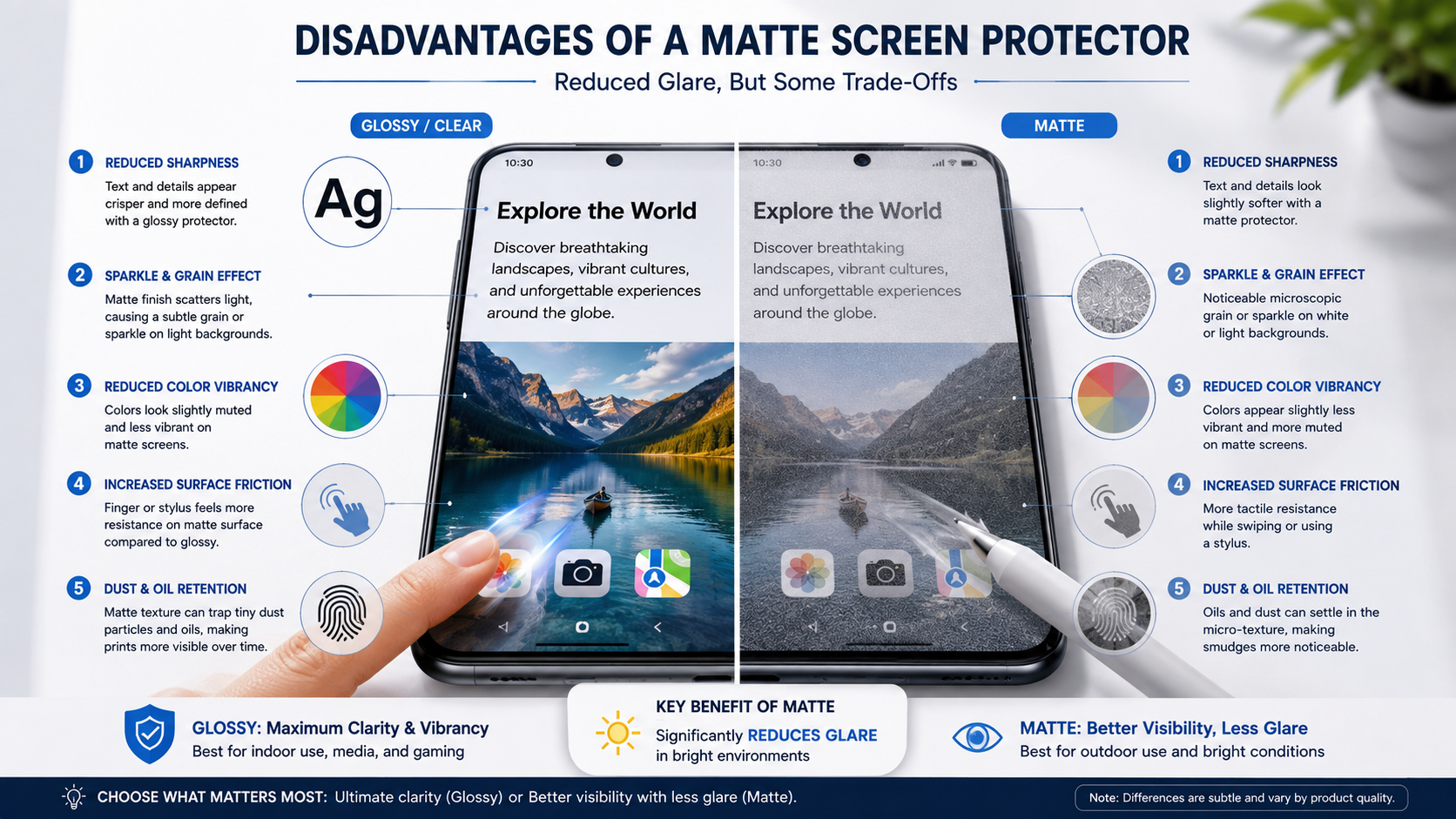
The main disadvantages of a matte screen protector involve clarity, sharpness, color vibrancy, and surface texture. Its frosted coating can make images appear slightly softer than they do through clear glass. Some users may also notice a grainy or sparkling effect on light backgrounds.
The textured finish can increase friction between your finger and the screen. Many people enjoy this because it creates a paper-like feel. However, users who prefer effortless swiping may find smooth glass more comfortable.
A matte surface can also hold oils and dust within its microscopic texture. Regular cleaning may therefore be necessary to maintain a clear appearance. Stylus users should also consider surface friction because frequent use may increase wear on some stylus tips.
Despite these drawbacks, a matte screen protector offers useful benefits. It can reduce reflections, hide fingerprints, and improve usability in bright surroundings.

The Sparkle and Grain Effect
Some users notice a subtle sparkle or grain effect on white and light-colored screens. This happens because the microscopic texture scatters light from individual pixels. The result can make uniform areas appear slightly less smooth.
The effect varies between protectors. A lower-quality film may produce more visible grain than a premium product. Screen resolution, pixel density, and viewing distance can also influence how noticeable the effect becomes.
Many users stop noticing the texture after regular use. Others remain sensitive to it, particularly when reading documents or viewing detailed content. If you value maximum image clarity, a clear protector may be a better choice.
Before buying a matte protector, consider how you normally use your phone. Heavy readers and graphic designers may notice the effect more often. Outdoor users may prefer the reduced glare despite the slight visual trade-off.
Is Glossy or Matte Better for Screen Protectors?
Neither glossy nor matte screen protectors is universally better. The right choice depends on your environment, viewing preferences, and daily activities.
Glossy protectors generally preserve the original appearance of your phone’s display. They offer strong clarity, vivid colors, and sharp contrast. They are often preferred by mobile gamers, photographers, and people who watch videos frequently.
Matte protectors prioritize glare reduction and a more textured touch experience. They can work particularly well for outdoor workers, students, writers, and productivity-focused users. The reduced reflections can make the screen easier to view under bright lights.
Your typical lighting conditions should guide the decision. If you mostly use your phone indoors or in dark rooms, glossy glass may suit you better. If you often use your phone outdoors, matte may provide greater practical comfort.
Ultimately, the best protector balances visual quality, comfort, and everyday usability.
Matching Your Personal Usage Style
Your daily habits can make one screen protector more suitable than another. Gamers and movie watchers often prefer glossy surfaces because they preserve sharp details and vibrant colors. These benefits become especially noticeable during high-resolution video or fast-paced games.
Students, professionals, and frequent readers may prefer matte surfaces. Reduced reflections can make text easier to view in classrooms, offices, and outdoor spaces. The textured surface can also feel more controlled during long writing sessions.
Consider these factors before choosing:
- Choose glossy for maximum clarity and color vibrancy.
- Choose matte for better glare control.
- Choose glossy if you often watch movies or play games.
- Choose matte if you frequently work outdoors.
- Choose matte if fingerprints and reflections bother you.
There is no universal winner. Your environment and personal preferences should determine which surface works best.
Do Screen Protectors Ruin Display Quality?
Screen protectors do not normally ruin display quality in a permanent or destructive way. Quality tempered glass and premium films are designed to sit over your phone’s existing display without harming the underlying panel.
A screen may look cloudy or degraded after installation for several reasons. Trapped dust, air bubbles, fingerprints, poor adhesive, and low-quality materials can all affect the viewing experience. Some inexpensive films can also develop scratches or yellowing over time.
These problems usually affect the protector rather than the phone’s actual display. Replacing or removing the protector can restore the intended viewing experience. The underlying panel should remain unaffected when the accessory is installed and removed correctly.
Identifying Low-Quality Material Issues
Low-quality plastic films can develop scratches, discoloration, or yellowing more quickly. Their surface may also produce uneven glare or unwanted visual distortion. Poor installation can make these problems even more noticeable.
A premium tempered glass or high-quality matte film can provide a more consistent experience. Look for products with durable coatings, good optical clarity, and reliable adhesive.
Keep these quality factors in mind:
- Consistent anti-glare coating
- Smooth and responsive touch performance
- Strong scratch resistance
- Reliable adhesive coverage
- Minimal visible grain or sparkle
A good protector should protect the screen without creating unnecessary viewing problems. If the display looks significantly worse after installation, inspect the protector first. The accessory is often responsible rather than the phone’s display hardware.
Which Is Better, a Clear or Matte Screen Protector?
Choosing between a clear and matte screen protector comes down to your priorities. Clear protectors focus on preserving the phone’s original viewing experience. Matte protectors prioritize glare reduction and a more textured surface. If privacy is also a concern, Privacy Phone Screen Protectors: Essential Buyer Guide offers another factor to consider when choosing screen protection.
A high-quality clear protector generally offers excellent brightness, color accuracy, contrast, and sharpness. It can feel similar to the phone’s original glass while adding protection against scratches and everyday impacts.
A matte protector introduces a light-diffusing surface. This can make the screen easier to view under harsh lighting. However, the finish may slightly reduce perceived sharpness and color intensity.
Neither option should permanently damage your phone’s display. The better choice depends on how and where you use your device.
The Impact on Touch and Feel
Clear glass usually provides a smooth, low-friction surface. This makes swiping, gaming, and general navigation feel fast and effortless. It closely resembles the feel of a modern smartphone’s original display.
Matte protectors provide more friction. Many users enjoy this paper-like feel for drawing, note-taking, and writing. The textured surface can also make fingerprints less noticeable.
Stylus users should consider this difference carefully. The added friction can improve control, but it may also increase wear on some stylus tips. Check the protector and stylus manufacturer’s recommendations when compatibility matters.
For everyday phone use, both surfaces can provide responsive touch performance. Your preferred tactile experience may ultimately matter as much as visual quality.
Frequently Asked Questions
Do matte screen protectors reduce touch sensitivity?
Matte screen protectors do not noticeably reduce touch sensitivity on modern smartphones. Modern devices feature high-sensitivity touch layers that easily register inputs through thin films and tempered glass. While the textured surface creates slightly more physical friction for your fingers, your phone registers every tap and swipe accurately without any noticeable lag or missed inputs.
Can matte screen protectors cause eye strain?
Matte screen protectors actually help reduce eye strain in bright environments by eliminating harsh glare and reflections from your field of view. However, if used in dim indoor lighting, the slight reduction in sharpness and contrast can occasionally force your eyes to work slightly harder. Matching your protector type to your typical lighting environment ensures optimal visual comfort, much like considerations discussed in Do Blue Light Screen Protectors Work? Clear Facts & Guide.
Are matte screen protectors harder to clean than glossy ones?
Matte screen protectors can sometimes trap facial oils and dust more stubbornly than smooth glass due to their micro-textured surface. While glossy screens wipe clean with a single stroke, matte protectors may require a microfiber cloth and a drop of screen cleaner to lift trapped oils completely out of the tiny surface grooves without leaving smudges.
Do matte screen protectors scratch easily?
Matte screen protectors feature durable surface coatings designed to resist daily wear and tear from keys, coins, and pocket debris. However, the soft anti-glare coating can show scuffs and scratches more visibly than clear glass because the frosted finish highlights surface abrasions. High-end tempered glass matte protectors offer better scratch resistance than basic plastic matte films.
Conclusion
A matte screen protector does not permanently ruin your phone’s display. Instead, it changes how the display looks and feels by scattering light across its textured surface.
That design can reduce glare and make outdoor viewing more comfortable. It can also reduce perceived sharpness, contrast, and color vibrancy. Some users may notice a subtle grain or sparkle effect, particularly on white backgrounds.
The best choice depends on your priorities. Glossy protectors are better for users who want maximum clarity and vivid colors. Matte protectors are better for users who value glare reduction, fingerprint resistance, and a textured writing feel. For readers interested in reducing screen dependence, the screen-free tech trend offers another perspective on how technology is evolving beyond traditional displays.
Quality also matters. A well-made protector can minimize unwanted visual effects while protecting the underlying screen. If you prefer comfortable viewing in bright environments, a matte screen protector can be an excellent option.
Consider your typical lighting, viewing habits, and touch preferences before choosing. The right protector should improve your everyday experience without compromising the safety of your phone’s display.