
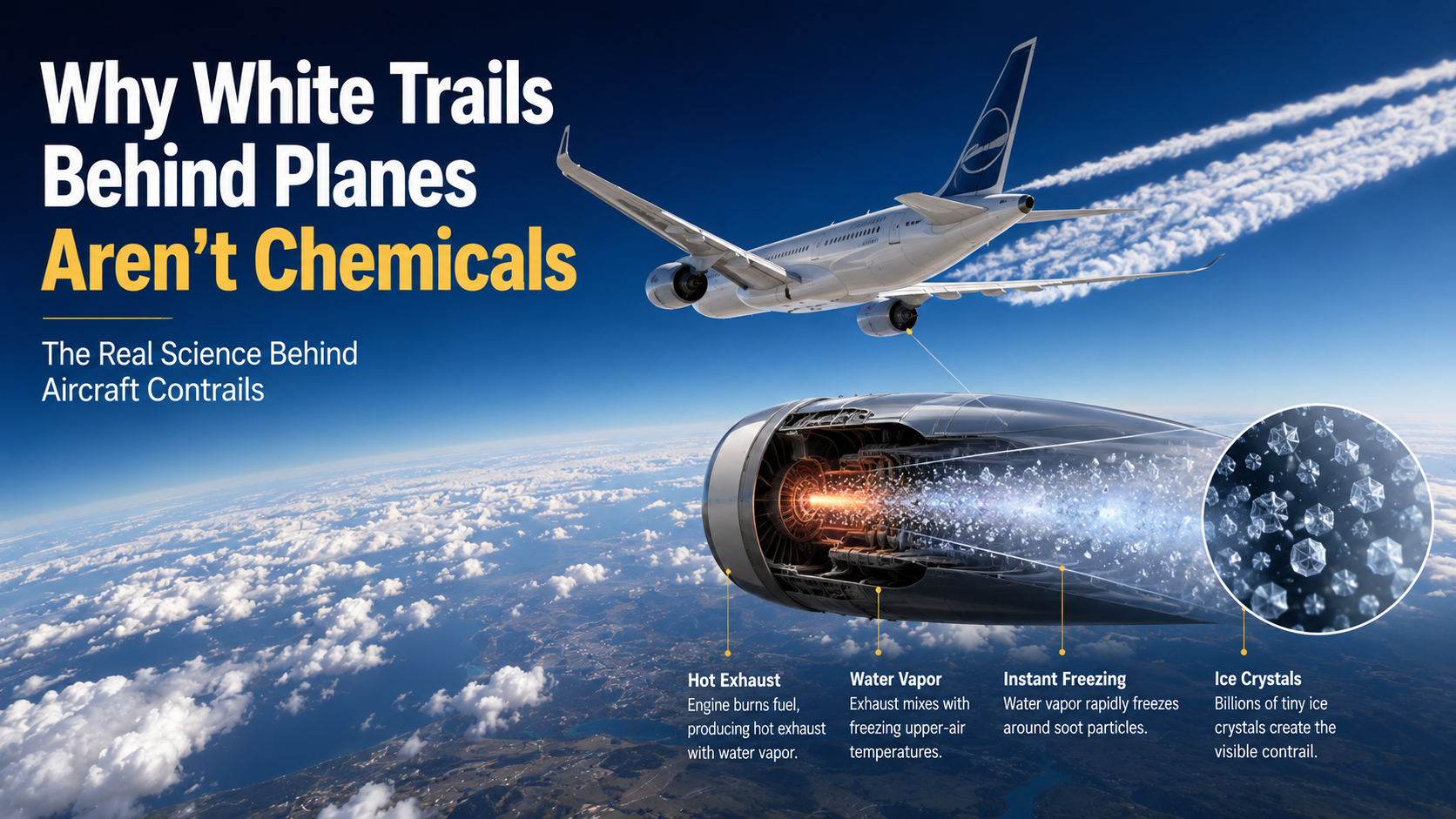
Why White Trails Behind Planes Aren’t Chemicals
Have you ever looked up at a clear blue sky and wondered about those long, chalky lines stretching across the horizon? You certainly are not alone. Many people assume that the white trails behind planes contain dangerous chemical sprays. However, this is a widespread misconception that ignores basic atmospheric science. These distinct streaks are actually condensation trails, more commonly known as contrails. To understand exactly what is happening above us, we can look at the extensive atmospheric research provided by NASA, which studies how aircraft exhaust interacts with high-altitude environments.
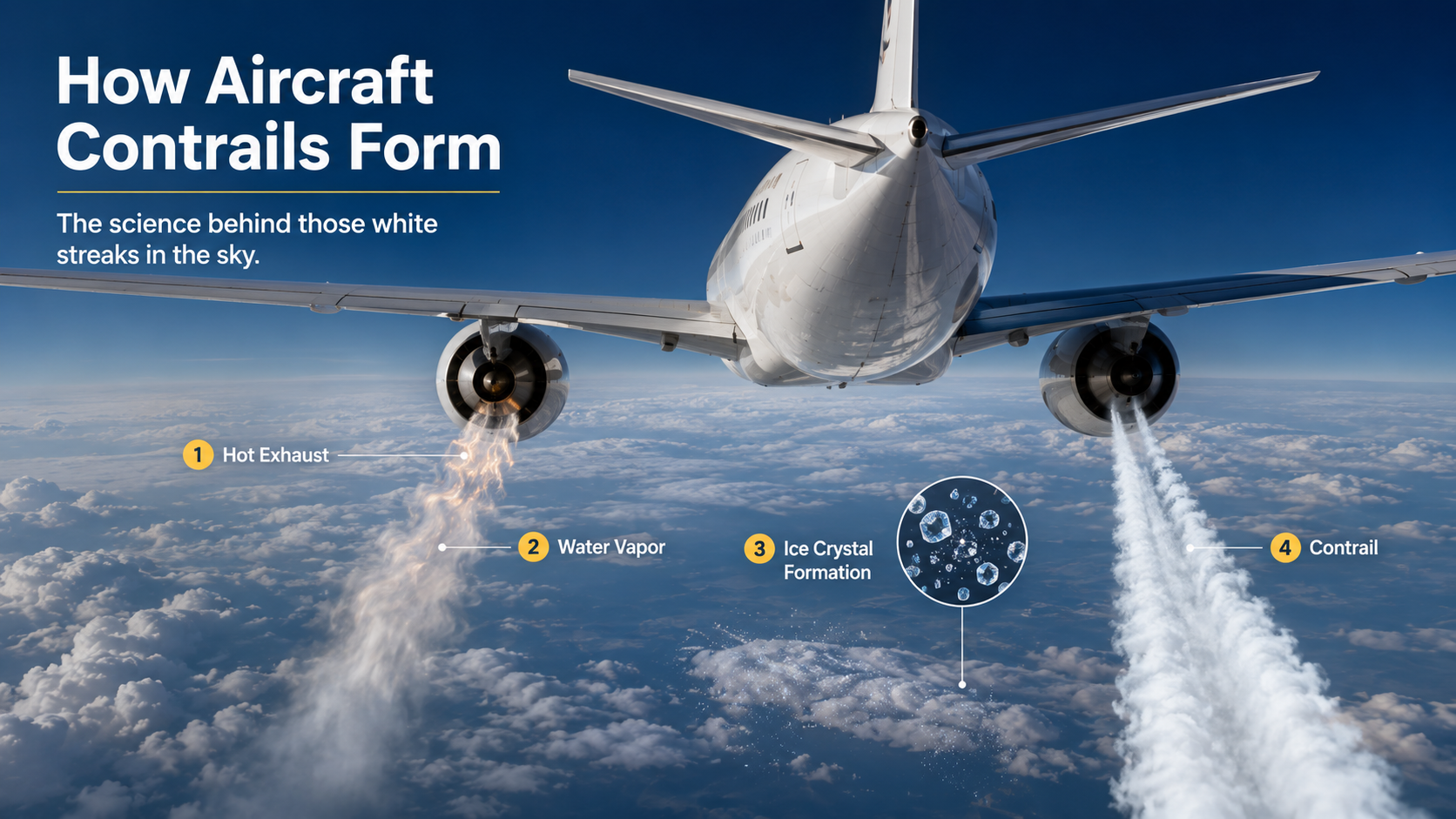
The internet remains full of wild theories regarding these aviation vapor trails. Some groups claim they contain weather-modifying substances. Others truly believe they carry harmful toxins designed to affect the population. The reality is far less sinister and deeply rooted in everyday physics and chemistry. When commercial jet engines burn aviation fuel, they naturally release water vapor, carbon dioxide, and small soot particles. In the freezing, low-pressure environment of high altitudes, this hot vapor instantly freezes into billions of tiny ice crystals.
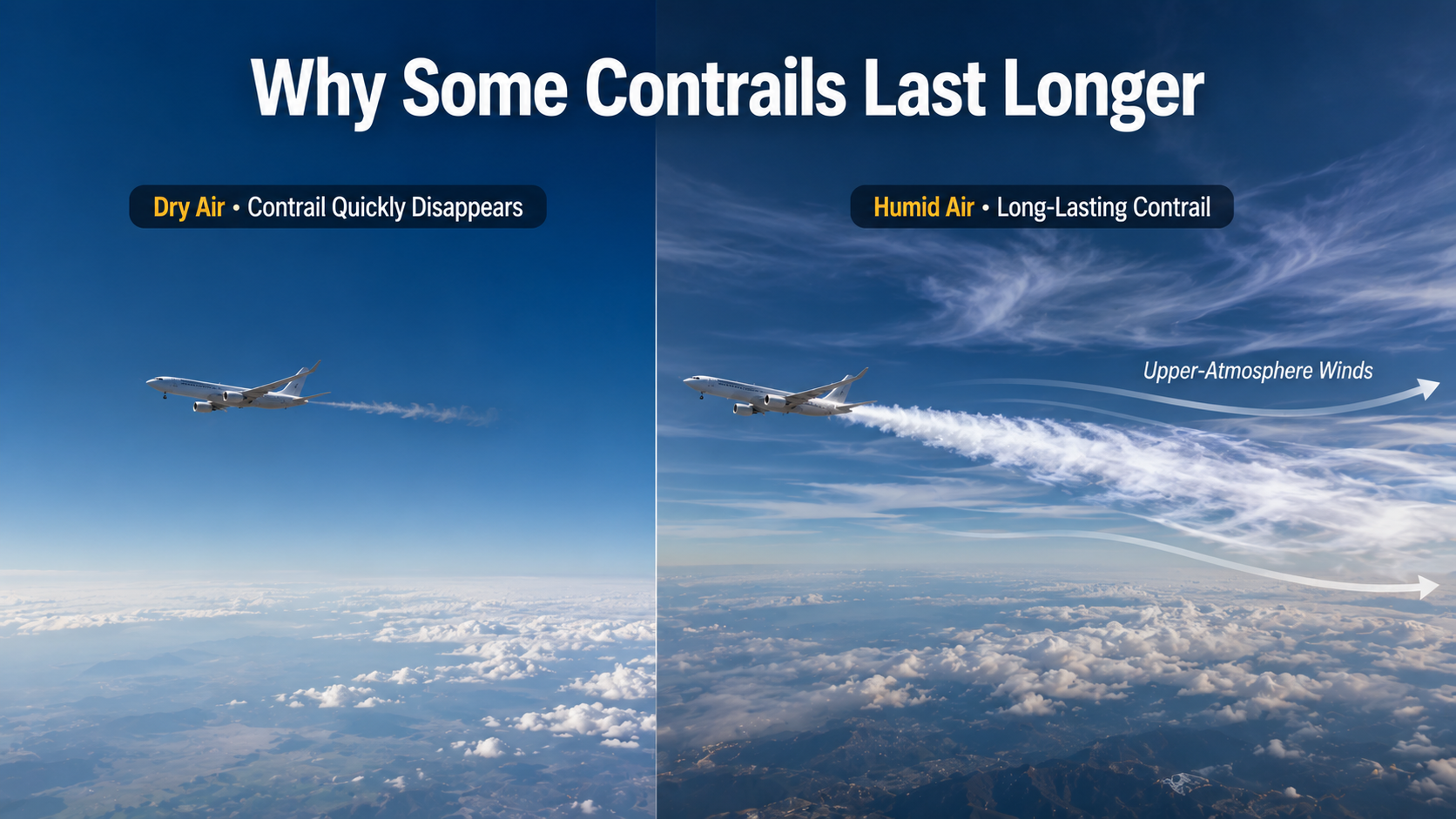
This article will debunk the popular myths surrounding aircraft exhaust and explain the fascinating science behind contrail formation. We will explore why some trails disappear in seconds while others linger for hours, spreading across the sky. We will also discuss how humidity and temperature play a critical role in creating these cloud-like formations. By the time you finish reading, you will understand the real physics of modern flight and recognize these trails for what they truly are.
Conclusion
Understanding the actual science above our heads helps dispel unnecessary fears and rumors. The white trails behind planes simply represent a fascinating interaction between modern aviation technology and extreme atmospheric conditions. When jet engines release incredibly hot, moist exhaust into the freezing, thin air of the upper atmosphere, basic physics takes over. The water vapor instantly freezes into tiny ice crystals, creating the beautiful white streaks we know as contrails. If you’re fascinated by atmospheric and space-related phenomena, you may also enjoy exploring some of the wildest planets in the Milky Way and the incredible science behind them.
Whether these trails disappear within seconds or spread across the sky depends almost entirely on atmospheric humidity, not a secret chemical mixture. While the aviation industry continues to study and reduce the climate impacts of persistent contrails, there is no credible scientific evidence supporting claims of widespread toxic spraying operations.
The next time you look up and see a long white streak crossing a bright blue sky, you can appreciate the remarkable science of condensation, ice crystal formation, and Earth’s atmosphere in action. Share this knowledge with curious friends and family to encourage evidence-based discussions and inspire a deeper interest in aviation, weather, and space science.