

Supporting a Child and Controlling Them: Practical Guidance for Modern Parents
Parenting often feels like a balance between setting healthy boundaries and providing emotional support. When supporting a child and controlling them, parents may struggle to decide where guidance ends and excessive control begins. According to developmental guidance from the American Academy of Pediatrics, effective discipline should teach children self-regulation rather than rely on fear or harsh punishment.
Too much control can create power struggles and weaken trust. However, having no clear boundaries can leave children feeling uncertain and insecure. The goal is not to control every action. Instead, parents should provide structure while helping children develop independence and emotional skills.
This guide explores practical parenting challenges. It covers behavior problems, controlling behavior, anxiety, parenting without family support, and simple calming techniques. These strategies can help parents respond consistently while maintaining a supportive relationship with their children.

How can I best support a child with behavior problems?
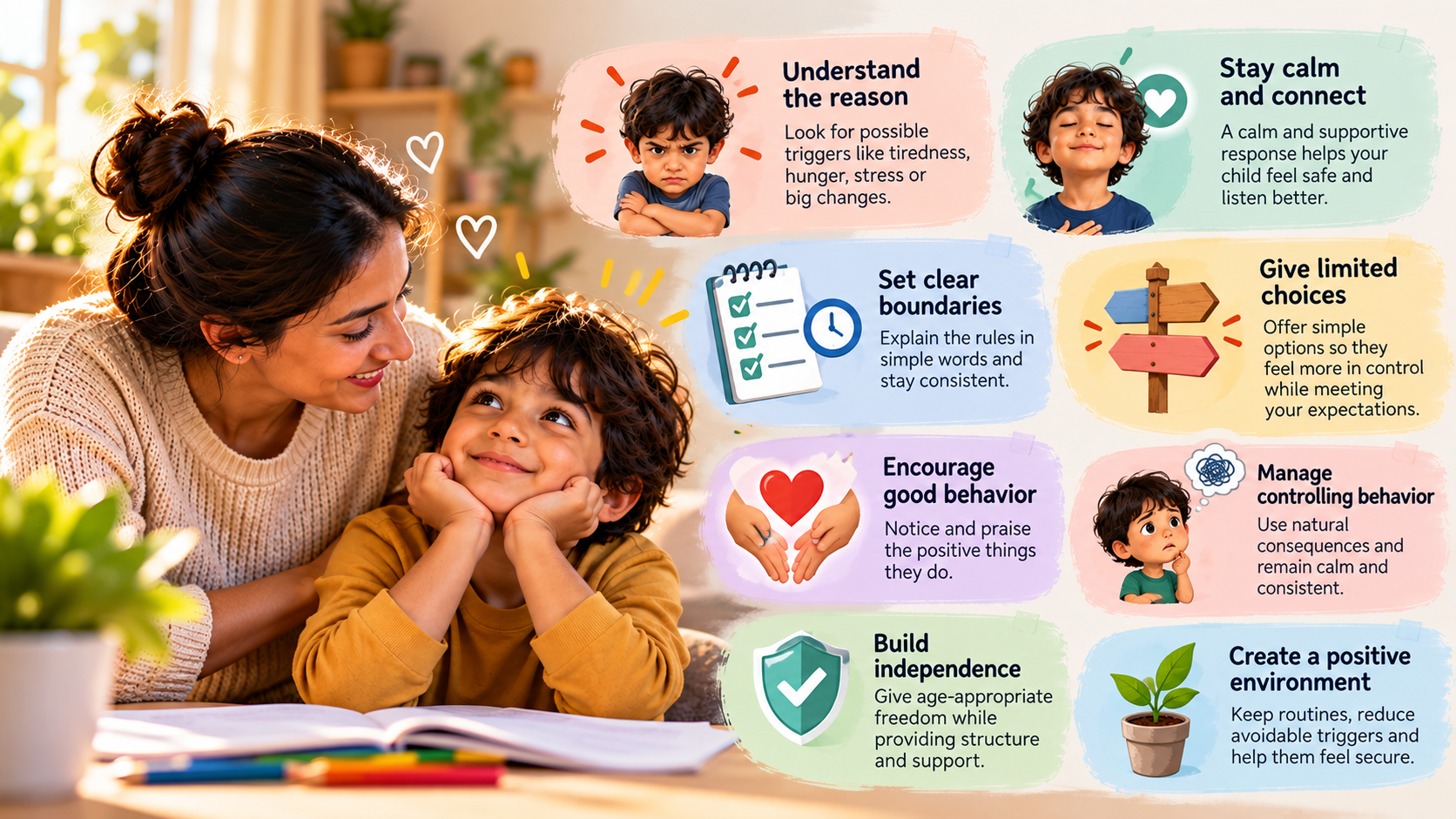
The most effective way to support a child with behavior problems is to understand what may be causing the behavior. Acting out can sometimes signal frustration, tiredness, anxiety, or difficulty managing strong emotions. It does not always mean a child is deliberately being difficult. Learning about how children grow into responsible individuals can also help parents understand how responsibility develops over time.
Start by regulating your own response during challenging moments. A calm parent can make an emotional situation feel safer. Acknowledge the child’s feelings before addressing the behavior. For example, you might say, “I can see that you are frustrated, but hitting is not okay.”
Set clear and consistent boundaries without using fear or humiliation. Children need to understand both the rule and the reason behind it. Praise positive behavior when you notice it. This reinforces the behaviors you want to see more often.
The goal is to combine emotional support, clear limits, and consistent consequences. Over time, this approach can help children develop better self-control.
Spotting Triggers Before Meltdowns Start
Pay attention to what happens before difficult behavior begins. Many children become more irritable when they are hungry, tired, overstimulated, or facing an unexpected change. Identifying these patterns can help parents respond before frustration becomes overwhelming and better understand how society and everyday environments shape children.
Keep a simple record for several days. Note the time, situation, behavior, and anything that happened immediately beforehand. You may notice patterns that were previously easy to miss.
Common triggers can include:
- Fatigue: Lack of sleep can make emotional regulation harder.
- Hunger: Long gaps between meals may increase irritability.
- Transitions: Moving from one activity to another can cause resistance.
- Sensory overload: Loud sounds, crowds, or busy environments may become overwhelming.
- Unexpected changes: Sudden changes to familiar routines can create stress.
Once you recognize a trigger, adjust the situation when possible. Give advance warnings before transitions, provide snacks when appropriate, or create a quieter environment. Prevention does not remove every difficult moment, but it can reduce avoidable conflicts.
How to help controlling a child?
When a child frequently tries to control situations, the goal should not be to overpower them. Instead, parents can create predictable boundaries while giving the child appropriate opportunities for independence. This approach supports cooperation without turning every disagreement into a power struggle.
Offer limited choices when possible. For example, ask whether the child wants to wear the blue shirt or the green one. Both choices meet the parent’s expectation while allowing the child some control.
When a child refuses a reasonable rule, remain calm and consistent. Use logical or natural consequences rather than yelling or threatening. Explain what will happen and follow through consistently.
Parents should also consider why the child is seeking control. Stress, anxiety, uncertainty, or a strong need for independence can influence controlling behavior. Understanding the underlying reason can make discipline more effective.
Supporting a child while maintaining boundaries requires balance. Children need freedom to make age-appropriate choices, but they also need adults who provide structure, safety, and dependable limits.
Practicing Connection Before Direct Correction
Before correcting difficult behavior, try connecting with your child first. Emotional connection can make children more receptive to guidance, especially when they are already upset or overwhelmed.
Move closer without appearing threatening. Get down to the child’s eye level when appropriate and use a calm, steady voice. Briefly acknowledge what they are experiencing before explaining what needs to change.
For example, you could say, “You really wanted to keep playing. It is hard to stop when you are having fun. It is time to put the toys away now.”
Connection does not mean allowing inappropriate behavior. It means recognizing the child’s feelings while maintaining the boundary.
Avoid lengthy explanations during an emotional outburst. A distressed child may not process complex instructions effectively. Keep your message simple and repeat the expectation calmly if necessary.
This approach helps separate feelings from behavior. A child can feel angry without being allowed to hit someone. They can feel disappointed without being allowed to break a rule. That distinction supports both emotional development and responsible behavior.
What are the challenges of parenting with no family support?
Parenting without nearby family support can create significant physical and emotional pressure. Without grandparents, siblings, or other relatives available, parents may have fewer opportunities to rest, share responsibilities, or ask for immediate help.
Everyday problems can become harder to manage. A sick child, unexpected school closure, work deadline, or household emergency may require parents to reorganize everything quickly. The lack of regular childcare can also make it difficult to attend appointments or simply take time to recover.
Isolation can create another challenge. Parents may question their decisions when they do not have trusted people nearby to provide perspective or encouragement. Ongoing stress can also contribute to parental burnout, making patience and emotional regulation more difficult.
Building support outside the family can reduce some of this pressure. Trusted friends, neighbors, school communities, parenting groups, and local programs may provide practical assistance or social connection. Strong communication with schools can also help, including through parent-teacher conferences that build trust.
You do not need a large support network. Even a few dependable people can make difficult parenting responsibilities easier to manage.
What are some effective strategies for helping children manage anxiety?
Helping children manage anxiety starts with taking their fears seriously. Avoid telling a worried child that their concerns are silly or that there is nothing to worry about. Dismissing their feelings can make them less likely to talk about anxiety in the future.
Instead, help your child identify what they are feeling. You might say, “Your stomach feels tight because you are worried about tomorrow.” Giving emotions a name can make them easier to understand, while simple tricks for a calmer morning can help children begin the day with greater predictability.
Teach simple calming strategies when your child is calm. Slow breathing can help some children settle their bodies. For example, ask them to breathe in slowly through their nose and breathe out as if they are gently blowing out birthday candles.
Avoid reinforcing anxiety through constant reassurance or complete avoidance. When appropriate, help your child approach difficult situations in small, manageable steps. Consistent routines can also provide a stronger sense of predictability.
If anxiety regularly interferes with sleep, school, relationships, or daily activities, consider discussing it with a qualified healthcare professional. Persistent anxiety may need additional support beyond everyday parenting strategies.
Designing a Predictable Home Environment
Children who experience anxiety may find uncertainty particularly difficult. A predictable home routine can provide structure and make everyday transitions easier to understand.
Create a simple schedule for important parts of the day. A visual calendar, checklist, or picture-based routine can help younger children understand what happens next.
Try to give advance notice before major transitions. For example, tell your child that bedtime will begin in five minutes. This gives them time to finish their activity instead of experiencing the change as sudden.
Keep important routines reasonably consistent. Regular times for waking, meals, school preparation, and bedtime can create a stronger sense of stability.
You can also prepare children for unfamiliar situations. Explain what they might see, hear, or experience before visiting a new place. Avoid promising that nothing uncomfortable will happen. Instead, explain that you will help them handle the situation and develop skills for facing unexpected situations.
Predictability does not mean removing every surprise. Children still need opportunities to adapt. The goal is to provide enough structure that everyday uncertainty feels manageable rather than overwhelming.
What is the 3-3-3 rule for anxiety children?
The 3-3-3 rule is commonly described as a grounding exercise that can help redirect attention toward the present moment. It uses simple sensory and movement-based tasks rather than requiring a child to analyze anxious thoughts.
One version asks the child to identify three things they can see. Next, they identify three sounds they can hear. Finally, they move three different parts of their body.
For example, a child might name a chair, window, and toy. They could then identify a fan, a car, and someone speaking. For movement, they might wiggle their toes, roll their shoulders, and move their fingers.
The exercise can give an anxious child something concrete to focus on. It may be particularly useful when worry has become overwhelming.
However, the 3-3-3 method should not be treated as a guaranteed treatment for anxiety. Children respond differently to grounding techniques. Practice the exercise during calm moments so your child knows how to use it when anxiety appears.
If anxiety is severe, persistent, or disrupting daily life, seek guidance from an appropriate healthcare professional.
Frequently Asked Questions
What is the difference between positive discipline and punishment?
Positive discipline focuses on supporting a child and controlling them through teaching, empathy, clear boundaries, and natural consequences. Punishment mainly focuses on forcing compliance through fear, pain, or deprivation. Positive discipline helps children develop self-regulation, understand expectations, solve problems, and make better decisions independently.
Why does yelling at a child rarely stop bad behavior?
Yelling may temporarily stop a behavior, but it rarely teaches children what to do differently. Supporting a child and controlling them works better when parents remain calm, explain boundaries, and help children manage strong emotions. Frequent yelling can also increase fear, resentment, defiance, and communication problems over time.
At what age should parents start setting behavioral boundaries?
Parents can begin setting simple behavioral boundaries during late infancy, around eight to twelve months, as babies become more mobile and curious. Supporting a child and controlling them at this stage means using gentle redirection, safety limits, routines, and consistent responses rather than expecting mature self-control.
Conclusion
Parenting effectively is never about asserting sheer dominance or enforcing quiet submission. When it comes to supporting a child and controlling them, success rests on swapping rigid manipulation for healthy, respectful leadership. Children do not need flawless parents; they need steady, empathetic guides who hold reliable boundaries while offering a warm harbor during emotional storms.
By addressing the root causes of behavioral outbursts, holding firm limits without anger, and utilizing physical calming tools like the 3-3-3 technique, you create an environment where emotional safety thrives. Even when parenting completely solo without a nearby village, focusing on connection protects your bond with your child and supports healthy growth and healing when a father is absent.
Start small today. Pick one practical strategy—whether it is breaking down a challenging anxiety trigger, introducing a predictable routine, or validating a tough emotion before offering correction. With consistent practice and genuine patience, you will foster genuine cooperation and help your child build emotional resilience that lasts a lifetime.