

Parent-Teacher Conference Notes: How to Build Trust
Parent-teacher meetings serve as a critical bridge between home and school environments. When educators take the time to prepare structured, accurate, and empathetic parent-teacher conference notes, they transform potentially intimidating or stressful conversations into meaningful, collaborative partnerships. Effective documentation allows teachers to track academic progress seamlessly, outline realistic growth goals, and maintain open, transparent communication with caregivers throughout the entire school year. Prominent educational organizations, such as the National PTA, consistently emphasize that meaningful family engagement directly enhances student achievement and social-emotional development. This demonstrates that thorough documentation is much more than mere administrative paperwork—it serves as the structural foundation for genuine trust.
Writing thoughtful notes requires a deliberate approach that balances a student’s strengths with areas needing targeted improvement. When parents receive objective, well-organized summaries, they feel genuinely respected and valued as equal partners in their child’s learning process. This comprehensive guide provides actionable strategies for taking parent-teacher meeting notes that establish lasting credibility and rapport. You will discover how to format documentation before, during, and after meetings, frame delicate behavioral or academic concerns constructively, and maintain an efficient archive system that saves valuable time. Whether you are a first-year teacher or a veteran educator, these practical frameworks will streamline your workflow and strengthen family connections.
Why Parent-Teacher Conference Notes Matter for Student Success
Carefully written documentation protects both teachers and families by maintaining a clear, factual, and shared history of every important discussion. When your notes are clear, concise, and objective, they eliminate guesswork, prevent misunderstandings, and ensure that everyone leaves the meeting with identical expectations regarding student growth. Without proper documentation, crucial details can be forgotten or misinterpreted over time, leading to frustration for both sides.
Building Transparency with Parent-Teacher Meeting Logs
Parents naturally want to understand how their child is performing socially, emotionally, and academically in the classroom environment. Detailed conference notes provide a transparent window into daily classroom interactions and academic expectations. When you document specific achievements alongside concrete challenges, parents recognize the deliberate effort you invest in understanding their child as an individual. This level of transparency fosters open communication, reassures families that their child is well-cared for, and creates a welcoming atmosphere where parents feel comfortable sharing their own insights from home.
Creating Continuity Across the School Year with Conference Summaries
Memories inevitably fade over a busy school year, but written records provide an enduring timeline of student development. Reviewing previous meeting logs allows you to track academic progress across multiple quarters, ensuring that long-term educational goals remain on target. Consequently, when progress reviews take place later in the year, you can easily reference earlier interventions, evaluate what strategies yielded success, and make informed adjustments. This continuous documentation establishes a reliable record that benefits future teachers, support staff, and administrators who may work with the student.
Pre-Conference Preparation: Setting Up Your Conference Documentation
Successful meeting notes start well before the parent steps through your classroom door. Proper advance preparation ensures that your notes remain organized, objective, and actionable during face-to-face or virtual discussions, keeping the conversation productive and focused.
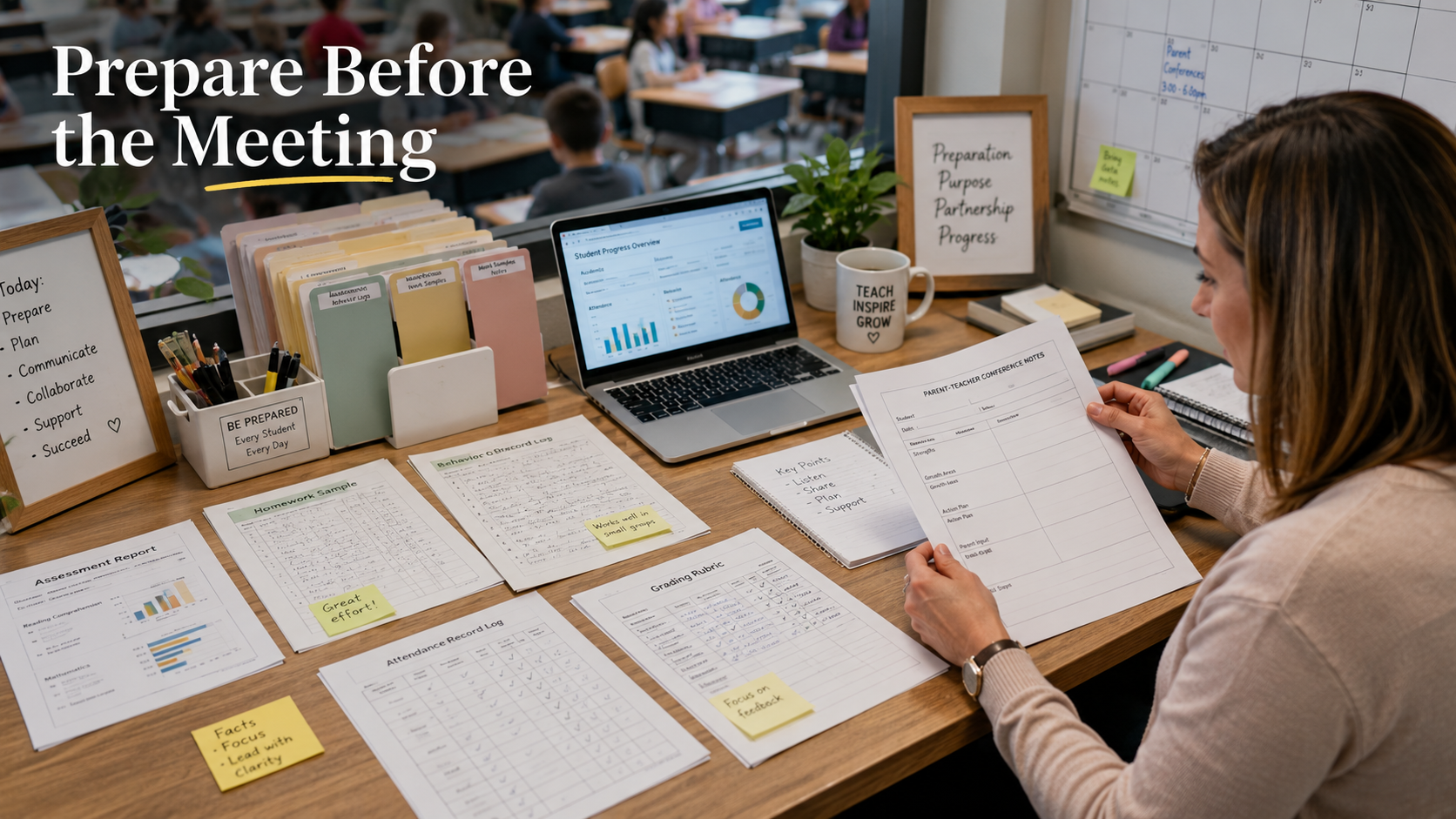

Gathering Objective Data for Parent-Teacher Conference Documentation
Never rely solely on general impressions or memory when discussing student progress with caregivers. Collect recent assessment scores, writing samples, project rubrics, and behavioral tracking logs prior to the conference. Having concrete evidence on hand allows you to ground every note in factual observation rather than subjective opinion.
-
Academic samples: Gather work samples demonstrating both areas of excellence and areas requiring growth.
-
Observational notes: Jot down specific instances of classroom participation, group collaboration, or focus.
-
Attendance and homework records: Compile objective tracking metrics to support administrative discussions regarding responsibility.
Formatting Your Parent-Teacher Conference Notes Template
Using a standardized meeting log saves significant time and maintains consistency across all family interactions. A well-designed, pre-printed or digital template keeps your conversation moving smoothly and ensures you capture essential details without breaking eye contact or disrupting the flow of dialogue.
| Template Section | Purpose | Example Note Content |
| Student Strengths | Highlight positive achievements | “Demonstrates strong leadership during collaborative science experiments.” |
| Growth Areas | Identify targeted skills | “Requires additional practice with multi-step math word problems.” |
| Action Plan | Define concrete next steps | “Will implement graphic organizers during daily reading blocks.” |
| Parent Input | Record family insights | “Parent noted the student completes homework best in quiet settings.” |
During the Meeting: Taking Clear Parent-Teacher Conference Notes
Taking comprehensive notes while maintaining an active, empathetic conversation can feel like a balancing act. However, using specific note-taking strategies enables you to capture crucial details accurately without making parents feel ignored or rushed during their scheduled time.
Use the Strengths-First Approach in Your Meeting Summary
Always begin your written summary and verbal discussion with a genuine positive insight regarding the student’s unique personality or accomplishments. Follow this positive introduction with specific, factual areas for growth, and conclude with an encouraging, forward-looking statement about working together.
Example: “Maya demonstrates wonderful enthusiasm during whole-group literature discussions. She struggles occasionally with completing independent math worksheets within the allotted timeframe. Together, we are introducing a visual checklist to help her manage her time effectively during quiet study periods.”
Focus on Facts in Your Student Progress Records
Avoid emotional or subjective language that might cause parents to feel defensive or criticized. Instead of writing sweeping generalizations like “John is lazy during reading time,” frame the observation objectively: “John benefits from structured, guided prompts to remain focused during 15-minute independent reading blocks.”
-
Subjective: “Sarah is easily distracted.”
-
Objective: “Sarah looks away from her work during independent tasks when background noise increases.”
-
Subjective: “Leo does not care about completing homework.”
-
Objective: “Leo has submitted 3 out of 8 completed homework assignments during this marking period.”
After the Conference: Follow-Up and Action Items
The documentation process does not end when the family leaves your classroom. Prompt post-meeting follow-up demonstrates high professional standards, reinforces accountability for both home and school, and guarantees that agreed-upon action plans are put into motion effectively.
Organizing and Archiving Your Conference Records
Digital note-taking platforms or organized physical binders ensure your documentation remains confidential, secure, and easily accessible. Immediately following the meeting, allocate two minutes to clean up shorthand notes, clarify handwriting, or complete unfinished sentences while the conversation details remain vivid in your memory.
Sharing Parent-Teacher Meeting Summaries with Families
Sending a concise copy of the agreed-upon meeting notes to caregivers builds immense trust and strengthens the home-school partnership. It confirms that both parties share a mutual understanding of student goals, support strategies, and upcoming deadlines, ensuring complete transparency.
-
Send a polite follow-up message within 24 to 48 hours summarizing the primary discussion points.
-
Express sincere gratitude for their valuable time, insights, and ongoing partnership.
-
Invite them to reach out if they have additional questions, concerns, or updates regarding the student.
FAQ SECTION
How detailed should parent-teacher conference notes be?
Parent-teacher conference notes should be concise and detailed enough to record critical academic metrics, social observations, and action steps. You do not need a word-for-word transcript of the conversation. Instead, capture key strengths, growth areas, parent feedback, and agreed strategies using bullet points. Bullet points keep the summary easy to scan for future reference. Aim for a balanced overview that provides clarity without creating excessive administrative work. This approach allows you to review student progress quickly during future evaluation periods throughout the school year.
Should I share my meeting summary notes directly with parents?
Yes, sharing a summary of your conference notes directly with parents is an exceptional way to build trust and promote transparency. Transmitting a brief follow-up email or printed message outlining key discussion points confirms aligned expectations. It demonstrates accountability and proves that you value their partnership in supporting the child’s academic journey. Furthermore, providing a written record gives parents a clear reference guide for home-based support strategies, routines, or learning activities you mutually agreed to implement during the conference.
What is the best way to document behavioral concerns without upsetting parents?
When documenting behavioral challenges, focus exclusively on objective, measurable facts rather than subjective labels or emotional terms. For instance, write that the student “requires reminders to raise their hand before speaking” instead of calling them “disruptive.” Pair every documented concern with a constructive classroom strategy designed to foster growth. Frame the situation as a shared challenge to solve together rather than a flaw. This reassures parents that your primary goal is helping their child succeed in a supportive environment.
How can I take effective conference notes while actively listening?
To maintain active listening while taking notes, rely on a structured template featuring clear headings such as Academic Progress, Behavior, Parent Input, and Action Steps. Use quick shorthand phrases, key abbreviations, and bullet points during the conversation instead of writing complete sentences. Maintain regular eye contact and stay engaged in the conversation. Immediately after the parent leaves, dedicate two minutes to completing your shorthand notes and expanding key details while the discussion remains completely fresh in your mind.
How long should teachers keep parent-teacher conference records?
Teachers should retain all parent-teacher conference records for at least the duration of the current academic year to track student growth, guide report cards, and inform instruction. In situations involving formal intervention plans or specialized educational services, records may need longer retention based on district compliance policies. Storing digital copies securely within password-protected school databases or organized physical binders guarantees confidentiality, protects student privacy, and allows for seamless record transfers to subsequent teachers when necessary.
CONCLUSION
Mastering the process of writing parent-teacher conference notes transforms routine school meetings into powerful, trust-building partnerships that significantly benefit student learning. Clear, structured documentation ensures that educators and caregivers maintain open communication, aligned expectations, and shared accountability across the entire school year. For additional actionable strategies on structuring these meetings from start to finish, explore this detailed parent-teacher meeting guide. By preparing organized templates, focusing on factual data rather than subjective opinions, and following up promptly with written summaries, teachers cultivate an inclusive educational environment where families feel respected, valued, and empowered to support their child’s development.
Building genuine trust with families requires consistent effort, empathy, and clear habits. When parents observe that you document student performance with care, objectivity, and actionable goal-setting, their confidence increases exponentially. Making small refinements to your note-taking framework eliminates guesswork. It prevents misunderstandings and establishes a cooperative relationship focused entirely on student success.
Take the initiative to refine your conference documentation strategy today. Prepare a clean, structured template. Collect relevant work samples before meetings, and commit to sharing helpful post-conference summaries with caregivers. By implementing these proactive measures, you will streamline your administrative workload. You will build long-lasting connections with parents and empower every student in your classroom to reach their full potential.