
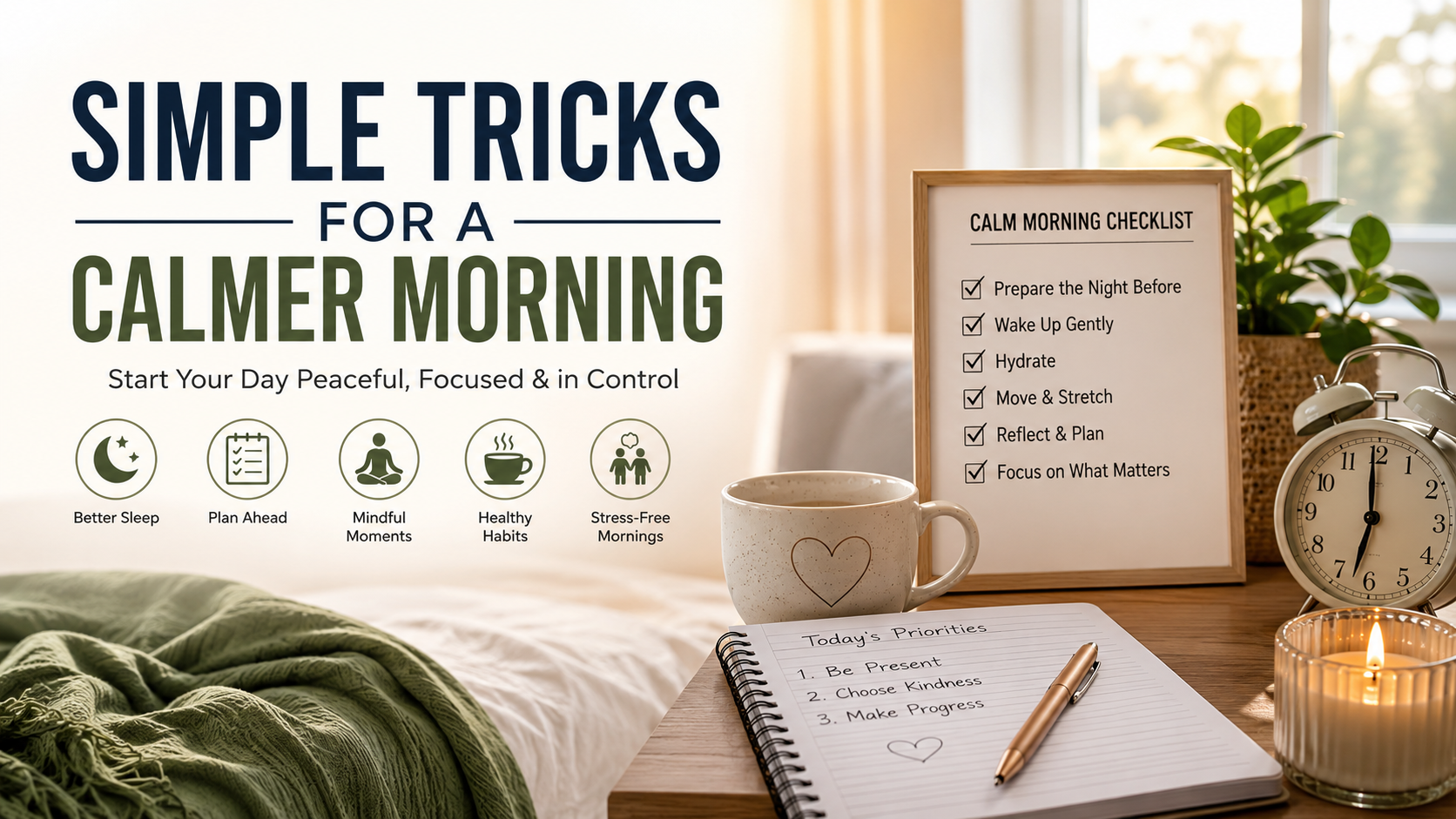
Simple Tricks for a Calmer Morning
Waking up in a rush can immediately make the day feel stressful. Learning simple tricks for a calmer morning can create a more peaceful start and improve your focus. Research published by the National Institutes of Health highlights the value of predictable routines for managing stress and supporting emotional well-being. A consistent morning routine can help you feel more prepared and in control.
Many people struggle with morning grogginess, rushed family schedules, and difficulty getting started. These problems can make even simple tasks feel overwhelming. The solution does not require a complicated lifestyle change.
This guide explores practical ways to wake up more easily, create a peaceful morning routine, and manage late-night energy. You will also learn how to build quick restorative rituals and reduce stressful family mornings.
Small changes can make your early hours more manageable. Preparing the night before, reducing distractions, and following a consistent schedule can create useful momentum. Over time, these habits can make calmer mornings feel more natural.


How to have a calm morning?
To have a calm morning, reduce unnecessary decisions and prepare as much as possible the night before. Lay out your clothes, pack bags, and prepare breakfast before going to bed. These simple steps remove common sources of morning stress and help you move through your routine more smoothly.
When you wake up, avoid checking your smartphone immediately. Notifications, messages, and social media can quickly pull your attention toward outside demands. Instead, drink some water and give yourself a few quiet minutes before checking your devices. Practicing a digital detox can also help reduce distractions and protect your attention.
Try spending five minutes on quiet reflection, breathing, or gentle stretching. You do not need an ambitious checklist. A simple routine that you can follow consistently is often easier to maintain.
The goal is to create breathing room before responsibilities begin. Move through your morning at a steady pace instead of rushing from one task to another. With practice, these simple tricks for a calmer morning can help you start the day feeling more focused and prepared.
Designing a Low-Stimulation Environment
Your surroundings can strongly influence how your morning feels. Keep your bedroom relatively quiet and use softer lighting during the first few minutes after waking. This creates a gentler transition from sleep to normal daytime activity.
Avoid starting the day with loud alarms, television, or constant phone notifications. These distractions can make your mind feel busy before you have even left the bedroom. If possible, use a gradually increasing alarm sound instead of an abrupt one. Exploring the screen-free tech trend can also offer ideas for reducing unnecessary digital stimulation.
You can also choose calming background sounds or complete silence. The best option depends on your personal preferences and environment. You could also use YouTube Music for calming background sounds if music helps create a more peaceful atmosphere. What matters most is limiting unnecessary stimulation.
A low-stimulation environment gives you time to become fully awake before dealing with work, school, or household responsibilities. Pairing this approach with simple morning habits can make your routine feel more intentional.
You do not need expensive products or a major bedroom makeover. Small changes, such as keeping your phone away from the bed, can make the first part of your morning noticeably calmer.
What is the 5 am rule?
The 5 AM rule is a personal-development method popularized by author Robin Sharma. It encourages waking at 5:00 AM and using the first hour for the 20/20/20 formula. The hour is divided into three 20-minute blocks.
The first block focuses on exercise or vigorous movement. The second is used for reflection, planning, or journaling. The final block is dedicated to learning, reading, or personal development.
The appeal of waking early is having uninterrupted time before work, school, messages, and other responsibilities begin. However, waking at 5 AM is not automatically better than waking later. The approach only works well if you still get enough quality sleep.
If an early wake-up forces you to sacrifice sleep, it can make mornings harder rather than calmer. Your ideal wake-up time should fit your natural sleep needs and daily schedule.
Used appropriately, the method can provide structure and protected personal time. It is best viewed as a framework rather than a rule that everyone must follow.
Applying the 20/20/20 Method Efficiently
The strength of the 20/20/20 method comes from giving each part of the morning a clear purpose. You begin with physical activity, move into reflection, and finish with learning. This creates a structured transition from waking up to beginning your day.
During the first 20 minutes, choose an exercise that matches your fitness level. A brisk walk, mobility routine, or workout can help increase alertness. You do not need to exercise intensely to benefit from movement.
Use the second block for journaling, planning, or quiet reflection. Write down your priorities and identify the tasks that matter most. This can reduce mental clutter and make your schedule easier to manage.
Spend the final 20 minutes reading, studying, or developing a useful skill. Choose material that supports your current goals rather than consuming random information.
If one hour feels unrealistic, shorten each block. The purpose is to create a repeatable routine, not to follow the formula perfectly. Consistency matters more than waking at exactly 5 AM.
What are some tricks for waking up in the morning?
Waking up more easily starts with building habits that support your sleep-wake cycle. One simple trick is placing your alarm away from the bed. This encourages you to stand up instead of repeatedly pressing snooze.
Morning light is another useful tool. Open your curtains soon after waking or spend a few minutes outside. Bright light helps regulate your circadian rhythm and signals that the day has begun.
Drinking water can also be part of your morning routine. Overnight, you naturally go several hours without fluids, so having water after waking can help you feel refreshed.
You can wash your face or take a shower if these actions help you become more alert. However, cold water is not necessary, and claims that it directly stimulates the vagus nerve should not be treated as a guaranteed effect.
Most importantly, maintain a consistent wake-up time. Going to bed and waking at similar times each day helps your body maintain a predictable rhythm. Combine this habit with adequate sleep, morning light, and fewer distractions for a smoother start.
Leveraging the Power of Immediate Natural Sunlight
Morning sunlight can play an important role in regulating your circadian rhythm. Light entering your eyes provides the brain with information about the time of day. Morning exposure can help reinforce the difference between daytime alertness and nighttime sleepiness.
Try opening the curtains soon after waking. If possible, spend some time outdoors in natural daylight. Outdoor light is generally much brighter than typical indoor lighting, even on cloudy days.
The timing matters because light exposure later in the evening can have a different effect. Bright light from screens and strong indoor lighting may delay sleepiness for some people.
Morning sunlight is not a magic solution for severe fatigue. If you regularly feel exhausted despite getting enough sleep, other factors may need attention.
For most people, however, making morning light part of a consistent routine is simple and practical. Combine it with a regular wake-up time and adequate nighttime sleep.
This approach supports healthier sleep timing and can make it easier to establish a predictable morning routine over time.
What is the 7 minute morning ritual?
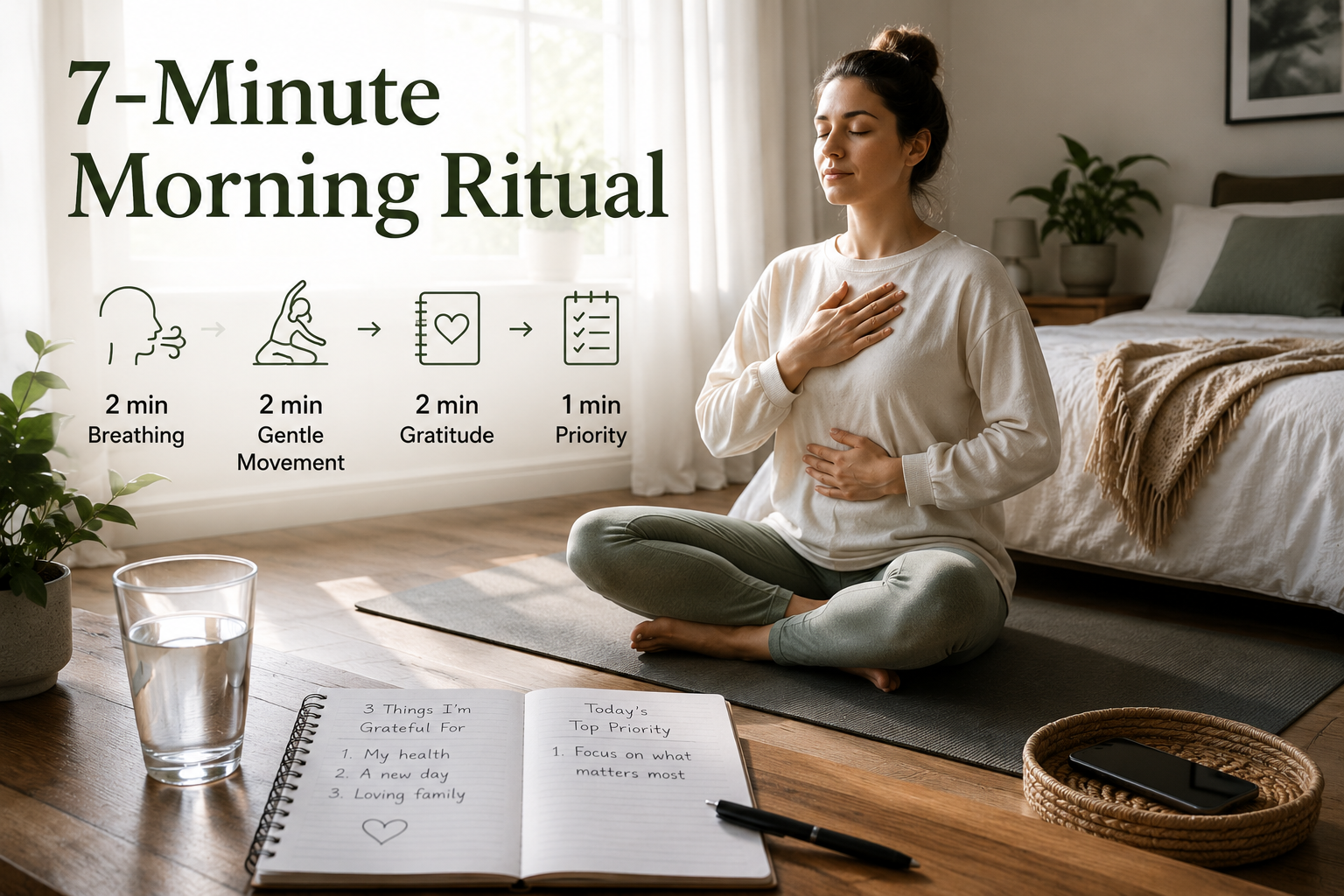
The 7-minute morning ritual is a short routine designed for people who want a structured start without spending an hour on self-care. It divides seven minutes into several simple activities that encourage calm and focus.
Start with two minutes of slow, comfortable breathing. Focus on steady breaths rather than forcing deep breaths. Next, spend two minutes doing gentle mobility exercises or stretches to loosen your body after sleep.
Use another two minutes to write down three things you appreciate. These can be simple observations, personal experiences, or things you are looking forward to.
Use the final minute to identify and visualize your main priority for the day. Keep this goal specific and realistic.
The routine is intentionally short. Its purpose is to create a calm morning habit that feels achievable even on busy days.
You can adjust the activities to suit your needs. The exact seven-minute structure is less important than following a routine consistently. Small rituals can create a useful transition between sleep and the demands of the day.

Maximizing Micro-Habits for Rapid Daily Focus
The value of a short morning ritual comes from consistency rather than duration. A routine that takes seven minutes is easier to repeat than a complicated schedule requiring an hour.
Begin with a simple breathing exercise. Slow breathing can encourage relaxation and give you a short break from immediate thoughts about work or responsibilities. Follow it with gentle movement to wake your body gradually.
Writing down your priorities can also reduce mental clutter. Instead of creating a long task list, identify the one or two actions that deserve your attention first.
You can then spend a minute visualizing how you want to approach the day. Focus on the behavior you want to practice rather than imagining a perfect outcome.
These micro-habits work best when they fit naturally into your existing schedule. If seven minutes feels too long, shorten the routine rather than abandoning it.
The goal is not to create another demanding obligation. It is to establish a small, repeatable ritual that helps you begin the day with greater clarity and less reactivity.
Why am I tired in the morning and energetic at night
Feeling tired in the morning but energetic at night can have several causes. A disrupted circadian rhythm is one possibility. Some people naturally have later sleep preferences, while others develop delayed sleep patterns through irregular schedules or nighttime habits.
Bright light from phones, computers, televisions, and indoor lighting can also affect sleep timing. Exposure to stimulating content late at night may make it harder to wind down. Reducing this exposure is one reason disconnecting from digital devices can support healthier nighttime habits.
Going to bed late can create sleep inertia, which is the temporary grogginess many people experience after waking. If you then need to wake early, insufficient sleep can make morning fatigue worse.
Stress can also affect sleep quality and energy levels. However, it is too simplistic to assume that tired mornings always mean low morning cortisol or an inverted cortisol curve.
Start with the basics. Keep consistent sleep and wake times, reduce stimulating activities before bed, and aim for enough sleep. If persistent fatigue continues despite healthy sleep habits, consider discussing it with a healthcare professional.
Resetting Your Inverted Daily Cortisol Curve
Rather than trying to manipulate cortisol directly, focus on habits that support a stable sleep-wake rhythm. Your body naturally follows daily patterns in hormones, alertness, temperature, and sleepiness.
Start by maintaining consistent bedtimes and wake-up times. Try to keep the schedule similar on weekends, because large changes can make your body clock harder to regulate.
Morning light is another useful habit. Getting outside soon after waking can provide a strong daytime signal to your circadian system. Regular daytime activity can also support healthier sleep timing.
In the evening, reduce bright light and stimulating activities. Dim household lighting and limit demanding screen use before bed if these habits interfere with your ability to fall asleep. Replacing screen time with family activities you can enjoy at night can provide a more relaxing alternative.
Avoid treating cortisol as the only explanation for nighttime energy. Sleep debt, stress, caffeine, inconsistent schedules, and individual chronotypes can all contribute.
The aim is to create clear signals for daytime and nighttime. With consistent habits, your body can gradually develop a more predictable sleep and wake pattern.
Calm morning routine for kids
A calm morning routine for kids depends on predictability, preparation, and clear expectations. Children often respond better when they know what comes next instead of receiving repeated verbal instructions.
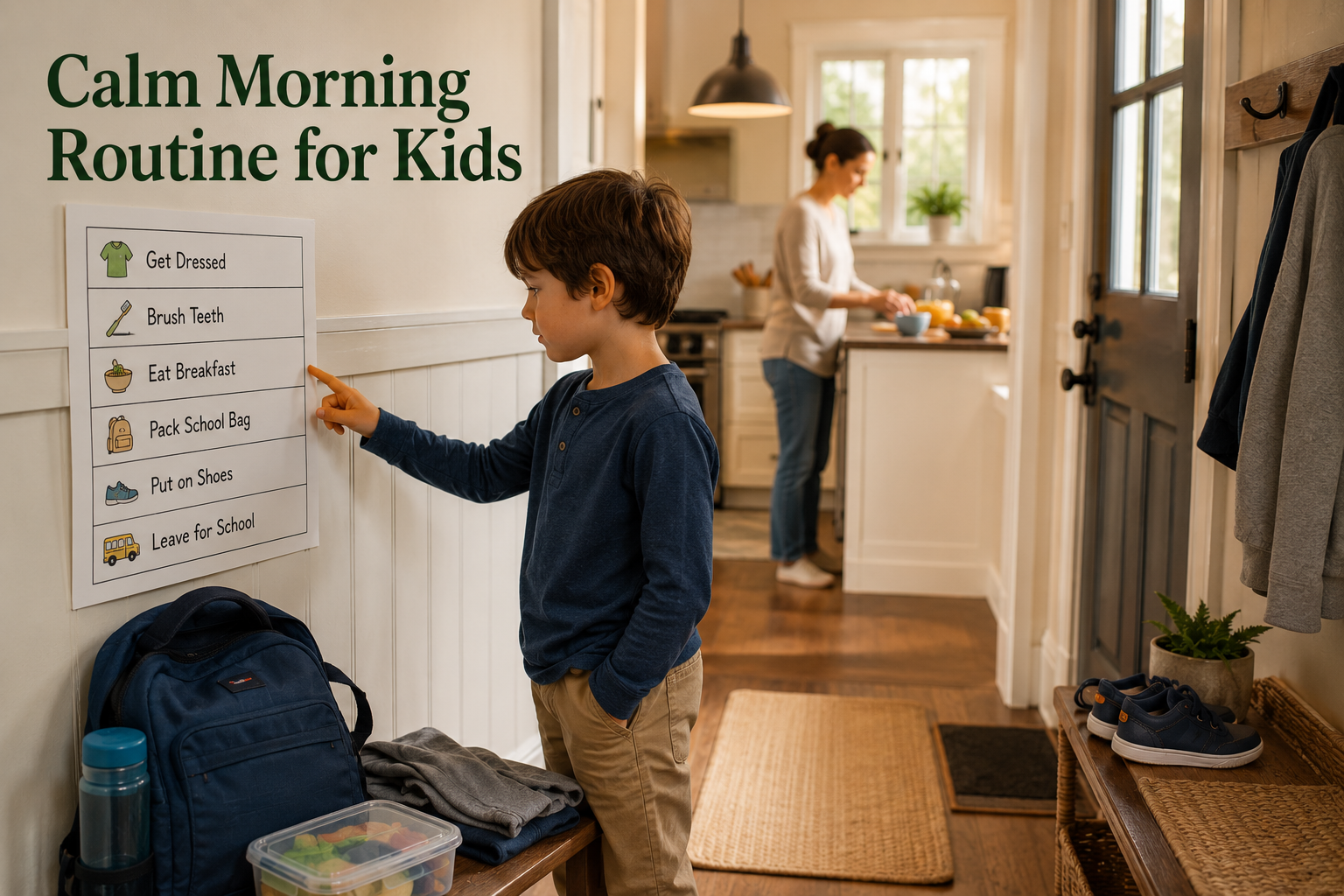
Create a simple visual routine that shows essential tasks. Include getting dressed, brushing teeth, eating breakfast, putting on shoes, and packing school items. Pictures can help younger children understand the sequence.
Prepare as much as possible the night before. Pack school bags, choose outfits, and organize lunches before bedtime. This removes several decisions from the busiest part of the morning.
Allow enough time so children do not feel constantly rushed. Waking them slightly earlier may help, but adding extra wake-up time should not reduce their sleep.
Your own behavior also matters. A calm voice and predictable instructions can help reduce unnecessary conflict. Learning how to be a relaxed, happy parent can also support a calmer approach to everyday family routines. Give children time to complete tasks instead of correcting every small mistake.
The goal is not a perfectly silent morning. It is a routine that feels predictable, manageable, and cooperative for the whole family.
Using Visual Task Checklists to Build Independence
Visual task checklists can help children understand their morning responsibilities without constant reminders. Instead of repeatedly saying what to do, parents can point to the next step on the schedule.
Keep the checklist short and age-appropriate. Younger children may benefit from pictures, while older children can use simple written instructions.
A basic sequence might include:
- Get dressed
- Brush teeth
- Eat breakfast
- Pack the school bag
- Put on shoes
- Leave for school
Let children move through the checklist independently whenever possible. Completing tasks without repeated prompting can build confidence and responsibility.
The system also helps parents identify where delays happen. If breakfast consistently takes too long, you can adjust preparation rather than simply rushing the child.
Avoid turning the checklist into another source of pressure. Give reasonable time limits and offer help when needed.
Over time, a visual morning routine for kids can reduce repeated instructions and prevent avoidable arguments. The objective is not perfect independence. It is creating enough structure for children to know what comes next and participate more confidently in the morning.
Frequently Asked Questions
How long does it take to establish a calm morning routine?
It often takes several weeks of consistent practice to make a new routine feel natural. Using simple tricks for a calmer morning works best when you introduce one or two habits at a time. This approach reduces overwhelm and makes your new routine easier to maintain consistently.
Should I exercise first thing in the morning?
Morning exercise can help you feel more alert and prepared for the day. As part of simple tricks for a calmer morning, try five to ten minutes of stretching, yoga, walking, or light movement. Choose an activity that increases energy without leaving you exhausted before work.
What should I eat for breakfast to stay calm and focused?
Choose a balanced breakfast that combines protein, complex carbohydrates, and healthy fats. For example, try eggs with avocado, oatmeal with nuts, or a protein-rich smoothie. Including balanced nutrition among your simple tricks for a calmer morning can help you stay satisfied and focused throughout the morning.
How do I stop checking my phone immediately after waking up?
Keep your smartphone outside the bedroom and use a separate alarm clock. This simple boundary removes the temptation to check notifications immediately. Avoiding your phone is one of the most practical simple tricks for a calmer morning, because it protects your attention from emails, social media, and outside demands.
Conclusion
A peaceful start does not require a perfect schedule or major lifestyle change. These simple tricks for a calmer morning can help you create more space, focus, and control before daily responsibilities begin. Prepare the night before, get some natural morning light, move your body, and delay phone use. Choose one or two habits first, then build gradually. With consistency, these simple tricks for a calmer morning can become a sustainable part of your daily routine and make your mornings feel more manageable.