
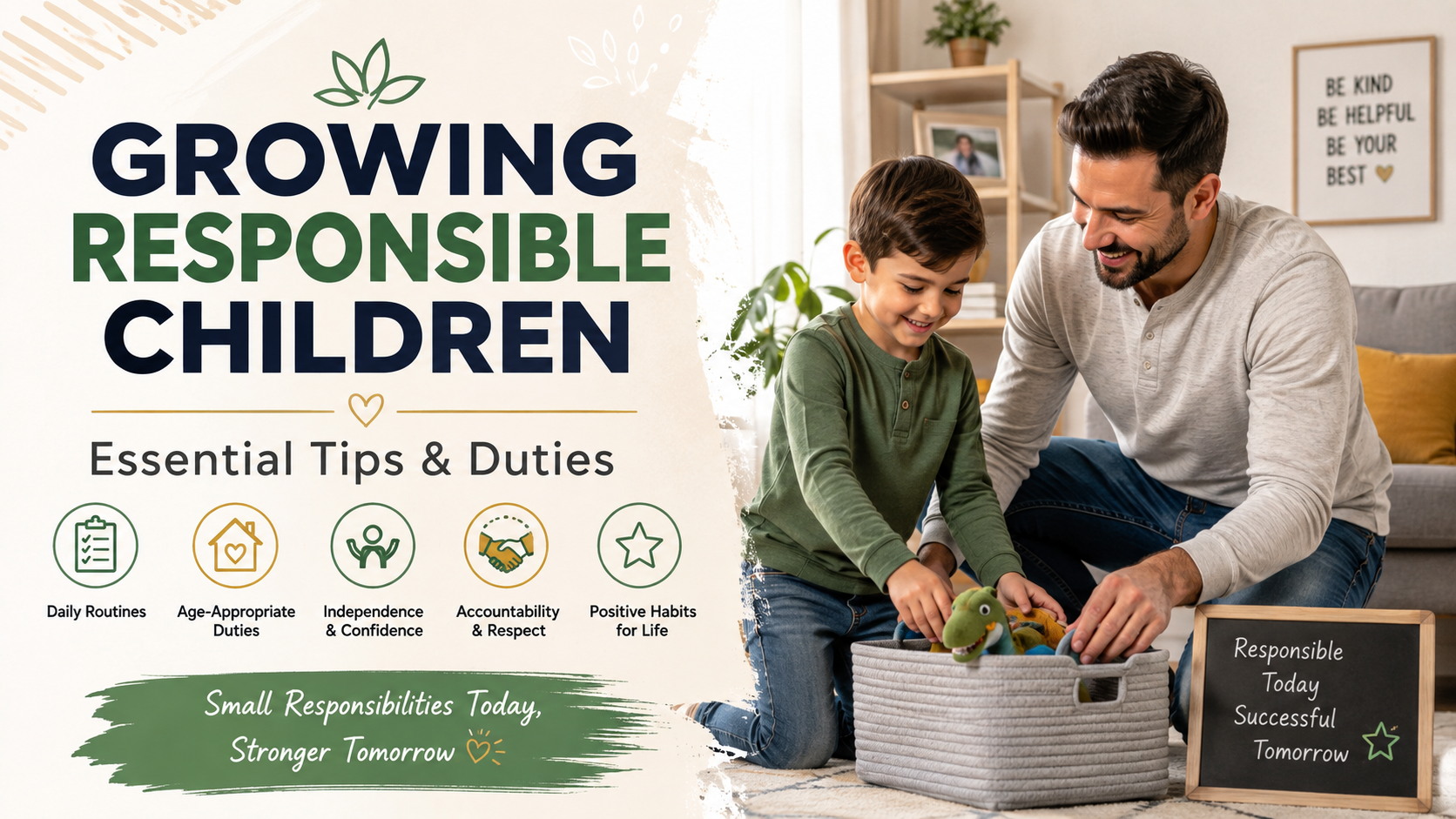
Growing Responsible Children: Essential Tips & Duties
Growing responsible children is one of the most rewarding goals for any parent or caregiver. It also requires patience, consistency, and realistic expectations. Parents want children who can manage tasks, make thoughtful decisions, and treat others with respect. These skills do not develop overnight. They grow through daily practice, clear expectations, and supportive guidance.
According to guidance from the American Academy of Pediatrics, children benefit from opportunities to develop independence and problem-solving skills. Parents can support this process by giving children age-appropriate responsibilities and allowing them to learn from mistakes. Responsibility should feel like a normal part of family life, not a punishment.
This guide explains practical ways of growing responsible children at different ages. It covers daily routines, household duties, independence, accountability, and positive habits. These simple strategies can help children become more capable and confident over time.
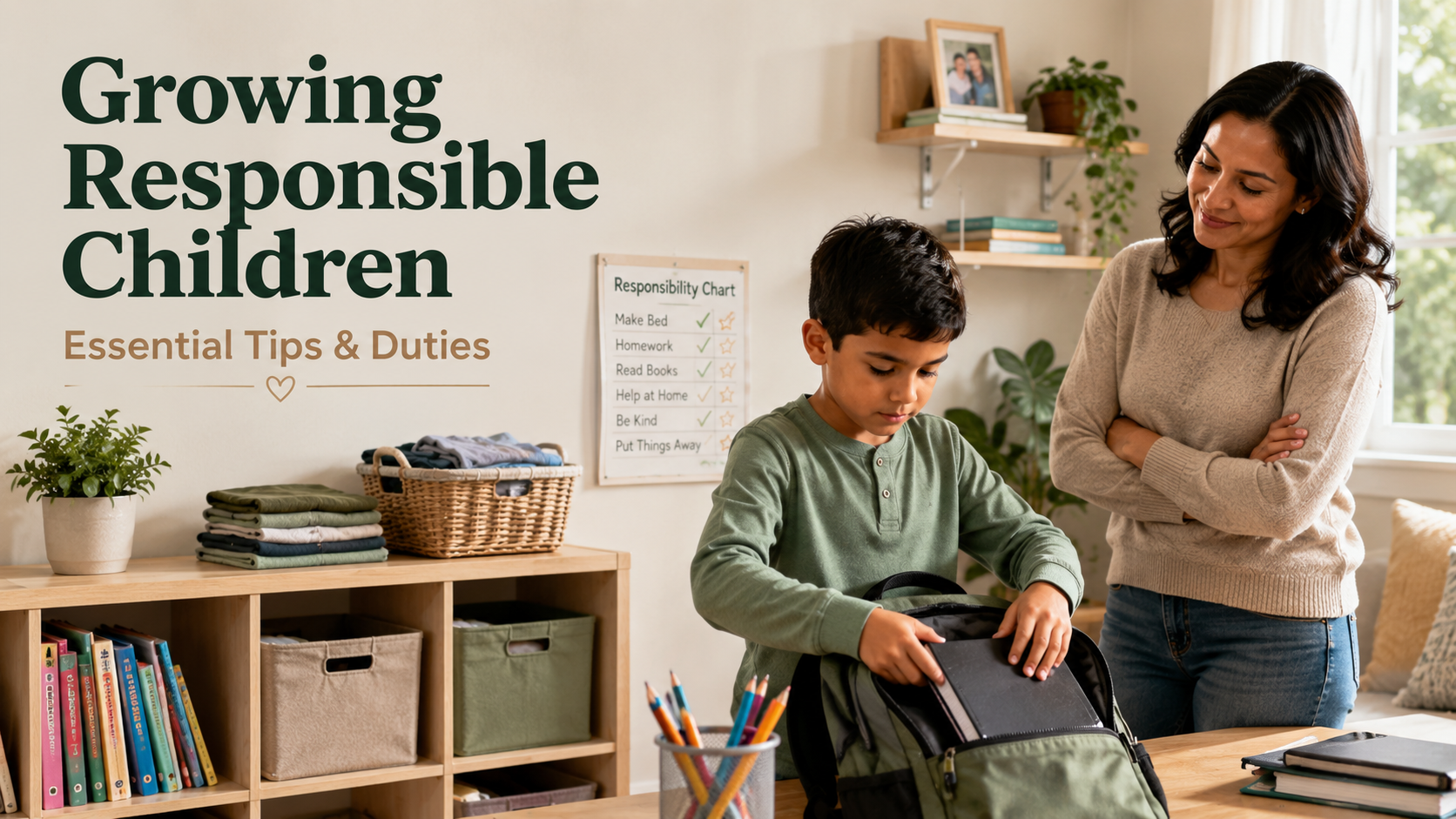

How to Raise Responsible Children?
Raising responsible children requires a balance between clear expectations and supportive guidance. Children need to understand what they are responsible for and why those duties matter. Simply giving instructions may not build lasting accountability.
Start with age-appropriate responsibilities. Younger children can put away toys or place clothes in a laundry basket. Older children can manage homework, organize belongings, or help with household tasks. Increase responsibilities gradually as children demonstrate readiness.
Parents should also avoid solving every problem for their children. When children make reasonable mistakes, allow them to experience natural consequences. This helps them understand how their choices affect themselves and others.
Positive reinforcement can also encourage responsible behavior. Recognize effort, reliability, and improvement instead of expecting perfection. Most importantly, remain consistent. Children learn responsibility when expectations stay clear and predictable.
Establishing Consistent Daily Routines
Consistent routines give children a clear framework for managing everyday responsibilities. When children know what happens next, they can gradually complete tasks without constant reminders. A predictable routine can also reduce arguments around homework, bedtime, meals, and personal care.
Create a simple schedule that matches your child’s age and abilities. Younger children may need pictures or a colorful checklist. Older children can use a planner or digital calendar, while families exploring different learning approaches can also consider types of alternative education.
Include responsibilities such as:
- Getting dressed independently
- Putting toys and belongings away
- Completing homework
- Preparing school materials
- Helping with household chores
- Following bedtime routines
Avoid making the schedule too complicated. The goal is to build independence, not create unnecessary pressure.
Parents can review the routine with children and make adjustments when needed. Over time, repeated practice helps children remember tasks without constant supervision. This approach makes responsibility part of everyday life rather than something parents have to enforce repeatedly.
How Can Children Be Responsible?
Children can demonstrate responsibility in many areas of daily life. Responsibility means taking ownership of actions, belongings, decisions, and commitments. It can begin with simple tasks and gradually develop into more complex responsibilities.
Young children can show responsibility by cleaning up toys, feeding a pet, or putting clothes away. School-age children can complete assignments, prepare their school bags, and follow agreed household rules. Teenagers may take responsibility for managing schedules, helping younger siblings, or handling part-time work.
Responsibility also involves social and emotional behavior. Children can learn to apologize when they hurt someone, manage frustration, and treat others respectfully. These skills are just as important as completing chores.
Parents should focus on progress rather than perfection. A child may forget a task or make a poor decision. Instead of immediately taking over, ask questions that encourage problem-solving. This helps children understand that responsible behavior involves both completing duties and learning from mistakes.
Taking Care of Personal Belongings
Taking care of personal belongings gives children a practical way to learn accountability. Start by teaching children that their possessions have a place and require care. This could include toys, books, clothing, school supplies, and electronic devices.
Younger children can learn to return toys after playing. School-age children can organize backpacks, sharpen pencils, and keep track of school materials. Teenagers can become responsible for maintaining their personal items and managing belongings needed for activities.
Parents should avoid replacing lost or damaged items immediately when doing so removes a useful learning opportunity. Instead, discuss what happened and ask the child how they can prevent it next time.
Children should also learn to respect items that belong to other people. Returning borrowed books, toys, or equipment in good condition teaches respect and accountability.
These habits may seem small, but they build important life skills. Children who learn to care for their belongings often become more organized and aware of their responsibilities. The goal is not perfect organization. It is helping children understand that their choices have consequences.
Is Raising Children Difficult?
Yes, raising children can be difficult, especially because their needs and abilities change as they grow. Parents often manage tiredness, disagreements, school demands, changing emotions, and competing responsibilities. There is no single parenting strategy that works for every child.
Children have different personalities, learning styles, and levels of independence. A method that works well for one child may need adjustment for another. Parents therefore need flexibility rather than a rigid formula.
Modern distractions can add another challenge. Digital devices, social media, gaming, and busy schedules can make routines harder to maintain. Setting reasonable boundaries and developing digital literacy skills for responsible technology use can help children balance responsibilities with recreation.
Despite these challenges, parenting can also be deeply rewarding. Seeing a child solve a problem independently or take responsibility for a mistake can show meaningful growth.
The goal is not to make parenting effortless. Instead, focus on building healthy habits and realistic expectations. When parents accept that mistakes are part of learning, they can guide children with greater patience and consistency.
Embracing Imperfection in Parenting
Embracing imperfection can make parenting more realistic and less stressful. Parents will sometimes lose patience, misunderstand a situation, or make decisions that do not work. These moments do not automatically make someone a bad parent.
What matters is how parents respond afterward. If you make a mistake, acknowledge it and apologize when appropriate. This shows children that responsible behavior applies to adults as well.
Avoid expecting children to perform every responsibility perfectly. Young people are still learning how to manage time, emotions, relationships, and consequences. Mistakes can become opportunities for discussion and problem-solving.
Parents can also model healthy responses to setbacks. Instead of saying, “I never make mistakes,” explain what went wrong and what you will do differently.
This approach teaches accountability through example. Children are more likely to accept responsibility when they see adults doing the same.
Give children room to learn while maintaining reasonable boundaries. The goal is not perfect parenting or perfect children. It is creating a home where mistakes can lead to learning, repair, and better choices.
What Are 5 Ways to Be Responsible?
Five practical habits can help children develop a stronger sense of responsibility. These habits apply to everyday situations and can be adjusted according to age.
1. Manage time effectively. Children can learn to prioritize homework, chores, activities, and relaxation. Simple schedules can make deadlines easier to understand.
2. Admit mistakes. Taking responsibility means acknowledging problems instead of blaming other people. Children should learn that mistakes can be corrected.
3. Keep commitments. Arriving on time, completing chores, and following through on promises help children become reliable.
4. Practice basic money management. Older children can learn to save part of their allowance or earnings. This introduces planning and delayed gratification.
5. Help others and the environment. Recycling, helping neighbors, or supporting family members can teach children that responsibility extends beyond themselves.
Parents should introduce these habits gradually. Children do not need to master everything at once. Consistent practice helps turn responsible choices into lasting habits.
Practicing Effective Time Management
Effective time management helps children balance responsibilities with play and relaxation. Without guidance, children may struggle to understand how long tasks take or why deadlines matter.
Begin with simple tools. A paper planner, wall calendar, timer, or age-appropriate digital calendar can help children visualize their schedules. Younger children may benefit from pictures that represent different activities.
Encourage children to divide larger tasks into smaller steps. For example, instead of saying “finish your project,” help them identify research, writing, checking, and preparation.
Avoid managing every minute of your child’s day. The goal is to teach children how to make reasonable choices independently. Allow them to experience small consequences when they misjudge how long something will take.
Praise planning and follow-through, not just perfect results. Over time, children become better at estimating time and prioritizing important tasks.
This skill becomes increasingly valuable during adolescence. Good time management can help teenagers balance schoolwork, extracurricular activities, family responsibilities, social time, and the importance of education for future career preparation.
How to Be a Responsible Child at Home
Being a responsible child at home means contributing to family life rather than expecting others to handle every task. Children can learn this through simple household responsibilities that match their age and abilities while developing an understanding of what homeownership involves.
Younger children can put away toys, help set the table, or place dirty clothes in the laundry basket. Older children can prepare simple meals, wash dishes, take out the trash, or help with younger siblings.
Responsibility also involves respecting family rules and shared spaces. Children should learn to communicate when they need help instead of ignoring a problem. They can also take responsibility for repairing mistakes, such as cleaning a spill they caused, while learning about the social benefits of homeownership and caring for shared spaces.
Parents should avoid assigning chores as punishment whenever possible. Household responsibilities are more effective when children understand that everyone contributes to a shared home.
Encourage children to notice what needs to be done. This helps them move from following instructions to showing initiative. Over time, these habits can prepare children for independent living and stronger relationships with others.
Pitching In With Unassigned Chores
Helping with unassigned chores can show that a child understands responsibility beyond a personal task list. Instead of waiting for instructions, children can learn to notice when someone needs help.
For example, a child might clear extra dishes from the table, pick up items in a shared room, or help carry groceries. These actions demonstrate awareness and consideration for other family members.
Parents can encourage this behavior by recognizing initiative without turning every helpful action into a reward. A simple acknowledgment can reinforce the idea that contributing to the household matters.
Children should still have clear assigned responsibilities. Unassigned help should complement those duties rather than replace them.
Avoid expecting young children to notice every household need. This skill develops gradually with age and experience. Parents can model it by explaining their own actions. For example, they might say, “I noticed the room was messy, so I decided to help clean it.”
This teaches children that responsibility includes initiative. They begin to understand that a supportive family works together rather than waiting for one person to handle everything.
How to Teach Someone to Be More Responsible?
Teaching someone to become more responsible requires consistency, patience, and gradual independence. Whether you are guiding a child, student, or younger sibling, avoid taking control of every task.
Start by defining the responsibility clearly. Explain what needs to be done, when it should be completed, and why it matters. Clear expectations make it easier for children to understand what success looks like.
Allow children to handle tasks they are capable of completing. You may need to accept slower results at first. Doing everything yourself may be faster, but it does not teach independence.
When mistakes happen, focus on solutions instead of criticism. Ask what went wrong and what could be done differently next time. This encourages problem-solving and accountability.
You can also increase freedom as children demonstrate reliability. More independence should come with appropriate boundaries and guidance.
The ultimate goal is internal motivation. Children should gradually learn to complete responsibilities because they understand their importance, not simply because an adult is watching. This shift takes time, but it creates stronger long-term habits.
Granting Gradual Independence and Trust
Gradual independence allows children to develop confidence while still having appropriate support. Giving too much freedom too quickly can overwhelm a child. Providing too little freedom can prevent them from developing essential skills.
Start with small responsibilities that match the child’s current abilities. Once the child handles them consistently, introduce a slightly more challenging task. This creates a natural progression toward greater independence.
For example, a young child might organize toys. Later, they can manage their school bag, prepare materials for the next day, or plan part of their routine. Teenagers may eventually manage appointments, schedules, money, or transportation with suitable parental guidance.
Trust should be connected to demonstrated responsibility. If a child repeatedly handles a task well, acknowledge that progress and provide more autonomy.
When mistakes occur, avoid immediately removing all independence. Discuss the problem and decide what support is needed.
This approach helps children develop confidence, judgment, and self-reliance. Over time, they learn that greater freedom comes with greater responsibility, preparing them for adulthood and independent decision-making.
FAQ SECTION
What Age Should Children Start Learning Responsibility?
Children can start learning responsibility as early as toddlerhood through simple, age-appropriate tasks. Putting toys away, carrying a small item, or placing clothes in a basket can introduce accountability. These early habits help children understand that everyone has responsibilities. As children grow, growing responsible children involves gradually increasing expectations based on their abilities, maturity, and independence.
How Do I Handle It When My Child Refuses to Do Chores?
When a child refuses to do chores, stay calm and avoid turning the situation into a power struggle. Remind them of the agreed expectation and apply a reasonable, logical consequence when necessary. Avoid completing the task for them every time. During a calm moment, discuss the reason for the refusal. This approach supports growing responsible children without relying on constant arguments or punishment.
Can Rewards Help in Teaching Responsibility to Kids?
Rewards can help children develop new habits, especially when they are learning responsibility for the first time. However, parents should avoid making every task dependent on a prize. Too many material rewards can reduce internal motivation. Instead, gradually shift toward praise, trust, and appropriate privileges. For parents focused on growing responsible children, the long-term goal should be helping children value responsibility itself.
What Is the Difference Between Obedience and Responsibility?
Obedience means following instructions or rules, while responsibility involves understanding expectations and taking ownership of choices. A child may obey because an adult is watching. A responsible child can make a good decision even without supervision. This distinction matters when growing responsible children because the goal is not simple compliance. Children should gradually develop judgment, accountability, and confidence in making appropriate decisions independently.
Conclusion
Growing responsible children is a gradual process that requires patience, consistency, and realistic expectations. Parents can begin with simple duties and increase responsibilities as children become more capable. Daily routines, household chores, personal organization, and opportunities to make decisions all provide valuable learning experiences.
Allow children to experience reasonable consequences instead of solving every problem for them. At the same time, provide guidance when a task is beyond their current abilities. This balance helps children develop independence without feeling overwhelmed.
The goal of growing responsible children is not perfection. Children will forget chores, make poor choices, and need reminders. What matters is helping them learn from those experiences and try again.
Use clear expectations, model responsible behavior, and recognize genuine progress. With consistent support, growing responsible children becomes a natural part of everyday family life. Small responsibilities introduced today can help children develop the confidence, judgment, and self-reliance they need for adulthood.