
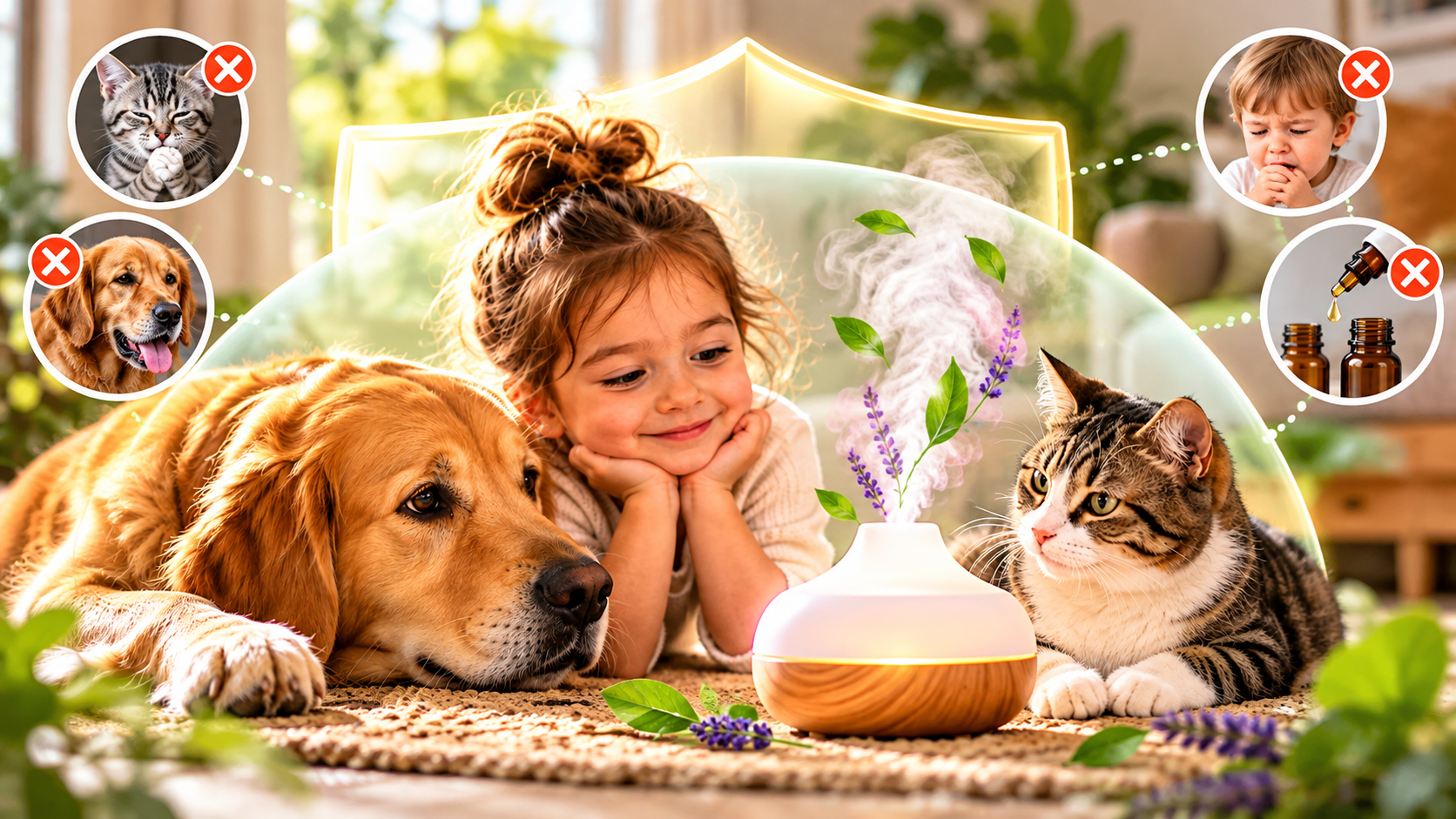
How to Safely Diffuse Essential Oils Around Pets and Children
Aromatherapy is a popular way to create a relaxing home atmosphere. However, if you live with pets or young children, safety should come first. Many people diffuse essential oils to freshen their rooms, but concentrated plant extracts can cause health problems when used incorrectly.
Cats, dogs, infants, and toddlers may react differently to airborne fragrances. Some essential oils can irritate the respiratory system, while direct contact or accidental ingestion can cause more serious effects. The risks depend on the oil, its concentration, the type of diffuser, and the level of exposure.
Before introducing aromatherapy into your home, consider guidance from trusted organizations such as the ASPCA Animal Poison Control Center and Poison Control.
This guide explains how to approach essential oil diffusion around pets and children. You will learn about potential risks, oils that require caution, safer ways to manage household odors, and precautions for using a diffuser around cats and dogs. These practical steps can help you make informed decisions while protecting your household.
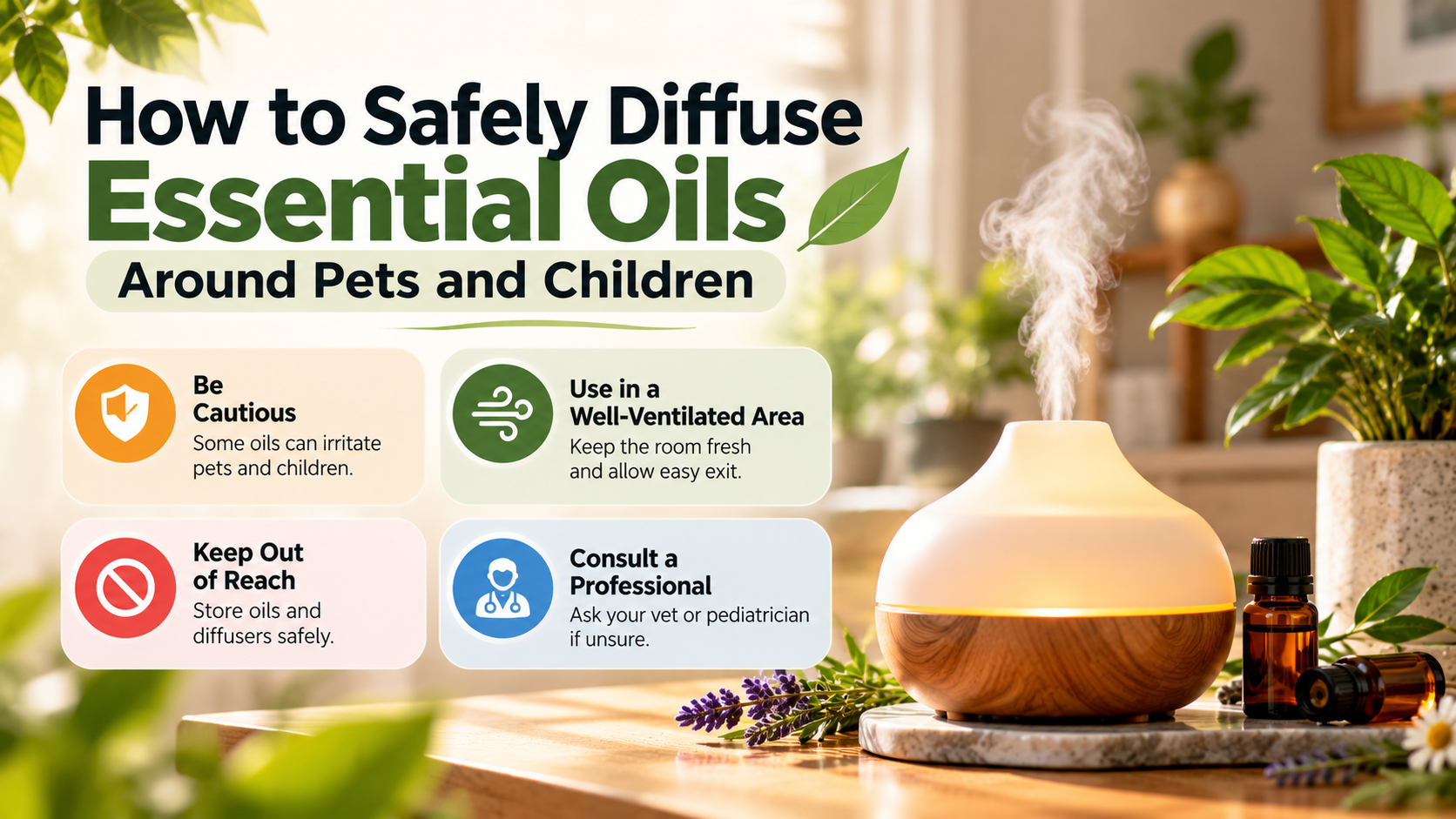
Is it safe to diffuse essential oils with pets?
Whether it is safe to diffuse essential oils around pets depends on the oil, concentration, exposure time, and animal’s health. Some products may cause irritation or poisoning, so natural ingredients should never be assumed harmless. Cats, dogs, and other household animals can react differently to the same fragrance.
Active diffusers, including ultrasonic and nebulizing models, can release tiny oil droplets into the surrounding air. These droplets may settle on an animal’s coat and later be swallowed during grooming. Strong fragrances can also irritate sensitive airways, particularly in small or poorly ventilated rooms. The ASPCA’s essential oil safety guidance explains why concentration and exposure matter.
If you choose to use a diffuser, keep pets out of the room and provide fresh air. Never force an animal to remain near a fragrance. Avoid diffusion altogether if your pet has breathing problems or shows signs of irritation. When uncertain, ask your veterinarian before introducing aromatherapy into your home.
Understanding Pet Sensitivity to Aromatherapy
Pets experience scents differently from humans, and a fragrance that seems mild to you may feel overwhelming to an animal. Their responses depend on species, individual sensitivity, underlying health conditions, and the chemicals in a particular oil. Cats can face additional risks because oil deposited on their fur may be swallowed during grooming.
Essential oil exposure can cause symptoms such as watery eyes, coughing, drooling, vomiting, weakness, or difficulty breathing. Severe poisoning may involve tremors, changes in coordination, or other serious effects. These symptoms should not be dismissed as ordinary reactions to a strong smell.
To reduce exposure, keep essential oil bottles and diffusers inaccessible to pets. Use a separate, well-ventilated area if you decide to diffuse, and ensure animals can leave the area freely. However, physical separation does not eliminate every risk because airborne particles can travel between rooms. If your pet has respiratory disease, avoiding diffusers is the more cautious option. Contact your veterinarian promptly if you suspect exposure or notice unusual symptoms.
What essential oils are safe around kids and pets?
There is no single essential oil that can be guaranteed safe for every child and pet. Lavender, chamomile, and frankincense are common aromatherapy choices, but their popularity does not establish that they are harmless when diffused around vulnerable household members. Safety depends on the specific product, concentration, exposure method, and individual sensitivity. Learn more about the benefits of essential oils and their common uses before introducing them into your home.
Before you diffuse essential oils, consider whether the fragrance is necessary. Unscented alternatives are often the safer choice in homes with infants, young children, cats, or animals with respiratory conditions. Even products marketed as natural or pet-friendly can cause adverse reactions. The ASPCA’s guidance on essential oils highlights the importance of considering the oil, concentration, and animal species.
If you still wish to use aromatherapy, consult your pediatrician and veterinarian first. Avoid applying concentrated oils directly to children’s skin or pets’ coats. Keep all products securely stored and stop using a fragrance if anyone develops irritation. Do not rely on a fixed diffusion time, such as 20 minutes, as proof of safety. Shorter exposure can reduce contact, but it cannot guarantee that a particular oil is safe.
Is it safe to diffuse essential oils around kids?
Diffusing essential oils around children requires extra caution, particularly when infants and toddlers are present. Their smaller bodies and developing systems can make accidental exposure more concerning. Airborne fragrances may also irritate sensitive airways and trigger coughing, wheezing, headaches, or other reactions in susceptible children.
The safety of diffusion depends on the oil, the device, the concentration, and the child’s health. Children with asthma, allergies, or other respiratory conditions may need additional precautions. The Johns Hopkins Medicine guide to essential oils and children recommends considering the effects on everyone sharing the surrounding air.
Avoid using essential oils as a treatment for childhood illnesses without appropriate medical advice. Keep oils away from children’s eyes, noses, and mouths, and store them securely to prevent accidental swallowing. Never assume that a child-friendly label guarantees safety. If diffusion causes coughing, wheezing, eye irritation, or discomfort, switch off the device and move the child into fresh air. Seek medical help if symptoms persist or breathing becomes difficult.
Age Guidelines for Pediatric Aromatherapy
Age matters when deciding whether to introduce essential oils into a child’s environment. Newborns and young infants are particularly vulnerable, so avoid exposing them to unnecessary fragrances. Do not assume that an oil suitable for an adult is appropriate for a baby or toddler. There is no universal age at which every essential oil becomes safe.
For older children, consider their medical history, allergies, and sensitivity to fragrances. Ask a pediatrician before using essential oils around children who have asthma, seizures, or other health conditions. Follow product-specific safety instructions rather than relying on general dilution or diffusion recommendations.
Take these precautions at home:
- Keep essential oil bottles locked away and out of children’s reach.
- Never allow children to handle concentrated oils without appropriate supervision.
- Avoid applying undiluted oils to skin or near the eyes, nose, and mouth.
- Stop exposure immediately if a child develops coughing, wheezing, a rash, or other unusual symptoms.
- Seek urgent medical care for breathing difficulties, seizures, or loss of consciousness.
If a child swallows essential oil, do not induce vomiting. Contact your local poison information service or seek medical advice immediately.
How can I make my room smell good without harming pets?
You can make your home smell fresher without relying on essential oil diffusers. The most effective approach is to remove unpleasant odors rather than cover them with stronger fragrances. This can also reduce the amount of airborne scent your pets and children encounter. For additional ways to maintain a healthy environment, explore the benefits of hydrotherapy and its role in supporting overall well-being.
Start by opening windows when outdoor conditions allow. Wash pet bedding regularly, empty rubbish bins, clean food bowls, and address damp areas promptly. A vacuum cleaner and a suitable air purifier can also help manage dust, dander, and some airborne particles. For persistent smells, identify and clean the source instead of masking it with perfume. For a broader understanding of environmental balance, see how ecosystems and biodiversity maintain nature’s balance.
Baking soda can help absorb odors in suitable locations, provided pets and children cannot reach or ingest it. Store cleaning products securely and choose fragrance-free options whenever possible. Avoid assuming that homemade air fresheners are automatically safe; ingredients such as citrus peels, cinnamon, and other aromatic botanicals can still present risks to certain animals.
If you want a consistently fresh room, prioritize ventilation, regular cleaning, and odor removal. These simple habits improve indoor comfort without deliberately releasing concentrated aromatic compounds into the air.
Which essential oils are not safe to diffuse around cats?
Cats can be particularly vulnerable to certain essential oils because of differences in their metabolism and grooming behavior. When oil droplets settle on their fur, cats may ingest the residue while cleaning themselves. Inhaling concentrated fragrances can also irritate their respiratory systems, especially in enclosed spaces.
Oils that warrant particular caution around cats include tea tree, peppermint, eucalyptus, cinnamon, pine, and citrus oils. Other oils may also pose risks depending on their chemical composition and concentration. This is not an exhaustive list, and the absence of an oil from it does not establish safety.
The ASPCA advises pet owners to consider exposure levels and keep concentrated products away from animals. Veterinary guidance is especially important if your cat has asthma or another respiratory condition. The safest approach is to avoid diffusing essential oils in areas where cats spend time.
Watch for warning signs such as drooling, vomiting, weakness, watery eyes, coughing, or unusual breathing. If exposure is suspected, move your cat into fresh air and contact a veterinarian promptly. Difficulty breathing, tremors, or collapse require urgent veterinary attention. Never apply concentrated essential oils directly to a cat’s skin or coat.
Can I use a diffuser if I have a dog?
Owning a dog does not automatically mean every essential oil diffuser is safe to use. Dogs can experience respiratory irritation or poisoning depending on the oil, its concentration, and how exposure occurs. Some animals are also more vulnerable because of existing respiratory problems or other health conditions.
Certain oils, including tea tree, pennyroyal, wintergreen, pine, and eucalyptus, can pose significant risks to dogs. The degree of toxicity varies, so this list should not be treated as exhaustive. Even oils considered suitable for some uses may cause problems when concentrated or used incorrectly.
If you decide to use a diffuser, keep your dog away from the room and ensure adequate ventilation. Do not allow your pet to lick spilled oil, chew the device, or access concentrated products. Avoid diffusion if your dog has breathing difficulties, and ask your veterinarian about any specific oil you are considering.
Monitor your dog for coughing, drooling, vomiting, weakness, or unusual behavior. Stop exposure and seek veterinary advice if symptoms appear. If your dog struggles to breathe, develops tremors, or collapses, seek emergency veterinary care. For everyday freshness, regular cleaning and good ventilation remain safer alternatives to relying on scented oils.
FAQ SECTION
Q: Can I use reed diffusers instead of ultrasonic diffusers around pets?
A: Reed diffusers are generally safer than ultrasonic diffusers because they release scent much more gradually, but they still present significant risks if knocked over. If a pet or child spills the concentrated oil container, direct skin contact or ingestion can cause severe poisoning. Therefore, you must place reed diffusers on high, secure shelves far out of reach. Additionally, choose non-toxic carrier oils and ensure the room remains well-ventilated at all times to protect sensitive household members.
Q: What symptoms indicate essential oil poisoning in cats or dogs?
A: Essential oil poisoning in pets typically manifests as sudden lethargy, drooling, vomiting, weakness, tremors, or difficulty breathing. If you notice any of these alarming signs after introducing a new aroma or running a diffuser, you should remove your pet to fresh air immediately. Never attempt home remedies without professional veterinary guidance. Contact your local veterinarian or an emergency animal poison control center right away for expert medical instructions and urgent treatment protocols.
Q: How long should I run an essential oil diffuser in a home with children?
A: Running an essential oil diffuser for more than fifteen to twenty minutes at a time is generally unnecessary and discouraged in rooms shared with young children. Short diffusion intervals prevent airborne concentrations from building up to levels that irritate sensitive pediatric airways. Always operate your device in a spacious, well-ventilated area rather than a small, enclosed nursery. Turning off the device promptly and allowing fresh air to circulate helps maintain a healthy indoor atmosphere.
Q: Can organic or therapeutic-grade essential oils still harm pets and kids?
A: Organic or therapeutic-grade essential oils can still harm pets and children if handled incorrectly. While these labels indicate purity and lack of synthetic fillers, they still contain highly concentrated plant chemicals that remain potent and potentially toxic. Natural plant extracts possess active biochemical properties regardless of their organic certification. Therefore, pet and child safety precautions apply universally to all essential oil products, regardless of their marketing claims or purity grades.
Conclusion
Navigating aromatherapy in a home filled with pets and children requires a careful balance between creating a pleasant atmosphere and protecting vulnerable family members. Throughout this comprehensive guide, we explored how to diffuse essential oils responsibly by understanding pet sensitivities, recognizing child-safe practices, identifying dangerous oils like those toxic to cats, and utilizing natural alternatives. By keeping diffusion sessions brief, ensuring proper ventilation throughout your rooms, storing botanical bottles securely, and monitoring your loved ones closely for any adverse physical signs, you can enjoy a fragrant living space without compromising household safety. Remember that natural plant extracts are exceptionally potent, and cautious usage prevents accidental health hazards. We strongly encourage you to apply these practical strategies today to cultivate a healthy, secure home environment where children, pets, and adults all thrive comfortably together while avoiding any unnecessary health risks in the future.