

Duties and Responsibilities of a School Principal: Everything You Need to Know
Understanding the duties and responsibilities of a school principal is essential for educators, parents, and aspiring school leaders. A principal serves as the primary leader of an educational institution. They balance administrative responsibilities with academic leadership to create a productive learning environment. According to the Central Board of Secondary Education (CBSE), school principals play an important role in maintaining educational standards and ensuring effective school management.
When a school operates smoothly, it rarely happens by accident. Behind every successful academic year is a principal making important decisions. These decisions influence teachers, students, parents, and administrative staff. From managing curriculum standards to resolving parent concerns, their responsibilities extend across the entire campus.
In this guide, we explore the five core duties of a principal and the essential qualities of an effective school leader. You will also learn about CBSE bye-laws, administrative responsibilities, and leadership expectations. Additionally, we examine the best words to describe a school principal and the potential salary ranges for this profession.
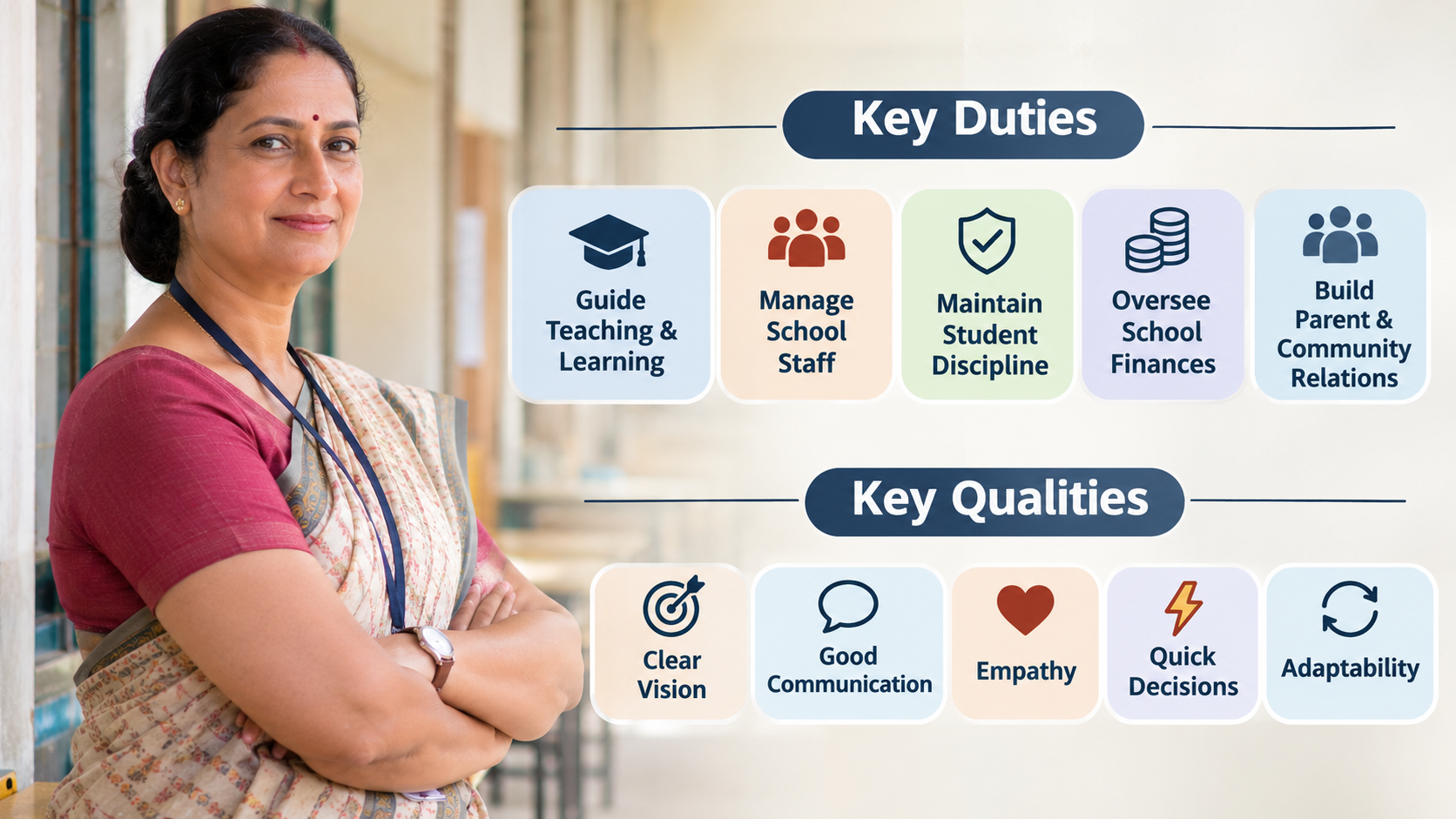
What are the 5 duties of a principal in school?
The five primary duties of a school principal include instructional leadership, staff management, student discipline, financial administration, and community relations. These responsibilities help maintain educational standards and support students’ overall development. Principals can also explore 10 things schools need to get right for modern student success to understand broader institutional priorities.
1. Instructional Leadership: Principals supervise curriculum implementation and monitor academic performance. They ensure teachers follow educational guidelines and use effective teaching methods.
2. Staff Management: They recruit, evaluate, guide, and support teachers. Regular feedback and professional development help maintain teaching quality.
3. Student Discipline: Principals establish behavioral expectations and enforce school policies. They address disciplinary issues while promoting respect, fairness, and student safety.
4. Financial Administration: They manage school budgets, approve necessary expenses, and allocate resources. Their decisions support classroom requirements and campus improvements.
5. Community Relations: Principals maintain communication with parents, teachers, and community members. They address concerns, encourage participation, and build strong relationships.
Together, these five duties help principals maintain efficient operations while improving educational outcomes. Effective leadership ensures that academic goals remain aligned with the school’s broader mission.
What are the 5 qualities of a good principal?
A good principal needs more than administrative knowledge. They must demonstrate leadership qualities that encourage teachers, support students, and build trust among parents. Five essential qualities include visionary leadership, communication, empathy, decisiveness, and adaptability. Regular one-on-one meetings with principals can also help strengthen communication and build trust within the school community.
1. Visionary Leadership: A strong principal establishes clear academic goals and creates a long-term development plan. They motivate teachers to work towards shared objectives.
2. Strong Communication: Effective communication prevents misunderstandings and encourages transparency. Principals must communicate clearly with students, parents, teachers, and administrative staff.
3. Empathy: Understanding individual challenges helps principals create an inclusive school environment. They should listen carefully before making important decisions.
4. Decisiveness: School leaders regularly handle emergencies, conflicts, and disciplinary concerns. They must make timely decisions while considering everyone’s interests.
5. Adaptability: Educational policies, teaching methods, and classroom technologies continue to change. Adaptable principals respond to these developments and introduce suitable improvements.
These qualities help create a supportive and productive learning environment. A principal who combines professional knowledge with emotional intelligence can strengthen staff relationships and improve student experiences. Consistent leadership also builds confidence across the school community.
What are the CBSE bye-laws for principals?
The CBSE Affiliation Bye-Laws establish important requirements for school management, leadership, and academic administration. Under these provisions, the principal serves as the school’s head and plays a significant role in maintaining educational standards. The principal also performs responsibilities associated with the School Managing Committee, as prescribed by applicable CBSE regulations.
Eligibility requirements generally include appropriate postgraduate qualifications, a Bachelor of Education (B.Ed.) degree, and relevant teaching and administrative experience. However, the exact requirements depend on the applicable recruitment rules and regulatory provisions.
Principals must supervise academic planning, monitor teaching standards, and support teacher development. They also ensure that schools follow applicable examination procedures, student safety requirements, and curriculum guidelines. Maintaining accurate student records and addressing complaints involving corporal punishment are important responsibilities.
Additionally, principals must support compliance with CBSE academic policies and applicable capacity-building requirements. They should regularly review institutional practices to identify compliance gaps. Following the current CBSE Affiliation Bye-Laws helps school leaders understand their regulatory responsibilities and maintain proper institutional governance.
Mandatory Qualifications and Governance Accountability
CBSE-affiliated schools must follow the applicable eligibility and governance requirements when appointing principals. These requirements help maintain professional leadership standards and ensure responsible school administration. Candidates should review the latest affiliation provisions and relevant recruitment rules before applying for principal positions.
Academic qualifications alone do not establish someone’s suitability for school leadership. Principals must also demonstrate administrative experience, professional integrity, and the ability to manage institutional responsibilities. Their decisions should support educational quality, student welfare, and transparent governance.
Governance accountability also involves preventing commercial exploitation, maintaining fair admission procedures, and following applicable safety requirements. Principals must ensure that school activities comply with relevant CBSE regulations. They should maintain accurate institutional records and address compliance concerns promptly.
Failure to follow applicable bye-laws can result in administrative action against the institution. Depending on the seriousness of the violation, regulatory consequences may also affect its affiliation status. Therefore, principals should regularly review official CBSE notifications and maintain clear communication with management committees. Responsible governance is an essential part of the duties and responsibilities of a school principal, as it protects students, supports teachers, and strengthens public confidence in the school.
What are the responsibilities and roles of a principal?
The duties and responsibilities of a school principal cover academic planning, administrative management, staff supervision, and student welfare. As the academic leader, a principal establishes educational goals and monitors teaching quality. They review examination results, identify learning gaps, and introduce suitable improvement programs. These activities help teachers maintain consistent academic standards.
Principals also manage daily school operations. Their responsibilities include supervising campus maintenance, monitoring facilities, managing resources, and ensuring compliance with applicable regulations. They must pay particular attention to student safety and child protection policies. Proper resource management also includes understanding available K-12 technology grants and school funding opportunities to support educational infrastructure.
Another important responsibility involves resolving conflicts. Principals mediate disagreements between teachers, students, parents, and administrative staff. They should approach these situations fairly and consider the needs of everyone involved.
Furthermore, school leaders encourage extracurricular activities such as sports, music, arts, and cultural programs. These activities support students’ confidence, creativity, and teamwork.
Principals also collaborate with teachers and parents to improve the learning environment. By combining administrative authority with supportive leadership, they turn educational policies into meaningful classroom experiences.
Balancing Administration With Campus Culture
Managing administrative duties is only one part of effective school leadership. The duties and responsibilities of a school principal also include building a positive and supportive campus culture. Principals must ensure that students and teachers feel respected, valued, and motivated. Their daily interactions influence how people communicate, cooperate, and handle challenges within the school.
For example, recognizing teachers’ achievements can improve staff morale and encourage professional growth. Celebrating student accomplishments builds confidence and motivates participation. Similarly, maintaining an approachable attitude allows parents to discuss academic concerns and other school-related issues comfortably.
An effective principal also establishes clear expectations for behavior, communication, and professional conduct. These expectations promote consistency across classrooms and administrative departments. Teachers can focus on delivering quality education when they understand school objectives and receive the necessary support.
A healthy school culture encourages better attendance, stronger relationships, and greater student engagement. Principals should regularly collect feedback from teachers, students, and parents. This helps them identify problems early and ensure school policies support the needs of the entire community. Creating an environment where students feel comfortable participating also requires understanding why students are afraid to ask questions in class.
What are some good words to describe a school principal?
Choosing the right words to describe a school principal depends on their leadership style, professional qualities, and contribution to education. Effective principals are often described as visionary, empathetic, decisive, approachable, and resilient. These adjectives highlight their ability to guide an institution while supporting its members.
Other useful words include collaborative, ethical, inspiring, organized, responsible, and student-centered. Each term communicates a different aspect of school leadership. For example, a collaborative principal encourages teachers to share ideas and participate in important decisions. An ethical leader demonstrates honesty, fairness, and accountability.
When writing a recommendation letter, appreciation message, or performance review, support descriptive words with specific examples.
Consider these examples:
- Approachable: Welcomes parents and students and listens to their concerns.
- Visionary: Establishes clear academic goals and encourages long-term improvement.
- Resilient: Remains calm and focused during challenging situations.
- Transformational: Introduces meaningful changes that improve school performance.
- Compassionate: Understands individual needs and supports student well-being.
- Organized: Manages academic activities, staff responsibilities, and administrative tasks effectively.
The most appropriate descriptions reflect a principal’s actual behavior and achievements. Specific examples make these qualities more meaningful and credible.
What is the highest salary for a principal?
The highest salary for a school principal depends on several factors, including location, educational qualifications, experience, school type, and institutional reputation. In India, government and private schools generally follow different salary structures.
Principals working at established international schools, IB institutions, and prestigious private schools in major cities may receive higher compensation. Some senior leadership positions can offer annual packages ranging from ₹25 lakh to ₹50 lakh or more. However, these figures are indicative estimates rather than guaranteed salary benchmarks.
Government school principals generally receive salaries according to applicable pay scales and service rules. For example, eligible Kendriya Vidyalaya principals fall under Pay Level 12 of the 7th Central Pay Commission. Their basic pay and total monthly earnings depend on experience, applicable allowances, and government revisions.
Internationally, principal salaries also vary considerably. Experienced school leaders in the United States and the Middle East may earn substantial annual packages, particularly at large institutions and prestigious private schools.
Additional benefits may include housing allowances, medical coverage, retirement benefits, and performance incentives. Therefore, candidates should compare the complete compensation package rather than focusing only on the advertised salary.
Frequently Asked Questions (FAQ)
How many years of experience do you need to become a school principal?
Most education boards, including CBSE, require at least 8 to 12 years of combined teaching and administrative experience. Candidates usually start as Post Graduate Teachers (PGTs) and serve as vice principals or academic coordinators before stepping into the principal role.
What is the difference between a principal and a vice principal?
A principal holds ultimate responsibility for school vision, budgets, board compliance, and final disciplinary decisions. A vice principal supports the principal by managing daily operations, handling routine student discipline, coordinating schedules, and supervising specific grade levels.
Can a principal remove or suspend a teacher?
Yes, a principal can recommend suspension or termination for misconduct or poor performance, following school rules. However, in most accredited institutions, final dismissal requires formal approval from the School Managing Committee or district board after a fair inquiry.
Do school principals still teach classes?
Most full-time principals do not teach regular daily classes because administrative and leadership duties consume their schedules. However, many principals occasionally conduct guest lectures, mentor exam batches, or substitute in classrooms to stay connected with students.
Conclusion
Mastering the duties and responsibilities of a school principal requires a rare blend of administrative skill, academic vision, and genuine human empathy. Throughout this guide, we explored the five core duties that anchor a school’s daily operations alongside the five leadership qualities that inspire teachers and students alike. We also reviewed essential CBSE bye-laws, examined how principals balance governance with campus culture, highlighted impactful words to describe their leadership, and broke down top salary potential across different school systems.
Whether you are an aspiring educator preparing for leadership interviews or a parent seeking to understand how schools operate, recognizing the scope of this role fosters deeper appreciation for educational leadership. Strong principals do more than manage buildings—they shape futures and build thriving communities. Take time to apply these insights in your professional development, hiring evaluations, or school collaborations today.