
Unlocking the Nutritional Benefits of Vegetable Oil for Daily Health
Understanding the nutritional benefits of vegetable oil can help you make informed choices for everyday cooking and long-term health. Dietary fats support hormone production, cell function, brain health, and the absorption of fat-soluble vitamins. Choosing the right cooking oil also helps you manage your intake of saturated and unsaturated fats. According to the American Heart Association, replacing saturated fats with unsaturated fats can help improve cholesterol levels and support cardiovascular health.
However, choosing a cooking oil can feel confusing. Supermarkets offer numerous plant-based oils, each with different fatty acid profiles, nutritional properties, and cooking applications. Conflicting claims about calories, smoke points, and processing methods can make the decision even harder.
This guide explores the nutritional value of vegetable oil, its health benefits, and the differences between popular options. You will also learn which oils are suitable for everyday cooking, what to consider when choosing them, and how to use dietary fats as part of a balanced diet.

What are the nutritional benefits of vegetable oil?
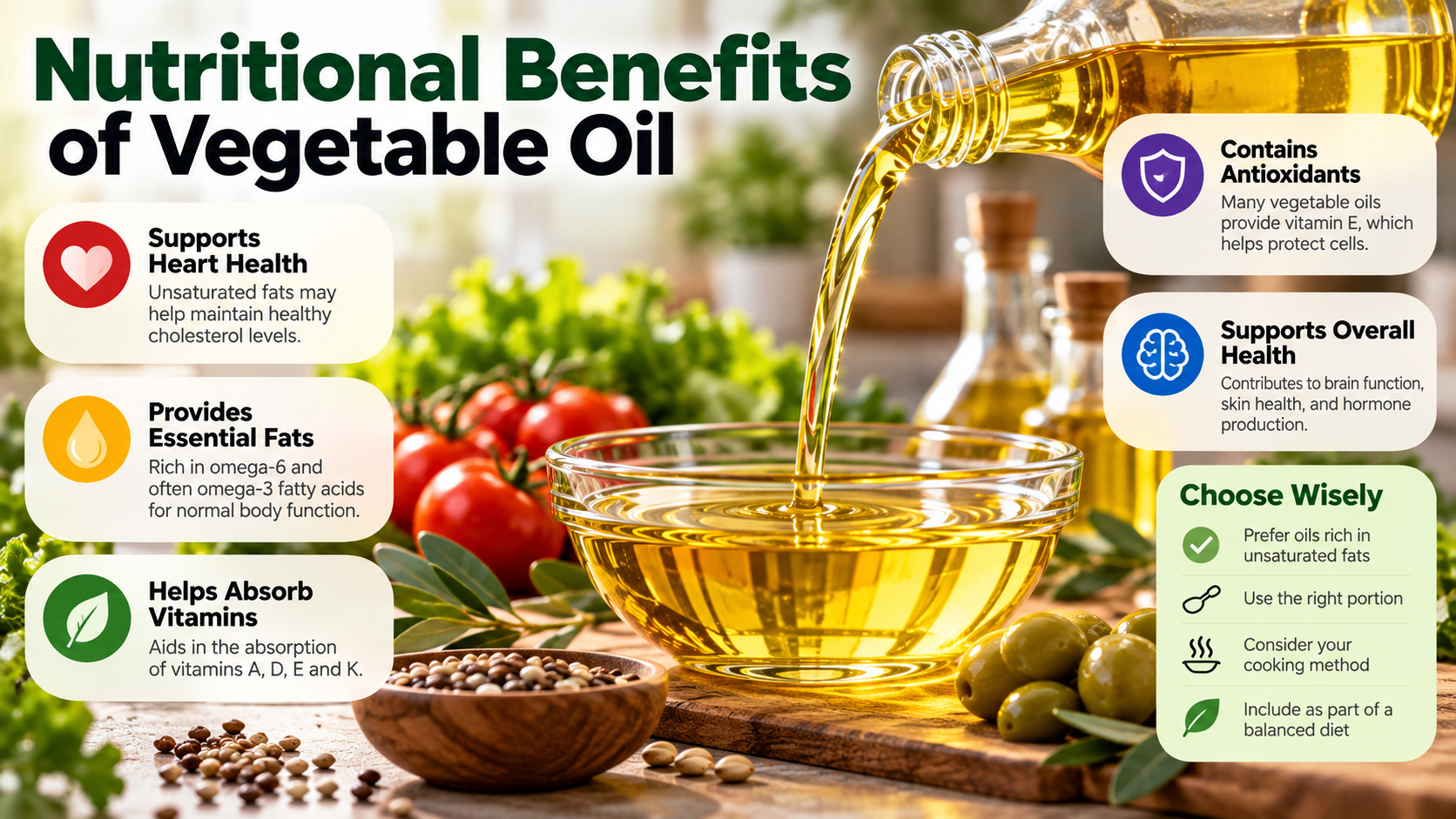
Vegetable oils provide essential fatty acids that your body cannot produce independently. These include linoleic acid, an omega-6 fatty acid, and, in certain oils, alpha-linolenic acid, an omega-3 fatty acid. Both support normal cell function and other essential processes.
The nutritional benefits of vegetable oil also include helping your body absorb fat-soluble vitamins A, D, E, and K. These vitamins support vision, bone health, immune function, and normal blood clotting. Vitamin E, naturally present in varying amounts in many vegetable oils, also acts as an antioxidant. Learn more about essential nutrients for eye health that support long-term vision.
Another important benefit comes from replacing saturated fats with unsaturated fats. Using oils rich in unsaturated fats instead of butter, ghee, or lard can help lower LDL cholesterol. This change may reduce cardiovascular risk over time.
However, not every vegetable oil has the same nutritional profile. Soybean, canola, sunflower, and olive oils contain different proportions of fatty acids and other beneficial compounds. Your best choice depends on your cooking needs, overall diet, and health goals.
What is the nutritional value of vegetable oil?
The nutritional value of vegetable oil comes primarily from its fat content. One tablespoon, approximately 14 grams, typically provides around 120 calories and 14 grams of fat. Vegetable oil contains virtually no protein or carbohydrates.
The exact nutritional composition depends on the plant source. Soybean and corn oils generally contain substantial amounts of polyunsaturated fats. Canola oil provides both monounsaturated and polyunsaturated fats, while olive oil is particularly rich in monounsaturated fats.
Most common vegetable oils contain relatively little saturated fat compared with butter and some animal fats. Many also provide vitamin E, although the amount varies by oil type and processing method.
Because oils are calorie-dense, portion size matters. A small amount can contribute valuable essential fatty acids to your diet, but excessive use can increase your overall calorie intake. For balanced nutrition, consider both the type of oil you use and the quantity added during cooking. Adopting healthy food habits can help you make more informed everyday dietary choices.
Understanding Calorie Density and Fat Content
Cooking oils are calorie-dense because they consist almost entirely of fat. Each gram of fat provides approximately nine calories, making oil a concentrated source of dietary energy.
This does not mean you need to avoid cooking oil. Your body needs dietary fat for essential functions, and unsaturated fats can support heart health when they replace saturated fats. The key is choosing appropriate oils and using reasonable portions.
Here are some practical ways to manage your intake:
- Measure your oil: Use a teaspoon or tablespoon instead of pouring directly from the bottle.
- Choose unsaturated fats: Consider olive, canola, or soybean oil for everyday cooking.
- Account for cooking methods: Deep-frying generally adds more oil to food than steaming or baking.
- Avoid unnecessary additions: Adjust the amount of oil according to the recipe and your nutritional needs.
These habits help you enjoy the nutritional benefits of vegetable oil without consuming excessive calories. You can complement these practices with fitness apps to track your daily workout and monitor your physical activity as part of a balanced lifestyle.
What are the benefits of oil?
Dietary oils provide several important benefits beyond improving the flavor and texture of food. Fats form essential components of cell membranes and help your body absorb vitamins A, D, E, and K. They also supply energy and support the production of hormones and other important substances.
Certain plant oils provide essential fatty acids that contribute to normal brain function, skin health, and cell growth. Oils containing vitamin E also help protect cells from oxidative damage. However, the amount of these nutrients varies depending on the oil’s source and processing. Pairing nutritious foods with breakfasts that support mental energy and focus can further support a balanced approach to daily nutrition.
Choosing the right oil can also support cardiovascular health. Replacing butter, ghee, and other sources of saturated fat with oils rich in unsaturated fats may help lower LDL cholesterol. This is particularly relevant for people looking to improve their overall dietary pattern.
Nevertheless, oil alone cannot guarantee better health. Its benefits depend on the amount consumed, the type selected, and the rest of your diet. Combining appropriate oil choices with vegetables, whole grains, legumes, fruits, and other nutritious foods supports a balanced approach to everyday health.
What is the most nutritious vegetable oil?
Extra virgin olive oil is one of the most nutritious choices for everyday cooking. Although olives are technically fruits, olive oil is commonly grouped with vegetable oils in cooking discussions. Its nutritional profile makes it particularly valuable in a balanced diet.
Extra virgin olive oil contains substantial amounts of monounsaturated fat, especially oleic acid. Replacing saturated fats with monounsaturated fats can help improve blood cholesterol levels. It also contains polyphenols and other antioxidant compounds that may help protect cells from oxidative stress.
Research on Mediterranean-style dietary patterns has linked olive oil consumption with better cardiovascular outcomes. However, these benefits come from an overall eating pattern rather than olive oil alone. The quality of the oil, serving size, and foods consumed alongside it also matter. For more practical ideas, explore healthy food habits to adopt when building a balanced diet.
Olive oil works well in salad dressings, sautéed dishes, roasted vegetables, and many everyday recipes. Extra virgin olive oil is particularly useful when you want both flavor and beneficial plant compounds. Other oils, including canola and avocado oil, can also be nutritious choices depending on your cooking method and preferences.
Why stay away from vegetable oil?
You do not necessarily need to avoid vegetable oils. Some claims that all seed oils cause inflammation or harm metabolic health are not supported by strong scientific evidence. In fact, replacing saturated fats with unsaturated vegetable oils can improve LDL cholesterol levels and support cardiovascular health.
However, there are practical reasons to choose cooking oils carefully. Refined oils undergo processing to improve their flavor, appearance, stability, and shelf life. This process can reduce certain naturally occurring compounds, although refined oils remain suitable for many cooking applications.
Another consideration is repeated high-temperature heating. Reusing frying oil many times can cause oxidation and produce unwanted breakdown compounds. Discard oil that has deteriorated, smells unusual, becomes excessively dark, or foams abnormally.
Your overall dietary balance also matters. Some oils contain more omega-6 fatty acids, while others provide more monounsaturated fats or omega-3 fatty acids. Omega-6 fats are essential nutrients and are not inherently harmful. Rather than eliminating seed oils, focus on choosing appropriate oils, avoiding repeated deep-frying, and eating a varied diet rich in whole foods.
Which oil do cardiologists recommend?
Cardiologists and heart health organizations generally encourage replacing saturated fats with unsaturated fats. Extra virgin olive oil is a widely recommended option because it contains monounsaturated fats and beneficial plant compounds. Canola and soybean oils can also fit into a heart-healthy diet.
Avocado oil is another option, particularly for cooking at higher temperatures when a refined version is selected. Its fatty acid composition is rich in monounsaturated fats, although its nutritional properties vary by product and processing method.
The best choice depends on how you prepare food, your budget, and your personal preferences. Extra virgin olive oil works well for dressings and everyday cooking. Canola oil offers a mild flavor, while other vegetable oils can provide practical alternatives for different recipes.
The key recommendation is to replace butter, ghee, and other sources of saturated fat with unsaturated plant oils when appropriate. Also, remember that all oils contain calories, so portion size remains important. For people managing high cholesterol or cardiovascular disease, an overall heart-healthy eating pattern matters more than relying on a single oil. A qualified healthcare professional can provide personalized advice when needed.
Frequently Asked Questions
Does heating vegetable oil destroy its nutritional benefits?
Yes, exposing fragile vegetable oils to excessive heat can degrade their nutritional value. When oils are heated past their smoke points, beneficial antioxidants break down, and harmful free radicals or toxic compounds can form. To preserve nutritional integrity, reserve delicate oils for dressings and low-temperature cooking, while choosing heat-stable options like avocado oil for high-heat cooking.
How should vegetable oil be stored to prevent oxidation?
Vegetable oil should be stored in a cool, dark place away from direct sunlight and heat sources. Light, oxygen, and heat are the primary catalysts that accelerate lipid oxidation, causing oils to become rancid and lose their health benefits. Keeping bottles tightly sealed in a pantry cupboard or a dark cabinet ensures maximum shelf life and preserves freshness.
Are organic vegetable oils healthier than conventional ones?
Organic vegetable oils are generally considered healthier because they are sourced from crops grown without synthetic pesticides or chemical fertilizers. Additionally, certified organic processing standards prohibit the use of harsh chemical solvents like hexane during oil extraction. Choosing organic varieties minimizes your daily exposure to chemical residues while supporting cleaner, more sustainable agricultural practices.
What is the best oil for high-heat frying?
Avocado oil and refined coconut oil are among the best choices for high-heat frying due to their high smoke points and stable chemical structures. Unlike unrefined oils that break down quickly under intense heat, these oils resist oxidation and maintain structural integrity during deep-frying or searing. This prevents the release of unpleasant odors and toxic byproducts in your kitchen.
Conclusion
Navigating dietary fats requires understanding how your culinary choices impact long-term wellness. Throughout this guide, we explored the core nutritional benefits of vegetable oil, examined standard nutritional values, and weighed the pros and cons of various cooking options. While plant-based oils provide essential fatty acids and sustained cellular energy, not all commercial oils are created equal. For additional guidance on making informed dietary choices, explore natural ways to boost energy without caffeine.
Highly processed seed oils warrant caution, whereas extra virgin olive oil and avocado oil stand out as top medical recommendations. By choosing minimally processed plant oils and practicing mindful portion control, you can protect your cardiovascular system. Evaluate your pantry staples today, swap inflammatory fats for heart-healthy alternatives, and support a vibrant, healthy lifestyle.