
Challenges Faced by Art and Craft in Today’s World
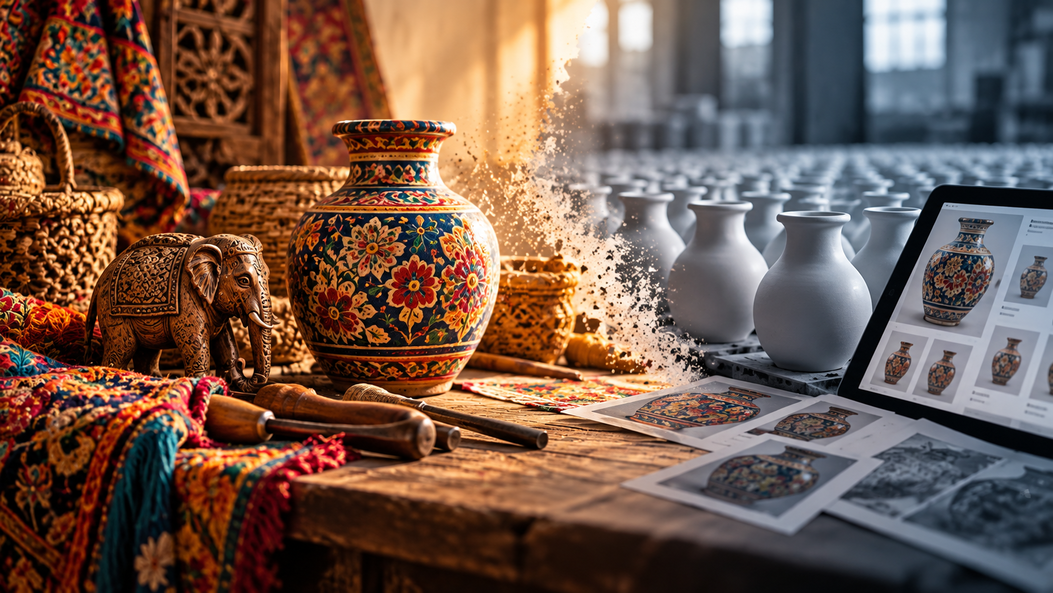
The creative world is experiencing significant cultural, economic, and technological changes. From independent painters to traditional textile weavers, artists must continually adapt to protect their livelihoods. Success today requires more than creative talent. It also demands digital skills, effective marketing, financial planning, and the ability to reach the right audience. The challenges faced by art and craft range from rising production costs to copyright infringement and competition from mass-produced goods.
Understanding these obstacles is essential for protecting cultural heritage and supporting creative professionals. Organizations such as the National Endowment for the Arts highlight the economic and cultural importance of the arts. However, many individual creators struggle to earn a stable income despite the value their work brings to society.
This guide explores the major pressures affecting artists, creative organizations, and traditional craft communities. It examines financial insecurity, technological disruption, industry competition, and the difficulties artisans face when accessing profitable markets. It also considers changes in the fine art market and examines six controversial artworks that challenged public expectations. Understanding these issues helps explain why supporting artists and preserving traditional craftsmanship remain important in today’s changing world.

What are the biggest challenges facing artists today?
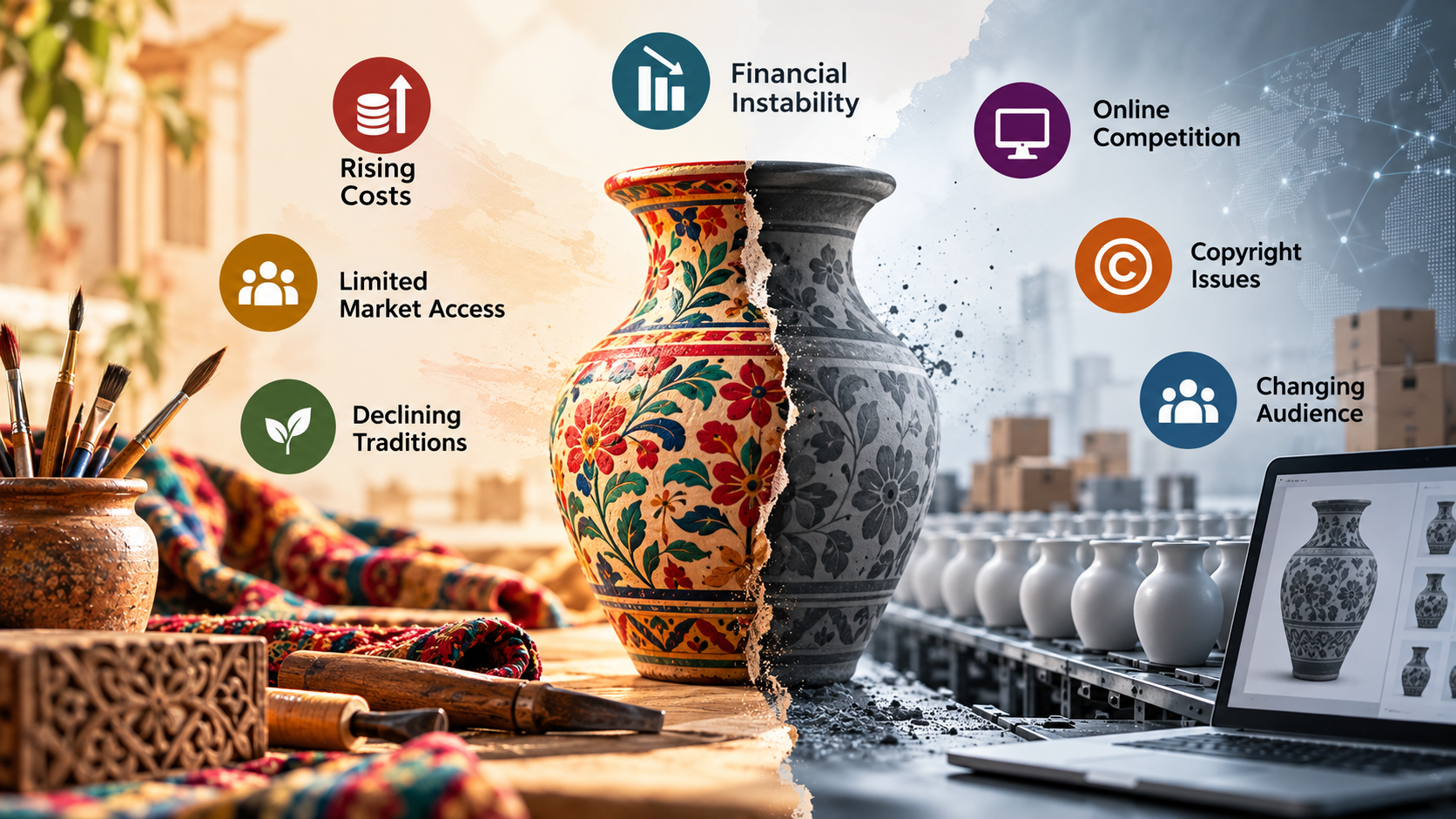
Artists face several challenges, including financial instability, intense online competition, rising material costs, and changing audience expectations. Many independent creators struggle to earn a predictable income because freelance commissions, exhibitions, and art sales can fluctuate throughout the year. Studio rent, equipment, transportation, and supplies can further reduce their profits.
Digital platforms offer opportunities to reach international audiences, but they also create new demands. Artists must promote their work, maintain social media accounts, manage online stores, and communicate with potential customers. These responsibilities can leave less time for creating original work. Learning about crafting compelling product reviews can also help artists present their products effectively to potential buyers.
Another major concern is copyright protection. Artwork shared online can be copied, redistributed, or used in AI training datasets without the creator’s permission. Protecting ownership and seeking fair compensation can be difficult, particularly for independent artists with limited resources.
To address these obstacles, artists can diversify their income through commissions, workshops, licensing agreements, and direct sales. Building relationships with customers and maintaining a professional portfolio can also improve visibility. However, sustainable careers require fair payment, accessible opportunities, and stronger protection for creative work.
What are the current challenges facing the creative arts industry?
The creative arts industry faces financial pressure, uncertain funding, rising production expenses, and changing audience habits. Regional theaters, community galleries, independent dance companies, and other cultural organizations often operate with limited budgets. Higher venue costs, equipment expenses, staffing requirements, and insurance premiums can make it difficult to maintain regular programs.
Funding uncertainty creates additional problems. Public grants and private donations may change with economic conditions or shifting priorities. When financial support decreases, organizations may reduce performances, postpone exhibitions, or cut educational programs. These decisions can limit opportunities for emerging artists and reduce community access to cultural activities.
Audience expectations are changing as well. Digital entertainment competes with traditional performances and exhibitions, encouraging organizations to develop online experiences and more accessible programs. However, digital production requires technical expertise and additional investment.
Addressing these challenges requires diversified funding, careful financial planning, and stronger community engagement. Organizations can explore memberships, educational workshops, partnerships, and digital events to reach new audiences. Nevertheless, commercial income alone cannot always support experimental work or community programs. Reliable funding and affordable creative spaces remain essential for preserving artistic diversity and helping cultural institutions serve the public.
What are the challenges faced by the handicraft industry?
The challenges faced by art and craft in the handicraft industry include intense competition from mass-produced goods, rising raw material costs, limited market access, and declining interest in traditional apprenticeships. Skilled artisans may spend hours or days creating a single handmade product. Factory-produced alternatives, however, can sell at lower prices because they benefit from large-scale manufacturing and standardized production.
Traditional designs also face imitation. Commercial businesses may reproduce recognizable motifs or patterns without acknowledging their cultural origins or compensating the communities that developed them. This can weaken demand for authentic handmade products and make it harder for artisans to earn fair prices.
Access to customers presents another obstacle. Rural craft communities may depend on intermediaries who control pricing and distribution. Without reliable internet access, marketing skills, or direct sales channels, artisans can struggle to reach wider markets. Creating engaging handmade products through photo craft projects can also introduce younger audiences to creative skills and traditional craftsmanship.
The transfer of traditional knowledge is equally important. Younger people may leave their communities for jobs offering more predictable earnings, reducing opportunities for experienced craftspeople to train apprentices. Creating dedicated spaces for hands-on learning, such as setting up a craft centre for children, can help introduce younger generations to practical creative skills.
Supporting the handicraft industry requires fair pricing, accessible marketplaces, skills training, and stronger intellectual property protections where applicable. Cultural tourism, artisan cooperatives, and ethical retail partnerships can also help preserve traditional techniques while creating sustainable income opportunities.
What are the challenges currently facing the creative industry?
The broader creative industry faces several challenges faced by art and craft professionals, including copyright disputes, concentrated digital platforms, changing revenue models, and rapidly evolving technology. Musicians, illustrators, writers, designers, and filmmakers increasingly depend on online services to distribute their work. Although these platforms provide global reach, their fees, algorithms, and monetization policies can significantly influence creators’ earnings and visibility.
Revenue distribution remains a concern. Streaming services, digital marketplaces, and licensing platforms operate under different payment structures. Some creators receive limited returns despite generating substantial audience engagement. Independent professionals may also struggle to negotiate favorable contracts or understand complex licensing terms.
Technology creates additional pressure. Employers and clients increasingly expect creative workers to use multiple tools, manage different content formats, and deliver projects quickly. Generative AI introduces further questions about training data, attribution, originality, and the commercial use of generated content. These concerns also connect to AI prompt injection and data theft, which highlights another set of risks associated with AI systems.
These developments can make competition difficult for small studios and independent professionals. However, digital tools can also improve productivity and open new markets when used responsibly.
A sustainable creative industry needs transparent contracts, fair compensation, effective copyright enforcement, and accessible professional training. Creators can reduce their dependence on individual platforms by developing direct customer relationships, building email lists, and diversifying their distribution channels.
Centralized Platform Monopolies and Creative Equity
Large digital platforms influence how creative work reaches audiences and generates revenue. Search engines, social networks, streaming services, and online marketplaces can provide valuable exposure. However, creators who depend heavily on these services may have limited control over distribution, pricing, and audience access.
Algorithm changes can reduce visibility without warning. Account restrictions, revised monetization rules, and changes to platform fees can also disrupt established businesses. Moving to another service may not solve the problem because creators risk losing followers, sales history, and established customer relationships.
These challenges affect independent artists and small creative businesses particularly strongly. Unlike large companies, they may lack the resources to negotiate contracts, hire legal specialists, or maintain multiple distribution channels.
Reducing this imbalance requires greater transparency and more reliable ways for creators to earn from their work. Artists can also strengthen their independence by maintaining personal websites, building direct customer relationships, and keeping backups of their portfolios and contact lists.
Ultimately, addressing the challenges faced by art and craft requires digital platforms to support creators without unnecessarily limiting their control. Fairer policies, accessible dispute resolution, and clear revenue-sharing arrangements can support a more equitable creative economy.
Is the art industry declining?
The art industry is not necessarily declining as a whole, but its performance varies across market segments. High-profile auction sales and expensive artworks can attract significant investment, while smaller galleries and emerging artists may struggle to cover operating costs. Therefore, headline sales figures do not always reflect the financial health of the wider art community.
Traditional galleries face several pressures, including commercial rent, staffing expenses, shipping costs, and uncertain demand. Younger collectors may discover artists through social media, online exhibitions, and digital marketplaces rather than visiting conventional galleries. These changes encourage galleries to reconsider how they display, promote, and sell artwork.
At the same time, online platforms allow artists to connect directly with buyers. Studio visits, virtual exhibitions, and independent websites can create opportunities beyond established art institutions. However, online visibility does not guarantee sales, and competition for attention remains intense.
The market is therefore evolving rather than following one simple downward trend. Established galleries, emerging artists, collectors, and digital marketplaces experience different conditions. Understanding this distinction is important when evaluating the challenges faced by art and craft businesses.
Long-term growth depends on accessible exhibition spaces, informed collectors, transparent pricing, and sustainable support for artists at different career stages.
What are 6 famously controversial works of art?
Controversial artworks challenge social expectations, question established beliefs, and provoke debate about artistic freedom. Some have faced criticism for their subject matter, while others have challenged traditional definitions of art. The following six works demonstrate how creative expression can generate lasting cultural discussion. Understanding the ages of human history also provides a broader context for examining how artistic expression and cultural expectations have changed over time.
- Édouard Manet’s Olympia (1863): This painting shocked audiences with its direct portrayal of a reclining sex worker. Its modern subject, unidealized presentation, and confrontational gaze challenged conventional expectations of respectable academic painting.
- Marcel Duchamp’s Fountain (1917): Duchamp submitted a commercially manufactured urinal as an artwork. The gesture questioned whether artistic intention and context could transform an ordinary object into art.
- Pablo Picasso’s Guernica (1937): This monumental painting depicts the suffering and destruction associated with the bombing of Guernica during the Spanish Civil War. Its disturbing imagery became a powerful antiwar statement.
- Andres Serrano’s Piss Christ (1987): This photograph depicts a crucifix submerged in the artist’s urine. It provoked intense religious and political controversy, particularly surrounding public funding for provocative art.
- Damien Hirst’s The Physical Impossibility of Death in the Mind of Someone Living (1991): This installation features a tiger shark preserved in a tank. It raised questions about mortality, animal preservation, and the boundaries of contemporary art.
- Maurizio Cattelan’s Comedian (2019): This artwork consists of a banana attached to a wall with duct tape. It sparked debate about artistic value, commercial spectacle, and the prices collectors are willing to pay.
These works demonstrate that controversy can influence how audiences interpret art and question cultural conventions.
Frequently Asked Questions
How does generative artificial intelligence impact traditional studio artists?
Generative artificial intelligence disrupts studio artists by mass-producing imagery using styles extracted from human portfolios without consent or compensation. While some artists adopt software tools to accelerate their conceptual workflows, uncredited digital replication devalues the years of practice required to master physical media. This algorithmic competition saturates commercial illustration markets, driving freelance commission rates downward. Consequently, manual studio artists must pivot toward tactile authenticity, live demonstrations, and transparent handmade provenance to stand apart from synthetic imagery.
Why are younger generations turning away from traditional handicraft careers?
Younger generations frequently abandon traditional craft apprenticeships due to low financial returns, physical strain, and a lack of social prestige compared to digital jobs. When an artisan spends several days weaving textiles or throwing ceramics for marginal profits, basic survival encourages relocation to urban centers offering stable wages. Without institutional protections, educational subsidies, and modernized marketing pipelines that secure dignified living incomes for apprentices, ancient material craft traditions face generational extinction.
What practical business skills do modern fine artists lack most?
Fine artists frequently lack formal education in contract negotiation, tax planning, digital marketing, and pipeline management. Traditional art schools historically prioritized conceptual exploration over practical commercial literacy, leaving graduates unprepared for the rigorous operational realities of self-employment. Successfully running an artistic practice requires understanding pricing psychology, managing intellectual property rights, and building resilient direct-to-consumer patron funnels. Bridging this commercial knowledge gap is essential for artists to convert their technical creative abilities into stable businesses.
How can consumers directly support struggling independent craftspeople?
Consumers can support independent craftspeople by purchasing directly from studio storefronts, artisan cooperatives, and verified fair-trade events rather than third-party reseller portals. In addition, avoiding fast-fashion knockoffs that steal traditional indigenous patterns helps preserve original artisan livelihoods. Paying fair prices without aggressive bargaining, sharing artisan portfolios across social networks, and commissioning custom handmade gifts provide sustainable cash flow that enables master craftspeople to sustain their traditional practices.
Conclusion
The cultural sector stands at an important turning point. Navigating the challenges faced by art and craft requires intentional action from both cultural producers and the communities that value them. Creators can no longer afford to treat commercial literacy, digital ownership, and professional business management as secondary concerns. The pressures of automation, institutional funding deficits, and market polarization make self-directed resilience essential.
At the same time, consumers and cultural institutions must take concrete steps to support human-made artistry. Valuing authentic craftsmanship means investing in local talent, supporting ethical fair-trade artisan pipelines, and advocating for public programs that protect creative intellectual property. The future vitality of art and craft relies on moving beyond passive appreciation to build an equitable creative economy.