
Media vs Digital Literacy: Key Differences, Frameworks, and Essential Skills
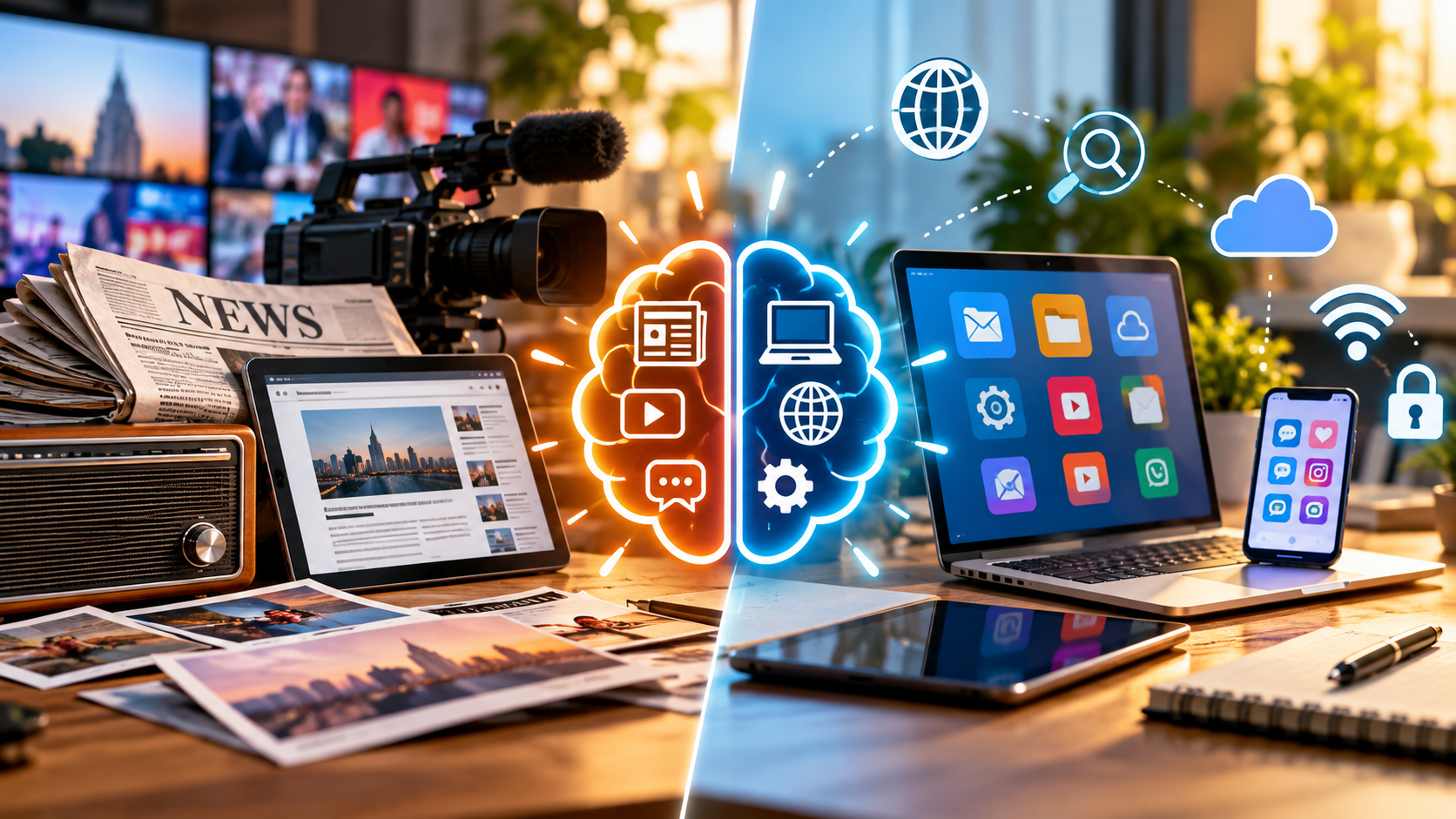
Every day, we encounter algorithmic news feeds, social media posts, generative AI content, and interactive applications. Navigating this environment requires skills beyond basic computer proficiency. Understanding media vs digital literacy helps people evaluate information, use technology effectively, and participate responsibly in online communities.
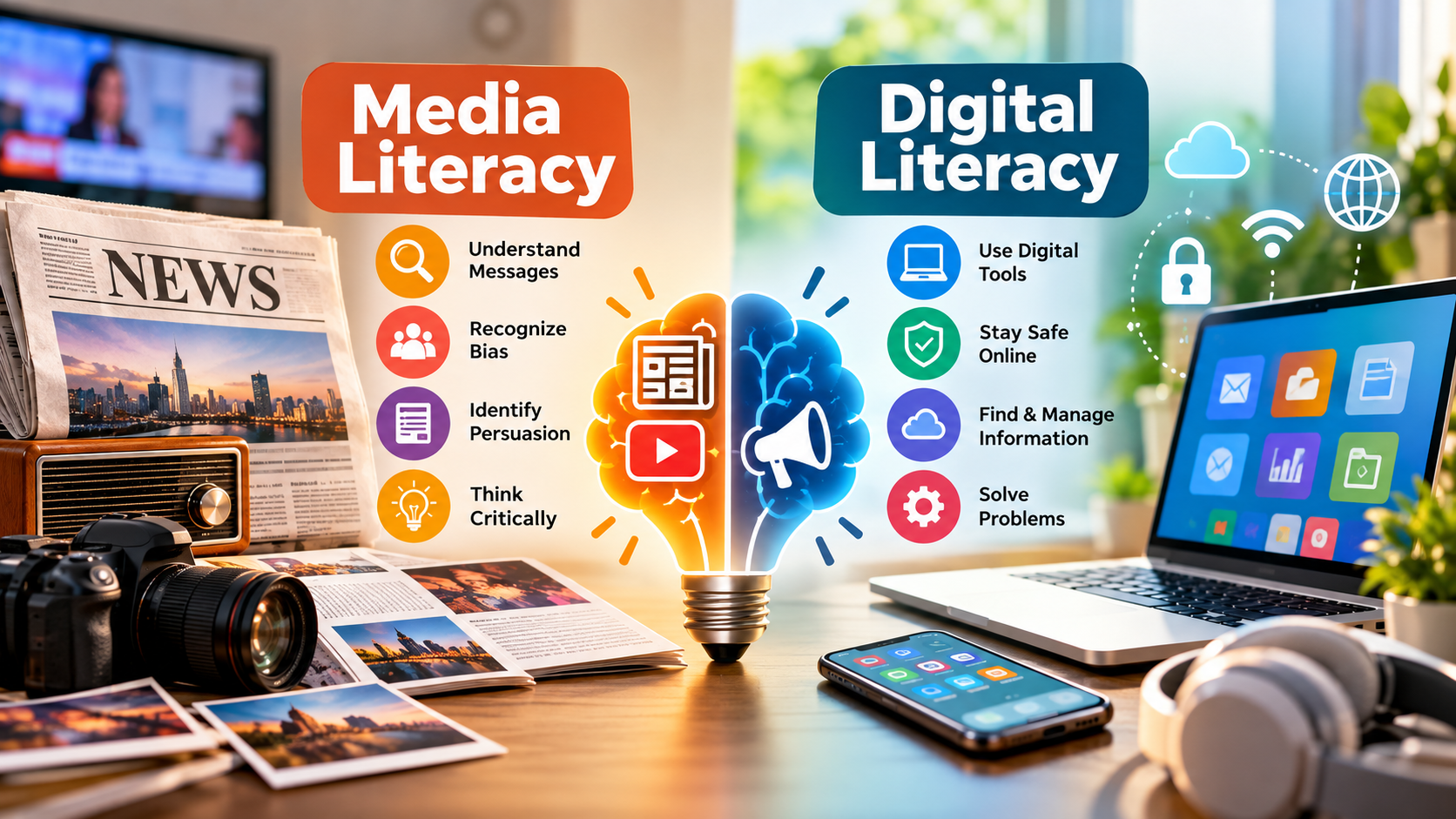
According to UNESCO’s media and information literacy framework, these skills help individuals access, evaluate, and use information critically. Although media literacy and digital literacy often overlap, they address different challenges. Media literacy focuses on interpreting messages, recognizing bias, and understanding how content influences audiences. Digital literacy emphasizes using digital tools, managing information, and navigating online environments safely.
Both skill sets are essential in modern life. Without media literacy, people may struggle to identify misinformation, misleading advertisements, or manipulative narratives. Without digital literacy, they may find it difficult to use software, protect personal information, or complete everyday tasks online.
This guide explains the difference between media and digital literacy, explores seven types of digital literacy, and provides practical media literacy examples. It also compares media literacy with information literacy and technology literacy to clarify how these essential skills work together.

What is the difference between media and digital?
The fundamental difference between media and digital technology lies in communication and technological delivery. Media refers to communication channels and the messages they carry. Examples include newspapers, television broadcasts, podcasts, advertisements, and online videos. Digital technology refers to electronic systems that create, process, store, and transmit information. These systems include computers, smartphones, software, and communication networks.
Media literacy helps people understand how messages are constructed and how they influence audiences. Digital literacy helps people operate digital devices, navigate applications, and manage online information responsibly. For example, reading a news article involves consuming media, while using a browser to access that article involves digital technology. Evaluating the article’s accuracy requires media and information literacy.
The two concepts frequently overlap because modern media often depends on digital platforms. However, they are not interchangeable. Understanding media vs digital literacy helps learners distinguish between evaluating communication and using technology effectively. Both skills support stronger research, communication, and technical abilities for education, employment, and everyday online activities.
Communication Purpose Versus Technical Delivery
Media focuses on communication, including the purpose, presentation, and potential influence of a message. Media creators make decisions about language, images, editing, and storytelling to communicate ideas. These choices can influence how audiences interpret information. For example, a news report may emphasize particular details while leaving others out. Media literacy helps readers recognize these choices and consider their effects.
Digital technology focuses on the systems used to create, distribute, and access content. It includes devices, software, coding, data processing, and internet connectivity. Digital literacy helps users operate these systems, solve technical problems, and protect their information online.
Consider a video advertisement. Media literacy helps you identify its persuasive techniques and commercial purpose. Digital literacy helps you recognize sponsored content on a platform, adjust privacy settings, or report misleading material. Both skills are valuable, but they serve different purposes. Understanding communication and technical delivery together allows people to participate more confidently and responsibly in digital environments.
What are the 7 types of digital literacy?
Digital literacy includes several interconnected skills that help people use technology confidently, safely, and effectively. Although frameworks organize these skills differently, seven useful categories provide a practical starting point for learners, students, and professionals.
- Foundational digital literacy: Understanding how to operate computers, smartphones, applications, and common software. This includes managing files, adjusting settings, and navigating operating systems.
- Information literacy: Searching for information, evaluating sources, comparing evidence, and identifying unreliable claims. These skills help users make informed decisions online.
- Communication and collaboration literacy: Using email, messaging platforms, video conferencing, and shared documents to communicate professionally and work with others.
- Digital content creation: Producing documents, presentations, graphics, videos, and other digital materials. It also involves respecting copyright and attributing sources.
- Digital safety and cybersecurity literacy: Protecting accounts, recognizing phishing attempts, using strong passwords, and managing personal information responsibly.
- Computational and problem-solving literacy: Troubleshooting technical issues, understanding basic computational concepts, and choosing suitable digital tools for specific tasks.
- Digital wellness literacy: Maintaining healthy technology habits, managing screen time, and recognizing how digital activities affect concentration and well-being.
These categories are not universal or fixed. Different educational frameworks may combine or rename certain skills. Together, however, they offer a practical foundation for responsible technology use at school, work, and home.
What are five examples of media literacy?
Media literacy involves actively questioning the messages people encounter rather than accepting every claim at face value. It helps individuals recognize persuasion, evaluate credibility, and understand how media influences opinions. The following five examples demonstrate how these skills apply to everyday situations.
- Identifying commercial bias: Recognizing that a lifestyle article promotes a sponsored product helps readers understand the financial interests behind its recommendations. Checking sponsorship disclosures can clarify whether commercial relationships influence the content.
- Fact-checking viral headlines: Before sharing a political claim, compare it with reputable news organizations, original documents, and independent fact-checking sources. Learn how to spot fake news and misinformation online to reduce the risk of spreading misleading information.
- Evaluating images and editing: Cropped photographs, selective camera angles, and edited visuals can change how an event appears. Examining the original image and its context helps readers avoid misleading interpretations.
- Recognizing manipulated videos: Deepfakes and edited clips can make people appear to say or do things they never did. Checking the original source, surrounding footage, and independent reporting can help establish authenticity.
- Assessing journalistic sources: Investigative reporting is more credible when it identifies evidence, provides relevant context, and distinguishes verified facts from allegations. Readers should also consider whether other reliable sources support its conclusions.
These examples show that media literacy requires curiosity and critical thinking. It does not mean rejecting every message or assuming every publisher is biased. Instead, it encourages people to examine evidence, develop critical thinking rather than relying on memorization, question assumptions, and reach balanced conclusions before forming opinions or sharing information.
What is digital literacy media?
The phrase digital literacy media can refer to digital resources used to teach technology skills, as well as media content accessed through digital platforms. Examples include online coding lessons, cybersecurity tutorials, software demonstrations, interactive courses, and educational videos. These resources help learners understand technology through practical instruction and accessible explanations.
Digital platforms also transform traditional media into interactive experiences. Online newspapers may include data visualizations, searchable archives, embedded videos, and interactive reports. Podcasts can provide transcripts, while educational websites may combine written explanations with quizzes and demonstrations. Such features can make information easier to explore, although their usefulness depends on accuracy, accessibility, and design.
Understanding media vs digital literacy helps clarify this relationship. Digital literacy enables users to navigate learning platforms, evaluate online resources, and manage digital content. Media literacy helps them assess the accuracy, purpose, and presentation of that content.
For example, someone learning cybersecurity through an online video needs digital skills to access the lesson and media literacy to evaluate the instructor’s claims. Developing both abilities, including essential digital literacy skills every student needs, supports more effective learning and responsible technology use.
Interactive Formats Accelerating Technical Understanding
Interactive learning formats can make complicated technical subjects easier to understand. Instructional videos demonstrate software operations visually, while interactive exercises allow learners to practise specific tasks. Searchable help databases also let users find answers when they encounter technical problems. These formats are particularly useful when learners need to see a process rather than read a lengthy explanation.
Examples include guided coding environments, cybersecurity simulations, software tutorials, and online troubleshooting tools. A beginner learning spreadsheets might watch a demonstration, complete an interactive exercise, and consult documentation when a formula fails. Each activity reinforces a different part of the learning process.
However, an interactive format does not automatically make information accurate or effective. Learners should check whether the material comes from a reliable source and whether its instructions remain current. They should also practise skills rather than simply watch demonstrations.
Combining clear explanations, practical exercises, and reliable documentation can improve understanding. Digital literacy helps learners use these resources effectively, while media literacy encourages them to assess the quality and credibility of the information presented.
What are the 7 media literacy skills?
Media literacy skills help people access, interpret, evaluate, and create media responsibly. Educational frameworks may group these abilities differently, but seven practical skills illustrate the process of critical media engagement.
- Access: Find and retrieve relevant media from suitable sources. This includes navigating different platforms and locating information that addresses a particular question.
- Analyze: Examine how language, images, editing, sound, and storytelling shape a message. Understanding these techniques helps reveal how media creators attract attention or influence audiences.
- Evaluate: Assess credibility, accuracy, evidence, and balance. Readers should distinguish documented facts from unsupported claims and compare primary and secondary sources across reliable sources.
- Identify perspective: Consider the creator’s viewpoint, assumptions, and possible conflicts of interest. Recognizing perspective helps explain why different sources present the same event differently.
- Contextualize: Examine the historical, political, cultural, and economic circumstances surrounding a message. Context can reveal missing information or explain why a particular issue receives attention.
- Create: Produce clear, accurate, and ethical media. Responsible creation involves checking facts, respecting copyright, and considering the potential impact on audiences.
- Take action: Apply media knowledge to make informed decisions, correct misinformation, and participate constructively in public discussions.
These skills work together rather than operating independently. For example, evaluating a viral news story may require accessing its original source, analyzing its presentation, checking its context, and comparing supporting evidence. Practising these abilities helps people become more thoughtful media consumers and responsible digital communicators.
What’s the difference between media literacy, information literacy, and technology literacy?
Media literacy, information literacy, and technology literacy are closely related, but each addresses a different aspect of modern communication and learning.
Media literacy focuses on understanding how messages are created, presented, and interpreted. It helps people recognize persuasive techniques, examine bias, and consider how media influences audiences. For example, it can help readers identify emotional language in an advertisement or understand how a news report frames an event.
Information literacy focuses on finding, evaluating, organizing, and using information effectively. It involves developing research questions, checking source credibility, comparing evidence, and identifying gaps in available information. These skills are essential for academic research, building a more inclusive library, professional decisions, and everyday problem-solving.
Technology literacy focuses on understanding and using technological tools. It includes operating devices, navigating software, managing files, and troubleshooting common technical problems. Depending on the context, it may also involve understanding basic technological concepts and systems.
Consider researching a new software application. Technology literacy helps you use the application, information literacy helps you find reliable documentation, and media literacy helps you assess reviews, advertisements, and promotional claims.
Together, these disciplines support informed decision-making. Developing all three helps people use technology confidently, evaluate information critically, and understand how communication shapes their perspectives.
Conclusion
Distinguishing between technical infrastructure and critical content analysis remains essential for anyone operating in our interconnected society. While mechanical dexterity allows individuals to operate devices, install applications, and troubleshoot software errors, analytical discernment protects audiences from deceptive persuasion, sensationalized framing, and deliberate digital falsehoods. True digital resilience requires merging both competencies into daily online habits.
Developing balanced proficiency across media vs digital literacy ensures that users can both build solutions and critically question the narratives they encounter. By systematically questioning authorial intent, verifying digital sources, recognizing common AI-powered scam tactics, adopting safe cybersecurity practices, and choosing ethical communication platforms, you protect your intellectual independence. Commit to inspecting source provenance, validating claims before sharing them, and practicing intentional digital consumption to navigate the modern media landscape with clarity.