
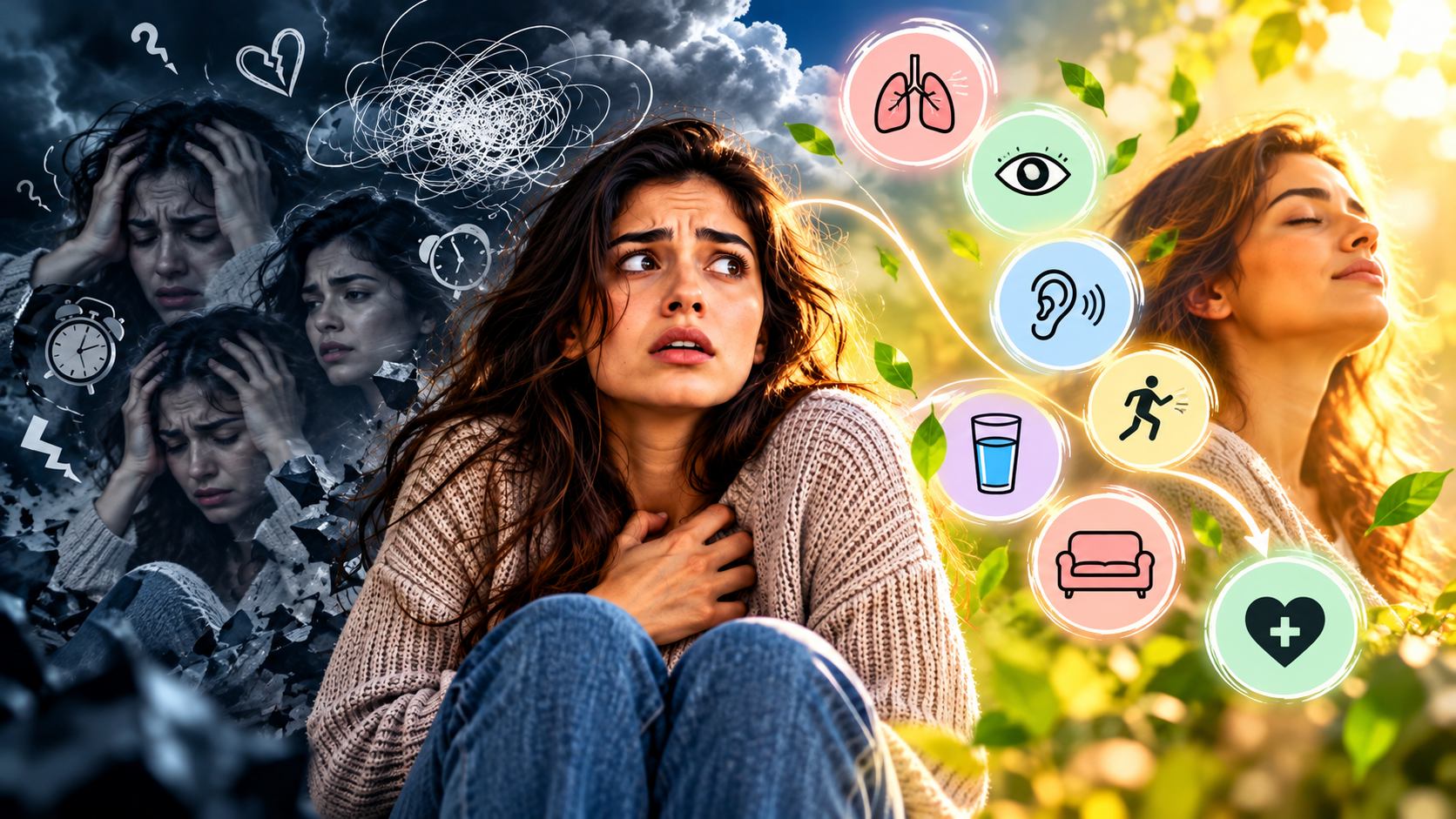
Panic vs Anxiety Attack: Key Differences, Warning Signs, and Relief
When sudden physical sensations strike, understanding panic vs anxiety attack differences can bring clarity and help you respond effectively. People often use these terms interchangeably, but they describe different experiences. A panic attack involves a sudden surge of intense fear or discomfort, often accompanied by alarming physical symptoms. An anxiety episode usually develops around ongoing stress, uncertainty, or a perceived threat.
Recognizing these differences can help you choose appropriate coping strategies when distress occurs. Learning the warning signs, grounding techniques, and first aid steps can also help you support someone experiencing an episode. However, symptoms vary from person to person, and not every episode follows the same pattern. The National Institute of Mental Health (NIMH) provides reliable information about anxiety disorders, panic disorder, and related symptoms.
This guide explains how to recover from a panic attack, use the 3-3-3 grounding method, and respond to symptoms safely. You will also learn how panic attacks compare with anxiety episodes, which warning signs to recognize, and when medical attention may be necessary.

How to recover from a panic attack?
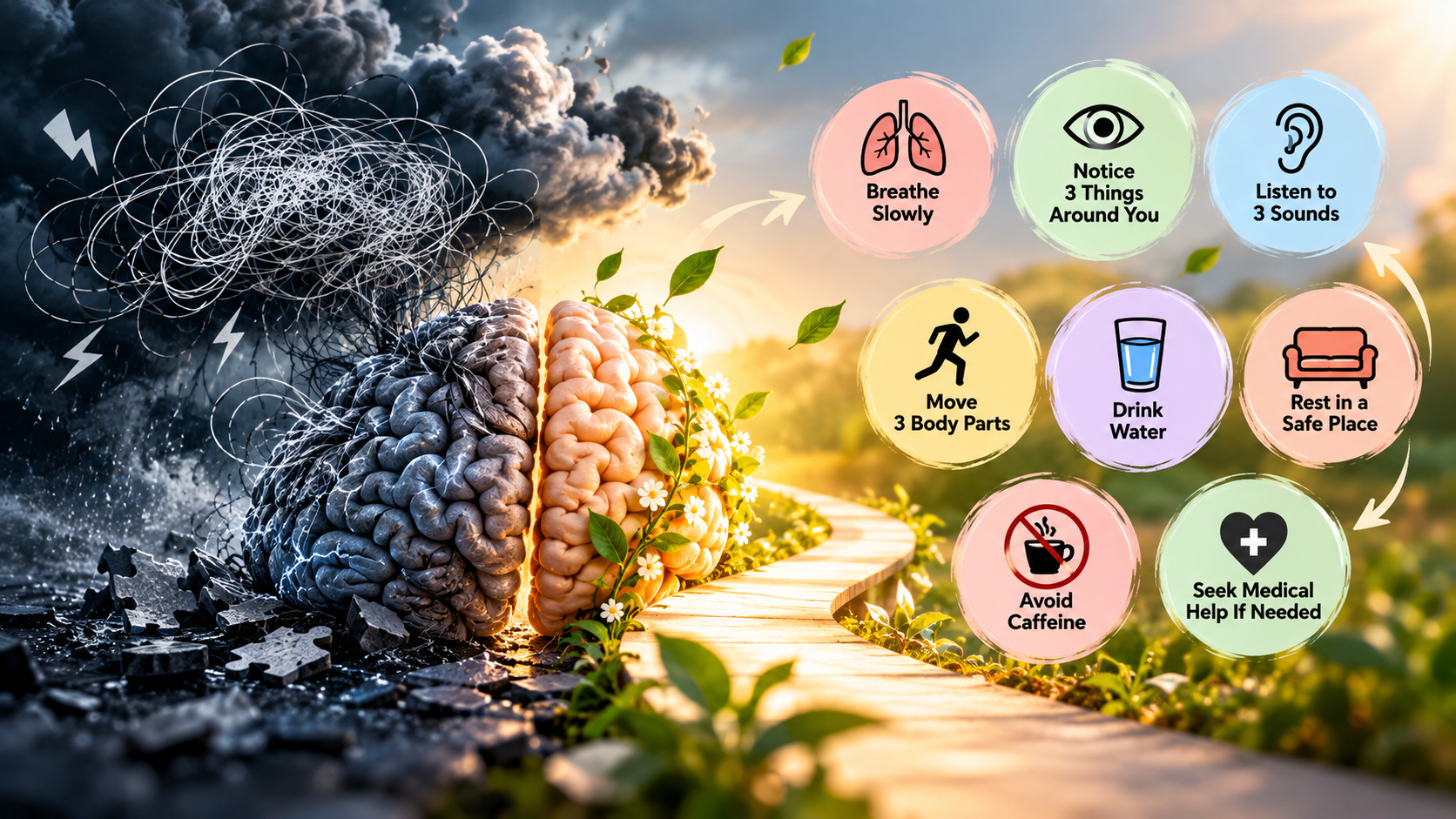
Recovering from a panic attack takes patience as your body’s stress response gradually settles. Once the symptoms begin to ease, sit somewhere comfortable and give yourself time to recover. Sip water if you feel comfortable doing so. Breathe gently through your nose and allow your exhalation to remain slow and relaxed. Avoid forcing deep breaths, as this can sometimes worsen dizziness or tingling.
Choose a quiet environment if possible, and avoid immediately returning to strenuous activities. Remind yourself that intense fear can produce powerful physical sensations. You do not need to fight every sensation or force yourself to feel normal immediately. Instead, focus on your surroundings and allow your body to settle naturally.
If this is your first episode, your symptoms feel different from previous experiences, or you remain concerned, seek medical advice. New or severe chest pain, fainting, or serious breathing difficulties require urgent assessment rather than an assumption that panic is responsible.
Rebuilding Physical Energy After an Episode
Feeling tired after a panic attack is common. Your body may feel drained after a period of intense fear, rapid breathing, and muscle tension. Give yourself time to rest instead of expecting immediate recovery. If you have not eaten recently, consider having a light meal or snack when you feel ready.
Drink water regularly, particularly if you have been sweating. Gentle walking or light stretching may help ease lingering muscle tension once you feel steady. Avoid excessive caffeine if it increases your anxiety, palpitations, or restlessness. Alcohol is also best avoided as a coping strategy because it can interfere with sleep and worsen anxiety for some people.
Pay attention to recurring symptoms and possible triggers. If attacks happen frequently or leave you exhausted, consider speaking with a healthcare professional. Identifying contributing factors can help you develop a more effective recovery plan.
What is the 3-3-3 rule for panic attacks?
The 3-3-3 rule for panic attacks is a simple grounding exercise that redirects your attention toward your surroundings. It can be useful when racing thoughts or overwhelming physical sensations make it difficult to focus. The technique involves noticing three things you can see, three sounds you can hear, and moving three parts of your body.
Start by looking around and naming three visible objects. You might notice a lamp, a book, or a window. Next, identify three sounds, such as a clock ticking, traffic outside, or a fan running. Finally, move three body parts. Try rolling your shoulders, tapping your feet, or gently moving your fingers.
This exercise encourages you to pay attention to the present moment rather than concentrating entirely on frightening sensations. You can repeat the sequence whenever necessary. If the full exercise feels overwhelming, begin with one object or one sound instead.
The 3-3-3 rule is a coping technique, not a medical treatment or guaranteed way to stop an attack. Combine it with gentle breathing and professional support when needed.
How to stop panic attacks?
Learning how to manage panic attacks starts with recognizing the symptoms and responding without adding unnecessary fear. A panic attack can feel dangerous, but the intensity often rises and then gradually decreases. Try sitting somewhere safe and reminding yourself that the sensations may be part of your body’s stress response. However, do not assume that unfamiliar or severe symptoms are caused by panic.
Focus on gentle, regular breathing rather than taking repeated deep breaths. Breathe in comfortably and allow the air to leave slowly. If counting helps, try a relaxed four-count inhale followed by a six-count exhale. Do not force this rhythm if it causes dizziness or discomfort.
Grounding techniques can also help redirect your attention. Name objects around you, feel your feet against the floor, or describe what you can see. If possible, remain in a safe environment while the symptoms ease. You do not need to force yourself to stay somewhere unsafe or uncomfortable.
Some people find cool water soothing, but it is not a guaranteed treatment. If attacks recur, cognitive behavioral therapy (CBT) and other professional treatments can help reduce their frequency and impact.
What are the first aid steps for a panic attack?
First aid for a panic attack focuses on safety, reassurance, and reducing additional stress. If someone appears distressed, guide them toward a quiet place if they are comfortable moving. Reduce unnecessary noise and stimulation. Speak slowly, use short sentences, and explain that you are there to help.
Encourage the person to sit comfortably and breathe gently at a natural pace. You can demonstrate relaxed breathing, but avoid forcing them to match your rhythm. Simple grounding prompts may help them reconnect with their surroundings. For example, ask them to notice their feet on the floor or identify an object nearby.
Give them space and ask before touching them. Avoid dismissive statements such as “calm down” or questions that require complicated answers. Instead, listen and acknowledge that the experience feels frightening.
Stay nearby if they want support, and watch for signs of a medical emergency. Severe or unfamiliar chest pain, collapse, or serious difficulty breathing should not automatically be attributed to panic. Seek urgent medical assistance when necessary. If the episode does not improve or the person remains unwell, professional assessment is appropriate.
Crucial Support Practices for Caregivers
Supporting someone during a panic attack requires patience and a calm approach. Your goal is to help the person feel safer without making them feel pressured or embarrassed. Speak clearly, keep your tone steady, and allow them to respond at their own pace.
Always ask permission before initiating physical contact. Unexpected touch may increase distress, particularly when someone feels overwhelmed or disconnected from their surroundings. Avoid crowding the person or giving too many instructions at once.
Helpful practices include:
- Offer reassurance: Explain that you are there to support them.
- Encourage gentle breathing: Model a comfortable rhythm without forcing it.
- Use simple grounding prompts: Help them notice objects, sounds, or physical sensations.
- Respect their space: Ask what they need instead of assuming.
- Recognize warning signs: Seek urgent medical help if symptoms suggest a possible emergency.
After the episode, ask whether they would like to discuss what happened. If attacks happen repeatedly, encourage them to seek professional guidance without judgment.
Which is worse, anxiety attacks or panic attacks?
When comparing panic vs anxiety attack experiences, neither is universally worse. A panic attack often feels more intense in the moment. It can cause a racing heart, chest discomfort, dizziness, trembling, and overwhelming fear. These symptoms may peak within minutes, although the overall experience can last longer.
Anxiety often develops more gradually around stress, uncertainty, or perceived danger. It may persist for hours, days, or longer, depending on the circumstances. Ongoing anxiety can interfere with sleep, concentration, relationships, and everyday responsibilities. For some people, this prolonged distress feels more exhausting than a brief but intense panic episode.
Understanding panic vs anxiety attack differences means looking at both intensity and duration. Panic attacks can lead to fear of future episodes, while persistent anxiety may create ongoing tension and worry. Both can affect daily life and deserve appropriate attention.
Neither experience should be dismissed or ranked solely by how frightening it feels. If symptoms are recurring, disrupting your routine, or becoming difficult to manage, a healthcare professional can help identify the cause and recommend suitable treatment.
Evaluating the Functional Impact on Daily Living
The effects of panic vs anxiety attack experiences can vary depending on their frequency, intensity, and duration. After a frightening panic episode, some people worry about experiencing another one. They may begin avoiding crowded places, public transport, shopping centres, or situations where they fear help might be unavailable. Persistent avoidance can limit independence and social activities.
Ongoing anxiety may affect daily life through constant worry, difficulty concentrating, disrupted sleep, irritability, and physical tension. These problems can make work, study, relationships, and routine responsibilities more challenging.
Neither condition is automatically more serious in every situation. What matters is whether the symptoms cause distress or interfere with normal functioning.
Keeping a record of episodes, possible triggers, and their effects on daily activities may help you explain your experience to a healthcare professional. Treatment can then address your specific symptoms and challenges.
What are the 12 warning signs of a panic attack?
Panic attacks can produce several physical and psychological symptoms. Recognizing common warning signs may help you respond appropriately when an episode begins. However, symptoms differ between individuals, and their presence does not automatically confirm a panic attack.
Twelve commonly reported signs include:
- Rapid heartbeat: Your heart may pound or race unexpectedly.
- Shortness of breath: You may feel unable to get enough air.
- Chest discomfort: Tightness or pain may create fear of a cardiac problem.
- Trembling: Your hands or other body parts may shake.
- Dizziness: You may feel lightheaded or unsteady.
- Excessive sweating: Your body may become sweaty without physical exertion.
- Hot flashes or chills: You may suddenly feel unusually hot or cold.
- Nausea: Your stomach may feel unsettled.
- Tingling or numbness: Your fingers, hands, or other areas may tingle.
- Choking sensations: Your throat may feel tight or uncomfortable.
- Feelings of unreality: Your surroundings may seem strange or unfamiliar.
- Intense fear: You may fear losing control, dying, or experiencing a serious emergency.
Recognizing these signs can help you identify a possible panic episode. However, new or severe symptoms need appropriate medical assessment rather than self-diagnosis.
What are the symptoms of a panic attack in adults?
Panic attack symptoms in adults can appear suddenly and feel overwhelming. The episode often reaches its greatest intensity within minutes, although symptoms and recovery times vary. Physical signs may include a racing heartbeat, palpitations, sweating, trembling, dizziness, and rapid breathing. Some adults also experience nausea, chest discomfort, chills, or a feeling of choking.
Psychological symptoms can be equally distressing. A person may fear dying, losing control, or experiencing a serious medical emergency. Some people experience depersonalization, which means feeling detached from their own body or thoughts. Others experience derealization, where their surroundings seem unreal or unfamiliar.
These symptoms can occur during a panic attack, but they are not exclusive to panic. Certain heart, lung, neurological, and other medical conditions can produce similar sensations. Stimulants and some medications may also contribute to symptoms that resemble anxiety or panic.
If attacks recur, a healthcare professional can assess possible causes and discuss suitable treatment options. Psychological therapies, including cognitive behavioral therapy, can help many people manage panic symptoms. Understanding your symptoms and receiving appropriate support can make future episodes easier to navigate.
Differentiating Adult Panic from Medical Emergencies
Panic attacks can resemble medical emergencies because both may cause chest discomfort, breathlessness, dizziness, and a racing heart. However, it is unsafe to assume that these symptoms are caused by anxiety, particularly when they occur for the first time or feel different from previous episodes.
Seek urgent medical assistance for new or severe chest pain, serious difficulty breathing, collapse, or other symptoms that suggest an emergency. Do not delay care simply because you suspect a panic attack. If you are unsure whether symptoms are dangerous, seek professional medical advice.
A healthcare professional can evaluate your symptoms, medical history, and possible contributing factors. Once other causes have been considered, you can work together to develop an appropriate management plan.
For recurring panic attacks, learning to recognize familiar symptoms may reduce fear and help you use grounding or breathing techniques more confidently. However, familiar symptoms should not prevent you from seeking medical care when something changes.
The key is to balance awareness with caution. Understanding panic symptoms can help you respond calmly, while recognizing medical warning signs helps protect your health.
Conclusion
Distinguishing between a panic vs anxiety attack is an empowering first step toward mastering your emotional and physical well-being. While anxiety develops gradually in response to identifiable stressors, panic strikes abruptly with intense physical symptoms. Fortunately, both conditions respond exceptionally well to deliberate, evidence-based coping mechanisms. By applying the 3-3-3 rule, establishing steady diaphragmatic breathing, and utilizing structured first aid steps, you can interrupt distress before it peaks. Exploring complementary approaches, such as music therapy for emotional well-being, may also help readers learn about the potential role of music in supporting relaxation and emotional health. Remember that these physical sensations, while uncomfortable, are temporary nervous system alarms rather than actual threats. With consistent practice, professional guidance, and practical self-care, you can navigate episodes with confidence and build long-term emotional resilience.