
Amazfit Helio Strap Vs. Fitbit Air: Which Screenless Tracker Should You Buy?
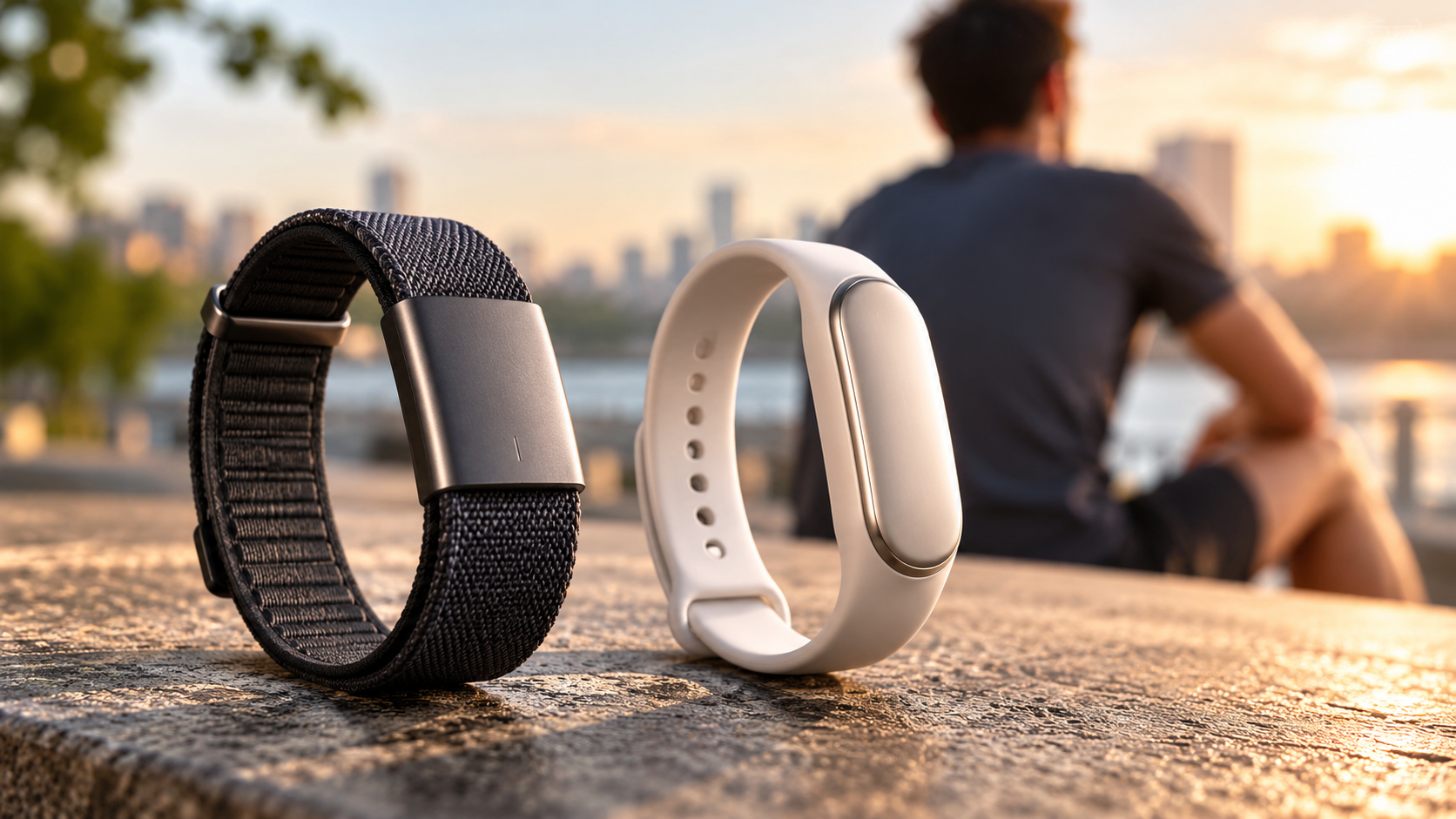
Amazfit Helio Strap Vs. Fitbit Air is a comparison worth exploring if you want a screenless fitness tracker without constant notifications. Both wearable bands track health and activity without a traditional smartwatch display. However, they differ in workout features, battery life, app integrations, and subscription requirements.
The Amazfit Helio Strap focuses on athletic performance, workout tracking, and recovery insights through the Zepp app. For a closer look at Google’s screenless wearable, explore the Google Fitbit Air features and benefits, including its everyday wellness and heart rhythm monitoring capabilities.
These differences matter when choosing a tracker for your daily routine. Some users prioritize detailed workout statistics and longer battery life. Others prefer automatic activity detection and health monitoring throughout the day.
This guide compares the key features of both screenless fitness bands. You’ll learn about their strengths, limitations, software experiences, and overall value. By the end, you can decide which tracker better matches your fitness goals and budget.

Is Amazfit Helio Better Than Fitbit Air?
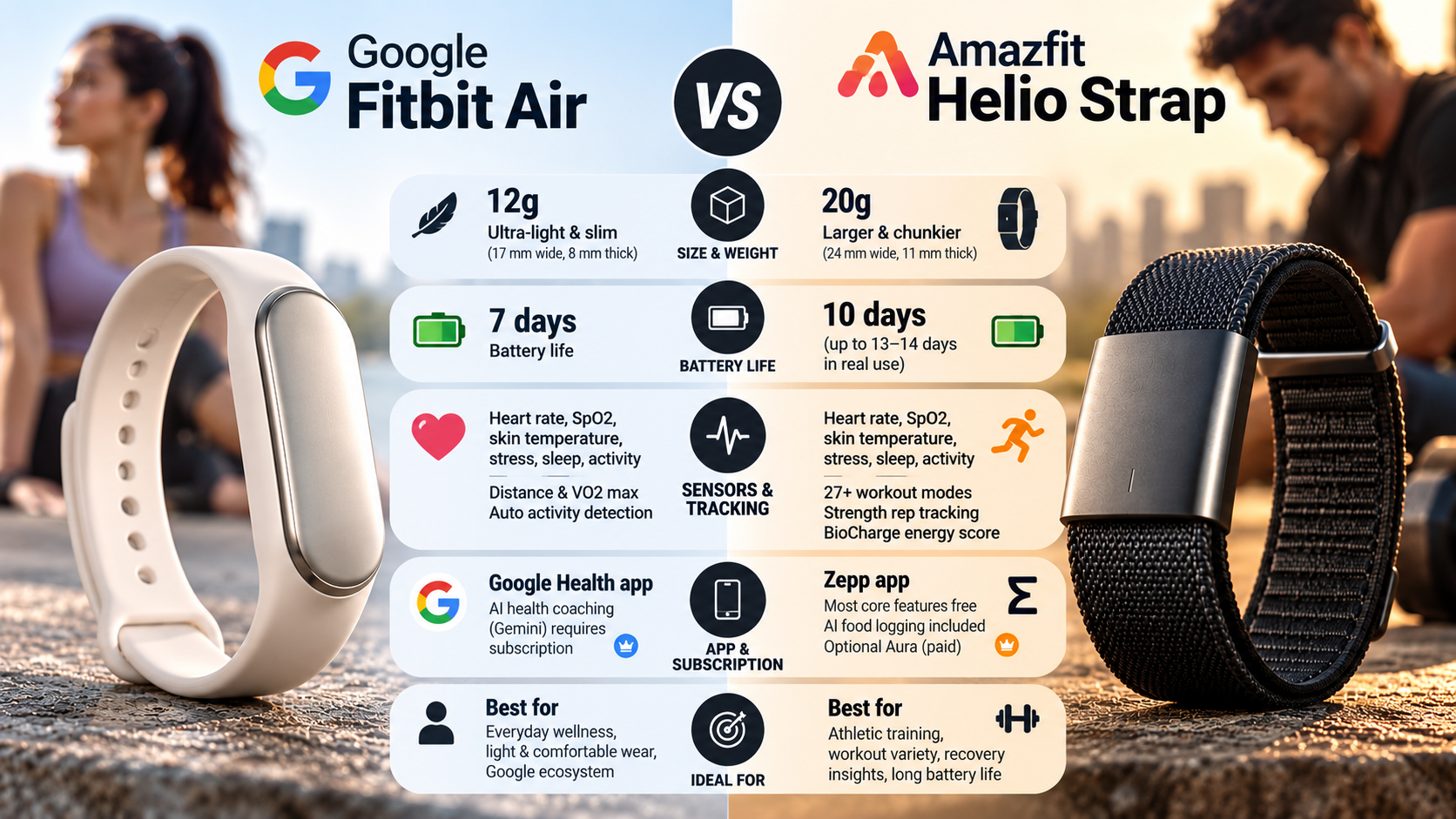
The Amazfit Helio Strap may be the better choice if you prioritize athletic training, recovery insights, and battery life. Amazfit advertises up to 10 days of battery life, while Fitbit Air advertises up to seven days. Actual endurance depends on usage, settings, and other factors.
The Helio Strap offers BioCharge energy monitoring, 27 workout modes, and strength-training recognition. These features appeal to users who want detailed fitness information without a screen. Its Zepp app also provides core tracking features without requiring a mandatory subscription.
Fitbit Air takes a different approach to fitness and wellness. It tracks heart rate, sleep, blood oxygen, and heart rhythm. It also supports automatic detection of common activities and connects with Google’s Health app. Personalized coaching and certain advanced insights require Google Health Premium.
Neither device is automatically more accurate in every situation. Consider your preferred features, smartphone compatibility, and budget before deciding which tracker offers better value.
Athletic Recovery Versus Everyday Health
The main difference between the Amazfit Helio Strap and Fitbit Air is their approach to health tracking. Amazfit focuses on athletic performance and recovery, while Fitbit combines everyday fitness monitoring with personalized wellness guidance.
The Helio Strap’s BioCharge feature helps users understand changes in their energy and recovery levels. Its workout modes and strength-training recognition also support structured exercise routines. The Zepp app brings these measurements together for users who want to review their progress without paying for a required premium subscription.
Fitbit Air suits people who prefer a simpler daily routine. It monitors heart rate, sleep, and other health indicators while automatically recognizing supported activities. Its heart rhythm monitoring can identify signs associated with atrial fibrillation (AFib), but it cannot replace a medical evaluation.
Choose Amazfit if training metrics are your priority. Consider Fitbit Air if everyday wellness tracking and Google’s health ecosystem appeal more to you.
Is Amazfit as Good as Fitbit?
Amazfit competes with Fitbit in screenless fitness tracking, but neither brand is universally better. Both offer heart rate monitoring, sleep analysis, and activity tracking. Their differences become clearer when you examine workout tools, software, integrations, and subscription costs.
The Helio Strap uses Amazfit’s BioTracker 6.0 sensor and Zepp app to monitor health indicators, including heart rate, blood oxygen, and sleep-related metrics. It also provides BioCharge energy monitoring and supports 27 workout modes. Amazfit advertises up to 10 days of battery life.
Fitbit Air connects with Google’s Health app and provides heart rate, sleep, activity, and heart rhythm monitoring. Google also offers personalized coaching through its premium membership.
Advertised specifications alone cannot establish which tracker measures every metric more accurately. Results can vary with fit, movement, skin contact, and the metric being measured. Compare the features you need instead of assuming one brand delivers superior accuracy across the board.
Ecosystem Value and Data Paywalls
Software access plays an important role in the Amazfit Helio Strap Vs. Fitbit Air comparison. A tracker might offer useful sensors, but its long-term value also depends on which insights remain available without additional payments.
The Zepp app provides core Helio Strap health and fitness features without requiring a mandatory subscription. Amazfit also supports selected third-party services, including Strava and Apple Health, although compatibility depends on the platform and integration.
Fitbit Air connects with Google’s Health app for activity tracking, sleep monitoring, and health metrics. However, personalized coaching and certain advanced insights require Google Health Premium.
Before buying either tracker, review the features included in the standard app experience. Check whether your preferred integrations work with your phone and existing fitness services.
If avoiding recurring fees is important, the Helio Strap may offer better value. Fitbit Air may appeal more if you want Google’s coaching tools and are comfortable with its subscription model.
Is the Amazfit Helio Strap Worth Buying?
The Amazfit Helio Strap is worth considering if you want a lightweight, screenless tracker for exercise, sleep, and recovery. It weighs approximately 20 grams and uses a nylon strap designed for comfortable everyday wear. Its display-free design avoids the notifications and visual interruptions associated with many smartwatches.
The device tracks 27 workout types and supports strength-training recognition. Its BioCharge feature provides insights into your energy and recovery, while continuous heart rate monitoring helps you review changes throughout the day. The Zepp app brings these measurements together without requiring a paid subscription for its core features.
Battery life is another advantage. Amazfit advertises up to 10 days per charge, reducing the need for frequent charging. The tracker also offers 5 ATM water resistance for suitable water-related activities.
However, consider your priorities before purchasing. The Helio Strap does not provide an on-device screen for checking information during exercise. It is best suited to people who prefer reviewing their workout data through a connected smartphone.
Premium Hardware Without Hidden Costs
The Helio Strap combines a lightweight design with practical features for regular training. Its fiber-reinforced polymer body, nylon strap, and 5 ATM water resistance make it suitable for many everyday activities. Amazfit also advertises up to 10 days of battery life, although actual endurance varies with usage.
Its main financial advantage is access to core fitness and recovery information through the Zepp app without a mandatory subscription. Users can review supported health metrics, workout records, and recovery-related information without paying recurring fees to unlock the main tracking experience.
However, not every feature or integration is necessarily unlimited. Third-party services may have their own requirements, and software capabilities can change over time. Check the current feature list before purchasing.
For athletes and fitness enthusiasts, the combination of workout modes, BioCharge monitoring, and longer advertised battery life offers practical value. However, users who mainly want basic step counts and sleep tracking might not need all these features. Compare the purchase price against your actual training needs before deciding.
What Is Better Than Fitbit Air?
The Amazfit Helio Strap is a strong alternative to Fitbit Air if you want a screenless tracker with a training-focused feature set. However, other wearables may suit different priorities. The right choice depends on your budget, preferred tracking style, and willingness to pay for ongoing coaching.
For example, WHOOP 4.0 focuses on strain, sleep, and recovery insights through a membership-based service. It may appeal to users who want structured guidance, provided they accept the recurring cost. Garmin’s vívosmart range offers a different approach, with a built-in display for checking activity information directly on the device.
These alternatives are not direct replacements in every respect. WHOOP emphasizes subscription-based coaching, while Garmin includes an on-device display that screenless trackers deliberately omit. The Helio Strap and Fitbit Air both focus on reducing visual distractions.
Before choosing an alternative, identify the features you use most. Consider workout tracking, sleep analysis, battery endurance, app compatibility, and long-term cost. A more expensive tracker is not necessarily better if its additional features do not support your goals.
Identifying the Best Wearable Alternative
Choosing a screenless fitness tracker becomes easier when you separate essential requirements from optional features. Start by deciding whether you care most about athletic performance, everyday health tracking, or personalized coaching. Then compare the devices against those priorities rather than relying on brand reputation alone.
The Amazfit Helio Strap suits users who want workout modes, recovery insights, and longer advertised battery life without a mandatory subscription. Fitbit Air is worth considering if you prefer Google’s Health app, automatic activity detection, and heart rhythm monitoring.
WHOOP 4.0 may suit people who value structured training and recovery guidance. However, include its membership costs in any long-term comparison. If you prefer a screen-free design, compare the Garmin Cirqa Smart Band’s tracking features and price before deciding which wearable best fits your needs.
Also check smartphone compatibility, water resistance, charging requirements, and the availability of your preferred health integrations. These practical details can matter more than small differences in advertised specifications.
Ultimately, the best tracker is the one that fits comfortably, provides useful information, and supports your routine without unnecessary costs.
Is the Fitbit Air Really Worth It?
Fitbit Air is worth considering if you want a lightweight, screenless wearable focused on everyday health and fitness tracking. It monitors heart rate, sleep stages, blood oxygen, and other health indicators through Google’s Health app. Its heart rhythm monitoring can also identify signs associated with atrial fibrillation (AFib).
Fitbit Air advertises up to seven days of battery life. Its fast-charging feature can provide up to a full day of power with a five-minute charge, according to Google. This can be useful if you forget to charge your tracker before bedtime or a workout.
The device also supports automatic detection of common activities, reducing the need to start every workout manually. Google Health integrates tracking information with personalized coaching, although coaching and certain advanced insights require Google Health Premium.
However, Fitbit Air is not automatically the best choice for everyone. Subscription costs can affect its long-term value, especially if you want advanced guidance. If you mainly need workout modes and recovery tracking without recurring fees, the Amazfit Helio Strap deserves serious consideration.
Passive Health Monitoring Done Right
Fitbit Air is designed for people who want health information collected throughout the day without constantly interacting with a device. Its screenless design supports uninterrupted wear, while the Google Health app provides access to activity records, sleep information, and other tracked metrics.
Automatic activity detection can make everyday exercise tracking more convenient. You can start an activity manually or allow the tracker to recognize supported activities. Afterward, the app helps you review your recorded workout and broader activity patterns.
Heart rhythm monitoring is another notable feature. Fitbit Air can look for signs associated with AFib, but these alerts are not a diagnosis and should not replace professional medical advice. Google’s health features are not intended to provide medical diagnoses.
The main trade-off involves the software experience. Core tracking features are available through Google Health, while personalized coaching and certain advanced insights require a premium membership.
Choose Fitbit Air if you value passive monitoring, automatic activity tracking, and Google’s health ecosystem. If your priority is athletic recovery without mandatory subscription costs, compare it carefully with the Amazfit Helio Strap before buying.
Final Verdict: Amazfit Helio Strap Vs. Fitbit Air
The Amazfit Helio Strap Vs. Fitbit Air comparison comes down to your fitness goals, preferred features, and budget. Both screenless fitness trackers offer a convenient way to monitor your health without smartwatch distractions, but they serve slightly different needs.
The Amazfit Helio Strap is worth considering if you prioritize workout tracking, recovery insights, longer battery life, and core features without a mandatory subscription. Fitbit Air may suit you better if you prefer Google’s Health ecosystem, automatic activity detection, and heart rhythm monitoring.
Before making your decision, compare their current prices, app features, smartphone compatibility, and subscription requirements. The best tracker is not necessarily the one with the most features. It is the one that supports your daily routine and helps you work toward your health goals.
Ultimately, choose the Amazfit Helio Strap for training-focused tracking or Fitbit Air for everyday wellness monitoring, based on your priorities. Either way, consistent use matters more than having the most expensive wearable.