

The Importance of Moral Values in Students Life
Student moral values importance lies in developing good character, responsible behavior, and positive decision-making from an early age. Academic achievements open doors, but personal character determines how well someone navigates the world. Understanding the importance of moral values in students’ lives helps young learners become responsible and well-rounded individuals. According to UNESCO, education plays an important role in promoting ethical behavior, empathy, and social responsibility.
When schools and families prioritize moral values, students develop emotional strength alongside academic skills. They learn to make thoughtful decisions, respect others, and handle challenges confidently. These qualities also help them build healthy relationships and become responsible members of society.
Modern classrooms present various challenges, including academic competition, peer pressure, and digital distractions. Therefore, parents and educators must reinforce positive behavior through everyday examples. Strong moral values provide guidance when students face difficult situations at school and beyond.
This guide explores ten essential moral values, five important foundations of good character, and practical reasons why ethical principles matter. It also explains how these values support students’ personal development, academic progress, and future success.
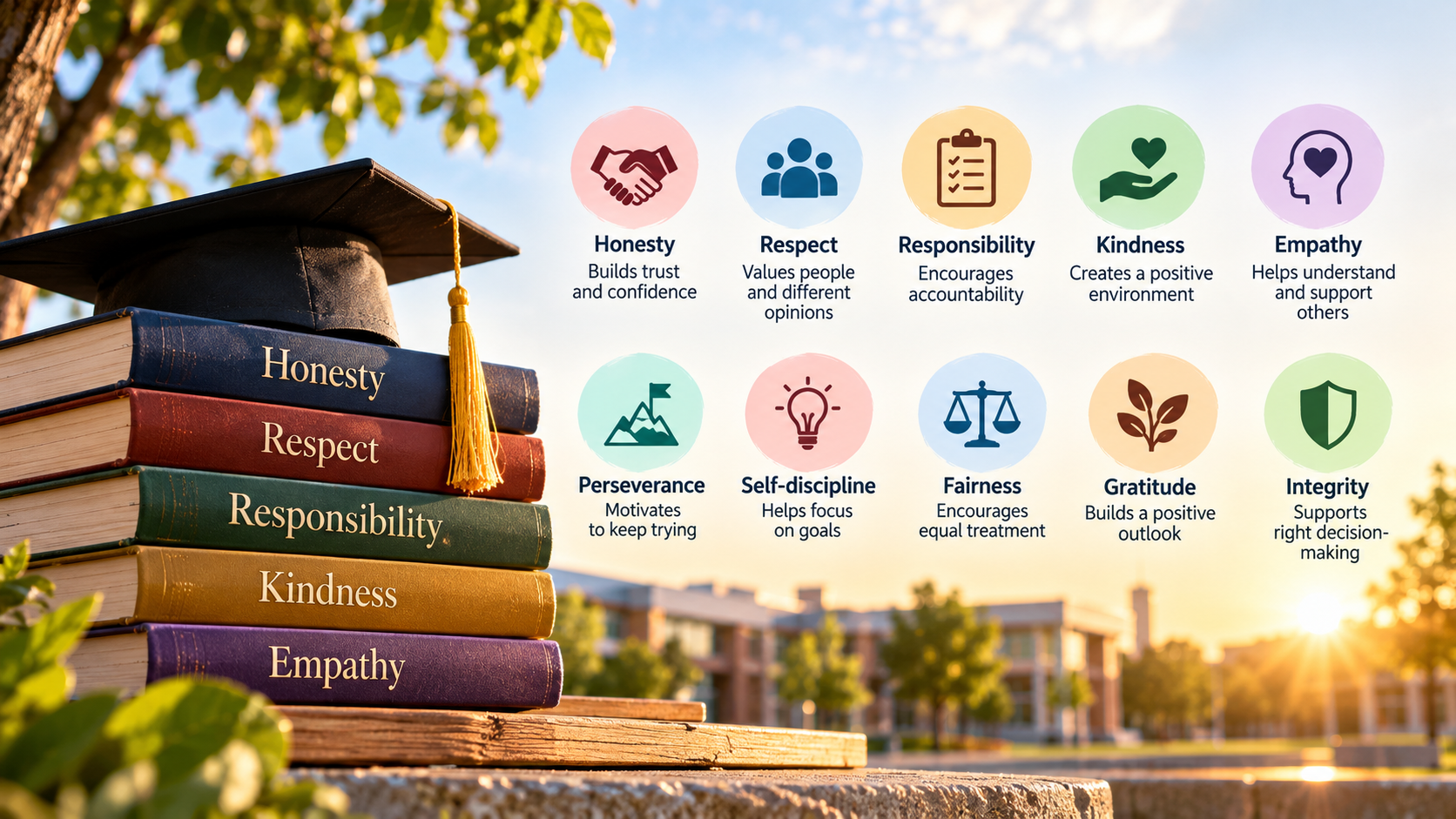
What are 10 important moral values for students?
Ten important moral values help students develop good character, responsible behavior, and positive relationships.
-
Honesty: Encourages students to tell the truth, avoid cheating, and communicate openly with teachers and classmates.
-
Respect: Teaches learners to value teachers, parents, classmates, and different opinions.
-
Responsibility: Helps students complete assignments, follow rules, and accept responsibility for their actions.
-
Empathy: Encourages students to understand others’ feelings and support classmates facing difficulties.
-
Perseverance: Motivates learners to keep trying despite academic challenges and setbacks.
-
Humility: Teaches students to accept mistakes, appreciate others, and remain modest about achievements.
-
Fairness: Encourages equal treatment, honest teamwork, and respect for everyone’s rights.
-
Kindness: Promotes helpful behavior, friendship, and a classroom environment free from bullying.
-
Self-discipline: Helps students manage their time, control distractions, and focus on academic goals.
-
Gratitude: Encourages appreciation for parents, teachers, friends, and the opportunities they receive.
Practising these values helps students build strong character and prepares them for personal, academic, and professional success.
What is the importance of moral values in life?
Moral values guide human behavior and help individuals make responsible decisions. They also influence how society shapes individuals and their behavior. Their importance includes:
-
Builds good character: Encourages honesty, kindness, patience, and responsible behavior.
-
Develops self-respect: Helps individuals make decisions that align with their principles.
-
Strengthens relationships: Promotes trust, understanding, and mutual respect.
-
Guides decision-making: Helps people distinguish between right and wrong.
-
Encourages social responsibility: Motivates individuals to contribute positively to their communities.
-
Reduces conflicts: Promotes patience, tolerance, and peaceful problem-solving.
-
Builds trust: Encourages people to remain honest and reliable.
-
Improves emotional strength: Helps individuals handle difficult situations without compromising their principles.
Cultivating Lasting Trust and Personal Peace
Strong moral values help individuals build meaningful relationships and maintain inner peace.
-
Creates trust: Honesty and reliability make others feel comfortable depending on someone.
-
Strengthens relationships: Respect and kindness encourage healthy communication.
-
Reduces misunderstandings: Open communication helps resolve disagreements peacefully.
-
Develops accountability: Accepting mistakes builds personal confidence and maturity.
-
Encourages emotional balance: Acting according to personal principles reduces internal conflict.
What are 5 importance of values?
Values play five important roles in shaping personality, behavior, and relationships. They also contribute to building confidence in students by helping learners develop self-belief and make responsible decisions.
-
Provides direction: Values help individuals establish meaningful goals and make better life choices.
-
Shapes personal identity: They help people understand their beliefs and remain confident under peer pressure.
-
Builds healthy relationships: Mutual respect and understanding strengthen friendships and family connections.
-
Guides ethical decisions: Values help individuals choose responsible actions during difficult situations.
-
Develops emotional resilience: Strong principles encourage patience and confidence when facing challenges.
These benefits explain the importance of moral values in students’ lives and their contribution to responsible personal development.
What are the five moral values in a student life?
Five foundational moral values explain the importance of moral values in students life: integrity, compassion, diligence, respect, and courage. These principles encourage responsible behavior and help learners develop positive relationships. Practising them regularly also supports academic growth and personal development.
- Integrity: Encourages students to complete original work, avoid cheating, and admit mistakes honestly. It builds trust between students and teachers.
- Compassion: Teaches learners to understand other people’s difficulties and support classmates who need help. It also encourages acceptance of different backgrounds and perspectives.
- Diligence: Promotes consistent effort in homework, examinations, and extracurricular activities. Students learn that regular practice and dedication improve their abilities.
- Respect: Helps students communicate politely with teachers, parents, and classmates. It also encourages appreciation for different opinions.
- Courage: Helps students stand up for what is right. They learn to speak against bullying, defend vulnerable classmates, and reject dishonest shortcuts.
Developing these five values supports balanced growth and prepares students to handle responsibilities inside and outside school.
Why are moral values important for students?
Moral values are important because they guide students’ behavior and support their overall development.
-
Develops good character: Encourages honesty, kindness, discipline, and responsibility.
-
Improves classroom behavior: Helps students follow rules and respect teachers and classmates.
-
Prevents negative influences: Makes it easier to resist peer pressure and harmful habits.
-
Encourages academic honesty: Discourages cheating, plagiarism, and dishonest practices.
-
Builds leadership skills: Develops confidence, accountability, and responsible decision-making.
-
Promotes teamwork: Encourages cooperation and understanding during group activities.
-
Strengthens relationships: Helps students build friendships based on trust and respect.
-
Prepares for adulthood: Develops qualities needed for professional and social responsibilities.
Guiding Sound Judgments in Digital Spaces
Moral values also help students behave responsibly in digital environments.
-
Promotes online respect: Encourages polite communication on social media and other platforms.
-
Prevents cyberbullying: Teaches students to avoid harmful comments and online harassment.
-
Encourages academic honesty: Helps learners avoid plagiarism and submit original assignments.
-
Protects privacy: Encourages careful sharing of personal information and photographs.
-
Reduces misinformation: Teaches students to verify information before sharing it.
-
Builds digital responsibility: Helps learners understand the long-term consequences of their online activities.
What are 10 good values?
Ten good values that benefit individuals and society include integrity, generosity, patience, loyalty, accountability, tolerance, optimism, courage, modesty, and justice. Together, these qualities encourage responsible behavior and help people maintain healthy relationships. Moreover, they promote fairness, understanding, and cooperation within communities.
Integrity ensures that individuals remain honest and consistent in their actions. Similarly, generosity encourages people to share resources and support those in need. Meanwhile, patience helps individuals remain calm during disagreements and challenging situations. In addition, loyalty strengthens meaningful relationships through trust and commitment.
Accountability teaches people to accept responsibility for their decisions and mistakes. Likewise, tolerance encourages peaceful cooperation among individuals with different opinions and backgrounds. Furthermore, optimism helps people maintain a positive outlook, even during difficult circumstances.
Courage allows individuals to defend their principles and stand against unfair behavior. On the other hand, modesty discourages excessive pride and encourages appreciation for others. Finally, justice promotes equal treatment and fairness in personal and professional environments.
Practising these ten values helps individuals contribute positively to society. More importantly, students who develop these qualities early build a strong foundation for responsible decision-making. As a result, they can establish meaningful relationships, handle challenges confidently, and achieve lifelong personal growth.
Frequently Asked Questions
How do moral values improve academic performance?
The importance of student moral values goes beyond classroom behavior. Understanding student moral values importance helps explain how ethical principles influence academic success. Moral values improve academic performance by developing self-discipline, time management, and concentration. For example, students who value honesty avoid plagiarism and complete their required reading. As a result, they develop a deeper understanding of their subjects. Furthermore, values like perseverance encourage learners to complete difficult assignments instead of giving up. This consistent effort leads to better academic performance and a genuine passion for lifelong learning.
Who plays the biggest role in teaching student values?
Parents and teachers share the primary responsibility for teaching moral values. First, parents introduce foundational behaviors at home through family routines, discipline, and everyday examples. Meanwhile, teachers reinforce these principles in classrooms by encouraging teamwork, managing peer relationships, and promoting fair play. Moreover, they help students understand accountability and respect for others. When families and schools work together, their consistent guidance creates a positive environment for character development. Therefore, both parents and educators play an essential role in shaping responsible young learners.
At what age should character education begin?
Character education should begin during early childhood, ideally between the ages of three and five. At this stage, children easily absorb basic concepts like sharing toys, telling the truth, and saying thank you. For example, parents can teach kindness through everyday activities and positive behavior. Similarly, teachers can introduce simple classroom rules that encourage cooperation and respect. As children grow, these early lessons help them understand more complex values like integrity, empathy, and responsibility. Consequently, early education creates a strong foundation for lifelong character development.
Can a student succeed without learning moral values?
A student might achieve temporary academic or financial success without strong moral values. However, such success may not remain sustainable in the long term. A lack of ethical principles can damage professional relationships, weaken personal reputations, and create serious consequences. Furthermore, students who ignore honesty and accountability may struggle to earn the trust of others. Although technical knowledge helps individuals build careers, moral character guides their decisions and actions. Therefore, lasting success requires a balance of academic knowledge, professional skills, and ethical behavior.
Conclusion
Academic excellence provides the tools to build a successful career. However, ethical principles determine how individuals use those skills. Throughout an educational journey, understanding the importance of moral values in students’ lives transforms ordinary schooling into meaningful character development.
The importance of student moral values becomes clear through everyday actions. Values like honesty, empathy, respect, and diligence protect young people from negative influences, digital pitfalls, and irresponsible shortcuts. Moreover, these principles help students develop a strong sense of responsibility. As a result, they build an internal moral compass that guides them long after graduation.
Schools, families, and communities must work together to teach and encourage ethical behavior. For instance, adults should demonstrate integrity, promote accountability, and reward positive actions. Similarly, students should practice these principles through daily conversations, study habits, and classroom discussions.
Ultimately, recognizing the importance of student moral values helps prepare the next generation for responsible leadership. By prioritizing personal character alongside academic achievement, we can encourage young people to lead with wisdom, compassion, and integrity.