

Should Parents Compare Their Child’s Grades With Others?
Every report card season brings a familiar wave of anxiety into family homes. When test scores arrive, many parents instinctively compare their child’s performance with classmates, siblings, or neighborhood children. However, choosing to compare a child’s grades with others can turn academic curiosity into unnecessary emotional pressure.
According to child development guidance from the American Academy of Pediatrics, children’s individual developmental needs deserve attention and support. Academic grades provide only a limited snapshot of learning. They do not measure every ability, talent, or personal quality a child possesses.
When parents measure children against their classmates, they may unintentionally communicate that academic performance determines personal worth. This can damage confidence and discourage children from discussing their difficulties openly.
This guide explores the psychological effects of academic comparisons and answers important parenting questions. You will learn whether comparing children is ever beneficial, understand the 7-7-7 rule, and discover what panda parenting means. We will also examine the consequences of excessive parental pressure and identify common signs of unhealthy parenting behavior.
Is it okay for parents to compare their children to others?
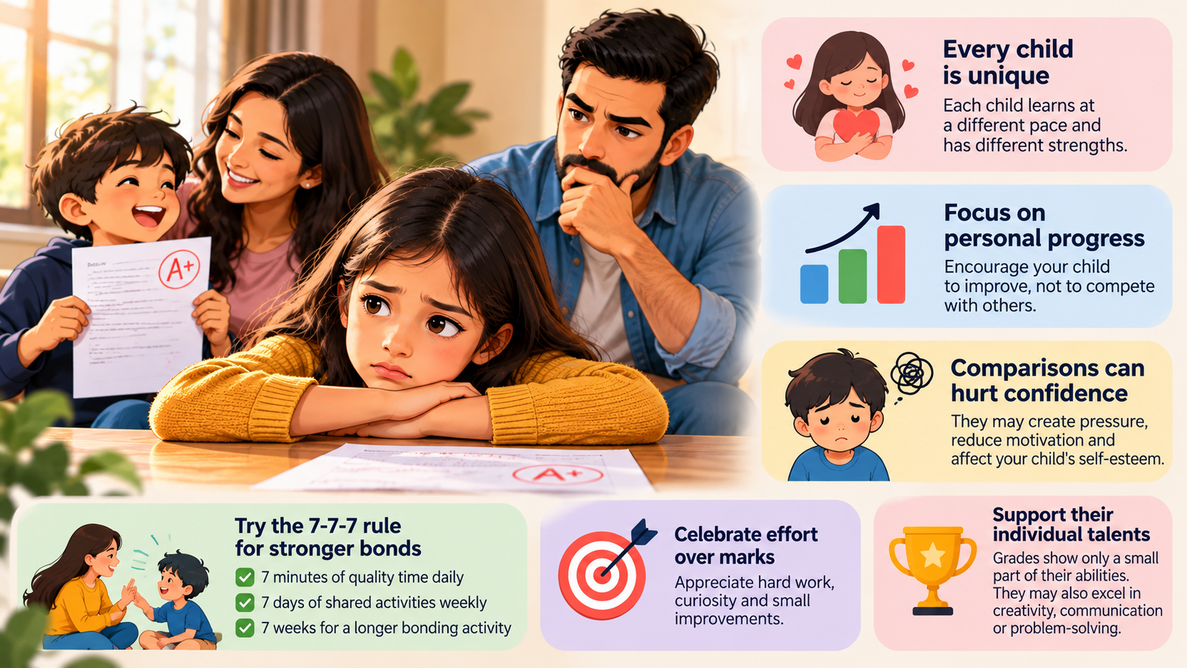
It is generally unhealthy for parents to measure their children’s achievements against those of classmates, friends, or siblings. Although adults sometimes believe comparisons encourage healthy competition, they can create unnecessary pressure. Children may begin connecting their self-worth with academic performance rather than effort, curiosity, or personal development.
When parents repeatedly highlight another child’s achievements, their own child may feel inadequate. This can gradually damage confidence and create resentment toward siblings or classmates. It may also weaken trust between parents and children.
A healthier approach involves evaluating progress against the child’s previous performance. Parents should recognize individual strengths, acknowledge improvements, and identify areas that need support.
Every child learns differently and develops at a different pace. Some children perform exceptionally well in mathematics, while others demonstrate stronger communication, creativity, or problem-solving abilities. Personal progress matters more than classroom rankings. Encouraging individual improvement helps children develop confidence without feeling constantly judged.
The Pitfall of Comparison-Based Motivation
Using another child’s achievements to motivate your own child can easily backfire. Instead of encouraging genuine interest in learning, this approach often creates fear, insecurity, and unnecessary competition. Children may start believing they must outperform everyone to earn parental approval.
This pressure can also weaken intrinsic motivation, which refers to the natural desire to learn and improve. Rather than exploring subjects out of curiosity, children may focus entirely on securing higher marks. They might avoid difficult assignments because mistakes could lead to criticism.
Comparison-based motivation can also affect relationships with classmates and siblings. Children may view others as competitors instead of friends who can support their learning.
Parents should encourage children to set realistic academic goals. Recognizing consistent effort, celebrating small improvements, and discussing challenges openly create healthier motivation. This approach helps children understand that learning involves progress, mistakes, and persistence rather than constant competition.
What is the 7 7 7 rule for parents?
The 7-7-7 rule is a relationship-building guideline that encourages families to make regular time for meaningful connections. It is also discussed in the context of romantic relationships, although some parenting discussions adapt it to parent-child relationships.
In this parenting interpretation, the guideline suggests three simple habits:
- Seven minutes every morning: Spend focused time talking, listening, or connecting with your child before daily activities begin.
- Seven days: Set aside time each week for outdoor activities, games, family conversations, or shared experiences.
- Seven weeks: Plan a longer bonding activity that allows parents and children to enjoy meaningful time together.
The exact schedule is flexible. The purpose is to make emotional connection a consistent part of family life.
Regular interaction helps children feel heard, supported, and valued. It also creates opportunities to discuss school experiences without making every conversation about grades. Parents can use this time to understand their children’s interests, concerns, and personal goals.
Why should I stop comparing my child to others?
Every child develops at a different pace, with unique cognitive, emotional, and social strengths. Comparing your child’s grades with others overlooks these differences and creates unrealistic expectations. Traditional grading systems measure specific academic abilities, but they cannot capture every quality that contributes to a child’s development. Unstructured play in early childhood development also provides opportunities for children to explore their abilities independently.
For example, one child might excel in mathematics, while another demonstrates creativity, empathy, communication, or practical problem-solving skills. Both children have valuable abilities that deserve recognition.
Constant comparisons can also damage the parent-child relationship. Children may begin hiding poor grades, academic difficulties, or personal mistakes because they fear disappointing their parents.
Instead, focus on your child’s individual progress. Identify subjects that need improvement and provide practical support without unnecessary criticism. Celebrate achievements that reflect genuine effort and persistence.
Children need encouragement, not constant competition. When parents accept individual differences, they create an environment where children can develop confidence, explore interests, and build skills at their own pace.
Protecting Long-Term Intrinsic Motivation
Stopping academic comparisons helps protect a child’s natural interest in learning. When parents focus on individual progress rather than classroom rankings, children can develop stronger internal motivation. They begin understanding that learning is about gaining knowledge, improving skills, and overcoming challenges. Parents should also understand why students lose their curiosity so they can encourage a lasting interest in learning.
This approach also supports a growth mindset. Children with this mindset understand that abilities can improve through practice, patience, and consistent effort. They become more willing to attempt difficult tasks because mistakes are viewed as opportunities to learn.
Parents can strengthen this mindset through simple everyday actions:
- Praise effort, preparation, and persistence rather than marks alone.
- Encourage children to ask questions and explore unfamiliar subjects.
- Discuss mistakes without making children feel embarrassed.
- Set achievable goals based on individual abilities.
- Recognize improvements, even when progress seems small.
These habits help children develop confidence and independence. They also reduce the fear of disappointing others. Over time, children can build a healthier relationship with education and become more responsible for their own learning.
What happens when parents compare their child to others?
Repeated academic comparisons can affect a child’s emotional well-being, confidence, and relationships. When parents constantly highlight another child’s achievements, children may experience anxiety, frustration, and feelings of inadequacy. They might start believing that their efforts are never good enough.
Some children respond by becoming overly competitive. Others withdraw from challenging activities because they fear making mistakes. This can affect classroom participation, friendships, and their willingness to try unfamiliar subjects. Encouraging learning outside the classroom can give children opportunities to explore new interests without the pressure of academic rankings.
Sibling relationships may also suffer when parents repeatedly favor one child’s academic performance. Instead of developing supportive relationships, siblings may begin viewing each other as rivals.
Long-term pressure can contribute to stress, sleep difficulties, and persistent worries about academic performance. However, every child responds differently, and comparisons do not automatically cause mental health conditions.
Parents should pay attention to changes in behavior, communication, and emotional well-being. Creating a supportive home environment allows children to discuss academic difficulties without fear of judgment. Emotional security should never depend on report card results.
What is panda parenting?
Panda parenting is an informal caregiving approach that combines emotional support, gentle guidance, and age-appropriate independence. Unlike strict parenting styles that emphasize constant control and academic perfection, panda parenting allows children to explore their interests while maintaining clear family boundaries.
The term is often used to describe a gentle approach inspired by the perceived behavior of pandas. However, it is not a standardized psychological parenting model. Its central idea is to provide children with security while giving them room to develop independence.
In academic matters, panda parents offer guidance without controlling every aspect of their children’s education. They help with difficult subjects, encourage healthy study habits, and allow children to take responsibility for their learning.
This approach does not mean ignoring rules or avoiding parental involvement. Children still need appropriate expectations, consistent boundaries, and guidance.
The goal is to balance support and independence. Parents can learn more about supporting a child without controlling them by allowing age-appropriate choices and encouraging independence. When children receive encouragement without excessive pressure, they have more opportunities to develop decision-making skills, emotional resilience, and confidence in their abilities.
What are some signs of a toxic parent?
Unhealthy parenting behaviors can include emotional manipulation, persistent criticism, conditional affection, and repeated boundary violations. These behaviors may make children feel anxious, unimportant, or constantly afraid of disappointing their parents.
Some parents dismiss their children’s feelings or use guilt to control their decisions. Others repeatedly compare siblings, criticize academic performance, or publicly embarrass children over their mistakes.
Another warning sign involves treating a child’s achievements as a reflection of parental status. For example, parents may focus more on how high grades make the family look than on the child’s actual learning experience.
Common behaviors that may indicate an unhealthy parenting dynamic include:
- Conditional affection: Showing approval or warmth only when children meet specific expectations.
- Constant criticism: Focusing on mistakes while ignoring effort and improvement.
- Emotional manipulation: Using guilt, shame, or silent treatment to influence behavior.
- Unfavorable comparisons: Repeatedly presenting siblings or classmates as better examples.
- Ignoring boundaries: Disregarding a child’s age-appropriate privacy, feelings, or independence.
One isolated disagreement does not automatically make someone a toxic parent. However, repeated harmful patterns can affect a child’s emotional development and sense of security.
Frequently Asked Questions
How can I motivate my child without comparing them to classmates?
Focus directly on your child’s past progress rather than peer performance. When parents decide not to compare child’s grades with others, it becomes easier to celebrate incremental improvements, persistent effort, and effective study habits instead of fixating solely on letter grades. Ask open-ended questions about what subjects excite them and identify specific areas where they feel stuck, offering constructive guidance rather than competitive pressure.
Does academic comparison cause long-term anxiety in children?
Yes, frequent comparison regularly fuels chronic anxiety, self-doubt, and clinical perfectionism that can persist well into adulthood. When caregivers routinely compare child’s grades with others, children begin to believe their emotional acceptance depends entirely on outperforming classmates. This breeds an intense fear of failure, frequently manifesting as academic burnout, avoidance behaviors, and social withdrawal.
What should I do if a teacher or relative compares my child’s grades?
Establish calm, polite boundaries immediately to safeguard your child’s self-esteem. Clarify that while some people reflexively compare child’s grades with others, your family prioritizes individual progress, effort, and mental well-being over competitive rankings. Reassure your child privately afterward, reiterating that external evaluations from relatives or teachers do not define their overall potential.
How do I address a sudden drop in my child’s school grades?
Approach sudden grade drops with curious empathy rather than immediate punishment. Sit down together to explore potential root causes, such as learning obstacles, social conflicts, emotional stress, or sleep issues. Collaborate on realistic adjustment plans, coordinate with teachers, and reinforce your unwavering support throughout the process.
Conclusion
Evaluating academic journeys through constant comparisons damages emotional well-being, strains family bonds, and diminishes real enthusiasm for learning. When parents choose to compare child’s grades with others, they unintentionally replace natural curiosity with persistent performance anxiety. Stepping away from the urge to compare child’s grades with others allows you to embrace healthier parenting alternatives, such as the gentle autonomy of panda parenting or consistent connection rituals like the 7-7-7 framework.
True educational success is never measured by where your child ranks against classmates, but by their resilience, curiosity, and individual development over time. By prioritizing steady personal growth and unconditional emotional support, you empower your child to build lasting confidence, discover genuine passions, and navigate future academic hurdles with authentic self-assurance.