
How to Protect Hardcover Books for Generations
Hardcover books bring timeless charm, durability, and intellectual value to any personal library. However, even the strongest cloth-bound editions can deteriorate without proper care. Dust, humidity, direct sunlight, and oils from bare hands can gradually damage delicate paper fibers and spine stitching. According to the preservation guidelines published by the Library of Congress, maintaining a stable environment is essential for extending the life of books and paper materials. When you take steps to protect hardcover books, you preserve personal memories, rare first editions, and family heirlooms.
Whether you are a casual reader or a dedicated book collector, preserving your collection requires consistent habits. Proper book care does not have to be complicated. Small changes in how you handle, clean, and store your books can prevent long-term damage. This guide explains how to care for hardcover books, choose suitable storage conditions, protect dust jackets, and maintain their original appearance. You will also learn how long hardcover books last and what the five-finger reading rule means. If you are building a personal collection, explore this guide to curating a more inclusive library. With the right precautions, your favorite books can remain in excellent condition for decades or even centuries.
How to care for hardcover books?
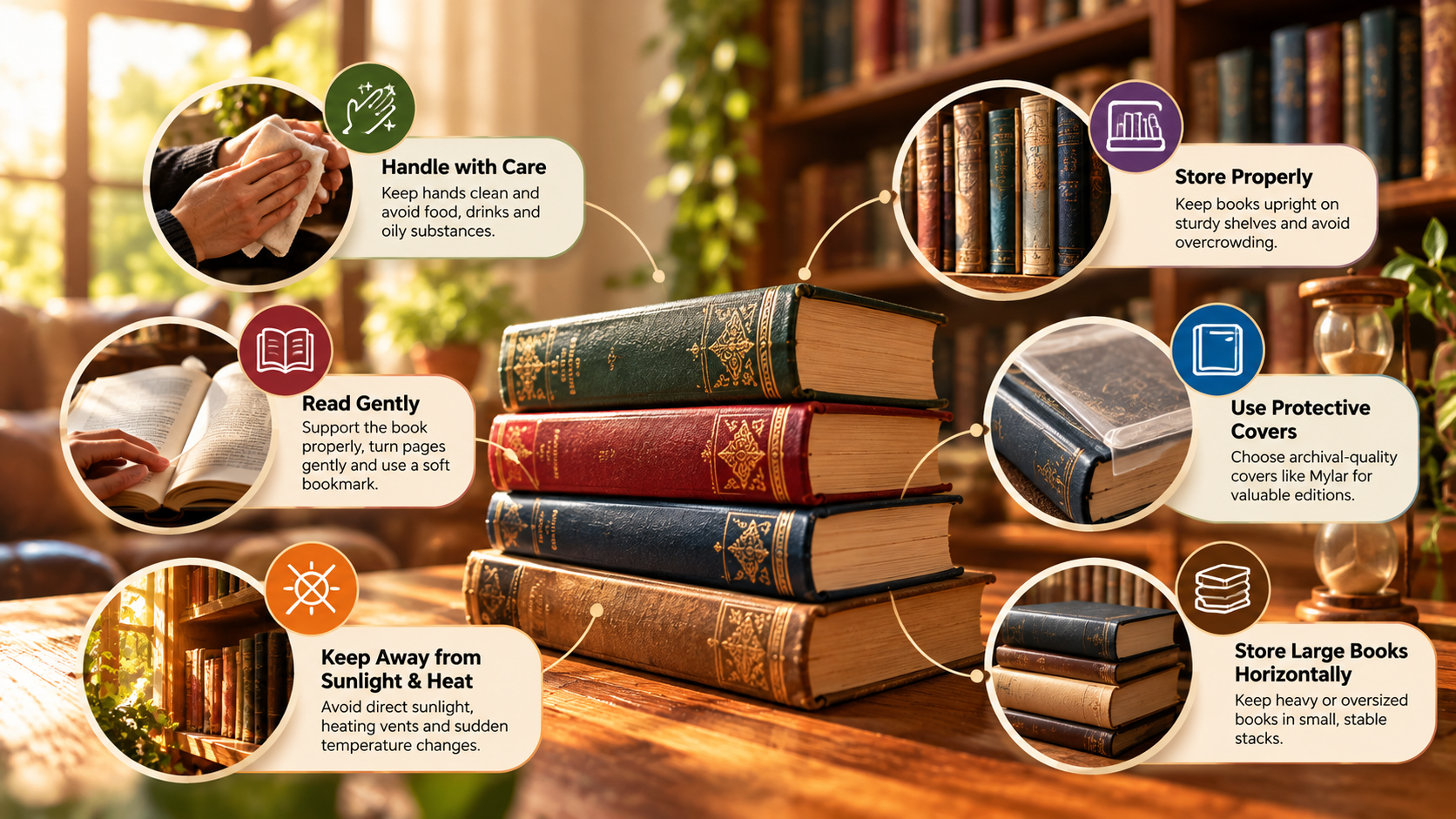
Caring for hardcover books starts with clean hands and careful handling. Avoid eating, drinking, or applying greasy lotions near your collection. Oils and food residue can transfer onto cloth covers and leave permanent stains. When removing a book from a tightly packed shelf, never pull it by hooking your finger over the top of its spine. Instead, gently push neighboring books inward and grip the selected volume around its middle.
You should also avoid forcing newly purchased books to open completely flat. This can damage the spine and weaken the internal adhesive. Dust your shelves regularly with a clean, dry microfiber cloth to prevent dirt from collecting on book covers and page edges. Consistent cleaning and gentle handling help prevent hardcover book damage over time.
Everyday Handling and Clean Habits
Good reading habits play an important role in extending a hardcover book’s lifespan. Always support the book’s weight evenly with both hands while reading. Avoid leaving open books facedown on tables or other flat surfaces. This position puts unnecessary pressure on the spine, adhesive, and inner hinges.
Use thin paper or cloth bookmarks instead of pens, folded objects, or thick accessories. These items can create pressure marks and damage nearby pages. You should also follow these simple habits:
- Keep food, drinks, and oily substances away from books.
- Turn pages gently without pulling or folding their corners.
- Avoid bending the front or back covers beyond their natural opening range.
- Wash and dry your hands before handling valuable editions.
- Never use adhesive labels directly on original book covers.
These everyday precautions help maintain the book’s structure and appearance. They also reduce the risk of stains, loose pages, and damaged bindings.
What is the best way to store hardcover books?
The best way to store hardcover books is upright on sturdy shelves in a clean, climate-controlled room. Avoid placing your collection against damp exterior walls, near drafty windows, or beside heating vents. These locations expose books to moisture and sudden temperature changes. Ideally, maintain room temperatures between 65 and 70 degrees Fahrenheit. Keep relative humidity around 35 to 50 percent to reduce the risk of mold and paper deterioration.
Arrange most hardcover books vertically on shelves. Keep them close enough to support one another without squeezing their covers. Avoid allowing books to lean for extended periods, as this can gradually distort their bindings. Store unusually large or heavy books horizontally in small, stable stacks. This prevents their weight from pulling the text block away from the spine.
Selecting the Right Shelving Materials
Choosing suitable shelving materials also helps protect hardcover books. Solid hardwood and powder-coated metal bookcases are generally reliable options. Avoid raw or unsealed particleboard, especially when storing valuable editions. Some pressed-wood products release acidic compounds that may contribute to paper deterioration.
Position your shelves away from direct sunlight, radiators, and damp areas. Ultraviolet light can fade decorative cover fabrics and dust jacket artwork. Heat can also accelerate the deterioration of adhesives and paper materials.
Consider these additional shelving tips:
- Choose sturdy shelves that can support heavy book collections.
- Avoid overcrowding shelves or forcing books into narrow spaces.
- Keep shelves clean and dry.
- Leave enough room to remove books without damaging their spines.
- Use bookends to support smaller collections and prevent leaning.
Proper shelving protects both the appearance and structural integrity of your books.
How to cover hardback books?
Covering hardback books with suitable protective materials helps prevent scratches, dust accumulation, and everyday wear. However, choosing the wrong covering can cause more damage than leaving a book unprotected. Avoid standard self-adhesive contact vinyl, household plastic wrap, and acidic brown craft paper. These materials may trap moisture, leave adhesive residue, or damage original cover materials.
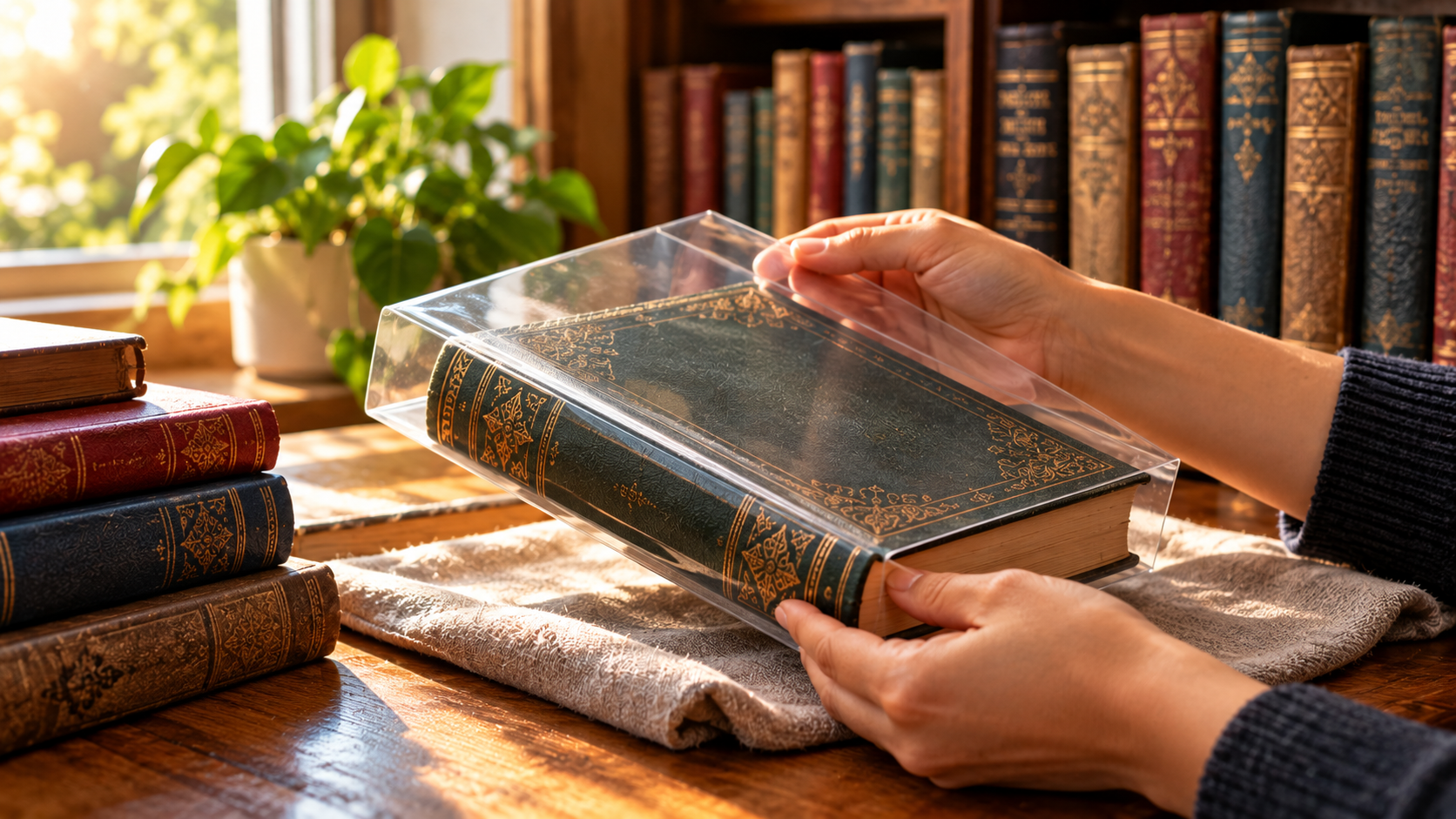
Instead, consider using archival-quality protective sleeves made from polyester film, such as Mylar, or suitable archival polyethylene. These materials provide a protective barrier without requiring permanent changes to the original book. They are particularly useful for valuable editions and books with delicate dust jackets.
Before covering a book, measure the height and width of its original dust jacket. Cut the protective material to the appropriate size and fold it neatly around the jacket. Make sure the sleeve fits securely without putting excessive pressure on the corners or edges.
Avoid applying sticky tape directly to original paper, cloth, or dust jackets. This helps preserve the book’s original condition and makes future removal safer.
How to preserve a book cover?
Preserving a hardcover book cover requires protection from friction, sunlight, dust, and moisture. The outer cloth, decorative paper, and original dust jacket can deteriorate through everyday handling. Regular inspection and gentle cleaning help prevent minor problems from becoming permanent damage.
For cloth-covered books, use a soft-bristled brush to remove loose dust. An archival chemical sponge may also help clean certain uncoated surfaces. However, test any cleaning method carefully before applying it to valuable editions. Avoid household cleaners, wet cloths, and chemical products that could discolor the material.
Protect original dust jackets whenever possible. These jackets often contain valuable artwork and publishing information. Consider using archival polyester sleeves to reduce scratches, tears, and surface wear. Keep books away from direct sunlight because ultraviolet exposure can fade printed designs and weaken exterior materials.
Preventing Environmental Surface Damage
Environmental conditions can significantly affect the appearance and condition of hardcover books. Damp basements, humid attics, and sunny window areas create risks for paper and binding materials. Temperature fluctuations can encourage mold growth, cause paper warping, and weaken adhesives.
Keep your collection in a dry room with stable temperature and humidity. Avoid placing books directly against exterior walls where condensation may develop. If you notice dampness, investigate the source before returning books to the affected shelf.
Accidental spills also require immediate attention. If liquid reaches an outer cover, gently blot the affected area with a clean, absorbent, unbleached towel. Never rub the surface, especially when the material is wet. Rubbing can spread moisture and damage delicate coatings or printed designs.
For valuable or antique books, avoid attempting complicated repairs yourself. Consult a professional book conservator when significant damage occurs. Following these precautions will help protect hardcover books and prevent unsuitable cleaning products or repair methods from causing further damage.
How long will a hardcover book last?
A well-made hardcover book can last several decades or even hundreds of years. Its lifespan depends on manufacturing quality, paper composition, binding materials, and storage conditions. Books printed on acid-free, buffered rag paper and bound with sewn cloth signatures can survive for centuries under suitable archival conditions.
However, not every hardcover book offers the same durability. Many modern trade editions use acidic wood-pulp paper and adhesive bindings. These materials can deteriorate more quickly than traditional archival materials. Paper may become brittle, pages may discolor, and bindings may eventually loosen.
The way you handle and store your collection also makes a significant difference. Exposure to sunlight, excessive humidity, dust, and poor storage conditions can accelerate deterioration.
To extend a hardcover book’s lifespan:
- Store books in a stable, climate-controlled environment.
- Keep relative humidity within a suitable range.
- Protect valuable dust jackets with archival sleeves.
- Avoid excessive pressure on spines and bindings.
- Inspect your collection regularly for moisture and pest damage.
With consistent care, quality hardcover books can remain readable and structurally sound across generations.
What is the 5 finger rule for books?
The five-finger rule is a simple reading assessment method used by teachers, librarians, and parents. It helps young readers determine whether a book matches their current reading ability. The method focuses on unfamiliar words rather than the physical condition or durability of a book.
To use this rule, open a book to a random page containing a normal paragraph. Ask the reader to read the passage aloud naturally. Each time they encounter an unfamiliar word, they should raise one finger. After finishing the page, count the raised fingers to estimate the reading difficulty.
The results generally indicate the following:
- Zero or one finger: The book is likely easy to understand.
- Two or three fingers: The book may offer a suitable reading challenge.
- Four or five fingers: The book may currently be too difficult.
- More than five fingers: Consider choosing an easier book.
The five-finger rule is a helpful starting point, not a formal reading assessment. Reading comprehension, confidence, and interest also matter when choosing suitable books.
How to keep books in good condition at home?
Keeping books in good condition at home requires regular cleaning, proper storage, and basic pest prevention. Even a well-organized library can suffer damage when dust, moisture, and insects accumulate. A consistent maintenance routine helps protect your collection and prevents small problems from spreading.
Start by cleaning bookshelves every few months. Use a vacuum cleaner with a soft brush attachment to remove dust and loose debris. Remove books carefully before cleaning the shelves. Allow the surfaces to dry completely before returning your collection.
Pest prevention is equally important. Avoid placing houseplants, flower vases, or damp objects directly on bookshelves. Moisture and organic debris can attract insects such as silverfish and booklice. These pests may damage paper, bindings, and other book materials.
Follow these practical home book-care tips:
- Inspect shelves regularly for insects, mold, and damp patches.
- Keep food and drinks away from your book collection.
- Maintain good air circulation around stored volumes.
- Avoid storing books in damp cupboards or unused basements.
- Clean shelves and surrounding areas regularly.
- Separate books showing signs of mold or pest activity.
A clean, dry, and well-maintained storage area helps preserve your collection. By following these precautions, you can protect hardcover books and enjoy them for many years.
Frequently Asked Questions
Should I store rare hardcover books inside plastic storage bins?
Standard airtight plastic totes trap ambient humidity and off-gassed acidic vapors, creating a microclimate that accelerates chemical rot and mold outbreaks. If you must store books in containers, use archival acid-free buffered cardboard boxes. Ensure the boxes reside in living quarters rather than unfinished attics or damp garages.
Why do the top page edges of old hardcover books turn brown?
Top edges discolor first because dust, airborne pollutants, and ambient oxygen settle directly upon the exposed paper surface. Over years of exposure, acidic components in the paper react with atmospheric moisture and light in an oxidation process known as foxing and yellowing. Regular dusting minimizes this damage.
How do I remove musty odors from second-hand hardcover books?
To neutralize musty smells safely, place the affected volume inside an aerated enclosure alongside an open dish of activated charcoal pellets or clean baking soda. Never let the absorbent powder touch the book. Seal the outer container for several days so the media absorbs airborne odors naturally.
Conclusion
Preserving a hardcover library requires steady, mindful diligence rather than costly specialized tools. By adopting gentle handling habits, maintaining clean hands, and stabilizing your home environment, you create an ideal sanctuary for your books. Simple preventive measures—such as fitting volumes with archival polyester jackets, spacing books properly on sturdy shelves, and keeping direct sunlight at bay—yield tremendous returns in physical longevity.
When you know how to protect hardcover books systematically, you safeguard both sentimental heirlooms and valuable collector editions from preventable decay. Take a few minutes today to assess your current book displays: straighten leaning spines, dust exposed top edges, and confirm that humidity levels remain within a safe range. These small, consistent efforts guarantee that your favorite volumes remain structurally intact, visually vibrant, and ready for future generations to enjoy.