
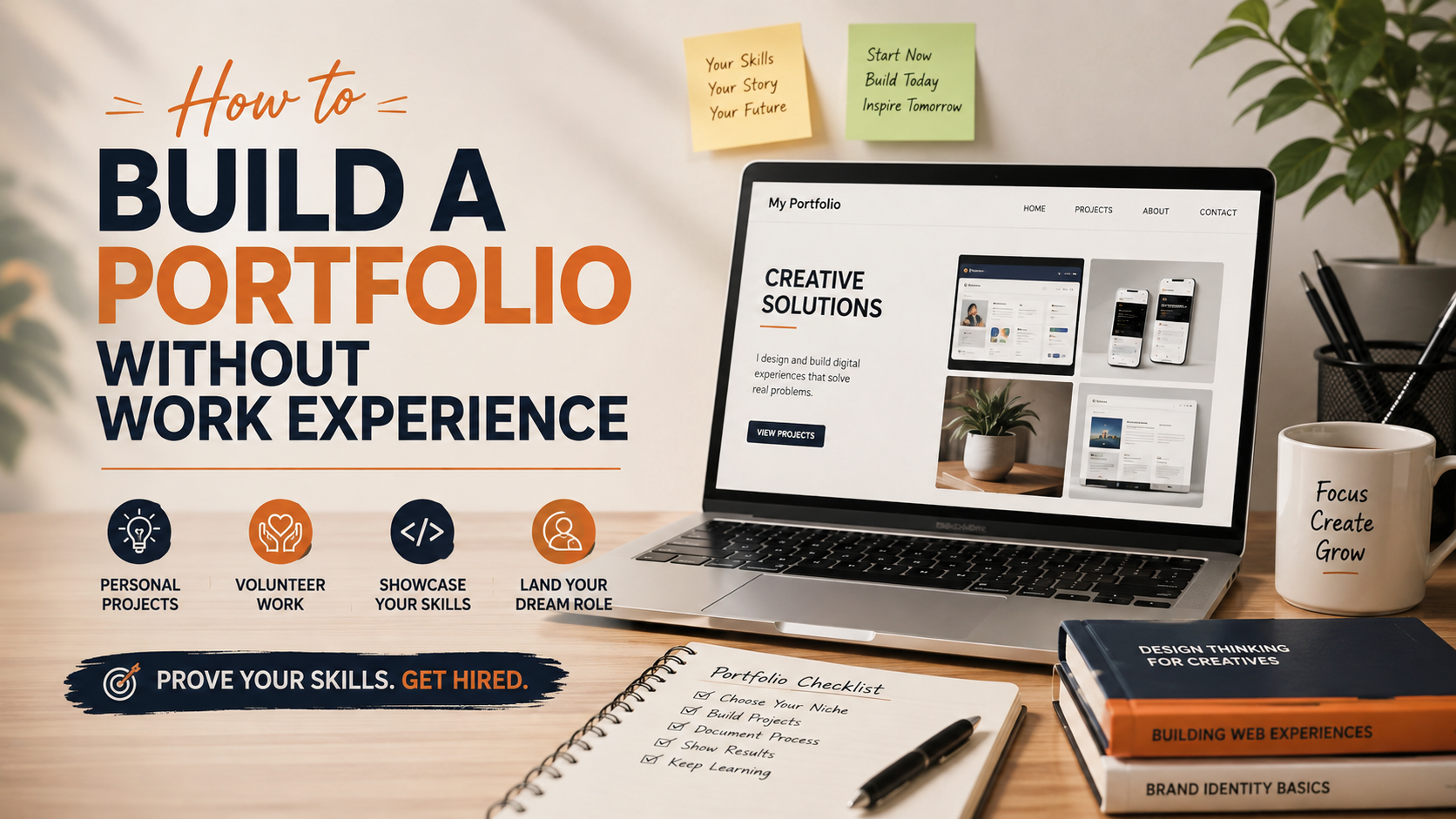
How to Build a Portfolio Without Work Experience
Starting your professional journey can feel intimidating when every job description demands prior experience. Yet, you do not need a traditional corporate background to showcase your true capabilities to potential employers. Learning how to build a portfolio without work experience opens doors by highlighting what you can actually create and achieve right now. Many aspiring professionals wonder how to create a portfolio with no experience, whether AI can help build it, how to design graphics without a history, or how to market yourself effectively. According to Google Search Central, demonstrating genuine expertise and high-quality content is vital for standing out. This comprehensive guide walks you through every essential step to help you launch a compelling portfolio that wins clients and secures interviews.
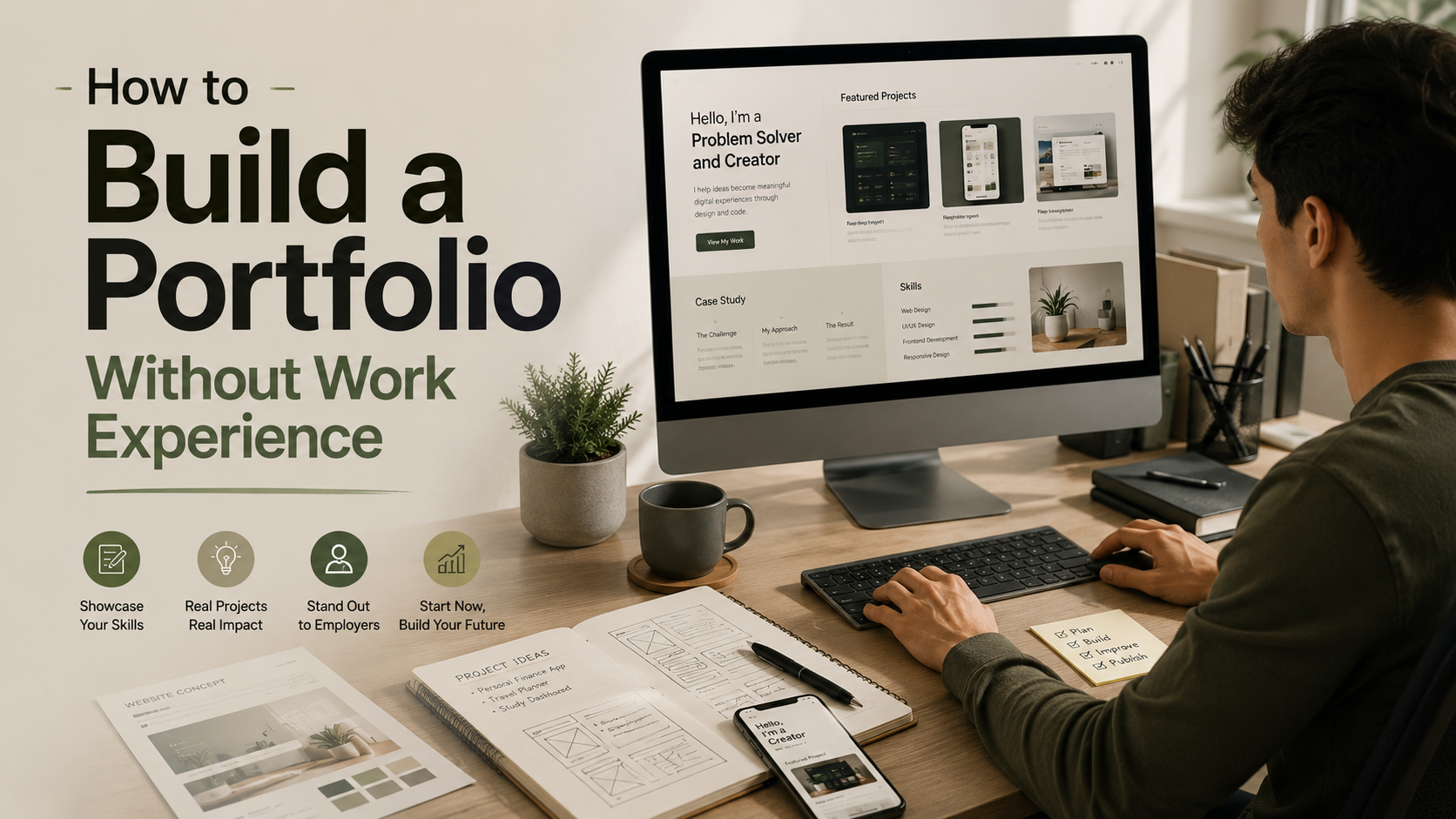

How to Build a Portfolio Without Work Experience
Building a portfolio without professional experience means replacing job history with proof of your skills. You can demonstrate your abilities through personal projects, volunteer work, open-source contributions, and real-world practice.
Start by choosing a clear niche and identifying the roles you want to target. Then, create projects that match the skills employers expect from those roles. For example, aspiring developers can build websites or applications, while designers can create branding concepts or user interfaces. Exploring career options without a college degree can also help you identify roles where a strong portfolio can demonstrate your abilities.
Document each project from the initial idea to the final result. Explain the problem, your approach, tools, challenges, and outcome. This gives hiring managers insight into how you think and solve problems.
Treat personal projects as seriously as paid assignments. A polished project can show initiative, technical ability, creativity, and attention to detail even when you have no formal employment history.
Focus on Personal and Pro Bono Projects
Personal and pro bono projects are among the most useful ways to build a portfolio without work experience. They give you practical examples that employers can evaluate instead of relying only on qualifications or coursework.
Start with projects that solve a specific problem. You could redesign a local business website, create marketing materials for a community organization, or build a small application that addresses an everyday need. These projects provide stronger evidence than generic practice exercises.
Volunteering your skills can also introduce you to real deadlines, feedback, and client requirements. Ask the organization for permission before publishing completed work in your portfolio.
Open-source contributions are another option, especially for developers. Even small improvements can demonstrate collaboration and familiarity with professional workflows.
For every project, explain:
- The problem you wanted to solve.
- Your role and responsibilities.
- The tools or skills you used.
- The challenges you encountered.
- The final result and what you learned.
This approach turns limited experience into verifiable evidence of your abilities.
Can AI Make My Portfolio?
AI can help you create a portfolio faster, but it cannot replace your judgment or experience. Tools powered by artificial intelligence can assist with website layouts, content ideas, project descriptions, research, and design concepts. However, publishing AI-generated material without meaningful customization can make your portfolio feel generic.
Use AI as a creative and productivity assistant, not as the author of your professional identity. Platforms and models from companies such as OpenAI can help you explore ideas and improve early drafts.
The important work still comes from you. Choose the projects, make strategic decisions, test your work, and explain why you made those choices.
When using AI, review every output carefully. Correct inaccurate information and remove anything that does not reflect your actual abilities. You should also avoid claiming that you completed work that AI performed for you.
A strong portfolio shows what you can do, not simply what an AI tool can generate. Use these tools to save time while keeping your skills, perspective, and decisions at the center.
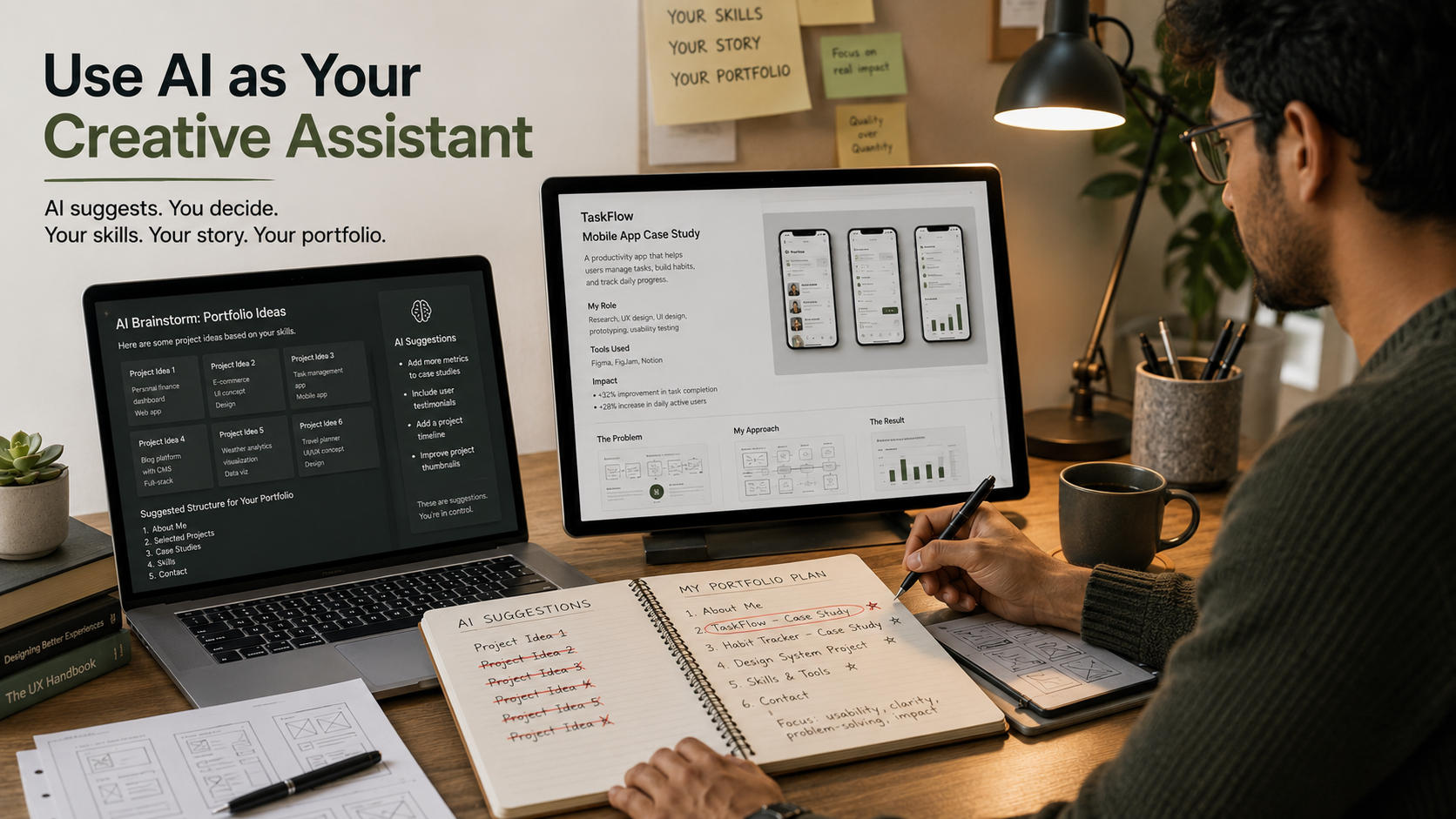
Leverage AI as a Creative Assistant
Generative AI can support many stages of portfolio development. It can help organize your content, suggest project ideas, create placeholder copy, and explore different design directions.
For example, you can ask an AI tool to suggest a structure for a case study. You can then rewrite the content using your actual project details and experiences. This keeps the final result personal and credible.
AI can also help identify gaps in your portfolio. Ask it to review your project descriptions and suggest information that employers may need. You should make the final decisions rather than accepting every recommendation automatically.
For visual projects, AI can provide inspiration for layouts, typography combinations, or color palettes. Treat these suggestions as starting points. Your final design should reflect your own decisions and design principles.
The same approach works for technical portfolios. AI can help brainstorm project ideas or explain unfamiliar concepts. However, you should understand and test any code before presenting it.
Used carefully, AI can reduce repetitive work while leaving the creative direction and professional judgment in your hands.
How Do I Build My Own Portfolio?
To build your own portfolio, start with a platform that matches your technical skills and the type of work you want to showcase. You can use a website builder, content management system, or create the site yourself if you have development experience. If you’re deciding between independent work and employment, freelance vs. full-time career paths can help you evaluate which direction fits your goals.
Keep the design simple. Clear navigation, responsive layouts, readable typography, and fast loading times help visitors find your work quickly.
Choose only your strongest projects. Each project should demonstrate a specific skill and explain the process behind the final result. A short case study can cover the objective, your approach, tools, challenges, and outcome.
Avoid filling your portfolio with unfinished experiments. A smaller collection of polished projects can create a stronger impression than dozens of weak examples.
Your portfolio should also make it easy to contact you. Include a clear contact section and relevant professional profiles, such as LinkedIn or GitHub.
If you have no professional experience, your projects become the main evidence of your ability. Make each project useful, well-presented, and relevant to the roles you want.
Choose a Clean and Minimalist Layout
A clean layout helps visitors focus on your work instead of navigating unnecessary design elements. Your portfolio should make important information easy to find within seconds.
Use consistent typography, spacing, colors, and visual hierarchy throughout the site. Avoid excessive animations, decorative graphics, or complicated navigation unless they support the purpose of your portfolio.
Make the website responsive across desktop computers, tablets, and smartphones. Employers may review your portfolio from different devices, so every project should remain easy to understand on smaller screens.
Your homepage should quickly explain who you are, what you do, and what type of opportunities you seek. Then, guide visitors toward your strongest projects.
Project pages should provide enough context without overwhelming readers. Use screenshots, demonstrations, or short videos when they help explain the work.
Fast performance also matters. Compress large images, avoid unnecessary scripts, and test your pages before publishing.
A minimalist design does not mean an empty website. It means removing distractions so your skills and projects receive the attention they deserve.
Can I Do Graphic Design With No Experience?
Yes, you can begin graphic design without formal employment or a professional design degree. The bigger challenge is proving that you understand design fundamentals and can produce consistent work.
Start by learning principles such as typography, color theory, composition, contrast, visual hierarchy, and spacing. Free tutorials and structured online courses can help you develop these foundations.
Practice by creating realistic design briefs. You could develop a fictional brand identity, design packaging for an imaginary product, or create social media graphics for a hypothetical business.
Recreating existing designs can also help you understand how professional work is constructed. However, clearly label practice work and never present another designer’s work as your own.
Share selected projects online to receive feedback. Constructive criticism can reveal weaknesses that are difficult to notice yourself. Apply that feedback to later projects and show how your skills improve over time.
Your portfolio should demonstrate variety without becoming unfocused. Select projects that match the type of graphic design work you want to pursue.
Consistency matters more than creating hundreds of pieces. A small collection of polished, thoughtful projects can establish credibility even before your first design job.
Master Fundamental Design Principles Early
Strong graphic design depends on more than knowing how to operate design software. Understanding fundamental principles helps you create work that looks intentional and communicates information clearly.
Typography affects readability, tone, and visual hierarchy. Learn how font size, weight, spacing, and pairing influence how people interpret information.
Color theory helps you create appropriate visual relationships and communicate emotion. Study contrast, harmony, saturation, and accessibility before choosing colors for portfolio projects.
Visual hierarchy guides attention toward the most important elements. Use size, position, spacing, and contrast to establish a clear reading order.
Whitespace is equally important. Giving elements enough room can improve readability and prevent a design from feeling crowded.
Composition determines how individual elements work together. Practice balancing images, text, shapes, and negative space within a defined layout.
These principles apply across logos, posters, websites, advertisements, presentations, and social media graphics. Learning them early gives your projects a stronger foundation.
Instead of relying on templates alone, understand why a design works. That knowledge will help you create original work and explain your decisions during interviews.
How to Build a Marketing Portfolio With No Experience
Building a marketing portfolio without professional experience requires evidence of your strategic thinking. You do not need a corporate job to demonstrate that you understand audiences, content, search, social media, or campaign performance.
Start a personal blog, niche website, newsletter, or social media account. Choose a topic that gives you enough opportunities to create and measure content consistently. You can also explore jobs in the creator economy to understand how content creation can develop into a professional career.
You can also create a simulated marketing campaign for a fictional company. Define the target audience, campaign objective, messaging, channels, content strategy, and expected results.
Whenever possible, collect real performance data. Track metrics such as website traffic, engagement, click-through rate, search impressions, conversions, or audience growth.
Do not invent results. If a project is hypothetical, clearly label it as a simulated campaign. Employers can still evaluate your strategic reasoning and execution.
Present each project as a short case study. Explain the problem, your research, strategy, implementation, metrics, and lessons learned. Building a personal brand for career growth can further help you present these projects and communicate your professional strengths.
This approach helps build a marketing portfolio without experience while showing employers that you understand how marketing decisions connect to measurable outcomes.
Highlight Data and Campaign Metrics
Marketing employers want to see whether you can connect activities with measurable outcomes. Including relevant metrics makes your portfolio more credible and gives readers evidence of your analytical thinking.
For a website project, you could report organic traffic, search impressions, keyword rankings, click-through rate, or conversions. For social media work, engagement rate, follower growth, reach, and link clicks may be useful.
Avoid presenting metrics without context. Explain what you changed and why the result matters. For example, describe how changing a headline affected clicks or how a content strategy increased organic traffic.
Charts can make performance information easier to understand. Keep them simple and show only metrics that support your case study.
If you have limited data, focus on the process instead. Explain your research, audience analysis, campaign objectives, content choices, and measurement strategy.
Most importantly, distinguish real results from projected results. Transparent reporting is more valuable than impressive-looking numbers with no evidence.
A marketing portfolio should demonstrate both creativity and analytical thinking. Showing how you made decisions and measured outcomes can help compensate for limited professional experience.
FAQ SECTION
What Tools Should I Use to Build My Portfolio Website?
When learning how to build a portfolio without work experience, choose a website platform that matches your technical skills and goals. WordPress, Webflow, and Notion are useful options for beginners because they require little or no advanced coding knowledge. Consider factors such as design flexibility, hosting reliability, mobile responsiveness, SEO features, and custom domain support. A professional domain can make your website easier to remember and improve its credibility. Most importantly, choose a platform that lets you present your projects clearly and maintain your portfolio easily.
How Many Projects Should I Include in My Portfolio?
When considering how to build a portfolio without work experience, focus on project quality rather than creating a large collection. For most beginners, three to five strong projects are enough to demonstrate relevant skills. Select projects that match the type of role you want to pursue. Each project should showcase a different ability or demonstrate meaningful problem-solving. Include a short description, your role, the tools you used, and the final outcome. Avoid adding weak, unfinished, or repetitive work simply to make your portfolio appear larger. A focused portfolio is usually easier for employers to review.
Should I Include Failed Projects in My Portfolio?
A failed project can still be useful when you are learning how to build a portfolio without work experience. However, only include it when the project demonstrates meaningful problem-solving, learning, or improvement. Explain the original goal, what went wrong, and how you identified the underlying issue. Then describe the changes you made and what you learned from the experience. Be transparent about the outcome and avoid presenting failure as success. A well-explained mistake can demonstrate self-awareness and adaptability. However, remove projects that contain major unresolved problems or do not provide useful evidence of your abilities.
How Do I Write Case Studies With No Real Clients?
You can create strong case studies while learning how to build a portfolio without work experience. Use personal projects, freelance practice assignments, volunteer work, or open-source contributions as examples. Start by defining a realistic problem and identifying the intended audience or user. Then explain your research, planning, tools, decisions, implementation, testing, and final solution. If the project is hypothetical, clearly label it as a concept or simulated assignment. Include screenshots or other visuals when useful. Never invent clients, revenue, traffic, or other results. Honest, detailed case studies can demonstrate your skills even without professional client experience.
Conclusion
Mastering how to build a portfolio without work experience is an empowering journey that transforms your self-driven passion into tangible professional proof. By focusing on personal projects, leveraging smart digital tools wisely, and documenting your creative process thoroughly, you create undeniable value. Every great professional started somewhere with a blank page and a willingness to learn through continuous practice. Take the first step today by outlining your initial project idea, organizing your best creative concepts, and publishing your work online. Your future employers and clients are waiting to see what you can accomplish when given the opportunity to shine.