
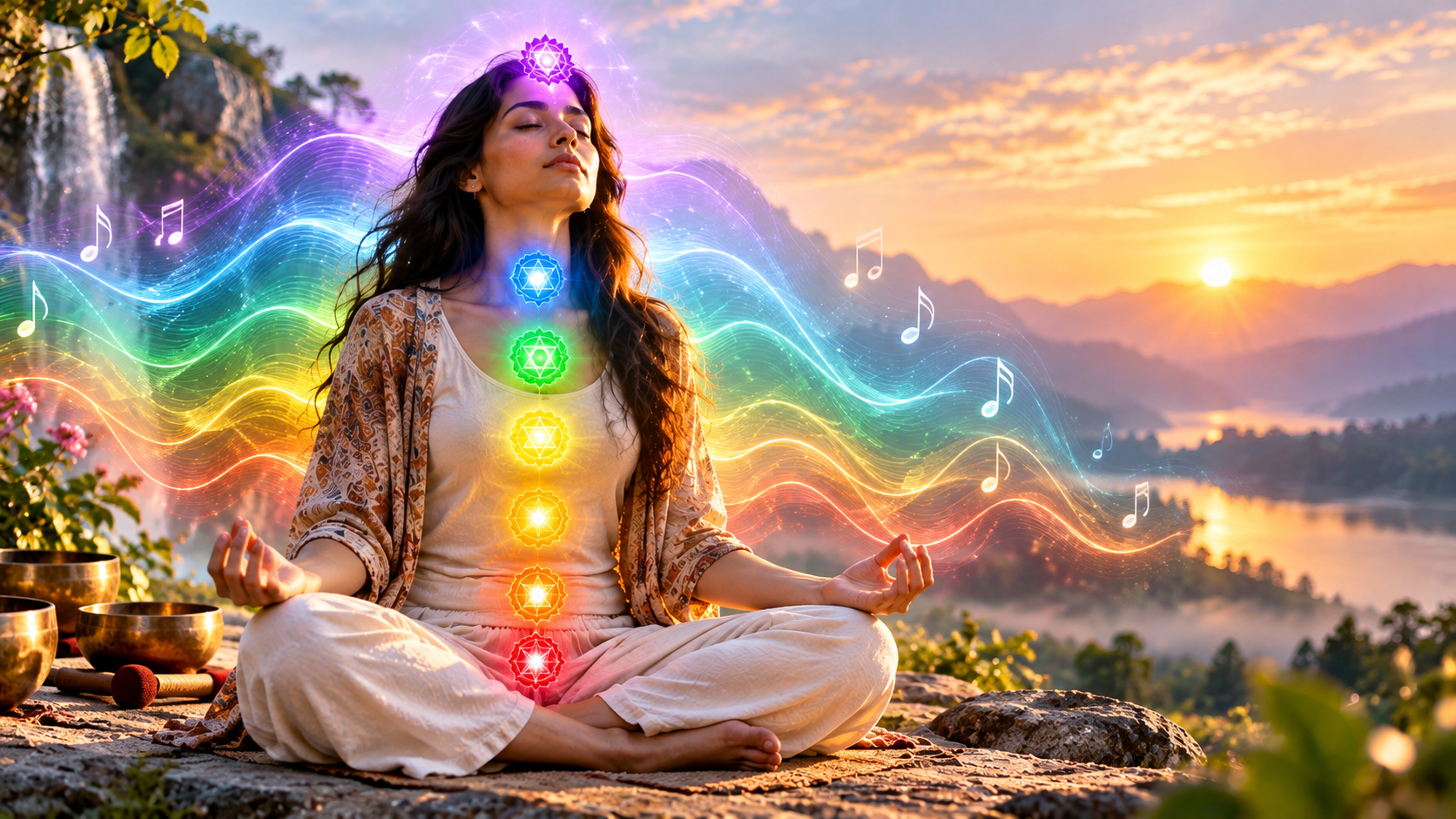
Healing of Seven Chakra with Sounds: The Complete Master Guide
The healing of seven chakra with sounds combines traditional chakra meditation with chanting, musical tones, and mindful listening. These practices aim to support relaxation, emotional awareness, and spiritual reflection. Although research suggests that music and sound-based activities may help reduce stress, science has not established that specific sounds can activate chakras or cure physical conditions.
Have you ever noticed how a deep hum or a resonant chime can change your mood? Sound has long played a role in meditation, relaxation, and spiritual practices. Research also suggests that music and sound-based interventions may help some people manage stress and anxiety. According to the National Center for Biotechnology Information (NCBI), research has examined the potential effects of music and sound-based interventions on well-being.
In chakra traditions, each energy center represents different aspects of physical awareness, emotional balance, or spiritual development. Practitioners use specific sounds to focus attention on these centers. When daily stress leaves you feeling overwhelmed, gentle music, controlled breathing, and vocal chanting may help you slow down. You can also explore oriental medicine as a holistic approach to health and healing to learn about other traditional wellness practices.
In this complete guide, you will discover traditional seed mantras for all seven chakras, commonly associated Solfeggio frequencies, and practical sound-healing techniques. You will also learn how music supports relaxation, which sounds practitioners associate with each chakra, and why emotional responses sometimes occur during meditation.
What are the sounds associated with the seven chakras?
The sounds most commonly associated with the seven chakras are traditional Sanskrit seed syllables, known as Bija mantras. These mantras appear in certain Hindu and yogic traditions. Practitioners chant them during meditation to focus attention and connect with different energy centers along the spine.
Each chakra has a commonly used seed mantra. The root chakra corresponds to LAM, the sacral chakra to VAM, and the solar plexus chakra to RAM. Similarly, the heart chakra uses YAM, while the throat chakra uses HAM. The third eye is commonly associated with OM. Traditions differ regarding the crown chakra, which practitioners may contemplate through silence, OM, or other sacred sounds.
Chanting does not have a scientifically established ability to activate specific energy centers. However, vocalization and mindful breathing can encourage relaxation and concentration. Therefore, you can use these sounds during meditation without treating their spiritual associations as medical facts.
| Chakra | Sanskrit name | Traditional seed mantra | Associated body area |
|---|---|---|---|
| Root | Muladhara | LAM | Base of the spine |
| Sacral | Svadhisthana | VAM | Lower abdomen |
| Solar plexus | Manipura | RAM | Upper abdomen |
| Heart | Anahata | YAM | Center of the chest |
| Throat | Vishuddha | HAM | Throat |
| Third eye | Ajna | OM | Between the eyebrows |
| Crown | Sahasrara | Silence or contemplative chanting | Crown of the head |
Vocalizing Bija Mantras for Maximum Resonance
Chanting Bija mantras creates vibrations that you can feel in your throat, mouth, and chest. These sensations may help you maintain attention during meditation. To begin, sit comfortably and breathe naturally. Choose one mantra and repeat it slowly during each exhalation.
You do not need to force your voice or extend your breath beyond what feels comfortable. Instead, let the sound emerge naturally and notice how it feels as it fades. You can also chant silently if vocalizing feels uncomfortable.
For a simple practice, follow these steps:
- Inhale gently through your nose.
- Chant the selected mantra during a comfortable exhalation.
- Notice the sound, vibration, and movement of your breath.
- Pause briefly before repeating the mantra.
- Continue for two to five minutes, then observe how you feel.
Key takeaway: Focus on comfortable breathing and steady attention. No scientific evidence establishes a requirement to prolong a particular consonant or direct vibrations toward a specific organ.
What are the 7 healing frequencies?
Seven commonly discussed Solfeggio frequencies are 396 Hz, 417 Hz, 528 Hz, 639 Hz, 741 Hz, 852 Hz, and 963 Hz. In contemporary sound-healing practices, practitioners associate each frequency with a particular emotional or spiritual intention. However, these associations vary between practitioners and are not universal across traditional chakra systems. You can also explore the frequencies of colors and the hidden power of light to learn about another perspective on frequencies and their symbolic associations.
The root chakra is commonly paired with 396 Hz for releasing fear. Meanwhile, practitioners link the sacral chakra to 417 Hz for change and the solar plexus to 528 Hz for transformation. They associate the heart chakra with 639 Hz for connection and the throat chakra with 741 Hz for expression. Similarly, they link the third eye to 852 Hz and the crown to 963 Hz.
These pairings can provide a structure for meditation, but their claimed chakra-specific effects lack strong scientific validation. A frequency measured in hertz describes the number of sound-wave cycles per second. Therefore, the frequency alone does not establish a healing effect.
| Frequency | Common chakra association | Traditional meditation intention |
|---|---|---|
| 396 Hz | Root | Reflecting on fear and feelings of safety |
| 417 Hz | Sacral | Embracing change and emotional reflection |
| 528 Hz | Solar plexus | Personal growth and transformation |
| 639 Hz | Heart | Connection, empathy, and relationships |
| 741 Hz | Throat | Self-expression and communication |
| 852 Hz | Third eye | Awareness and introspection |
| 963 Hz | Crown | Spiritual reflection and unity |
How to do 7 chakra healing?
You can practise seven-chakra sound meditation at home using gentle music, recorded singing bowls, or your own voice. The aim is to develop concentration and relaxation while exploring the traditional symbolism of each energy center. Fortunately, you do not need expensive equipment or special training to begin. You can complement this routine with the benefits of essential oils if you enjoy incorporating calming scents into your relaxation practice.
First, choose a quiet room where you can sit or lie comfortably. Play the sounds at a moderate volume and keep your breathing relaxed. Then start with the root chakra and gradually move through the other six centers. You can imagine the traditional color associated with each chakra as you listen.
Try this simple routine:
- Settle your body: Sit comfortably and take several gentle breaths.
- Begin at the root: Chant LAM or listen to a low, steady tone.
- Move upward: Use VAM, RAM, YAM, HAM, and OM in sequence.
- Explore the crown: Finish with a few minutes of silence or gentle chimes.
- Reflect: Notice your breathing, mood, and physical sensations without judging them.
Spend one or two minutes on each center initially. As you become comfortable, you can gradually extend your sessions. However, stop if you feel dizzy, anxious, or uncomfortable. Treat this practice as a relaxation exercise rather than a replacement for medical or mental health care.
A consistent routine can make the healing of seven chakra with sounds a calming part of your daily meditation practice. Most importantly, focus on your personal experience instead of expecting a particular sound to produce a guaranteed result.
Can chakras be activated with music?
In chakra traditions, practitioners use music to focus attention on individual energy centers. They may incorporate chanting, singing bowls, gongs, flutes, or recorded meditation tracks. These sounds create an immersive environment that can make it easier to concentrate and remain present.
Music can also influence mood, attention, and perceived stress. For example, slow, soothing compositions may help some listeners relax, while familiar melodies can evoke memories and emotions. Additionally, steady breathing while listening may support a calming experience. For a closer look at the therapeutic role of music, explore how music therapy can support the mind and body.
However, scientific evidence does not confirm that music activates chakras as measurable physical structures. Some practitioners propose brainwave entrainment as an explanation for sound healing, but claims that specific frequencies reliably produce particular brain states remain uncertain. Likewise, sound vibrations have not demonstrated an ability to remove emotional blockages from particular organs.
For a practical approach, select music you find soothing and listen at a comfortable volume. Then combine it with mindful breathing or gentle chanting. For many practitioners, the healing of seven chakra with sounds offers a structured way to combine music, breathing, and spiritual reflection. Focus on whether the practice improves your sense of calm rather than expecting a particular frequency to produce a guaranteed result.
Which sound activates each chakra?
The healing of seven chakra with sounds uses traditional seed mantras, musical notes, and instruments to support focused meditation. Each chakra has a commonly associated sound in certain spiritual traditions. However, these associations vary between practices and do not represent scientifically established methods of chakra activation.
The root chakra is commonly paired with LAM and musical note C. Similarly, the sacral chakra uses VAM and note D, while the solar plexus corresponds to RAM and note E. The heart chakra is linked to YAM and note F. Meanwhile, the throat chakra uses HAM and note G, and the third eye corresponds to OM and note A. Finally, practitioners may represent the crown chakra through note B, gentle chimes, or silence.
Choose instruments based on the sounds you enjoy. For example, deep drums can provide grounding rhythms, while flutes and chimes create lighter tones. Singing bowls offer sustained sounds that support focused listening. Ultimately, the healing of seven chakra with sounds can provide a structured meditation routine without requiring expensive equipment or specialized training.
| Chakra | Common musical note | Suggested instruments | Seed mantra |
|---|---|---|---|
| Root | C | Deep drums, low gongs | LAM |
| Sacral | D | Rainsticks, ocean drums, flowing strings | VAM |
| Solar plexus | E | Frame drums, acoustic guitar | RAM |
| Heart | F | Harp, cello, singing bowls | YAM |
| Throat | G | Wooden flutes, wind instruments | HAM |
| Third eye | A | Chimes, tubular bells, singing bowls | OM |
| Crown | B or silence | High chimes, bells, silence | Silence or contemplative chanting |
Remember that musical-note associations can vary between sound-healing systems. You can still enjoy these instruments without assuming that a particular note will activate a specific chakra.
Which chakra makes you cry?
The heart chakra (Anahata) is commonly associated with love, compassion, grief, and emotional connection. Meanwhile, the throat chakra (Vishuddha) is often linked to communication and self-expression. In chakra traditions, practitioners may connect tears during meditation with these emotional themes. However, crying does not prove that a particular chakra is blocked or has been released.
In addition, music and chanting can evoke powerful memories and emotions. For example, a familiar melody may remind you of a relationship, while quiet meditation can help you recognize feelings you have been avoiding. As a result, tears may arise from sadness, relief, joy, frustration, or mixed emotions. Nevertheless, crying is a normal human response and does not necessarily indicate a spiritual transformation.
If you cry during sound meditation, pause and breathe comfortably. Rather than forcing yourself to continue, give yourself permission to stop whenever you need to. Similarly, you do not have to interpret every emotional response as a sign of healing. Instead, take your time to understand what you are feeling.
If the experience becomes overwhelming, stop the session and use grounding techniques. For instance, notice your surroundings, focus on your breathing, or speak with someone you trust. Furthermore, consider seeking professional support if intense emotional distress persists or interferes with daily life.
Somatic insight: Emotional experiences can involve physical sensations, including tears, changes in breathing, and muscle tension. However, these responses vary from person to person. Although crying may feel relieving, science has not established that tears specifically release stored trauma or remove stress hormones in a predictable way.
Ultimately, the healing of seven chakra with sounds can provide a framework for emotional reflection and mindful listening. Treat any tears or emotional changes as personal experiences rather than definitive evidence of chakra healing.
FREQUENTLY ASKED QUESTIONS
How long does it take for sound healing to unblock a chakra?
Many individuals experience an immediate shift in relaxation and physical lightness during their very first session. However, the results can vary depending on personal preferences and expectations. For those who practice sound meditation regularly, the routine may help promote relaxation and emotional well-being over time. Therefore, engaging in ten-to-twenty-minute sound meditation sessions three times a week can be a useful addition to a wellness routine. However, there is currently no strong scientific evidence establishing a specific timeline for unblocking chakras through sound healing.
Can I practice sound therapy with regular headphones?
Yes, high-quality, comfortable stereo headphones or noise-canceling over-ear models work well for individual sound therapy. In particular, they can be useful when listening to binaural beats, which rely on slightly different sound frequencies delivered separately to each ear. As a result, headphones can create an immersive listening experience. Nevertheless, you should keep the volume at a moderate, comfortable level to prevent auditory strain or discomfort during sessions.
Are crystal singing bowls better than metal Tibetan bowls?
Neither bowl variety is inherently superior, as both offer distinct listening experiences depending on your goals. For example, quartz crystal bowls typically produce clear, resonant tones, while hand-hammered Tibetan metal bowls create complex harmonic overtones. Consequently, crystal bowls may appeal to those who prefer sustained, pure-sounding tones, whereas metal bowls may suit listeners who enjoy richer, layered sounds. Ultimately, the best option depends on your personal preferences and relaxation needs rather than any proven difference in chakra-healing effectiveness.
CONCLUSION
Integrating therapeutic sound into your daily wellness routine offers a practical, non-invasive way to support relaxation and emotional well-being. Moreover, sound-based practices can complement other mindfulness techniques, including meditation and deep breathing. You may also explore the benefits of hydrotherapy and how water therapy supports body and mind for another approach to relaxation and wellness. Although research suggests that music and sound may help reduce stress, claims that specific vibrations unblock chakras or restore energy centers remain scientifically unproven.
Throughout this guide, we explored classical Bija mantras, the potential uses of Solfeggio tones, and the emotional experiences associated with sound meditation. For instance, you can chant the resonant syllable LAM as part of a grounding meditation or listen to 528 Hz tones if you find them soothing. Similarly, crystal singing bowls offer another way to incorporate sound into your relaxation practice. Together, these approaches make the healing of seven chakra with sounds an accessible topic to explore as part of a broader wellness routine.
To get started, put on a comfortable pair of headphones, close your eyes, and listen to calming sounds at a safe volume. Meanwhile, focus on your breathing and notice how your body responds. With regular practice, you may find that sound meditation helps you manage everyday stress and create a more peaceful, mindful routine.