

Google Certifications Worth Doing? Complete Beginner’s Guide
The professional landscape is evolving rapidly, forcing job seekers to reconsider the traditional four-year college degree. As high-paying industries prioritize verified technical skills over elite school names, finding accessible alternative education pathways has become crucial. The Grow with Google initiative helps bridge this massive gap by offering self-paced, online programs designed by industry experts. However, with dozens of training paths available online, you might wonder if these programs truly deliver results. Finding the exact Google Certifications Worth Doing can save you hundreds of hours of study and fast-track your entry into a lucrative new career.
Many professionals choose these training paths because they require absolutely no prior experience. Whether you want to transition into cybersecurity or learn automated data modeling, these digital badges provide structured, practical knowledge. As online learning continues to grow, it is also important to understand how search engines evaluate educational content and AI-generated material. You can learn more in our guide on Google and Its Policy to Penalize Sites Using AI Content.
This beginner-friendly guide breaks down the highest-value programs available today, analyzes real-world employment statistics, and highlights how to choose the right certificate for your long-term career goals. You will find detailed breakdowns of study times, expected salaries, and portfolio tips below.
What Makes Certain Google Certifications Worth Doing?
Before investing in an online program, it is important to understand what gives a digital credential real value. Not all online courses are viewed equally by employers. Google has built a training ecosystem that stands out for beginners. It combines practical learning with strong industry recognition. This approach helps solve the common challenge of gaining experience before landing a job.
One major advantage is academic recognition. Many Google certificates include recommendations from the American Council on Education (ACE). Completing a program can earn you up to 14 college credits. This can reduce higher education costs while validating your skills. Graduates also gain access to an employer network of more than 150 global companies. Many of these employers actively consider certificate holders for open roles.
Practical experience is another key benefit. These programs focus on hands-on learning instead of memorization. You will use real industry tools and complete job-related projects. The coursework includes practical case studies and a capstone project. These projects can become part of your professional portfolio.
The combination of college credit opportunities, employer access, and portfolio development makes these Google Certifications Worth Doing. They are especially valuable for people seeking an affordable and efficient career change.
Google Certifications Worth Doing: Top Training Paths for Beginners
Choosing the right specialization is the most critical decision you will make. The best options combine high salary potential, strong market demand, and comprehensive skill-building. You need to align your natural analytical or creative strengths with a program that provides a high return on investment.
1. Data Analytics Professional Certificate
Data analytics remains one of the fastest-growing professional fields globally. This comprehensive curriculum teaches beginners how to collect, transform, and organize information to drive crucial business decisions across various corporate departments. You will start by understanding the basic life cycle of data before diving into advanced statistical analysis techniques.
-
Key Skills Learned: Spreadsheet optimization, SQL database management, Tableau visualization, and basic programming using R or Python.
-
Why It Is Worth It: This program helps automated tracking systems recognize your resume. It prepares you for entry-level analyst roles by concluding with a rigorous capstone project that shows employers you can handle real corporate data management tasks.
The training takes you sequentially through data cleaning, processing, and visualization. By learning how to turn raw numbers into clear narrative stories, you develop a skill set that is highly valued by tech companies, financial institutions, and healthcare providers alike.
2. Cybersecurity Professional Certificate
With digital infrastructure facing constant global threats, companies are investing heavily in network defense. This technical training path prepares you to protect corporate assets from sophisticated cyber attacks by introducing you to the fundamental principles of defensive computing security.
-
Key Skills Learned: Network architecture security, threat mitigation, security compliance frameworks, and automated script creation using Python.
-
Why It Is Worth It: Cybersecurity professionals are in incredibly high demand. This specific credential directly prepares you for the industry-standard CompTIA Security+ exam, giving you a double advantage in the job market.
Throughout the course, you will analyze real-world security breaches and learn how to use Linux and SQL to detect system vulnerabilities. The curriculum focuses heavily on hands-on labs that simulate actual security incidents, giving you the confidence needed to step into a high-stakes corporate operations center as an entry-level analyst.
3. Digital Marketing and E-commerce Certificate
The modern retail world operates entirely online, creating a massive need for certified digital growth specialists who understand consumer behavior and online sales funnels. This track bridges the gap between creative storytelling and analytical performance tracking.
-
Key Skills Learned: Search engine optimization (SEO), customer relationship management (CRM), email marketing automation, and e-commerce store management.
-
Why It Is Worth It: This is an exceptional path for creative individuals. Startups and marketing agencies actively seek out candidates who possess these verified skills to manage their digital ad campaigns.
You will gain direct experience setting up digital storefronts using Shopify and running targeted advertising campaigns using Google Ads. The modules walk you through social media management strategies and customer acquisition funnels, ensuring you understand how to build brand loyalty and increase online revenue for any modern enterprise.
How to Maximize the Value of Your Professional Badge
Simply finishing the video lessons and earning a digital badge will not guarantee a high-paying job. To stand out in a competitive job market, you must treat your training program as a launchpad for practical application. Recruiters see thousands of identical certificates, so your unique presentation of these skills determines your hiring success.
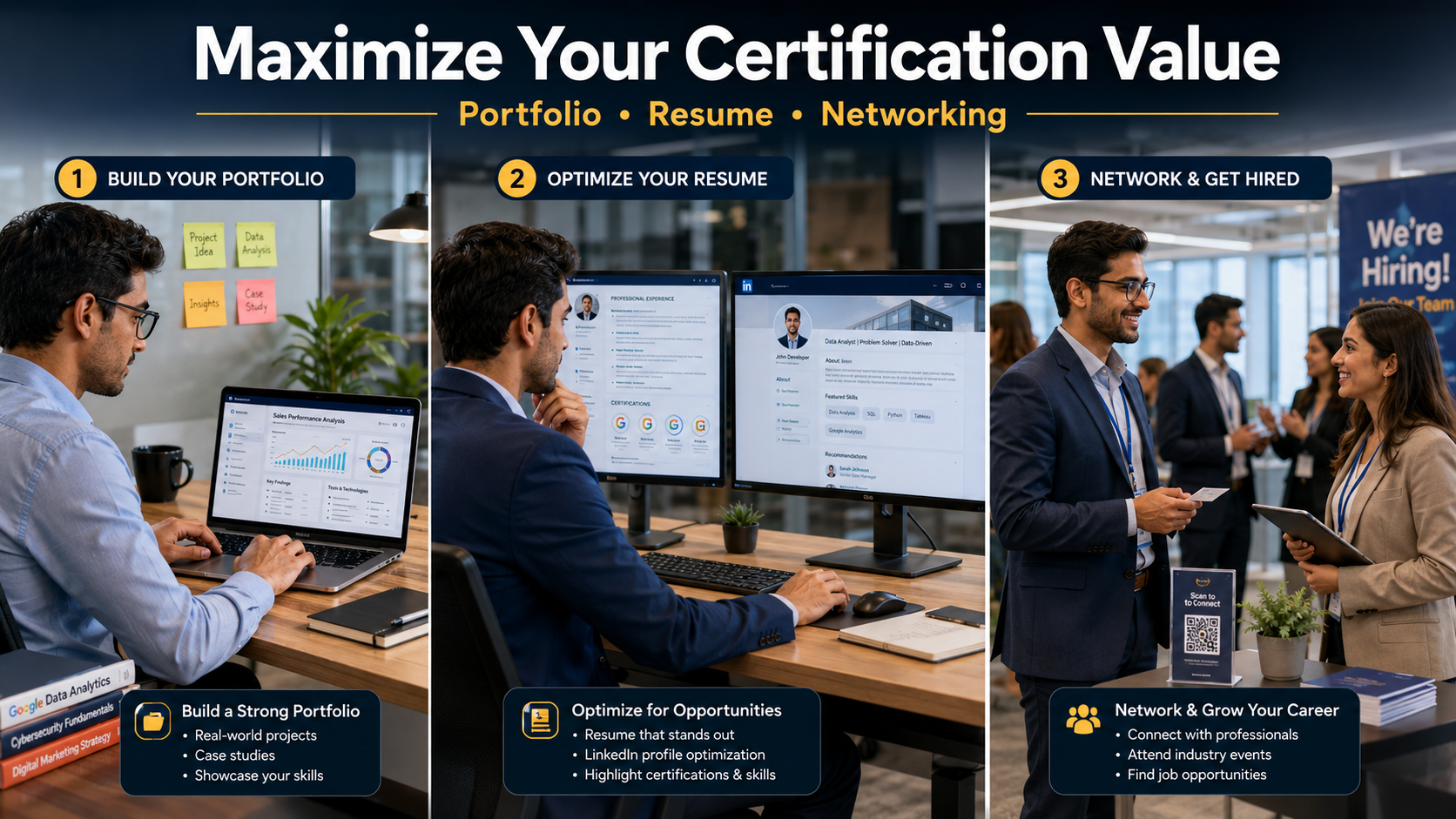
First, focus heavily on the quality of your capstone projects. Instead of copying the exact examples shown in the instructional videos, try to find unique public datasets or build a marketing campaign for a real local business. Showing a recruiter a live, functional dashboard or a comprehensive strategy plan proves that you can handle actual corporate responsibilities from day one.
Furthermore, make sure to optimize your professional profiles once you finish your coursework. Add your new technical skills directly to your resume to help you pass automated applicant screening systems. Display your verified digital credentials prominently on LinkedIn, and connect actively with other alumni working inside your target industry to unlock hidden, unadvertised employment opportunities.
Frequently Asked Questions
Are Google Career Credentials Respected by Hiring Managers?
Yes, hiring managers generally respect these credentials, especially at agile tech startups, mid-sized digital agencies, and modern software companies. Many professionals consider them among the top Google Certifications Worth Doing because they focus on practical, job-ready skills.
The curriculum is developed by Google’s industry experts and reflects real workplace requirements. As a result, employers know that graduates have spent months learning relevant tools and techniques. While some large corporations may still prefer a bachelor’s degree for senior leadership positions, these credentials can help candidates pass initial screening processes and secure entry-level interviews. They also demonstrate self-motivation, commitment to learning, and familiarity with current industry practices.
Another reason these programs are often listed among the Google Certifications Worth Doing is their emphasis on hands-on experience. Rather than focusing heavily on theory, they encourage learners to complete projects that mirror real business challenges. This practical approach helps candidates build portfolios that showcase their abilities to employers.
When combined with a strong portfolio and relevant experience, these certifications can strengthen your job application. The connection to Google’s employer network also provides additional opportunities to connect with potential employers and explore new career paths.
Can I Complete Google Certifications Worth Doing for Free?
You can access these professional training courses for free by utilizing specific financial assistance options. Google hosts its certificates on the Coursera platform, which charges a monthly subscription fee of roughly $39 to $49. However, Coursera offers a robust financial aid application process for every course within the program. If you apply and demonstrate financial need, you can receive full access to the material without paying anything. Additionally, many local community colleges, public libraries, and state university systems offer free access codes to these specific technical programs for their students and local residents.
It is also worth noting that non-profit organizations often sponsor learning cohorts for underrepresented groups in the technology sector. By looking for localized digital literacy programs or state-sponsored workforce development grants, you can find alternative paths to bypass the subscription cost entirely. This democratized access ensures that your financial situation does not prevent you from acquiring elite technical expertise.
How long does it take to finish a complete certification track?
It typically takes three to six months to finish a complete certification track if you study part-time. Most programs consist of multiple individual courses and are designed around a flexible, self-paced schedule. If you dedicate roughly 8 to 10 hours per week to watching the instructional videos, completing the quizzes, and building the lab projects, you will comfortably finish within a six-month window. Some highly motivated students who study full-time manage to accelerate through the curriculum and graduate in under eight weeks, though spreading the work out helps you absorb complex programming principles.
The modular design allows you to fit your studies around full-time employment, childcare responsibilities, or academic schedules. Because there are no rigid deadlines or mandatory live lecture hours, you retain total control over your educational pace. If you happen to struggle with a complex topic like data visualization or cryptography, you can pause, rewatch the foundational materials, and take the necessary time to fully understand the concepts.
Do I need prior coding experience to start the data or security paths?
No, you do not need any prior coding or technical experience to start the data or security paths. Google explicitly designed these foundational programs to accommodate complete beginners and career switchers. The initial modules start with basic, high-level concepts and define every technical term clearly. For example, the data analytics path teaches basic spreadsheet functions before introducing you to data modeling languages like SQL or R. As long as you possess basic computer literacy, a reliable internet connection, and a strong willingness to learn, you can succeed in these courses.
The instructional designers assume you are entering the tech world with a blank slate, so they avoid using confusing jargon without a proper contextual explanation. You will build your skills sequentially, moving from fundamental logic structures to advanced automation processes. This graduate-level scaffolding model transforms overwhelming subjects into small, manageable milestones that anyone can conquer with consistent effort.
What is the average salary for graduates of these entry-level programs?
The average salary for graduates ranges from $50,000 to over $100,000 annually, depending heavily on the specific path you choose and your physical location. According to comprehensive corporate hiring data, entry-level digital marketing specialists often start around $51,000 per year. Meanwhile, entry-level data analysts and junior cybersecurity specialists can command significantly higher starting wages due to the specialized nature of network defense and corporate business intelligence. Your salary will scale up rapidly as you pair your technical badge with real-world workplace experience and advanced industry networking.
Furthermore, your previous professional background can act as a major force multiplier for your earning potential. If you combine past experience in management, healthcare, or retail with these new technical credentials, you become an elite candidate for cross-functional corporate roles. Employers are highly willing to pay a premium for individuals who can instantly translate complex technical data points into actionable everyday business strategies.
Conclusion: Taking the Next Step in Your Career
Choosing the right online program can make career growth much easier. The Google Certifications Worth Doing offer structured learning and practical career support. They are designed for beginners and help learners build job-ready skills. Whether you want to analyze data, secure cloud systems, or manage digital marketing campaigns, these certifications provide a clear learning path.
These programs also reduce many traditional barriers to entering the technology industry. They offer affordable training and flexible learning options for people around the world. This makes them a strong choice for career changers and professionals seeking new opportunities.
Earning a certification is only the first step. Long-term success depends on applying your skills in real-world situations. Build a professional portfolio to showcase your work. Strengthen your LinkedIn profile and expand your professional network. These actions can increase your visibility to employers and improve your job prospects.
Take the next step today. Choose the certification that matches your career goals and start building skills that can support your future success.