
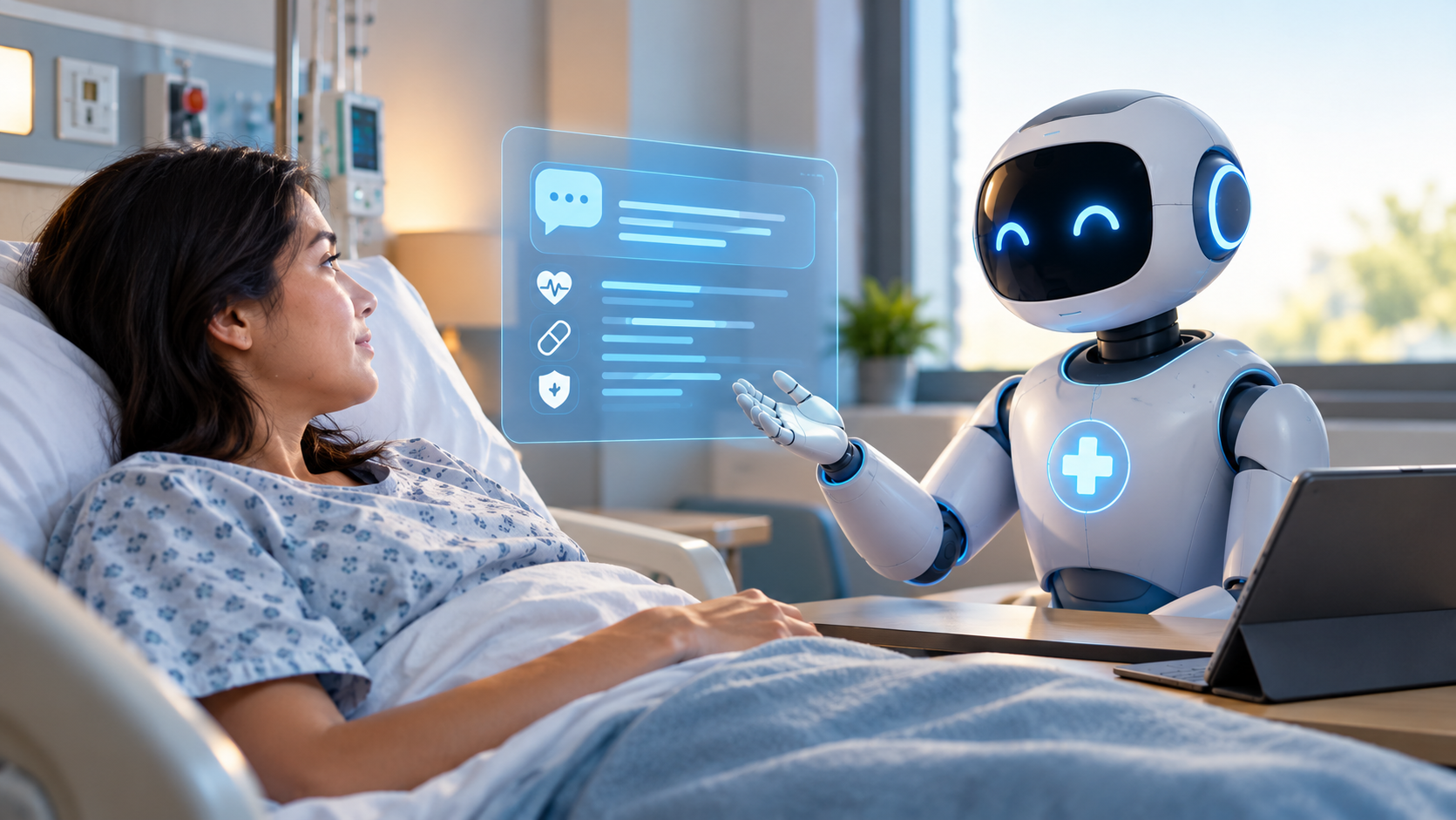
A Complete Guide to Getting Health Advice From AI Chatbots
Getting health advice from AI chatbots has become increasingly common. Millions of people use these tools to find quick answers to health-related questions. Whether you are checking symptoms late at night or trying to understand a medical term, AI can provide information within seconds. However, relying on algorithms for medical guidance comes with important risks.
The World Health Organization (WHO) recognizes the potential of artificial intelligence in healthcare. However, it also emphasizes the importance of safety, transparency, and human oversight. Understanding how AI is advancing healthcare and wellbeing can help readers appreciate its potential benefits while recognizing the risks of using chatbots for medical guidance. AI chatbots can explain medical concepts and help you prepare questions for your doctor. Yet, their answers are not always accurate or appropriate for your situation. This guide explores whether you can trust AI health advice, how popular chatbots compare, and why qualified doctors remain essential.\

Should I Trust AI for Health Advice?
You should approach health advice from AI chatbots with caution. These systems generate responses using patterns learned from data. They do not assess your health in the same way a qualified medical professional does. A chatbot may not know your complete medical history, current medications, allergies, or other important risk factors. As a result, its recommendations may not fit your individual needs.
AI can also sound confident when providing incorrect or incomplete information. This makes it difficult to distinguish reliable guidance from a misleading answer. Even a detailed explanation can contain errors or overlook important symptoms.
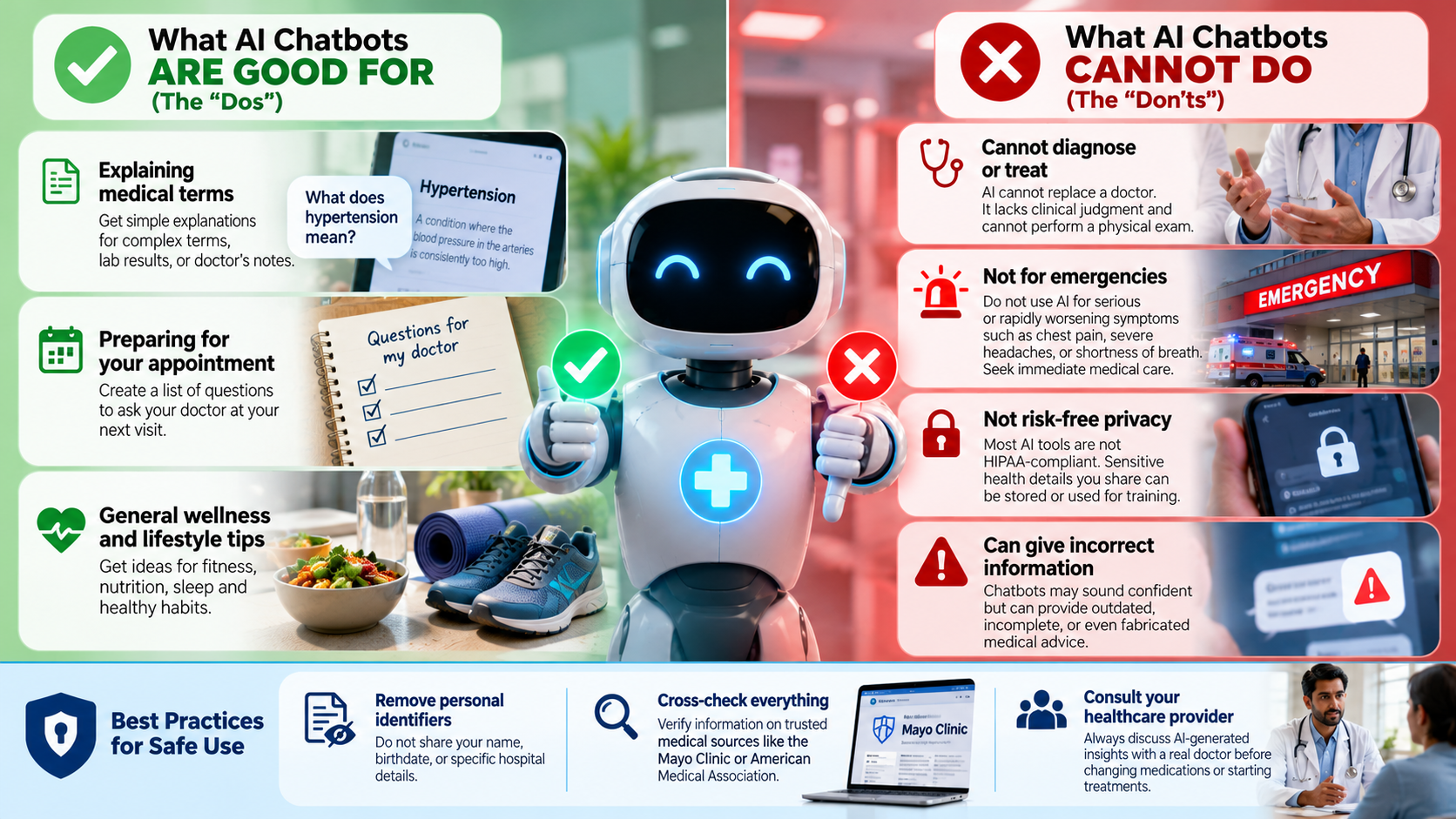
However, AI can still be useful for general health education. You can use it to understand medical terminology, summarize health information, or prepare questions for a consultation. Always verify important claims with a qualified healthcare professional. Never rely on a chatbot alone to diagnose a condition, change medication, or decide whether urgent treatment is necessary.
Understanding the Risks of Automated Medical Guidance
Automated medical guidance has several limitations. Chatbots may overlook rare conditions, misunderstand symptoms, or fail to recognize warning signs. Many illnesses share similar symptoms, so identifying the correct cause often requires more than a written description. A chatbot cannot independently perform a physical examination or order diagnostic tests.
The quality of its answer also depends on the information you provide. Missing details about symptom duration, medication use, or existing conditions can lead to inappropriate suggestions. Even when you provide complete information, the response may still be wrong.
To reduce these risks, consider the following precautions:
- Verify medical claims: Check trusted sources and consult a healthcare professional.
- Protect your privacy: Avoid sharing identifying details or sensitive medical records unnecessarily.
- Recognize emergencies: Seek immediate medical attention for severe or rapidly worsening symptoms.
- Avoid self-treatment decisions: Consult a clinician before changing prescribed medication or starting a treatment.
Use AI as an educational resource, not a replacement for professional medical assessment.
Which AI Chatbot Is Best for Health Advice?
The best AI chatbot for health advice depends on your needs. Popular tools, including ChatGPT and Google Gemini, can explain medical concepts, summarize information, and answer general health questions. However, their performance varies depending on the question, available information, and model version. No general-purpose chatbot should be assumed to provide consistently reliable medical advice.
Some models are better suited to organizing complex information into clear explanations. Others may help users explore current online sources when browsing features are available. These differences can make certain tools more convenient for specific tasks. However, convenience does not guarantee medical accuracy.
When choosing a chatbot, consider whether its answers include credible sources, acknowledge uncertainty, and encourage professional care when appropriate. Check important claims against reputable medical organizations or peer-reviewed research. Be especially careful with medication interactions, treatment recommendations, and symptom interpretation.
The safest chatbot is not necessarily the one that sounds most convincing. Look for transparent sourcing, clear limitations, and responsible guidance. Regardless of the platform, use AI to support your understanding rather than make medical decisions independently.
Evaluating Popular Language Models for Wellness Queries
Different AI models offer different strengths when answering wellness questions. To understand the technology behind these tools, explore what generative AI is and how it works. Some models can summarize dense research papers in simpler language. Others can organize symptoms into a list of questions to discuss with a doctor. Certain tools also offer web search or source links, which may help users investigate medical claims further.
However, these features do not guarantee that an answer is correct. A chatbot may misinterpret a research paper, rely on outdated information, or provide a citation that does not support its claim. Even accurate general information may be unsuitable for a particular patient.
When evaluating AI health tools, consider these factors:
- Source quality: Does the chatbot reference reputable medical organizations or peer-reviewed studies?
- Accuracy: Can you independently verify its medical claims?
- Transparency: Does it acknowledge uncertainty and explain its limitations?
- Privacy: Does the service explain how it handles health-related information?
- Appropriate guidance: Does it recommend professional care when symptoms warrant assessment?
No single model is a foolproof diagnostic tool. Treat its responses as a starting point for further research, not a final medical conclusion.
Can AI Replace MBBS?
No. Artificial intelligence cannot replace the education, clinical training, and professional responsibilities associated with an MBBS degree. Medical students spend years learning anatomy, physiology, pathology, pharmacology, and patient care. Understanding the different types of doctors and their medical specialties also shows how healthcare requires diverse expertise and specialized training. Their education includes supervised clinical experience, where they learn to assess symptoms and respond to unpredictable situations.
AI chatbots can process large amounts of text and identify patterns in information. However, they do not independently examine patients or assume the professional responsibilities of a licensed physician. Their recommendations may also overlook relevant medical history, physical findings, or competing diagnoses.
Doctors combine scientific knowledge with clinical judgment, communication, and accountability. They can assess a patient’s condition, order appropriate investigations, and adjust treatment based on changing circumstances. They also discuss risks and benefits while considering the patient’s preferences.
AI may support medical education and selected clinical tasks. However, its usefulness depends on the application, evidence, and appropriate human oversight. AI should complement qualified healthcare professionals, not replace them. Patients should continue to rely on trained clinicians for diagnosis, treatment planning, and decisions involving their health.
The Limits of Algorithms in Clinical Practice
Algorithms can help organize medical information, but clinical care involves more than processing text. Doctors consider physical examination findings, test results, medical history, and changes in a patient’s condition. They also recognize when symptoms require urgent investigation or when a diagnosis remains uncertain.
AI systems can struggle when information is incomplete, unusual, or contradictory. They may also miss subtle warning signs described indirectly by a patient. Some systems can process different forms of information, including text, images, and audio. Understanding what multimodal AI is and how it works helps explain these capabilities and their limitations. However, these features do not replace a complete clinical assessment.
Communication is another important part of healthcare. Patients may feel anxious, confused, or uncertain about treatment options. Doctors can respond to these concerns, explain alternatives, and support shared decision-making. AI can offer conversational support, but this does not make it equivalent to a clinician-patient relationship.
There are also important questions about accountability, confidentiality, and medical ethics. A healthcare professional must follow applicable standards and take responsibility for clinical decisions. AI tools operate under different legal and professional frameworks.
For these reasons, AI is best used as a supporting tool in healthcare. Human expertise remains essential when decisions require judgment, examination, and individualized care.
Which Is More Accurate for Medical Advice: ChatGPT or Gemini?
Comparing ChatGPT and Google Gemini for medical advice is not straightforward. Both models can explain health concepts, summarize information, and respond to medical questions. However, their accuracy depends on the model version, the complexity of the question, and the information available at the time. Neither should be treated as a consistently reliable source for individual diagnosis or treatment decisions.
ChatGPT can help organize complex explanations into accessible language. Depending on the version and enabled features, it may also help users analyze documents or explore information from external sources. Gemini can integrate with Google’s search capabilities in supported settings, helping users find relevant online material. However, access to current information does not automatically make an answer medically accurate.
Both systems can produce hallucinations, meaning they may generate false or misleading information that sounds convincing. They can also misinterpret research, omit important qualifications, or provide citations that do not support their conclusions.
The safest approach is to compare their answers against trusted medical sources. Check whether the evidence is current, relevant, and consistent with established clinical guidance. For personal health concerns, consult a qualified healthcare professional rather than choosing a chatbot based on its confidence or writing quality.
Analyzing Performance Differences in Clinical Benchmarks
Medical benchmarks help researchers evaluate how AI models perform on selected healthcare tasks. These tests may involve medical examination questions, clinical case descriptions, or tasks requiring interpretation of medical information. Understanding the levels of scientific evidence can also help readers distinguish promising benchmark results from stronger evidence of real-world clinical effectiveness. These assessments can reveal strengths and weaknesses under controlled conditions.
However, benchmark results do not tell the whole story. A model that performs well on standardized questions may still struggle with real patients. Clinical situations often involve incomplete information, multiple health conditions, unusual symptoms, and competing treatment considerations. These factors can make real-world decisions much more difficult.
Results also depend on how researchers design their tests. Different datasets, scoring methods, and model versions can produce different outcomes. A high score on one assessment does not establish that a chatbot is safe for independent diagnosis.
When comparing ChatGPT and Gemini, look for independent evaluations that describe their methods and limitations. Check the publication date and confirm which model versions were tested. Avoid assuming that one model is universally superior based on a single study.
Clinical benchmark scores are useful evidence, but they are not proof of patient-level reliability. Medical advice should always be evaluated in context and verified through appropriate clinical guidance.
Which AI Is Most Medically Accurate?
There is no single AI chatbot that can be confidently identified as the most medically accurate for every health question. Performance changes as companies update their models, tools, and information sources. A system that performs well on medical examination questions may not perform equally well during a real patient consultation.
Specialized medical AI systems may perform well on specific tasks involving biomedical literature, clinical documentation, or structured medical questions. General-purpose chatbots, including ChatGPT and Gemini, can be more flexible when explaining health concepts in everyday language. However, neither type automatically provides safe, individualized medical advice.
Accuracy also depends on the question being asked. Explaining a common medical term is different from evaluating chest pain, identifying a drug interaction, or recommending treatment for a complex condition. The consequences of an incorrect answer vary significantly across these situations.
When assessing medical AI, look beyond confident wording or impressive test scores. Consider the quality of supporting evidence, the system’s limitations, and whether a qualified professional can verify its conclusions.
No chatbot should be relied on as the sole authority for medical diagnosis or treatment. For personal health concerns, professional assessment remains the safer choice.
Specialized Medical Models Versus General Chatbots
Specialized medical AI models are designed for particular healthcare tasks. Depending on their intended use, they may be trained or adapted using biomedical publications, clinical datasets, or other domain-specific information. This can help them perform certain medical research and information-processing tasks more effectively.
General-purpose chatbots serve a broader range of needs. They can explain medical terms, simplify complex documents, and help users prepare questions for healthcare appointments. Their flexibility can make them useful for health education, although their medical knowledge and reliability vary by task.
Neither approach eliminates the risk of incorrect answers. Specialized models may still misinterpret evidence or perform poorly outside their intended setting. General chatbots may provide outdated information, invent details, or fail to account for individual circumstances.
It is also important to distinguish research tools from clinically validated medical systems. A model designed to summarize biomedical literature is not necessarily approved for patient diagnosis. Its intended use, testing, and level of clinical oversight all matter.
When choosing a tool, consider its purpose and evidence of performance rather than its label alone. Verify important findings through reputable medical sources and qualified clinicians.
Ultimately, specialized training can improve performance on certain tasks, but it does not guarantee safe medical decisions. Human oversight remains essential whenever AI-generated information could affect patient care.
Conclusion: Should You Trust Health Advice From AI Chatbots?
Getting health advice from AI chatbots can be a convenient way to understand medical terms, explore general health information, and prepare questions for your doctor. However, convenience does not always guarantee accuracy. Tools like ChatGPT and Google Gemini can provide helpful explanations, but they may also generate misleading information or overlook important symptoms.
The key is to understand the limitations of AI in healthcare. The World Health Organization’s guidance on artificial intelligence in healthcare highlights the importance of ethics, safety, and human oversight when using AI for health-related purposes. Always verify important medical information using trusted sources and consult a qualified healthcare professional before making decisions about diagnosis or treatment.
Ultimately, AI should support your healthcare journey, not replace professional medical advice. By using chatbots responsibly and recognizing when human expertise is necessary, you can benefit from AI while protecting your health and well-being.