
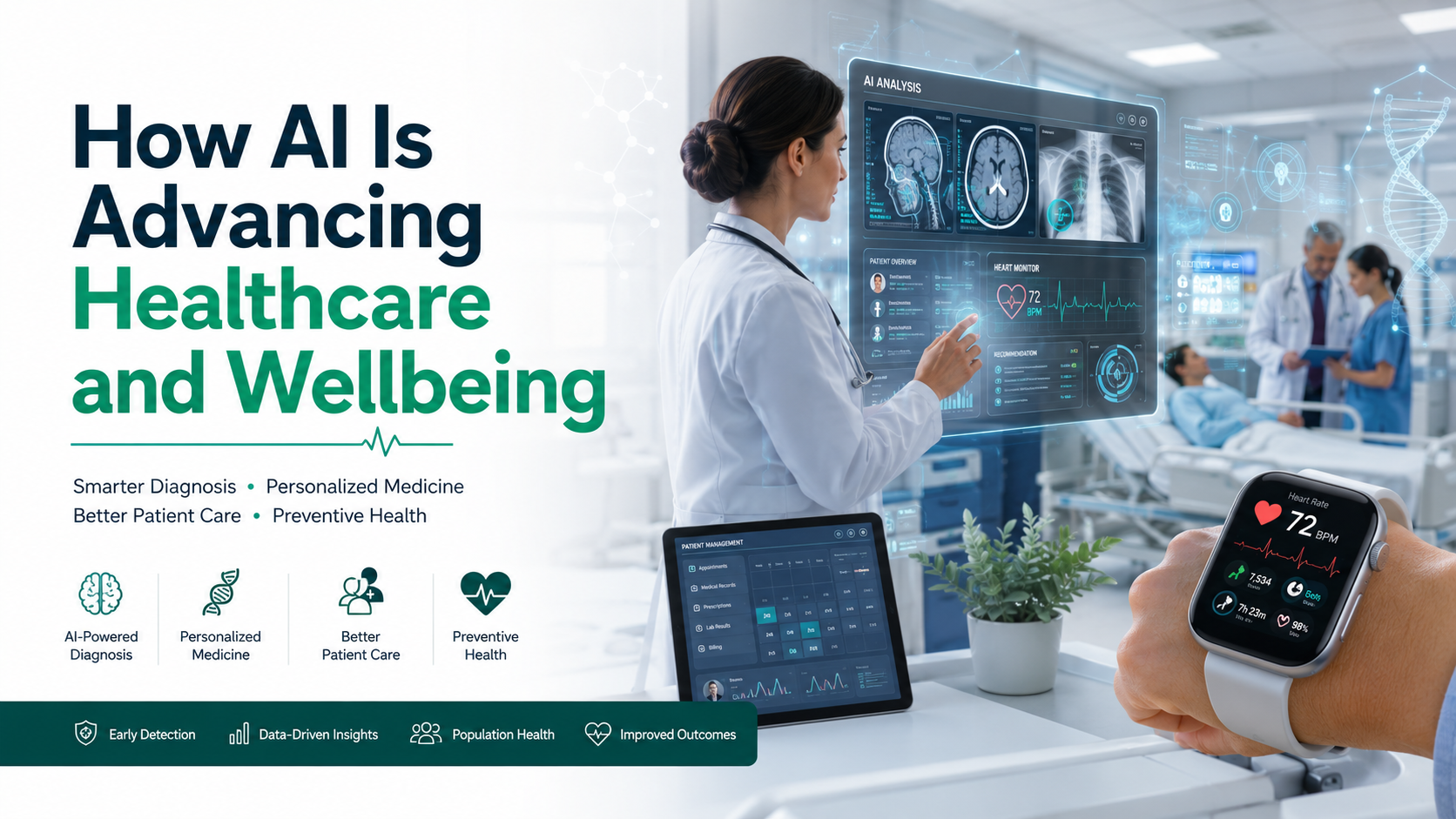
How AI Is Advancing Healthcare and Wellbeing
The healthcare industry is experiencing a major transformation, and AI is advancing healthcare by improving diagnosis, treatment, and patient care. Artificial intelligence is helping doctors analyze medical data faster, identify diseases earlier, and create more personalized treatment plans. According to the World Health Organization’s guidance on digital health and artificial intelligence, responsible AI adoption can support stronger healthcare systems and improve access to medical services. From hospitals to wearable health devices, AI-powered systems are changing how people manage their health and wellbeing.
Today, AI is advancing healthcare by giving medical professionals powerful tools to analyze complex information quickly. Machine learning systems can process large amounts of medical data, helping clinicians detect patterns that may be difficult to identify manually. These technologies support better decision-making and improve patient outcomes.
AI is not designed to replace doctors or healthcare workers. Instead, it works alongside medical experts to improve accuracy, reduce workload, and deliver faster care. By combining human knowledge with advanced algorithms, healthcare systems can become more efficient and accessible.
Understanding the role of AI in modern medicine is important because these technologies affect both clinical care and personal wellness. Hospitals, research centers, and consumer health devices are already using intelligent systems to improve everyday healthcare experiences.
This article explores how AI is advancing healthcare through improved diagnostics, personalized medicine, operational efficiency, and preventative wellness solutions.
Transforming Medical Diagnostics and Early Disease Detection
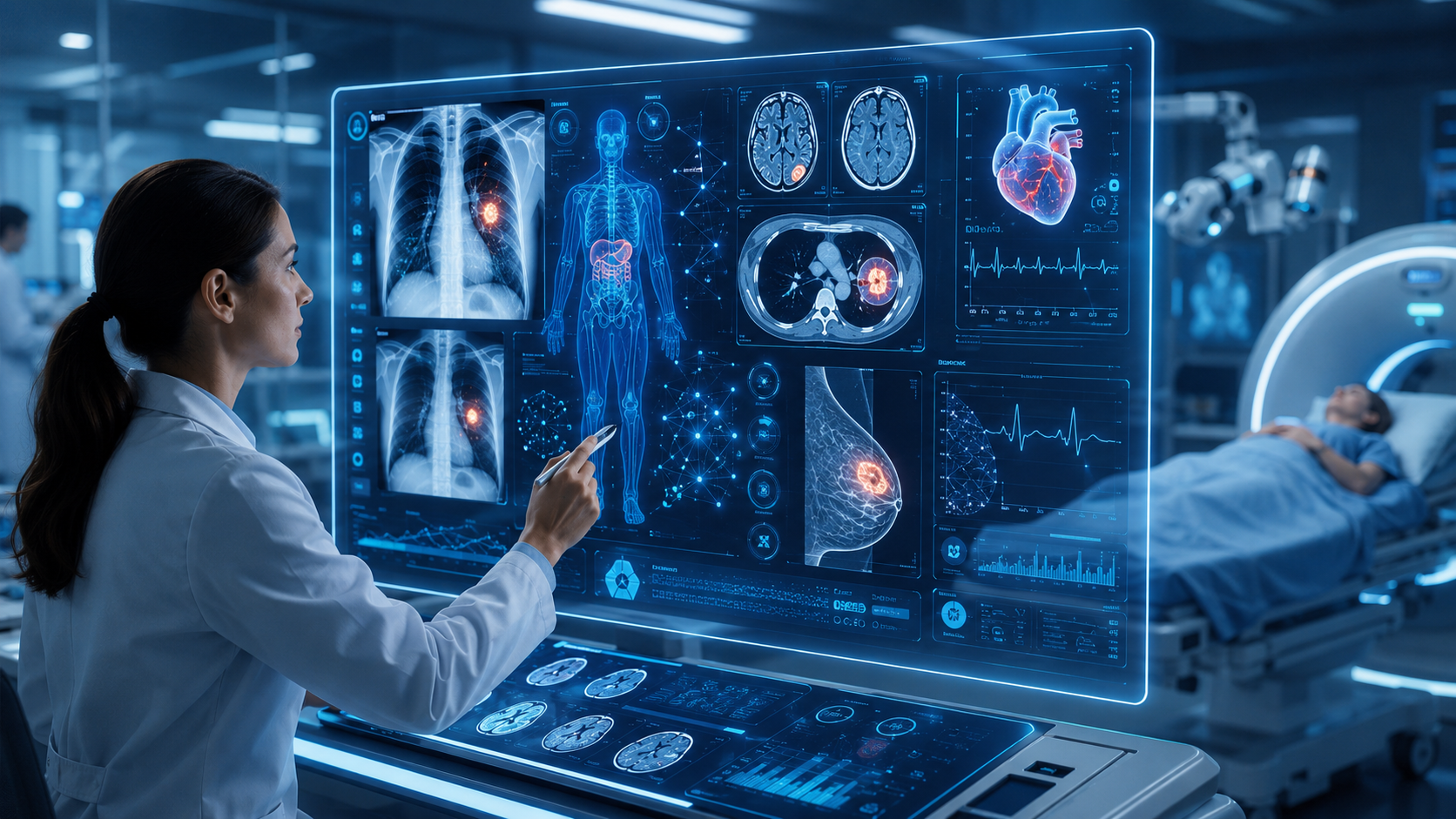

One of the most important ways AI is advancing healthcare is through faster and more accurate medical diagnosis. Traditional diagnostic methods often depend on careful human analysis, which can be time-consuming. AI-powered systems provide additional support by identifying patterns in medical images and patient data.
Machine learning models are trained using millions of healthcare records, including medical scans and clinical information. This allows them to recognize small changes that may indicate early signs of disease.
Medical imaging is one area where these technologies have shown significant potential. AI systems can analyze X-rays, MRIs, and CT scans to help doctors identify abnormalities more efficiently. These tools do not replace medical professionals. Instead, they provide valuable insights that support clinical decisions.
Early detection can improve treatment outcomes by allowing healthcare teams to respond sooner. Conditions that are discovered at an earlier stage often provide more opportunities for effective intervention.
AI Support in Cancer Screening
Cancer treatment often depends on early detection. AI systems are helping specialists review medical images with greater speed and precision.
Advanced algorithms can analyze mammograms, lung scans, and other diagnostic images to identify suspicious patterns. These findings can help doctors investigate potential problems before symptoms become severe.
By supporting earlier screening, AI can help healthcare providers create treatment strategies sooner. This approach may improve patient care while reducing delays in diagnosis.
Predicting Cardiovascular Risks
AI is also transforming cardiovascular care through predictive analytics. Heart-related conditions can develop silently, making early risk identification extremely valuable.
Machine learning systems analyze information such as:
- Electrocardiogram (ECG) results
- Patient medical history
- Lifestyle factors
- Previous health patterns
These insights help healthcare professionals identify patients who may have a higher risk of future cardiac events.
As a result, doctors can recommend preventive measures earlier. This may include lifestyle changes, additional monitoring, or targeted treatments.
AI-driven diagnostics represent a major step toward a more proactive healthcare system. Instead of responding only after illness appears, medical teams can increasingly focus on prevention and early intervention.
How AI Is Advancing Healthcare Through Personalized Medicine
Traditional healthcare often follows general treatment guidelines. However, every person has a unique combination of genetics, lifestyle factors, and health conditions. AI-powered personalized medicine helps healthcare professionals move beyond a one-size-fits-all approach.
AI systems analyze large amounts of patient data, including genetic information, medical history, and treatment responses. These insights help doctors create more precise care plans based on individual needs.
This approach improves treatment decisions and reduces unnecessary trial and error. Patients may receive therapies that better match their specific biological characteristics. As a result, healthcare can become more effective, targeted, and patient-focused.
AI is especially valuable in areas such as cancer treatment, genetic research, and chronic disease management. By continuously analyzing new information, intelligent systems can support doctors in adjusting treatments as patient conditions change.
Some major applications of AI-driven personalized medicine include:
- Genomic sequencing: AI processes genetic data quickly to identify disease-related mutations and health risks.
- Targeted drug therapies: Predictive models help researchers discover medications that may work better for specific patient profiles.
- Adaptive treatment plans: AI tools allow doctors to adjust therapies based on real-time patient responses.
This personalized approach creates a future where treatments are designed around individual patients rather than general populations. As AI technology improves, healthcare providers can deliver more accurate and efficient medical solutions.
Streamlining Hospital Operations and Reducing Healthcare Burnout
AI is transforming healthcare beyond diagnosis and treatment. It is also helping hospitals improve daily operations and reduce administrative pressure on medical professionals.
Healthcare workers often spend significant time completing paperwork, updating electronic health records, and managing schedules. These responsibilities can reduce the time available for direct patient care.
AI-powered automation helps solve these challenges by handling repetitive administrative tasks. Natural language processing (NLP) systems can listen to doctor-patient conversations and create accurate clinical notes automatically.
This allows physicians to spend less time typing and more time communicating with patients. Better workflows can improve both healthcare efficiency and the overall patient experience.
Hospitals also use predictive analytics to improve resource management. AI systems can analyze patient flow, staff availability, and facility capacity.
These tools help medical organizations:
- Improve emergency room management
- Predict patient admission patterns
- Optimize hospital bed availability
- Create more efficient staff schedules
During busy periods, these improvements help hospitals respond more effectively. AI allows healthcare teams to make faster decisions while maintaining quality care.
By reducing administrative workloads, artificial intelligence supports healthcare workers and helps create more sustainable medical environments.
Empowering Consumer Wellbeing Through Preventative Healthcare
AI is not limited to hospitals and medical facilities. It is also changing how people manage their everyday health. Smart devices and wellness applications now use artificial intelligence to monitor personal health information continuously.
Wearable technology, such as smartwatches and fitness trackers, collects important biometric data. These devices can measure heart rate, sleep patterns, activity levels, and blood oxygen levels.
AI algorithms analyze this information to identify unusual changes. When a device detects possible health concerns, it can provide alerts and encourage users to seek professional advice.
This creates a shift from reactive healthcare to preventative healthcare. Instead of waiting for symptoms to appear, people can monitor their health patterns and make earlier lifestyle adjustments.
The preventative health cycle works through three main stages:
Continuous Tracking → Anomaly Detection → AI-Based Health Guidance

(Biometric Sensors)   (Algorithm Review)   (Personal Alerts)
AI-powered wellness tools can help users:
- Understand daily health trends
- Monitor fitness progress
- Detect unusual body signals
- Make informed lifestyle decisions
For example, some smart devices can identify irregular heart rhythms by analyzing pulse patterns over time. These alerts do not replace medical diagnosis, but they can encourage timely consultations with healthcare professionals.
As consumer health technology continues to develop, AI will play a larger role in helping individuals take control of their wellbeing.
Frequently Asked Questions About How AI Is Advancing Healthcare
How is AI currently used in everyday medical practice?
AI is already supporting many areas of modern healthcare. Medical professionals use artificial intelligence to analyze diagnostic images, manage patient information, and monitor health conditions.
Radiologists use AI systems to review medical scans, including mammograms and chest X-rays. These tools help identify unusual patterns that may require further examination.
Doctors also use natural language processing (NLP) tools to simplify documentation. These systems can create clinical notes from patient conversations, reducing the amount of manual paperwork.
In critical care settings, AI-powered monitoring systems analyze patient data continuously. They can detect changes in vital signs and alert healthcare teams before serious complications develop.
Common uses of AI in medical practice include:
- Medical image analysis
- Patient monitoring
- Clinical documentation
- Risk prediction
- Treatment support
AI works as a support system for healthcare professionals. It improves efficiency while allowing doctors and nurses to focus more on patient care.
Can AI replace human doctors and nurses in hospitals?
No, AI cannot replace human doctors and nurses. Healthcare requires qualities that technology cannot fully provide, including empathy, communication, ethical judgment, and hands-on decision-making.
Artificial intelligence is designed to support medical professionals rather than remove the human role from healthcare. AI systems can process large amounts of information quickly, but doctors remain responsible for understanding patient needs and making final treatment decisions.
For example, an AI tool may identify a possible concern in a medical scan. However, a healthcare professional must evaluate the result within the patient’s complete medical context.
The future of healthcare depends on human-AI collaboration. AI can handle repetitive tasks, analyze data, and provide recommendations. Medical professionals can then focus on compassionate care, complex decisions, and patient relationships.
This partnership allows healthcare systems to become more accurate, efficient, and patient-centered.
How does artificial intelligence protect patient data privacy?
Protecting patient information is one of the most important challenges in healthcare technology. AI systems use several security methods to maintain data privacy and prevent unauthorized access.
Healthcare organizations use encryption, identity protection methods, and secure data management systems to safeguard sensitive medical records.
One advanced approach is federated learning. This method allows AI models to learn from information stored across multiple healthcare institutions without transferring complete patient records to a central location.
Healthcare providers also follow strict privacy regulations and security standards. These requirements help ensure that personal health information remains confidential.
Important privacy measures include:
- Data encryption
- Patient information anonymization
- Secure digital systems
- Controlled access permissions
As AI adoption increases, healthcare organizations must continue improving cybersecurity practices. Responsible data management is essential for building trust in AI-powered healthcare solutions.
What are the main benefits of AI in drug discovery?
AI is transforming drug discovery by helping researchers develop new treatments faster and more efficiently. Traditional drug development often requires years of laboratory testing and significant financial investment.
Artificial intelligence can analyze millions of chemical compounds and predict which ones may have the greatest potential against specific diseases.
Researchers use AI models to simulate interactions between molecules and biological targets. This process helps identify promising drug candidates earlier.
Key benefits of AI in drug discovery include:
- Faster identification of potential medicines
- Reduced research costs
- Improved analysis of complex biological data
- Greater support for rare disease research
By reducing the amount of manual testing required, AI helps scientists focus on the most promising options. This can shorten development timelines and accelerate medical breakthroughs.
Although AI does not replace laboratory research, it provides researchers with powerful tools to make better decisions during the discovery process.
How do wearable devices use machine learning for wellbeing?
Wearable devices use machine learning to analyze health information collected through built-in sensors. These devices track personal data, including heart rate, sleep patterns, movement, and other biometric signals.
AI algorithms study this information to understand an individual’s normal health patterns. When the system detects unusual changes, it can provide alerts or recommendations.
For example, some smartwatches can identify irregular heart rhythms by analyzing pulse patterns. These notifications may encourage users to contact healthcare professionals for further evaluation.
Wearable AI technology helps people become more aware of their daily health habits. It supports preventative care by identifying possible concerns before they become more serious.
However, wearable devices are not a replacement for professional medical advice. They are designed to support healthier decisions and encourage early attention when potential problems appear.
Conclusion: The Future of AI in Healthcare and Wellbeing
The growth of artificial intelligence represents a major transformation in modern medicine. Across hospitals, research centers, and consumer health platforms, AI is advancing healthcare by improving diagnosis, personalizing treatments, and supporting preventative care.
AI-powered systems help medical professionals analyze complex information, identify risks earlier, and create more effective treatment strategies. They also improve hospital operations by reducing administrative workloads and optimizing daily processes.
Alongside medical innovation, individuals can also improve their overall wellbeing by building healthier digital habits. Practices such as managing screen time and creating balance with technology through a digital detox for better mental health can support a more balanced approach to personal wellness.
By adopting artificial intelligence responsibly, healthcare providers can create systems that are more accurate, efficient, and accessible. These innovations will help move healthcare toward a future focused on prevention, personalization, and improved wellbeing for people worldwide.