
Groundwater Conservation and Aquifers: The Complete Guide
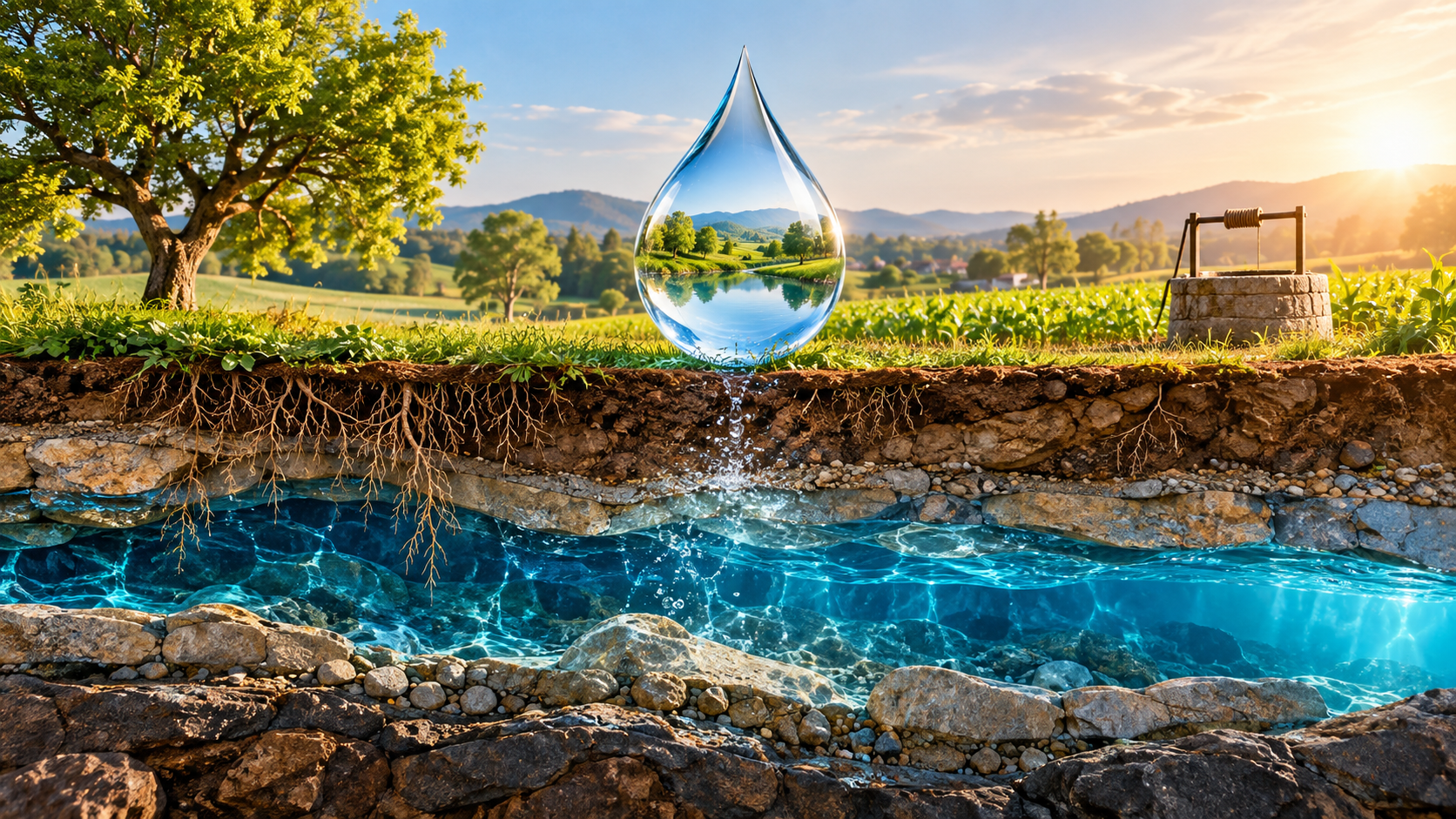
Clean, fresh water often exists out of sight beneath our feet. Understanding groundwater conservation and aquifers is essential because these underground resources support ecosystems, agriculture, and communities worldwide. According to the United States Geological Survey, groundwater supplies nearly half of the world’s drinking water.
However, intensive pumping and prolonged drought can place severe pressure on these hidden water resources. When groundwater extraction exceeds natural recharge, wells can dry up. Water quality can also decline, while excessive pumping may contribute to land subsidence.
Groundwater also acts as an important buffer during droughts and other climate-related stresses. When rivers, lakes, and reservoirs decline, communities often depend more heavily on underground water supplies.
Protecting these resources requires a clear understanding of how aquifers work. This guide explains the four main types of aquifers and the difference between groundwater and aquifers. It also covers seven practical water conservation methods, groundwater protection strategies, and ten important uses of groundwater.
What are the four types of aquifers?
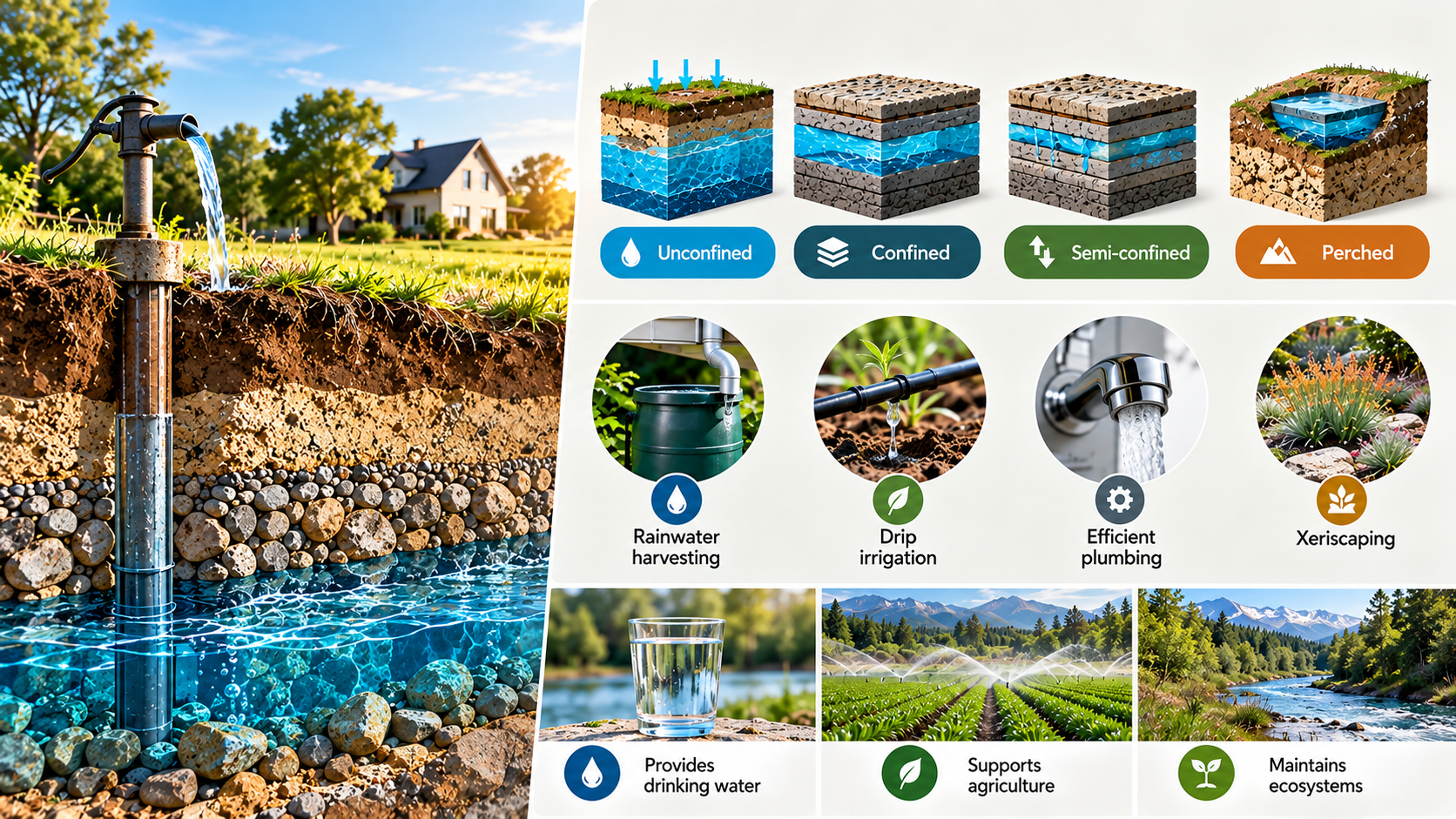
Geologists generally describe aquifers according to their geological structure, permeability, and relationship with surrounding layers. The four commonly discussed types are unconfined, confined, semi-confined, and perched aquifers.
Unconfined aquifers have a permeable upper boundary connected to the ground surface. Rainwater can move downward through soil and rock and recharge the aquifer. Their water levels can therefore respond relatively quickly to rainfall and drought.
Confined aquifers sit between layers of low-permeability material. These layers restrict water movement and can create pressure within the aquifer. Wells drilled into confined systems may experience artesian conditions when pressure pushes water upward.
Semi-confined, or leaky, aquifers contain low-permeability layers that allow water to move slowly between geological formations. Perched aquifers are smaller, localized water bodies that form above the main water table.
Understanding these structures is essential for effective groundwater conservation and aquifer management.
What are 7 methods of water conservation?
Effective water conservation combines household, agricultural, industrial, and municipal practices. Seven practical methods can reduce freshwater demand and help protect groundwater resources.
- Rainwater harvesting: Collecting roof runoff through rainwater harvesting systems for homes can provide water for gardens, cleaning, and other suitable uses.
- Drip irrigation: Delivering water directly to plant roots through efficient garden irrigation reduces evaporation and unnecessary runoff.
- Efficient plumbing: Low-flow faucets, showerheads, and toilets can reduce household water consumption.
- Xeriscaping: Native and drought-tolerant plants generally require less irrigation than traditional lawns.
- Graywater reuse: Properly treated household wastewater can sometimes support landscape irrigation.
- Leak detection: Finding and repairing damaged pipes prevents substantial amounts of treated water from being wasted.
- Industrial water metering: Monitoring industrial consumption can encourage facilities to reduce waste and reuse water.
These methods can work together rather than separately. Households can reduce daily demand, while farmers improve irrigation efficiency. Cities can upgrade infrastructure, and industries can monitor water use more closely. Together, these actions support groundwater conservation and aquifer sustainability.
What is the difference between an aquifer and ground water?
Groundwater and aquifers are not the same thing. Groundwater is the water found below Earth’s surface. It occupies spaces within soil, sediment, and rock formations.
An aquifer is a geological formation that can store and transmit enough groundwater to support wells or other water supplies. Aquifers may consist of permeable sand, gravel, porous rock, or fractured bedrock.
A simple comparison can make the difference clearer. Think of an aquifer as the underground storage structure. Groundwater is the water stored within that structure.
Not every underground formation qualifies as a productive aquifer. Some rocks and sediments may contain water but release it too slowly for practical use. The formation must have suitable porosity and permeability to store and transmit usable quantities of water.
This distinction matters for groundwater management. Scientists need to understand both the water and the geological formation containing it. They use this information to estimate storage, recharge, movement, and sustainable pumping rates.
Understanding the difference helps communities make better decisions about groundwater conservation and aquifer protection.
Hydrogeologic Porosity and Storage Capacity
Porosity describes the amount of empty space within soil or rock. These spaces can contain groundwater. However, having many pores does not always mean that water can move easily through a formation.
Effective porosity refers to connected pore spaces that contribute to groundwater movement. This distinction is important when scientists evaluate aquifer storage and well productivity.
Clay provides a useful example. Clay can contain considerable amounts of water because it has many small pore spaces. However, those spaces are poorly connected, so water usually moves through clay very slowly.
Sand and gravel often provide better conditions for groundwater movement. Their larger, connected spaces can allow water to flow toward wells more efficiently.
Fractured rocks can also form productive aquifers. In these systems, groundwater moves mainly through cracks and fractures rather than through large pore spaces.
Hydrogeologists study these characteristics when evaluating groundwater supplies. They examine porosity, permeability, fractures, recharge, and water movement to understand how much water an aquifer can provide without causing long-term depletion.
How can we conserve groundwater?
Groundwater conservation requires reducing unnecessary extraction while protecting areas where water naturally enters the ground. Building water security and resilience requires several approaches working together to achieve this goal.
Artificial recharge can help replenish depleted groundwater systems in suitable locations. Some projects use treated stormwater or other appropriate water sources to increase underground storage.
Water authorities can also monitor groundwater wells with meters and other measurement systems. Tracking extraction helps identify excessive pumping and supports better water management decisions.
Agricultural practices can contribute as well. Conservation tillage and cover crops can improve soil structure and reduce runoff. These practices may allow more rainfall to infiltrate the soil and support climate change food security.
Protecting natural recharge areas is equally important. Wetlands, open land, and permeable soils can help rainfall move underground. Excessive development can cover these areas with concrete and asphalt, reducing infiltration.
Groundwater quality also requires protection. Preventing pollutants from entering recharge zones helps maintain safe underground water supplies.
Together, recharge, responsible pumping, land protection, efficient water use, and pollution prevention form the foundation of long-term groundwater conservation.
Implementing Permeable Urban Infrastructure
Cities often replace natural ground surfaces with roads, parking areas, buildings, and sidewalks. These hard surfaces prevent rainfall from infiltrating the soil and can increase stormwater runoff.
Permeable urban infrastructure offers one way to address this problem. Porous pavement allows some rainfall to pass through its surface. Gravel areas and properly designed drainage systems can also encourage infiltration.
Green infrastructure provides another approach. Bioswales and rain gardens can capture stormwater and allow it to move gradually through soil. These systems can also reduce the volume of water entering storm drains during heavy rainfall.
However, permeable infrastructure must be designed carefully. Contaminated runoff should not be directed toward vulnerable groundwater supplies. Local soil conditions and groundwater depth also influence whether infiltration is appropriate.
When properly planned, urban infiltration projects can support groundwater recharge while reducing surface runoff. They can also complement wider stormwater management programs.
Cities should therefore consider groundwater conditions before installing infiltration systems. Good design can help balance flood management, water conservation, and aquifer protection.
What are 10 uses of groundwater?
Groundwater supports many essential activities across households, agriculture, industry, and natural ecosystems. Its uses vary by region, but ten important applications include:
- Drinking water: Many communities depend on groundwater for household water supplies.
- Crop irrigation: Farmers use wells to irrigate grains, fruits, vegetables, and other crops.
- Livestock: Farms may use groundwater to provide drinking water for animals.
- Industrial processes: Factories can use groundwater for cooling, cleaning, and manufacturing.
- Mining: Groundwater may support mineral processing and other mining operations.
- Geothermal energy: Some geothermal systems use underground heat and water for energy and heating.
- Food and beverage production: Groundwater can be used in producing certain foods and beverages.
- Rural water supplies: Private wells can provide water to homes outside municipal networks.
- Thermal springs: Groundwater contributes to naturally heated springs in suitable geological regions.
- Ecosystem support: Groundwater can maintain streamflow, wetlands, and other ecosystems during dry periods.
These uses show why groundwater conservation and aquifer management matter. Excessive extraction can affect both human water supplies and natural ecosystems.
Sustainable management requires communities to understand how much groundwater is available and how quickly local aquifers recharge. Responsible use can help maintain these resources for future needs.
Frequently Asked Questions
What happens when an aquifer completely runs dry?
When an aquifer runs completely dry, groundwater supplies decline, wells may stop producing water, and land can subside as underground sediments compact. Groundwater conservation and aquifers management helps reduce these risks.
How quickly does rain recharge deep underground reservoirs?
Rainwater may recharge shallow aquifers within days or months, while deep confined aquifers can take decades, centuries, or longer. Groundwater conservation and aquifers planning considers these major differences in recharge rates.
Why is groundwater often cleaner than surface lake water?
Groundwater can be cleaner because soil, sand, and rock filter many sediments and microorganisms as water moves underground. However, groundwater conservation and aquifers protection is essential because underground contamination can persist for years.
Conclusion
Understanding groundwater conservation and aquifers is essential for maintaining global food supplies, steady economic growth, and thriving natural habitats. These underground geological marvels do not provide an infinite supply of fresh water. Excessive consumption, uncontrolled extraction, and surface contamination threaten reserves that took thousands of years to accumulate. By embracing responsible extraction metrics, upgrading to water-efficient agricultural tools, and maintaining permeable soil horizons, society can protect these critical assets. Every homeowner, commercial grower, and urban planner shares responsibility for preserving our subterranean legacy. Adopting simple preservation routines at home and backing regional watershed protection plans today secures resilient, clean drinking reserves for future generations tomorrow.