
Which Soil Is Best for Agriculture and Crop Farming Success?
Understanding which soil is best for agriculture is essential for improving crop yields and maintaining long-term soil health. Healthy soil provides plants with essential nutrients, water, oxygen, and structural support. However, different soil types vary in fertility, drainage, moisture retention, and suitability for specific crops.
According to the Food and Agriculture Organization (FAO), healthy soils play a vital role in food security and sustainable agriculture. Choosing the right soil helps farmers grow healthier crops while managing water and nutrients more efficiently.
In this guide, we will explore whether black soil is good for farming, which soil types are less suitable for agriculture, and why loamy soil is often preferred. We will also compare black soil and red soil, identify the best soil for crop farming, and explain the main disadvantages of black soil.

Is black soil good for agriculture?
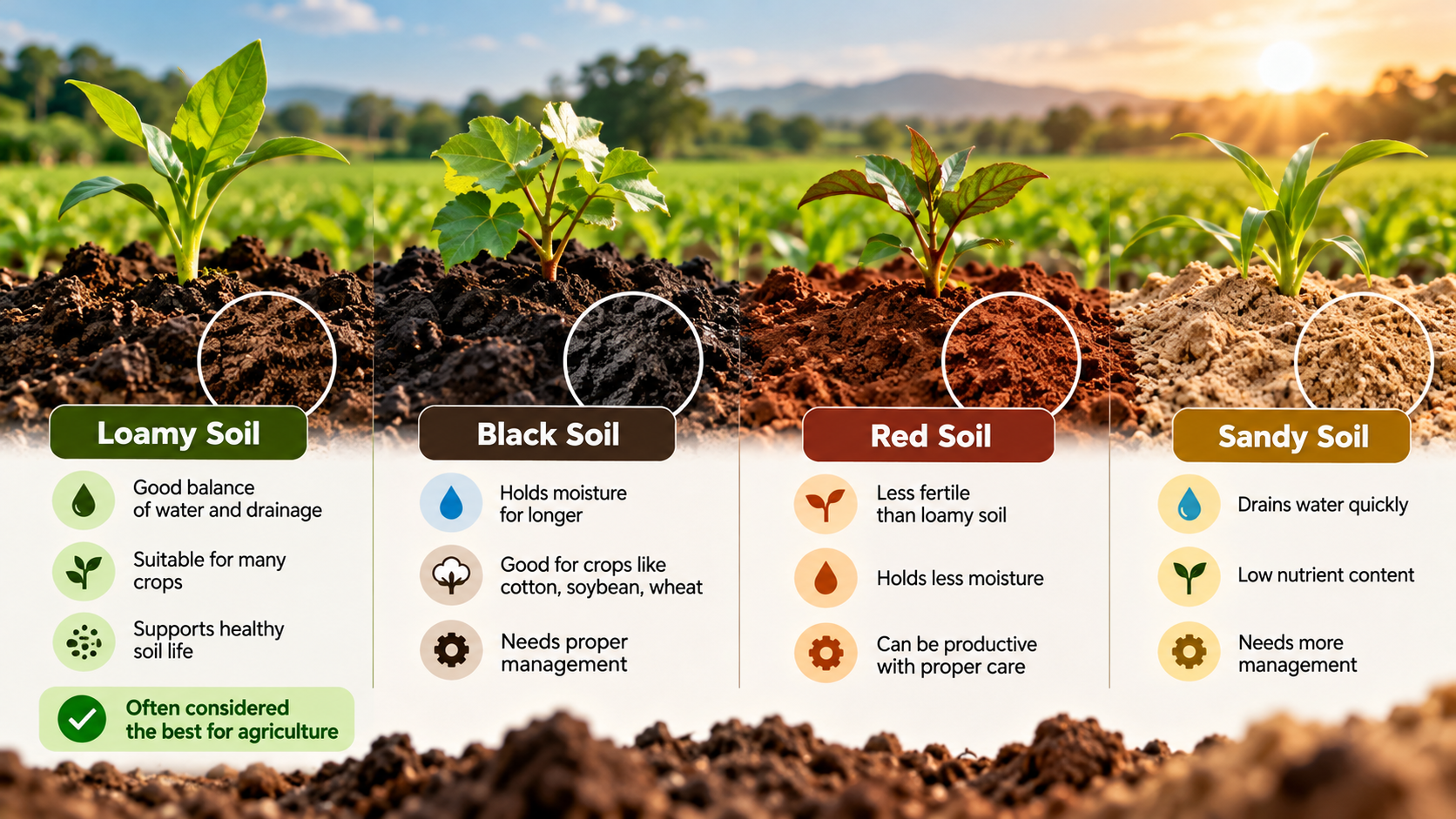
Yes, black soil is good for agriculture, particularly for crops that benefit from high moisture retention. Also known as regur or black cotton soil, it contains substantial amounts of clay. This gives it the ability to hold water for extended periods, making it valuable in areas with seasonal rainfall and dry spells.
Black soil is commonly associated with cotton cultivation. Depending on its fertility, drainage, and local climate, it can also support crops such as soybeans, wheat, and certain pulses. It often contains minerals such as calcium, magnesium, and potassium, although nutrient levels vary by location. Farmers should test their soil before deciding which fertilizers to apply.
Despite these benefits, black soil requires careful management. It becomes sticky when wet and hard when dry, making cultivation difficult under unsuitable conditions. Proper drainage, suitable tillage practices, and balanced nutrient management help maintain productivity. When managed correctly, black soil can support productive and sustainable farming.
Excellent Moisture Retention Properties
One of the most valuable characteristics of black soil is its excellent moisture retention capacity. Its high clay content allows it to store water for longer than many sandy soils. This can help crops survive short periods of limited rainfall and reduce the need for frequent irrigation under suitable conditions. Improving farm-level water management also contributes to building water security and resilience in areas affected by changing rainfall patterns.
Black soil is particularly useful in regions where rainfall is seasonal. The stored moisture can support plant growth between rain events, helping farmers manage changing weather conditions. However, the amount of water available to plants depends on the soil’s structure, depth, and drainage.
Excessive moisture can also become a problem. Poorly drained black soil may restrict oxygen around plant roots and delay field operations. Farmers should therefore manage irrigation carefully and avoid working the soil when it is too wet. Combining appropriate drainage with good soil management helps improve crop performance and preserve soil structure.
Which soil is not good for agriculture?
No single soil type is unsuitable for every crop, but some soils require more management to support productive agriculture. Sandy soil and highly weathered laterite soil can present challenges when they lack sufficient nutrients, organic matter, or moisture.
Sandy soil contains relatively large particles and drains water quickly. As a result, water and dissolved nutrients may move below the root zone before plants can absorb them. Crops grown in nutrient-poor sandy soil may experience moisture stress, especially during hot weather. Adding compost, incorporating suitable organic matter, and applying fertilizer according to soil tests can improve its productivity.
Laterite soil may also have limited natural fertility because of intense weathering and nutrient leaching. However, its agricultural potential varies considerably by location and management. Liming may help correct excessive acidity, while organic amendments can improve soil structure and nutrient availability.
Farmers should assess soil pH, texture, organic matter, and nutrient levels before choosing crops. Understanding the role of the three main nutrients in commercial fertilizers can help farmers address nutrient deficiencies and select appropriate fertilizers. With suitable irrigation, fertilization, and soil conservation practices, many challenging soils can support successful farming. The key is matching management practices to the soil’s specific limitations.
Why is loamy soil best for agriculture?
Loamy soil is often considered the best soil for agriculture because it offers a useful balance of sand, silt, and clay. This combination supports good drainage while retaining enough moisture for plant growth. It also provides suitable conditions for roots to spread and access oxygen. Effective water management and groundwater conservation and aquifer protection can further support sustainable agricultural practices.
Unlike very sandy soil, loam can hold water and nutrients effectively. Unlike heavy clay soil, it generally allows excess water to drain more easily. These characteristics make it suitable for many crops, including vegetables, cereals, fruit trees, and flowering plants.
Loamy soil can also support beneficial microorganisms when it contains sufficient organic matter. These organisms help break down organic materials and contribute to nutrient cycling. Understanding ecosystems and biodiversity helps explain why these organisms are important for maintaining ecological balance. Adding compost, maintaining soil cover, and rotating crops can help preserve its fertility and structure.
However, not all loamy soils are equally productive. Soil pH, nutrient levels, drainage, and organic matter content still influence crop growth. Farmers should test their soil and make improvements based on the results. With proper management, loamy soil provides a versatile growing environment for a wide range of agricultural crops.
What is the best type of soil for crop farming?
For most general farming purposes, well-managed loamy soil is one of the best choices for crop production. Its balanced texture helps retain moisture, provide drainage, and maintain suitable conditions for root development. These properties support healthy growth across many agricultural crops.
Loamy soil can benefit vegetables, grains, fruit trees, and several other plants. Its structure often makes seed planting and root development easier than in extremely sandy or compacted clay soils. It can also warm up reasonably well during spring, depending on local weather and soil conditions.
Nevertheless, the best soil for crop farming depends on the crop being grown. Cotton, for example, can perform well in suitable black clay soils, while crops that require excellent drainage may benefit from lighter soils. Soil pH, climate, irrigation, and nutrient availability also influence crop performance. These factors also matter when addressing the impacts of climate change on food security and protecting agricultural productivity.
Farmers can improve productivity by testing soil regularly, adding organic matter, rotating crops, and applying fertilizers according to actual nutrient requirements. Maintaining suitable drainage and preventing erosion are equally important. Farmers can also explore climate-smart agriculture practices to improve agricultural resilience while managing environmental challenges. Rather than relying on soil type alone, farmers should select crops that match their soil conditions and use appropriate management practices.
Which soil is better, black or red?
Whether black soil or red soil is better for agriculture depends on the crop, climate, and condition of the land. Both soil types can support productive farming when their limitations are managed properly. Their main differences involve moisture retention, drainage, mineral composition, and natural fertility.
Black soil generally contains more clay and holds moisture effectively. It is particularly suitable for cotton and can support other crops, including wheat and pulses, depending on local conditions. However, heavy clay can create drainage problems and make field preparation difficult when the soil is wet.
Red soil gets its characteristic colour mainly from iron oxides. It often has a lighter texture than black soil and may provide better drainage. However, many red soils have low organic matter or limited nutrient availability, so they may require compost, fertilizers, or other amendments. Groundnuts and millets can grow well in suitable red soils, depending on rainfall and soil conditions.
The following comparison highlights their main differences:
- Moisture retention: Black soil generally holds more water than sandy or lighter red soils.
- Drainage: Red soil often drains more readily, while heavy black soil may drain slowly.
- Fertility: Both vary in nutrient content and may require soil amendments.
- Suitable crops: Black soil is commonly associated with cotton, while red soil can support crops such as groundnuts and millets.
Ultimately, the better option is the soil that matches the crop’s requirements and local growing conditions.
What Is the Disadvantage of Black Soil?
The main disadvantages of black soil include:
- Sticky when wet: Black soil becomes sticky during rainy weather, making cultivation difficult.
- Develops deep cracks: During dry weather, black soil shrinks and forms wide cracks that may disturb plant roots.
- Poor drainage: Heavy black soil may retain excess water, reducing oxygen availability around plant roots.
- Difficult to cultivate: Agricultural machinery may become stuck in wet soil, delaying farming operations.
- Risk of soil compaction: Working the soil when it is too wet can damage its structure and reduce productivity.
- Delayed field preparation: Farmers must carefully time tillage to maintain suitable soil conditions.
Despite these disadvantages, proper drainage, timely cultivation, and suitable crop selection can help farmers maintain soil health and achieve good crop yields.
FAQ SECTION
Is sandy soil ever useful for agriculture?
Yes, sandy soil can be useful for agriculture if specific root crops like carrots, potatoes, and peanuts are cultivated. These plants actually prefer the loose, friable texture of sandy earth because it allows tubers to expand without physical resistance. Additionally, sandy soils warm up much faster in the spring than heavy clay, allowing for earlier planting dates in cooler regions. However, farmers must implement frequent, controlled irrigation and regular fertilizer applications to compensate for rapid nutrient leaching and poor moisture retention.
How can farmers improve poor agricultural soil?
Farmers can dramatically improve poor agricultural soil by regularly incorporating organic matter such as compost, well-rotted manure, or green cover crops. Organic amendments enhance soil structure, boost beneficial microbial populations, and significantly increase water-retention capacity in sandy or depleted earth. Applying agricultural lime can also correct overly acidic soil pH levels, unlocking locked nutrients for plant uptake. Furthermore, adopting no-till or reduced-tillage practices prevents erosion and preserves natural soil layers over successive growing seasons.
Why is soil pH important for crop farming?
Soil pH directly dictates nutrient availability, microbial activity, and overall chemical reactions within the agricultural growing medium. When pH levels drop too low or rise too high, essential macronutrients like phosphorus and nitrogen become chemically bound to soil particles, making them inaccessible to roots. Most agricultural crops thrive in a slightly acidic to neutral pH range between six and seven. Maintaining the correct pH ensures that plants absorb fertilizers efficiently, minimizing waste and maximizing healthy harvest yields.
What role do earthworms play in agricultural soil?
Earthworms play a vital role in agricultural soil by tunneling through the earth, which naturally enhances aeration and water infiltration rates. As they consume organic matter, they excrete nutrient-rich castings that supply vital nitrogen, phosphorus, and potassium directly to plant roots. Their burrowing activity creates stable biopores that allow tender plant roots to penetrate deeper layers of earth with ease. Encouraging earthworm populations through organic management practices is a proven method for maintaining long-term soil health.
Conclusion
Choosing which soil is best for agriculture is the cornerstone of successful, sustainable crop production and farm management. Throughout this guide, we explored how balanced loamy earth provides the ultimate growing environment, while understanding the unique traits of black and red soils helps optimize farming choices. By recognizing the limitations of poor or difficult earth types, farmers can apply targeted amendments to enhance fertility and water retention. Prioritizing soil health not only boosts seasonal harvest yields but also protects natural resources for future generations. Applying these insights into your agricultural practices will ensure long-term productivity and resilient crop growth.