
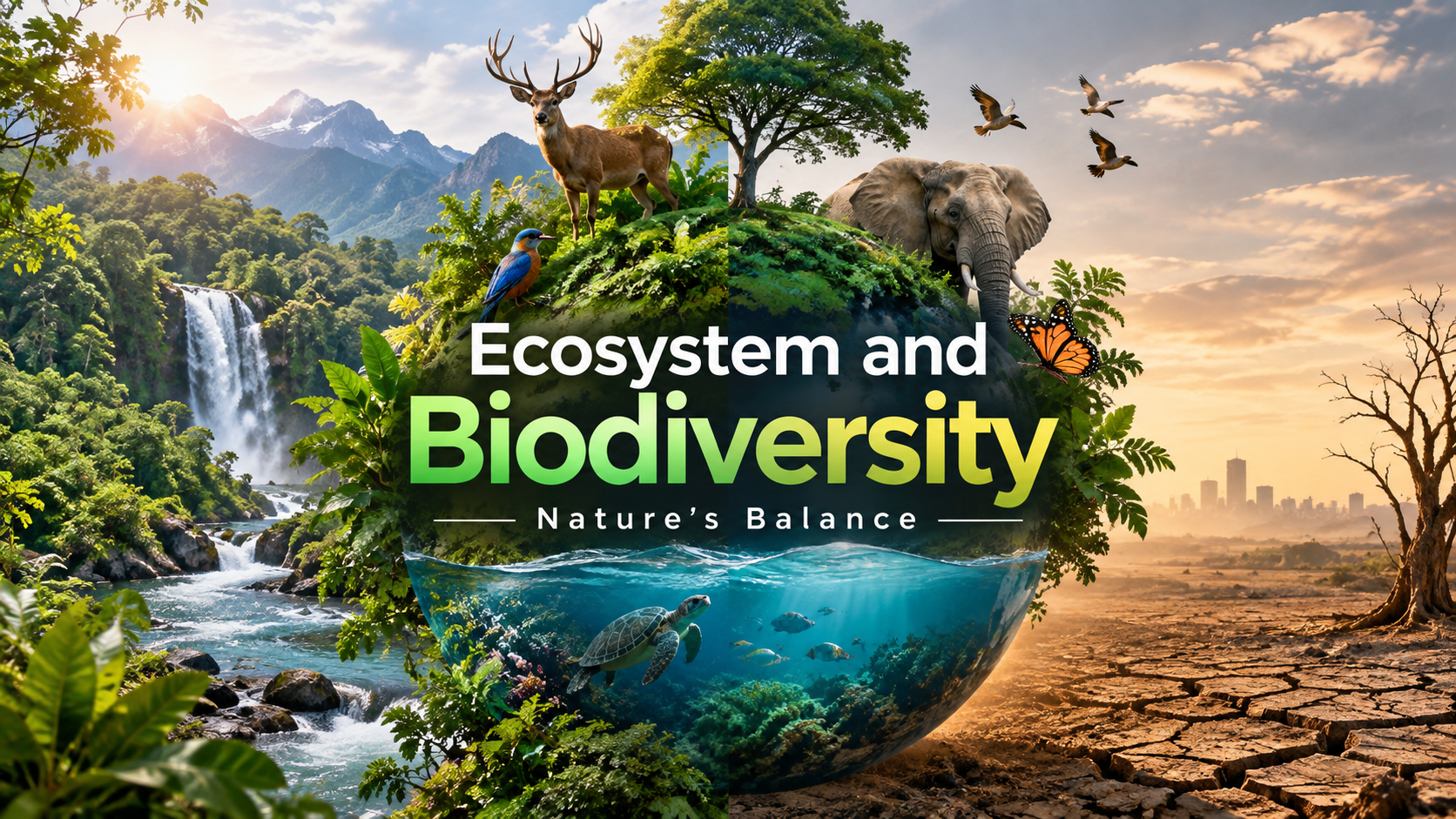
Ecosystem and Biodiversity Nature’s Balance: A Complete Guide
Every living organism on Earth belongs to an intricate web of life. Understanding ecosystem and biodiversity nature’s balance shows how plants, animals, microorganisms, and physical landscapes interact to sustain our planet. Healthy natural systems provide clean air, fresh water, fertile soils, and reliable food supplies for human survival. According to the United Nations Environment Programme, healthy ecosystems are essential for human well-being and sustainable development. When biological variety flourishes, habitats can resist environmental shocks more effectively.
However, habitat destruction, pollution, resource use, and climate shifts continue to disrupt these vital relationships. Protecting the environment requires a clear understanding of basic ecological processes. Many people struggle to see how individual species connect with wider planetary systems.
This guide answers four essential questions about the natural world. You will learn how biodiversity supports ecological balance across different environments. We also examine seven major ecosystem types and their defining features. Next, we explore seven broad principles that describe how nature operates. Finally, you will learn the technical difference between an ecosystem and biodiversity. Together, these concepts explain why nature’s balance depends on both biological variety and healthy environmental conditions.

How does biodiversity balance an ecosystem?
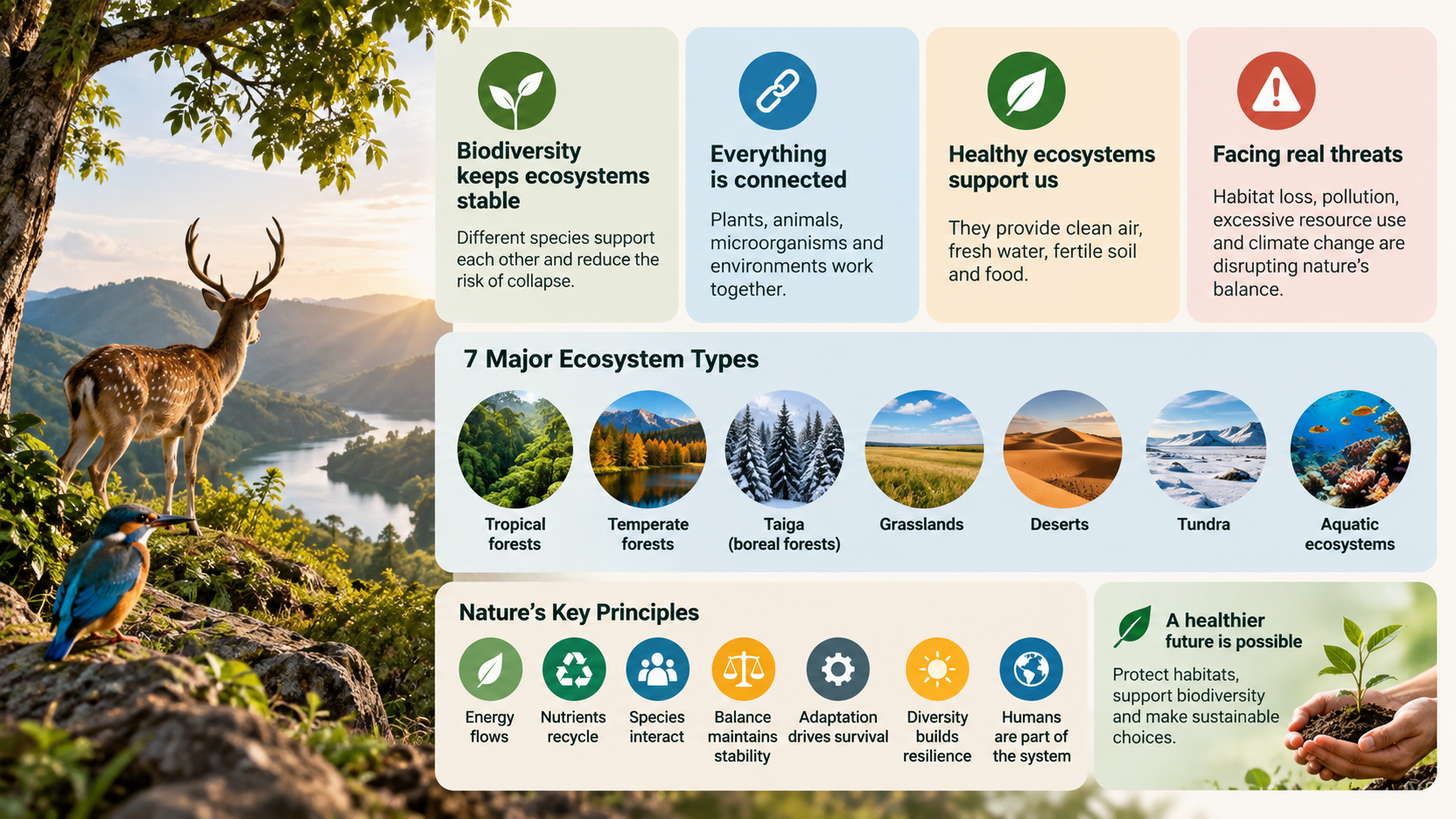
Biodiversity helps stabilize ecosystems by creating overlapping functional roles. These roles can reduce the impact of sudden environmental disturbances. When several species perform similar functions, one declining species may not cause immediate ecosystem failure. Pollination, seed dispersal, decomposition, and pest control are common examples.
Higher genetic and species diversity can also strengthen food webs and nutrient cycling. For example, predators can control herbivore populations and reduce excessive pressure on vegetation. Plants then have better opportunities to grow and protect the soil.
This relationship shows why ecosystem and biodiversity nature’s balance depends on biological variety. Diverse communities often have more ways to respond to disease, drought, pests, and changing conditions. Different species can also respond differently to environmental stress.
However, biodiversity does not guarantee that an ecosystem will remain stable. Severe habitat loss or pollution can overwhelm natural resilience. Human activities can also remove several species performing similar ecological roles.
Protecting habitats therefore supports both biodiversity and ecosystem function. Healthy populations, genetic variation, and connected habitats give natural systems more opportunities to recover after disturbances.
Functional Redundancy in Resilient Food Webs
Ecological resilience can increase when different organisms share overlapping ecological responsibilities. Scientists often describe this concept as functional redundancy. It means several species can perform similar roles within an ecosystem. If one species declines, another may partly maintain the same ecological function.
For example, a plant community may depend on several pollinators. If one pollinator population falls, other insects or birds may continue transferring pollen. The effect can help maintain plant reproduction and reduce wider disruption.
Functional redundancy can also occur among decomposers, predators, seed dispersers, and herbivores. These interactions support nutrient cycling and energy movement through food webs. They can also reduce the risk of sudden ecological breakdown.
However, redundancy has limits. Species with similar functions may still respond differently to drought, disease, pollution, or temperature changes. Severe environmental pressure can affect several species simultaneously.
Maintaining diverse communities therefore remains important for ecosystem resilience. Protecting native species and their habitats preserves different ecological roles. This diversity can help ecosystems continue functioning when individual populations experience stress or decline.
What are the 7 types of ecosystems?
Ecologists commonly describe major ecosystems according to their physical conditions, dominant organisms, and ecological processes.
The seven broad ecosystem categories are:
- Tropical forests
- Temperate forests
- Taiga or boreal forests
- Grasslands
- Deserts
- Tundra
- Aquatic ecosystems
Aquatic ecosystems include both freshwater and marine environments, such as rivers, lakes, wetlands, coral reefs, and oceans, making the water cycle process relevant to understanding how these environments function.
Tropical rainforests have warm conditions, high rainfall, and exceptionally rich biological communities. Temperate forests experience seasonal changes and support diverse trees, plants, fungi, and animals. Taiga, also called boreal forest, occurs across colder northern regions and contains many evergreen conifers.
Grasslands receive enough rainfall to support grasses but generally not dense forests. Deserts experience very low precipitation, so plants and animals rely on specialized water-saving adaptations. Tundra occurs in polar and high-altitude regions where cold temperatures limit plant growth.
Aquatic ecosystems include freshwater and marine environments. Lakes, rivers, streams, wetlands, coral reefs, and oceans all support distinct biological communities.
These categories help explain how ecosystem structure changes with temperature, rainfall, soil, water availability, and geography. In reality, boundaries can overlap, and ecosystems often contain smaller habitats with their own unique conditions.
Marine and Freshwater Aquatic Systems
Aquatic ecosystems cover a vast portion of Earth’s surface and contain highly diverse biological communities. They include both marine ecosystems and freshwater ecosystems. Oceans, coral reefs, estuaries, and coastal habitats form major marine environments.
Marine systems support complex food webs involving plankton, fish, seabirds, marine mammals, and many other organisms. Oceans also influence climate by absorbing and moving heat around the planet. Marine organisms contribute to important carbon and nutrient cycles.
Freshwater systems include rivers, streams, lakes, ponds, and wetlands. Although they occupy a much smaller area than oceans, they support many specialized species. Freshwater habitats also provide essential resources for wildlife and human communities.
Wetlands can store water, reduce flooding, and support breeding grounds for numerous species. Rivers transport nutrients and connect different habitats across landscapes, highlighting the importance of building water security and resilience.
Human activities can threaten aquatic ecosystems through pollution, habitat modification, excessive water use, and climate change. Protecting water quality and natural habitats through green technology innovations can therefore support biodiversity and ecosystem health.
Maintaining healthy aquatic systems also benefits people. Clean water, fisheries, flood protection, and climate regulation all depend partly on functioning aquatic environments.
What are the 7 principles of nature?
Seven broad principles can help explain recurring patterns within natural systems. The first is cyclicity, because water and many nutrients continually move through natural cycles. The second is diversity, which can provide different responses to environmental pressures.
The third principle is interconnection. Organisms and physical conditions interact through energy flows, food webs, nutrient exchanges, and habitat relationships. The fourth involves balance and self-regulation. Natural feedback processes can influence population sizes and resource availability, including those associated with wave vs tidal power and other energy systems.
The fifth principle is change. Evolution, disturbance, migration, and ecological succession continually reshape natural communities. The sixth is limitation. Resources such as water, nutrients, space, and food remain finite, creating ecological limits.
The sixth is limitation. Resources such as water, nutrients, space, and food remain finite, creating ecological limits, which makes nuclear energy and other energy sources relevant to broader discussions about resource use and sustainability.
These principles are broad ecological ideas rather than strict universal laws. Natural systems vary greatly across regions and conditions. Still, they provide a useful framework for understanding nature’s balance.
Recognizing these patterns can also guide sustainable practices. Human systems that respect resource limits, natural cycles, and ecological connections may reduce pressure on surrounding ecosystems.
Dynamic Balance Through Feedback Mechanisms
Natural systems contain feedback mechanisms that can influence population sizes and resource availability. These mechanisms can help ecosystems adjust when conditions change. Predator-prey relationships provide one familiar example.
When prey populations increase, predators may gain greater access to food. Higher food availability can support predator reproduction and survival. As predator numbers increase, prey populations may later decline. Reduced prey availability can then limit predator growth.
Similar feedback occurs in plant communities and nutrient cycles. Changes in vegetation can influence soil conditions, water availability, and herbivore populations. These interactions can create patterns that help maintain ecological stability.
However, natural feedback does not mean ecosystems always return to their original condition. Severe disturbances can push systems beyond their ability to recover. Deforestation, invasive species, pollution, and rapid climate changes can disrupt established relationships.
Feedback mechanisms therefore support ecosystem balance, but they operate within environmental limits. Healthy ecosystems generally have multiple interacting processes that influence one another.
Understanding these relationships helps explain why removing one species can affect many others. It also shows why protecting habitats and ecological connections matters for long-term environmental resilience.
What is the difference between ecosystem and biodiversity?
The main difference between an ecosystem and biodiversity concerns their scope. An ecosystem describes a functional system that includes living organisms and their physical surroundings. Biodiversity describes the variety of life within a particular area or across the planet.
An ecosystem includes biotic components such as plants, animals, fungi, and microorganisms. It also includes abiotic factors such as sunlight, water, soil, temperature, minerals, and climate. These components interact through energy flows and nutrient cycles.
Biodiversity focuses specifically on biological variation. Scientists can consider genetic diversity, species diversity, and ecosystem diversity when studying biodiversity. It therefore measures variety rather than describing the entire ecological system.
A simple comparison can make the distinction clearer. Think of an ecosystem as a complete house and its surroundings. Biodiversity represents the different living residents and the variety among them.
Both concepts are closely connected. Biodiversity can influence ecosystem functions, while environmental conditions shape which organisms can survive. Losing species can therefore alter food webs, nutrient cycling, and other ecological processes.
Understanding this difference helps explain nature’s balance more clearly. An ecosystem provides the interacting framework, while biodiversity describes the variety of life participating within that framework.
Structural Framework Versus Biological Variety
An architectural comparison can clarify the relationship between ecosystems and biodiversity. An ecosystem provides the broader framework in which organisms live and interact. It includes living communities, physical conditions, energy flows, and nutrient cycles.
Biodiversity describes the variety of organisms and biological characteristics found within that system. This variety can exist at several levels. Genetic diversity refers to differences within species. Species diversity describes differences among species. Ecosystem diversity considers variation among different habitats and ecological systems.
For example, a forest ecosystem contains trees, insects, birds, fungi, mammals, soil, water, sunlight, and climate conditions. The biodiversity of that forest reflects the variety of organisms and genetic characteristics it contains.
The two concepts should not be treated as interchangeable. You can measure biodiversity within an ecosystem, but biodiversity does not describe every physical or functional part of that ecosystem.
This distinction is important when discussing ecosystem health and biodiversity conservation. Protecting biological variety requires protecting the environmental conditions that support it.
Healthy ecosystems provide habitat, resources, and ecological interactions. Diverse biological communities, in turn, contribute to processes that keep those ecosystems functioning. Together, they form an important foundation for nature’s balance.
Frequently Asked Questions
Why is genetic diversity vital within an ecosystem?
Genetic diversity provides species with variations that improve their ability to survive diseases, climate changes, and environmental stress, supporting ecosystem and biodiversity nature’s balance.
What is a keystone species in ecology?
A keystone species has a major influence on its environment despite its population size. Its presence helps maintain ecosystem and biodiversity nature’s balance.
How does habitat fragmentation disrupt nature’s balance?
Habitat fragmentation separates natural areas into smaller isolated patches, restricting wildlife movement and genetic exchange while disrupting ecosystem and biodiversity nature’s balance.
Can degraded ecosystems recover their natural biodiversity?
Yes, degraded ecosystems can recover through restoration, pollution control, native species reintroduction, and habitat protection, gradually rebuilding ecosystem and biodiversity nature’s balance.
Conclusion
Maintaining ecosystem and biodiversity nature’s balance is necessary for global ecological stability and human survival. Biological variety ensures that forests, wetlands, and oceans remain resilient against climatic disruptions and habitat loss. Recognizing the seven distinct habitat types and nature’s core principles highlights how interconnected every living community truly is on Earth.
Moreover, distinguishing between an overall ecological system and its biological variety sharpens our approach to scientific conservation. Protecting individual species means very little if we fail to safeguard the abiotic soils, watersheds, and physical terrains that sustain them. Sustainable land management requires proactive stewardship rather than passive observation.
Every community choice impacts regional biodiversity and habitat health. You can champion sustainable agriculture, support local wildlife corridors, and reduce your daily environmental footprint to protect vital natural networks. Embracing these ecological realities empowers us to leave a thriving, balanced, and resilient planet for future generations.