The Power of Watching Your Teaching on Replay
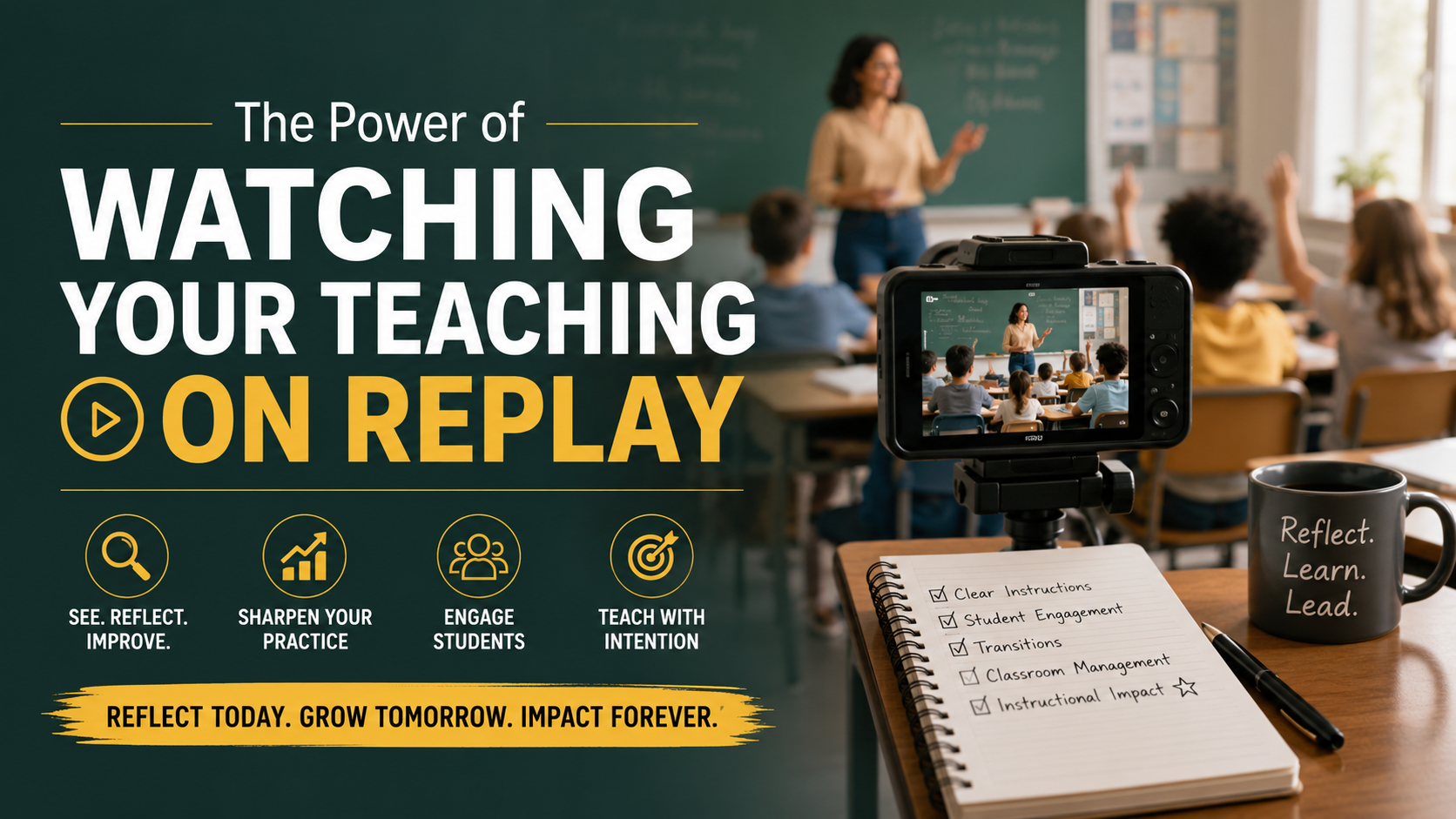
Every single day, teachers step into the classroom to manage intricate lesson plans. They handle unpredictable student behavior and make split-second choices. It is a fast-paced, high-pressure environment. Reflecting deeply on your own performance in real time is nearly impossible. This is precisely why watching your teaching on replay stands out as a highly transformative tool. By recording your live lessons, you gain an entirely objective lens into your daily classroom dynamics. Elite educational organizations like the National Board for Professional Teaching Standards consistently emphasize video reflection. This practice helps educators analyze their instructional choices, critique their delivery methods, and improve student outcomes.
Reviewing your own recorded lessons allows you to see critical structural flaws. You catch student disengagement and subtle environmental shifts that you completely missed in the heat of the moment. It shifts your professional growth journey away from subjective guesswork. Instead, you rely on concrete, evidence-based self-improvement. When you sit down to watch yourself teach, your perspective shifts. You transition from being a participant in the chaos to a deliberate scientist studying the environment. In this article, we will deeply explore how this recording practice builds unshakeable confidence. It sharpens your everyday pedagogy and helps you become a significantly more intentional, impactful, and empathetic educator.
Why Watching Your Teaching on Replay Changes Everything
When you stand in front of a class, your human brain operates at maximum capacity. You deliver complex content and check individual students for understanding. You also manage behavior and stick to a tight schedule. Consequently, you rely heavily on your immediate perception of the lesson. Historical data proves this perception is not always accurate. Our brains naturally remember the loudest student or the single worst moment. This bias completely distorts our overall view of the instructional period.
Breaking Through Blind Spots
We all possess deeply ingrained instructional blind spots. These flaws remain completely invisible to us without technological intervention. You might walk out of a lecture thinking you gave clear, beautifully structured instructions. However, a quick video replay might show a room full of confused or checked-out students. Similarly, you might honestly believe you call on every student equally. Yet, the video reveals you subconsciously favor the right side of the classroom. Watching your teaching on replay completely removes this emotional bias. It presents the hard, undeniable facts of your classroom environment. This reality forces you to confront your habits with grace and a growth mindset.
The Power of Objective Evidence
Video evidence does not lie. It never softens the truth; it acts as an impartial mirror. The recording allows you to pause, rewind, fast-forward, and micro-analyze interactions. You can study the tiny exchanges between yourself and your students. Instead of driving home with a vague sense of dread, you get answers. You can pinpoint the exact sixty-second window where an activity transition went off track. This immense level of clarity turns vague, exhausting frustration into highly actionable, concrete steps. You can seamlessly implement these new adjustments during your very next class period.
Improving Classroom Performance by Reviewing Lesson Tape
Classroom management is universally recognized as a difficult skill to master. It drains teachers emotionally regardless of grade level. Fortunately, video reflection provides an excellent, highly personalized blueprint for success. It helps improve student behavior, optimize physical space, and tighten structural routines. When teachers observe themselves, they make surprising discoveries. Student disruptions are rarely random events. Instead, they are almost always directly linked to specific gaps in the classroom’s structural design or pacing.
Here is the comparison data converted into a clean, scannable Markdown table format for your article:
| What You Think Happened | What the Video Replay Actually Shows |
| “Students took too long to get to work.” | The teacher took three minutes to pass out papers without giving explicit directions. |
| “The class was incredibly disruptive today.” | Only three students were making noise, while the rest of the class waited patiently. |
When analyzing your classroom management techniques on video, you must actively force yourself to focus. Look at specific structural elements rather than general impressions.
-
Pacing and Transitions: Watch exactly how long it takes students to move between distinct activities. Identify the precise moments where you waste time or instructions break down.
-
Teacher Proximity and Movement: Notice exactly where you stand throughout the hour. Are you glued securely to the whiteboard and projector? Or do you move strategically around the room to keep disengaged students on task?
-
Reaction vs. Proaction: Closely observe your behavioral management style. Are you accurately anticipating potential behavioral disruptions? Or do you simply react to them with frustration after they interrupt the flow of the lesson?
Enhancing Instructional Delivery and Student Engagement
An amazing, beautifully formatted lesson plan means absolutely nothing if the real-world delivery falls flat. By evaluating your recording with a critical eye, you can perform a thorough audit. You quickly see if your students are truly, deeply engaged with the material. True engagement leaves physical clues that a camera captures effortlessly. This data allows you to see past superficial compliance, which often masks academic boredom.
Auditing Your Questioning Techniques
Take detailed notes on the exact types of questions you ask your students. Are they mostly simple, low-level yes-or-no questions? Or are you actively pushing your students toward higher-order critical thinking and analysis? More importantly, use the video timestamp to strictly analyze your wait time. Educators often feel incredibly uncomfortable with classroom silence. Because of this, they inadvertently answer their own questions far too quickly. A video replay shows you reality. It tracks exactly how many seconds you give students to process complex information before stepping in to speak.
Measuring Genuine Engagement
Active intellectual participation looks radically different than mere behavioral compliance. A student sitting perfectly quietly with a pencil in hand might look engaged from a distance. However, a closer look at the video replay might reveal a different story. You might notice their eyes are completely glazed over in a daydream. Check your recordings to track peer interactions. See if your students actively talk to each other about the academic content through structured dialogue. Note whether you perform 90% of the talking while they passively absorb information.
Practical Steps to Try Watching Your Teaching on Replay
Starting a video reflection practice can feel incredibly intimidating, vulnerable, and uncomfortable. Almost nobody likes seeing their own movements at first. Hearing the sound of your own voice played back on a camera causes natural anxiety. However, setting up a simple, non-intrusive system changes your perspective. It quickly eases performance anxiety and maximizes professional development benefits. Best of all, it works without adding hours to your daily workload.
Step 1: Keep the Setup Simple
You absolutely do not need expensive, professional-grade camera equipment. You can skip external microphones and complex software entirely. A standard smartphone or a school-issued tablet works perfectly. Place it securely on a cheap, lightweight tripod to capture high-quality data. Simply set the camera in a far back corner of the room. From there, it easily captures your physical movements and the majority of the students’ desks.
Step 2: Focus on One Goal at a Time
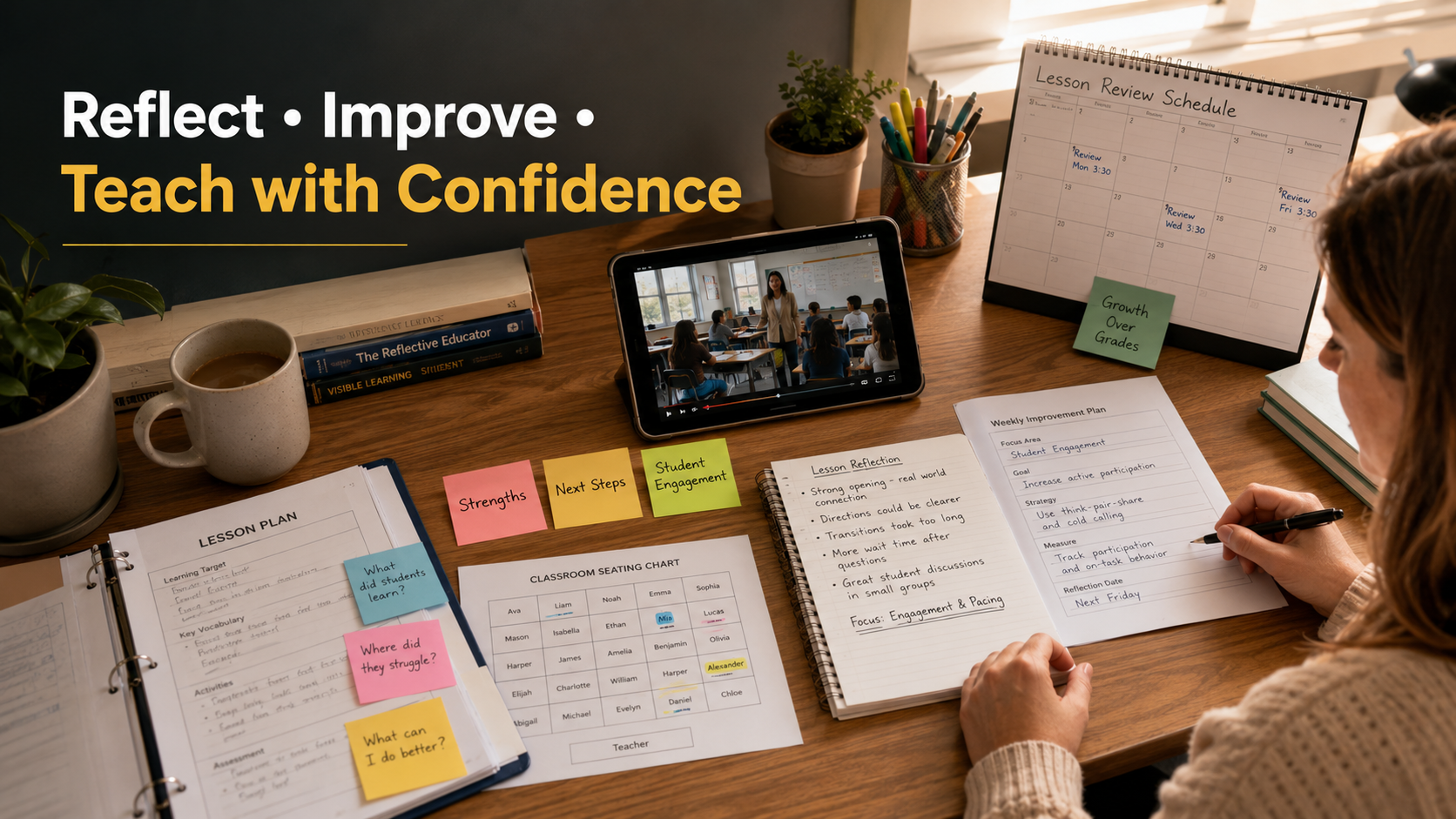
Do not make the mistake of trying to analyze every single flaw at once. Avoid overwhelming your brain during your very first video review session. Pick one highly specific, manageable focus area for each individual video review. For example, you can choose to dedicate your first recording entirely to checking your technical pacing. Alternatively, you can track your positive-to-negative reinforcement ratios when speaking to struggling students.
Step 3: Create a Reflection Routine
Consistency is the ultimate key to seeing massive, long-term professional growth in your career. Try to commit to recording just one 20-minute lesson segment every two weeks. Avoid making exceptions to this rule. Sit down in a quiet space with a clean notepad. Write down three positive moments first to protect your morale. Then, list two small, specific structural changes you can seamlessly implement the very next morning.
FAQs About Video Reflection in Teaching
How does watching your teaching on replay improve student behavior?
Directly observing a recorded lesson helps you uncover the hidden, systemic triggers for student misbehavior. These triggers are impossible to see while you lecture. For example, you might notice that specific disruptions consistently occur when your spoken instructions exceed three minutes. They might also happen during highly unstructured transitions between activities. By identifying these exact behavioral patterns on camera, you can intentionally alter your environmental routines. You learn to deliver much clearer instructions and proactively manage your physical classroom space. This targeted approach allows you to address the root causes of restlessness rather than merely punishing the symptoms. Ultimately, this habit leads to a focused, calm, and cooperative classroom culture where students feel secure.
Will recording my classroom violate student privacy laws?
Student privacy is incredibly important. Educators must handle this matter with the highest level of professional care and administrative oversight. Before ever pressing record on a device, you must thoroughly check your school district’s specific technological policies. Ensure you obtain all necessary parental consent forms required by local laws. If you utilize the captured video strictly for personal professional growth, it is generally permitted. Most educational systems allow this use if you do not share it online or with third parties. To add an extra layer of safety, you can easily position the camera at the front of the room. This placement faces only you. Alternatively, place it at the very back so it only captures the back of students’ heads.
How often should I practice watching your teaching on replay?
You absolutely do not need to record yourself every single day to experience massive professional growth. Recording your lessons every single week is also unnecessary. Aiming for once or twice a month is a highly sustainable, realistic, and effective target. This schedule fits neatly into a busy educator’s hectic work week. This specific frequency gives you more than enough baseline data to track your structural progress over time. Best of all, it works without overwhelming your limited planning periods. Focus your efforts on recording radically different types of academic lessons. Capture direct lecture instruction, independent silent work, and collaborative small group projects. This variety ensures you get a highly accurate, well-rounded view of your versatile teaching capabilities.
What should I look for during my first video reflection session?
During your very first video reflection session, you must actively force yourself to look for positive moments. Focus on highly successful interactions first to consciously build your professional confidence and ease anxiety. Once you feel comfortable, begin to objectively observe your overall teacher talking time. Compare it directly against active student talking time to see who is doing the heavy lifting. Pay close attention to your physical movement patterns around the room. Track your vocal tone when correcting students and note how long you wait for responses after asking a question. Keep your initial critique limited to one or two ultra-simple observations so you do not feel discouraged.
Can experienced teachers benefit from watching themselves on video?
Without a doubt, veteran and highly experienced educators derive immense, practice-altering benefits from watching their daily lessons. Experienced educators often develop deep-rooted, highly automatic instructional habits over decades of classroom work. Sometimes, these habits can eventually morph into rigid instructional ruts. Reviewing your live lessons on video helps veteran teachers stay innovative. It encourages them to critically evaluate their changing biases and adapt their methods to meet modern student needs. It ensures that professional growth never completely stagnates. The practice challenges comfortable assumptions and breathes fresh energy into a long, successful teaching career by revealing new avenues for student connection.
Conclusion
Embracing the challenging practice of watching your teaching on replay is an invaluable, highly courageous step toward instructional mastery. It takes an incredible amount of personal vulnerability to look objectively at your own flaws on camera. It requires professional bravery to confront mistakes and shortcomings, but the long-term rewards are absolute. This habit benefits both your career and your students immensely. If you teach specialized subjects, pairing video reviews with top tools like the best math learning platforms can rapidly accelerate student breakthroughs. Video reflection perfectly bridges the massive mental gap between imagination and reality. It connects how we subjectively think we teach in our heads with how we actually perform in front of a live audience. It turns the abstract art of teaching into a visible, improvable craft.
By consistently analyzing your pacing, body language, question structures, and real-time student engagement, you gain total tactical clarity. You stop blindly guessing what instructional strategies work. Instead, you start knowing exactly how to tweak your daily delivery for maximum academic impact. Commit to recording just one brief lesson segment sometime during this upcoming month. Step completely out of your comfort zone. Press play on your personal professional development, and watch your instructional confidence rise. Your classroom control and student impact will soar to heights you never thought possible.