

Use AI responsibly for homework
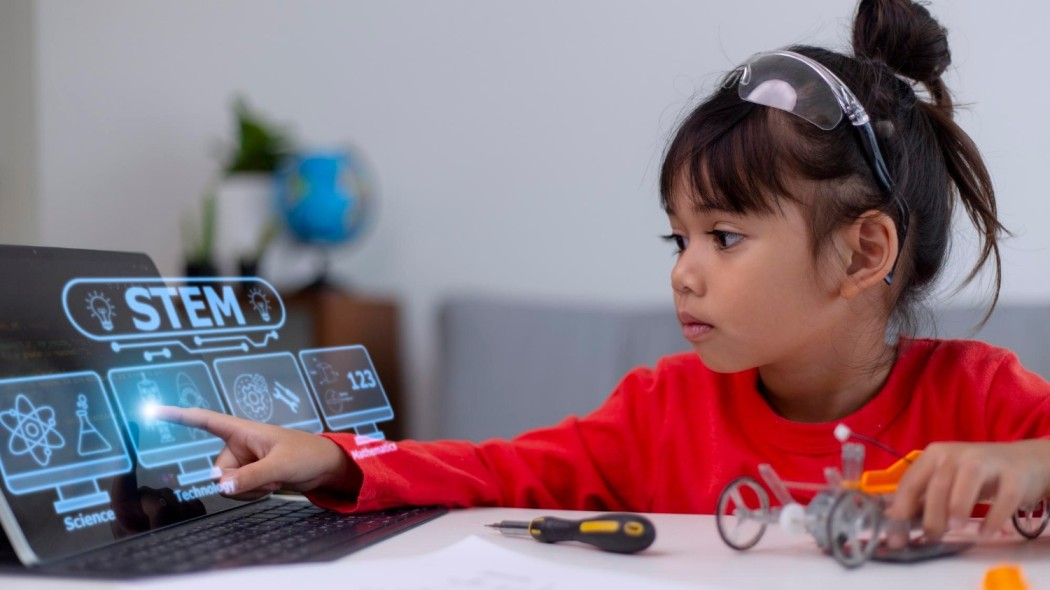
The landscape of education has shifted dramatically in recent years. Artificial intelligence is now a permanent classroom fixture. From drafting essays to solving complex calculus problems, tools like ChatGPT and Gemini offer incredible convenience. However, this convenience brings up a major challenge for modern learners. Using AI responsibly for homework is no longer just a suggestion. It is an absolute necessity for anyone who wants to learn and grow.
When you use AI as a shortcut to bypass hard work, you only cheat your own intellectual development. Conversely, when you treat artificial intelligence as a personalized tutor, it can unlock new levels of understanding. The goal is to enhance your natural abilities, not replace them. Furthermore, mastering this technology today sets the stage for your future career in the AI age.
In this article, we will explore exactly how you can navigate this new digital terrain. We will look at practical strategies to integrate AI into your study routine. You will also learn ways to avoid accidental plagiarism and keep your critical thinking skills sharp. Ultimately, learning to manage these tools ethically will give you a massive advantage both in school and in life.
Treat AI as a Personal Tutor, Not a Ghostwriter
The most common mistake students make is asking an AI to do the heavy lifting from start to finish. If you simply copy and paste an essay prompt into a chatbot and submit the result, you are completely bypassing the learning process. Instead, you should view AI as a highly knowledgeable, 24/7 tutor.
For instance, if you are stuck on a difficult math concept, do not ask the tool for the final answer. Ask it to explain the steps, provide a similar example, or break down the underlying formula. This approach forces you to actively engage with the material. Moreover, it builds problem-solving skills that you will actually remember when test day arrives.
When you use AI to clarify confusing topics, you retain ownership of your education. You are still doing the mental push-ups required to build cognitive strength, but you have a spotter to make sure you do not get crushed by the weight of the assignment.
Brainstorming and Overcoming Writer’s Block
Staring at a blank screen is one of the most frustrating parts of any writing assignment. Fortunately, AI is an incredible tool for breaking through writer’s block. You can use it to generate ideas, suggest outlines, or provide different perspectives on a topic you might not have considered.
-
Ask for varied viewpoints: Request three different arguments for a debate topic to broaden your understanding.
-
Generate essay outlines: Let the AI create a structural skeleton, but fill in the meat and evidence yourself.
-
Refine your thesis: Feed your initial thesis statement to the AI and ask for constructive criticism to make it stronger.
By using the technology in this manner, you are setting up a collaborative environment. The AI acts as a sounding board, but the final voice, style, and conclusions are entirely your own. Therefore, the work remains authentic to your personal perspective.
Fact-Checking: A Crucial Step to Use AI Responsibly for Homework
One of the biggest risks of relying heavily on artificial intelligence is the “hallucination” phenomenon. Developers design AI models to predict the next logical word in a sentence. Because of this, these tools can confidently present completely fabricated information as absolute fact.
Therefore, you must cross-reference every single piece of data, historical date, or scientific claim an AI gives you. A chatbot might provide a compelling statistic for your history paper. If so, you need to find a primary or secondary source to back it up. Relying on unverified information can severely damage your academic credibility and result in failing grades.
Always utilize trusted databases, textbooks, and academic journals to confirm what the AI tells you. When you rigorously fact-check, you not only protect your grades but also sharpen your digital literacy and research skills.
Preparing for the Future by Using AI Responsibly for Homework
Navigating AI ethically in school keeps you out of trouble with teachers. It also actively prepares you for the modern workforce. The world is changing rapidly. Employers want professionals who can leverage technology without losing their human touch.
A recent International Monetary Fund (IMF) analysis highlights a major shift. Artificial intelligence is expected to affect nearly 40% of all jobs globally. AI will certainly enhance productivity in many sectors. However, workers must develop strong critical thinking and AI literacy to remain competitive.
Therefore, figuring out how to use AI responsibly for homework right now is essentially early career training. You are learning how to prompt effectively and verify digital outputs. You also learn to synthesize machine-generated data with human intuition. These are the exact skills that will make you invaluable in the future job market.
Frequently Asked Questions (FAQ)
1. Is AI Cheating? Guidelines for Using AI Responsibly on Assignments.
No, using AI responsibly is generally not considered cheating, provided you follow your school’s specific guidelines and use the tool to enhance your learning rather than bypass it. Cheating occurs when you misrepresent someone else’s work—or a machine’s work—as your own original thought. If you copy and paste a complete essay generated by ChatGPT and put your name on it, that is undeniably academic dishonesty.
However, if you use AI to clarify a confusing concept, generate a study schedule, or brainstorm potential topics for a project, you are using it as an educational aid. Think of it like using a calculator in a math class; it is a tool meant to assist you, but you still need to know how the formulas work to pass the exam. Always communicate with your teachers about their specific policies regarding AI. Transparency is the best way to ensure you are staying on the right side of academic integrity.
2. How can I use AI to brainstorm essay ideas without plagiarizing?
Using AI to brainstorm is one of the most effective and ethical ways to integrate the technology into your workflow. To do this without plagiarizing, you must treat the AI strictly as an idea generator, not a writer. Start by feeding the AI your general topic and asking it to provide a list of unique angles or thesis statements.
For example, if you are writing about climate change, ask the AI to suggest five unconventional aspects of climate policy. Once the AI provides the list, do not ask it to write the paragraphs. Instead, choose the angle that interests you the most and do your own independent research using library databases or academic journals. Create your own outline based on the evidence you find. Because the actual words, sentence structures, and synthesized arguments come from your own brain, the resulting essay is entirely your own original work.
3. Can AI detectors accurately tell if I used ChatGPT for my assignment?
The short answer is that AI detectors are helpful tools, but they are not entirely foolproof. Programs designed to catch AI-generated text analyze patterns, predictability, and sentence variety to determine the likelihood of machine involvement. If you submit a totally unedited block of text directly from an AI, these detectors have a very high chance of flagging it.
However, detectors are also known to produce “false positives,” occasionally flagging entirely human-written text as AI-generated. This usually happens if a student writes in a very rigid, repetitive, or overly formal style. Because of this unreliability, depending on detectors alone is risky for both students and educators. The best defense against being falsely accused is to maintain your unique writing voice, utilize personal anecdotes, and keep thorough records of your research and drafting process to prove your work is authentic.
4. What is the best way to fact-check information provided by an AI?
Fact-checking AI output requires a skeptical mindset and a multi-step verification process. Because AI models can “hallucinate” and invent convincing but fake sources, you should never blindly trust a quote, statistic, or historical claim provided by a chatbot. The first step is to take the specific claim and plug it into a traditional search engine like Google or Google Scholar.
Look for the claim in established, reputable sources such as peer-reviewed journals, government websites (.gov), or recognized educational institutions (.edu). If the AI provided a specific citation, manually search for that exact book or paper title to ensure it actually exists. Furthermore, check the context. Sometimes an AI will provide a real statistic but apply it to the wrong situation entirely. By treating AI output as a rough draft of information that needs to be proven, you build essential media literacy skills.
5. How Does Ethical AI Homework Prep You for Future Careers?
Using AI responsibly today is essentially a training ground for the modern workplace. In almost every major industry—from medicine to finance to creative arts—professionals are using AI to streamline their workflows. By learning to interact with AI now, you are developing “prompt engineering” skills, which is the ability to clearly communicate with machines to get precise, highly useful outputs.
More importantly, you are practicing critical thinking and quality control. When you use AI ethically, you learn to evaluate data, spot errors, and refine machine-generated concepts with human intuition. Employers in the coming decades will not pay you to simply generate content; they will pay you for your judgment, your ethical boundaries, and your ability to orchestrate AI tools to solve complex problems. Mastering this balance during your school years gives you a massive head start.
Conclusion
In the end, navigating the modern educational landscape requires a delicate balance of embracing new technology while maintaining personal integrity. Figuring out how to use AI responsibly for homework is not about finding the easiest way out of an assignment. Rather, it is about learning to use powerful tools to elevate your own understanding and cognitive abilities.
When you treat AI as a collaborator and personalized tutor, you unlock an incredible learning resource. However, you must always remain the captain of your own ship. You are the one responsible for fact-checking, critical thinking, and forming your own opinions. Using AI responsibly for homework means doing your own thinking. Relying on a machine will only leave you ill-equipped for the real world.
As artificial intelligence continues to integrate into our economy, the habits you build today will define your future success. Embrace the technology, set strict ethical boundaries, and always prioritize your own intellectual growth. By making the choice to use AI responsibly for homework, you will master your coursework today. You will also step into the future with confidence and highly sought-after skills.