

Top 10 Behavioral Interview Questions: Complete Mastery Guide
Mastering the hiring process starts with understanding top 10 behavioral interview questions that hiring managers frequently ask. Behavioral interviews allow employers to evaluate your past actions, problem-solving skills, and cultural fit by examining real workplace scenarios. According to guidance from the U.S. Office of Personnel Management, structured behavioral assessments offer deep insights into candidate competencies. Candidates often struggle because they lack structured frameworks to articulate their past experiences clearly and concisely. This comprehensive guide answers critical hiring inquiries, including top 5 queries, STAR framework questions, common scenario lists, teamwork assessments, and beginner strategies. By exploring these sections, you will build the confidence required to ace your next job interview and secure your dream career opportunity.

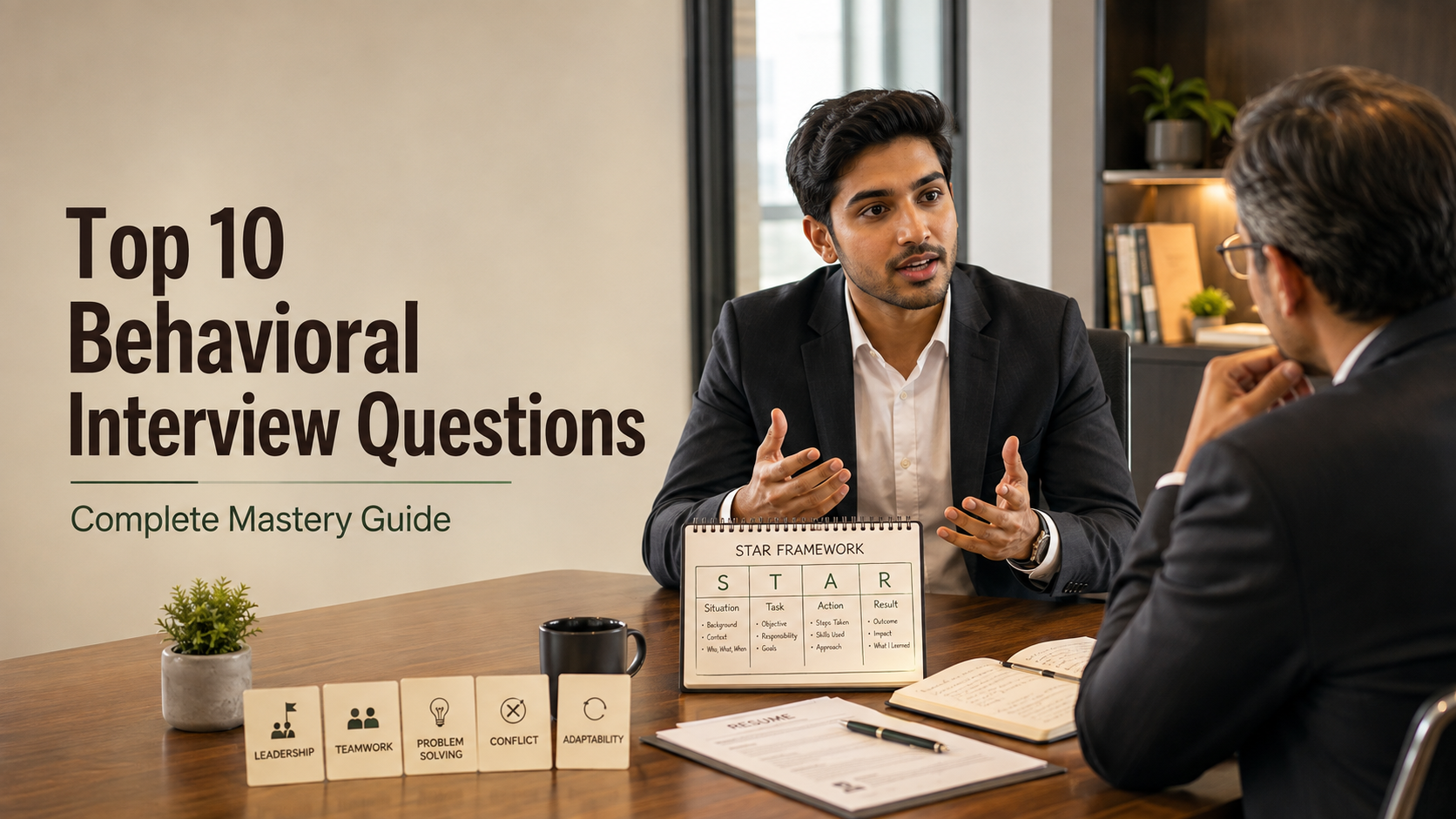
What Are the Top 5 Behavioral Interview Questions?
Identifying the most common behavioral interview questions helps candidates prepare relevant stories from their professional or academic backgrounds. The top 10 behavioral interview questions often include several core scenarios that employers use across industries. The five most common areas involve conflict resolution, failure, tight deadlines, teamwork challenges, and leadership. For broader preparation, review these HR interview success strategies to strengthen your overall interview approach.
Hiring managers use these questions to understand how you behaved in real situations. Your past actions can help them assess how you may handle similar challenges in the future. Avoid giving theoretical answers. Instead, describe a specific situation, explain your role, and show the outcome.
The top five behavioral questions commonly ask:
- Tell me about a time you resolved a conflict.
- Describe a time you failed and what you learned.
- Tell me about a tight deadline you managed.
- Describe a difficult teamwork situation.
- Tell me about a time you demonstrated leadership.
Prepare strong stories around these areas. Focus on situations where your actions produced clear, measurable results.
The Core Five Scenarios Explained
When answering these common behavioral interview questions, emphasize your individual contribution. Do not spend most of your answer describing what the entire team did. Explain the specific problem you faced and the responsibility you accepted.
A useful structure is Situation, Task, Action, Result (STAR). Briefly explain the background before focusing on your decisions and actions. Then describe the outcome and what you learned from the experience.
For example, a teamwork question should explain the disagreement, your responsibility, the steps you took, and the final result. A failure question should also show accountability rather than blaming another person or department.
Practice these five scenarios before your interview. However, avoid memorizing complete scripts. Memorized answers can sound unnatural and may fail when interviewers ask follow-up questions.
Instead, remember the key facts, actions, and results. This approach keeps your answers flexible while helping you remain calm and organized under pressure.
What Are the Top 10 STAR Questions to Ask in a Behavioral Interview?
The STAR method—Situation, Task, Action, Result—helps candidates organize behavioral interview answers clearly. The top 10 behavioral interview questions often target competencies such as adaptability, communication, teamwork, leadership, prioritization, and resilience.
Common STAR questions include:
- Tell me about a time you solved a difficult problem.
- Describe a conflict you had with a colleague.
- Tell me about a time you failed.
- Describe a situation where you worked under pressure.
- Tell me about a time you led a project.
- Describe a time you received difficult feedback.
- Tell me about a time you adapted to change.
- Describe a time you managed competing priorities.
- Tell me about a difficult customer or client.
- Describe a time you made a mistake at work.
Interviewers use these questions to understand how you approach real challenges. Your answers should show clear reasoning, personal responsibility, and measurable outcomes whenever possible.
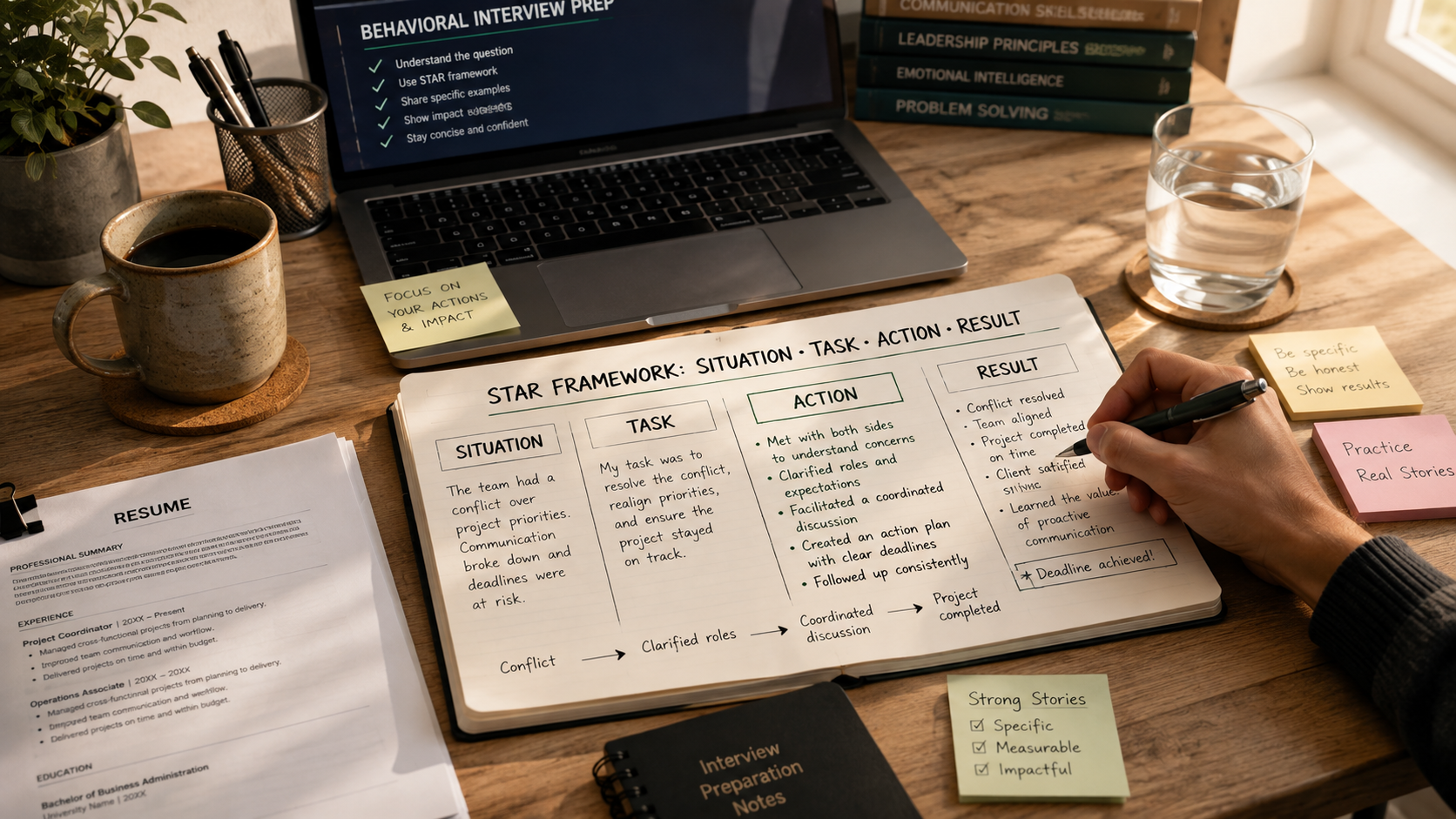
Mastering the STAR Framework Strategy
Using the STAR framework effectively requires more than simply following four labels. Keep the Situation and Task concise. Spend most of your answer explaining the Action you personally took.
The Action section should reveal your decision-making process. Mention the communication skills employers value, tools, skills, or leadership behaviors you used. Avoid vague statements such as “we worked hard” or “we solved the issue.”
The Result should explain what changed because of your actions. Use measurable evidence when available, such as time saved, errors reduced, revenue increased, deadlines achieved, or customer satisfaction improved.
For example, instead of saying that you improved a process, explain how you identified the problem and changed the workflow. Then show the measurable outcome.
Keep your STAR answers conversational. Most responses should take around one to two minutes unless the interviewer asks for additional detail. Practice enough to become comfortable without sounding rehearsed.
What Are the Top 10 Behavioral Interview Questions?
Preparing for the top 10 behavioral interview questions gives you a practical foundation for screening calls, interviews, and final hiring rounds. These questions commonly explore how you handle difficult clients, constructive criticism, competing priorities, workplace mistakes, and unexpected changes.
Here are ten questions worth preparing:
- Tell me about a time you handled a difficult person.
- Describe a time you received constructive criticism.
- Tell me about a challenging goal you achieved.
- Describe a time you had to prioritize several tasks.
- Tell me about a time you made an important decision.
- Describe a time you adapted to a major change.
- Tell me about a time you motivated yourself or others.
- Describe a situation where you disagreed with a manager.
- Tell me about a time you took initiative.
- Describe a time you learned from a mistake.
These behavioral interview questions help employers assess communication, emotional intelligence, accountability, resilience, and judgment. Understanding the skills employers look for in graduates can also help you choose stronger examples. Prepare different examples so your answers do not sound repetitive.
Comprehensive Coverage of Workplace Scenarios
A thorough review of these questions reveals several qualities employers consistently value. They want candidates who can adapt, accept responsibility, communicate clearly, solve problems, and continue learning.
Your answers should demonstrate these qualities through specific experiences. Simply claiming that you are adaptable or hardworking provides little evidence. A concrete example gives the interviewer something meaningful to evaluate.
Create a small collection of professional stories before your interview. Include examples involving leadership, conflict, failure, teamwork, problem-solving, pressure, and learning. One strong story can sometimes answer several related questions.
However, do not force the same example into every response. Interviewers may notice when a candidate repeatedly uses one story without adapting it to the question.
Review your examples and identify the skill demonstrated by each experience. Then match the strongest story to the competency being tested.
This preparation method makes behavioral interviews easier without requiring you to memorize dozens of answers. You can respond naturally while still covering the evidence interviewers want.
Can You Give Me 30 Common Behavioral Interview Questions?
Preparing beyond the top 10 behavioral interview questions can help candidates handle unexpected interview prompts. A broader list can cover workplace situations involving leadership, ethics, innovation, collaboration, communication, and adaptability.
Here are 30 common behavioral interview questions:
- Tell me about a time you solved a difficult problem.
- Describe a workplace conflict you resolved.
- Tell me about a time you failed.
- Describe a time you worked under pressure.
- Tell me about a time you led others.
- Describe a time you received difficult feedback.
- Tell me about a major change you handled.
- Describe a time you managed competing priorities.
- Tell me about a difficult customer.
- Describe a time you made a mistake.
- Tell me about a time you showed initiative.
- Describe a difficult decision you made.
- Tell me about a time you missed a deadline.
- Describe a time you motivated someone.
- Tell me about a time you disagreed with your manager.
- Describe a successful team project.
- Tell me about an ethical challenge you faced.
- Describe a time you improved a process.
- Tell me about a time you used creativity.
- Describe a time you handled criticism.
- Tell me about a time you persuaded someone.
- Describe a time you managed limited resources.
- Tell me about a difficult goal you achieved.
- Describe a time you learned something quickly.
- Tell me about a time you supported a colleague.
- Describe a cross-functional challenge.
- Tell me about an unexpected problem.
- Describe a time you demonstrated resilience.
- Tell me about a time you changed your approach.
- Describe your most meaningful professional achievement.
Categorizing Extended Question Inventories
Thirty questions can look overwhelming, but you do not need thirty separate stories. Group the questions into themes and prepare a few versatile examples for each category.
Useful categories include:
- Leadership: leading projects, motivating others, and taking initiative.
- Teamwork: collaboration, disagreement, communication, and support.
- Problem-solving: difficult decisions, unexpected problems, and process improvements.
- Failure: mistakes, missed deadlines, criticism, and lessons learned.
- Adaptability: organizational changes, new responsibilities, and learning quickly.
- Customer service: difficult clients, complaints, and expectation management.
- Ethics: responsible decisions and challenging situations.
Choose four or five strong career stories that demonstrate different skills. Make sure each story has a clear action and measurable result. You can also use these technical vs. soft skills examples to identify which abilities your stories demonstrate.
This strategy reduces memorization while improving flexibility. You can adapt one relevant experience to several related questions without giving the same answer repeatedly.
Review your examples before each interview. Prioritize stories that closely match the employer, role, and responsibilities described in the job posting.
Teamwork Behavioral Interview Questions
Teamwork behavioral interview questions help interviewers assess how effectively you collaborate with colleagues and contribute to shared goals. For example, they may ask about disagreements, communication problems, or difficult teammates. In addition, you might need to describe a situation where you supported a struggling colleague. Therefore, your answer should show communication skills, empathy, cooperation, and accountability. Moreover, explain how you handled the situation and what changed afterward. By focusing on your specific actions, you can demonstrate that you work well with different personalities while keeping the team focused on its shared objectives.
Common questions include:
- Tell me about a time you worked with a difficult teammate.
- Describe a team conflict you helped resolve.
- Tell me about a time you supported a struggling colleague.
- Describe a successful team project.
- Tell me about a time you had to compromise.
- Describe a situation where communication affected your team.
Strong answers should demonstrate active listening, empathy, accountability, and communication. Avoid presenting yourself as the person who single-handedly rescued the entire team.
Explain what you contributed and how you helped the group move forward. If a disagreement occurred, describe how you understood the other person’s perspective before proposing a solution.
Interviewers want evidence that you can work effectively with different personalities. Show how your behavior improved collaboration and helped achieve the team’s objective.
Demonstrating Collaborative Success Effectively
When answering teamwork questions, explain how you communicated with other people. Describe how you gathered feedback, handled different opinions, and kept everyone focused on the shared objective.
Your answer should clearly distinguish your contribution from the team’s overall work. For example, explain how you identified a communication gap, organized a discussion, clarified responsibilities, or helped resolve a disagreement.
Avoid criticizing former colleagues. Even when another person caused the original problem, blaming them can make your answer appear defensive. Focus instead on what you could control and how you responded.
Strong teamwork examples can also demonstrate leadership without requiring formal authority. Helping a struggling teammate, coordinating tasks, or improving communication can all show leadership qualities.
Whenever possible, explain the final outcome. Consider the final outcome. For example, explain whether the team completed the project on time, communication improved, or the group avoided a repeated problem.
End with a short lesson learned. This shows self-awareness and demonstrates that you can improve your collaboration skills over time.
Behavioral Interview Questions for Freshers
Behavioral interview questions for freshers can feel difficult because entry-level candidates may have limited corporate experience. However, employers do not expect freshers to have years of workplace stories.
Interviewers can assess your behavior through academic projects, internships, volunteer activities, student organizations, part-time work, and extracurricular activities. They may ask questions about teamwork, deadlines, leadership, failure, conflict, and problem-solving.
Common questions include:
- Tell me about a challenging college project.
- Describe a disagreement during a group assignment.
- Tell me about a time you managed multiple deadlines.
- Describe a mistake you made and what you learned.
- Tell me about a time you took leadership.
- Describe a situation where you received feedback.
Treat these experiences as professional examples. Explain the situation, your responsibility, the actions you took, and the result. If you are also refining your application materials, these resume and interview tips for beginners can help you prepare more effectively.
Do not apologize for lacking extensive work experience. Instead, demonstrate coachability, reliability, problem-solving, communication, and willingness to learn through specific examples.
Leveraging Academic and Extracurricular Wins
Freshers can build strong behavioral interview answers from experiences outside traditional employment. A university project can demonstrate teamwork. A presentation can demonstrate communication. A student organization can demonstrate leadership.
Choose examples where your actions clearly affected the outcome. For instance, explain how you organized responsibilities when teammates missed deadlines or how you solved a technical problem during a project.
Internships and volunteer activities can provide even stronger examples because they involve real responsibilities. However, academic experiences remain useful when they demonstrate relevant workplace behaviors.
Avoid exaggerating your achievements. Interviewers may ask follow-up questions about your exact role, decisions, and results. Your story should remain accurate and easy to explain.
Focus on what you learned from each experience. Entry-level employers often recognize that candidates are still developing professional skills. Showing that you accept feedback and improve your approach can strengthen your response.
Before the interview, prepare four or five flexible stories. Map each story to skills such as teamwork, leadership, problem-solving, adaptability, and communication. This gives you enough material to answer many behavioral questions confidently.
FAQ SECTION
Conclusion
Preparing for behavioral interviews requires dedication, self-reflection, and a commitment to structured storytelling techniques. By mastering the top 10 behavioral interview questions and related variations, you equip yourself to handle any hiring scenario. Remember to anchor your answers in the STAR framework, keep your explanations concise, and emphasize measurable results. Apply these strategies consistently during your preparation to transform interview anxiety into genuine professional confidence. Take the first step today by auditing your career achievements and drafting your core interview stories.