
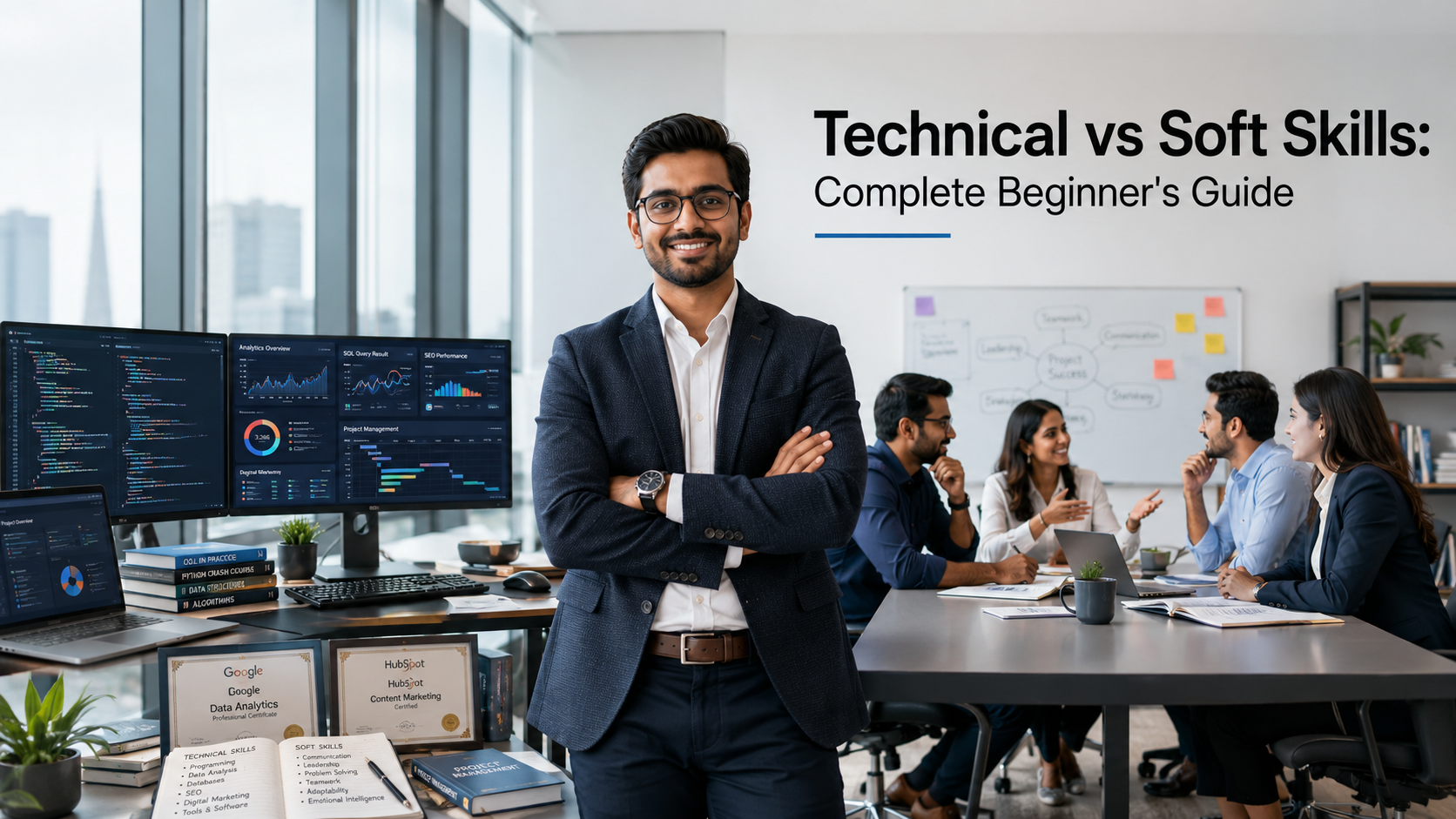
Technical vs Soft Skills? Complete Beginner’s Guide
When stepping into the modern job market, you will constantly hear hiring managers talk about balancing Technical vs Soft Skills. Developing the right mix of these capabilities is essential for career longevity, a fact underscored by comprehensive global workforce studies from institutions like the World Bank. Understanding how these two skill sets complement each other is the first step toward building a successful professional path.
Many beginners make the mistake of focusing entirely on one side of the coin. They might spend years mastering a specific programming language while completely ignoring how they communicate with teammates. Conversely, some charismatic individuals rely solely on their personality but lack the concrete abilities required to execute tasks. This guide will demystify both concepts, breaking down the differences in Technical vs Soft Skills and showing you exactly how to cultivate both for maximum career growth.
Whether you are preparing for your very first job interview or looking to pivot into a new industry, achieving a firm grasp on Technical vs Soft Skills will give you a competitive edge. Employers increasingly evaluate candidates based on how effectively they balance Technical vs Soft Skills in real-world workplace situations. Let us dive into what makes each skill set unique and why understanding Technical vs Soft Skills matters for long-term professional success.
Understanding Technical Capabilities: The Hard Facts
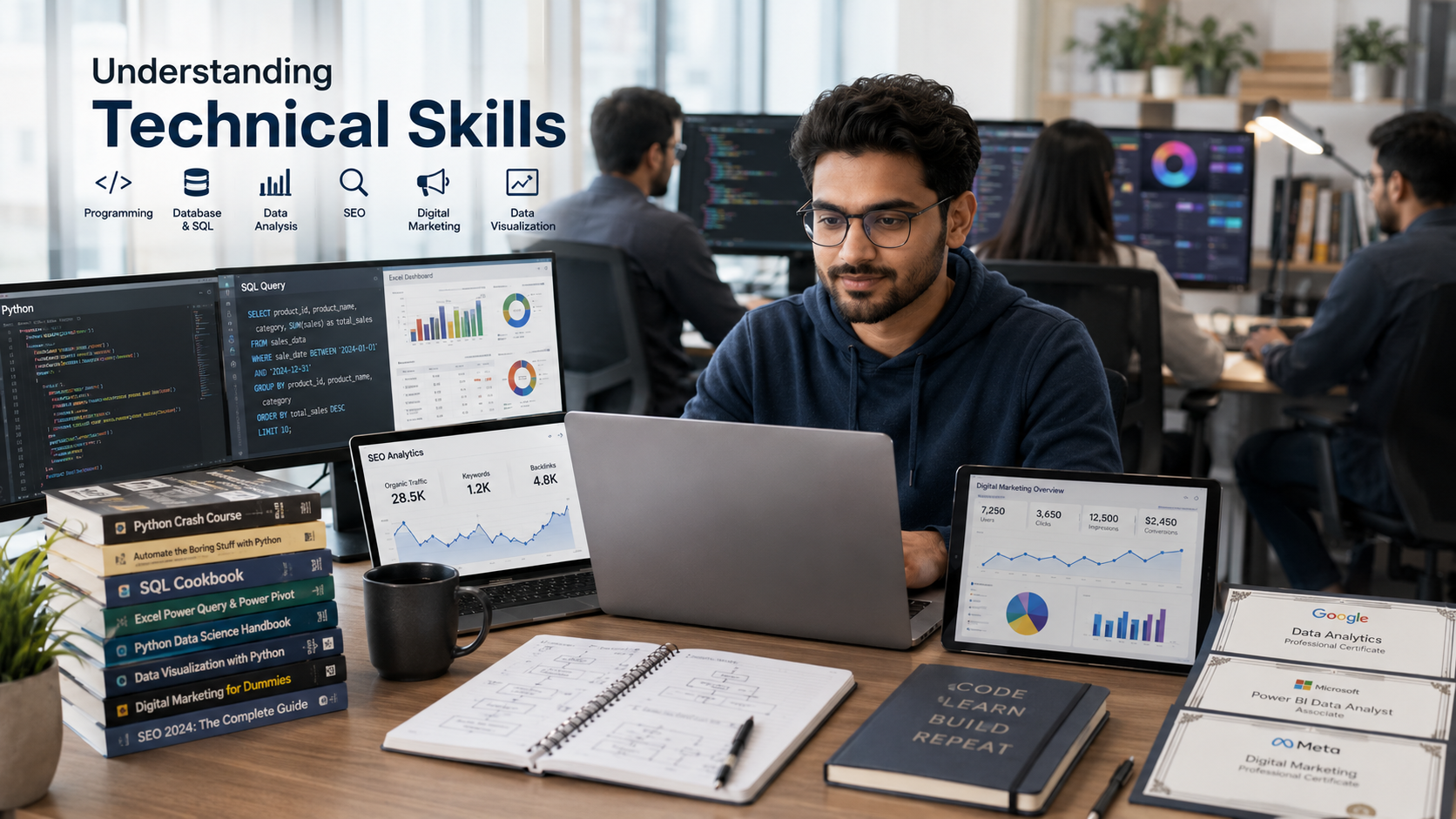

Technical skills, often referred to as hard skills, are the quantifiable, teachable abilities you need to perform a specific job. You usually acquire these through formal education, specialized training programs, certifications, or direct on-the-job experience. They are easy to define, measure, and demonstrate to a prospective employer.
For example, a software developer needs to know how to write code in Python or Java. An accountant must understand tax laws and know how to use specific ledger software. A graphic designer must master tools like Adobe Photoshop. These are binary capabilities; you either know how to use the tool, or you do not.
In the discussion of Technical vs Soft Skills, technical abilities are often the foundation that enables professionals to perform their core responsibilities effectively. Whether you are learning programming, digital marketing, or content creation, developing strong technical expertise is essential. Bloggers, for instance, benefit greatly from understanding SEO, website management, and content optimization. If you are new to these concepts, check out our guide on the technical side of blogging.
Employers often assess technical skills through certifications, portfolios, practical tests, or previous work experience. This measurable nature is one of the key distinctions in the debate surrounding Technical vs Soft Skills.
Common Examples of Hard Expertise
-
Data Analysis: Using SQL, Excel, or Tableau to interpret complex data sets.
-
Digital Marketing: Managing SEO campaigns, running Google Ads, and analyzing web traffic.
-
Foreign Languages: Speaking, writing, or translating a second language fluently in a business environment.
Deconstructing Interpersonal Attributes: The Human Element

On the flip side of the coin, we find your interpersonal attributes, universally known as soft skills. These are non-technical, personality-driven traits that dictate how you work, interact with colleagues, and manage your daily responsibilities. Unlike technical abilities, these traits are highly subjective and much harder to quantify on a resume.
They relate directly to your emotional intelligence and situational awareness. Think of them as the grease that keeps the corporate machine running smoothly. A brilliant engineer who cannot take constructive feedback or collaborate with a team will quickly become a liability rather than an asset.
Key Professional Traits to Cultivate
-
Active Listening: Truly hearing and understanding your colleagues before formulating a response.
-
Adaptability: Staying calm and finding creative solutions when project requirements change at the last minute.
-
Conflict Resolution: Navigating disagreements between team members calmly and professionally without hurting morale.
Technical vs Soft Skills: Key Differences Explained
To truly grasp the dynamics of your professional growth, it helps to compare these capabilities across several distinct operational categories. Both are vital, but they serve entirely different purposes in your day-to-day work life.
| Feature | Technical Skills | Soft Skills |
| How You Learn Them | Books, courses, classrooms, structured training. | Life experience, mentoring, conscious practice. |
| How They Are Measured | Tests, certifications, portfolios, practical tasks. | Observation, peer reviews, 360-degree feedback. |
| Transferability | Often specific to a certain role or industry. | Highly transferable across any job or sector. |
| Core Focus | Interacting with machines, code, data, or processes. | Interacting with colleagues, clients, and yourself. |
Moreover, technical expertise gets you the job interview, but your interpersonal traits secure the actual job offer. Employers use your resume to verify your technical baseline, but they use the live conversation to evaluate how well you will fit into their existing company culture.
Striking the Perfect Balance for Career Success
True professional excellence happens at the intersection of both domains. Highly successful individuals understand that these skill sets do not compete; instead, they complement each other perfectly. For instance, a project manager needs the hard capability to build budget spreadsheets, but they also need the leadership to motivate a tired team to meet a tight deadline.
According to data compiled by Harvard University and the Stanford Research Center, 85% of job success comes from well-developed interpersonal traits, while only 15% comes from technical knowledge.
To find your balance, start by assessing your current strengths. If you are highly technical but struggle with public speaking, challenge yourself to lead the next small team meeting. If you are a natural communicator but lack data literacy, take a basic introductory course online. Continuous self-improvement in both areas ensures you remain highly employable.
Frequently Asked Questions
Can you teach soft skills to someone who lacks them?
Yes, you can absolutely develop these behavioral traits, though the transformation process looks entirely different from learning a technical tool. You cannot simply read a textbook or memorize a formula to become empathetic, a better listener, or a more effective leader. Developing these interpersonal attributes requires consistent self-awareness, active feedback from peers, and intentional daily practice under real-world pressure.
For example, if you want to improve your time management, you must actively implement frameworks like the Pomodoro technique or the Eisenhower Matrix, tracking your daily habits until efficiency becomes a natural reflex. Similarly, improving emotional intelligence involves slowing down your reactions during heated conversations and practicing active listening rather than just waiting for your turn to speak. Over time, these conscious, repeated efforts reshape your neurological pathways, fundamentally changing how you interact with colleagues, handle daily stressors, and manage your overall professional workload.
Which skill set do employers value more during the hiring process?
Employers fundamentally value both sets equally, but they prioritize them differently depending on the specific job role and the current stage of the hiring pipeline. For entry-level positions, companies often focus heavily on technical capability to ensure you can execute the baseline tasks without needing constant hand-holding. They need to know you can write the code, balance the ledger, or design the layout immediately.
However, as you climb the corporate ladder into leadership or senior management roles, interpersonal traits become the dominant factor in your success. A director or vice president spends far less time writing code or analyzing raw spreadsheets and much more time negotiating complex deals, motivating cross-functional teams, and resolving interpersonal conflicts. Ultimately, a lack of technical capability keeps you from getting past the initial resume screening, but a lack of interpersonal attributes will stall your career growth or get you fired.
How do I showcase my interpersonal traits on a highly technical resume?
The absolute best way to showcase these traits on a technical resume is by tying them directly to quantifiable business results within your professional experience section. Instead of creating a generic, bulleted “skills” list that explicitly states you are a “good communicator” or a “team player”—which carries very little weight with hiring managers—you should weave these attributes into your actual career achievements.
For example, you could write a bullet point like this: “Coordinated a cross-functional team of five software engineers and three product designers to deliver a complex legacy database migration two weeks ahead of schedule, reducing server downtime by 40%.” This single, action-oriented sentence proves your leadership, proactive communication, and time management abilities using concrete context. It subtly demonstrates to the employer that your personal attributes drive real, measurable business value, making you a highly attractive candidate.
Are technical skills easier to learn than soft skills?
Generally speaking, technical abilities are easier to learn because they follow logical rules, structured frameworks, and clear, binary parameters. If you want to learn a programming language like Python, master data analysis in SQL, or learn financial accounting, you can follow a predefined online syllabus. When you write code or configure a system, you either get an error message or a successful output, allowing you to fix mistakes and see immediate, predictable results.
Interpersonal development, by contrast, is far more ambiguous, subjective, and emotionally demanding. It requires you to confront your own deep-rooted biases, behavioral habits, and communication flaws. Changing how you naturally handle high-stress situations, process constructive criticism, or manage anger takes a long time. It forces you to step outside your comfort zone repeatedly and accept vulnerability, which makes the learning curve feel much steeper.
How Has Remote Work Changed the Balance Between These Skill Sets?
The shift to remote and hybrid work has increased the demand for strong interpersonal abilities. Skills such as written communication, empathy, and self-motivation are now more important than ever.
When you do not see colleagues face-to-face, clear communication becomes essential. Employees must write concise emails and Slack messages. This helps prevent misunderstandings and keeps projects moving forward.
Proactive collaboration and emotional intelligence also play a larger role. These skills help teams work effectively across different locations and time zones. Without casual office conversations, professionals must communicate more intentionally.
Remote work also requires greater personal accountability. Managers cannot observe daily work habits as easily as they can in a traditional office. As a result, discipline and time management become critical for success.
The discussion of Technical vs Soft Skills has evolved because of these workplace changes. Technical expertise remains important, but it is no longer enough on its own. Remote employees must combine strong technical abilities with effective communication and collaboration skills. This balance helps them build trust, stay visible, and contribute consistently to their organizations.
Conclusion: Crafting Your Personal Growth Strategy
Navigating the workplace requires a clear understanding of technical vs soft skills. Hard capabilities act as your passport, opening doors to new industries and satisfying the basic requirements of a job description. Your interpersonal traits act as your vehicle, determining how far and how fast you will travel once you get inside the organization.
Focusing exclusively on one domain while ignoring the other will ultimately stall your professional growth. The most competitive professionals in the modern economy are those who can seamlessly code a program or analyze a financial sheet, and then clearly explain their findings to a room full of stakeholders.
As you move forward, create a balanced learning plan for yourself. Dedicate time to mastering the emerging tools of your specific trade, but do not neglect your emotional intelligence, communication, and leadership capabilities. By deliberately nurturing both sides of your professional profile, you build a resilient, future-proof career.