
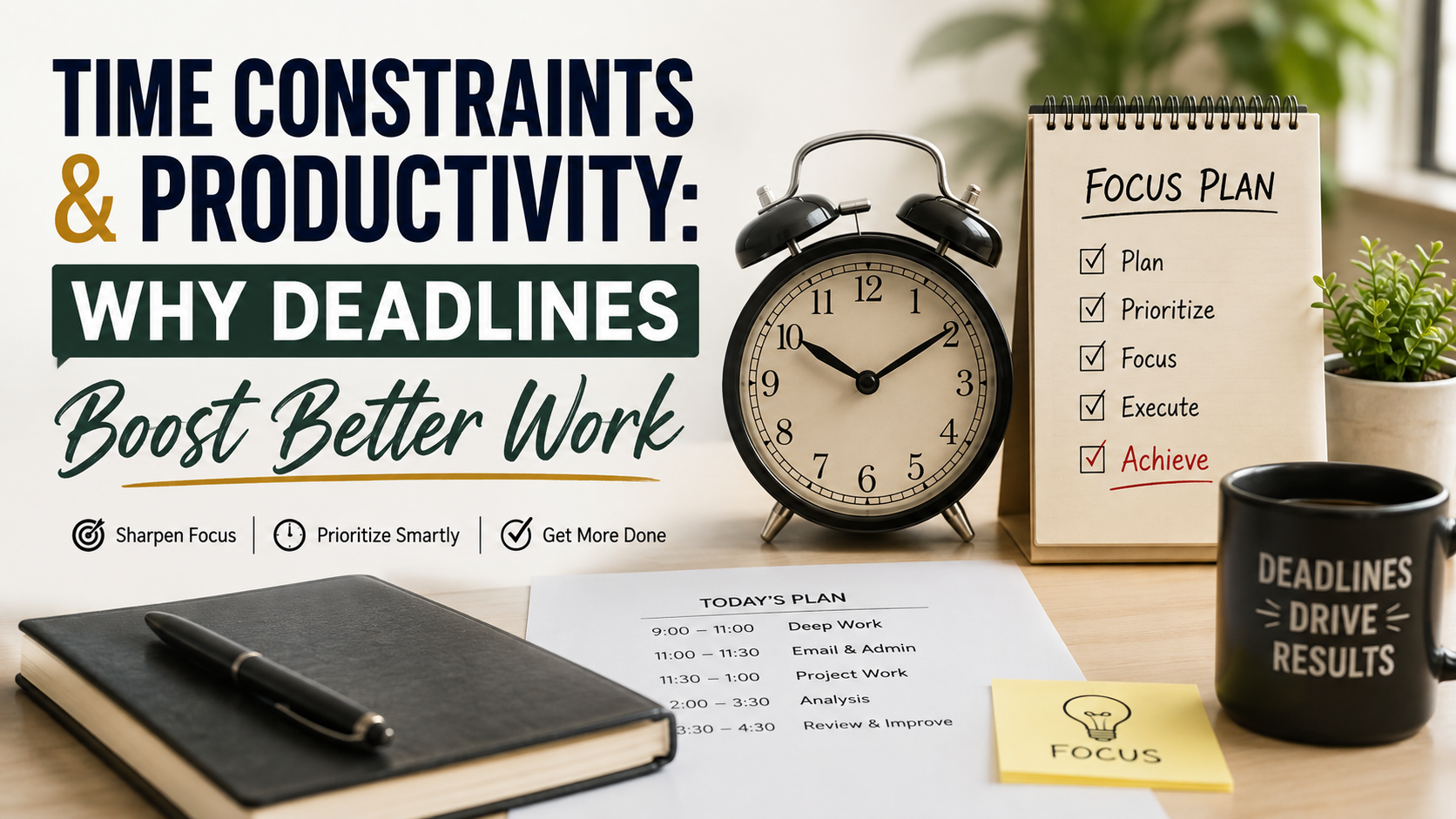
Time Constraints and Productivity: Why Deadlines Boost Better Work
Have you ever noticed how quickly you finish a project when the clock is ticking? Open-ended schedules often invite distractions, while firm deadlines create urgency and direction. The connection between time constraints and productivity explains why intentional limits can sharpen focus rather than restrict it.
Research from organizations such as the American Psychological Association highlights the value of clear, bounded goals. Defined limits can reduce cognitive overload and help workers avoid unnecessary decision-making. When you know how much time you have, you can focus on what matters most.
Time limits also encourage better prioritization. Instead of spending hours perfecting minor details, you identify the tasks that create the greatest impact. This approach can turn an unstructured workday into a more predictable and focused workflow.
Understanding how to use time boundaries can improve both efficiency and work quality. This guide explains time constraints, the 3-3-3 productivity method, major productivity factors, and practical examples. You will also learn how deadlines can help you complete meaningful work without extending your hours.


How does time management improve productivity?
Effective time management improves productivity by giving each commitment a clear place in your schedule. Instead of deciding what to do throughout the day, you establish priorities before work begins. Time blocking can make this approach more practical by assigning specific periods to important tasks. This reduces mental friction and makes it easier to start important tasks.
Time management also discourages constant multitasking. Switching between emails, meetings, messages, and projects can consume attention and reduce efficiency. Dedicated time blocks allow you to concentrate on one objective before moving to another.
Another benefit involves energy management. A realistic schedule helps you distribute demanding tasks across your available energy. You can reserve focused periods for complex work and use lower-energy periods for routine activities.
Clear time limits also create accountability. A defined deadline encourages action instead of endless planning. However, productivity should not mean filling every minute with work. Effective time management leaves room for breaks, unexpected issues, and recovery.
When your schedule reflects your priorities, you spend less time reacting. You also gain a clearer understanding of where your working hours actually go.
Eliminating the Cost of Context Switching
Dedicated work blocks reduce the productivity cost of context switching. Every time you move between unrelated tasks, your attention must adjust to a new set of goals, information, and decisions. That transition can interrupt momentum and make simple work take longer.
Grouping similar activities can reduce this problem. For example, you might answer emails during one scheduled block instead of checking your inbox throughout the day. You can then reserve another block for writing, analysis, or project development. Time blocking can help structure these dedicated periods and reduce unnecessary switching.
This approach also supports deeper concentration. When distractions remain outside your current task, your brain has fewer competing demands. You can maintain attention longer and spot errors before they become larger problems.
Context control does not require working continuously. Short breaks between focused blocks can help you reset before starting another activity. The goal is to create clear boundaries around attention.
By limiting unnecessary task switching, you make each work period more intentional. Over time, this can improve completion speed, reduce mental fatigue, and create a more predictable daily workflow.
What do you mean by time constraints?
Time constraints are predefined boundaries that limit how long you can spend on an assignment. They can take the form of formal deadlines, scheduled work blocks, or self-imposed limits. The purpose is to create a clear endpoint for a task.
External constraints often come from clients, managers, projects, or business requirements. Internal constraints are created by you. For example, you might give yourself ninety minutes to complete a report before moving to another priority.
These boundaries can influence how you approach work. Without a limit, you may continue researching, editing, or planning long after the task has produced meaningful value. This principle also appears in innovation born from limitations, where restrictions can shape how people approach problems and make decisions. A deadline encourages you to decide what is necessary and what can wait.
This idea connects with Parkinson’s Law, which states that work tends to expand to fill the available time. A shorter, realistic timeframe can therefore encourage greater focus.
However, time constraints should remain practical. Extremely tight deadlines can increase stress and reduce quality. The objective is not to rush every task. It is to create enough urgency to prevent unnecessary delays.
Setting Proactive vs. Reactive Boundaries
Proactive and reactive time constraints serve different purposes. Proactive boundaries are limits you create before a task begins. Examples include timed work sessions, calendar blocks, writing sprints, and scheduled email periods. You control these boundaries and can adjust them around your priorities. This idea closely relates to setting up constraints to inspire creative thinking, where deliberate limitations can provide structure for approaching work differently.
Reactive boundaries usually come from outside your control. A client deadline, meeting time, product launch, or urgent request can create this type of constraint. Because these deadlines may appear suddenly, they can create pressure and disrupt planned work.
Proactive boundaries are generally easier to manage. They allow you to protect focused work before urgent tasks take over your schedule. For example, blocking ninety minutes for strategic planning can prevent routine messages from consuming that period.
Reactive constraints still have value. They establish accountability and clarify when something must be completed. However, relying on external urgency for every task can create a stressful workflow.
A balanced schedule uses both types. Proactive limits protect important work, while reactive deadlines help coordinate commitments. Together, they create clearer expectations without making every task feel like an emergency.
What is the 3-3-3 rule of productivity?
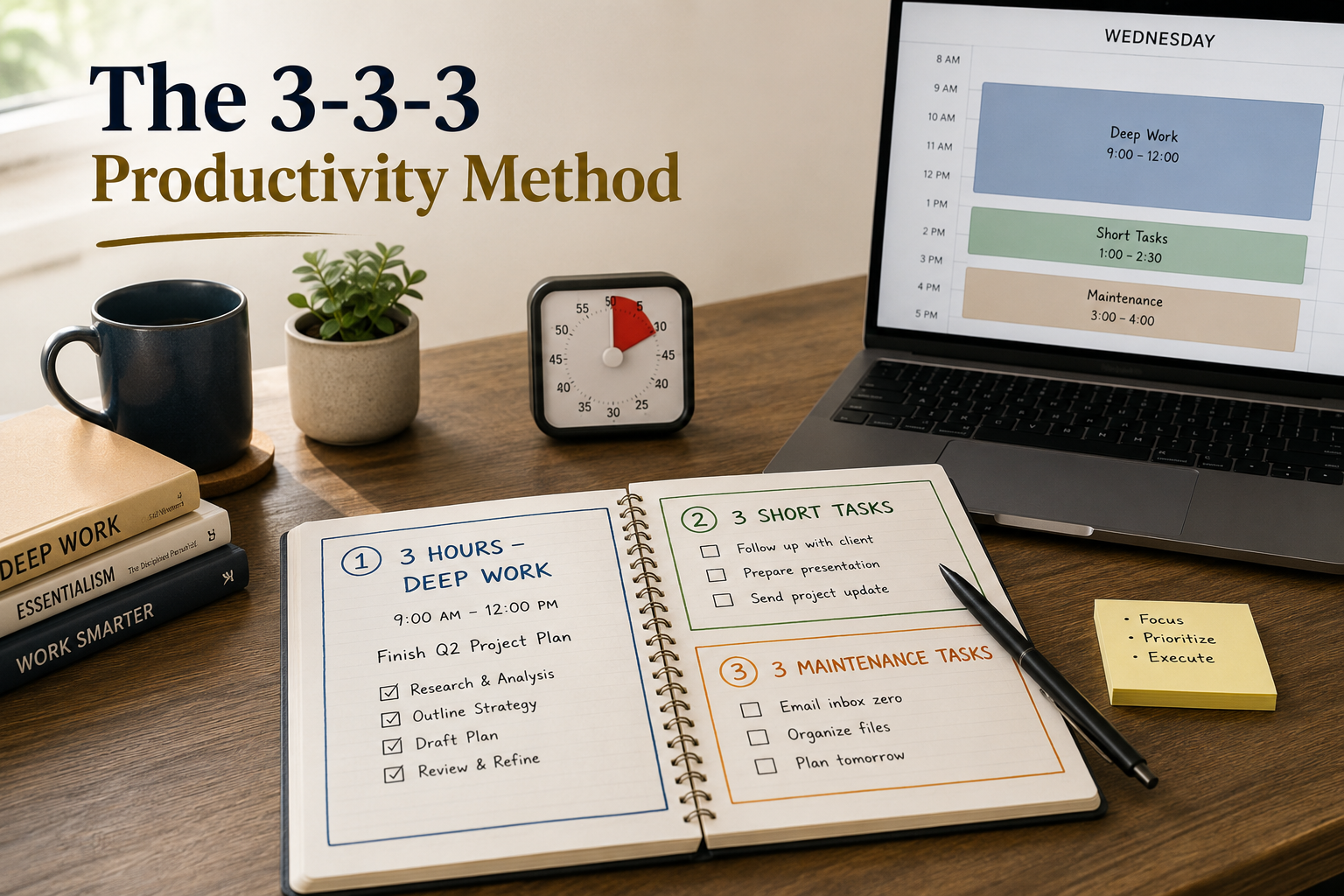
The 3-3-3 rule of productivity is a simple planning framework that divides the workday into three categories. The method typically starts with three hours dedicated to one major project. This period is designed for focused work that requires substantial attention and creativity.
The second part involves three shorter tasks. These activities usually require moderate effort and may include answering important messages, reviewing documents, or handling urgent requests. Keeping this list limited prevents smaller responsibilities from taking over the entire day.
The final part covers three maintenance tasks. These can include scheduling appointments, organizing files, clearing an inbox, or completing routine administrative work.
The value of the method comes from its structure. You begin with high-value work instead of letting small tasks dictate your morning. You then address necessary responsibilities without expecting yourself to complete an endless task list.
The 3-3-3 approach is not a universal formula. Some roles cannot support three uninterrupted morning hours. Still, the underlying principle remains useful: protect important work first, then manage shorter and routine tasks within defined boundaries.

Maximizing Morning Deep Work Windows
The first three hours of the 3-3-3 framework are intended for meaningful, concentrated work. The goal is not simply to work longer. It is to protect your strongest available focus for the task that matters most.
Many people experience fewer interruptions earlier in the day. Meetings may be limited, notifications may be quieter, and fewer urgent requests may have appeared. This can create a useful environment for writing, planning, analysis, strategy, or creative production.
Starting with one major objective also reduces early decision-making. Instead of asking which small task to handle first, you already know where your attention belongs. That clarity can make it easier to begin.
However, morning deep work is not equally effective for everyone. Some people reach peak concentration later in the day. The broader lesson is to identify your strongest focus window and protect it from interruptions.
You can also divide a long session into smaller blocks when three hours feels unrealistic. A ninety-minute block followed by a short break may work better.
The principle matters more than the exact timing. Schedule demanding work when your attention is strongest, then protect that period deliberately.
What are the 5 main factors that affect productivity?
Productivity depends on more than how many hours you work. Five major factors include energy management, environment, task clarity, technology, and motivation. Each factor can either support focused execution or create additional friction.
Energy management affects how effectively you think and make decisions. Poor sleep, inadequate breaks, or unrealistic schedules can reduce concentration. A suitable physical environment also matters. Noise, clutter, interruptions, and uncomfortable equipment can make sustained attention harder.
Task clarity determines whether you understand the desired outcome. Vague assignments often lead to unnecessary research, repeated decisions, and delayed action. Clear objectives make it easier to identify the next step.
Technology can either save time or consume it. Automation, templates, and useful software can remove repetitive work. For example, understanding how AI agents work can help you identify where automated tools may reduce repetitive tasks. Constant notifications and unnecessary applications can create the opposite effect.
Finally, motivation influences persistence. Challenging work often requires sustained effort, especially when results are not immediate.
These factors also interact. Better tools cannot compensate for unclear priorities. A quiet workspace cannot solve a poorly defined task. Sustainable productivity therefore requires a balanced approach rather than relying on a single technique.
Optimizing Workspace and Digital Hygiene
Your physical workspace and digital environment can influence how easily you maintain focus. A cluttered desk may create visual distractions, while an overloaded desktop can make digital tasks harder to manage. Small sources of friction can accumulate throughout the day.
Start by removing items that do not support your current work. Keep frequently used tools within reach and store unnecessary materials elsewhere. This creates a cleaner environment without requiring an elaborate workspace.
Digital hygiene matters just as much. Disable non-essential notifications during focused work. Close unrelated browser tabs and applications. Students can also use free student software to organize academic tasks and reduce unnecessary digital friction. Organize frequently used files into clearly labeled folders so you spend less time searching.
Email deserves particular attention. Checking messages continuously can fragment your attention and encourage reactive work. Instead, schedule specific periods for reviewing and responding to routine communication.
These changes do not eliminate every interruption. They simply make distractions less accessible.
A productive environment should also support comfortable, sustainable work. Your desk setup, lighting, equipment, and break routine all matter. The goal is not to create a perfectly controlled workspace. It is to reduce avoidable friction so your attention stays available for important tasks.
Time constraints and productivity examples
Real-world examples show how time constraints and productivity can work together across different types of work. Software development teams often use fixed development sprints to create clear delivery windows. A defined sprint encourages teams to prioritize essential features instead of endlessly revising every detail.
Writers can apply similar principles through the Pomodoro Technique. A focused twenty-five-minute work period creates a short, manageable target. Repeating these sessions can make large writing projects feel easier to approach.
Meetings provide another example. A strict fifteen-minute limit can force participants to focus on essential updates, decisions, and action items. Without a defined endpoint, discussions can easily expand beyond their original purpose.
Students can also use time constraints when studying. Setting a forty-five-minute review period can create a specific target and reduce the temptation to delay starting. Students can combine this approach with time blocking for students to assign focused study periods more deliberately.
The same principle applies to administrative work. A fixed time window can prevent routine tasks from consuming an entire afternoon.
These examples share one idea: the constraint creates a boundary around attention. It does not automatically guarantee better work. The time limit must remain realistic, and the task must have a clear objective.
Applying Timeboxing to Daily Administrative Duties
Timeboxing can prevent administrative tasks from taking over your most productive hours. The technique involves assigning a specific period to a task instead of allowing it to remain open-ended.
For example, you could reserve thirty minutes each afternoon for email, paperwork, scheduling, or file management. When the time begins, focus only on those activities. When the block ends, move to the next priority unless something genuinely requires immediate attention.
A timer can make the boundary more visible. It also encourages faster decisions on routine tasks. You may find it easier to archive an unnecessary message, send a short response, or defer a low-priority request.
Timeboxing also helps expose inefficient habits. If email consistently requires two hours, the problem may involve message volume, unclear priorities, or excessive checking. The constraint gives you a useful signal about where your process needs improvement.
However, not every administrative task should be rushed. Important correspondence or complex decisions may require additional time.
The goal is to contain routine work, not sacrifice accuracy. By creating clear boundaries, you protect larger blocks for strategic work while still keeping daily operations under control.
Frequently Asked Questions
What is Parkinson’s Law in time management?
Parkinson’s Law states that work expands to fill the time available for completion. In time constraints and productivity, shorter deadlines can encourage faster decisions and sharper priorities. A two-hour limit for a simple memo may prevent unnecessary research, revisions, and perfectionism.
How do strict deadlines reduce procrastination?
Strict deadlines reduce procrastination by creating urgency and removing uncertainty about when work must begin. The connection between time constraints and productivity becomes clear when a firm cutoff limits opportunities for delay. A specific deadline encourages immediate action, reduces overthinking, and creates accountability.
Can tight time constraints cause burnout?
Yes, unrealistic time constraints can increase stress, exhaustion, and burnout. Time constraints and productivity work best when deadlines remain achievable and include adequate recovery periods. Balance focused work sessions with breaks, realistic expectations, and manageable workloads to maintain consistent performance without creating constant pressure.
How do I set effective artificial deadlines?
Set artificial deadlines by dividing large projects into smaller milestones with specific completion times. This approach strengthens time constraints and productivity by creating measurable progress points. Treat self-imposed deadlines seriously, add calendar reminders, and share important targets with someone who can provide accountability.
Conclusion
Intentional deadlines can create structure, reduce procrastination, and help you focus on high-value work. Understanding time constraints and productivity also shows why realistic boundaries often improve efficiency without requiring longer hours. Start by identifying open-ended tasks and assigning practical time limits. Use timeboxing, focused work sessions, and regular breaks to protect quality while completing important work more efficiently. When applied consistently, these boundaries can reduce perfectionism, improve focus, and create a more sustainable workflow.