

Why a Teacher Friend in Year One Is Your Best Asset
Navigating your first year in the classroom can feel overwhelming. Every day brings new lesson plans, behavior challenges, parent communication, and administrative tasks. Having a teacher friend in year one can make those challenges much easier to manage.
A trusted colleague understands the daily pressures because they experience them too. You can share ideas, discuss difficult situations, and ask for honest advice without feeling judged. That connection can also make school feel less isolating.
According to the National Center for Education Statistics, teacher support and positive working conditions can play an important role in educator retention. Strong professional relationships can therefore benefit both teachers and schools.
A teacher friend also provides emotional support during difficult weeks. They can celebrate small victories and help you put setbacks into perspective. Whether you need classroom advice or simple encouragement, a supportive colleague can make your first year more manageable.
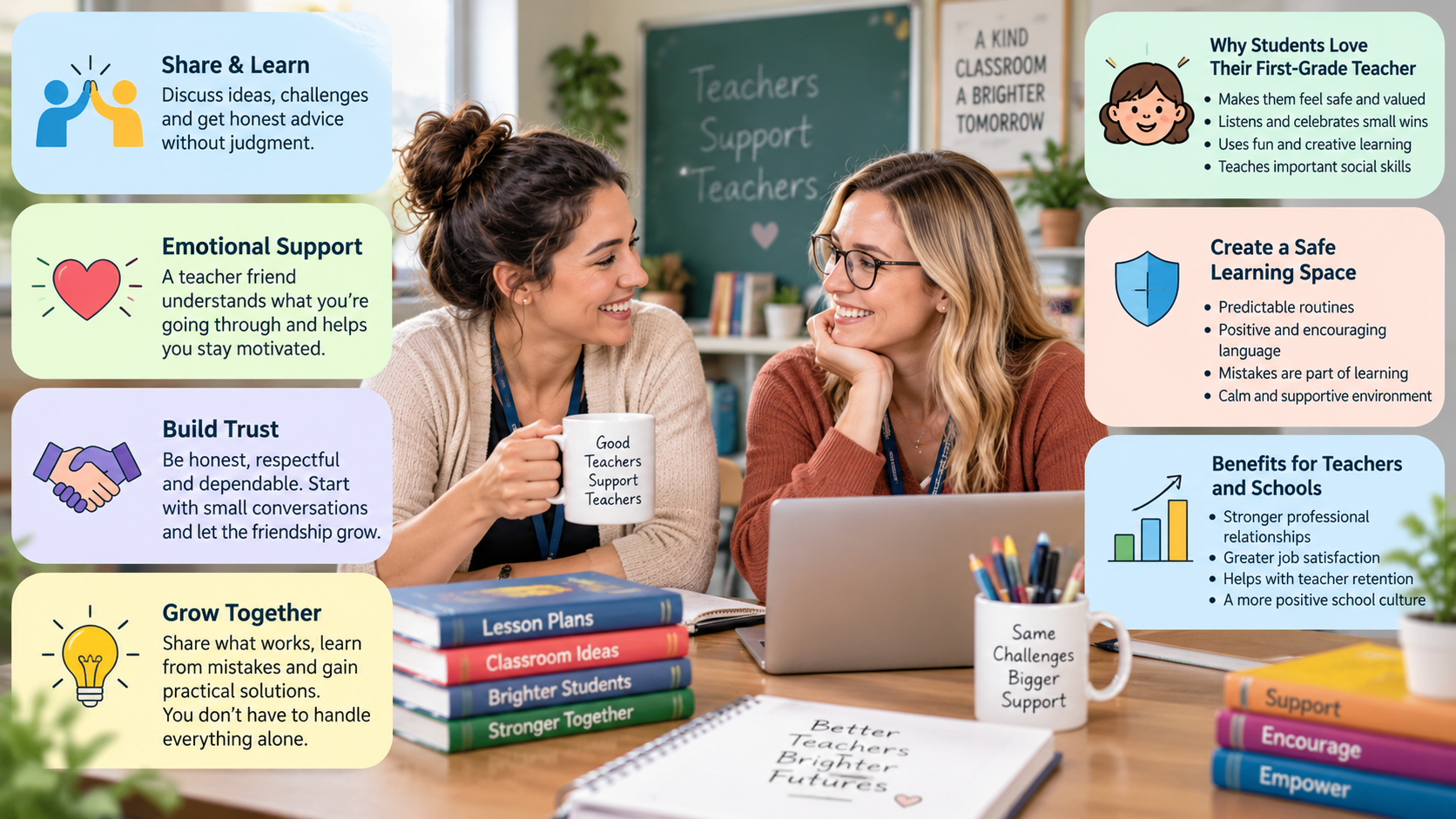

What is the role of a teacher as a friend?
A teacher friend plays a different role from a traditional colleague, mentor, or administrator. Supervisors evaluate performance, while mentors often focus on professional development and instructional guidance. A teacher friend provides something equally valuable: emotional support and understanding.
This person knows what it feels like to manage a busy classroom. They understand the pressure of preparing lessons, responding to student behavior, and completing school responsibilities. You can discuss difficult moments without worrying that every conversation will become an evaluation.
A strong teacher friendship also creates space for honest conversations. You can admit when a lesson failed or when classroom management felt difficult. Your colleague can listen, share their own experiences, and help you find a practical solution. This kind of support can also complement positive student relationships in the classroom, helping teachers create stronger connections with students.
That support matters during the first year because new teachers often face uncertainty. A trusted friend can remind you that mistakes are part of professional growth.
Building Trust in the Classroom
Trust creates the foundation for a meaningful relationship between educators. New teachers may hesitate to share classroom failures or admit that they need help. A trusted teacher friend makes those conversations feel safer and more productive.
You can build trust by being honest, respectful, and dependable. Start with small conversations about lesson ideas, classroom routines, or everyday challenges. Over time, those discussions can develop into a stronger professional friendship.
It also helps to respect each other’s boundaries. A teacher friend should offer support without becoming responsible for solving every problem. Both teachers need space to make their own decisions and develop their individual teaching styles.
When trust becomes mutual, feedback becomes easier to accept. You can discuss what worked, what failed, and what might improve next time. This creates a useful exchange of practical knowledge.
Most importantly, trust reduces the feeling that you must handle everything alone. That sense of connection can strengthen confidence and make difficult teaching days easier to manage.
Why do you love your teacher class 1?
Children often develop a strong connection with their first-grade teacher because school can feel unfamiliar at first. Many first graders experience excitement and separation anxiety during their early school days. A caring teacher can make that transition feel safer and more predictable.
Students often love teachers who make them feel seen, respected, and valued. Simple actions can have a lasting effect. A teacher who listens carefully, celebrates small achievements, and patiently explains difficult lessons can quickly become a trusted adult.
Young children also respond strongly to fun learning experiences. Games, stories, songs, creative activities, and hands-on lessons can make difficult subjects easier to enjoy. Student engagement strategies can help teachers turn these activities into more active and meaningful classroom experiences.
A first-grade teacher also teaches important social skills. Students learn how to share, cooperate, solve disagreements, and show kindness. These daily interactions help children understand that school is more than academic work.
Creating a Safe Space for Learning
Young children learn more confidently when they feel emotionally secure. A safe classroom does not mean removing every challenge. Instead, it means creating an environment where students can make mistakes without feeling embarrassed or rejected.
Teachers can establish this environment through predictable routines and clear expectations. Consistent routines help children understand what happens next. Calm responses also show students that mistakes can become opportunities to learn, especially when teachers use effective student relationship-building strategies.
Positive classroom language can make a significant difference. Instead of criticizing an incorrect answer, teachers can encourage students to try again or explain their thinking. This approach helps children become more comfortable asking questions.
A welcoming classroom can also encourage stronger relationships between students. When children see kindness and respect modeled by their teacher, they are more likely to demonstrate those behaviors themselves. Learn more about how school friendships shape emotional and academic success through these positive connections.
Over time, emotional safety can support academic confidence. Students become more willing to participate, read aloud, attempt challenging problems, and ask for help. A classroom that feels safe gives children room to develop both academically and socially.
What is your greatest achievement as a teacher?
A teacher’s greatest achievement is not always a test score, award, or formal recognition. Often, the most meaningful achievements happen quietly inside the classroom. These moments can include helping a struggling student understand a difficult concept or watching a shy child become confident enough to participate.
Teachers also make a difference when they help students develop qualities beyond academics. Confidence, empathy, resilience, curiosity, and kindness can influence children long after they leave the classroom. These qualities also contribute to becoming a great student, both inside and outside the classroom.
For example, a student who once avoided reading may eventually volunteer to read aloud. Another child may learn to manage frustration instead of giving up. These changes can represent major achievements for both the student and teacher.
The impact of teaching can also appear much later. Students may remember the teacher who encouraged them when they doubted themselves. They may carry those lessons into future classrooms, relationships, and careers.
For many educators, that lasting influence represents the real reward of teaching. Helping children believe in their own ability can be more meaningful than any professional award.
Transforming Self Doubt into Confidence
Helping students overcome self-doubt is one of the most rewarding parts of teaching. Children sometimes decide they are “bad” at reading, mathematics, writing, or another subject after repeated difficulties. A supportive teacher can challenge that belief by using proven methods to build confidence in students.
Teachers can begin by breaking difficult tasks into manageable steps. Small successes give students evidence that improvement is possible. Specific praise also helps children understand which behaviors or strategies contributed to their progress.
For example, instead of simply saying “Good job,” a teacher might recognize a student’s persistence. This shows the child that effort and effective strategies matter. Over time, students can begin to view mistakes as part of the learning process.
A teacher’s patience is especially important during this stage. Confidence rarely develops after one successful lesson. Students may need repeated opportunities to practice, reflect, and try again.
When students eventually approach a difficult task with greater confidence, the change can be significant. They are not only improving one academic skill. They are developing a stronger belief in their ability to learn.
What are 10 reasons why I like my teacher?
Students often like their teachers because of the small things they experience every day. A caring teacher combines kindness, patience, fairness, and engaging instruction. These qualities can make the classroom feel welcoming and enjoyable.
Here are 10 common reasons students appreciate their teachers:
- Teachers listen patiently when students want to share something.
- They make lessons enjoyable through games and creative activities.
- They treat students fairly and show everyone respect.
- They explain difficult concepts using simple examples.
- They encourage students when schoolwork feels challenging.
- They create a welcoming and organized classroom.
- They celebrate birthdays, achievements, and personal milestones.
- They remain patient during noisy or stressful moments.
- They help students resolve disagreements fairly.
- They encourage children to work hard and believe in themselves.
These everyday actions can shape how students feel about school. A teacher does not need to be perfect to make a positive impression. Consistent care and encouragement can create a relationship students remember for years.
The Power of Everyday Encouragement
Small interactions can have a surprisingly strong effect on student confidence. A warm greeting at the classroom door can help a child feel noticed. A quick word of encouragement can also change how a student approaches a difficult task.
Teachers can use simple forms of positive reinforcement throughout the school day. These might include personalized feedback, high-fives, encouraging notes, or specific praise for effort. The goal is not to praise everything a child does. Instead, teachers should recognize meaningful progress and positive behavior in students.
Consistency matters because students notice repeated patterns. When a teacher regularly responds with patience and respect, children learn what they can expect from the classroom. That predictability can strengthen trust.
Encouragement can also motivate students to participate more actively. A child who feels comfortable making mistakes is more likely to answer questions and attempt challenging activities.
These interactions do not require elaborate planning. They can happen naturally during lessons, transitions, group activities, or conversations. Over time, these small moments can help create a classroom culture built on confidence, respect, and belonging.
What are 5 qualities of a good teacher?
Good teaching requires more than subject knowledge. Effective teachers combine professional skills with patience, flexibility, communication, and empathy. These qualities help educators respond to different learning needs while maintaining a positive classroom environment.
Five important qualities of a good teacher include:
- Patience: Students learn at different speeds and may need repeated explanations or additional practice.
- Adaptability: Teachers must adjust lessons when students struggle or unexpected situations arise.
- Communication: Clear instructions help students understand expectations and complete tasks successfully.
- Empathy: Understanding a student’s emotions can help teachers respond appropriately to challenging behavior.
- Passion: Enthusiasm for teaching and child development can make lessons more engaging and meaningful.
These qualities work together rather than operating separately. A patient teacher may need adaptability when a lesson does not work. Strong communication can also support empathy by helping teachers understand student concerns.
No teacher demonstrates every quality perfectly every day. Professional growth involves recognizing weaknesses and gradually improving them through experience, reflection, and collaboration.
Cultivating Adaptability in Daily Practice
Classrooms rarely follow a perfect script. A lesson that worked yesterday may not work today. Students may need more time, fewer instructions, additional examples, or a completely different activity.
Adaptability helps teachers respond without losing focus. Instead of abandoning the learning objective, an adaptable teacher can change the route used to reach it. This might involve slowing the lesson, creating smaller groups, adding visual examples, or providing extra practice.
Unexpected classroom events can also become learning opportunities. A student question may lead to a useful discussion. A behavior issue may create an opportunity to reinforce classroom expectations. The key is responding calmly rather than becoming overwhelmed by the change.
Teachers can improve adaptability through regular reflection. After a lesson, consider what worked, what caused difficulty, and what could change next time. Talking with a teacher friend in year one can also provide another perspective.
Over time, these adjustments become easier. Teachers gain a larger collection of strategies and become more comfortable changing plans when student needs require it.
How to write 10 lines about a teacher?
Writing 10 lines about a teacher becomes easier when you focus on specific qualities and experiences. Start with the teacher’s name and the subject or grade they teach. Then describe their personality, teaching style, and relationship with students.
You can mention how the teacher makes lessons interesting. Add an example of how they help students understand difficult topics. You can also describe how they encourage good manners, teamwork, respect, and kindness.
A simple structure can help:
- Introduce the teacher and their role.
- Describe their personality.
- Mention their teaching style.
- Explain how they make lessons enjoyable.
- Describe how they support struggling students.
- Mention how they encourage positive behavior.
- Explain how they motivate students.
- Share what makes the teacher special.
- Describe how students feel around them.
- End with a sincere thank-you.
Specific details make the writing more meaningful. Instead of using only general words such as “nice” or “good,” explain what the teacher actually does.
A short tribute can still feel personal when it focuses on genuine classroom experiences.
Structuring Paragraphs for Maximum Impact
Good structure makes a short piece about a teacher easier to read and remember. Start with an introduction that identifies the teacher and explains why they are important. This gives the reader immediate context.
The middle should provide specific details. Describe the teacher’s personality, teaching methods, classroom behavior, and relationship with students. Each sentence should add a new point rather than repeating the same compliment.
Examples make the writing stronger. Instead of saying a teacher is helpful, explain how they stay after class to explain a difficult concept. Instead of calling them kind, describe how they comfort students who feel nervous or upset.
End with a clear and sincere conclusion. A simple expression of gratitude can give the piece a personal finish.
When writing only 10 lines, every sentence should serve a purpose. Keep the language simple and avoid unnecessary descriptions. A clear beginning, focused middle, and meaningful ending can make even a short teacher tribute feel thoughtful and complete.
Frequently Asked Questions
How do I find a supportive teacher friend in my first year?
Finding a reliable teacher friend starts by being open, observant, and willing to collaborate during staff meetings and lunch breaks. Look for colleagues who share your grade level or classroom philosophy, and offer help when you see them carrying heavy supplies. Building these relationships takes time, so start small by sharing quick words of encouragement in the hallway or eating lunch together once a week. Mutual support grows naturally when both educators feel safe sharing their daily challenges.
Why is year one teaching notoriously difficult for new educators?
The first year of teaching presents a steep learning curve because novices must simultaneously manage lesson planning, classroom discipline, parent communication, and school policies. Unlike student teaching, where a veteran mentor oversees your actions, year one places complete responsibility entirely on your shoulders. This sudden influx of administrative tasks and behavioral management challenges often leads to cognitive overload and emotional exhaustion. Having a supportive community of experienced peers helps mitigate these intense pressures significantly.
What should I look for in a good mentor teacher?
An effective mentor teacher should possess strong active listening skills, deep patience, and an open-door policy that welcomes questions without judgment. Look for someone who models effective classroom management while remaining adaptable to your unique teaching style rather than forcing you to mimic them. A great mentor provides constructive, actionable feedback and offers emotional encouragement when self-doubt creeps in. Their primary goal is to help you build confidence and develop your own authentic professional voice.
How can I maintain a healthy work-life balance during my first year?
Maintaining work-life balance requires setting strict boundaries around grading, lesson planning, and school emails outside of contracted hours. Prioritize your most essential tasks each day, and accept that your classroom does not need to bePinterest-perfect to be effective. Schedule dedicated personal time for hobbies, family, and rest to recharge your mental batteries. Remember that taking care of your own physical and emotional health makes you a much more patient and effective educator for your students.
Conclusion
Navigating the turbulent waters of your initial year in education is a journey that no teacher should ever have to walk alone. Having a teacher friend in year one provides the emotional anchor, practical advice, and shared laughter necessary to transform overwhelming stress into sustainable success. From understanding the core role of a teacher to appreciating the unique qualities that make educators unforgettable, peer connections shape our professional identities. By leaning on trusted colleagues, communicating openly, and prioritizing mutual support, you build a resilient foundation for a long and rewarding career. Take the initiative today to reach out to a fellow educator, offer words of encouragement, and strengthen the community spirit within your school hallway. Apply these insights to cultivate meaningful professional friendships that will sustain your passion for teaching for years to come.