
Building Positive Student Relationships: A Practical Guide for Educators
Creating a strong connection with your learners is the foundation of effective teaching. When educators prioritize building positive student relationships, they unlock higher academic engagement, decrease classroom disruptions, and foster emotional well-being. Research compiled by the U.S. Department of Education consistently highlights that strong teacher-student connections directly correlate with improved academic resilience and long-term social development. When students feel seen, heard, and valued, their willingness to take intellectual risks grows exponentially.
Teaching involves far more than simply delivering curriculum standards. It requires establishing a safe space where young minds feel secure enough to ask questions and make mistakes. A supportive learning environment does not happen by accident. Instead, educators construct it through deliberate, everyday interactions that communicate empathy and respect. When students know their teacher truly cares about their individual success and personal circumstances, they approach challenges with greater confidence and enthusiasm.
In this comprehensive guide, we will explore practical, evidence-based methods focused on building positive student relationships in your school. You will discover actionable strategies for everyday classroom routines, methods for resolving conflict constructively, and tactics to reach even the most disengaged students. By shifting your focus toward genuine human connection, you will transform your classroom management and cultivate an inspiring environment where both teachers and students thrive together.
Why Building Positive Student Relationships Matters
The impact of building positive student relationships in the classroom extends far beyond daily lesson plans and standard academic metrics. When educators invest time in developing meaningful connections with their students, the entire learning environment shifts from a rigid place of compliance to an active space of genuine collaboration. This shift creates a protective buffer against academic burnout, disinterest, and behavioral friction. When students view their instructor as a supportive mentor rather than a distant figure of authority, they develop a sense of psychological safety that allows them to engage deeply with challenging subject matter without fear of failure.
Furthermore, prioritizing building positive student relationships lays the social framework for emotional maturity and self-regulation. When children feel secure in their educational environment, their brain remains open to higher-order critical thinking rather than remaining in a defensive or anxious state. This social-emotional stability translates to better peer interactions, improved communication skills, and an overall rise in classroom morale. Educators who build trust notice that everyday administrative tasks, transitions, and instructional routines flow much more smoothly. Investing in human relationships ultimately yields exponential returns in both student output and workplace satisfaction for teachers.
| Benefits of Positive Relationships | Level |
|---|---|
| Academic Growth | High |
| Classroom Management Stress | Low |
| Student Emotional Security | High |
Boosting Academic Engagement by Building Positive Student Relationships
Students consistently work harder for educators who show genuine interest in their personal success and overall well-being. When a child recognizes that their teacher believes in their innate capabilities, their internal motivation skyrockets. Consequently, voluntary participation increases, assignment completion rates rise dramatically, and assessment scores naturally improve over time. The academic benefits stem directly from the trust built during everyday interactions.
Furthermore, students who experience warm rapport are far more likely to seek help when they encounter difficult concepts. Rather than hiding their lack of understanding out of fear or shame, they actively ask questions and seek extra guidance. This open line of communication allows educators to catch learning gaps early and provide tailored support. Over time, this collaborative dynamic transforms passive listeners into active, self-directed learners who take real ownership of their educational journey.
Reducing Behavior Issues Through Teacher-Student Trust and Rapport
Most classroom disruptions stem from unmet emotional needs, frustration with difficult materials, or deep-seated feelings of disconnect. By building positive student relationships early in the school year, you diminish the need for reactive discipline and constant enforcement. Students who respect and trust their teachers are far less likely to act out and far more likely to respond positively to subtle redirections or quiet reminders.
When a positive relationship exists, corrective feedback feels like helpful guidance rather than a personal attack. Students recognize that boundaries exist to maintain a safe, respectful environment for everyone. This mutual understanding turns behavior management into a cooperative effort. Instead of relying on punishments or rewards, you build a community built on shared respect, where students self-regulate because they value their place within the classroom.
Classroom Strategies for Building Positive Student Relationships
Building positive student relationships does not require hours of complex preparation or massive changes to your existing curriculum. Instead, subtle shifts in your daily habits and communication style can yield substantial long-term results. Consistency remains the most crucial element when implementing connection strategies; small daily actions build trust far faster than elaborate, occasional gestures.
Moreover, integrating relationship-building directly into your everyday procedures ensures that no student falls through the cracks. Busy schedules can make individual attention difficult, but embedding personal interactions into routines keeps equity at the forefront. By establishing predictable moments of connection, you create an approachable atmosphere where every learner feels acknowledged, supported, and ready to participate fully in the learning process.
Daily Connection Routines
| Routine | Action |
| Morning Greetings | Stand at the door; use names. |
| Interest Inventories | Track hobbies and preferences. |
| Active Listening | Give undivided focus during eye contact moments. |
Implementing Daily Welcomes and Check-Ins to Build Rapport
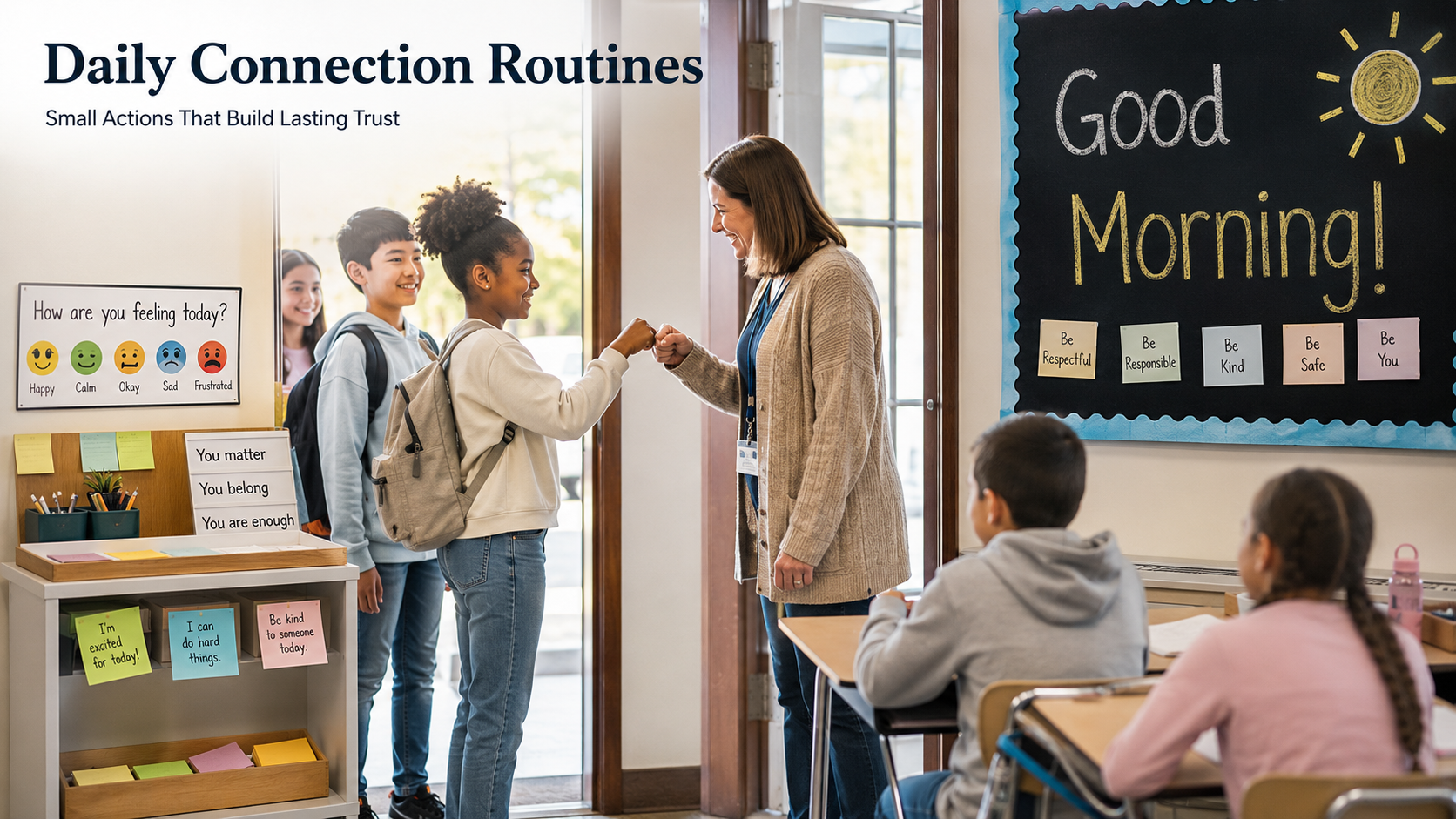

First impressions set the tone for the entire school day. Stand near your classroom doorway each morning and greet every single learner by their preferred name as they enter. This simple routine immediately signals to students that their presence matters and that they belong in your instructional space.
-
Use a warm smile, a friendly wave, or a personalized high-five tailored to each student’s comfort level.
-
Ask a brief, non-academic question about their weekend, favorite extracurricular activities, or personal hobbies.
-
Observe their facial expressions and energy levels to spot students who might need extra emotional support during the day.
Taking two seconds to acknowledge each student creates a personal touchpoint before academic demands begin. This practice helps bridge the transition from home to school, settling anxious minds and establishing a welcoming atmosphere. Over time, these brief morning greetings accumulate into a solid foundation of mutual familiarity and trust.
Showing Genuine Interest in Student Lives Outside School
Take deliberate time to learn what excites your students beyond their performance in academic subjects. Attend school sports games, music concerts, drama productions, or art showcases whenever your schedule allows. Asking students about their favorite video games, athletic teams, or creative hobbies demonstrates that you value them as whole human beings rather than just test-takers.
When you remember small details about a student’s personal interests and bring them up in casual conversation, it leaves a lasting impression. You might tailor reading suggestions to match their passion for animals or use sports statistics in a mathematics example. This subtle integration shows students that their world outside the classroom matters inside it, deepening their trust and investment in your class.
Overcoming Challenges and Building Positive Student Relationships with Disengaged Learners
Connecting with eager, high-achieving students comes naturally to most educators, but building positive student relationships with distant, frustrated, or disruptive learners demands intentional patience and specialized strategies. Struggling students often build protective walls due to past academic failures or negative experiences with authority figures. Breaking down these barriers requires time, empathy, and strategic persistence.
It is vital to recognize that pushback or indifference from a student is rarely a personal reflection on you. Often, it reflects a fear of vulnerability or failure. By remaining calm, consistent, and supportive, you demonstrate that your commitment to their success does not depend on their immediate performance or attitude. Over time, even the most defensive learners begin to let their guard down when met with unwavering support.
Utilizing the 2×10 Strategy for Struggling Students
The 2×10 strategy represents one of the most powerful, evidence-based tools for reaching guarded or persistent behavioral challenge students. The practice requires spending two full minutes a day for ten consecutive school days chatting with a specific student about anything other than schoolwork, rules, or behavior. You can discuss movies, local events, favorite foods, or personal hobbies.
This short, focused routine accelerates building positive student relationships because it removes academic pressure and discipline from the interaction. By giving the student undivided attention in a stress-free context, you demonstrate that you value them for who they are. Educators regularly report dramatic turnarounds in student attitude, trust, and classroom participation after completing this simple ten-day investment.
Repairing Harm and Practicing Restorative Discipline to Strengthen Bonds
Conflicts and misbehaviors will inevitably arise in any vibrant educational setting. However, how you manage these difficult moments determines whether a relationship breaks permanently or grows stronger. Avoid public reprimands that humiliate students in front of their peers, as embarrassment almost always leads to resentment and heightened defiance. Instead, handle discipline through private, calm conversations focused on restoring harm.
Structure these conversations using restorative questions that encourage reflection rather than defensive reactions. Ask the student what happened, what they were thinking at the time, who was affected by their actions, and what steps are needed to make things right. This approach holds students accountable while preserving their dignity, teaching them accountability and emotional regulation while maintaining a supportive relationship.
Cultivating an Inclusive Environment by Building Positive Student Relationships
Relationships flourish best in classroom environments that celebrate individual diversity, equity, and a sense of belonging. Building positive student relationships requires proactive efforts to ensure that classroom materials, physical spaces, and social norms reflect and respect all student identities and backgrounds. Every student must enter your space confident that their perspective enriches the broader learning community.
Furthermore, an empathetic classroom culture encourages peer-to-peer appreciation alongside teacher-student connections. When you model inclusive behavior, active listening, and constructive empathy, your students learn to mirror those qualities in their interactions with one another. This collective environment reduces bullying, lowers social anxiety, and creates an empowering setting where every learner feels safe enough to participate fully.
Validating Student Emotions and Perspectives
Empathy serves as the essential backbone of strong interpersonal trust. When a student expresses frustration, anxiety, or sadness, avoid dismissing their feelings with quick fixes, platitudes, or immediate corrections. Validating their emotional experience first opens the door for meaningful communication and problem-solving down the line.
A simple phrase like, “I can see why that situation feels overwhelming for you,” helps students feel heard and understood. Once they feel secure in your empathy, their brain moves out of a defensive state, making them far more receptive to working together toward a constructive solution. Practicing emotional validation builds deep trust and teaches students how to process their emotions in healthy ways.
Designing Collaborative Learning Spaces to Enhance Connection
Structure your physical room layout and social activities to encourage frequent, positive interactions among peers. Use flexible seating arrangements, cooperative group projects, and structured community-building icebreakers throughout the entire academic year rather than just during the first week of school.
Intentionally designing group tasks allows students from different backgrounds and social circles to collaborate, solve problems, and discover shared interests. As students learn to support one another, the overall emotional atmosphere of the classroom strengthens. A cohesive, connected peer group reinforces your overall classroom expectations and supports a safe, productive learning environment.
FAQ SECTION
How do you start building positive student relationships on the first day of school?
Start building positive student relationships from day one by creating an inviting, low-stress environment the moment students enter your room. Warmly greet students at the doorway, ensure you learn their preferred names, and practice correct pronunciations immediately. Rather than spending the entire first period reading through a long list of rules and syllabus requirements, focus on engaging community-building activities. Run low-stakes icebreakers that allow students to share their personal interests, strengths, and goals for the year. Additionally, share fun, relatable details about your own life and teaching journey to humanize yourself. This balanced approach sets a welcoming, collaborative tone for the rest of the term.
What are the best ways to connect with quiet or introverted students?
Connecting with introverted or reserved students requires subtle, low-pressure strategies that respect their comfort levels. Quiet learners often feel overwhelmed by public praise or forced group participation, so focus on individual, private interactions instead. Leave brief, encouraging sticky notes on their desks acknowledging their hard work, insightful written responses, or creative ideas. Use written interest surveys at the beginning of the term to discover their passions without putting them on the spot in front of peers. During class discussions, provide ample wait time or allow them to submit thoughts via digital chat tools or journals. These quiet touchpoints show introverted students that you value their presence without overwhelming them.
How can teachers maintain boundaries while building rapport?
Maintaining clear professional boundaries while building strong rapport is essential for a safe, well-structured classroom environment. Educators can easily build warmth and trust without stepping into the role of a peer or friend. Always maintain professional standards in your language, physical space, and communication channels, using only approved school platforms for all digital interactions. Speak with genuine empathy while consistently upholding classroom rules, academic expectations, and behavioral boundaries. Never share overly personal details about your adult private life or encourage non-professional relationships. By combining steady warmth with firm structure, you create a secure environment where students respect your authority as a supportive professional mentor.
Why do positive teacher-student relationships improve classroom management?
Positive relationships transform classroom management from an exhausting dynamic of power and compliance into a cooperative partnership built on mutual respect. When students feel genuinely valued, respected, and supported by their teacher, they develop a strong sense of belonging within the classroom community. This sense of belonging directly increases their investment in maintaining a productive, peaceful learning environment. Consequently, students are far less likely to engage in disruptive behavior because they want to preserve their positive connection with you. When misbehavior does occur, a strong foundation of trust allows for quick, quiet redirections that resolve issues without escalating into power struggles or damaging student dignity.
How can you restore a positive relationship after a major behavioral incident?
Restoring a broken relationship after a major conflict requires intentional effort, emotional composure, and a commitment to providing a fresh start. Once the immediate incident has been addressed and calm is restored, schedule a private restorative conversation with the student. Focus the conversation on understanding what triggered the event, discussing how the behavior impacted the classroom community, and agreeing on practical steps to move forward. Reassure the student that while the specific behavior was unacceptable, your care for their personal well-being remains unchanged. Greet them with genuine warmth the very next day to demonstrate that they have a clean slate and remain a valued member of your class.
CONCLUSION
Building positive student relationships serves as the absolute heart of effective, transformative education. When teachers invest time in knowing their students as individuals, validating their emotional experiences, and creating inclusive classroom spaces, academic engagement and behavior improve dramatically. Simple daily routines—such as greeting students warm-heartedly at the doorway, taking time for non-academic check-ins, or using the 2×10 strategy with guarded learners—yield massive long-term benefits for both academic performance and emotional well-being.
It is essential to remember that relational teaching is an ongoing practice rather than a single lesson plan or a one-time project. It requires consistent patience, deliberate effort, and genuine empathy, particularly when working with students who face significant personal or academic struggles. By placing human connection alongside your standard curriculum goals, you transform your classroom into a safe, empowering community where every student feels secure enough to take risks and grow. Understanding the role of emotions in student learning can further strengthen your approach by helping you create a classroom environment that supports both academic achievement and emotional well-being. Take a proactive step today by prioritizing building positive student relationships through a new strategy tomorrow morning.