

How School Friendships Shape Emotional and Academic Success
School friendships play an important role in a young person’s emotional development and academic experience. From kindergarten through university, students spend much of their lives interacting with peers. These relationships can shape how they handle challenges, communicate, learn, and view themselves.
Supportive friendships give students a sense of belonging. They can also make school feel safer and more enjoyable. When children have trusted companions, they often feel more comfortable participating in activities and trying unfamiliar experiences. These interactions also help them develop empathy, communication, cooperation, and conflict-resolution skills.
The American Psychological Association notes that positive peer relationships are associated with emotional well-being and better adjustment to school. However, friendship quality matters more than having a large social circle. Healthy connections should provide respect, encouragement, trust, and emotional support.
This article examines how friendships affect students at different educational stages. It also explores studying with friends, university relationships, and the connection between social interaction and academic performance.
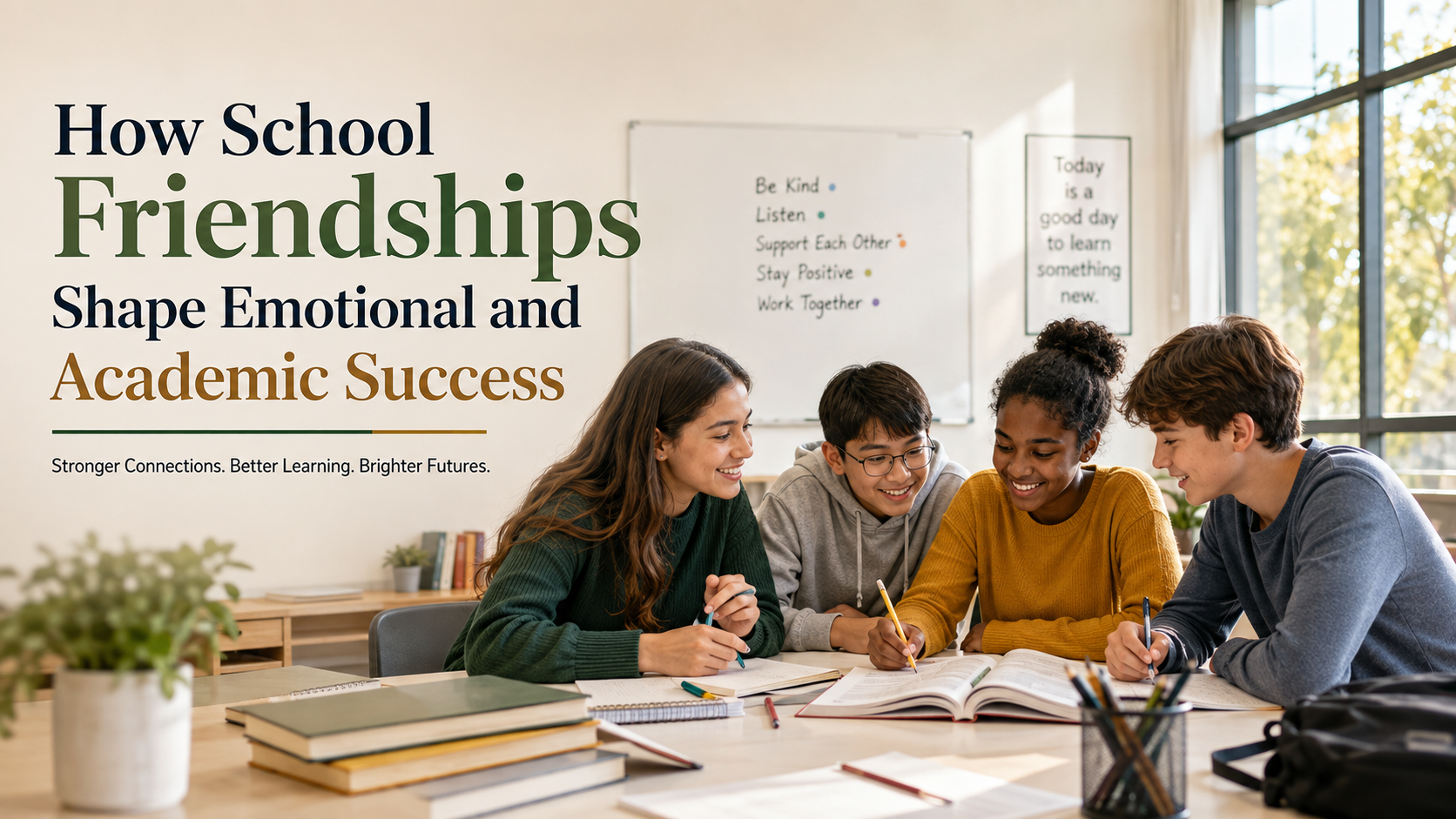

Why Are Friendships Important in School Life?
Friendships provide an important source of emotional security during childhood and adolescence. Entering a busy classroom can feel stressful, especially for younger students. Having a trusted friend can reduce that anxiety and create a stronger sense of belonging.
School friendships also encourage students to participate more actively in school life. Children may feel more confident joining activities, answering questions, or trying something new when supportive peers surround them. This confidence can gradually strengthen their independence and communication skills. Learning more about building confidence in students can also help parents and educators support this development.
Friendships also teach practical social skills that students use throughout life. Children learn to listen, share, cooperate, compromise, and resolve disagreements. They also discover how their actions affect other people.
However, not every friendship is beneficial. Negative peer relationships can create stress, exclusion, or pressure. For this reason, parents and educators should help children recognize healthy relationships based on respect and trust.
When students feel accepted by their peers, school becomes more than a place for academic learning. It becomes an environment where they can develop socially and emotionally.
Building Resilience Through Peer Support
Trusted friends can make everyday school challenges easier to manage. Children experience disappointing grades, disagreements, difficult assignments, and moments of embarrassment. Having someone who listens can help them process these experiences without feeling alone.
Peer support can strengthen emotional resilience by giving students reassurance during stressful situations. A friend may offer encouragement after a disappointing result or help another student think through a difficult problem. These small interactions can make setbacks feel more manageable.
Friendships also teach children that challenges are normal. When students see their friends make mistakes and recover, they learn that failure does not define their abilities. This understanding can encourage a healthier response to academic and social setbacks.
At the same time, children need guidance when friendship problems become serious. Persistent exclusion, bullying, or unhealthy peer pressure should not be treated as ordinary friendship issues.
Healthy peer relationships therefore provide both comfort and learning opportunities. They help children develop emotional flexibility, confidence, and problem-solving skills. These qualities can support them as they face increasingly complex academic and social demands.
Why Are Friendships Important for High School Students?
High school brings academic pressure, changing expectations, and greater social independence. During this period, school friendships can provide teenagers with an important source of emotional stability. Students often face demanding coursework, examinations, preparing for college, and changing relationships at the same time.
Trusted friends give teenagers a place to discuss concerns without always feeling judged. They can share worries about grades, future careers, family expectations, and social situations. This communication can reduce feelings of isolation and help students manage everyday stress.
Peer relationships also influence identity development. Teenagers naturally compare ideas, interests, values, and goals with people their own age. Supportive friendships allow them to explore these changes while maintaining a sense of acceptance.
However, peer influence can work in harmful ways. Pressure to conform can affect academic choices, behavior, and emotional well-being. Teenagers therefore benefit from friendships that respect individual boundaries.
Strong friendships do not remove high school challenges. Instead, they can make those challenges easier to navigate. Supportive peers can help students remain connected, confident, and engaged during an important stage of personal and academic development.
Navigating Identity and Independence
Adolescence involves a gradual shift from family dependence toward greater independence. During this transition, friendships can provide a valuable space for teenagers to explore their developing identities.
Peers often share experiences that parents may not fully understand. Conversations about interests, goals, relationships, school pressures, and future plans can help teenagers understand their own preferences. Healthy friendships allow students to express different opinions without fearing rejection.
Friends can also provide constructive feedback. A trusted peer may challenge an unrealistic idea or encourage someone to pursue a meaningful goal. These interactions can strengthen decision-making and self-awareness.
Still, independence should not mean following every group expectation. Peer approval can sometimes encourage risky decisions or unhealthy behavior. Teenagers need enough confidence to maintain personal boundaries while remaining socially connected.
The strongest friendships support individuality rather than demanding conformity. They allow students to change their interests and opinions without losing their sense of belonging.
For high school students, this balance matters. Supportive peers can help teenagers become more independent while providing reassurance during a period of significant emotional, social, and academic change.
What Are the Benefits of Studying With Friends?
Studying with friends can turn individual academic work into a collaborative learning experience. When students review material together, they can explain difficult concepts using simpler language. Teaching a topic to another person can also reveal gaps in their own understanding.
Studying with friends can improve accountability. Students may be more likely to complete assignments when they have agreed to meet or review material together. Friends can also quiz each other, compare notes, and discuss difficult questions before examinations.
Study groups can make demanding subjects feel less overwhelming. Students may divide research tasks, share useful resources, or approach the same problem from different perspectives. These interactions can encourage critical thinking and deeper understanding.
However, group study does not automatically improve performance. Friends can easily become distractions when sessions lack structure. Effective study groups need clear goals, reasonable time limits, and focused activities.
The best approach depends on the student’s learning style and subject. Some tasks require quiet individual concentration. Others benefit from discussion and peer explanation.
Used intentionally, collaborative study can combine social support with academic accountability without replacing independent learning.
Boosting Accountability and Motivation
Motivation can decline when students study alone for long periods. A planned session with classmates can create a stronger sense of responsibility. Knowing that others are expecting participation can make it easier to begin difficult work.
Academic accountability works because students make their progress visible to others. A study partner might ask whether an assignment is finished or whether a student reviewed a particular chapter. These simple questions can discourage procrastination.
Friends can also provide encouragement when academic tasks become frustrating. A short discussion may help students approach a difficult problem from another angle. This support can prevent temporary frustration from turning into complete disengagement.
However, accountability works best when students choose realistic goals. A group that spends most of its time chatting will not improve productivity. Each session should have a clear purpose, such as completing practice questions or reviewing a specific topic.
Students can improve group sessions by setting a start time, choosing a topic, and removing unnecessary distractions. Short breaks can also maintain attention.
When structured properly, studying with friends combines motivation, social connection, and shared responsibility. These benefits can make consistent academic effort easier to maintain.
Why Are Friendships Important at University?
University introduces greater independence, demanding coursework, and unfamiliar social environments. For students living away from home, university friendships can provide valuable emotional support during this transition. A college survival guide for freshers can also help students manage the practical and social challenges of starting university.
Friends can help students manage homesickness, academic pressure, and changes in daily routines. A supportive peer group can make an unfamiliar campus feel more comfortable. Students may also rely on friends when adjusting to new responsibilities and expectations.
University friendships can provide academic benefits as well. Students often exchange notes, discuss assignments, form study groups, and share information about courses. Working with peers can expose students to different approaches and ideas.
These relationships can also extend beyond university. Classmates may eventually work in related industries or pursue similar career paths. Professional opportunities can emerge through collaboration, shared networks, and long-term connections.
Still, university students should maintain relationships beyond one social group. A balanced network can provide different perspectives and reduce dependence on a single friendship circle.
University friendships therefore serve several purposes. They can provide emotional support, academic collaboration, social belonging, and future professional connections. Their value often continues long after students leave campus.
Creating Professional and Personal Networks
The friendships students develop at university can become valuable personal and professional relationships. Working together on assignments, projects, clubs, or extracurricular activities allows students to understand each other’s strengths and interests.
These experiences can build professional trust over time. A classmate who demonstrates strong communication skills may later become a useful collaborator. Another peer may introduce a graduate to an employer, industry contact, or professional opportunity.
However, networking should not replace genuine friendship. Relationships built only around career benefits can feel transactional and may not provide meaningful long-term support. Strong professional networks usually grow from authentic connections and shared experiences.
University also exposes students to people from different backgrounds and academic disciplines. These interactions can broaden perspectives and introduce ideas that students might not encounter within their immediate circles.
Maintaining these relationships after graduation can be valuable. Alumni networks, professional communities, and former classmates can remain sources of advice and collaboration.
The most useful university networks therefore develop naturally. Students should focus first on building respectful relationships and contributing positively to their communities. Career opportunities can follow from those connections without becoming the sole purpose.
What Are Five Benefits of Friendship?
Friendship can influence emotional well-being, personal development, and everyday behavior. While every relationship differs, supportive friendships commonly provide several important benefits.
- Emotional support: Friends can provide encouragement during stressful or disappointing experiences.
- Reduced loneliness: Regular social connection can help people feel understood and included.
- Personal growth: Friends introduce different perspectives, interests, experiences, and ideas.
- Healthy habits: Supportive peers can encourage positive routines and shared activities.
- Accountability: Friends can encourage people to follow through on personal and academic goals.
These benefits depend on friendship quality. A large social circle does not automatically provide meaningful support. Relationships based on trust, respect, and mutual encouragement tend to be more valuable than connections based mainly on popularity.
For students, these benefits can influence school experiences in practical ways. Emotional support may improve confidence, while accountability can encourage better study habits. Social connection can also make difficult periods easier to manage.
Friendship should not replace professional or family support when serious problems arise. Instead, healthy friendships provide an additional layer of connection.
When students learn to build respectful relationships, they gain social resources that can support both present well-being and future development.
Enhancing Long-Term Well-Being
Supportive friendships can contribute to long-term emotional well-being by creating regular opportunities for connection, encouragement, and shared experiences. Strong relationships can help people feel valued during both successful and difficult periods.
For students, these benefits can begin with simple daily interactions. Talking with classmates, sharing activities, or helping a friend can create meaningful social bonds over time. These experiences can strengthen communication skills and emotional awareness.
Healthy social connections may also encourage positive behaviors. Friends can motivate one another to stay active, pursue goals, manage responsibilities, or seek help when needed. Such influence can become especially valuable during stressful educational transitions.
However, maintaining friendships requires effort from both sides. Listening, respecting boundaries, communicating honestly, and resolving disagreements are important parts of lasting relationships.
Students should also understand that friendships naturally change. People may move, choose different courses, develop new interests, or enter different life stages. A changing friendship does not necessarily represent failure.
The goal is not to maintain every relationship permanently. Instead, students can learn how to build connections that remain respectful and supportive.
These skills can strengthen relationships throughout adulthood and contribute to a healthier, more connected life.
Effects of Social Interaction on Academic Performance
Social interaction can influence how students participate in learning environments. Classroom discussions allow students to explain ideas, question assumptions, and consider different viewpoints. These activities can strengthen communication and critical-thinking skills.
Positive peer relationships may also improve classroom engagement. Students who feel accepted by classmates can become more comfortable asking questions or contributing to discussions. Feeling socially secure can make participation less intimidating.
The opposite can also occur. Bullying, exclusion, persistent conflict, or social isolation can interfere with concentration and school attendance. Students dealing with these problems may find it harder to focus on academic responsibilities.
However, social interaction alone does not guarantee higher grades. Academic performance depends on many factors, including teaching quality, study habits, motivation, resources, and individual learning needs.
Schools can support students by creating respectful and inclusive learning environments. Cooperative projects, peer learning, classroom discussions, and structured group activities can encourage healthy interaction.
Teachers should also monitor harmful peer dynamics. Students need opportunities to build friendships without experiencing exclusion or pressure.
When social and academic environments work together, students can benefit from both emotional security and intellectual engagement. Healthy peer relationships can therefore support learning without becoming a substitute for effective teaching or independent study.
Cultivating Active Classroom Participation
Students are more likely to participate when they feel comfortable expressing their ideas. A supportive peer environment can reduce the fear of making mistakes in front of classmates.
Active classroom participation helps students engage more deeply with lessons. Asking questions can clarify confusing concepts. Explaining an answer can strengthen understanding. Listening to different opinions can also expand a student’s perspective.
Friendships may make these behaviors easier because familiar peers can provide social confidence. A student who feels accepted may be more willing to volunteer an answer or contribute to group discussions.
Teachers can strengthen this environment by creating respectful classroom routines. They can encourage students to listen without interrupting and respond to different opinions constructively. Group activities can also give quieter students opportunities to participate.
Still, participation should not become a measure of intelligence or academic ability. Some students understand material well but prefer quieter forms of engagement. Teachers should provide different ways for students to demonstrate learning.
The goal is to create classrooms where students feel safe enough to contribute without pressure.
When social confidence and effective teaching work together, students can become more engaged learners. School friendships can support that confidence when they are respectful, inclusive, and emotionally healthy.
Frequently Asked Questions
How can parents help children make friends at school?
Parents can support school friendships by encouraging participation in extracurricular activities, organizing supervised playdates, and modeling healthy social behaviors. Teaching children active listening, empathy, and how to share also gives them the practical social tools needed to initiate and maintain positive peer relationships smoothly.
Do online friendships have the same impact as school friendships?
Online friendships offer valuable peer connection and shared interests, but they lack the immediate face-to-face interaction and shared physical environment of school friendships. In-person school friendships provide spontaneous social practice, nonverbal communication cues, and daily collaborative experiences that are difficult to replicate entirely online.
What should a student do if they feel excluded at school?
Students experiencing exclusion should communicate their feelings to a trusted teacher, school counselor, or parent. Joining structured clubs or interest-based school organizations can also help students find like-minded peers who share common passions, making it easier to form genuine, lasting friendships.
Can having too many friends hurt a student’s grades?
Maintaining an extremely large social circle can sometimes overwhelm a student and consume valuable study time. However, having a few close, supportive friendships usually enhances academic success by providing emotional stability and collaborative study partners rather than causing academic distraction.
Conclusion
School friendships do much more than simply make the school day more enjoyable; they are foundational pillars of both emotional maturity and academic achievement. Throughout this exploration, we have seen how meaningful peer connections reduce anxiety, build resilience, boost study motivation, and enhance long-term well-being. Whether navigating the halls of elementary school, the pressures of high school, or the independence of university, students thrive when surrounded by supportive companions. By recognizing the profound impact of these relationships, educators and families can better foster environments where positive connections flourish. Encourage the young people in your life to invest in genuine friendships, as these bonds ultimately shape a successful, well-rounded future.